


Artist Spotlight: Shuyang Zhou — from booooooom.com

Artist Spotlight: Shuyang Zhou — from booooooom.com
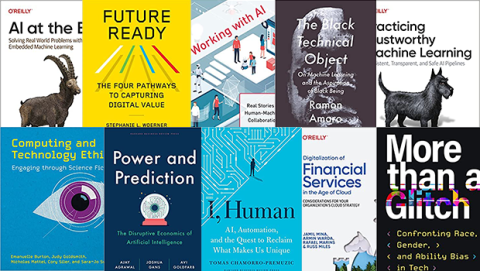
10 Must Read Books for Learning Designers — from linkedin.com by Amit Garg
Excerpt:
From the 45+ #books that I’ve read in last 2 years here are my top 10 recommendations for #learningdesigners or anyone in #learninganddevelopment
Speaking of recommended books (but from a more technical perspective this time), also see:
10 must-read tech books for 2023 — from enterprisersproject.com by Katie Sanders (Editorial Team)
Get new thinking on the technologies of tomorrow – from AI to cloud and edge – and the related challenges for leaders
How the University of California Strike Could Reshape Higher Education — from news.yahoo.com by Katie Reilly
Excerpts:
“To have this many workers on strike is really something new in higher education,” says Rebecca Givan, an associate professor of labor studies at Rutgers, who is also president of the union for graduate workers and faculty at her university. “The willingness of these workers to bring their campuses to a standstill is demonstrating that the current model of higher education can’t continue, and that the current system really rests on extremely underpaid labor.”
…
The striking workers argue that their current pay makes it challenging to afford housing near their universities, in a state with one of the highest costs of living in the country. Jaime, the Ph.D. candidate, says he makes $27,000 per year as a teaching fellow and pays $1,200 in monthly rent for an apartment he shares with two roommates. (Median rent in the Los Angeles metropolitan area is about $3,000, according to Realtor.com.) “We are the ones who do the majority of teaching and research,” he says. “But nevertheless, the university doesn’t pay us enough to live where we work.”
Also relevant/see:
Hundreds of UC Faculty Members Stop Teaching as Strike Continues — from chronicle.com by Grace Mayer
Excerpt:
The strike is shining a spotlight on a longstanding problem within higher education: Today, tenured, full-time faculty members make up a smaller percentage of university employees than they did 50 years ago, in part due to the financial pressures facing universities amid funding cuts. The proportion of other university employees, who receive less job security and lower pay, “has grown tremendously,” says Tim Cain, an associate professor at the University of Georgia’s Institute of Higher Education, who studies campus activism and unionization.
“There’s such stratification between the tenured full professor and a graduate student employee or a postdoc or a tutor,” says Cain. “They’re doing a great deal of the work, and the work that they’re doing in the classroom is often very similar to the work of others who are getting paid substantially more.”
Speaking of schools in California, also see:
The Justice Gap: The Unmet Civil Legal Needs of Low-income Americans — from the Legal Services Corporation
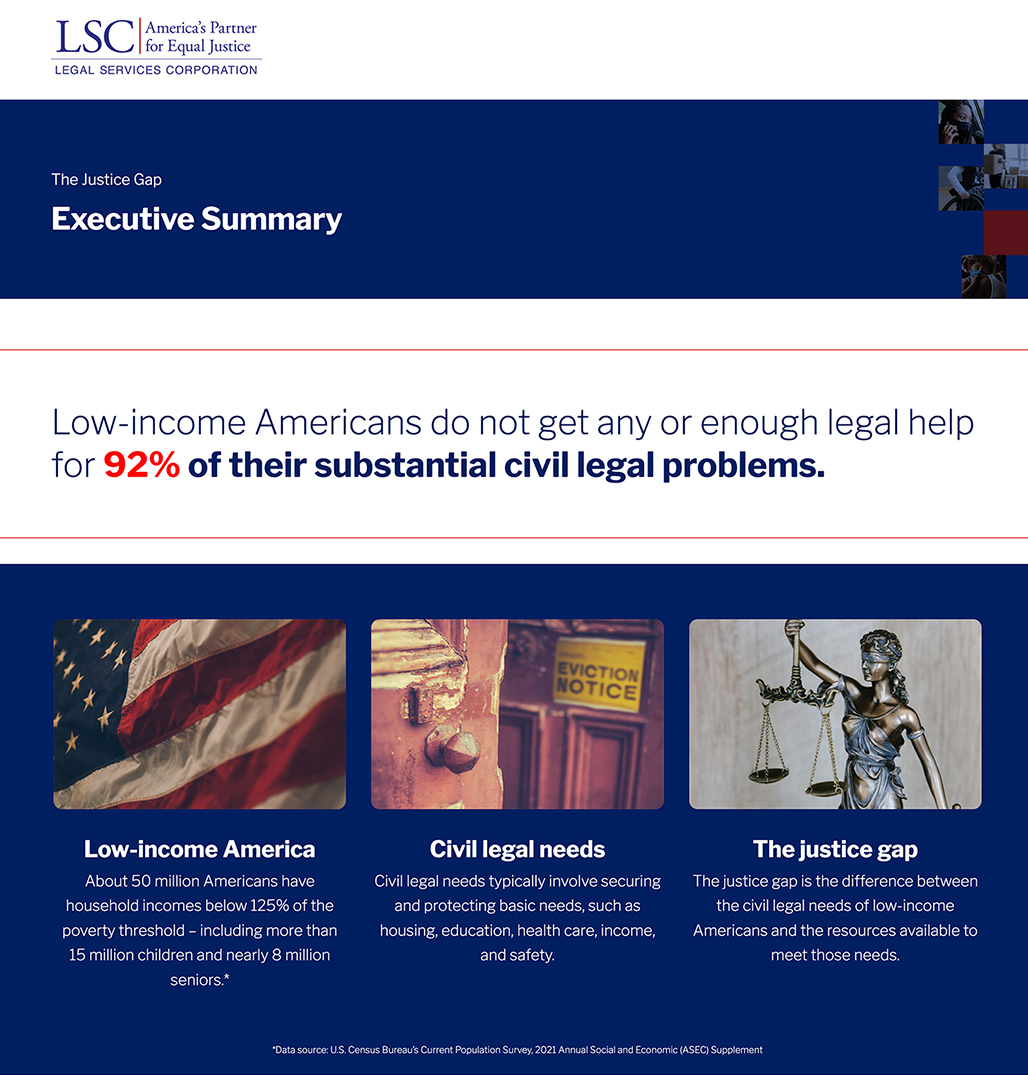
Legal Services Corporation’s 2022 Justice Gap Report provides a comprehensive look at the differences between the civil legal needs of low-income Americans and the resources available to meet those needs. LSC’s study found that low-income Americans do not get the help they need for 92% of their civil legal problems, even though 74% of low-income households face at least one civil legal issue in a single year.
The consequences that result from a lack of appropriate counsel can be life-altering – low-income Americans facing civil legal problems can lose their homes, children and healthcare, among other things. Help can be hard to access, so LSC is working to bridge this “justice gap” by providing pro bono civil legal aid for those in need. Find out more about LSC’s work to ensure equal justice for all by tuning in to the rest of the Justice Gap video series.
For more information on the Justice Gap, visit https://justicegap.lsc.gov/.
Also relevant/see:
.
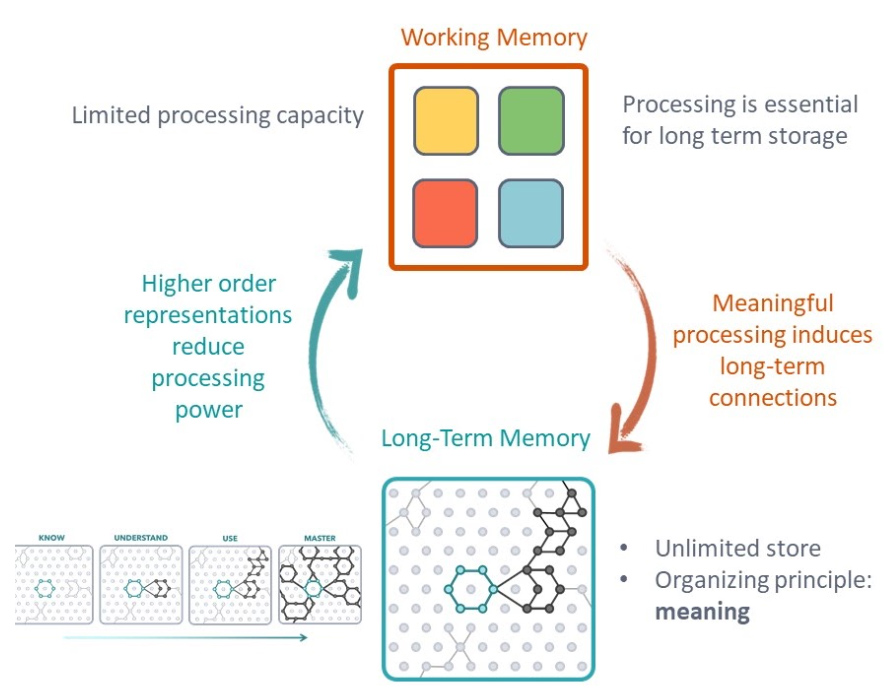
Learning in the brain — from sites.google.com by Efrat Furst; with thanks to 3-Star Learning Experiences for this resource
Excerpts:
Think of working memory as the reception counter to a huge archive.
To summarize, working memory processing resources are highly limited, and yet meaningful processing is essential for storage in long-term memory. It is therefore important to use these resources effectively when learning. There are many tested and proven effective teaching strategies, but a question that often comes up is when to apply each strategy for the best results?
Learning in the brain- not new, but newly updated:
long-term memory, working memory, interactions, and related strategies –https://t.co/mtxr74egz4 pic.twitter.com/oPC6sUYlXy— Efrat Furst (@EfratFurst) March 6, 2022
Table of Experts: Trends in Higher Education — from bizjournals.com by Holly Dolezalek. The Minneapolis-St. Paul Business Journal held a panel discussion recently about trends in higher education.
Excerpts (which focus on law schools/the legal profession):
Anthony Niedwiecki: The legal profession and legal education are very conservative. Covid showed they can, and we as institutions can, change. At Mitchell Hamline, we were the first law school in the country to offer a partially online JD degree. We’ve had that experience since 2015, which has really helped us through Covid. But I think the biggest thing I’ve learned from our students through this process is the need for flexibility. We thought students would want to go back into the classroom at some point and be around people. No! They voted by the classes they signed up for: They signed up for the classes that were online. Some students want to be on campus, some online. So we’ve had to develop our program around different types of modalities we may not have given any thought to before. The students in the online program range in age all the way up to 73 years old. They’ve been in careers, they’re accountants, they’re doctors, they’re health care professionals, elected officials. The other thing is office hours — students like online office hours because it’s convenient, and they can be in an office where other people are talking and learn from it.
The lesson I take from that, in some ways, even applying it to the law school, is having that partnership with people who want to hire students to make sure that they’re actually involved with the students. We’re finding they help mentor those students, help us make sure we have the right courses in place, and give them opportunities to do internships and externships. So we’ve been starting to partner with some national professional organizations that are attached to the law.
Forget About Setting Goals. Focus on This Instead. — from jamesclear.com by James Clear; with thanks to Robert Talbert on LinkedIn for this resource.
Excerpt:
The goal in any sport is to finish with the best score, but it would be ridiculous to spend the whole game staring at the scoreboard. The only way to actually win is to get better each day. In the words of three-time Super Bowl winner Bill Walsh, “The score takes care of itself.” The same is true for other areas of life. If you want better results, then forget about setting goals. Focus on your system instead.
What do I mean by this? Are goals completely useless? Of course not. Goals are good for setting a direction, but systems are best for making progress. A handful of problems arise when you spend too much time thinking about your goals and not enough time designing your systems.
Also from Robert Talbert out on LinkedIn see:
Government’s $18.5 million microcredential pilot aims to inject workers into sectors suffering from talent shortages — from smartcompany.com.au by Melissa Coade
Excerpt:
Jason Clare has announced $18.5 million for a higher education initiative to inject new skills into the workforce using small courses.
The government will fund higher-education institutions to develop microcredentials targeting national priority areas, which include teaching, engineering, health, and technology.
The Education Minister said the pilot would parachute workers with particular skills into industries that were “crying out” for talent.
4 Enter his gates with thanksgiving
and his courts with praise;
give thanks to him and praise his name.
5 For the Lord is good and his love endures forever;
his faithfulness continues through all generations.
From DSC:
Thank you for you LORD!!! And thank you for your patience with me, and for your mercy, forgiveness, and love (which it has taken me a long time to realize/embrace). Thank you for being active (most likely, mind-blowingly so).
Thank you for your creativity. Thank you for my/our senses of sight, hearing, taste, smell, and touch — and for all that our bodies can do. We truly are fearfully and wonderfully made. Thank you for our minds and our hearts — may they be inclined towards doing right by you and by others.
To Combat Learning Loss, Schools Need to Overhaul the Industrial-Age Paradigm — from educationnext.org by Frederick Hess
The decline in academic gains may be steeper, but it’s not a new phenomenon
Excerpt:
Why did movements over the last two decades to raise standards, improve educator quality, upgrade curriculum, enable choice, leverage assessment, instill accountability, and increase funding appear to have such a limited impact on college and career readiness?
One potential answer: Nearly all of these reforms left the basic tenets of the industrial-paradigm classroom intact.
The above article links to:

It’s Time to Rethink the ‘One Teacher, One Classroom’ Model — from edweek.org by Irene Chen & Stephanie Banchero
How to build a happier and more effective teaching force
Excerpt:
The last few years have taken a toll on our teachers. The COVID-19 pandemic, ongoing cultural divisions, and the Uvalde, Texas, massacre all weigh heavily. Morale is at an all-time low. Now is the time to rethink the teaching profession.
Addendum; also relevant/see: