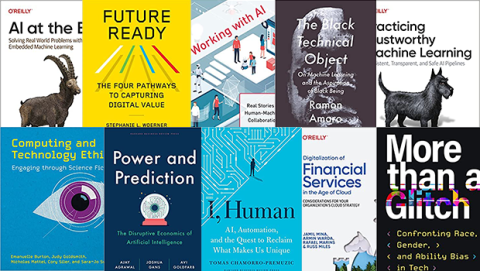
As we near the end of 2022, we’re taking a look back at the year, starting with the books we found most compelling, impressive, and inspirational. We’ve published dozens of articles on artist monographs and compendiums of broader topics across art and design and science and history over the last 12 months, and these are the 10 titles that impacted us most.
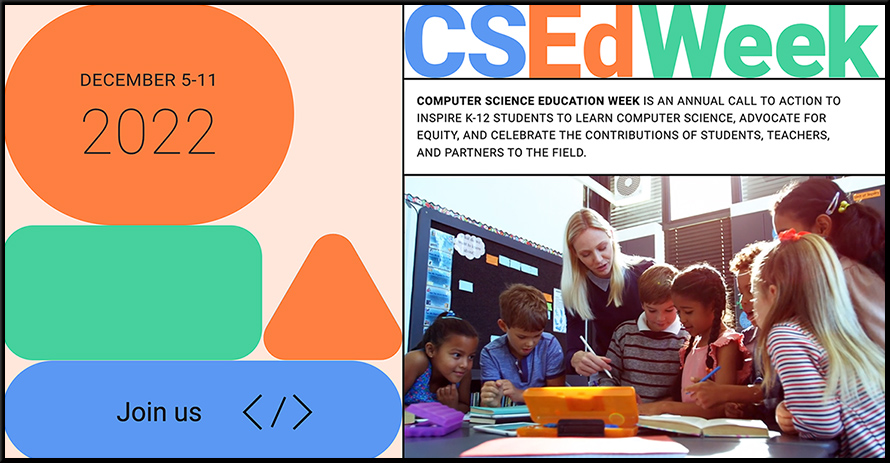
Resources for Computer Science Education Week (December 5-11, 2022) — with thanks to Mark Adams for these resources
Per Mark, here are a few resources that are intended to show students how computers can become part of their outside interests as well as in their future careers.
There is a misconception that interest-led learning is not appropriate for a high school education in your homeschool. The good news is that all the same benefits of interest-led learning still apply in the middle and high school years.
…
Think of an interest-led homeschool as one that functions more as a college than a high school. Just as a college student declares a major and the bulk of their study is in that topic area with supplemental general education, your interest-led high school can function the same way.
Allowing interests to guide the educational path you take in your high school has tremendous benefits including:
Less resistance
Less learner anxiety
Increased self-confidence in learning
More in-depth studies in topics of interest
Self-motivated learning that can be applied in later college and career settings
MADE Podcast on Branching Scenarios — from christytuckerlearning.com by Christy Tucker My interview for the MADE podcast on branching scenarios: when to use them, challenges, tools, planning, and getting started.
Excerpt:
MADE is the Media and Design in Education team for the University of Toronto. Inga Breede from this educational technology group recently interviewed me for their podcast. We talked about scenario-based learning and specifically about branching scenarios.
What we discussed
We covered several topics in our 20-minute conversation.
When should branching scenarios be used in learning experiences?
What are some of the challenges and limitations that designers typically come across when they’re building a branching scenario?
What are the key components to consider in the planning stage?
What are my favorite tools to use to build branching scenarios?
For learning designers who are interested in scenario building, where can they begin their journey of discovery?
6 You alone are the Lord. You made the heavens, even the highest heavens, and all their starry host, the earth and all that is on it, the seas and all that is in them. You give life to everything, and the multitudes of heaven worship you.
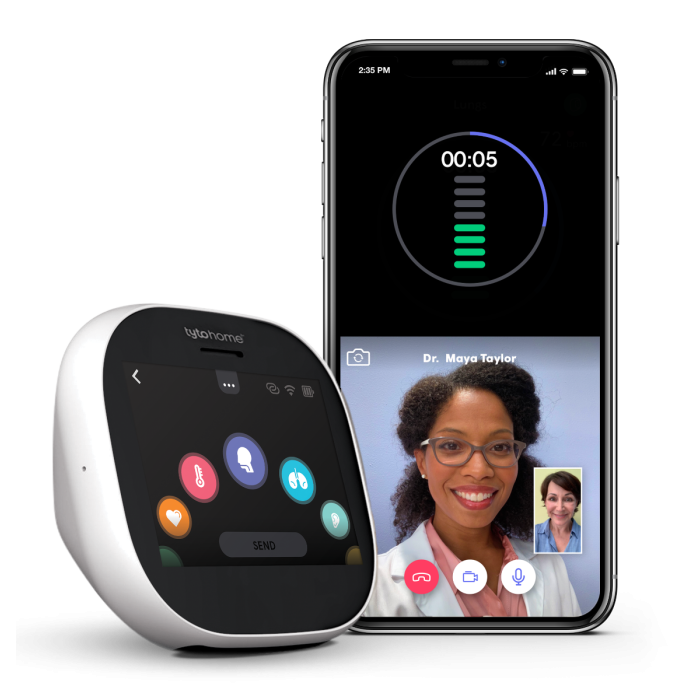
From DSC: I received an email the other day re: aTytoCare Exam Kit.It said (with some emphasis added by me):
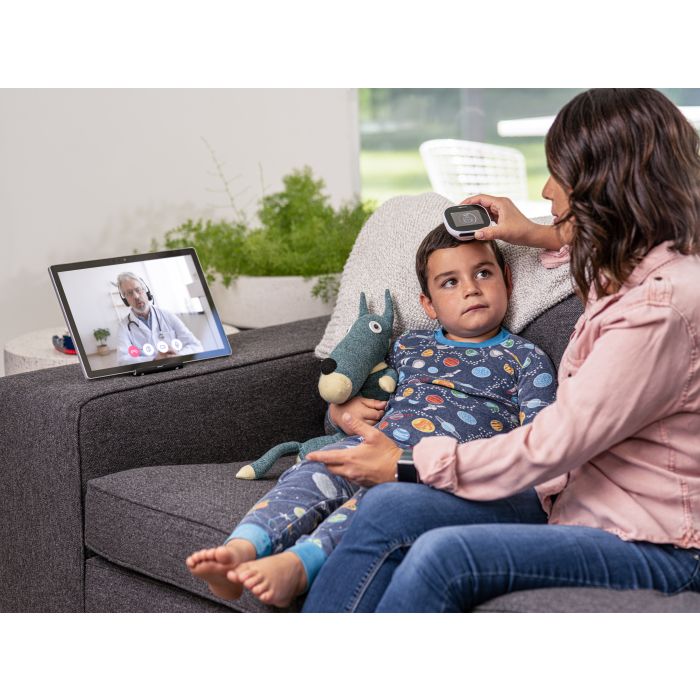
With a TytoCare Exam Kit connected to Spectrum Health’s 24/7 Virtual Urgent Care, you and your family can have peace of mind and a quick, accurate diagnosis and treatment plan whenever you need it without having to leave your home.
Your TytoCare Exam Kit will allow your provider to listen to your lungs, look inside your ears or throat, check your temperature, and more during a virtual visit.
Why TytoCare?
Convenience – With a TytoCare Exam Kit and our 24/7/365 On-Demand Virtual Urgent Care there is no drive, no waiting room, no waiting for an appointment.
Peace of Mind – Stop debating about whether symptoms are serious enough to do something about them.
Savings – Without the cost of gas or taking off work, you get the reliable exams and diagnosis you need. With a Virtual Urgent Care visit you’ll never pay more than $50. That’s cheaper than an in-person urgent care visit, but the same level of care.
From DSC:
It made me reflect on what #telehealth has morphed into these days. Then it made me wonder (again), what #telelegal might become in the next few years…? Hmmm. I hope the legal field can learn from the healthcare industry. It could likely bring more access to justice (#A2J), increased productivity (for several of the parties involved), as well as convenience, peace of mind, and cost savings.
Female students show a stronger preference for contributing to remote classes via text chat than their male counterparts, according to peer-reviewed research published in PLOS One, an open-access journal.
Researchers also found all students were more likely to use the chat function to support or amplify their peers’ comments than to diminish them.
Given these findings, the researchers suggested incorporating text chats into class discussions could boost female participation in large introductory science classrooms, where women are less likely to participate than men.
Drew Builds Stuff has an office in the basement of his parents’ house. Because of its subterranean location, it doesn’t get much light. To brighten things up, he built a window wall out of three 75? 4K TVs, resulting in a 12-foot diagonal image. Since he can load up any video footage, he can pretend to be anywhere on Earth.
From DSC: Perhaps some ideas here for learning spaces!
From the 45+ #books that I’ve read in last 2 years here are my top 10 recommendations for #learningdesigners or anyone in #learninganddevelopment
Speaking of recommended books (but from a more technical perspective this time), also see:
10 must-read tech books for 2023 — from enterprisersproject.com by Katie Sanders (Editorial Team) Get new thinking on the technologies of tomorrow – from AI to cloud and edge – and the related challenges for leaders
A survey of National Education Association members at the beginning of the year revealed an unsettling truth: More than half of the respondents said they were looking for a way out. That’s an astounding number of unhappy teachers. If they all quit, it would leave millions of students in the lurch.
But were these just empty threats? At the start of this school year, we spoke to over 50 educators in almost 20 states to find out. The picture they painted was far bleaker than we could have imagined: Empty classrooms, kids in crisis, and teachers who can’t survive another day on the job — that’s the reality of American education today.
And from the UK, see the following: The word OUCH! comes to my mind here — for this item from the UK and from the above item from the US. The politicians are going to need to back off and let the teachers do their jobs. Or we may not have many people who want to go into teaching anymore. The current situation is not only bad for the teachers, it’s bad for the youth/students.
“To have this many workers on strike is really something new in higher education,” says Rebecca Givan, an associate professor of labor studies at Rutgers, who is also president of the union for graduate workers and faculty at her university. “The willingness of these workers to bring their campuses to a standstill is demonstrating that the current model of higher education can’t continue, and that the current system really rests on extremely underpaid labor.”
…
The striking workers argue that their current pay makes it challenging to afford housing near their universities, in a state with one of the highest costs of living in the country. Jaime, the Ph.D. candidate, says he makes $27,000 per year as a teaching fellow and pays $1,200 in monthly rent for an apartment he shares with two roommates. (Median rent in the Los Angeles metropolitan area is about $3,000, according to Realtor.com.) “We are the ones who do the majority of teaching and research,” he says. “But nevertheless, the university doesn’t pay us enough to live where we work.”
The strike is shining a spotlight on a longstanding problem within higher education: Today, tenured, full-time faculty members make up a smaller percentage of university employees than they did 50 years ago, in part due to the financial pressures facing universities amid funding cuts. The proportion of other university employees, who receive less job security and lower pay, “has grown tremendously,” says Tim Cain, an associate professor at the University of Georgia’s Institute of Higher Education, who studies campus activism and unionization.
“There’s such stratification between the tenured full professor and a graduate student employee or a postdoc or a tutor,” says Cain. “They’re doing a great deal of the work, and the work that they’re doing in the classroom is often very similar to the work of others who are getting paid substantially more.”
OpenAI has built the best Minecraft-playing bot yet by making it watch 70,000 hours of video of people playing the popular computer game. It showcases a powerful new technique that could be used to train machines to carry out a wide range of tasks by binging on sites like YouTube, a vast and untapped source of training data.
The Minecraft AI learned to perform complicated sequences of keyboard and mouse clicks to complete tasks in the game, such as chopping down trees and crafting tools. It’s the first bot that can craft so-called diamond tools, a task that typically takes good human players 20 minutes of high-speed clicking—or around 24,000 actions.
The result is a breakthrough for a technique known as imitation learning, in which neural networks are trained to perform tasks by watching humans do them.
…
The team’s approach, called Video Pre-Training (VPT), gets around the bottleneck in imitation learning by training another neural network to label videos automatically.
“Most language learning software can help with the beginning part of learning basic vocabulary and grammar, but gaining any degree of fluency requires speaking out loud in an interactive environment,” Zwick told TechCrunch in an email interview. “To date, the only way people can get that sort of practice is through human tutors, which can also be expensive, difficult and intimidating.”
Speak’s solution is a collection of interactive speaking experiences that allow learners to practice conversing in English. Through the platform, users can hold open-ended conversations with an “AI tutor” on a range of topics while receiving feedback on their pronunciation, grammar and vocabulary.
It’s one of the top education apps in Korea on the iOS App Store, with over 15 million lessons started annually, 100,000 active subscribers and “double-digit million” annual recurring revenue.
If you last checked in on AI image makers a month ago & thought “that is a fun toy, but is far from useful…” Well, in just the last week or so two of the major AI systems updated.
You can now generate a solid image in one try. For example, “otter on a plane using wifi” 1st try: pic.twitter.com/DhiYeVMEEV
So, is this a cool development that will become a fun tool for many of us to play around with in the future? Sure. Will people use this in their work? Possibly. Will it disrupt artists across the board? Unlikely. There might be a few places where really generic artwork is the norm and the people that were paid very little to crank them out will be paid very little to input prompts. Look, PhotoShop and asset libraries made creating company logos very, very easy a long time ago. But people still don’t want to take the 30 minutes it takes to put one together, because thinking through all the options is not their thing. You still have to think through those options to enter an AI prompt. And people just want to leave that part to the artists. The same thing was true about the printing press. Hundreds of years of innovation has taught us that the hard part of the creation of art is the human coming up with the ideas, not the tools that create the art.
A quick comment from DSC: Possibly, at least in some cases. But I’ve seen enough home-grown, poorly-designed graphics and logos to make me wonder if that will be the case.
How to Teach With Deep Fake Technology — from techlearning.com by Erik Ofgang Despite the scary headlines, deep fake technology can be a powerful teaching tool
Excerpt:
The very concept of teaching with deep fake technology may be unsettling to some. After all, deep fake technology, which utilizes AI and machine learning and can alter videos and animate photographs in a manner that appears realistic, has frequently been covered in a negative light. The technology can be used to violate privacy and create fake videos of real people.
However, while these potential abuses of the technology are real and concerning that doesn’t mean we should turn a blind eye to the technology’s potential when using it responsibly, says Jaime Donally, a well-known immersive learning expert.
From DSC: I’m still not sure about this one…but I’ll try to be open to the possibilities here.
Recently, we spoke with three more participants of the AI Explorations program to learn about its ongoing impact in K-12 classrooms. Here, they share how the program is helping their districts implement AI curriculum with an eye toward equity in the classroom.
A hitherto stealth legal AI startup emerged from the shadows today with news via TechCrunch that it has raised $5 million in funding led by the startup fund of OpenAI, the company that developed advanced neural network AI systems such as GPT-3 and DALL-E 2.
The startup, called Harvey, will build on the GPT-3 technology to enable lawyers to create legal documents or perform legal research by providing simple instructions using natural language.
The company was founded by Winston Weinberg, formerly an associate at law firm O’Melveny & Myers, and Gabriel Pereyra, formerly a research scientist at DeepMind and most recently a machine learning engineer at Meta AI.
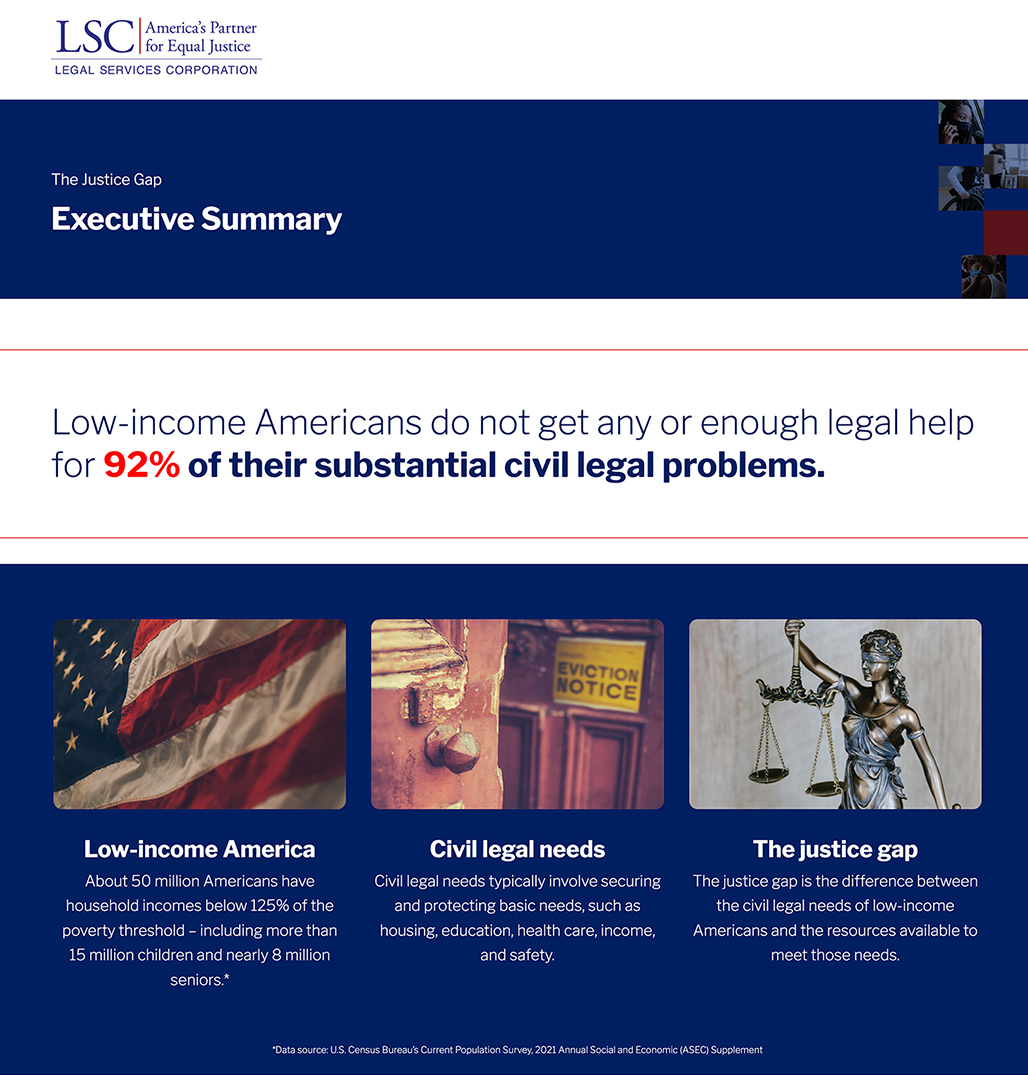
The Justice Gap: The Unmet Civil Legal Needs of Low-income Americans — from the Legal Services Corporation
Legal Services Corporation’s 2022 Justice Gap Report provides a comprehensive look at the differences between the civil legal needs of low-income Americans and the resources available to meet those needs. LSC’s study found that low-income Americans do not get the help they need for 92% of their civil legal problems, even though 74% of low-income households face at least one civil legal issue in a single year.
The consequences that result from a lack of appropriate counsel can be life-altering – low-income Americans facing civil legal problems can lose their homes, children and healthcare, among other things. Help can be hard to access, so LSC is working to bridge this “justice gap” by providing pro bono civil legal aid for those in need. Find out more about LSC’s work to ensure equal justice for all by tuning in to the rest of the Justice Gap video series.
Thanks for dropping by my Learning Ecosystems blog!
My name is Daniel Christian and this blog seeks to cover the teaching and learning environments within the K-12 (including homeschooling, learning pods/micro-schools), collegiate, and corporate training spaces -- whether those environments be face-to-face, blended, hyflex, or 100% online.
Just as the organizations that we work for have their own learning ecosystems, each of us has our own learning ecosystem. We need to be very intentional about enhancing those learning ecosystems -- as we all need to be lifelong learners in order to remain marketable and employed. It's no longer about running sprints (i.e., getting a 4-year degree or going to a vocational school and then calling it quits), but rather, we are all running marathons now (i.e., we are into lifelong learning these days).