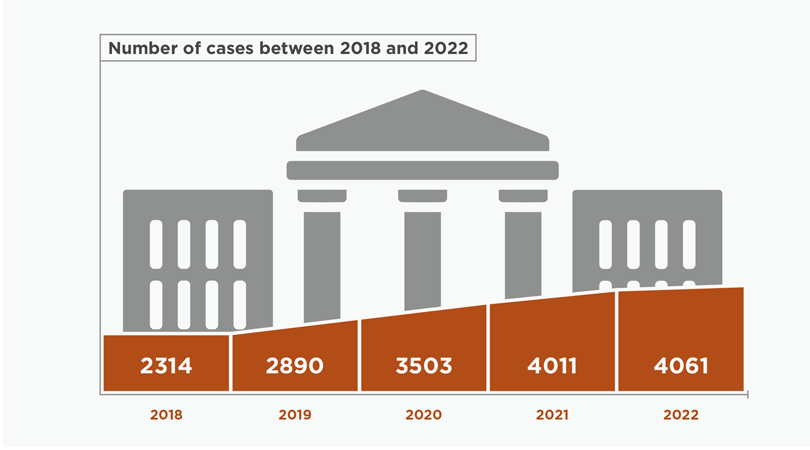
94% of Consumers are Satisfied with Virtual Primary Care — from hitconsultant.net

Excerpt from What You Should Know (emphasis DSC):

  • For people who have used virtual primary care, the vast majority of them (94%) are satisfied with their experience, and nearly four in five (79%) say it has allowed them to take charge of their health. The study included findings around familiarity and experience with virtual primary care, virtual primary care and chronic conditions, current health and practices, and more.
  • As digital health technology continues to advance and the healthcare industry evolves, many Americans want the ability to utilize more digital methods when it comes to managing their health, according to a study recently released by Elevance Health — formerly Anthem, Inc. Elevance Health commissioned to conduct an online study of over 5,000 US adults age 18+ around virtual primary care.
 

  • The cliffs of the Carina Nebula (NGC 3324).
  • The Southern Ring Nebula
  • Cluster of Galaxies SMACS 0723
  • Stephan’s Quintet
 

GPT Takes the Bar Exam — from papers.ssrn.com by Michael James Bommarito and Daniel Martin Katz; with thanks to Gabe Teninbaum for his tweet on this

Excerpt from the Abstract (emphasis DSC):

While our ability to interpret these results is limited by nascent scientific understanding of LLMs and the proprietary nature of GPT, we believe that these results strongly suggest that an LLM will pass the MBE component of the Bar Exam in the near future.

LLM — Large Language Model
MBE — Multistate Bar Examination


From DSC:
For me, I wish politicians and legislators would stay out of the way and let public and private educators make the decisions. But if any politician is about to vote on significant education-related policies, laws, etc. — I would like to suggest that society require them to either:

  • teach a K12-based class for at least one month
    or
  • be in the classroom for the entire day to observe — and do this for at least one month 

Perhaps we would have far less standardized testing. Perhaps we would have far more joy and wonder — for the teachers as well as for the students. Perhaps lifelong learning — and the love of learning — would get the wind in its sails that it so desperately needs.
.


From DSC:
Along these lines of enjoyment in everyday things, could this type of thing happen more within education?


From DSC:
For those seeking a doctorate in education: Here’s a potential topic for your doctoral thesis.

Homelessness is a huge issue. It’s a complex issue, with many layers, variables, and causes to it. I once heard Oprah Winfrey say that we are all one to two steps away from being homeless, and I agree with that.

But as I was passing a homeless person asking for money on the exit ramp from a local highway the other day, I wondered what place, if any, education played (or didn’t play) in people’s lives. Was/is there any common denominator or set of experiences with their education that we can look at? If so, can we use design thinking to get at some of those root issues? For examples:

  • Was school easy for them? Hard for them?
  • A source of joy for them? A source of pain for them?
  • Were they engaged or disengaged?
  • Were they able to pursue their interests and passions?

It might turn out that education had little to do with things. It could have been health issues, broken relationships, systemic issues, the loss of a job, addictions, intergenerational “chains,” or many other things. 

But it’s worth someone researching this. Such studies and interviews could turn up some helpful directions and steps to take for our future.

#homelessness #society #education #passions #participation
#research #educationreform #K12 #lifelonglearning


Some Day In Higher Education: Predictions And Possibilities For A Jolly Academic New Year — from forbes.com by Ann Kirschner

Excerpt:

  • Partnering with the private sector. Some university will have a clear strategy and adequate staff to develop strategic partnerships with key regional economic players. These would include internship/apprenticeship student opportunities and curricular initiatives including part-time teaching roles for professors of practice in rapidly changing technologies.
  • Looking for presidential talent in new places. Some university will vet its new president for skills and experience as leaders of complex organizations in an era of disruption, with a Ph.D. as a optional nice-to-have. There just aren’t enough good ex-provosts and deans to go around.
  • An educated board of trustees. Some university will provide its trustees with a realistic understanding of the highly competitive and complex world of higher education today. Nostalgia for the good old days and a roomful of well-meaning financial experts can strangle innovation at a time when the university should be the leader in solving the world’s challenges, starting with the exploding need for advanced, scalable, affordable education.

Redefining the professoriate. Some university will reject the institutional shame of relying on overworked and underpaid adjunct faculty and on graduate students who are headed for those same dead-end adjunct positions. Some university will evolve the tenure process into one that celebrates and supports faculty as innovative teachers and rewards their critical role in student career development and service to the university.


What’s next for AI — from technologyreview.com by Melissa Heikkilä and Will Douglas Heaven
Get a head start with our four big bets for 2023.

Excerpts:

But take the conversational skills of ChatGPT and mix them up with image manipulation in a single model and you’d get something a lot more general-purpose and powerful. Imagine being able to ask a chatbot what’s in an image, or asking it to generate an image, and have these interactions be part of a conversation so that you can refine the results more naturally than is possible with DALL-E.

10 AI Predictions For 2023 — from forbes.com by Rob Toews

Excerpts (emphasis DSC):

  1. GPT-4 will be released in the next couple months—and yes, it will be a big deal.
  2. We are going to start running out of data to train large language models.
  3. For the first time, some members of the general public will begin using fully driverless cars as their day-to-day mode of transportation.
  4. Midjourney will raise venture capital funding.
  5. Search will change more in 2023 than it has since Google went mainstream in the early 2000s.

AI Trends For 2023: Industry Experts (And ChatGPT AI) Make Their Predictions — from forbes.com by Ganes Kesari

Excerpt:

To understand the top AI trends, I asked industry leaders and academic experts five questions. It’s the age of human-machine collaboration, so what better way to demonstrate this than by asking AI software about the 2023 AI trends it’s excited about? I did that too.

    1. What do you think was the biggest achievement in the AI space in 2022?
    2. What’s the most exciting AI trend that you look forward to materializing in 2023?
    3. What’s a fad in this space that you wish would go away next year?
    4. To get value from AI, what’s one thing that leaders can start doing today that doesn’t take big effort or money?
    5. What’s one thing that leaders should stop doing immediately to realize benefits from AI?

Is A.I. the Future of Test Prep? — from nytimes.com by Craig S. Smith (NOTE: Paywall)

Excerpt:

Riiid is one of a handful of companies that believe that A.I.’s algorithms are perfectly suited to track student performance and give individualized attention.

“Education is a complex field deeply related to cognition, motivation, peer interaction, etc.,” Mr. Jang wrote in an email. “We draw insights from learning science, cognitive biology, data science, and other related areas of research for an iterative experimentation process that is challenging and time consuming — that’s why there are only a few players in the market.”

Artificial intelligence predictions 2023 — from information-age.com by Tim Adler
2023 could be the year that artificial intelligence moves from the fringes into the mainstream, as AI becomes widely adopted by healthcare, travel and banking. Five experts give their predictions

Excerpt:

Worldwide spending on artificial intelligence will hit half a billion dollars this year, according to IDC. Five artificial intelligence experts give Information Age their predictions as to how adoption of AI will accelerate in 2023.

.


The Art of Active Listening | The Harvard Business Review Guide — from Harvard Business Review out on YouTube.com by Amy Gallo; with thanks to Roberto Ferraro for this resource


From DSC:
The following article made me again wonder about the place of technology in the access to justice realm.


Legal Tech Startup Lexion Tasks GPT-3 to Help Draft Contracts in Microsoft Word — from voicebot.ai by Eric Hal Schwartz

Excerpt:

Lawyers can ask GPT-3 to help write contracts in Microsoft Word thanks to legal tech startup Lexion’s new AI Contract Assist Word plugin. The new tool offers assistance in drafting and negotiating terms, as well as summarizing the contract for those not versed in legal language and marks the growing interest in applying generative AI within the legal profession.

Lexion’s AI Contract Assistant is designed to compose, adjust, and explain contracts with an eye toward streamlining their creation and approval. Lawyers with the Word plugin can write a prompt describing the goal of a contract clause, and the AI will generate one with appropriate language. 


From DSC:
Our son recently took a 3-day intensive course on the Business of Acting. It was offered by the folks at “My College Audition” — and importantly, the course was not offered by the university where he is currently working on a BFA in Acting. By the way, aspiring performing arts students may find this site very beneficial/helpful as well. (Example blog posting here.)
mycollegeaudition.com/

The course was actually three hours of learning on a Sunday night, a Monday night, and a Tuesday night from 6-9pm.
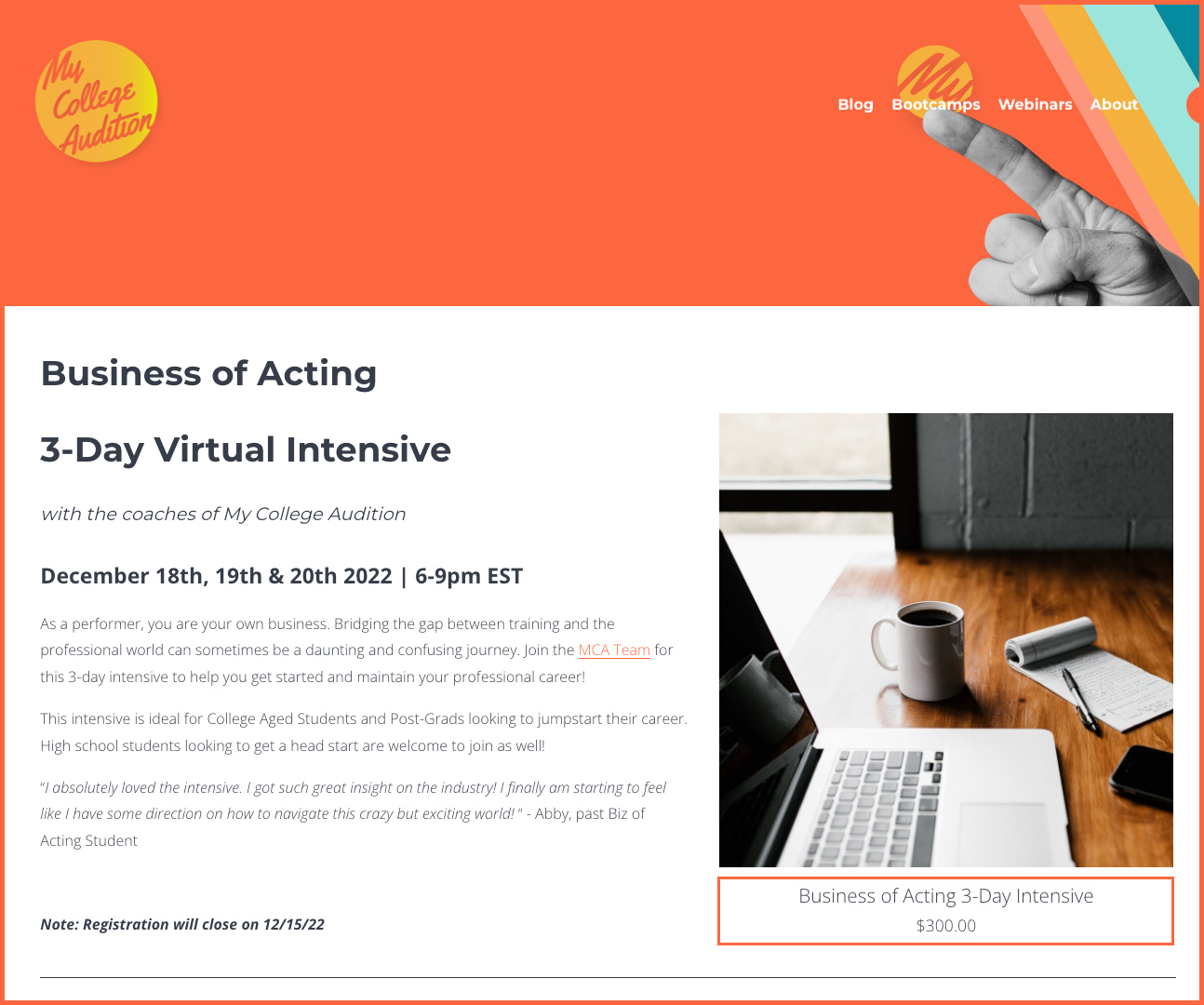
The business of acting -- a 3-day virtual intensive course from mycollegeaudition.com

He learned things that he mentioned have not been taught in his undergrad program (at least not so far). When I asked him what he liked most about the course, he said:

  • These people are out there doing this (DSC insert: To me, this sounds like the use of adjunct faculty in higher ed)
  • There were 9 speakers in the 9 hours of classtime
  • They relayed plenty of resources that were very helpful and practical. He’s looking forward to pursuing these leads further.

He didn’t like that there were no discussion avenues/forums available. And as a paying parent, I didn’t like that we had to pay for yet another course and content that he wasn’t getting at his university. It may be that the university that he’s studying at will offer such a course later in the curriculum. But after two years of college experience, he hasn’t come across anything this practical and he is eagerly seeking out this type of practical/future-focused information. In fact, it’s critical to him staying with acting…or not. He needs this information sooner in his program.

It made me reflect on the place of adjunct faculty within higher education — folks who are out there “doing” what they are teaching about. They tend to be more up-to-date in their real-world knowledge. Sabbaticals are helpful in this regard for full-time faculty, but they don’t come around nearly enough to keep one’s practical, career-oriented knowledgebase up-to-date.

Again, this dilemma is to be expected, given our current higher education learning ecosystem. Faculties’ plates are full. They don’t have time to pursue this kind of endeavor in addition to their daily responsibilities. Staff aren’t able to be out there “doing” these things either.

This brings me back to design thinking. We’ve got to come up with better ways of offering student-centered education, programming, and content/resources.

My son walked away shaking his head a bit regarding his current university. At a time when students and families are questioning the return on their investments in traditional institutions of higher education, this issue needs to be taken very seriously. 


Also potentially relevant for some of the performing arts students out there:


Master of Lettering [Biernat]

Master of Lettering — from theawesomer.com by Tomasz Biernat

Also fun/see:

Everyday Situations Take an Amusing Turn in Toon Joosen’s Clever Collages — from thisiscolossal.com by Grace Ebert and Toon Joosen


For to us a child is born,
    to us a son is given,
    and the government will be on his shoulders.
And he will be called
    Wonderful Counselor, Mighty God,
    Everlasting Father, Prince of Peace.


Top challenges for L&D leaders in 2023 — from chieflearningofficer.com by Ken Blanchard

Excerpts:

From an HR perspective, survey respondents reported that the biggest challenges they expect as HR and L&D leaders in 2023, in ranked order, are:

  1. Capacity and resources
  2. Turnover and attrition
  3. Improving engagement and experience
  4. Adapting to a hybrid culture

From DSC:
I wonder if many in higher education might respond similarly…? Perhaps some even in the K-12 space as well.

Also see:

This posting from William Kennedy-Long (re: instructional design) out on LinkedIn:

Excerpt (emphasis DSC):

I read Clark Quinn’s outstanding article which I highly recommend reading, entitled Performance Focus For Deeper Learning Design.

Immediately, I was captivated by what it and he had to say, such that I wrote a short piece to follow up on it.

What are on-ramps? Here’s how to build them for all adult learners to reach their academic potential — from chieflearningofficer.com by Michelle Westfort

Excerpt:

This may come as a surprise — adult learners over 25 make up nearly 40 percent of today’s U.S. undergraduate population at colleges and universities. However, these learners often find themselves treated as outliers by institutions designed for traditional students, which leads to poorer learner outcomes and, as a result, barriers to social mobility.

To ensure adult learners can meaningfully participate in your workforce education program, organizations can build on-ramps capable of accommodating all learners.

On-ramps provide employees access to high-quality academic programs, enable them to continue their educational journey toward a degree or certification by meeting them where they are, and hold a key role in paving the way for successful learner outcomes.

Leveraging 2022’s future-forward lessons to improve L&D — from chieflearningofficer.com by Keith Keating

Excerpts:

Top 4 future-forward lessons from 2022:

  1. The world changes rapidly — prepare for it
  2. Anticipate trends, events and the skills you’ll need in the future
  3. Continuously adopt new capabilities and expand your knowledge
  4. Use tech to your advantage
 

Local private colleges slash tuition prices as enrollment declines — from news.yahoo.com by Jason Law

Excerpts:

“By reducing the published price, we certainly would hope that more people would apply,” Alexander said. “If they see a sticker price of $60,000 or more, there’s research out there that says 60% of them don’t take the next step to apply or figure out if they can afford it.”

One of the most frustrating aspects for consumers, the Hechinger Report found, is the difference between a school’s sticker price—its published tuition cost–and the actual price a student will pay after scholarships and institutional aid are subtracted.

“Many families are not aware that some students do not pay the full sticker price for college. Only 18% of college-bound families agree that the amount families actually pay is lower than the price advertised by the school,” a 2022 Sallie Mae College Confidence report found.

Student Loan Debt: 2022 Statistics and Outlook — from investopedia.com by Daniel Kurt, Thomas Brock, and Amanda Jackson; with thanks to Ray Schroeder for posting this on LinkedIn
The numbers are staggering—and still on the rise

KEY TAKEAWAYS

  • The total amount of outstanding student loan debt in the United States is $1.77 trillion.
  • Soaring college costs and pressure to compete in the job marketplace are big factors for student loan debt.
  • Student loans are the most common form of educational debt, followed by credit cards and other types of credit.
  • Delinquency statistics may be understated because of the relief provided to student loan borrowers by the White House.
  • Borrowers who don’t complete their degrees are more likely to default.

Congress to Boost Pell Grant by $500 — from insidehighered.com by Katherine Knott
While the draft spending plan for fiscal year 2023 provides more funding for several programs, higher education groups and advocates had hoped for higher increases.


© 2025 | Daniel Christian