AI, Instructional Design, and OER — from opencontent.org by David Wiley

Excerpt:

LLMs Will Make Creating the Content Infrastructure Significantly Easier, Faster, and Cheaper
LLMs will dramatically increase the speed of creating the informational resources that comprise the content infrastructure. Of course the drafts of these informational resources will need to be reviewed and improvements will need to be made – just as is the case with all first drafts – to insure accuracy and timeliness. But it appears that LLMs can get us 80% or so of the way to reasonable first drafts orders of magnitude faster, eliminating the majority of the expense involved in this part of the process. Here’s an example of what I’m talking about. Imagine you’re a SME who has been tasked with writing the content for an introductory economics textbook. (The following examples are from ChatGPT.)

Speaking of ID and higher education, also relevant/see:


The academic career is broken  — from chronicle.com by Hannah Leffingwell

Excerpt:

We are in the midst of a crisis in academe, to be sure, but it’s not an economic crisis. It’s a crisis of faith. The question is not just whether our institutions pay faculty fairly, but whether any wage is worth the subservience and sacrifice that modern higher ed requires. Too often, colleges perceive themselves as voluntary, meritocratic institutions dedicated to a “higher” moral purpose. Or, as one of the characters in Babel puts it: “The professors like to pretend that the tower is a refuge for pure knowledge, that it sits above the mundane concerns of business and commerce, but it does not.”

Have these strikes solved the central paradox of academe: a capitalist institution that claims it is above capitalism while exploiting students, faculty, and staff for financial gain? No, they have not.

It gives me no pleasure to say that the system I have dedicated my entire life to is broken — that it needs to be rebuilt from the ground up.

Also related to careers and higher education, see:

36% of higher ed supervisors are looking for other work, study finds — from highereddive.com by Laura Spitalniak

Excerpt:

Over a third of higher education supervisors, 36%, are likely to look for a new job in the next year, according to a new survey from the College and University Professional Association for Human Resources, CUPA-HR. And only 40% said they were interested in finding employment opportunities at their current institution.


Infinite AI Interns for Everybody — from wired.com by Matt Clifford; via Sam DeBrule
These assistants won’t just ease the workload, they’ll unleash a wave of entrepreneurship.

Excerpt:

Excitingly, though, there’s also a new generation of startups that are demonstrating that you don’t need a billion-dollar budget to get to the cutting edge of AI. Take Midjourney or Stability AI, applications which produce results that rival DALL-E, or Causaly (disclosure: I’m an investor), which allows scientists to find new causal relationships in life sciences with natural language questions. Then there is a growing list of new AI startups with impressive backers and more general ambitions, like Anthropic (an AI safety and research firm), Conjecture (which seeks to keep damaging factors such as racial bias out of AI), and Keen Technologies, which was founded by computer science legend John Carmack.

Just as the advent of the internet gave every startup a vastly scalable distribution engine, the era of AI superpowers will give every startup a vastly scalable production engine. 


“Exhausted majority” wants to rethink K-12 education— from axios.com by Stef W. Kight; via GSV

Excerpt:

Americans have drastically shifted some priorities on K-12 education since the start of COVID, a new study by Populace reveals.

Why it matters: There’s new pressure to change the existing model. Preparing students for college has fallen from 10th highest priority to 47th.

  • The study demonstrates what Populace co-founder Todd Rose called an “exhausted majority” who just wants kids to learn to think for themselves and find a career “with meaning and purpose.”

The big picture: Americans have a warped understanding of what the majority prioritizes in education.

  • U.S. adults overestimate the public’s desire for teachers to prepare kids for college, internships and only the highest-paying jobs. They also overestimate support for standardized processes and teaching social norms.
  • They underestimate preferences to allow students to learn at their own pace and according to their own interests and for kids to come away with more holistic, practical skills.

Also relevant/see:

New Survey: America’s Families are Rethinking K-12 Education — from schoolchoiceweek.com by the National School Choice Week Team

Excerpt:

K-12 education in America is experiencing a once-in-a-generation transformation, as tens of millions of parents rethink their children’s education and make crucial decisions about how and where their children learn. From exploring their school choice options to expressing interest in nontraditional learning models, parents are eager to find better or supplementary learning environments for their children. Parents don’t see this a dichotomous; a majority of them are open to change even as two thirds of all parents (67.9 percent) remain largely satisfied with the schools their children attend.

What do we mean by rethinking? Parents choosing new schools, parents considering options more frequently, and parents seeking to round out their children’s education by thinking outside the box and exploring new or nontraditional learning options.

On a related note see:


Why, LORD, do you stand far off? Why do you hide yourself in times of trouble?

From DSC:
I get this piece of scripture…big time.

In the early fall of my senior year in college, I wanted to be sure that the LORD wasn’t a hoax. I didn’t want to commit the rest of my life to Him if He wasn’t real. From that point on, until a Maundy Thursday service at the Alice Millar Chapel on NU’s campus the next spring, I felt that the LORD was 10,000 miles away from me. I couldn’t hear Him or sense Him. I won’t go into details, but it turned out that the LORD was definitely at work. He was changing my identity (though it felt more like a ripping away of my identity) from an athlete to one of His adopted children. I’m glad He was at work, but I wouldn’t want to relive that year ever again.


How ChatGPT3 Impacts the Future of L&D in an AI World — from learningguild.com by Markus Bernhardt and Clark Quinn

Excerpt:

Recent advances in artificial intelligence (AI) are promising great things for learning. The potential here is impressive, but there also exist many questions and insecurities around deploying AI technology for learning: What can AI do? Where is it best utilized? What are the limits? And particularly: What does that leave for the instructional designer and other human roles in learning, such as coaching and training?

We want to suggest that these developments are for the benefit of everyone—from organizational development strategy devised in the C-suite, via content creation/curation by instructional designers, right through to the learners, as well as coaches and trainers who work with the learners.

Also somewhat relevant/see:


Also relevant/see:


From DSC:
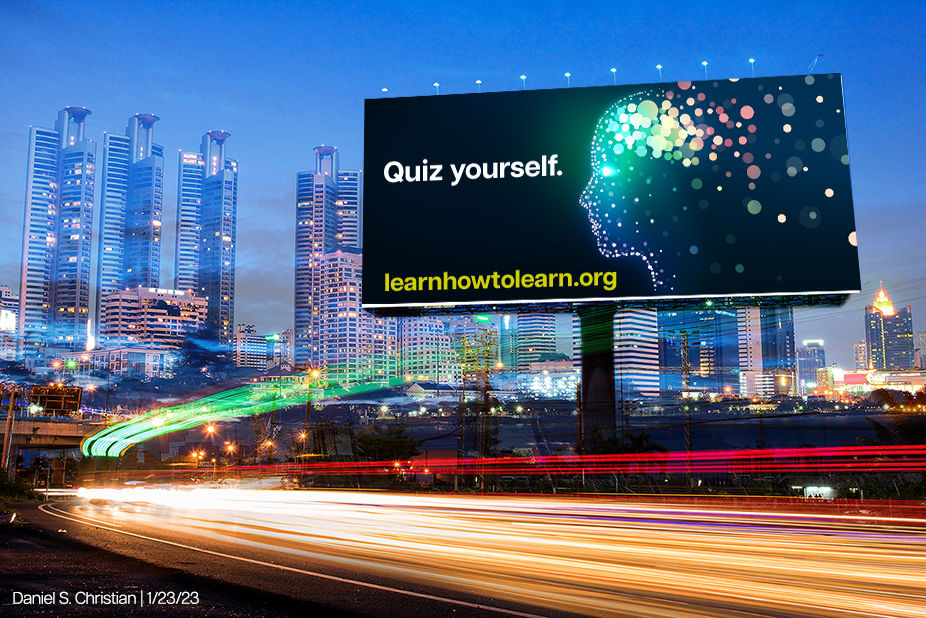
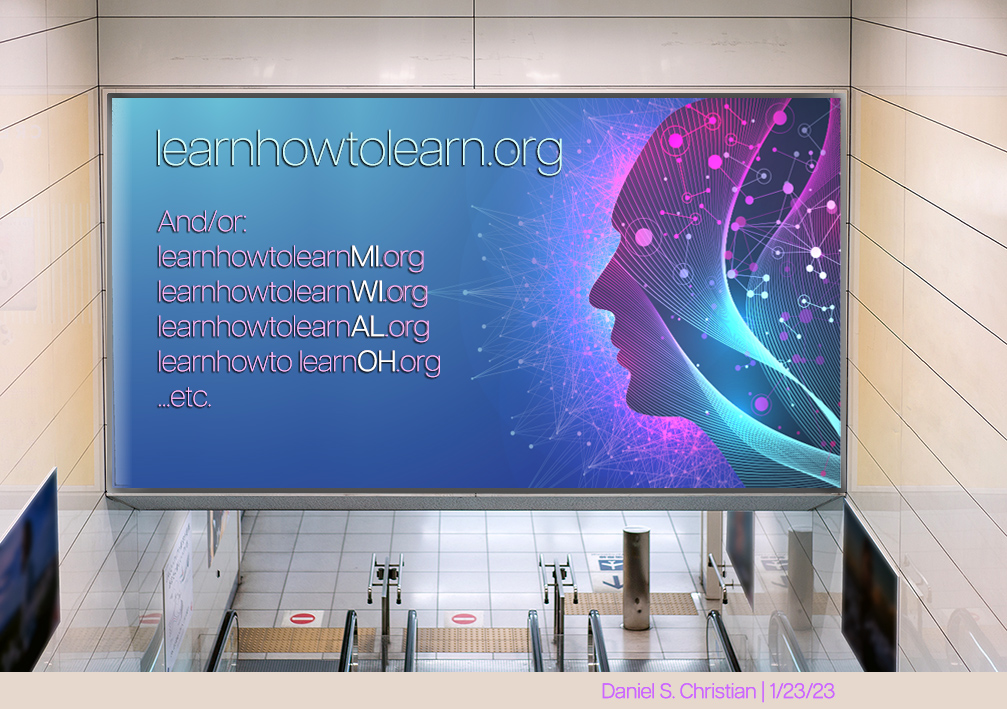
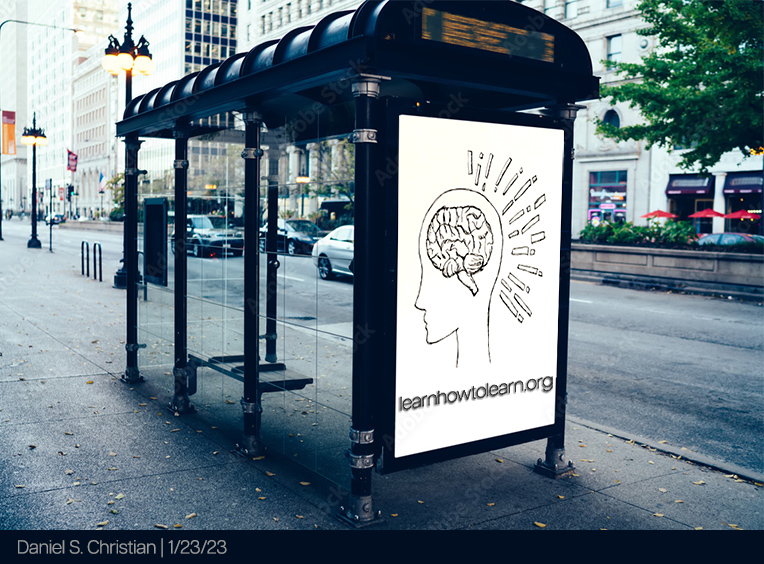
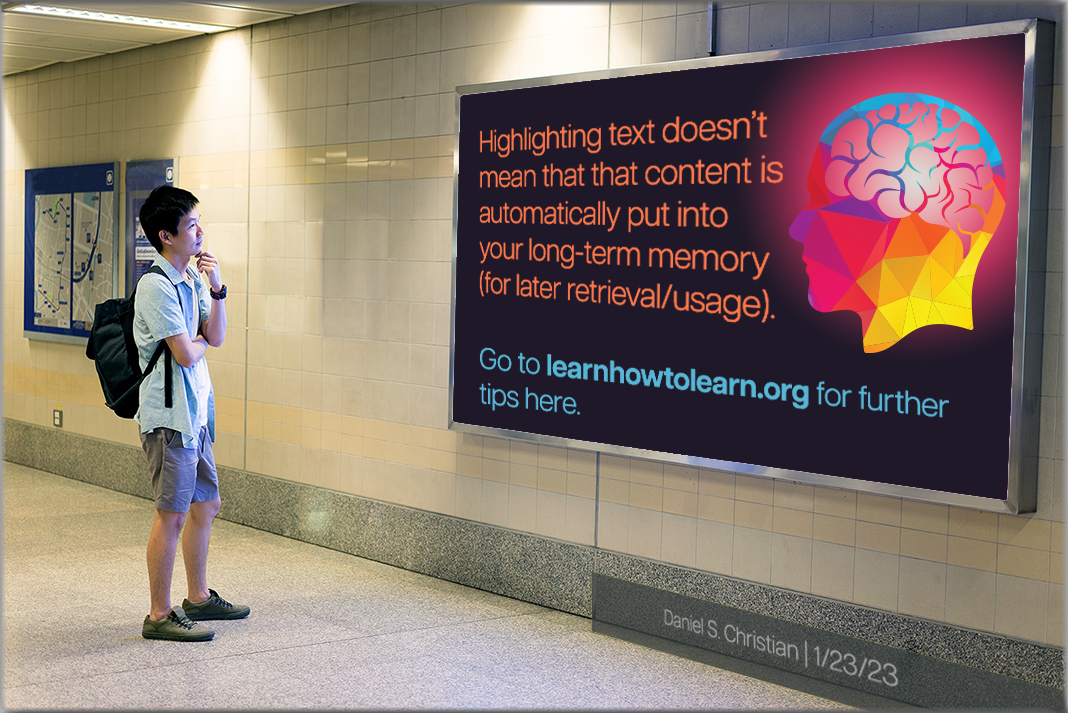
Let’s put together a nationwide campaign that would provide a website — or a series of websites if an agreement can’t be reached amongst the individual states — about learning how to learn. In business, there’s a “direct-to-consumer” approach. Well, we could provide a “direct-to-learner” approach — from cradle to grave. Seeing as how everyone is now required to be a lifelong learner, such a campaign would have enormous benefits to all of the United States. This campaign would be located in airports, subway stations, train stations, on billboards along major highways, in libraries, and in many more locations.

We could focus on things such as:

  • Quizzing yourself / retrieval practice
  • Spaced retrieval
  • Interleaving
  • Elaboration
  • Chunking
  • Cognitive load
  • Learning by doing (active learning)
  • Journaling
  • The growth mindset
  • Metacognition (thinking about one’s thinking)
  • Highlighting doesn’t equal learning
  • There is deeper learning in the struggle
  • …and more.

A learn how to learn campaign covering airports, billboards, subways, train stations, highways, and more


A learn how to learn campaign covering airports, billboards, subways, train stations, highways, and more


A learn how to learn campaign covering airports, billboards, subways, train stations, highways, and more


A learn how to learn campaign covering airports, billboards, subways, train stations, highways, and more


NOTE:
The URL I’m using above doesn’t exist, at least not at the time of this posting.
But I’m proposing that it should exist.


A group of institutions, organizations, and individuals could contribute to this. For example The Learning Scientists, Daniel Willingham, Donald Clark, James Lang, Derek Bruff, The Learning Agency Lab, Robert Talbert, Pooja Agarwal and Patrice Bain, Eva Keffenheim, Benedict Carey, Ken Bain, and many others.

Perhaps there could be:

  • discussion forums to provide for social interaction/learning
  • scheduled/upcoming webinars
  • how to apply the latest evidence-based research in the classroom
  • link(s) to learning-related platforms and/or resources
 

Closing the digital divide in Black America — from mckinsey.com
Five steps could help to bring broadband and digital equity to every Black household in the United States—urban and rural—while bolstering efforts to create a more inclusive economy.

Excerpt:

But broadband access is only part of a much bigger picture. Ensuring all Americans can fully participate in civic life and the digital economy requires afford­able subscriptions, internet-enabled devices, applications, digital skills, and high-quality technical support. For example, while smartphone and tablet penetration are approximately equal among White, Black, and Hispanic and Latino adults in the United States, only 69 percent of Black Americans and 67 percent of Hispanic Americans have desktop or laptop computers, compared with 80 percent of White Americans (Exhibit 1).5 A 2020 OECD survey found that roughly half of Black workers had the advanced or proficient digital skills needed to thrive in our increasingly tech-driven economy, compared with 77 percent of White workers.6


Some example components of a learning ecosystem [Christian]

A learning ecosystem is composed of people, tools, technologies, content, processes, culture, strategies, and any other resource that helps one learn. Learning ecosystems can be at an individual level as well as at an organizational level.

Some example components:

  • Subject Matter Experts (SMEs) such as faculty, staff, teachers, trainers, parents, coaches, directors, and others
  • Fellow employees
  • L&D/Training professionals
  • Managers
  • Instructional Designers
  • Librarians
  • Consultants
  • Types of learning
    • Active learning
    • Adult learning
    • PreK-12 education
    • Training/corporate learning
    • Vocational learning
    • Experiential learning
    • Competency-based learning
    • Self-directed learning (i.e., heutagogy)
    • Mobile learning
    • Online learning
    • Face-to-face-based learning
    • Hybrid/blended learning
    • Hyflex-based learning
    • Game-based learning
    • XR-based learning (AR, MR, and VR)
    • Informal learning
    • Formal learning
    • Lifelong learning
    • Microlearning
    • Personalized/customized learning
    • Play-based learning
  • Cloud-based learning apps
  • Coaching & mentoring
  • Peer feedback
  • Job aids/performance tools and other on-demand content
  • Websites
  • Conferences
  • Professional development
  • Professional organizations
  • Social networking
  • Social media – Twitter, LinkedIn, Facebook/Meta, other
  • Communities of practice
  • Artificial Intelligence (AI) — including ChatGPT, learning agents, learner profiles, 
  • LMS/CMS/Learning Experience Platforms
  • Tutorials
  • Videos — including on YouTube, Vimeo, other
  • Job-aids
  • E-learning-based resources
  • Books, digital textbooks, journals, and manuals
  • Enterprise social networks/tools
  • RSS feeds and blogging
  • Podcasts/vodcasts
  • Videoconferencing/audio-conferencing/virtual meetings
  • Capturing and sharing content
  • Tagging/rating/curating content
  • Decision support tools
  • Getting feedback
  • Webinars
  • In-person workshops
  • Discussion boards/forums
  • Chat/IM
  • VOIP
  • Online-based resources (periodicals, journals, magazines, newspapers, and others)
  • Learning spaces
  • Learning hubs
  • Learning preferences
  • Learning theories
  • Microschools
  • MOOCs
  • Open courseware
  • Portals
  • Wikis
  • Wikipedia
  • Slideshare
  • TED talks
  • …and many more components.

These people, tools, technologies, etc. are constantly morphing — as well as coming and going in and out of our lives.


Top edtech trends in 2023 and the ASU example — from news.asu.edu

Excerpt:

In spite of our tendency to break things down into tidy time frames, like a new year or academic semester, change constantly turns over the status quo. Especially in the world of technology, where disruptive innovation may evolve rapidly from the fringe to the mainstream.

“At ASU’s Enterprise Technology, we work in spaces where technology is not just revolutionizing higher education, but the world at large,” said Lev Gonick, chief information officer at Arizona State University. “We strive to be proactive, not reactive, to new paradigms changing the ways in which we work, learn and thrive.”

As referenced by the above article:

Thus, the top higher education technology trends to watch out for in 2023 include Artificial Intelligence (AI), Virtual Reality (VR), Augmented Reality (AR), Digital Twins, the Metaverse (including digital avatars and NFT art for use in the Metaverse and other Web3-based virtual environments), Internet of Things (IoT), Blockchain, Cloud, Gamification, and Chatbots. These technologies will support the expansion of the Digital Transformation of higher education going forward.

Also relevant/see:


Microsoft Plans to Build OpenAI, ChatGPT Features Into All Products — from wsj.com by Sam Schechner (behind paywall)
Offering for businesses and end users to be transformed by incorporating tools like ChatGPT, CEO Satya Nadella says

Excerpt:

DAVOS, Switzerland—Microsoft Corp. MSFT 2.86%increase; green up pointing triangle plans to incorporate artificial-intelligence tools like ChatGPT into all of its products and make them available as platforms for other businesses to build on, Chief Executive Satya Nadella said.

It’s a matter of time before the LMSs like Canvas and Anthology do the same. Really going to change the complexion of online learning.

Jared Stein; via Robert Gibson on LinkedIn

Also relevant/see:

Donald Clark’s thoughts out on LinkedIn re: Google and AI

Excerpt:

Microsoft are holding a lot of great cards in the AI game, especially ChatGPT-3, but Google also have a great hand, in fact they have a bird in the hand:

Sparrow, from Deepmind, is likely to launch soon. Their aim is to trump ChatGTP by having a chatbot that is more useful and reduces the risk of unsafe and inappropriate answers. In the released paper, they also indicate that it will have moral constraints. Smart move.

Hassabis has promised some sort of release in 2023. Their goal is to reduce wrong and invented information by linking it to Google Search and Scholar for citations.

Donald Clark’s thought re: Apple’s strategy for AI — from donaldclarkplanb.blogspot.com

Wonder Tools:7 ways to Use ChatGPT — from wondertools.substack.com by Jeremy Caplan

Excerpt:

4 recommended ChatGPT resources

  • The Art of ChatGPT PromptingA Guide to Crafting Clear and Effective Prompts.
    This free e-book acts a useful guide for beginners.
  • Collection of ChatGPT Resources
    Use ChatGPT in Google Docs, WhatsApp, as a desktop app, with your voice, or in other ways with this running list of tools.
  • Awesome ChatGPT prompts
    Dozens of clever pre-written prompts you can use to initiate your own conversations with ChatGPT to get it to reply as a fallacy finder or a journal reviewer or whatever else.
  • Writing for Renegades – Co-writing with AI
    This free 17-page resource has writing exercises you can try with ChatGPT. It also includes interesting nuggets, like Wycliffe A. Hill’s 1936 attempt at writing automation, Plot Genie.


We often see the battle between technology and humans as a zero-sum game. And that’s how much of the discussion about ChatGPT is being framed now. Like many others who have been experimenting with ChatGPT in recent weeks, I find that a lot of the output depends on the input. In other words, the better the human question, the better the ChatGPT answer.

So instead of seeing ourselves competing with technology, we should find ways to complement it and view ChatGPT as a tool that assists us in collecting information and in writing drafts.

If we reframe the threat, think about how much time can be freed up to read, to think, to write?

As many have noted, including Michael Horn on the Class Disrupted podcast he co-hosts, ChatGPT is to writing what calculators were once to math and other STEM disciplines. 

Jeff Selingo: ‘The Calculator’ for a New Generation?


GPT in Higher Education — from insidehighered.com by Ray Schroeder
ChatGPT has caught our attention in higher education. What will it mean in 2023?

Excerpt:

Founder and CEO at Moodle Martin Dougiamas writes in Open Ed Tech that as educators, we must recognize that artificial general intelligence will become ubiquitous. “In short, we need to embrace that AI is going to be a huge part of our lives when creating anything. There is no gain in banning it or avoiding it. It’s actually easier (and better) to use this moment to restructure our education processes to be useful and appropriate in today’s environment (which is full of opportunities).”

Who, at your institution, is examining the impact of AI, and in particular GPT, upon the curriculum? Are instructional designers working with instructors in revising syllabi and embedding AI applications into the course offerings? What can you do to ensure that your university is preparing learners for the future rather than the past?

Ray Schroeder

ChatGPT Advice Academics Can Use Now — from insidehighered.com by Susan D’Agostino
To harness the potential and avert the risks of OpenAI’s new chat bot, academics should think a few years out, invite students into the conversation and—most of all—experiment, not panic. 

Alarmed by AI Chatbots, Universities Start Revamping How They Teach — from The New York Times (out at Yahoo) by Kalley Huang

Excerpt:

At schools including George Washington University in Washington, D.C., Rutgers University in New Brunswick, New Jersey, and Appalachian State University in Boone, North Carolina, professors are phasing out take-home, open-book assignments — which became a dominant method of assessment in the pandemic but now seem vulnerable to chatbots. They are instead opting for in-class assignments, handwritten papers, group work and oral exams.

Gone are prompts like “write five pages about this or that.” Some professors are instead crafting questions that they hope will be too clever for chatbots and asking students to write about their own lives and current events.

With ChatGPT, Teachers Can Plan Lessons, Write Emails, and More. What’s the Catch? — from edweek.org by Madeline Will  (behind paywall)

Why Banning ChatGPT in Class Is a Mistake — from campustechnology.com by Thomas Mennella
Artificial intelligence can be a valuable learning tool, if used in the right context. Here are ways to embrace ChatGPT and encourage students to think critically about the content it produces.

.


Let the Lawsuits Against Generative AI Begin! — from legallydisrupted.com by Zach Abramowitz
Getty Sues Stability AI as Lawsuits Mount Against GenAI Companies

Excerpt:

Well, it was bound to happen. Anytime you have a phenomenon as disruptive as generative AI, you can expect lawsuits.

Case in point: the lawsuit recently filed by Getty Images against Stability AI, highlighting the ongoing legal challenges posed by the use of AI in the creative industries. But it’s not the only lawsuit recently filed, see e.g. Now artists sue AI image generation tools Stable Diffusion, Midjourney over copyright | Technology News, The Indian Express


.


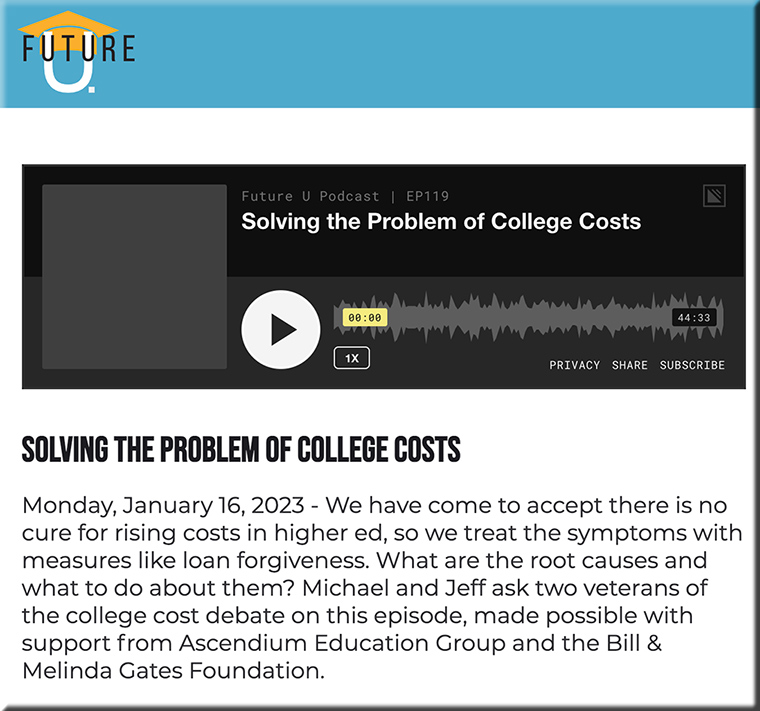
Podcast at Future U -- Solving the problem of college costs

The Case of College Costs — as found at “ChatGPT Growing Strong, Sparking Teacher’s AI Fears” — from by Michael Horn, Jeff Selingo, Bill Troutt, & Susan Dynarski

Per Michael (emphasis DSC):
Several things struck me in the episode. Among them were:

  • How prescient the National Commission on the Cost of Higher Education was all the way back in 1998 when it said that “continued inattention to issues of cost and price threatens to create a gulf of ill will between institutions of higher education and the public they serve.”
  • And Bill’s observation that the forgiveness of student loans probably wouldn’t spur much in the way of strategic conversations for boards of trustees at colleges.

Also relevant/see:

By Bryan Alexander, Bruce Kimball, & Sarah Iler


1 Peter 3:8 NIV — from my.bible.com

Finally, all of you, be like-minded, be sympathetic, love one another, be compassionate and humble.

 
© 2025 | Daniel Christian