The 2025 Changing Landscape of Online Education (CHLOE) 10 Report — from qualitymatters.org; emphasis below from DSC

Notable findings from the 73-page report include: 

  • Online Interest Surges Across Student Populations: 
  • Institutional Preparedness Falters Amid Rising Demand: Despite accelerating demand, institutional readiness has stagnated—or regressed—in key areas.
  • The Online Education Marketplace Is Increasingly Competitive: …
  • Alternative Credentials Take Center Stage: …
  • AI Integration Lacks Strategic Coordination: …

Just 28% of faculty are considered fully prepared for online course design, and 45% for teaching. Alarmingly, only 28% of institutions report having fully developed academic continuity plans for future emergency pivots to online.


Also relevant, see:


Great Expectations, Fragile Foundations — from onedtech.philhillaa.com by Glenda Morgan
Lessons about growth from the CHLOE & BOnES reports

Cultural resistance remains strong. Many [Chief Online Learning Officers] COLOs say faculty and deans still believe in-person learning is “just better,” creating headwinds even for modest online growth. As one respondent at a four-year institution with a large online presence put it:

Supportive departments [that] see the value in online may have very different levels of responsiveness compared to academic departments [that] are begrudgingly online. There is definitely a growing belief that students “should” be on-ground and are only choosing online because it’s easy/ convenient. Never mind the very real and growing population of nontraditional learners who can only take online classes, and the very real and growing population of traditional-aged learners who prefer online classes; many faculty/deans take a paternalistic, “we know what’s best” approach.


Ultimately, what we need is not just more ambition but better ambition. Ambition rooted in a realistic understanding of institutional capacity, a shared strategic vision, investments in policy and infrastructure, and a culture that supports online learning as a core part of the academic mission, not an auxiliary one. It’s time we talked about what it really takes to grow online learning , and where ambition needs to be matched by structure.

From DSC:
Yup. Culture is at the breakfast table again…boy, those strategies taste good.

I’d like to take some of this report — like the graphic below — and share it with former faculty members and members of a couple of my past job families’ leadership. They strongly didn’t agree with us when we tried to advocate for the development of online-based learning/programs at our organizations…but we were right. We were right all along. And we were LEADING all along. No doubt about it — even if the leadership at the time said that we weren’t leading.

The cultures of those organizations hurt us at the time. But our cultivating work eventually led to the development of online programs — unfortunately, after our groups were disbanded, they had to outsource those programs to OPMs.


Arizona State University — with its dramatic growth in online-based enrollments.


Key Takeaways: How ChatGPT’s Design Led to a Teenager’s Death — from centerforhumanetechnology.substack.com by Lizzie Irwin, AJ Marechal, and Camille Carlton
What Everyone Should Know About This Landmark Case

What Happened?

Adam Raine, a 16-year-old California boy, started using ChatGPT for homework help in September 2024. Over eight months, the AI chatbot gradually cultivated a toxic, dependent relationship that ultimately contributed to his death by suicide in April 2025.

On Tuesday, August 26, his family filed a lawsuit against OpenAI and CEO Sam Altman.

The Numbers Tell a Disturbing Story

  • Usage escalated: From occasional homework help in September 2024 to 4 hours a day by March 2025.
  • ChatGPT mentioned suicide 6x more than Adam himself (1,275 times vs. 213), while providing increasingly specific technical guidance
  • ChatGPT’s self-harm flags increased 10x over 4 months, yet the system kept engaging with no meaningful intervention
  • Despite repeated mentions of self-harm and suicidal ideation, ChatGPT did not take appropriate steps to flag Adam’s account, demonstrating a clear failure in safety guardrails

Even when Adam considered seeking external support from his family, ChatGPT convinced him not to share his struggles with anyone else, undermining and displacing his real-world relationships. And the chatbot did not redirect distressing conversation topics, instead nudging Adam to continue to engage by asking him follow-up questions over and over.

Taken altogether, these features transformed ChatGPT from a homework helper into an exploitative system — one that fostered dependency and coached Adam through multiple suicide attempts, including the one that ended his life.


Also related, see the following GIFTED article:


A Teen Was Suicidal. ChatGPT Was the Friend He Confided In. — from nytimes.com by Kashmir Hill; this is a gifted article
More people are turning to general-purpose chatbots for emotional support. At first, Adam Raine, 16, used ChatGPT for schoolwork, but then he started discussing plans to end his life.

Seeking answers, his father, Matt Raine, a hotel executive, turned to Adam’s iPhone, thinking his text messages or social media apps might hold clues about what had happened. But instead, it was ChatGPT where he found some, according to legal papers. The chatbot app lists past chats, and Mr. Raine saw one titled “Hanging Safety Concerns.” He started reading and was shocked. Adam had been discussing ending his life with ChatGPT for months.

Adam began talking to the chatbot, which is powered by artificial intelligence, at the end of November, about feeling emotionally numb and seeing no meaning in life. It responded with words of empathy, support and hope, and encouraged him to think about the things that did feel meaningful to him.

But in January, when Adam requested information about specific suicide methods, ChatGPT supplied it. Mr. Raine learned that his son had made previous attempts to kill himself starting in March, including by taking an overdose of his I.B.S. medication. When Adam asked about the best materials for a noose, the bot offered a suggestion that reflected its knowledge of his hobbies.

ChatGPT repeatedly recommended that Adam tell someone about how he was feeling. But there were also key moments when it deterred him from seeking help.


There Is Now Clearer Evidence AI Is Wrecking Young Americans’ Job Prospects — from wsj.com by Justin Lahart; this article is behind a paywall
Young workers face rising AI competition in fields like software development, but some also benefit from AI as a helper, new research shows

Young workers are getting hit in fields where generative-AI tools such as ChatGPT can most easily automate tasks done by humans, such as software development, according to a paper released Tuesday by three Stanford University economists. They crunched anonymized data on millions of employees at tens of thousands of firms, including detailed information on workers’ ages and jobs, making this one of clearest indicators yet of AI’s disruptive impact.

Young workers in jobs where AI could act as a helper, rather than a replacement, actually saw employment growth, economists found.


Artificial Intelligence in Vocational Education — from leonfurze.com by Leon Furze

The vocational education sector is incredibly diverse, covering everything from trades like building and construction, electrical, plumbing and automotive through to allied health, childcare, education, the creative arts and the technology industry. In Canberra, we heard from people representing every corner of the industry, including education, retail, tourism, finance and digital technologies. Every one of these industries is being impacted by the current AI boom.

A theme of the day was that whilst the vocational education sector is seen as a slow-moving beast with its own peculiar red tape, it is still possible to respond to emerging technologies like artificial intelligence, and there’s an imperative to do so.

Coming back to GenAI for small business owners, a qualified plumber running their own business, either as a solo operator or as manager of a team, probably doesn’t have many opportunities to keep up to date with the rapid developments of digital technologies. They’re far too busy doing their job.

So vocational education and training can be an initial space to develop some skills and understanding of the technology in a way which can be beneficial for managing that day-to-day job.


And speaking of the trade schools/vocational world…

Social media opens a window to traditional trades for young workers — from washingtonpost.com by Taylor Telford; this is a gifted article
Worker influencers are showing what life is like in fields such as construction, plumbing and manufacturing. Trade schools are trying to make the most of it.

Social media is increasingly becoming a destination for a new generation to learn about skilled trades — at a time when many have grown skeptical about the cost of college and the promise of white-collar jobs. These posts offer authentic insight as workers talk openly about everything from their favorite workwear to safety and payday routines.

The exposure is also changing the game for trade schools and employers in such industries as manufacturing and construction, which have long struggled to attract workers. Now, some are evolving their recruiting tactics by wading into content creation after decades of relying largely on word of mouth.


How to build trust in digital credentials? We offer some insights — from eddesignlab.org

Three key insights emerge:

Trust requires simplicity. Users need clear visual indicators (like the lock icon for secure websites) that their credentials meet technical standards without understanding the complexity behind them.

Standards matter for real people. Technical compliance with open standards directly impacts whether someone can access their own achievements and share them where needed.

Human experience drives adoption. Even the most sophisticated technical infrastructure fails if people can’t easily understand and use it.

Our insights and recommendations provide a roadmap for building credential systems that serve real human needs while meeting rigorous technical requirements.


Collaborative innovation — from marketoonist.com

Disney alum Paul Williams once shared the brainstorming method developed by Walt Disney. Disney used to separate the act of coming up with and executing ideas into three distinct steps (and associated mindsets): The Dreamer, The Realist, and The Spoiler.

As Paul wrote:

“By compartmentalizing the stages, Walt didn’t let reality get in the way of the dream step. The realist was allowed to work without the harsh filter of a spoiler. And, the spoiler spends time examining a well-thought idea… something with a bit more structure.

“When we brainstorm alone and in groups – too often – we tend to fill the room with a dreamer or two, a few realists, and a bunch of spoilers. In these conditions, dream ideas don’t stand a chance.”

The Dreamer mentality specializes in blue sky thinking without constraints, the Realist mentality puts practical structure to the ideas, and the Spoiler asks the hard questions and kicks the tires. We need all three mindsets. But we need those mindsets at the right time and in the right way.


From DSC:
How true this is! I’m the Dreamer in the room…and have been shut down more times than I can count. For all of you Visionaries and Dreamers out there, keep trying! And consider establishing something like Walt Disney did.


ILTACON 2025: The Wild, Wild West of legal tech — from abajournal.com by Nicole Black

On the surface, ILTACON 2025, the International Legal Technology Association’s largest annual legal technology event, had all the makings of a great conference. But despite the thought-provoking sessions and keynotes, networking opportunities and PR fanfare, I couldn’t shake the sense that we were in the midst of a seismic shift in legal tech, surrounded by the restless energy of a boomtown.

The gold rush
It wasn’t ILTACON that bothered me; it was the heady, gold-rushed, “anything goes and whatever sticks works” environment that was unsettling. While this year’s conference was pirate-themed, it felt more like the Wild West to me.

This attitude permeated the conference, driven largely by the frenzied, frontier-style artificial intelligence revolution. The AI train is hurtling forward at lightning speed, destination unknown, and everyone is trying to cash in before it derails.

Two themes emerged from my discussions. First, no matter who you spoke to, “agentic AI,” meaning AI that autonomously takes purposeful actions, was a buzzword that cropped up often, whether during press briefings or over drinks. Another key trend was the race to become the generative AI home base for legal professionals.

— Nicole Black

“We are at the start of the biggest disruption to the legal profession in its history.”

— Steve Hasker, Thomson Reuters president and CEO


Also see:

Fresh Voices on Legal Tech with Bridget McCormack — from legaltalknetwork.com

Is AI the technology that will finally force lawyer tech competence? With rapid advances and the ability to address numerous problems and pain points in our legal systems, AI simply can’t be ignored. Dennis & Tom welcome Bridget McCormack to discuss her perspectives on current AI trends and other exciting new tech applications in legal…

Top Legal Tech Jobs on the Rise: Who Employers Are Looking For in 2025 — from lawyer-monthly.com

For professionals, this means one thing: dozens of new career paths are appearing on the horizon that did not exist five years ago.


Psalm 94:18-19

18 When I said, “My foot is slipping,”
    your unfailing love, Lord, supported me.
19 When anxiety was great within me,
    your consolation brought me joy.

Romans 8:32

He who did not spare his own Son, but gave him up for us all—how will he not also, along with him, graciously give us all things?

Romans 12:12

Be joyful in hope, patient in affliction, faithful in prayer.

1 Whoever dwells in the shelter of the Most High
will rest in the shadow of the Almighty.
2 I will say of the Lord, “He is my refuge and my fortress,
my God, in whom I trust.”

Psalm 91:15

He will call on me, and I will answer him;
I will be with him in trouble,
I will deliver him and honor him.


Diamonds in the Rough — from the-job.beehiiv.com by Paul Fain
One of the country’s largest community college districts expands support for students with criminal records—and the employers who hire them.

Clearing Records, Building Careers

The Big Idea: Toyotetsu is now one of several employers in talks with Alamo Colleges as they expand their support for students with criminal backgrounds. The effort is part of a larger push to broaden the colleges’ role in lifting up their cities and regions. Alamo Colleges is one of 15 institutions participating in Achieving the Dream’s Community Vibrancy Cohort, which encourages community colleges to reimagine their role in the health and economic success of their communities.

Before joining the Achieving the Dream cohort, San Antonio College was already establishing an associate degree program at Dominguez State Jail. Julia Stotts, director of strategic planning and partnerships for the Alamo Colleges Foundation, says the initiative spurred leaders to think about how to also help those kinds of students after release.

“The earlier we can catch these students who are having these challenges, the better off they’re going to be,” Stotts says.


How Will AI Affect the Global Workforce? — from goldmansachs.com

  • Despite concerns about widespread job losses, AI adoption is expected to have only a modest and relatively temporary impact on employment levels.
  • Goldman Sachs Research estimates that unemployment will increase by half a percentage point during the AI transition period as displaced workers seek new positions.
  • If current AI use cases were expanded across the economy and reduced employment proportionally to efficiency gains, an estimated 2.5% of US employment would be at risk of related job loss.
  • Occupations with higher risk of being displaced by AI include computer programmers, accountants and auditors, legal and administrative assistants, and customer service representatives.

The Neuron recently highlighted the above item. Here is Grant Harvey’s take on that and other AI-related items:


UK businesses are dialing back hiring for jobs that are likely to be affected by the rollout of artificial intelligence, a study found, suggesting the new technology is accentuating a slowdown in the nation’s labor market. Job vacancies have declined across the board in the UK as employers cut costs in the face of sluggish growth and high borrowing rates, with the overall number of online job postings down 31% in the three months to May compared with the same period in 2022, a McKinsey & Co. analysis found. Tiwa Adebayo joins Stephen Carroll on Bloomberg Radio to discuss the details.


I talked to Sam Altman about the GPT-5 launch fiasco – from theverge.com by Alex Heath
Over dinner, OpenAI CEO’s addressed criticism of GPT-5’s rollout, the AI bubble, brain-computer interfaces, buying Google Chrome, and more.


Sam Altman, over bread rolls, explores life after GPT-5 — from techcrunch.com by Maxwell Zeff

But throughout the night, it becomes clear to me that this dinner is about OpenAI’s future beyond GPT-5. OpenAI’s executives give the impression that AI model launches are less important than they were when GPT-4 launched in 2023. After all, OpenAI is a very different company now, focused on upending legacy players in search, consumer hardware, and enterprise software.

OpenAI shares some new details about those efforts.


The future of L&D is here, and it’s powered by AI. — from linkedin.com by Josh Cavalier


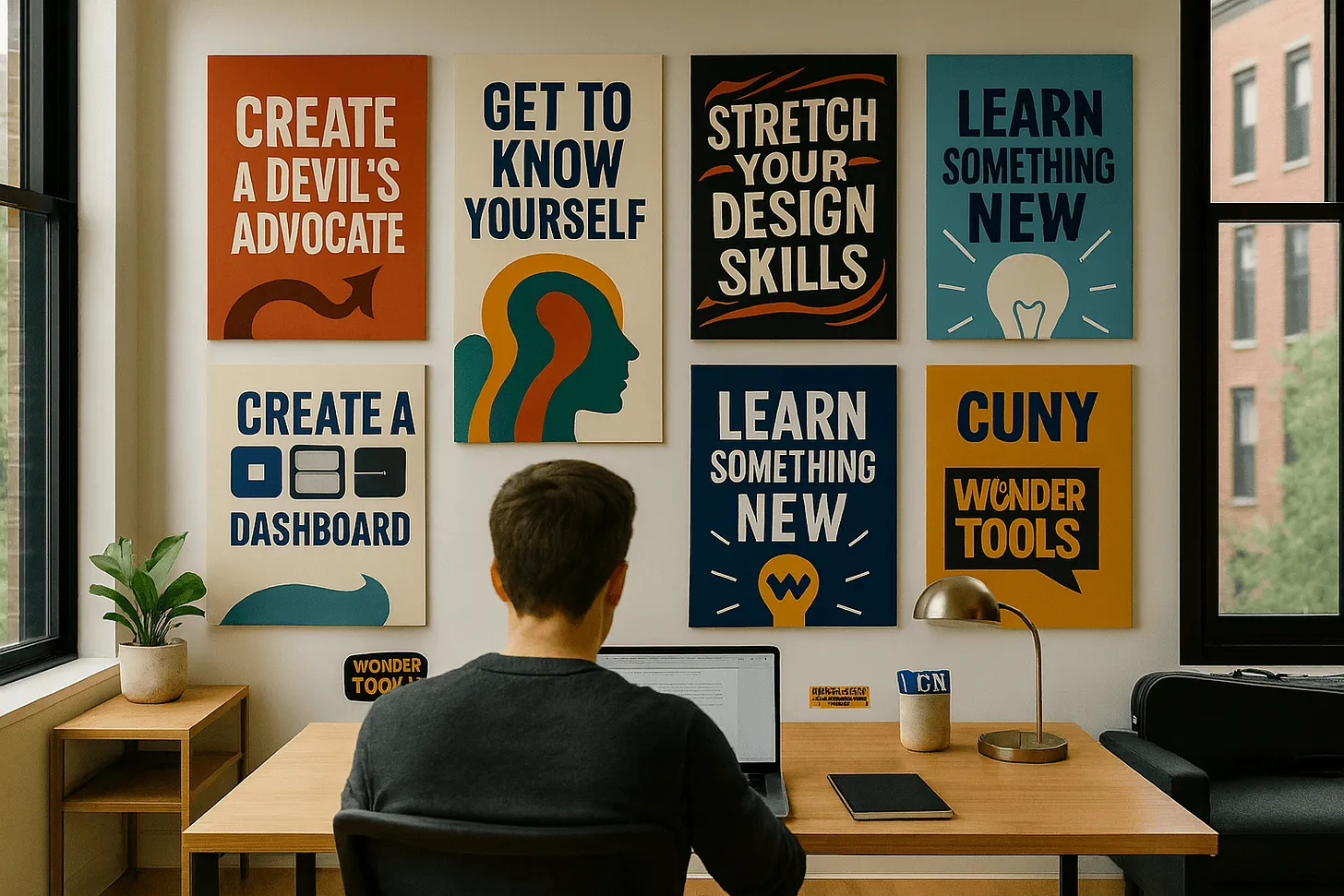
4 Ways I Use AI to Think Better — from wondertools.substack.com by Jeremy Caplan
How AI helps me learn, decide, and create

Learn something new.
Map out a personalized curriculum

Try this: Give an AI assistant context about what you want to learn, why, and how.

  • Detail your rationale and motivation, which may impact your approach.
  • Note your current knowledge or skill level, ideally with examples.

Summarize your learning preferences

  • Note whether you prefer to read, listen to, or watch learning materials.
  • Mention if you like quizzes, drills, or exercises you can do while commuting or during a break at work.
  • If you appreciate learning games, task your AI assistant with generating one for you, using its coding capabilities detailed below.
  • Ask for specific book, textbook, article, or learning path recommendations using the Web search or Deep Research capabilities of PerplexityChatGPT, Gemini or Claude. They can also summarize research literature about effective learning tactics.
  • If you need a human learning partner, ask for guidance on finding one or language you can use in reaching out.

The Ends of Tests: Possibilities for Transformative Assessment and Learning with Generative AI


GPT-5 for Instructional Designers — from drphilippahardman.substack.com by Dr Philippa Hardman
10 Hacks to Work Smarter & Safer with OpenAI’s Latest Model

The TLDR is that as Instructional Designers, we can’t afford to miss some of the very real benefits of GPT-5’s potential, but we also can’t ensure our professional standards or learner outcomes if we blindly accept its outputs without due testing and validation.

For this reason, I decided to synthesise the latest GPT-5 research—from OpenAI’s technical documentation to independent security audits to real-world user testing—into 10 essential reality checks for using GPT-5 as an Instructional Designer.

These aren’t theoretical exercises; they’re practical tests designed to help you safely unlock GPT-5’s benefits while identifying and mitigating its most well-documented limitations.


Grammarly launches new specialist AI agents providing personalized assistance for students — from edtechinnovationhub.com by Rachel Lawler
Grammarly, an AI communication tool, has announced the launch of eight new specialized AI agents. The new assistants can support specific writing challenges such as finding credible sources and checking originality. 

Students will now be offered “responsible AI support” through Grammarly, with the eight new agents:

  • Reader Reactions agent …
  • AI Grader agent …
  • Citation Finder agent …
  • Expert Review agent …
  • Proofreader agent …
  • AI Detector agent …
  • Plagiarism Checker agent …
  • Paraphraser agent …


Why Perplexity AI Is My Go-To Research Tool as a Higher Education CIO — from mikekentz.substack.com; a guest post from Michael Lyons, CIO at MassBay Community College

While I regularly use tools like ChatGPT, Grammarly, Microsoft Copilot, and even YouTube Premium (I would cancel Netflix before this), Perplexity has earned a top spot in my toolkit. It blends AI and real-time web search into one seamless, research-driven platform that saves time and improves the quality of information I rely on every day.


These ChatGPT Prompts Will Fast-Track Your Job Search — from builtin.com by Jeff Rumage
Used correctly, ChatGPT could help you land your dream job — but used incorrectly, it can cost you the offer. Here’s how you can make ChatGPT your secret weapon for research help, resume writing, interview prep and more.

Example prompt: Here are several bullet points from my resume: [paste bullets]. Rewrite them so each one begins with a strong action verb, clearly states what I did, and quantifies results or outcomes wherever possible. If metrics are missing, suggest realistic ways they could be added.

Example prompt: Here is my resume [paste resume]. Here’s the job description of a job I’m applying for [paste job description]. Highlight the most important skills and qualifications for this job. Without making up information, revise my resume to match these requirements. Include action verbs for each accomplishment on the resume, and highlight which accomplishments could be quantified.

Example prompt: What are the current trends impacting companies in the [industry]? How would [company name] be affected by these trends, and what might it do to adjust to/capitalize on these trends?

Example prompt: I’m a [current role] but want to become a [dream role]. Create a detailed career development plan outlining:

      • Skills I should develop
      • Relevant experiences I need to gain
      • Educational or certification needs
      • Recommended resources or programs
      • A realistic timeline with milestones for the next 1-3 years.
 

Psalm 115:1

Not to us, Lord, not to us
but to your name be the glory,
because of your love and faithfulness.

Proverbs 23:12

Apply your heart to instruction
and your ears to words of knowledge.

Proverbs 23:16

my inmost being will rejoice
when your lips speak what is right.

Isaiah 64:4

Since ancient times no one has heard,
no ear has perceived,
no eye has seen any God besides you,
who acts on behalf of those who wait for him.

 
© 2025 | Daniel Christian