Reimagining Higher Education: The Post-Covid Classroom — from er.educause.edu by Rob Curtin
As we prepare to return to campus, many of the technologies that helped us simply survive and sustain classroom continuity will become permanently embedded in our educational methods and play a pivotal role in the refinement of practices consistent with an ongoing shift to more student-centered learning.

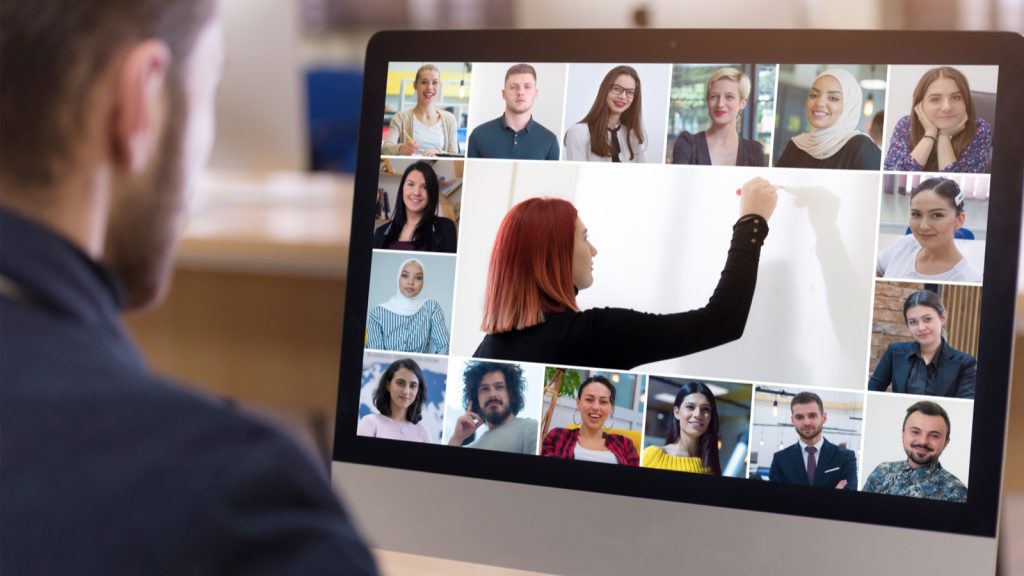
Videoconferencing -- a professor teaching a class of virtual students

Credit: as-artmedia / Shutterstock.com © 2021

As learning practices continue to evolve, new remote learning and collaboration technologies, in concert with pedagogy, will be critical to enabling inclusive, personalized, and engaging hybrid learning experiences to bring students together beyond simple videoconferencing and recording of lectures. 


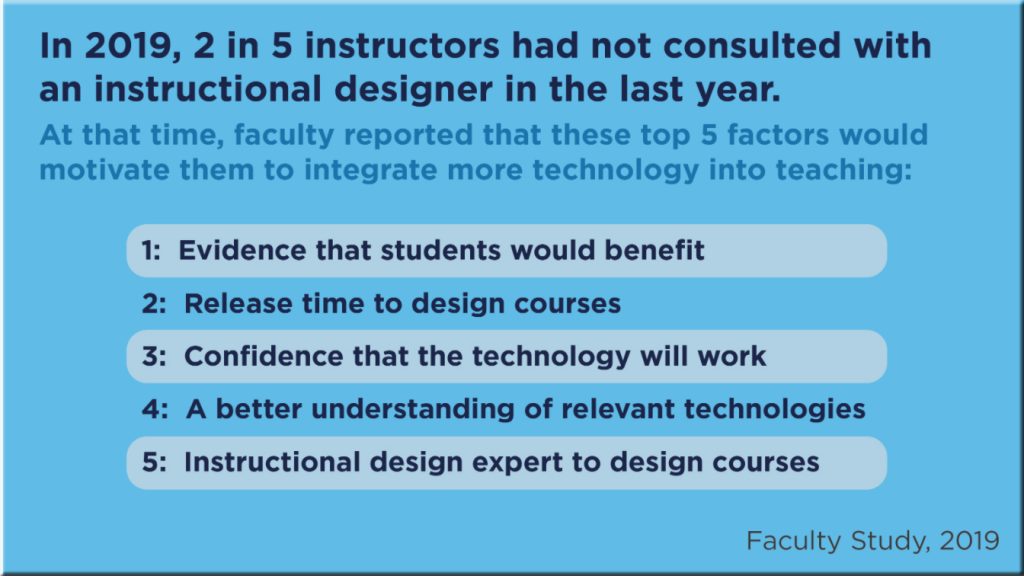
In 2019, 2 in 5 instructors had not consulted with an Instructional Designer in the last year -- from Educause

Also see:

EDUCAUSE QuickPoll Results: Assessment and Learning Design — by Mark McCormack

Excerpt:

Respondents expressed confidence that recent increases in faculty engagement with instructional design and technology will continue in future academic years, as will institutions’ adoption of hybrid/online education. Respondents are less confident that larger changes in institutional policy and practice will persist, and they do not anticipate that institutions will be investing in key instructional needs in the future. Increases in cross-department collaboration hold great promise for leaders seeking to engage faculty and make wider and more lasting strategic changes. Long-term success for new approaches to teaching and learning may rely at least in part on clear and consistent policies and practices across the institution, as well as a shift in institutional narrative from “short-term crisis mitigation” to “innovation for the future.”


Teacher Makes Beautiful Illustrations of Your Favorite Physics Formulas — from interestingengineering.com by Loukia Papadopoulos
From electromagnetism to the law of conservation of energy, this teacher illustrates all your favorite physics formulas.

From electromagnetism to the law of conservation of energy, this teacher illustrates all your favorite physics formulas.

From DSC:
Not all of us have these kinds of skills — but how cool to see this creative, artistic, multidisciplinary approach to teaching and learning. The use of teams comes to mind for the rest of us! 🙂 


Moving Online Learning from Challenge to Opportunity — from campustechnology.com by Dr. Mark Lombardi
The future of higher education means breaking down classroom walls, embracing digital tools and engaging students with creativity and innovation.

Excerpt (emphasis DSC):

Similarly, Maryville criminology professor Geri Brandt, working in concert with our learning designers and on-site production studio, used 360-degree camera technology to stage a virtual, explorable, interactive crime scene. Extending this online experience further, the criminology department created a “choose your own adventure” virtual experience, where each student response or choice in an investigation leads to a different outcome.

Creativity and innovation on this scale are only possible when faculty work with a talented team of learning design professionals who can translate a vision of interactive and immersive learning into a new student experience. Designing and delivering this active learning ecosystem integrated in online and on-ground learning takes a team of committed professionals and the courage to make it happen.

What if students could choose to learn in environments that are fully immersive, deeply enriching and profoundly meaningful to their courses of study? We encourage our students to explore the world beyond the campus, but what happens when the world is your campus?


Specialties In Instructional Design and What They Do — from teamedforlearning.com
Specialties in instructional design can help both job seekers and hiring managers find the right fit for digital learning courses and programs.

Excerpt:

An instructional designer is anyone who designs and develops digital learning experiences. That may sound straightforward, but within that vague job title nest dozens of specialties. Even more confusingly, instructional designers may also be called learning designers or learning architects. Their work often overlaps with that of instructional technologists and content creators. Specialties in instructional design help both teammates and hiring managers to navigate this evolving position.

Untangling the complexities of the instructional design role can help both job seekers and hiring managers find the right fit. Identifying a specialty can help professionals carve out their own niche in the instructional design ecosystem. Greater clarity around what instructional designers actually do can help team leaders find the right instructional designer for their project.


AI in the Legal Industry: 3 Impacts and 3 Obstacles — from exigent-group.com

Excerpt:

In this article, we’ll talk about three current impacts AI has had on the legal industry as well as three obstacles it needs to overcome before we see widespread adoption.

Consider JPMorgan’s Contract Intelligence (COIN) software. Rather than rely on lawyers to pour over their commercial loan contracts, the banking giant now uses COIN to review these documents for risk, accuracy and eligibility. Not only does this save JPMorgan 360,000 hours per year in contract review, it also results in fewer errors. One can also look to major law firms like DLA Piper, which now regularly rely on AI for M&A due diligence. At Exigent, we’ve had first-hand experience using AI to support document analysis for our clients as well.

2. Legal departments need to build cross-functional expertise
…bringing greater diversity into the legal department is essential if the efficiencies promised by AI in the legal industry are to be realized.

Fortunately, some legal departments have begun to bring data scientists on board in addition to lawyers. And the industry is beginning to open up to hybrid roles, like legal technologists, legal knowledge engineers, legal analysts and other cross-functional experts. It’s clear that a greater diversity of skills are in the legal department’s future; it’s just a matter of how smoothly the transition goes.


Five free keynotes on online learning for streaming into virtual conferences — from tonybates.ca by Tony Bates

These are the five keynotes:

  1. Developing quality blended learning courses
  2. Digital learning and the new economy
  3. New technologies and their potential and limitations for teaching and learning
  4. Ten lessons for online learning from the Covid-19 experience (based on research findings)
  5. Online learning in the (k-12) school sector

From DSC:
Thanks Tony for sharing these keynotes and your expertise — which is drawn from so much research and experience. Thanks for giving it away — may your gift bless many. (And I thought you were going to retire…?!? Selfishly, I’m/we’re glad you didn’t!)   🙂


AI and the Future of Lawyering & Law Firms – Northwestern Law and Technology Initiative — from youtube.com by Northwestern Law & Technology Initiative as moderated by Dan Linna; with thanks to Gabe Teninbaum for this resource.

Artificial Intelligence is transforming the future of work. AI has the potential to automate and augment many tasks. This transformation is leading to the creation of new roles and jobs to be done. How will AI impact the work of lawyers, legal professionals, and law firms? Our panelists will discuss the future of work, the work of lawyers and structure of law firms, and current uses of AI for legal services today.

Speakers:

  • Hyejin Youn, Assistant Professor of Management & Organizations, Kellogg School of Management, Northwestern University
  • Mari Sako, Professor of Management Studies, Saïd Business School, University of Oxford
  • Stephen Poor, Partner and chair emeritus, Seyfarth

Moderator:

  • Daniel W. Linna Jr., Senior Lecturer & Director of Law and Technology Initiatives, Northwestern Pritzker School of Law & McCormick School of Engineering
 

Don’t force square-peg students back into wrong-shaped holes — from crpe.org by Robin Lake Paul Hill

But what gets lost in the reopening debate is the growing evidence that a significant portion of students and their families are actually happier and learn better outside of traditional schooling.

Excerpt:

Some of the “square-peg” children are the most creative and bright students in their class, but had struggled academically or socially in the traditional classroom. According to informal surveys of parents and teachers, new approaches to learning are benefiting:

  • Students with special needs, like ADHD or autism, who focus better on learning without disruptions from other kids, and who—when learning from home—can take breaks and calm themselves when needed, not just when the classroom schedule permits.
  • Students who didn’t speak up or ask questions in regular classrooms for fear of being mocked, but are now able to send private questions to teachers or make written contributions.
  • Socially-awkward or otherwise different kids who experienced bullying.
  • Kids who best learn from small-group instruction.
  • Students who have mastered all the regular class material and are motivated to learn advanced materials and explore on their own.
  • Students who learn best by hearing about a new idea and then quickly practicing or applying it on their own.

From DSC:
One of our daughters needs a team of people around her to help her learn and grow. The one-size-fits-all, the-train-stops-for-no-one type of educational system that she often encountered did not work well for her.

K-12 education in America is like a quickly-moving train that stops for no one.

Homeschooling has seen her grow a lot more. She even has her own blog now — and she’s excited about it! She loves reading and writing — and she’s very creative (albeit her writing gets pretty dark at times. But come to think of it…my second-grade teacher thought that my friend Andrew’s and my 38-page book with vampires, witches, and werewolves was pretty morbid too!)


The Year TV Leaped Into The Future [Roettgers]

The Year TV Leaped Into The Future [Roettgers]

The Year TV Leaped Into The Future — from protocol.com by Janko Roettgers

The lockdowns this year have transformed our homes into offices, schools, concert halls, movie theaters and gyms. Our homes are working harder for us, but so is our technology. The device that is working the hardest is perhaps the TV—becoming our lifeline to a far more virtual world.

Addendums:
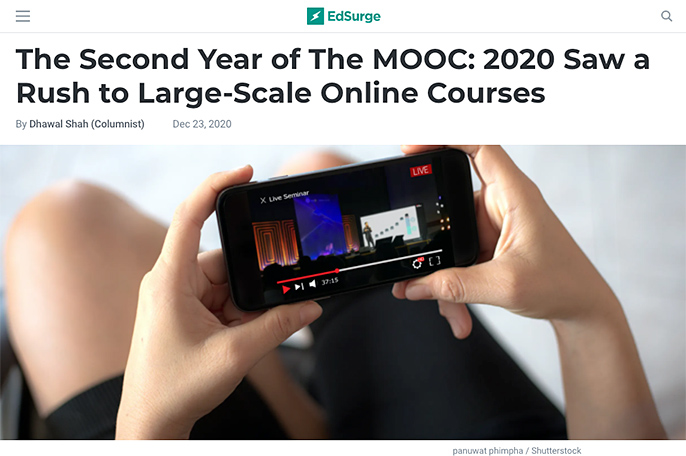
The Second Year of The MOOC: 2020 Saw a Rush to Large-Scale Online Courses

The Second Year of The MOOC: 2020 Saw a Rush to Large-Scale Online Courses — from edsurge.com by Dhawal Shah

Excerpt:

This was the year that more people learned what a MOOC is.

As millions suddenly found themselves with free time on their hands during the pandemic, many turned to online courses—especially, to free courses known as MOOCs, or Massive Open Online Courses. This phenomenon was compounded by media worldwide compiling lists of “free things to do during lockdown,” which tended to include MOOCs.

Within two months, Class Central had received over 10 million visits and sent over six million clicks to MOOC providers. These learners also turned out to be more engaged than usual. In April 2020, MOOC providers Coursera, edX and FutureLearn attracted as many new users in a single month as they did in the entirety of 2019.

.

From DSC:
The pieces continue to come together…
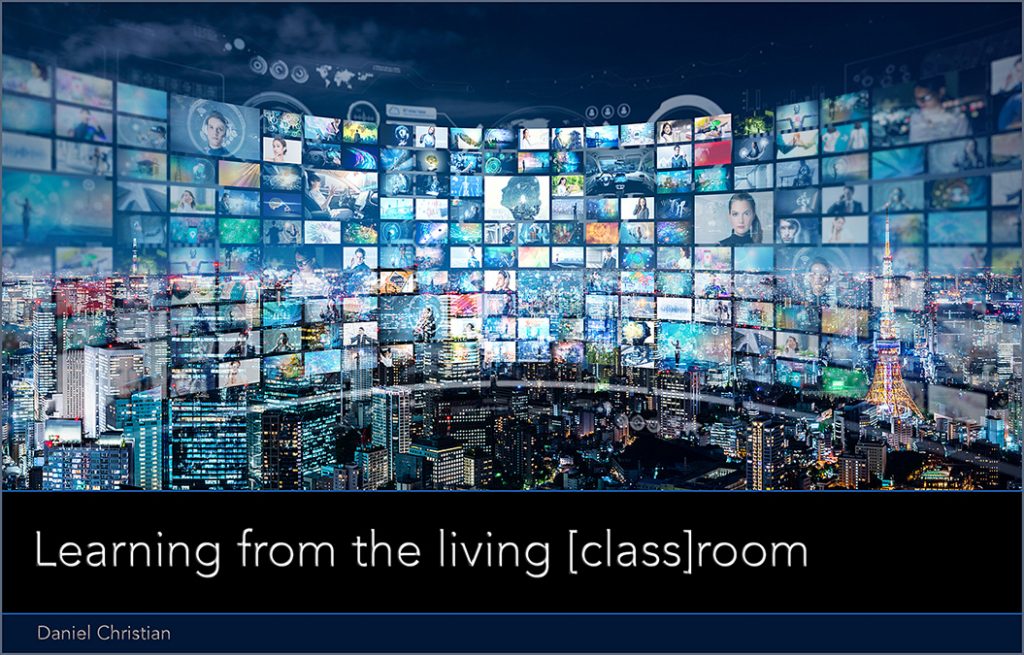
Learning from the living class room

...team-based content creation and delivery will dominate in the future (at least for the masses). It will offer engaging, personalized learning and the AI-based systems will be constantly scanning for the required/sought-after skills and competencies. The systems will then present a listing of items that will help people obtain those skills and competencies.

#AI #LearningProfiles #Cloud #LearningFromTheLivingClassRoom #LearningEcosystems #LearningSpaces #21stCentury #24x7x365 #Reinvent #Surviving #StayingRelevant #LifeLongLearning and many more tags/categories are applicable here.


Lincoln Financial CIO: How to build a learning culture – even in a pandemic — from enterprisersproject.com by Ken Solon
Lincoln Financial CIO Ken Solon shares how he’s bringing a virtual perspective to his longtime commitment to prioritizing the people behind the technology

Excerpt (emphasis DSC):

In the spirit of test-and-learn, we created “Lean In and Learn IT,” an interactive digital program that provides a deep dive into one key IT strategy each month. Topics include digital and architecture, agile and DevOps, cloud, big data, and cybersecurity.

Based in our virtual collaboration platform, each topic features a kick-off video followed by a drip of content and interaction, including snackable articles, video clips, quizzes, and prizes to keep the team engaged. The month wraps up with a webcast focused on a key business application of the strategy, featuring subject matter experts both from within the IT organization and our business partners.

The involvement of partners is key, as our surveys tell us that few things motivate our teams as effectively as seeing the impact of their work.

From DSC:
Love their use of “streams of content.”


The Gap Between What C-Suite Leaders Think And What HR Executives And Employees Know About Their Workplaces — from forbes.com by Kathy Caprino

Excerpt:

  • C-suite executives now rank organizational complexity, inadequate skills and employee burnout as the top 3 greatest challenges their businesses will face in the next 2 years, and 84% of CHROs say over the next two years they will prioritize agility and flexibility in the workforce. Yet only 19% of HR executives say their HR function has the proper business acumen or capabilities to do so
  •  74% of executives believe they’re helping their employees learn new skills needed to work during the pandemic yet only 38% of their employees believe the same
  • Despite nearly 80% of C-suite executives say they’re supporting the physical and emotional health of their workers right now, only 46% of employees agree
 
 
© 2025 | Daniel Christian