


Social media as a learning tool: Five suggested sses for the classroom — from frontierinternet.com; with thanks to Laura Tscholl, Communications Specialist | The Gateway for this resource
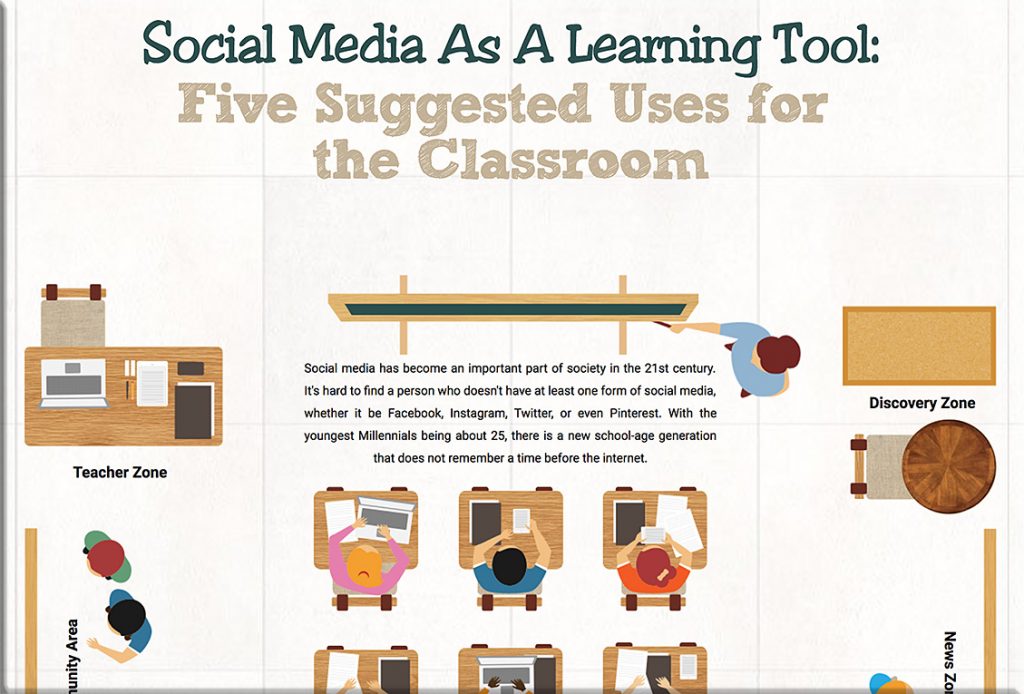
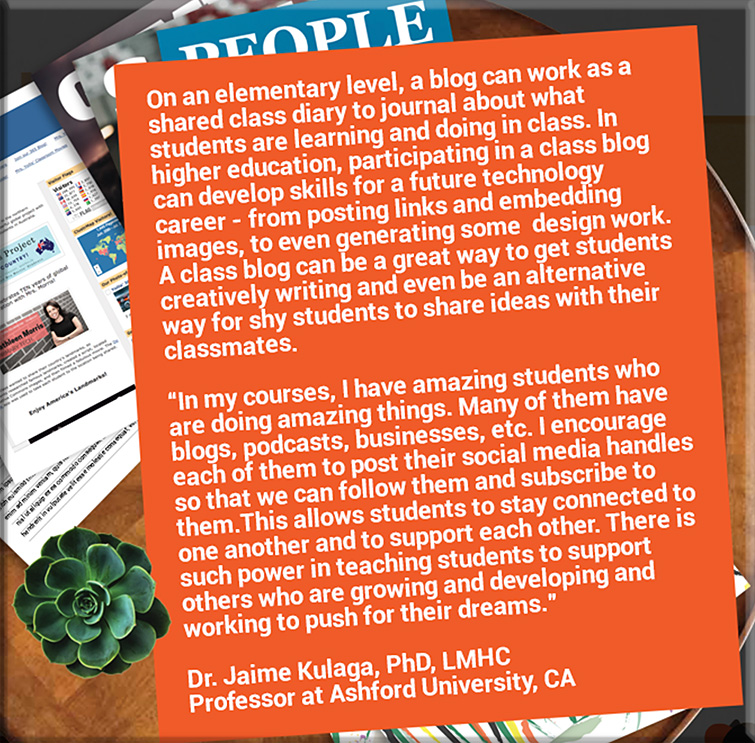
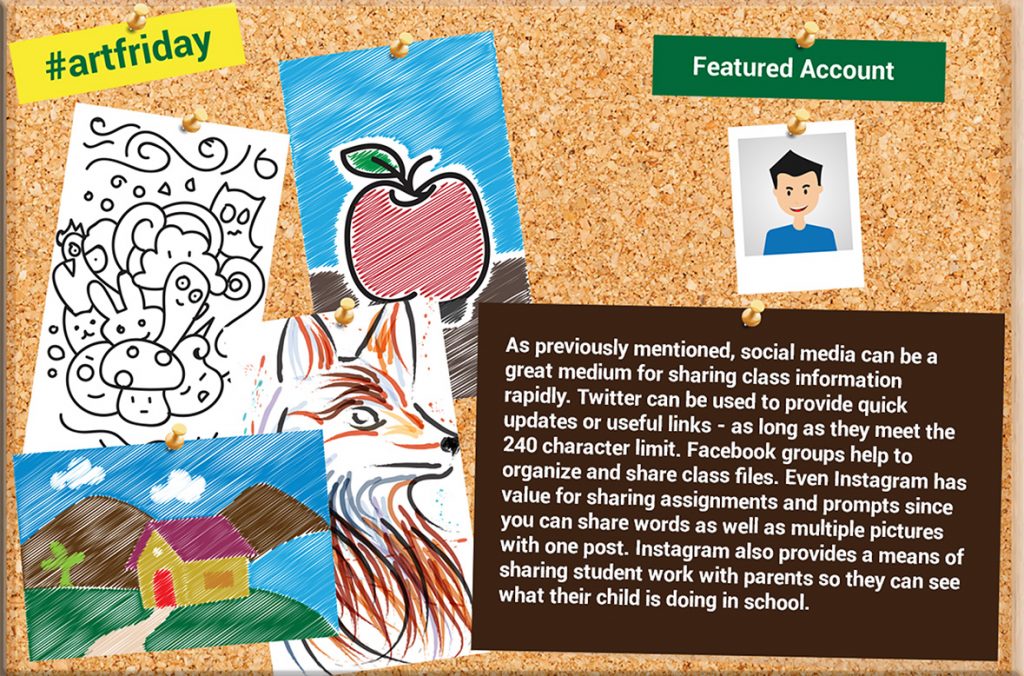
Social media as a learning tool: Five suggested sses for the classroom — from frontierinternet.com; with thanks to Laura Tscholl, Communications Specialist | The Gateway for this resource
From DSC:
I have often reflected on differentiation or what some call personalized learning and/or customized learning. How does a busy teacher, instructor, professor, or trainer achieve this, realistically?
It’s very difficult and time-consuming to do for sure. But it also requires a team of specialists to achieve such a holy grail of learning — as one person can’t know it all. That is, one educator doesn’t have the necessary time, skills, or knowledge to address so many different learning needs and levels!
Educators and trainers have so many things on their plates that it’s very difficult to come up with _X_ lesson plans/agendas/personalized approaches, etc. On the other side of the table, how do students from a vast array of backgrounds and cognitive skill levels get the main points of a chapter or piece of text? How can they self-select the level of difficulty and/or start at a “basics” level and work one’s way up to harder/more detailed levels if they can cognitively handle that level of detail/complexity? Conversely, how do I as a learner get the boiled down version of a piece of text?
Well… just as with the flipped classroom approach, I’d like to suggest that we flip things a bit and enlist teams of specialists at the publishers to fulfill this need. Move things to the content creation end — not so much at the delivery end of things. Publishers’ teams could play a significant, hugely helpful role in providing customized learning to learners.
Some of the ways that this could happen:
Use an HTML like language when writing a textbook, such as:
<MainPoint> The text for the main point here. </MainPoint>
<SubPoint1>The text for the subpoint 1 here.</SubPoint1>
<DetailsSubPoint1>More detailed information for subpoint 1 here.</DetailsSubPoint1>
<SubPoint2>The text for the subpoint 2 here.</SubPoint2>
<DetailsSubPoint2>More detailed information for subpoint 2 here.</DetailsSubPoint2>
<SubPoint3>The text for the subpoint 3 here.</SubPoint3>
<DetailsSubPoint3>More detailed information for subpoint 3 here.</DetailsSubPoint1>
<SummaryOfMainPoints>A list of the main points that a learner should walk away with.</SummaryOfMainPoints>
<BasicsOfMainPoints>Here is a listing of the main points, but put in alternative words and more basic ways of expressing those main points. </BasicsOfMainPoints>
<Conclusion> The text for the concluding comments here.</Conclusion>
<BasicsOfMainPoints> could be called <AlternativeExplanations>
Bottom line: This tag would be to put things forth using very straightforward terms.
Another tag would be to address how this topic/chapter is relevant:
<RealWorldApplication>This short paragraph should illustrate real world examples
of this particular topic. Why does this topic matter? How is it relevant?</RealWorldApplication>
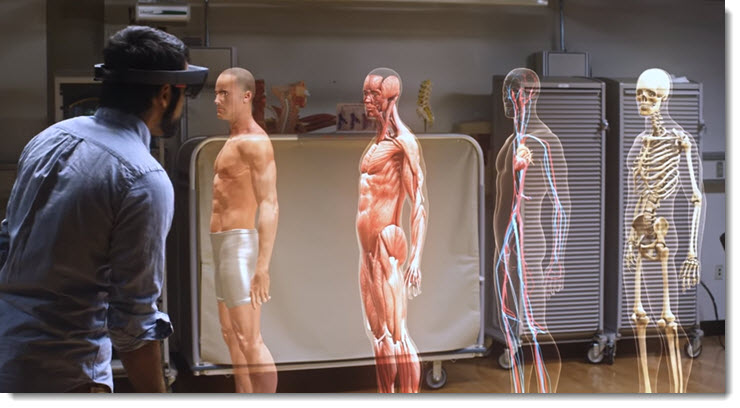
On the students’ end, they could use an app that works with such tags to allow a learner to quickly see/review the different layers. That is:
It’s like the layers of a Microsoft HoloLens app of the human anatomy:
Or it’s like different layers of a chapter of a “textbook” — so a learner could quickly collapse/expand the text as needed:
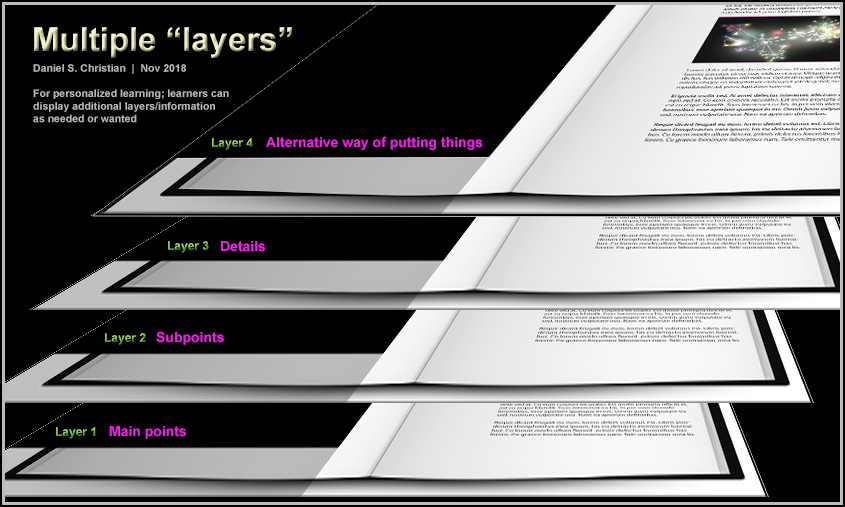
This approach could be helpful at all kinds of learning levels. For example, it could be very helpful for law school students to obtain outlines for cases or for chapters of information. Similarly, it could be helpful for dental or medical school students to get the main points as well as detailed information.
Also, as Artificial Intelligence (AI) grows, the system could check a learner’s cloud-based learner profile to see their reading level or prior knowledge, any IEP’s on file, their learning preferences (audio, video, animations, etc.), etc. to further provide a personalized/customized learning experience.
To recap:
Top Trends in Active and Collaborative Learning — from thesextantgroup.com by Joe Hammett
Excerpts:
My daughter is a maker. She spends hours tinkering with sewing machines and slime recipes, building salamander habitats and the like. She hangs out with her school friends inside apps that teach math and problem solving through multi-player games. All the while, they are learning to communicate and collaborate in ways that are completely foreign to their grandparent’s generation. She is 10 years old and represents a shift in human cognitive processing brought about by the mastery of technology from a very young age. Her generation and those that come after have never known a time without technology. Personal devices have changed the shared human experience and there is no turning back.
The spaces in which this new human chooses to occupy must cater to their style of existence. They see every display as interactive and are growing up knowing that the entirety of human knowledge is available to them by simply asking Alexa. The 3D printer is a familiar concept and space travel for pleasure will be the norm when they have children of their own.
Current trends in active and collaborative learning are evolving alongside these young minds and when appropriately implemented, enable experiential learning and creative encounters that are changing the very nature of the learning process. Attention to the spaces that will support the educators is also paramount to this success. Lesson plans and teaching style must flip with the classroom. The learning space is just a room without the educator and their content.

…
8. Flexible and Reconfigurable
With floor space at a premium, classrooms need to be able to adapt to a multitude of uses and pedagogies. Flexible furniture will allow the individual instructor freedom to set up the space as needed for their intended activities without impacting the next person to use the room. Construction material choices are key to achieving an easily reconfigurable space. Raised floors and individually controllable lighting fixtures allow a room to go from lecture to group work with ease. Whiteboard paints and rail mounting systems make walls reconfigurable too!.
Active Learning, Flipped Classroom, SCALE-UP, TEAL Classroom, whatever label you choose to place before it, the classroom, learning spaces of all sorts, are changing. The occupants of these spaces demand that they are able to effectively, and comfortably, share ideas and collaborate on projects with their counterparts both in person and in the ether. A global shift is happening in the way humans share ideas. Disruptive technology, on a level not seen since the assembly line, is driving a change in the way humans interact with other humans. The future is collaborative.
Augmented Reality In Healthcare Will Be Revolutionary — from medicalfuturist.com
Excerpts:
1) Augmented reality can save lives through showing defibrillators nearby
2) Google Glass might help new mothers struggling with breastfeeding
3) Patients can describe their symptoms better through augmented reality
4) Nurses can find veins easier with augmented reality
5) Motivating runners through zombies
6) Pharma companies can provide more innovative drug information
7) Augmented reality can assist surgeons in the OR
8) Google’s digital contact lens can transform how we look at the world
How is AI used in healthcare – 5 powerful real-world examples that show the latest advances — from forbes.com by Bernard Marr
Excerpts:
1) AI-assisted robotic surgery
2) Virtual nursing assistants
3) Aid clinical judgment or diagnosis
4) Workflow and administrative tasks
5) Image analysis
Summary: A Manager’s guide to Augmented Reality. — from twnkls.com by Prof. Michael Porter
Excerpt:
The full read can be found at the bottom of this page. But we summarized for you the 4 key take-aways:
What’s so great about VR? Virtually everything — from virtuallyinspired.org
Excerpt:
No doubt about it. Virtual reality isn’t just for gamers and gadget geeks anymore. In fact, as the technology gets better and cheaper, VR is the wave of the future when it comes to creating a truly memorable and effective learning experience – and for good reason.
Multiple Learning Attributes. To begin with, it empowers us to create any number of safely immersive virtual learning environments that feel and respond much as they would in real life, as students engage and explore, interact with and manipulate objects within these worlds. Imagine teleporting your students to re-enact historic battles; explore outer space; or travel the inner workings of the human body. What’s more, using sophisticated controls, they can actually “practice” complex procedures like cardiac surgery, or master difficult concepts, such as the molecular properties of brain cells.
Likewise, VR gives new meaning to the term “field trip,” by enabling students to virtually experience first-hand some of the world’s great museums, natural wonders and notable landmarks. You can also embed 360-degree objects within the virtual classroom to support course content, much as Drexel University Online is doing after assembling its one-of-a-kind VRtifacts+ repository. And you can use it to live-stream events, guest lectures and campus tours, in addition to hosting virtual community spaces where learners can meet and connect in a seemingly “real” environment.
The Modern Alternative Learning Resource: Time To Drop The Ban On Phones In Schools? — from vrfocus.com by Robert Currie
Robert Currie discusses the mobile phone’s role in education, and how thanks in part to AR and VR it should now be considered a top tool.
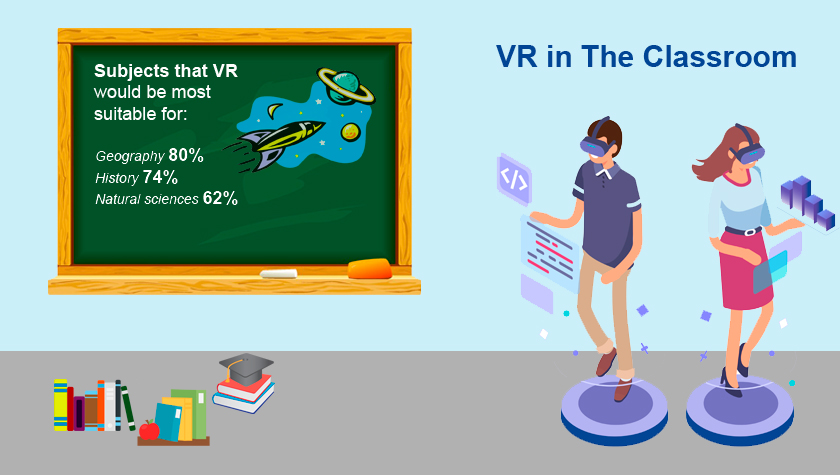
Benefits of Virtual Reality in Education — from invisible.toys
The AVR Platform and Classroom 3.0 Showcased at EduTECH Asia 2018 — from eonreality.com
Excerpt:
At EduTECH Asia 2018 this week in Singapore, EON Reality spent two full days speaking, promoting, and demonstrating the latest updates to the AVR Platform to the thousands of education and technology professionals in attendance.
With a focus on how the AVR Platform can best be used in the education world, EON Reality’s discussion, ‘Augmented and Virtual Reality in Education: The Shift to Classroom 3.0,’ highlighted Wednesday’s offerings with a full presentation and hands-on demos of the new tools in Creator AVR. Over the course of both days, visitors filled the EON Reality booth to get their own one-on-one experience of Creator AVR, Virtual Trainer, and the ways in which AR Assist can help out in the classroom.
The AVR Platform’s three products are the fundamental tools of EON Reality’s Classroom 3.0 vision for the Immersed Flipped Classrooms of the future. With Creator AVR — a SaaS-based learning and content creation solution — leading the way, the AVR Platform empowers Classroom 3.0 by providing teachers and educators of all types with the tools needed to create Augmented and Virtual Reality learning modules.
Bringing Asian educators from all over the continent together, EON Reality’s presence at EduTECH showed just how significantly Augmented Reality and Virtual Reality can elevate the overall educational experience going forward. After two full days of demonstrations, EON Reality introduced the AVR Platform to approximately 1500 teachers, school administration officials, and other decision-makers in Asia’s education industry.
As the AVR Platform expands to educational markets around the world, EON Reality’s revolutionary spin on traditional learning branches into new cultures and nations. With local Singaporean educational institutions like Temasek Polytechnic already onboard, the EduTECH Asia 2018 conference marked the continued spread of Classroom 3.0 and the AVR Platform on both a regional and global level.
Are ‘smart’ classrooms the future? — from campustechnology.com by Julie Johnston
Indiana University explores that question by bringing together tech partners and university leaders to share ideas on how to design classrooms that make better use of faculty and student time.
Excerpt:
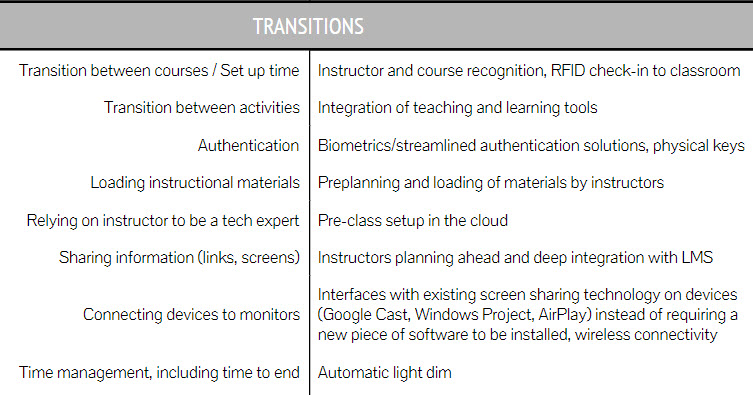
To achieve these goals, we are investigating smart solutions that will:
…
Activities included collaborative brainstorming focusing on these questions:
From DSC:
Though many peoples’ — including faculty members’ — eyes gloss over when we start talking about learning spaces and smart classrooms, it’s still an important topic. Personally, I’d rather be learning in an engaging, exciting learning environment that’s outfitted with a variety of tools (physically as well as digitally and virtually-based) that make sense for that community of learners. Also, faculty members have very limited time to get across campus and into the classroom and get things setup…the more things that can be automated in those setup situations the better!
I’ve long posted items re: machine-to-machine communications, voice recognition/voice-enabled interfaces, artificial intelligence, bots, algorithms, a variety of vendors and their products including Amazon’s Alexa / Apple’s Siri / Microsoft’s Cortana / and Google’s Home or Google Assistant, learning spaces, and smart classrooms, as I do think those things are components of our future learning ecosystems.
Teaching technology today: One law school’s innovative offerings — from abovethelaw.com by David Lat
Lawyers of the future, regardless of practice area, need to be proficient in legal technology.
Excerpts (emphasis DSC):
Technology is transforming the practice and profession of law — and legal education must evolve accordingly. Across the country, law schools are launching and expanding research centers, clinics, and course offerings focused on legal technology.
…
Earlier this month, I spoke with Judge Prudenti again, to check in on her efforts. I asked her: Why is legal-tech proficiency so important today?
“I’m a true believer,” Judge Prudenti told me. “I have seen, up close and personal, how technology has changed the legal marketplace and the practice of law — in the private sector, in the public sector, and in the courtroom.”
In private law firms, large or small, lawyers are engaged in e-discovery, e-filing, and e-billing — as a necessity. In the public sector, technology is being used to bridge the justice gap, helping to deliver legal services to the unrepresented. And in the courtroom, Judge Prudenti’s former domain, technology has been revolutionary, with touch-screen monitors, iPads, and video screens being used to present and review evidence.
“Lawyers of the future, regardless of practice area, need to be proficient in legal technology,” Judge Prudenti said — which is why Hofstra Law has been focusing so intensely on its technology offerings.
Addendum on 10/31/18:
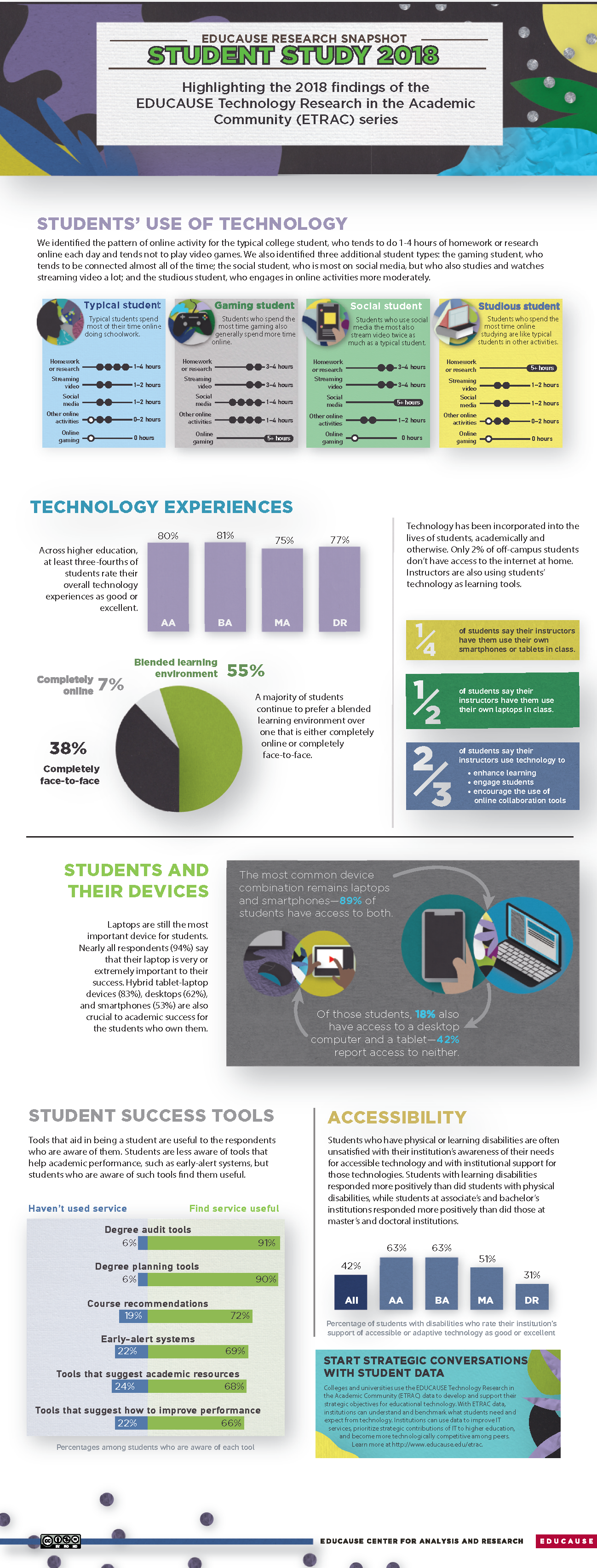
2018 Students and Technology Research Study — from library.educause.edu
Topics Covered
From DSC:
Ever notice how effective Ted Talks begin? They seek to instantly grab your attention with a zinger question, a somewhat shocking statement, an interesting story, a joke, an important problem or an issue, a personal anecdote or experience, a powerful image/photo/graphic, a brief demonstration, and the like.
Grabbing someone’s attention is a key first step in getting a piece of information into someone’s short-term memory — what I call getting through “the gate.” If we can’t get through the gate into someone’s short-term memory, we have zero (0) chance of having them actually process that information and to think about and engage with that piece of content. If we can’t make it into someone’s short-term memory, we can’t get that piece of information into their long-term memory for later retrieval/recall. There won’t be any return on investment (ROI) in that case.
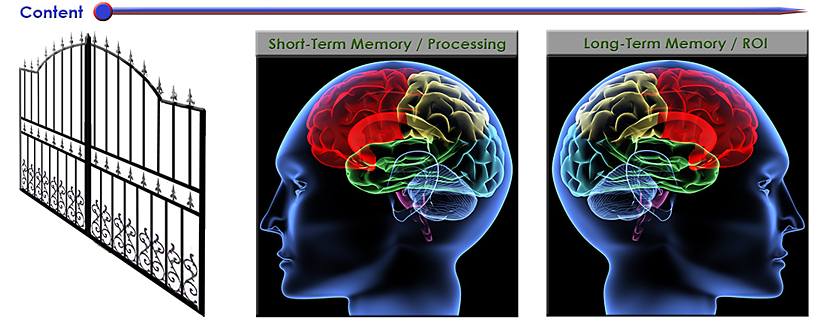
So why not try starting up one of your classes this week with a zinger question, a powerful image/photo/video, or a story from your own work experience? I’ll bet you’ll grab your students’ attentions instantly! Then you can move on into the material for a greater ROI. From there, offering frequent, low-stakes quizzes will hopefully help your students slow down their forgetting curves and help them practice recalling/retrieving that information. By the way, that’s why stories are quite powerful. We often remember them better. So if you can weave an illustrative story into your next class, your students might really benefit from it come final test time!
Also relevant/see:
Ready, set, speak: 5 strong ways to start your next presentation — from abovethelaw.com by Olga Mack, with thanks to Mr. Otto Stockmeyer for this resource
No matter which of these five ways you decide to launch your presentation, ensure that you make it count, and make it memorable.
Excerpts:
Inside Amazon’s artificial intelligence flywheel — from wired.com by Steven Levy
How deep learning came to power Alexa, Amazon Web Services, and nearly every other division of the company.
Excerpt (emphasis DSC):
Amazon loves to use the word flywheel to describe how various parts of its massive business work as a single perpetual motion machine. It now has a powerful AI flywheel, where machine-learning innovations in one part of the company fuel the efforts of other teams, who in turn can build products or offer services to affect other groups, or even the company at large. Offering its machine-learning platforms to outsiders as a paid service makes the effort itself profitable—and in certain cases scoops up yet more data to level up the technology even more.
It took a lot of six-pagers to transform Amazon from a deep-learning wannabe into a formidable power. The results of this transformation can be seen throughout the company—including in a recommendations system that now runs on a totally new machine-learning infrastructure. Amazon is smarter in suggesting what you should read next, what items you should add to your shopping list, and what movie you might want to watch tonight. And this year Thirumalai started a new job, heading Amazon search, where he intends to use deep learning in every aspect of the service.
“If you asked me seven or eight years ago how big a force Amazon was in AI, I would have said, ‘They aren’t,’” says Pedro Domingos, a top computer science professor at the University of Washington. “But they have really come on aggressively. Now they are becoming a force.”
Maybe the force.
From DSC:
When will we begin to see more mainstream recommendation engines for learning-based materials? With the demand for people to reinvent themselves, such a next generation learning platform can’t come soon enough!
![The Living [Class] Room -- by Daniel Christian -- July 2012 -- a second device used in conjunction with a Smart/Connected TV](http://danielschristian.com/learning-ecosystems/wp-content/uploads/2012/07/The-Living-Class-Room-Daniel-S-Christian-July-2012.jpg)

We’re about to embark on a period in American history where career reinvention will be critical, perhaps more so than it’s ever been before. In the next decade, as many as 50 million American workers—a third of the total—will need to change careers, according to McKinsey Global Institute. Automation, in the form of AI (artificial intelligence) and RPA (robotic process automation), is the primary driver. McKinsey observes: “There are few precedents in which societies have successfully retrained such large numbers of people.”
Also relevant/see:
Online education’s expansion continues in higher ed with a focus on tech skills — from educationdive.com by James Paterson
Dive Brief: