Creativity Required: How a Tesla Partnership is Setting the Stage for Program and Credential Innovation — from evolllution.com by Lenore Rodicio
By building strong employer partnerships and bringing a creative approach to program design and credentialing, it’s possible for colleges to create opportunities for learners to build the skills they need to work while progressing toward a degree.

Excerpt:

So for this particular program, a new state-of-the-art facility is being specifically constructed at MDC’s west campus from the ground up. Tesla provides the vehicles, equipment, instructors, tools and curriculum for hands-on learning.


Here’s another item that deals with creativity:

  • Digital Transformation: A Focus on Creativity, Not Tools — from campustechnology.com by Mary Grush and Ellen Wagner
    Excerpt:
    It is easier to talk about [the technology tools] than it is to talk about the things people need to do to adapt to working with the new tools. And what’s odd is the lack of anticipation about the potential of digital transformation to open up true innovation and creativity. That’s the real prize, and it seems like this point is often missed.
    …
    Of course, in my role as a researcher at the Mixed Emerging Technology Integration Lab (the METIL lab) at the University of Central Florida’s Institute for Simulation and Training, I’ve begun work on three new projects that incorporate simulation, mobile, and artificial intelligence. We don’t just learn about the tools; we study their impact and how they can extend creativity.For another example of related research, take a look at ShapingEdu and the Humersive Learning Project at Arizona State University. There, the researchers look specifically at immersive learning and how to humanize it while fostering innovation.

 

This A.I. pocket device translates languages in real-time — from bigthink.com
The ONE Mini is a Swiss Army knife of translation tech, interpreting 12 different foreign languages with a host of features.


The future of law and computational technologies: Two sides of the same coin — from law.mit.edu by Daniel Linna
Law and computation are often thought of as being two distinct fields. Increasingly, that is not the case. Dan Linna explores the ways a computational approach could help address some of the biggest challenges facing the legal industry.

Excerpt:

The rapid advancement of artificial intelligence (“AI”) introduces opportunities to improve legal processes and facilitate social progress. At the same time, AI presents an original set of inherent risks and potential harms. From a Law and Computational Technologies perspective, these circumstances can be broadly separated into two categories. First, we can consider the ethics, regulations, and laws that apply to technology. Second, we can consider the use of technology to improve the delivery of legal services, justice systems, and the law itself. Each category presents an unprecedented opportunity to use significant technological advancements to preserve and expand the rule of law.

For basic legal needs, access to legal services might come in the form of smartphones or other devices that are capable of providing users with an inventory of their legal rights and obligations, as well as providing insights and solutions to common legal problems. Better yet, AI and pattern matching technologies can help catalyze the development of proactive approaches to identify potential legal problems and prevent them from arising, or at least mitigate their risk.
…

We risk squandering abundant opportunities to improve society with computational technologies if we fail to proactively create frameworks to embed ethics, regulation, and law into our processes by design and default.
…

To move forward, technologists and lawyers must radically expand current notions of interdisciplinary collaboration. Lawyers must learn about technology, and technologists must learn about the law.


Per RetrievalPractice.org:

Download ALL our free guides, research, and resources!

We’re here to make your life easier. In order to unleash the science of learning, we strive to make it easy to access and quick to implement.

That’s why we really want you to download everything from our library, including free practice guides, book club resources, research, and more.


The 20 top tech skills that employers want and that can help you find a job, according to recruiting site Indeed — from businessinsider.com by Rosalie Chan and Bani Sapra

Excerpt:

The job search site Indeed released a report this month about the top tech skills of 2019 based on job descriptions that are being posted.

Andrew Flowers, an economist at Indeed, says that in today’s job market, there are two major trends that drive the top skills in tech. The first is the rise of data science, machine learning, and artificial intelligence. The second is the rise of cloud computing.

“Python has had explosive growth,” Flowers told Business Insider. “If I’m around the dinner table and a nephew asks what should I learn? Having done this report, I would say, learn Python.”


From DSC:
This posting is for those students who are studying Education in college and/or for those adult learners who are making a right turn in their careers to become teachers.

Don’t underestimate the learning potential in a hashtag on Twitter! Consider a few:

Look at the individuals and the organizations who are posting in those hashtags — then follow those who are contributing solid resources, ideas, thoughts, and content.


Colleges see equity success with adaptive learning systems — from edtechmagazine.com by Shailaja Neelakantan
Powered by advanced algorithms, adaptive learning technologies boost completion rates and give students confidence.

“I used to teach one class of 100 students, but now I teach 100 classes of one student each,” said Doug Williams, the adaptive learning coordinator at Arizona State University, in the white paper, describing the effect of using such a technology-driven system to improve learning outcomes.


From DSC:
I post this item because I believe that this is the type of thing that will be a piece of our future learning ecosystems. Learning agents. Systems that accommodate each individual’s learning preferences. Real-time formative assessments…that impact what you see and experience next.  Intelligent systems. Intelligent tutoring.

People demonstrate mastery at different times — let that be part of our futures — versus this one-size fits all, hop-on-board-or-you-miss-the-train…a train that stops for no one.


Meet the new era of IoT tracking technologies — from medium.com by Vasil Tarasevich

Excerpt:

IoT or Internet of things has empowered a massive change in how machines can communicate with each other and opened room for surreal technology. Today, we have billions of interconnected devices, digital machines, people, objects and even animals provided with unique identifier capable of transferring data over a scalable network without any human intervention.

This has brought a radical change in how this exceptional technology can be applied to tracking and tagging objects and how these data can be perceived to know their locations and even improve their existing routes. Whether we consider the old RFID tags or the latest NFC, we live in an era where obtaining information is never a hassle.

Top IoT tracking Technologies
While there are a lot of emerging IoT tracking technologies like BLE, Zigbee, RFID, LTE Advanced, GPS, LiFi, LPWAN, and NFC, we have enlisted the top 3 tracking technologies.


From DSC:
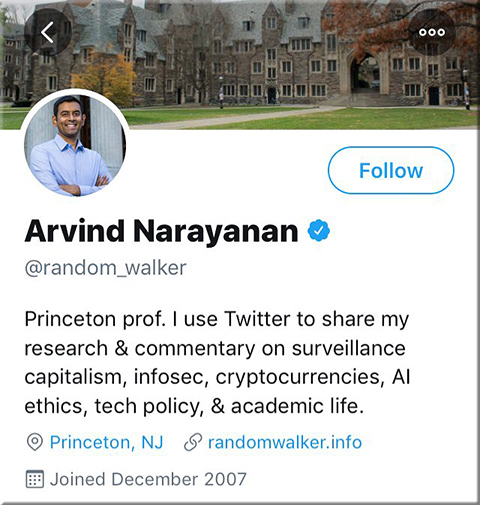
I wish that more faculty members would share their research, teaching methods, knowledge, and commentary with the world as this professor does (vs. talking to other professors behind publishers’ walled off content). In this case, Arvind happens to use Twitter. But if one doesn’t like to use Twitter, there’s also LinkedIn, WordPress/blogging, podcasting, and other outlets. 


Amazon’s new Fire TV Blaster works with Echo to control your TV, soundbar, cable box and more — from techcrunch.com by Sarah Perez

Excerpt:

Amazon already offers Alexa voice control to TV owners through its Fire TV devices, by way of a voice remote or by pairing an Echo device with a Fire TV, for hands-free voice commands. Now, it’s introducing a new device, the Fire TV Blaster, which extends that same hands-free voice control to your TV itself and other TV devices — like your soundbar, cable box, or A/V Receiver.

That means you’ll be able to say things like “Alexa, turn off the TV,” or “Alexa, switch to HDMI 1 on TV.” You can also control the volume and the playback.

And if you have other TV devices, you can control them hands-free as well, by saying things like “Alexa, turn up the soundbar volume,” or “Alexa tune to ESPN on cable.”


From DSC:
How might such Natural Language Processing (NLP) / voice recognition technologies impact future learning experiences and learning spaces? Will we enjoy more hands-free navigation around some cloud-based learning-related content? Will faculty members be able to use their voice to do the things that a Crestron Media Controller does today?

Parenthetically…when will we be able to speak to our routers (to shut off the kids’ internet connections/devices for example) and/or speak to our thermostats (to set the temperature(s) quickly for the remainder of the day)?


This former Apple designer is taking on Amazon’s Twitch with $146 million and Fox’s backing — from fastcompany.com by Jeff Beer
Caffeine founder and CEO Ben Keighran talks about why live streaming is much more than gaming—it’s the future of TV.

Excerpt (emphasis DSC):

Live-streaming startup Caffeine, started by former Apple designer Ben Keighran, is emerging out of a two-year beta today and aims to overtake Amazon’s Twitch and Microsoft’s Mixer as the world’s leading live broadcasting platform. The official release version features a completely new design for its website and iOS and Android apps that combines editorial, algorithmic, and social connections to make it easier to discover live broadcasting from gamers, entertainers, and athletes, as well as create your own interactive broadcasts featuring live television content.

Twitch is the undisputed king of live-streamed gaming, but Keighran is betting that Caffeine’s more diverse focus to go beyond gaming—into entertainment and sports—will make it a more attractive place for both viewers and creators.

Keighran says another technological difference between Caffeine and Twitch is in its ease of use and quickness. “In just a couple of clicks, you can stream Red Bull 24/7 and be the commentator, you can stream Fortnite in one click, you can create an entertainment stream and talk about the new sneaker you just got, and you can do that all in one place,” he says. “And it’s all in real-time—there’s no delay in the video, whereas on Twitch, there’s up to a 60-second delay.”


From DSC:
Hmmm… social interaction. New platforms for streaming live content. Ability to comment and ask questions (i.e., audience interactions). Interactive chats.

Can we add learning-related experiences to the audiences and applications here?


A somewhat related item:


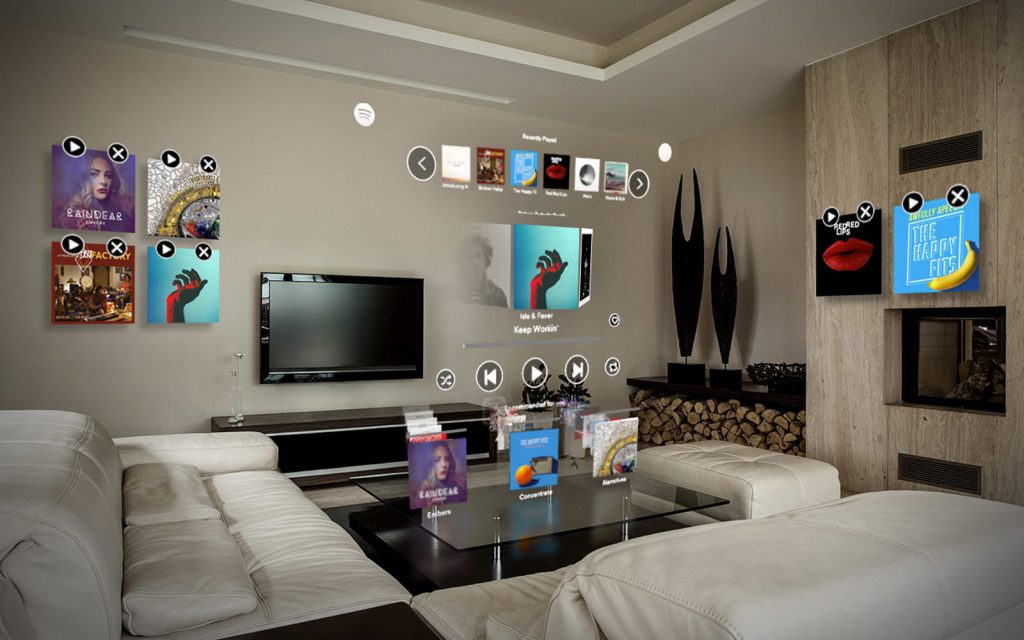
Turn Your Home Into A Mixed Reality Record Store With Spotify On Magic Leap — from vrscout.com by Kyle Melnick

“We see a time in the not too distant future when spatial computing will extend into the wider world of podcasts, audiobooks and storytelling,” continues Magic Leap in their post. “And this is just the beginning. The launch of Spotify marks an evolution in the way you can see, hear and experience the bands and artists that you love. It’s an exciting time for music. For musicians. For developers. And for music-lovers the world over.”


In Search of a Conversational Bot: Voice Computing Evolves — from learningsolutionsmag.com by Pamela Hogle

Excerpts:

Voice computing is rapidly changing the way people interact with technology, which will have dramatic impact on how learners expect to interact with eLearning technology.

Using conversational AI in an eLearning context, where learners are focused on a single topic or narrow range of content, could become feasible before developers achieve the goal of an AI that excels at general conversation.


Six Examples of Augmented Reality in Performance Support — from learningsolutionsmag.com by Jeff Batt

Excerpt:

What do you think of when you hear the words “performance support”? We may all have our interpretation, but for me, performance support gives the learner instruction on how to perform actions while on the job and in the moment they need it. That has AR written all over it.

AR in performance support puts learning content in the context of what the learner is seeing. It enhances the real world, and it guides the learner through steps they need to take in the real world and even allows them to explore content they cannot easily access otherwise.

That has enormous potential for the learning and development space and gets me super excited about using AR. In this article, I’ll explore some possible scenarios for using AR in your performance support materials.

 
© 2025 | Daniel Christian