The Year TV Leaped Into The Future [Roettgers]

The Year TV Leaped Into The Future [Roettgers]

The Year TV Leaped Into The Future — from protocol.com by Janko Roettgers

The lockdowns this year have transformed our homes into offices, schools, concert halls, movie theaters and gyms. Our homes are working harder for us, but so is our technology. The device that is working the hardest is perhaps the TV—becoming our lifeline to a far more virtual world.

Addendums:
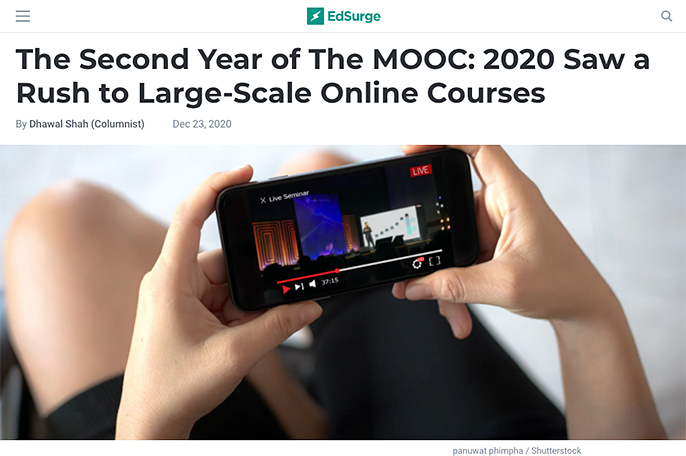
The Second Year of The MOOC: 2020 Saw a Rush to Large-Scale Online Courses

The Second Year of The MOOC: 2020 Saw a Rush to Large-Scale Online Courses — from edsurge.com by Dhawal Shah

Excerpt:

This was the year that more people learned what a MOOC is.

As millions suddenly found themselves with free time on their hands during the pandemic, many turned to online courses—especially, to free courses known as MOOCs, or Massive Open Online Courses. This phenomenon was compounded by media worldwide compiling lists of “free things to do during lockdown,” which tended to include MOOCs.

Within two months, Class Central had received over 10 million visits and sent over six million clicks to MOOC providers. These learners also turned out to be more engaged than usual. In April 2020, MOOC providers Coursera, edX and FutureLearn attracted as many new users in a single month as they did in the entirety of 2019.

.

From DSC:
The pieces continue to come together…
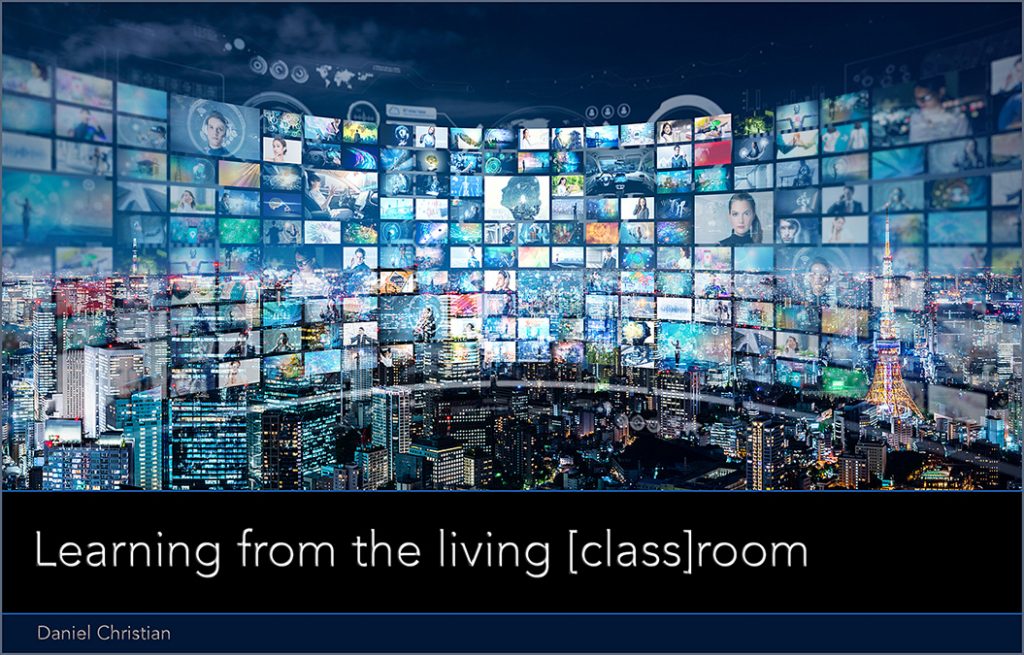
Learning from the living class room

...team-based content creation and delivery will dominate in the future (at least for the masses). It will offer engaging, personalized learning and the AI-based systems will be constantly scanning for the required/sought-after skills and competencies. The systems will then present a listing of items that will help people obtain those skills and competencies.

#AI #LearningProfiles #Cloud #LearningFromTheLivingClassRoom #LearningEcosystems #LearningSpaces #21stCentury #24x7x365 #Reinvent #Surviving #StayingRelevant #LifeLongLearning and many more tags/categories are applicable here.
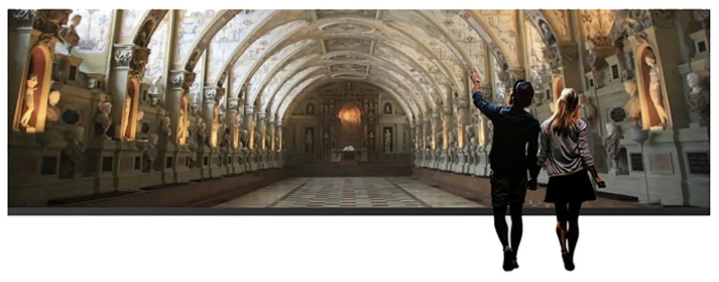
 

Sony to reveal all new Direct-View Display tech in January

Sony to reveal all new Direct-View Display tech in January — from provideocoalition.com by Jose Antunes

Excerpt:

Sony will start 2021 unveiling “the next Sony breakthrough in premium Direct-View Display technology to faithfully bring content to life as the creator intended”, announced the company.

Also see:

Sony Spatial Reality Display: 3D without glasses for creatives — from provideocoalition.com by Jose Antunes


Trends Report for 2021: Three Scenes from the Future -- from Frog Design

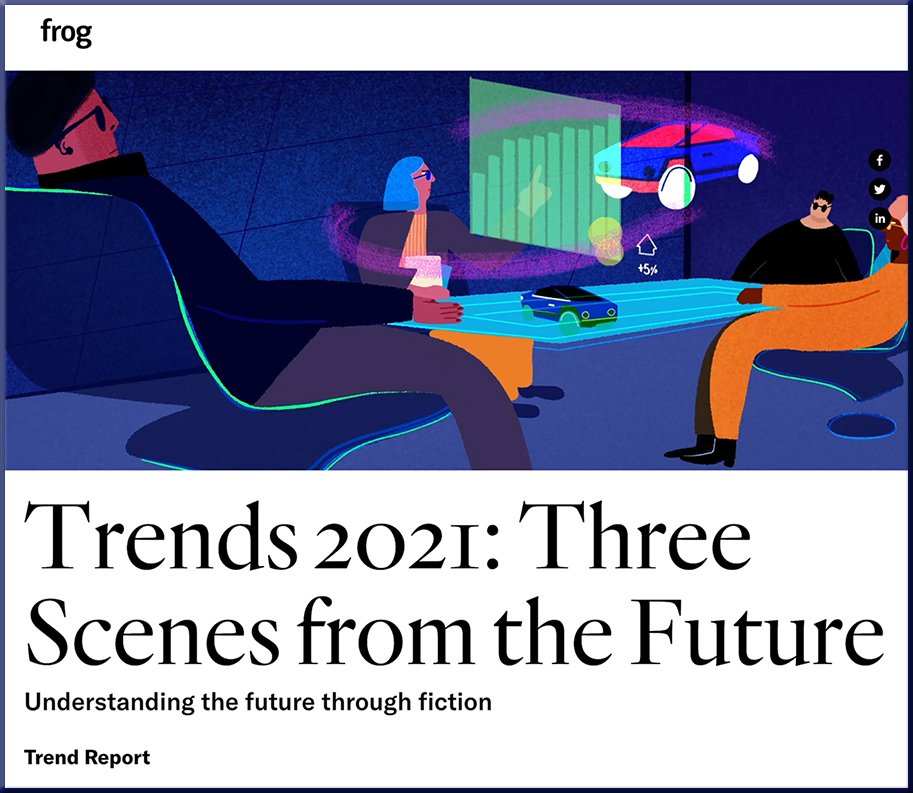
Trends 2021: Three Scenes from the Future — from frogdesign.com

Excerpt:

This year, we decided to lean into this unreality. For our tenth annual Trends list, we asked frogs to not only imagine the societal and technological shifts that will impact our future, but to project the future worlds these shifts will create. From perspectives on the accelerated adoption of remote work, to visions of distorted realities and changing consumer behaviors, we’re sharing different possible views of 2021 and beyond—and the products, services and experiences that will shape our future worlds.


The Hack That Shook Washington -- by Tom Krazit

The Hack That Shook Washington — from protocol.com by Tom Krazit

Excerpt:

A cybersecurity nightmare is unfolding in the nation’s capital as the fallout from one of the most brazen security breaches in recent memory continues to spread throughout several government agencies.

The internal networks belonging to no less than five government agencies, including the Defense and State Departments, were left wide open to a group of hackers believed to be working on behalf of Russia for several months this year, according to multiple reports and tacit confirmation of a breach from government officials earlier this week. This incident was especially scary because no one seems to know exactly how much data was accessed or stolen, and because those affected may never know.

The incident also highlights the vulnerability of the software supply chain, an important part of modern application development. Here’s what we know:

Addendum on 12/19/20:

Brad Smith, President of Microsoft" This is a moment of reckoning (referring to the Solar Winds cyberattack)


From DSC:
An interesting, more positive use of AI here:

Deepdub uses AI to dub movies in the voice of famous actors — from protocol.com by Janko Roettgers
Fresh out of stealth, the startup is using artificial intelligence to automate the localization process for global streaming.

Excerpt:

Tel Aviv-based startup Deepdub wants to help streaming services accelerate this kind of international rollout by using artificial intelligence for their localization needs. Deepdub, which came out of stealth on Wednesday, has built technology that can translate a voice track to a different language, all while staying true to the voice of the talent. This makes it possible to have someone like Morgan Freeman narrate a movie in French, Italian or Russian without losing what makes Freeman’s voice special and recognizable.

From DSC:
A much more negative use of AI here:

A much more negative use of AI here...


For Carolina Panthers, Learning Online Translates To Better Play On Field

For Carolina Panthers, Learning Online Translates To Better Play On Field — from forbes.com by Michael Horn

Excerpt:

The solution the Panthers devised wasn’t the traditional one of just studying and memorizing voluminous playbooks coupled with endless Zoom calls. They instead turned to an education startup called Learn to Win.

Learn to Win is one of the pioneers in mobile learning, as it uses the principles of sound instructional design to transform training material that’s critical to an organization’s success into content that allows people to learn faster and more effectively.


Teaching with Amazon Alexa — from Sylvia Martinez

Excerpt:

Alexa is a voice-activated, cloud-based virtual assistant, similar to Siri on Apple devices, or Google Assistant. Alexa is an umbrella name for the cloud-based functionality that responds to verbal commands. Alexa uses artificial intelligence to answer questions or control smart devices, and has a range of “skills” — small programs that you can add to increase Alexa’s capabilities.

Many teachers are experimenting with using smart devices like Alexa in the classroom. Like most other Amazon features and products, Alexa is primarily designed for home use, anticipating that users will be household members. So in thinking about Alexa in a classroom, keeping this in mind will help determine the best educational uses.

Alexa is most often accessed in three ways…


Designed to Deceive: Do These People Look Real to You? — from nytimes.com by Kashmir Hill and Jeremy White
These people may look familiar, like ones you’ve seen on Facebook or Twitter. Or people whose product reviews you’ve read on Amazon, or dating profiles you’ve seen on Tinder. They look stunningly real at first glance. But they do not exist. They were born from the mind of a computer. And the technology that makes them is improving at a startling pace.

Is this humility or hubris? Do we place too little value in human intelligence — or do we overrate it, assuming we are so smart that we can create things smarter still?


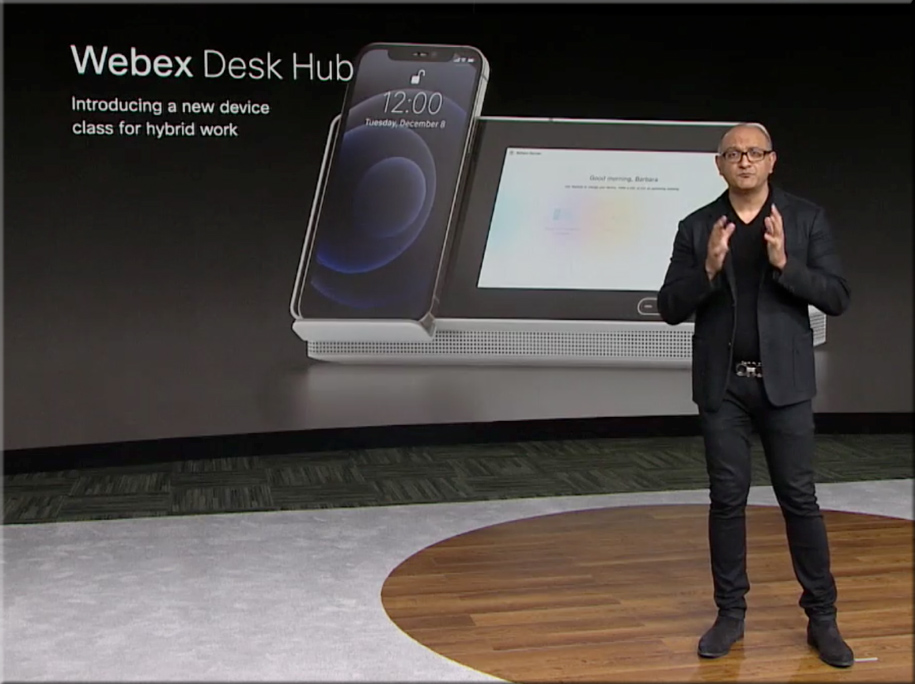
A new category of devices from Cisco -- the Webex Desk Hub

From DSC:
In yesterday’s webexone presentations, Cisco mentioned a new device category, calling it the Webex Desk Hub. It gets at the idea of walking into a facility and grabbing any desk, and making that desk you own — at least for that day and time. Cisco is banking on the idea that sometimes people will be working remotely, and sometimes they will be “going into the office.” But the facilities will likely be fewer and smaller — so one might not have their own office.

In that case, you can plug in your smart device, and things are set up the way they would be if you did have that space as a permanent office.

Applying this concept to the smart classrooms of the future, what might that concept look like for classrooms? A faculty member or a teacher could walk into any room that supports such a setup, put in their personal smart device, and the room conditions are instantly implemented:

  • The LMS comes on
  • The correct class — based on which day it is and then on the particular time of day it is — is launched
  • The lights are dimmed to 50%
  • The electric window treatments darken the room
  • The projector comes on and/or the displays turn on
  • Etc.
 

Cisco to Acquire Best-in-Class Audience Interaction Company, Slido — from blogs.cisco.com

Excerpt:

At Cisco, our goal is to deliver Webex experiences that are 10X better than in-person interactions and an important part of that is making these experiences inclusive and equal for all. We are making sure everyone is included and part of the conversation, whether working from their dining table or in an office building.

Today, I’m pleased to announce Cisco’s intent to acquire privately-held Slido s.r.o., a technology company that provides a best-in-class audience interaction platform. Slido technology enables higher levels of user engagement — before, during and after meetings and events. The Slido technology will be part of the Cisco Webex platform and enhance Cisco’s ability to offer new levels of inclusive audience engagement across both in-person and virtual experiences.
…
Soon, meeting owners will be able to:

    • Create engaging and dynamic participant experiences with dynamic Q&As and polls using graphic visual representations to express the results clearly.
    • Get real-time critical insights and understanding before, during and after meetings and events, from all-hands and townhalls to conferences and training sessions.
    • Obtain inclusive feedback so every voice is heard.
    • Give presenters the confidence that they are connecting in a meaningful way with their audience.

Also see:

Slido to be acquired by Cisco to help transform virtual meetings — from blog.sli.do


From DSC:
The good…

London A.I. lab claims breakthrough that could accelerate drug discovery — from nytimes.com by
Researchers at DeepMind say they have solved “the protein folding problem,” a task that has bedeviled scientists for more than 50 years

This long-sought breakthrough could accelerate the ability to understand diseases, develop new medicines and unlock mysteries of the human body.

…and the not so good…


The Journal 2020 Award Winners

THE Journal 2020 New Product Award Winners

For THE Journal’s first-ever New Product Award program, judges selected winners in 30 categories spanning all aspects of technology innovations in K–12 education, from the classroom to the server room and beyond. We are proud to honor these winners for their outstanding contributions to the institution of education, in particular at this time of upheaval in the way education is being delivered to the nation’s 50 million students.


From DSC:
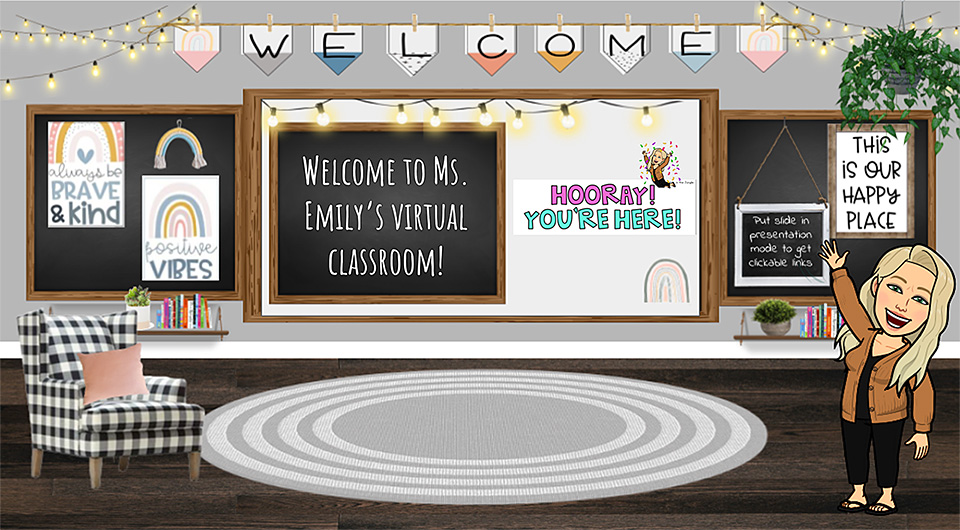
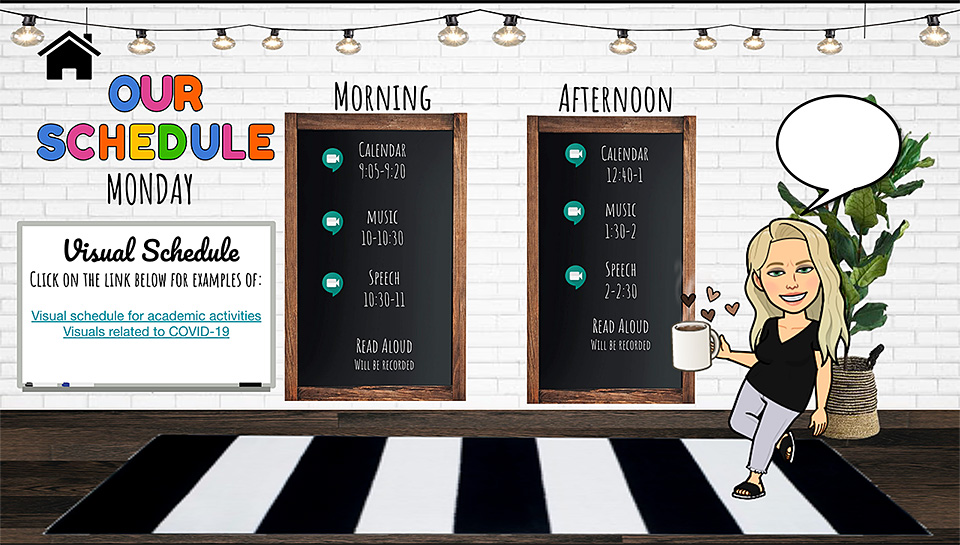
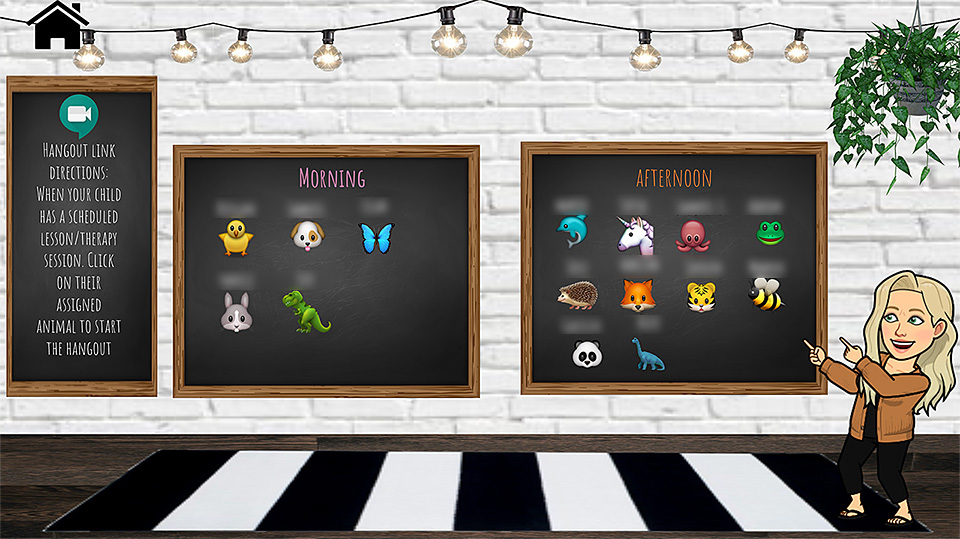
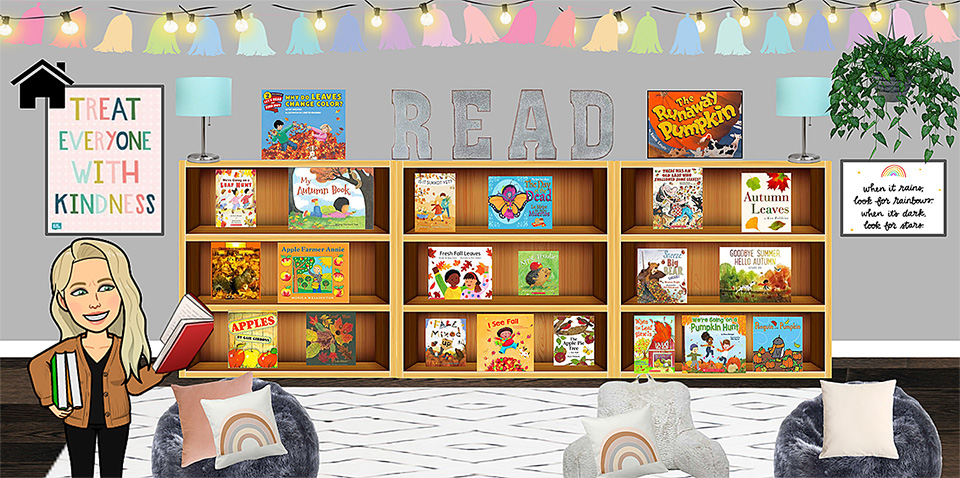
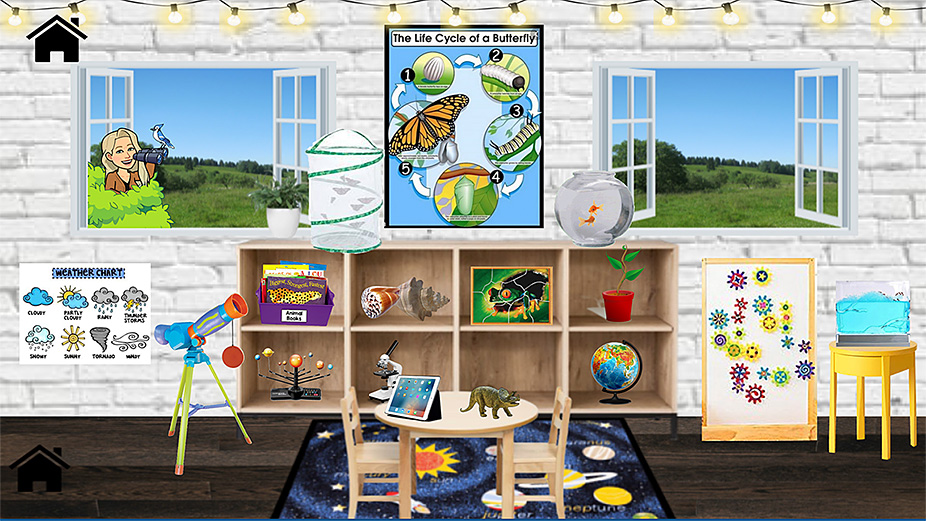
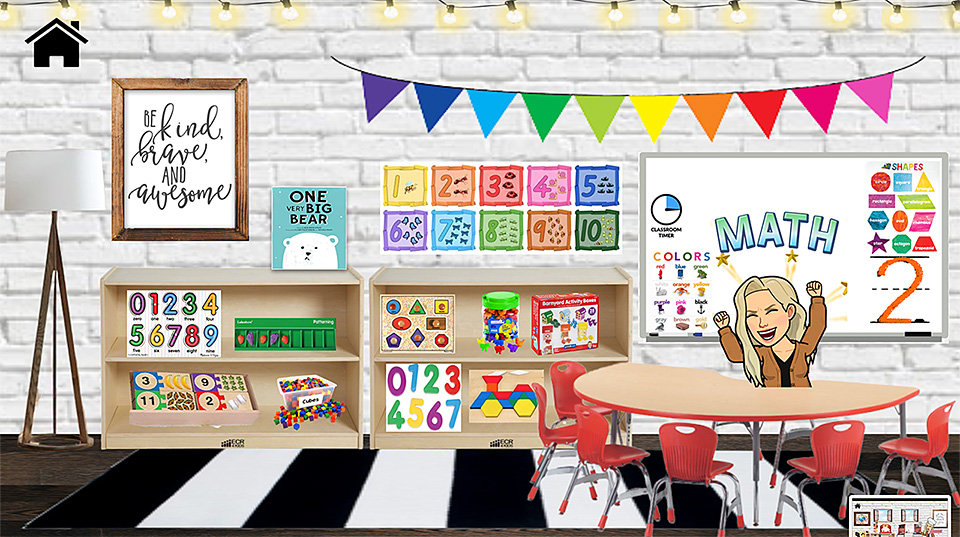
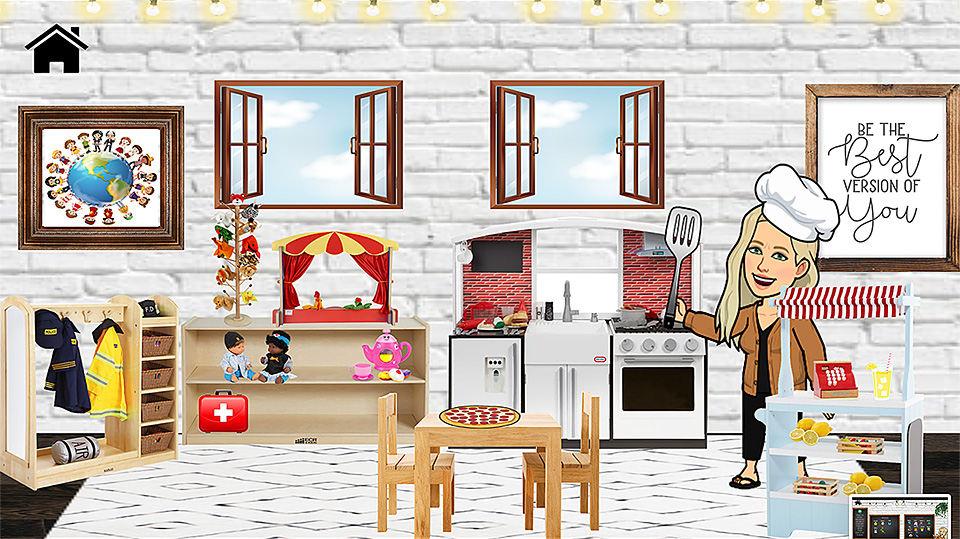
Our oldest daughter showed me a “Bitmoji Classroom” that her mentor teacher — Emily Clay — uses as her virtual classroom. Below are some snapshots of the Google Slides that Emily developed based on the work of:

  • Kayla Young (@bitmoji.kayla)
  • MaryBeth Thomas 
  • Ms. Smith 
  • Karen Koch
  • The First Grade Creative — by C. Verddugo

My hats off to all of these folks whose work laid the foundations for this creative, fun, engaging, easy-to-follow virtual classroom for a special education preschool classroom — complete with ties to videoconferencing functionalities from Zoom. Emily’s students could click on items all over the place — they could explore, pursue their interests/curiosities/passions. So the snapshots below don’t offer the great interactivity that the real deal does.

Nice work Emily & Company! I like how you provided more choice, more control to your students — while keeping them engaged! 

A snapshot of a Bitmoji Classroom created by Emily Clay


A snapshot of a Bitmoji Classroom created by Emily Clay

From DSC:
I also like the idea of presenting this type of slide (immediately below, and students’ names have been blurred for privacy’s sake) prior to entering a videoconferencing session where you are going to break out the students into groups. Perhaps that didn’t happen in Emily’s class…I’m not sure, but in other settings, it would make sense to share one’s screen right before sending the students to those breakout rooms and show them that type of slide (to let them know who will be in their particular breakout group).

The students in the different breakout sessions could then collaboratively work on Google Docs, Sheets, or Slides and you could watch their progress in real-time!

A snapshot of a Bitmoji Classroom created by Emily Clay


A snapshot of a Bitmoji Classroom created by Emily Clay


A snapshot of a Bitmoji Classroom created by Emily Clay


A snapshot of a Bitmoji Classroom created by Emily Clay


A snapshot of a Bitmoji Classroom created by Emily Clay

Also see:

 
© 2025 | Daniel Christian