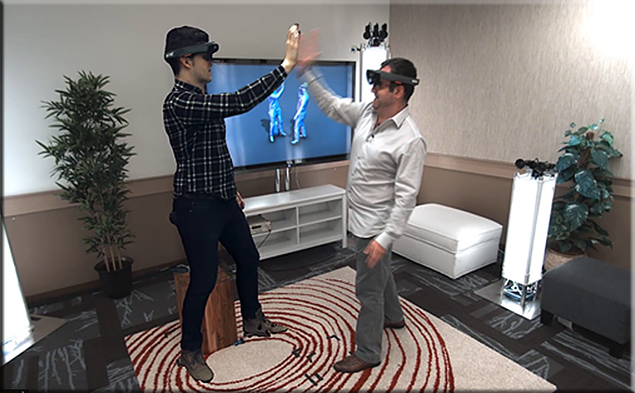
Similarly, messaging and social media are the killer apps of smartphones. Our need to connect with other people follows us, no matter where technology takes us. New technology succeeds when it makes what we are already doing better, cheaper, and faster. It naturally follows that Telepresence should likewise be one of the killer apps for both AR and VR. A video of Microsoft Research’s 2016 Holoportation experiment suggests Microsoft must have been working on this internally for some time, maybe even before the launch of the HoloLens itself.
Telepresence, meaning to be electronically present elsewhere, is not a new idea. As a result, the term describes a broad range of approaches to virtual presence. It breaks down into six main types:
Our need to connect with other people follows us, no matter where technology takes us.
The same techniques that generate images of smoke, clouds and fantastic beasts in movies can render neurons and brain structures in fine-grained detail.
Two projects presented yesterday at the 2017 Society for Neuroscience annual meeting in Washington, D.C., gave attendees a sampling of what these powerful technologies can do.
“These are the same rendering techniques that are used to make graphics for ‘Harry Potter’ movies,” says Tyler Ard, a neuroscientist in Arthur Toga’s lab at the University of Southern California in Los Angeles. Ard presented the results of applying these techniques to magnetic resonance imaging (MRI) scans.
The methods can turn massive amounts of data into images, making them ideally suited to generate brain scans. Ard and his colleagues develop code that enables them to easily enter data into the software. They plan to make the code freely available to other researchers.
After several cycles of development, it became clear that getting our process into VR as early as possible was essential. This was difficult to do within the landscape of VR tooling. So, at the beginning of 2017, we began developing features for early-stage VR prototyping in a tool named “Expo.”
… Start Prototyping in VR Now We developed Expo because the tools for collaborative prototyping did not exist at the start of this year. Since then, the landscape has dramatically improved and there are many tools providing prototyping workflows with no requirement to do your own development:
It’s no secret that one of the biggest issues holding back virtual and augmented reality is the lack of content.
Even as bigger studios and companies are sinking more and more money into VR and AR development, it’s still difficult for smaller, independent, developers to get started. A big part of the problem is that AR and VR apps require developers to create a ton of 3D objects, often an overwhelming and time-consuming process.
Google is hoping to fix that, though, with its new service called Poly, an online library of 3D objects developers can use in their own apps.
The model is a bit like Flickr, but for VR and AR developers rather than photographers. Anyone can upload their own 3D creations to the service and make them available to others via a Creative Commons license, and any developer can search and download objects for their own apps and games.
The definition of business-to-business (B2B) is rapidly changing. While B2B used to refer to commercial transactions between businesses, the power of augmented reality (AR) is transforming B2B by changing how businesses interact with one another. B2B is becoming more than business-to-business marketing; even more than B2B sales. AR is expanding businesses’ ability to connect with each other across multiple channels, and it is increasing the reasons they do so.
In this article, we will examine how augmented reality can help businesses promote their products and services to other enterprises. More exciting for some, we will also explore new ways businesses can use AR to connect with corporate customers, vendors, and partners.
…
Augmented Reality B2B Product Support Companies not only buy products from other companies; they also need customer service for many of the products they purchase. From poorly-written user manuals to poorly-written online self-help portals, product support hasn’t changed very much. But augmented reality is changing all that.
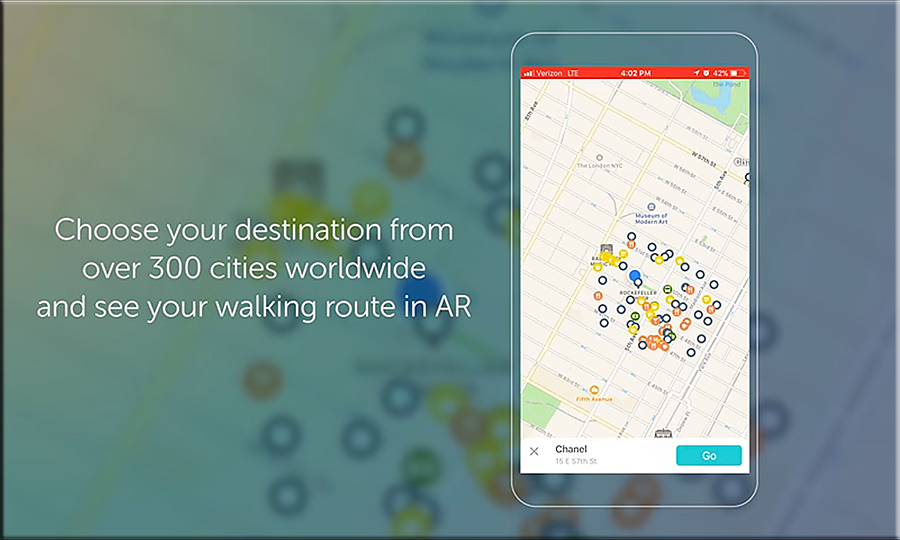
By layering how-to information over a product image as viewed on a mobile device or AR viewer, augmented reality can display interactive text and images that instruct the user how to setup, configure, troubleshoot and repair a wide variety of products.
AR-based customer support has barely broken ground in the consumer market, but opportunities are also great for developers who can target B2B industries with AR solutions.
Using AR apps, a carpet company can show an office manager what various carpet designs would look like installed in their office. A manufacturing engineer can see how a new production line would fit on the production floor. A physician can see how powerful AR medical applications can help her better diagnose her patients. And an architect can show a client how a new room addition will look from the outside when completed.
Much has been made of the potential for blockchain technologies to open up new vistas for business and society. But is there a way for this revolutionary technology to empower the rich and poor alike? We argue that, like previous revolutionary ideas, blockchain has the potential to help developing nations leapfrog more-developed economies.
Leapfrogging — using the lack of existing infrastructure as an opportunity to adopt the most advanced methods — has been a highly effective strategy for developing nations over the last few decades. The most visible example of leapfrogging today is in nations like Kenya and South Africa, which have rolled out near-universal telephone access using 3G networks instead of laying down copper cables, and provided internet access by smartphone rather than with desktop PCs. But it’s not just physical infrastructure that can be leapfrogged.
One of the 20th century’s most celebrated examples of leapfrogging happened in Japan, when the country recovered from the ravages of World War II by embracing sophisticated new manufacturing techniques.
Blockchains can also address the most pressing needs of developing-world governments: the modernization and digitization of government functions. The current world leader in blockchain adoption is Dubai, and there is much in Dubai’s approach that could be adopted by developing world nations. TheDubai Blockchain Strategy(disclosure: Vinay is the designer) envisions moving all government documents — more than 100 million documents per year — onto a blockchain by 2020, creating a new platform for innovation and huge cost savings.
Because it was explicitly designed to function in an environment where participants cannot necessarily trust each other, blockchain technology is extremely secure. Records held on a blockchain database are immune to being tampered with by third parties, and can thus be authoritative. Smart contracts can provide automatic and predictable execution, again removing the ability for third parties to subvert agreed-upon processes. The benefits for a developing economy are clear: There’s less potential for fraud and corruption, trade becomes more efficient and less costly, government becomes more effective, and local technology hubs can form to build out the infrastructure and export the knowledge gained.
Educational records, business histories, health care information, and credit ratings could all be made usable the world over, helping those who want to trade or travel to prove their credentials. Anybody who has ever paid too much for a college transcript or tried to clear a shadow on their credit score can see how systems like this would be helpful in our daily lives.
Required documentation, such as visa applications, bill payments and license renewals, which account for over 100 million documents each year, will be transacted digitally under the new strategy. Blockchain technology would contribute savings of up to 114 MTons CO2 emissions from trip reductions, and redistribute up to 25.1 million hours of economic productivity in saved document processing time.
And from another perspective —from Forrester’s 2018 predictions document
Blockchain is a story of rational exuberance. Blockchain promises to fully enable bold platform and ecosystem strategies while defending against increasing cybersecurity threats. And that extraordinary promise is, in part, the problem. The exuberance for blockchain hindered progress in 2017:
Marketers oversold blockchain.
Teams ran narrow tests that delivered underwhelming results against high expectations.
Teams applied blockchain-like approaches to problems that they could have solved with existing technologies.
Eighty percent of projects failed to meet expectations.
In 2018, the combination of rhetoric and enthusiasm will continue to limit blockchain gains. However, 30% of proofs of concept will accelerate blockchain for those companies able to consider its operational impact.
Addendum on 11/21/17:
7 Ways Blockchain Will Enable Entrepreneurs in 2018— from inc.com by Bill Carmody Blockchain is so much more than the technology used for cryptocurrencies. Here are 7 ways blockchain is enabling an entirely new generation of entrepreneurs.
Creative voice tech — from jwtintelligence.com by Ella Britton New programs from Google and the BBC use voice to steer storytelling with digital assistants.
Exceprt:
BBC Radio’s newest program, The Inspection Chamber, uses smart home devices to allow listeners to interact with and control the plot. Amid a rise in choose-your-own-adventure style programming, The Inspection Chamber opens up creative new possibilities for brands hoping to make use of voice assistants.
The Inspection Chamber tells the story of an alien stranded on earth, who is being interrogated by scientists and an AI robot called Dave. In this interactive drama, Amazon Echo and Google Home users play the part of the alien, answering questions and interacting with other characters to determine the story’s course. The experience takes around 20 minutes, with questions like “Cruel or Kind?” and “Do you like puzzles?” that help the scientists categorize a user.
…
“Voice is going to be a key way we interact with media, search for content, and find what we want,” said BBC director general Tony Hall. As describedin the Innovation Group’s Speak Easy report, the opportunities for brands to connect with consumers via smart speakers are substantial, particularly when it comes to education and entertainment. Brands can also harness these opportunities by creating entertaining and engaging content that consumers can interact with, creating what feels like a two-way dialogue.
From DSC: More and more, our voices will drive the way we interact with computing devices/applications. This item was an especially interesting item to me, as it involves the use of our voice — at home — to steer the storytelling that’s taking place. Talk about a new form of interactivity!
The Massachusetts Institute of Technology has issued learner-owned academic credentials on the blockchain. The University’s Digital Diploma Pilot Program allowed a select cohort of students to receive both a paper diploma and a digital diploma anchored to the blockchain. Digital diplomas are encoded using the open-source Blockcerts standard, which was developed by Learning Machine Technologies and the MIT Media Lab.
Speaking to MIT News, Registrar and Senior Associate Mary Callahan said, “From the beginning, one of our primary motivations has been to empower students to be the curators of their own credentials. This pilot makes it possible for them to have ownership of their records and be able to share them in a secure way, with whomever they choose.”
From DSC: I am honored to be currently serving on the 2018 Advisory Council for the Next Generation Learning Spaces Conference with a great group of people. Missing — at least from my perspective — from the image below is Kristen Tadrous, Senior Program Director with the Corporate Learning Network. Kristen has done a great job these last few years planning and running this conference.
NOTE:
The above graphic reflects a recent change for me. I am still an Adjunct Faculty Member
at Calvin College, but I am no longer a Senior Instructional Designer there.
My brand is centered around being an Instructional Technologist.
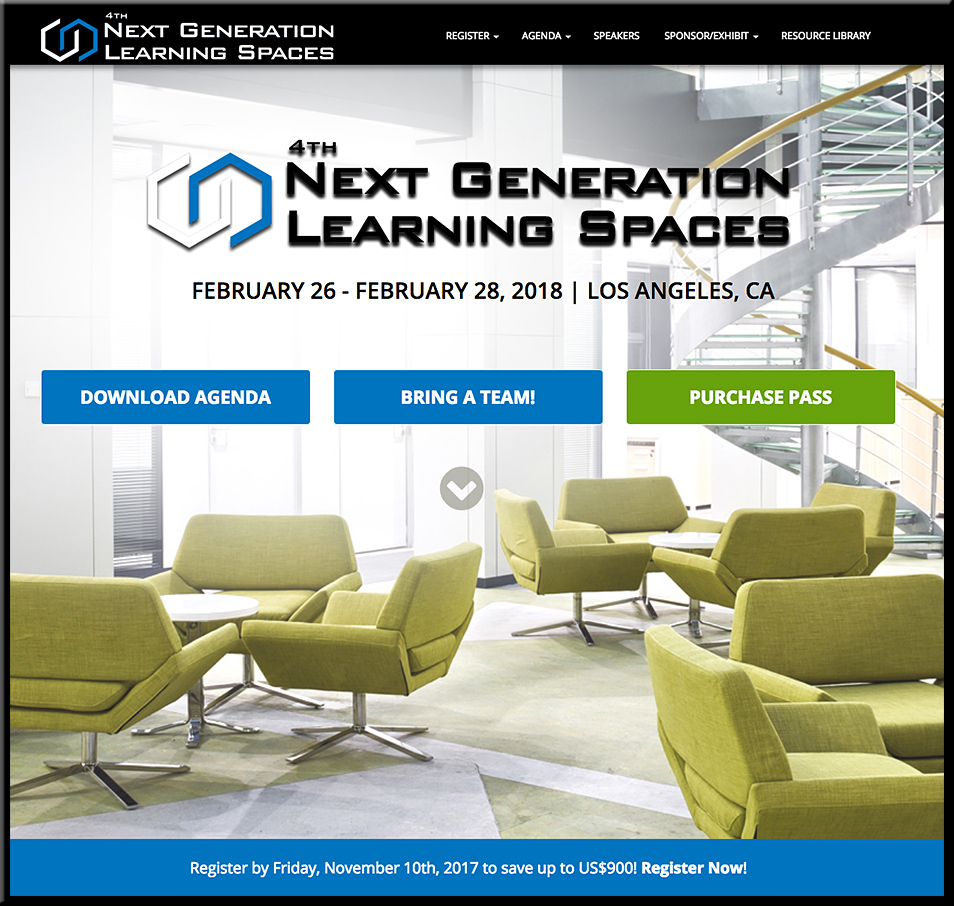
This national conference will be held in Los Angeles, CA on February 26-28, 2018. It is designed to help institutions of higher education develop highly-innovative cultures — something that’s needed in many institutions of traditional higher education right now.
I have attended the first 3 conferences and I moderated a panel at the most recent conference out in San Diego back in February/March of this year. I just want to say that this is a great conference and I encourage you to bring a group of people to it from your organization! I say a group of people because a group of 5 of us (from a variety of departments) went one year and the result of attending the NGLS Conference was a brand new Sandbox Classroom — an active-learning based, highly-collaborative learning space where faculty members can experiment with new pedagogies as well as with new technologies. The conference helped us discuss things as a diverse group, think out load, come up with some innovative ideas, and then build the momentum to move forward with some of those key ideas.
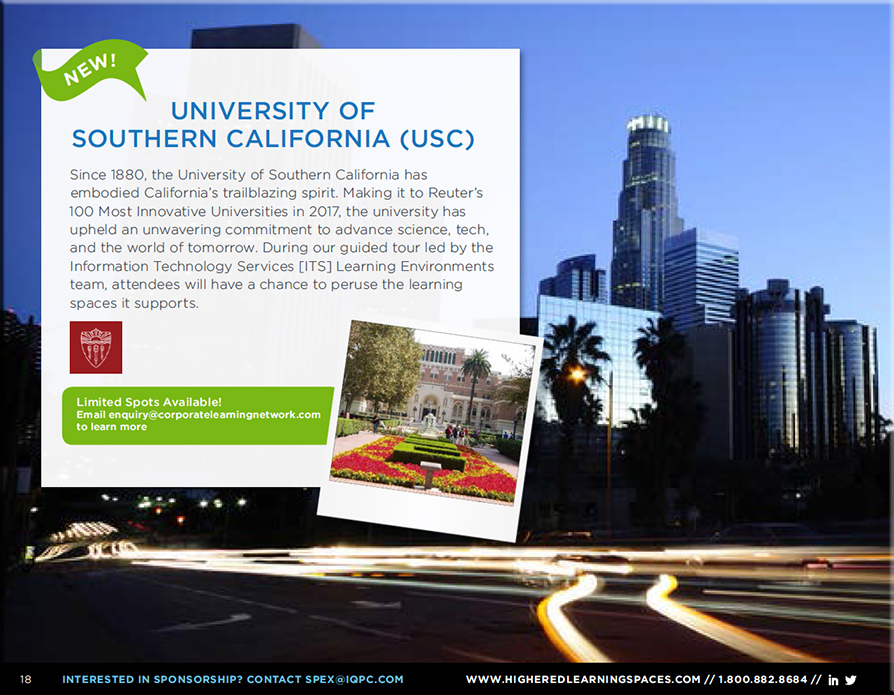
Per Kristen Tadrous, here’s why you want to check out USC:
A true leader in innovation: USC made it to the Top 20 of Reuter’s 100 Most Innovative Universities in 2017!
Detailed guided tour of leading spaces led by the Information Technology Services Learning Environments team
Benchmark your own learning environments by getting a ‘behind the scenes’ look at their state-of-the-art spaces
There are only 30 spots available for the site tour
Building Spaces to Inspire a Culture of Innovation — a core theme at the 4th Next Generation Learning Spaces summit, taking place this February 26-28 in Los Angeles. An invaluable opportunity to meet and hear from like-minded peers in higher education, and continue your path toward lifelong learning. #ngls2018 http://bit.ly/2yNkMLL
2018 marks the beginning of the end of smartphones in the world’s largest economies. What’s coming next are conversational interfaces with zero-UIs. This will radically change the media landscape, and now is the best time to start thinking through future scenarios.
In 2018, a critical mass of emerging technologies will converge finding advanced uses beyond initial testing and applied research. That’s a signal worth paying attention to. News organizations should devote attention to emerging trends in voice interfaces, the decentralization of content, mixed reality, new types of search, and hardware (such as CubeSats and smart cameras).
Journalists need to understand what artificial intelligence is, what it is not, and what it means for the future of news. AI research has advanced enough that it is now a core component of our work at FTI. You will see the AI ecosystem represented in many of the trends in this report, and it is vitally important that all decision-makers within news organizations familiarize themselves with the current and emerging AI landscapes. We have included an AI Primer For Journalists in our Trend Report this year to aid in that effort.
Decentralization emerged as a key theme for 2018. Among the companies and organizations FTI covers, we discovered a new emphasis on restricted peer-to-peer networks to detect harassment, share resources and connect with sources. There is also a push by some democratic governments around the world to divide internet access and to restrict certain content, effectively creating dozens of “splinternets.”
Consolidation is also a key theme for 2018. News brands, broadcast spectrum, and artificial intelligence startups will continue to be merged with and acquired by relatively few corporations. Pending legislation and policy in the U.S., E.U. and in parts of Asia could further concentrate the power among a small cadre of information and technology organizations in the year ahead.
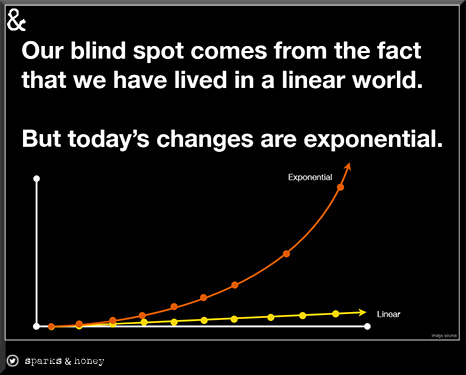
To understand the future of news, you must pay attention to the future of many industries and research areas in the coming year. When journalists think about the future, they should broaden the usual scope to consider developments from myriad other fields also participating in the knowledge economy. Technology begets technology. We are witnessing an explosion in slow motion.
Those in the news ecosystem should factor the trends in this report into their strategic thinking for the coming year, and adjust their planning, operations and business models accordingly.
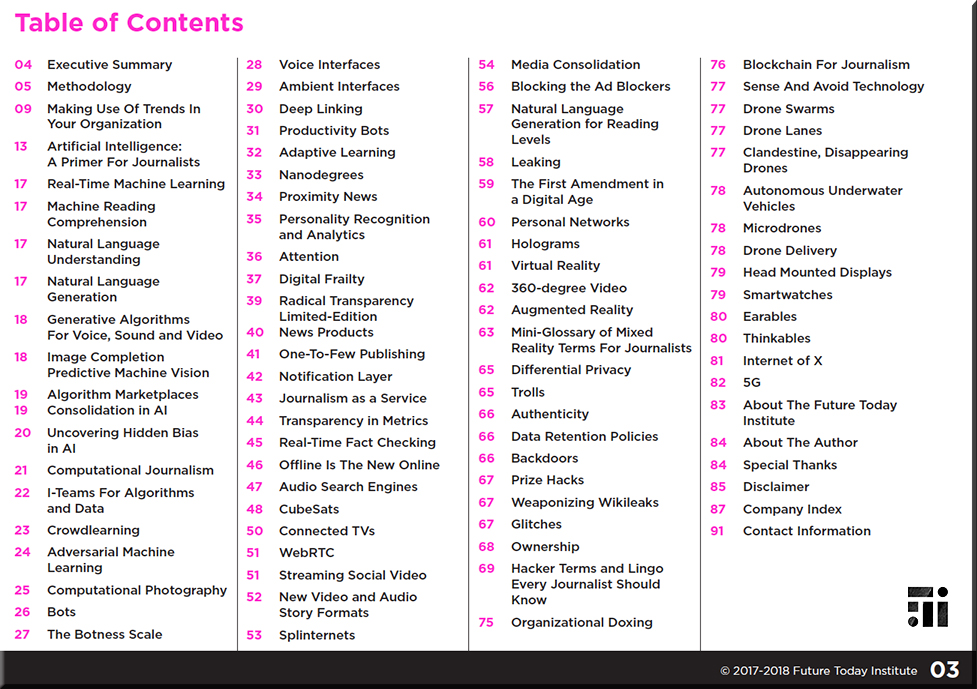
This year’s report has 159 trends.
This is mostly due to the fact that 2016 was the year that many areas of science and technology finally started to converge. As a result we’re seeing a sort of slow-motion explosion––we will undoubtedly look back on the last part of this decade as a pivotal moment in our history on this planet.
…
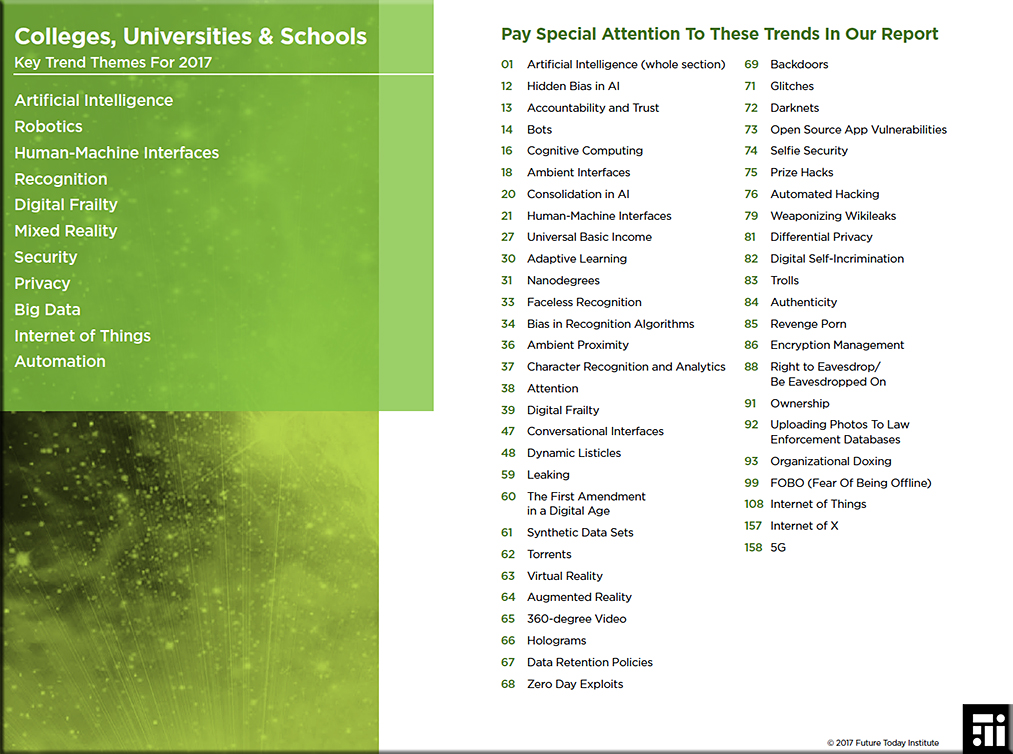
Our 2017 Trend Report reveals strategic opportunities and challenges for your organization in the coming year. The Future Today Institute’s annual Trend Report prepares leaders and organizations for the year ahead, so that you are better positioned to see emerging technology and adjust your strategy accordingly. Use our report to identify near-future business disruption and competitive threats while simultaneously finding new collaborators and partners. Most importantly, use our report as a jumping off point for deeper strategic planning.
Augmented and virtual reality offer ways to immerse learners in experiences that can aid training in processes and procedures, provide realistic simulations to deepen empathy and build communication skills, or provide in-the-workflow support for skilled technicians performing complex procedures.
Badges and other digital credentials provide new ways to assess and validate employees’ skills and mark their eLearning achievements, even if their learning takes place informally or outside of the corporate framework.
Chatbots are proving an excellent tool for spaced learning, review of course materials, guiding new hires through onboarding, and supporting new managers with coaching and tips.
Content curation enables L&D professionals to provide information and educational materials from trusted sources that can deepen learners’ knowledge and help them build skills.
eBooks, a relative newcomer to the eLearning arena, offer rich features for portable on-demand content that learners can explore, review, and revisit as needed.
Interactive videos provide branching scenarios, quiz learners on newly introduced concepts and terms, offer prompts for small-group discussions, and do much more to engage learners.
Podcasts can turn drive time into productive time, allowing learners to enjoy a story built around eLearning content.
Smartphone apps, available wherever learners take their phones or tablets, can be designed to offer product support, info for sales personnel, up-to-date information for repair technicians, and games and drills for teaching and reviewing content; the possibilities are limited only by designers’ imagination.
Social platforms like Slack, Yammer, or Instagram facilitate collaboration, sharing of ideas, networking, and social learning. Adopting social learning platforms encourages learners to develop their skills and contribute to their communities of practice, whether inside their companies or more broadly.
xAPI turns any experience into a learning experience. Adding xAPI capability to any suitable tool or platform means you can record learner activity and progress in a learning record store (LRS) and track it.
How does all of this relate to eLearning? Again, Webb anticipated the question. Her response gave hope to some—and terrified others. She presented three possible future scenarios:
Everyone in the learning arena learns to recognize weak signals; they work with technologists to refine artificial intelligence to instill values. Future machines learn not only to identify correct and incorrect answers; they also learn right and wrong. Webb said that she gives this optimistic scenario a 25 percent chance of occurring.
Everyone present is inspired by her talk but they, and the rest of the learning world, do nothing. Artificial intelligence continues to develop as it has in the past, learning to identify correct answers but lacking values. Webb’s prediction is that this pragmatic optimistic scenario has a 50 percent chance of occurring.
Learning and artificial intelligence continue to develop on separate tracks. Future artificial intelligence and machine learning projects incorporate real biases that affect what and how people learn and how knowledge is transferred. Webb said that she gives this catastrophic scenario a 25 percent chance of occurring.
In an attempt to end on a strong positive note, Webb said that “the future hasn’t happened yet—we think” and encouraged attendees to take action. “To build the future of learning that you want, listen to weak signals now.”
In most of the world, the iconic 140-character tweet is now officially a thing of the past. Twitter said today that after a global test, 280-character tweets will roll out to users around the world. Longer tweets will now be the standard in every language where Twitter is available save for Chinese, Japanese, and Korean, where the 140-character limit will still apply. (The company says Asian languages fit more thoughts into fewer characters; the average length of a tweet in Japanese is 15 characters.)
In a blog post, Twitter said the expanded character limit would allow for easier expression while retaining the brevity for which the service is known. With the previous limit in place, 9 percent of tweets hit 140 characters. But during the test of expanded tweets, only 1 percent of tweets hit 280 characters, Twitter said. “More space makes it easier for people to fit thoughts in a tweet, so they could say what they want to say, and send Tweets faster than before,” the company said in a blog post.
From DSC: As I tell students in my online-based Foundations of Information Technology course, Twitter is a key tool that I believe everyone should have as a piece of their learning ecosystems. It is a Top 10 tool in all 4 categories that Jane Hart tracks each year (2017 results are shown below):
Overall Top 200 Tools for Learning — #5
Top 100 Tools for Personal & Professional Learning — #3
Emerging social VR platforms are experimenting with new ways of democratizing access and ownership of content and information.
VR has often been considered something of a solitary experience, but that’s changing fast. Social VR platforms are on the rise, and as the acquisition of AltspaceVR by Microsoft shows, major players in that space are taking notice.
…
This shows how momentum is building around social VR, and although it’s unlikely that such platforms will replace social media in terms of popularity overnight, the question is certainly being asked about who will emerge as “Facebook of VR.”
…
“We believe virtual reality will flourish once users have a more prominent role in controlling their creations. Currently, the companies that create the virtual worlds own all of the content built by the users. They are the ones who profit, reap the benefits from the network effects, and have the power to undo, change or censor what happens within the world itself. The true potential of VR might be realized, and certainly surpass what already exists, if this power were put into the hands of the users instead,” believes Ariel Meilich, founder of blockchain-based virtual platform Decentraland.
A blockchain is a digitized, decentralized public ledger of cryptocurrency transactions. Essentially each ‘block’ is like an individual bank statement. Completed ‘blocks’ (the most recent transactions) are added in chronological order allowing market participants to keep track of the transactions without the need for central record keeping. Just as Bitcoin eliminates the need for a third party to process or store payments, and isn’t regulated by a central authority, users in any blockchain structure are responsible for validating transactions whenever one party pays another for goods or services.
From DSC: As this article reminded me, it’s the combination of two or more emerging technologies that will likely bring major innovation our way. Here’s another example of that same idea/concept.
Online glasses retailer Warby Parker built its reputation by selling fashionable yet affordable eyeglasses, so it perhaps a surprise that it’s one of the first developers to take advantage of the technology in the least affordable iPhone yet.
While other developers are making adjusting to their apps to account for the infamous camera notch, Warby Parker decided to update its Glasses app to directly leverage the Face ID facial recognition system. Now, in the updated version of the app, Glasses can measure the user’s face to estimate which frames will fit best.
Apple Inc., seeking a breakthrough product to succeed the iPhone, aims to have technology ready for an augmented-reality headset in 2019 and could ship a product as early as 2020.
Unlike the current generation of virtual reality headsets that use a smartphone as the engine and screen, Apple’s device will have its own display and run on a new chip and operating system, according to people familiar with the situation. The development timeline is very aggressive and could still change, said the people, who requested anonymity to speak freely about a private matter.
“The power is that we can take the user anywhere in the entire universe throughout all of time for historical experiences like this.” (source)
Ask a robot to do the same and you’ll either get a blank stare or a crumpled object in the cold, cold grasp of a machine. Because robots are good at repetitive tasks that require a lot of strength, but they’re still bad at learning how to manipulate novel objects. Which is why today a company called Embodied Intelligence has emerged from stealth mode to fuse the strengths of robots and people into a new system that could make it far easier for regular folk to teach robots new tasks. Think of it like a VR videogame—only you get to control a hulking robot.
From DSC: To remain up-to-date, Engineering Departments within higher ed have their work cut out for them — big time! Those Senior Engineering Teams have many new, innovative pathways and projects to pursue these days.
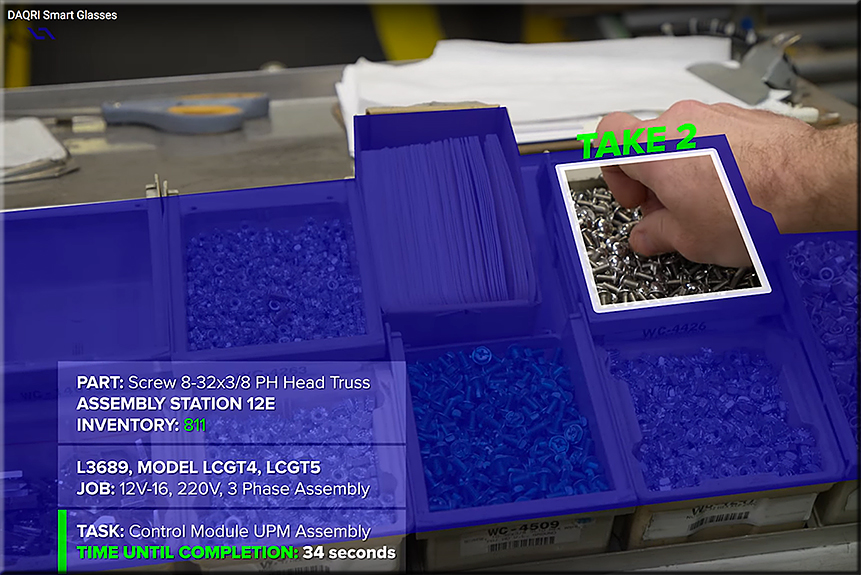
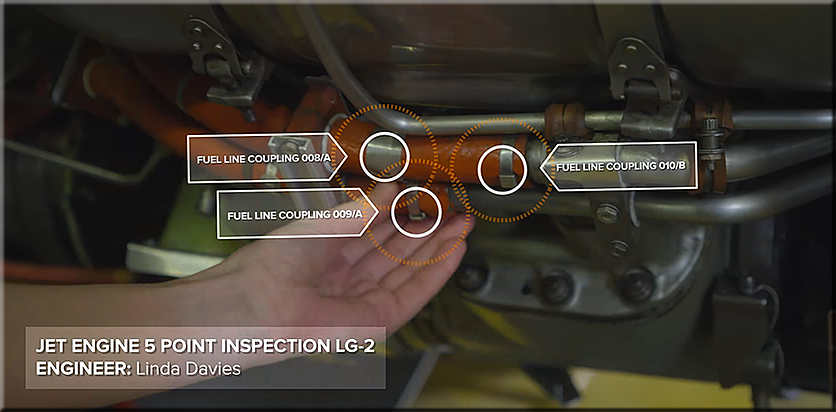
Daqri has begun shipping its augmented reality smart glasses for the workplace.
Los Angeles-based Daqri is betting that AR — a technology that overlays digital animations on top of the real world — will take off first in the enterprise, where customers are willing to pay a higher price in order to solve complex problems. The idea is to help people solve real-world problems, like fixing a jet engine or piecing together an assembly. Daqri argues that the gains in productivity and efficiency make up for the initial cost.
At $4,995, the system is not cheap, but it is optimized to present complex workloads and process a lot of data right on the glasses themselves. It is available for direct purchase from Daqri’s web site and through channel partners. Daqri is targeting customers across manufacturing, field services, maintenance and repair, inspections, construction, and others.
The NBA really wants you to watch games in VR— from cnet.com by Terry Collins The basketball league has now struck two partnerships to broadcast games in virtual reality. Are fans willing to watch them?
Excerpt:
What’s keeping you from watching NBA games in VR?
Is it the bulky headsets? Is it the slow camera switches that don’t follow the players quickly enough? Is it too expensive?
The NBA is betting that one reason is it just doesn’t have enough partnerships yet. So, the league is teaming up with Turner Sports and Intel TrueVR to air weekly games on TNT in VR starting with the All-Star weekend festivities from Los Angeles in February.
russell-westbrook-alley-oop.jpg
NBA fans will soon be able to see more of MVP Russell Westbrook in virtual reality.
NBAE/Getty Images
This partnership represents a doubling down of NBA’s VR efforts, despite indications it isn’t actually working. Last year, the NBA began airing games with NextVR as part of a multiyear deal.
At the Microsoft Future Decoded conference in London, executives from the tech giant offered a vision for integrating Microsoft 365, Microsoft HoloLens, Windows Mixed Reality, and 3D capabilities into modern workplaces to aid digital transformation.
Firstline workers and information workers will likely be the first to benefit from mixed reality in the workplace, using the technology for collaboration, training, and more.
Microsoft has made a number of moves into the mixed reality space recently, including expanding its HoloLens headset into new European markets.
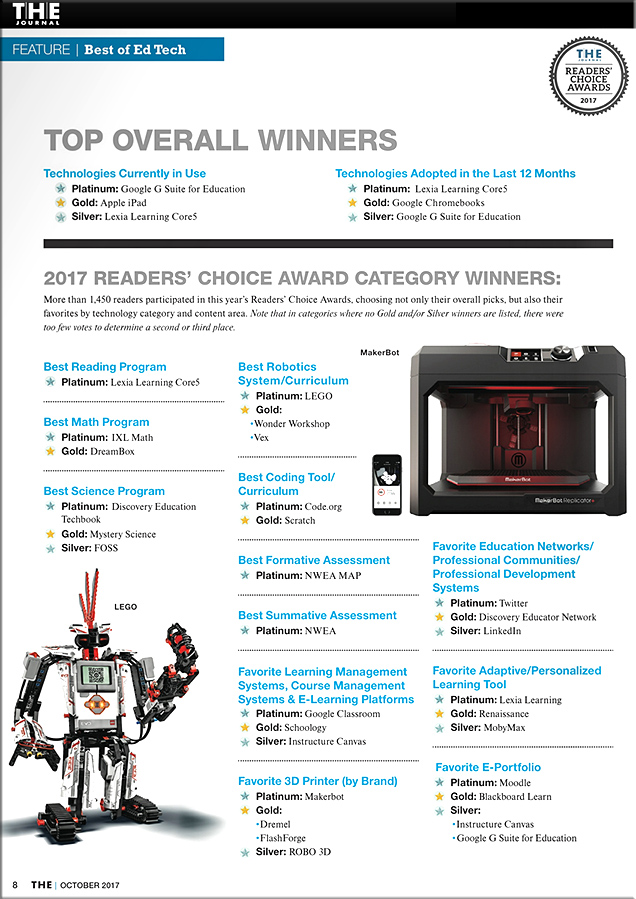
In an open-ended question asking for educators’ favorite technologies currently in use at their schools, respondents overwhelmingly chose Google’s G Suite for Education as their top overall pick.
…
The top overall categories were:
Mobile devices
Interactive whiteboards/displays/projectors
eLearning/learning management systems and reading software — Lexia Learning’s Core5 scored big in the reading software area, while Google Classroom, Schoology, Moodle, Canvas, and Blackboard Learn were often mentioned in the LMS area
Also, there was an article in there on learning spaces. Some ideas mentioned include:
4. Incorporate A “Moment Of Need” Online Training Repository
That brings us to the next tip, which is to incorporate a “just in time” online training library. This features microlearning online training resources that are easy to digest and remember. Employees can access support tools based on their needs, goals, and skill gaps. Best of all, they can expand their knowledge whenever it’s most convenient, whether that’s on the sales floor, before a client meeting, or during the morning commute. “Moment of need” online training repositories aid in memory retention by breaking the online training content into consumable pieces, instead of barraging your employees with large quantities of information.
From DSC:
This idea of an online training repository is tied in with a more recent development of “chatbots.” As artificial intelligence continues to pick up steam, these chatbots could offer internal employees as well as external customers automated responses to questions. People could ask the questions either by typing in their questions and/or by using their voices to ask their questions. So keep your eyes on chatbots — as they will likely bring a whole new method of obtaining information and professional development to us in the near future!
A Manager’s Guide to Augmented Reality — from hbr.org by Michael Porter and James Heppelmann Augmented reality technologies promise to transform how we learn, make decisions, and interact with the physical world. In this package we explain what AR is, how its applications are evolving, and why it’s so important.
Excerpt (emphasis DSC):
Though still in its infancy, AR is poised to enter the mainstream; according to one estimate, spending on AR technology will hit $60 billion in 2020. AR will affect companies in every industry and many other types of organizations, from universities to social enterprises. In the coming months and years, it will transform how we learn, make decisions, and interact with the physical world. It will also change how enterprises serve customers, train employees, design and create products, and manage their value chains, and, ultimately, how they compete.
In this article we describe what AR is, its evolving technology and applications, and why it is so important. Its significance will grow exponentially as SCPs proliferate, because it amplifies their power to create value and reshape competition. AR will become the new interface between humans and machines, bridging the digital and physical worlds.While challenges in deploying it remain, pioneering organizations, such as Amazon, Facebook, General Electric, Mayo Clinic, and the U.S. Navy, are already implementing AR and seeing a major impact on quality and productivity. Here we provide a road map for how companies should deploy AR and explain the critical choices they will face in integrating it into strategy and operations.
Until this month, it seemed that GAN-generated images [where GAN stands for “generative adversarial networks”] that could fool a human viewer were years off. But last week research released by Nvidia, a manufacturer of graphics processing units that has cornered the market on deep learning hardware, shows that this method can now be used to generate high-resolution, believable images of celebrities, scenery, and objects.GAN-created images are also already being sold as replacements for fashion photographers—a startup called Mad Street Den told Quartz earlier this month it’s working with North American retailers to replace clothing images on websites with generated images.
From DSC: So AI can now generate realistic photos (i.e., image creation/manipulation). And then there’s Adobe’s VoCo Project, a sort of a Photoshop for audio manipulation plus other related technologies out there:
The era of easily-faked photos is quickly emerging—much as it did when Photoshop became widely prevalent—so it’s a good time to remember we shouldn’t trust everything we see.
…and perhaps we’ll need to add, “we shouldn’t trust everything we hear either.” But how will the average person with average tools know the real deal? The concept of watermarking visuals/audio may be increasingly involved. From the ending of bbc.com article:
For its part, Adobe has talked of its customers using Voco to fix podcast and audio book recordings without having to rebook presenters or voiceover artists.
But a spokeswoman stressed that this did not mean its release was imminent.
“[It] may or may not be released as a product or product feature,” she told the BBC.
“No ship date has been announced.”
In the meantime, Adobe said it was researching ways to detect use of its software.
“Think about watermarking detection,” Mr Jin said at the demo, referring to a method used to hide identifiers in images and other media.
But again, we see that technology often races ahead. “Look at what we can do!” But then the rest of society — such as developing laws, policies, questions about whether we should roll out such technologies, etc. — needs time to catch up. Morals and ethics do come into play here — as trust levels are most assuredly at stake.
Another relevant article/topic/example of this is listed below. (Though I’m not trying to say that we shouldn’t pursue self-driving cars. Rather, the topic serves as another example of technologies racing ahead while it takes a while for the rest of us/society to catch up with them).
Nvidia CEO: Expect autonomous vehicles to hit the streets by 2021 — from bizjournals.com by Gina Hall More than 40 companies, including Intel, Nvidia, Waymo, Tesla, Uber Technologies and Samsung, have secured permits from the California DMV to test self-driving cars on public roads.