Experience Virtual Reality on the web with Chrome — from blog.google

Excerpt:

Virtual reality (VR) lets you tour the Turkish palace featured in “Die Another Day,” learn about life in a Syrian refugee camp firsthand, and walk through your dream home right from your living room. With the latest version of Chrome, we’re bringing VR to the web—making it as easy to step inside Air Force One as it is to access your favorite webpage.

For a fully immersive experience, use Chrome with your Daydream-ready phone and Daydream View—just browse to a VR experience you want to view, choose to enter VR, and put the phone in your Daydream View headset. If you don’t have a headset you can view VR content on any phone or desktop computer and interact using your finger or mouse.

You can already try out some great VR-enabled sites, with more coming soon. For example, explore the intersection of humans, nature and technology in the interactive documentary Bear 71. Questioning how we see the world through the lens of technology, this story blurs the lines between the wild world and the wired one.


Learn A New Language With Your Mobile Using MondlyAR — from vrfocus.com by
Start learn a new language today on your Android device.

Excerpt:

MondlyAR features an avatar “teacher” who brings virtual objects – planets, animals, musical instruments and more – into the room as teaching tools, engages the user in conversations and gives instant feedback on pronunciation thanks to chatbot technology. By incorporating these lifelike elements in the lessons, students are more likely to understand, process, and retain what they are taught.

Users will have seven languages to chose from, American English, British English, French, Spanish, Italian, Portuguese, and German with the studio expecting to be able to offer no less than 30 languages in AR by the next update in August 2018.


Augmented Reality takes 3-D printing to next level — from rtoz.org

Excerpt:

Cornell researchers are taking 3-D printing and 3-D modeling to a new level by using augmented reality (AR) to allow designers to design in physical space while a robotic arm rapidly prints the work. To use the Robotic Modeling Assistant (RoMA), a designer wears an AR headset with hand controllers. As soon as a design feature is completed, the robotic arm prints the new feature.


The Legal Hazards of Virtual Reality and Augmented Reality Apps — from by Tam Harbert
Liability and intellectual property issues are just two areas developers need to know about

Excerpt:

As virtual- and augmented-reality technologies mature, legal questions are emerging that could trip up VR and AR developers. One of the first lawyers to explore these questions is Robyn Chatwood, of the international law firm Dentons. “VR and AR are areas where the law is just not keeping up with [technology] developments,” she says. IEEE Spectrum contributing editor Tam Harbert talked with Chatwood about the legal challenges.


Why VR has a bright future in the elearning world — elearninglearning.com by Origin Learning

Excerpt:

The Benefits of Using Virtual Reality in eLearning

  • It offers a visual approach – According to numerous studies, people retain what they have read better when they are able to see it or experience it somehow. VR in eLearning makes this possible and creates a completely new visual experience to improve learners’ retention capacity and their understanding of the material.
  • It lowers the risk factor – VR in eLearning can simulate dangerous and risky situations in an environment that is controllable, so that it removes the risk factor usually associated with such situations. This lets learners alleviate their fear of making a mistake.
  • It facilitates complex data – Like the visual approach, when learners can really experience complex situations, they are more likely to handle them with ease. VR simplifies the complexity of those situations, allowing learners to actually experience everything themselves, rather than just reading about it.
  • It offers remote access – VR in eLearning doesn’t require an actual classroom so that learning can be conducted remotely, which can help you save a lot of time and money that would normally have to be spent on planning a complete learning program.
  • It provides real-life scenarios – As mentioned, one of the greatest things about VR in the context of eLearning is that it allows learners to really immerse themselves in various virtual scenarios. For instance, if the learning program involves some real situation that a certain business has faced before, an employee will be able to handle such a situation more efficiently after experiencing it virtually.
  • It is fun and innovative – People love to try out new things. VR offers a completely innovative and interactive approach to learning and makes learning become an entertaining, rather than an everyday dull process.


5 reasons to use augmented reality in education — from kitaboo.com

Excerpt:

[AR] is making it possible to add a layer of enhanced reality to a context-sensitive virtual world. This gives educators and trainers numerous possibilities to enhance the learning experience, making it lively, significant and circumstantial to the learner.

According to the investment company, Goldman Sachs, Augmented Reality “has the potential to become a standard tool in education and could revolutionize the way in which students are taught, for both the K-12 segment and higher education.” The company further projects that by 2025, there would be 15 million users of educational AR worldwide, representing a $700 million market.

Let’s have a look at 5 main reasons to use Augmented Reality in education.


The Difference Between Virtual Reality, Augmented Reality And Mixed Reality — from forbes.com
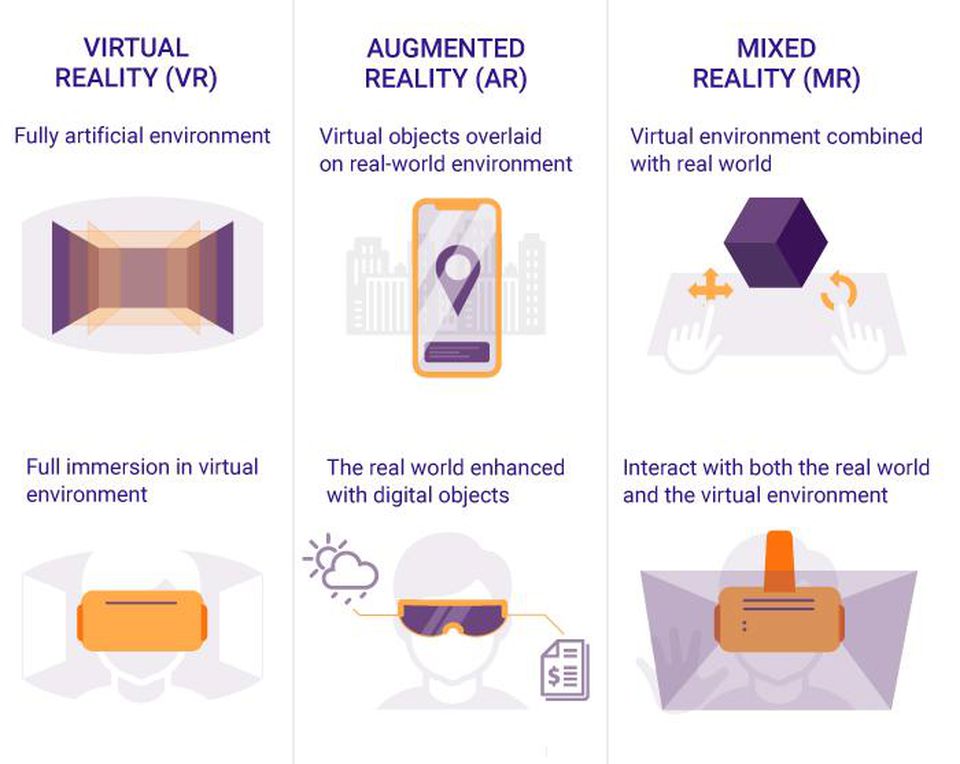


SXSW 2018: Key trends — from jwtintelligence.com by Marie Stafford w/ contributions by Sarah Holbrook

Excerpt:

Ethics & the Big Tech Backlash
What a difference a week makes. As the Cambridge Analytica scandal broke last weekend, the curtain was already coming down on SXSW. Even without this latest bombshell, the discussion around ethics in technology was animated, with more than 10 panels devoted to the theme. From misinformation to surveillance, from algorithmic bias to the perils of artificial intelligence (hi Elon!) speakers grappled with the weighty issue of how to ensure technology works for the good of humanity.

The Human Connection
When technology provokes this much concern, it’s perhaps natural that people should seek respite in human qualities like empathy, understanding and emotional connection.

In a standout keynote, couples therapist Esther Perel gently berated the SXSW audience for neglecting to focus on human relationships. “The quality of your relationships,” she said, “is what determines the quality of your life.


2018 TECH TRENDS REPORT — from the Future Today Institute
Emerging technology trends that will influence business, government, education, media and society in the coming year.

Description:

The Future Today Institute’s 11th annual Tech Trends Report identifies 235 tantalizing advancements in emerging technologies—artificial intelligence, biotech, autonomous robots, green energy and space travel—that will begin to enter the mainstream and fundamentally disrupt business, geopolitics and everyday life around the world. Our annual report has garnered more than six million cumulative views, and this edition is our largest to date.

Helping organizations see change early and calculate the impact of new trends is why we publish our annual Emerging Tech Trends Report, which focuses on mid- to late-stage emerging technologies that are on a growth trajectory.

In this edition of the FTI Tech Trends Report, we’ve included several new features and sections:

  • a list and map of the world’s smartest cities
  • a calendar of events that will shape technology this year
  • detailed near-future scenarios for several of the technologies
  • a new framework to help organizations decide when to take action on trends
  • an interactive table of contents, which will allow you to more easily navigate the report from the bookmarks bar in your PDF reader


01 How does this trend impact our industry and all of its parts?
02 How might global events — politics, climate change, economic shifts – impact this trend, and as a result, our organization?
03 What are the second, third, fourth, and fifth-order implications of this trend as it evolves, both in our organization and our industry?
04 What are the consequences if our organization fails to take action on this trend?
05 Does this trend signal emerging disruption to our traditional business practices and cherished beliefs?
06 Does this trend indicate a future disruption to the established roles and responsibilities within our organization? If so, how do we reverse-engineer that disruption and deal with it in the present day?
07 How are the organizations in adjacent spaces addressing this trend? What can we learn from their failures and best practices?
08 How will the wants, needs and expectations of our consumers/ constituents change as a result of this trend?
09 Where does this trend create potential new partners or collaborators for us?
10 How does this trend inspire us to think about the future of our organization?


China’s New Frontiers in Dystopian Tech — from theatlantic.com by Rene Chun
Facial-recognition technologies are proliferating, from airports to bathrooms.

Excerpt:

China is rife with face-scanning technology worthy of Black Mirror. Don’t even think about jaywalking in Jinan, the capital of Shandong province. Last year, traffic-management authorities there started using facial recognition to crack down. When a camera mounted above one of 50 of the city’s busiest intersections detects a jaywalker, it snaps several photos and records a video of the violation. The photos appear on an overhead screen so the offender can see that he or she has been busted, then are cross-checked with the images in a regional police database. Within 20 minutes, snippets of the perp’s ID number and home address are displayed on the crosswalk screen. The offender can choose among three options: a 20-yuan fine (about $3), a half-hour course in traffic rules, or 20 minutes spent assisting police in controlling traffic. Police have also been known to post names and photos of jaywalkers on social media.

The technology’s veneer of convenience conceals a dark truth: Quietly and very rapidly, facial recognition has enabled China to become the world’s most advanced surveillance state. A hugely ambitious new government program called the “social credit system” aims to compile unprecedented data sets, including everything from bank-account numbers to court records to internet-search histories, for all Chinese citizens. Based on this information, each person could be assigned a numerical score, to which points might be added for good behavior like winning a community award, and deducted for bad actions like failure to pay a traffic fine. The goal of the program, as stated in government documents, is to “allow the trustworthy to roam everywhere under heaven while making it hard for the discredited to take a single step.”


With great tech success, comes even greater responsibility — from techcrunch.com by Ron Miller

Excerpts:

As we watch major tech platforms evolve over time, it’s clear that companies like Facebook, Apple, Google and Amazon (among others) have created businesses that are having a huge impact on humanity — sometimes positive and other times not so much.

That suggests that these platforms have to understand how people are using them and when they are trying to manipulate them or use them for nefarious purposes — or the companies themselves are. We can apply that same responsibility filter to individual technologies like artificial intelligence and indeed any advanced technologies and the impact they could possibly have on society over time.

We can be sure that Twitter’s creators never imagined a world where bots would be launched to influence an election when they created the company more than a decade ago. Over time though, it becomes crystal clear that Twitter, and indeed all large platforms, can be used for a variety of motivations, and the platforms have to react when they think there are certain parties who are using their networks to manipulate parts of the populace.


But it’s up to the companies who are developing the tech to recognize the responsibility that comes with great economic success or simply the impact of whatever they are creating could have on society.


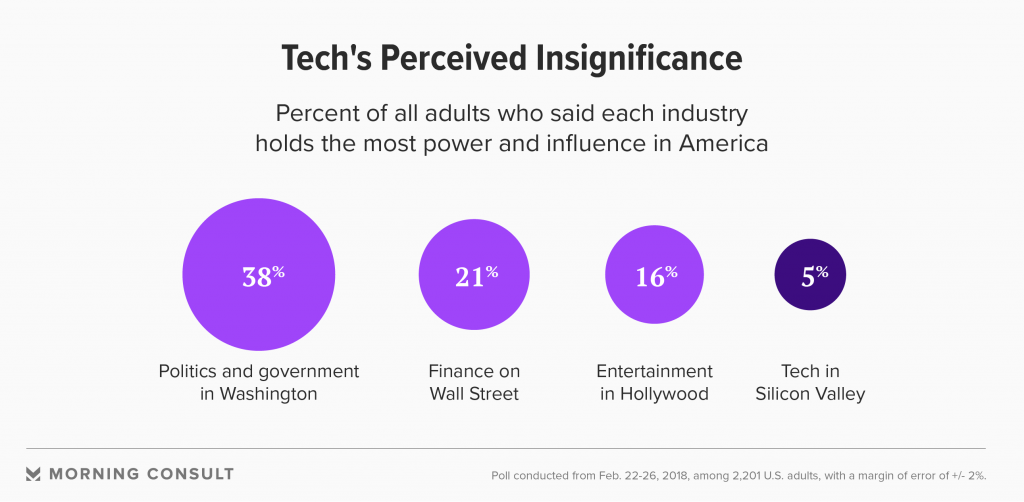
Why the Public Overlooks and Undervalues Tech’s Power — from morningconsult.com by Joanna Piacenza
Some experts say the tech industry is rapidly nearing a day of reckoning

Excerpts:

  • 5% picked tech when asked which industry had the most power and influence, well behind the U.S. government, Wall Street and Hollywood.
  • Respondents were much more likely to say sexual harassment was a major issue in Hollywood (49%) and government (35%) than in Silicon Valley (17%).

It is difficult for Americans to escape the technology industry’s influence in everyday life. Facebook Inc. reports that more than 184 million people in the United States log on to the social network daily, or roughly 56 percent of the population. According to the Pew Research Center, nearly three-quarters (73 percent) of all Americans and 94 percent of Americans ages 18-24 use YouTube. Amazon.com Inc.’s market value is now nearly three times that of Walmart Inc.

But when asked which geographic center holds the most power and influence in America, respondents in a recent Morning Consult survey ranked the tech industry in Silicon Valley far behind politics and government in Washington, finance on Wall Street and the entertainment industry in Hollywood.


How to Set Up a VR Pilot — from campustechnology.com by Dian Schaffhauser
As Washington & Lee University has found, there is no best approach for introducing virtual reality into your classrooms — just stages of faculty commitment.

Excerpt:

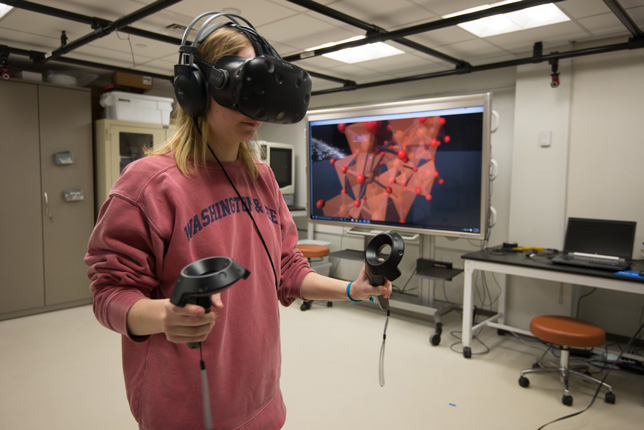
The work at the IQ Center offers a model for how other institutions might want to approach their own VR experimentation. The secret to success, suggested IQ Center Coordinator David Pfaff, “is to not be afraid to develop your own stuff” — in other words, diving right in. But first, there’s dipping a toe.

The IQ Center is a collaborative workspace housed in the science building but providing services to “departments all over campus,” said Pfaff. The facilities include three labs: one loaded with high-performance workstations, another decked out for 3D visualization and a third packed with physical/mechanical equipment, including 3D printers, a laser cutter and a motion-capture system.


The Future of Language Learning: Augmented Reality vs Virtual Reality — from medium.com by Denis Hurley

Excerpts:

Here, I would like to stick to the challenges and opportunities presented by augmented reality and virtual reality for language learning.

While the challenge is a significant one, I am more optimistic than most that wearable AR will be available and popular soon. We don’t yet know how Snap Spectacles will evolve, and, of course, there’s always Apple.

I suspect we will see a flurry of new VR apps from language learning startups soon, especially from Duolingo and in combination with their AI chat bots. I am curious if users will quickly abandon the isolating experiences or become dedicated users.


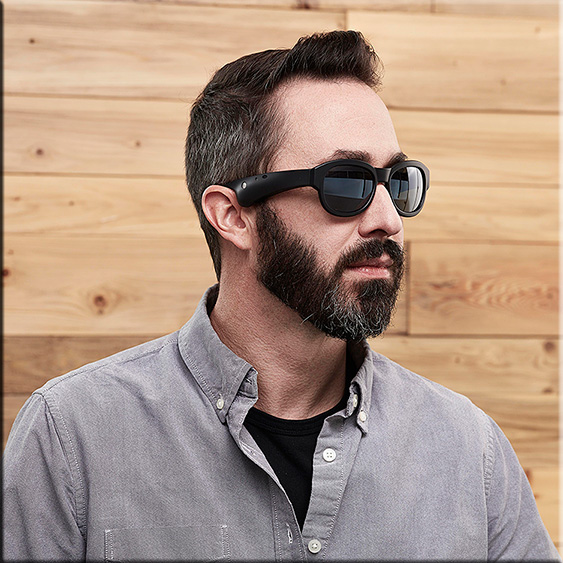
Bose has a plan to make AR glasses — from cnet.com by David Carnoy
Best known for its speakers and headphones, the company has created a $50 million development fund to back a new AR platform that’s all about audio.

Excerpts:

“Unlike other augmented reality products and platforms, Bose AR doesn’t change what you see, but knows what you’re looking at — without an integrated lens or phone camera,” Bose said. “And rather than superimposing visual objects on the real world, Bose AR adds an audible layer of information and experiences, making every day better, easier, more meaningful, and more productive.”

The secret sauce seems to be the tiny, “wafer-thin” acoustics package developed for the platform. Bose said it represents the future of mobile micro-sound and features “jaw-dropping power and clarity.”

Bose adds the technology can “be built into headphones, eyewear, helmets and more and it allows simple head gestures, voice, or a tap on the wearable to control content.”


Bose is making AR glasses focused on audio, not visuals

Here are some examples Bose gave for how it might be used:

    • For travel, the Bose AR could simulate historic events at landmarks as you view them — “so voices and horses are heard charging in from your left, then passing right in front of you before riding off in the direction of their original route, fading as they go.” You could hear a statue make a famous speech when you approach it. Or get told which way to turn towards your departure gate while checking in at the airport.
    • Bose AR could translate a sign you’re reading. Or tell you the word or phrase for what you’re looking at in any language. Or explain the story behind the painting you’ve just approached.
  • With gesture controls, you could choose or change your music with simple head nods indicating yes, no, or next (Bragi headphones already do this).
  • Bose AR would add useful information based on where you look. Like the forecast when you look up or information about restaurants on the street you look down.


The 10 Best VR Apps for Classrooms Using Merge VR’s New Merge Cube — from edsurge.com


Google Lens arrives on iOS — from techcrunch.com by Sarah Perez

Excerpt:

On the heels of last week’s rollout on Android, Google’s  new AI-powered technology, Google Lens, is now arriving on iOS. The feature is available within the Google Photos iOS application, where it can do things like identify objects, buildings, and landmarks, and tell you more information about them, including helpful details like their phone number, address, or open hours. It can also identify things like books, paintings in museums, plants, and animals. In the case of some objects, it can also take actions.

For example, you can add an event to your calendar from a photo of a flyer or event billboard, or you can snap a photo of a business card to store the person’s phone number or address to your Contacts.


The eventual goal is to allow smartphone cameras to understand what it is they’re seeing across any type of photo, then helping you take action on that information, if need be – whether that’s calling a business, saving contact information, or just learning about the world on the other side of the camera.


15 Top Augmented Reality (AR) Apps Changing Education — from vudream.com by Steven Wesley


CNN VR App Brings News to Oculus Rift — from vrscout.com by Jonathan Nafarrete


2018 Workplace Learning Report — from learning.linkedin.com

Excerpts:

The path to opportunity is changing
The short shelf life of skills and a tightening labor market are giving rise to a multitude of skill gaps. Businesses are fighting to stay ahead of the curve, trying to hold onto their best talent and struggling to fill key positions. Individuals are conscious of staying relevant in the age of automation.

Enter the talent development function.
These organizational leaders create learning opportunities to enable employee growth and achievement. They have the ability to guide their organizations to success in tomorrow’s labor market, but they can’t do it alone.

Our research answers the talent developer’s most pressing questions:
* How are savvy talent development leaders adapting to the pace of change in today’s dynamic world of work?
* Why do employees demand learning and development resources, but don’t make the time to learn?
* How do executives think about learning and development?
* Are managers the missing link to successful learning programs?


From DSC:
Even though this piece is a bit of a sales pitch for Lynda.com — a great service I might add — it’s still worth checking out. I say this because it brings up a very real trend that I’m trying to bring more awareness to — i.e., the pace of change has changed. Our society is not ready for this new, exponential pace of change. Technologies are impacting jobs and how we do our jobs, and will likely do so for the next several decades. Skills gaps are real and likely growing larger. Corporations need to do their part in helping higher education revise/develop curriculum and they need to offer funds to create new types of learning labs/environments. They need to offer more internships and opportunities to learn new skills.


A Microlearning Framework — from jvsp.io and Pablo Navarro
This infographic is based on the experience of different clients from different industries in different training programs.


From DSC:
I thought this was a solid infographic and should prove to be useful for Instructional Designers, Faculty Members, and/or for Corporate Trainers as well. 

I might also consider adding a “Gotcha!” piece first — even before the welcome piece — in order to get the learner’s attention and to immediately answer the WHY question. WHY is this topic important and relevant to me? When topics are relevant to people, they care and engage a whole lot more with the content that’s about to be presented to them. Ideally, such a piece would stir some curiosity as well.


Embracing Digital Tools of the Millennial Trade. — from virtuallyinspired.org

Excerpt:

Thus, millennials are well-acquainted with – if not highly dependent on – the digital tools they use in their personal and professional lives. Tools that empower them to connect and collaborate in a way that is immediate and efficient, interactive and self-directed. Which is why they expect technology-enhanced education to replicate this user experience in the virtual classroom. And when their expectations fall short or go unmet altogether, millennials are more likely to go in search of other alternatives.


From DSC:
There are several solid tools mentioned in this article, and I always appreciate the high-level of innovation arising from Susan Aldridge, Marci Powell, and the folks at virtuallyinspired.org.

After reading the article, the key considerations that come to my mind involve the topics of usability and advocating for the students’ perspective. That is, we need to approach things from the student’s/learner’s standpoint — from a usability and user experience standpoint. For example, a seamless/single sign-on for each of these tools would be a requirement for implementing them. Otherwise, learners would have to be constantly logging into a variety of systems and services. Not only is that process time consuming, but a learner would need to keep track of additional passwords — and who doesn’t have enough of those to keep track of these days (I realize there are tools for that, but even those tools require additional time to investigate, setup, and maintain).

So plug-ins for the various CMSs/LMSs are needed that allow for a nice plug-and-play situation here.


The Space Satellite Revolution Could Turn Earth into a Surveillance Nightmare — from scout.ai by Becky Ferreira
Laser communication between satellites is revolutionizing our ability to track climate change, manage resources, and respond to natural disasters. But there are downsides to putting Earth under a giant microscope.

Excerpts:

And while universal broadband has the potential to open up business and education opportunities to hundreds of thousands of people, it’s the real-time satellite feeds of earth that may have both the most immediate and widespread financial upsides — and the most frightening surveillance implications — for the average person here on earth.

Among the industries most likely to benefit from laser communications between these satellites are agriculture and forestry.

Satellite data can also be used to engage the public in humanitarian efforts. In the wake of Typhoon Haiyan, DigitalGlobe launched online crowdsourcing campaigns to map damage and help NGOs respond on the ground. And they’ve been identifying vulnerable communities in South Sudan as the nation suffers through unrest and famine.

In an age of intensifying natural disasters, combining these tactics with live satellite video feeds could mean the difference between life and death for thousands of people.

Should a company, for example, be able to use real-time video feeds to track your physical location, perhaps in order to better target advertising? Should they be able to use facial recognition and sentiment analysis algorithms to assess your reactions to those ads in real time?

While these commercially available images aren’t yet sharp enough to pick up intimate details like faces or phone screens, it’s foreseeable that regulations will be eased to accommodate even sharper images. That trend will continue to prompt privacy concerns, especially if a switch to laser-based satellite communication enables near real-time coverage at high resolutions.

A kaleidoscopic swirl of possible futures confronts us, filled with scenarios where law enforcement officials could rewind satellite footage to identify people at a crime scene, or on a more familial level, parents could remotely watch their kids — or keep tabs on each other — from space. In that world, it’s not hard to imagine privacy becoming even more of a commodity, with wealthy enclaves lobbying to be erased from visual satellite feeds, in a geospatial version of “gated communities.”


From DSC:
The pros and cons of technologies…hmmm…this article nicely captures the pluses and minuses that societies around the globe need to be aware of, struggle with, and discuss with each other. Some exciting things here, but some disturbing things here as well.


4 Things Experts Want You to Know About Blockchain in Higher Ed — from edtechmagazine.com by Meghan Bogardus Cortez
The electronic ledger software holds a lot of potential for university data.

Excerpt:

At universities, blockchain is poised to help in aspects of data management, credentialing and research. From boosting security to enhancing access, the e-ledger tool has a lot of possibility.

Here are four ways experts think blockchain has a place in higher education:


In Move Towards More Online Degrees, Coursera Introduces Its First Bachelor’s — from edsurger.com by Sydney Johnson

Excerpt:

These days, though, many MOOC platforms are courting the traditional higher-ed market they once rebuked, often by hosting fully-online masters degrees for colleges and universities. And today, one of the largest MOOC providers, Coursera, announced it’s going one step further in that direction, with its first fully online bachelor’s degree.

“We are realizing that the vast reach of MOOCs makes them a powerful gateway to degrees,” Coursera CEO Jeff Maggioncalda said in a statement.

The new degree will be a bachelor of science in computer science from the University of London. The entire program will cost between £9,600 and £17,000 (approximately $13,300 to $23,500), depending on a student’s geographic location. According to a spokesperson for Coursera, the program’s “cost is adjusted based on whether a student is in a developed or developing economy.”


From DSC:
At least a couple of questions come to mind here:

  • What might the future hold if the U.S. Department of Education / the Federal Government begins funding these types of alternatives to traditional higher education?
  • Will Coursera be successful here and begin adding more degrees? If so, a major game-changer could be on our doorsteps.


Virtual reality technology enters a Chinese courtroom — from supchina.com by Jiayun Feng

Excerpt:

The introduction of VR technology is part of a “courtroom evidence visualization system” developed by the local court. The system also includes a newly developed computer program that allows lawyers to present evidence with higher quality and efficiency, which will replace a traditional PowerPoint slideshow.

It is reported that the system will soon be implemented in courtrooms across the city of Beijing.


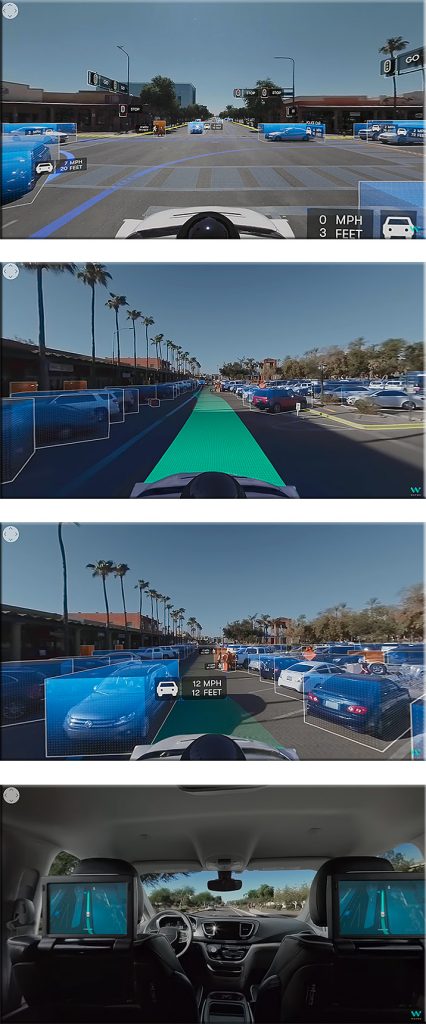
Watch Waymo’s Virtual-Reality View of the World — from spectrum.ieee.org by Philip Ross

From DSC:
This is mind blowing. Now I see why Nvidia’s products/services are so valuable.


Along these same lines, also see this clip and/or this article entitled, This is why AR and Autonomous Driving are the Future of Cars:


The Legal Hazards of Virtual Reality and Augmented Reality Apps — from spectrum.ieee.org by Tam Harbert
Liability and intellectual property issues are just two areas developers need to know about

Excerpt:

As virtual- and augmented-reality technologies mature, legal questions are emerging that could trip up VR and AR developers. One of the first lawyers to explore these questions is Robyn Chatwood, of the international law firm Dentons. “VR and AR are areas where the law is just not keeping up with [technology] developments,” she says. IEEE Spectrum contributing editor Tam Harbert talked with Chatwood about the legal challenges.


This VR Tool Could Make Kids A Lot Less Scared Of Medical Procedures — from fastcompany.com by Daniel Terdiman
The new app creates a personalized, explorable 3D model of a kid’s own body that makes it much easier for them to understand what’s going on inside.

Excerpt:

A new virtual reality app that’s designed to help kids suffering from conditions like Crohn’s disease understand their maladies immerses those children in a cartoon-like virtual reality tour through their body.

Called HealthVoyager, the tool, a collaboration between Boston Children’s Hospital and the health-tech company Klick Health, is being launched today at an event featuring former First Lady Michelle Obama.

A lot of kids are confused by doctors’ intricate explanations of complex procedures like a colonoscopy, and they, and their families, can feel much more engaged, and satisfied, if they really understand what’s going on. But that’s been hard to do in a way that really works and doesn’t get bogged down with a lot of meaningless jargon.


Augmented Reality in Education — from invisible.toys


Star Chart -- AR and astronomy


The state of virtual reality — from furthermore.equinox.com by Rachael Schultz
How the latest advancements are optimizing performance, recovery, and injury prevention

Excerpt:

Virtual reality is increasingly used to enhance everything from museum exhibits to fitness classes. Elite athletes are using VR goggles to refine their skills, sports rehabilitation clinics are incorporating it into recovery regimes, and others are using it to improve focus and memory.

Here, some of the most exciting things happening with virtual reality, as well as what’s to come.


Augmented Reality takes 3-D printing to next level — from rtoz.org

Excerpt:

Cornell researchers are taking 3-D printing and 3-D modeling to a new level by using augmented reality (AR) to allow designers to design in physical space while a robotic arm rapidly prints the work. To use the Robotic Modeling Assistant (RoMA), a designer wears an AR headset with hand controllers. As soon as a design feature is completed, the robotic arm prints the new feature.


From DSC:
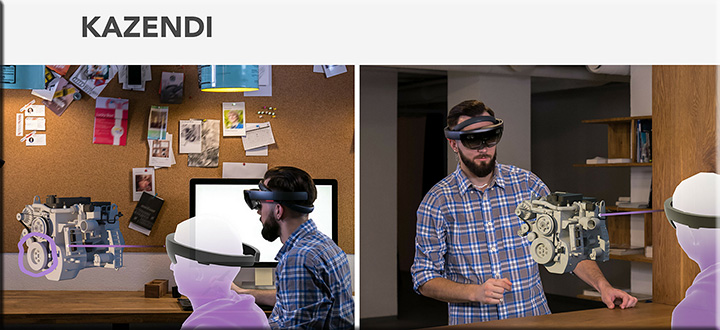
How might the types of technologies being developed and used by Kazendi’s Holomeeting be used for building/enhancing learning spaces?


AR and Blockchain: A Match Made in The AR Cloud — from medium.com by Ori Inbar

Excerpt:

In my introduction to the AR Cloud I argued that in order to reach mass adoption, AR experiences need to persist in the real world across space, time, and devices.

To achieve that, we will need a persistent realtime spatial map of the world that enables sharing and collaboration of AR Experiences among many users.

And according to AR industry insiders, it’s poised to become:

“the most important software infrastructure in computing”

aka: The AR Cloud.


From DSC:
Why aren’t we further along with lecture recording within K-12 classrooms?

That is, I as a parent — or much better yet, our kids themselves who are still in K-12 — should be able to go online and access whatever talks/lectures/presentations were given on a particular day. When our daughter is sick and misses several days, wouldn’t it be great for her to be able to go out and see what she missed? Even if we had the time and/or the energy to do so (which we don’t), my wife and I can’t present this content to her very well. We would likely explain things differently — and perhaps incorrectly — thus, potentially muddying the waters and causing more confusion for our daughter.

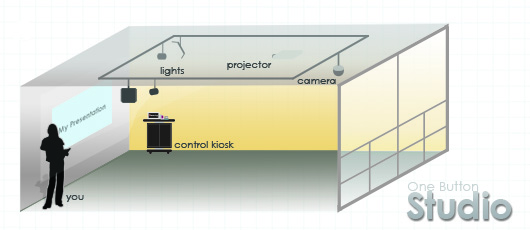
There should be entry level recording studios — such as the One Button Studio from Penn State University — in each K-12 school for teachers to record their presentations. At the end of each day, the teacher could put a checkbox next to what he/she was able to cover that day. (No rushing intended here — as education is enough of a run-away train often times!) That material would then be made visible/available on that day as links on an online-based calendar. Administrators should pay teachers extra money in the summer times to record these presentations.

Also, students could use these studios to practice their presentation and communication skills. The process is quick and easy:


I’d like to see an option — ideally via a brief voice-driven Q&A at the start of each session — that would ask the person where they wanted to put the recording when it was done: To a thumb drive, to a previously assigned storage area out on the cloud/Internet, or to both destinations?

Providing automatically generated close captioning would be a great feature here as well, especially for English as a Second Language (ESL) students.


From DSC:
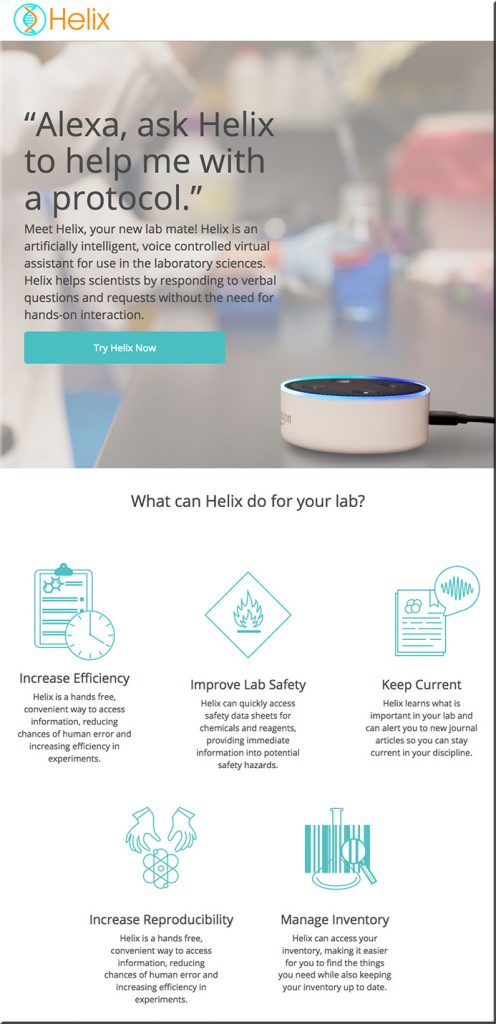
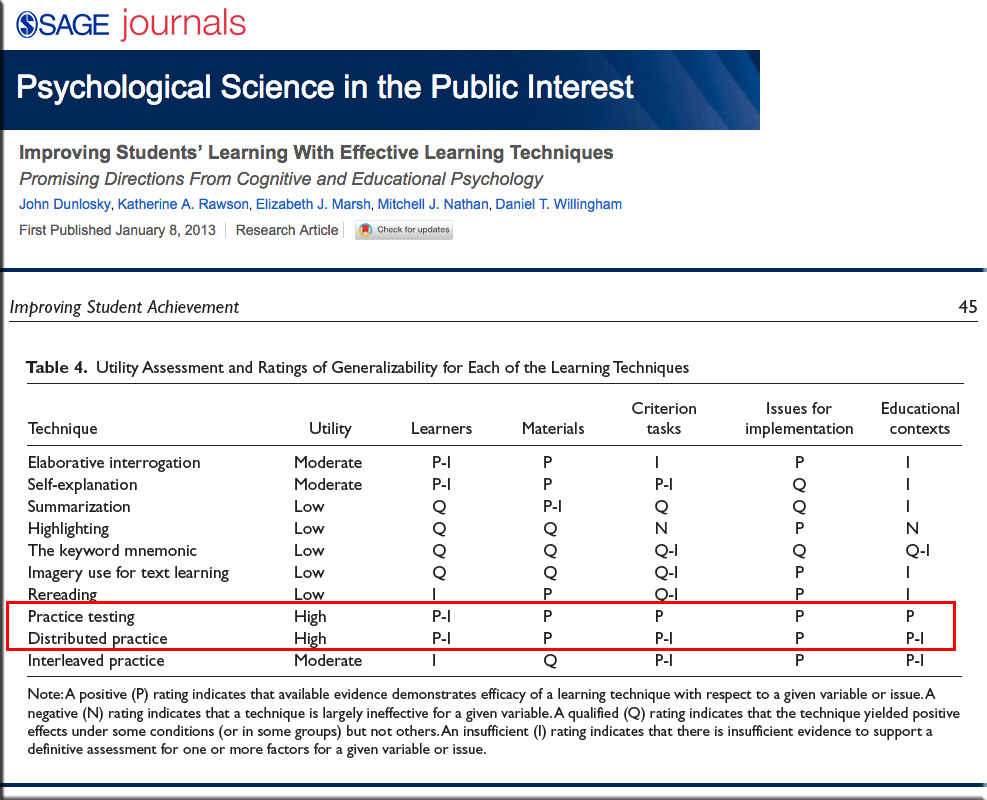
After seeing the article entitled, “Scientists Are Turning Alexa into an Automated Lab Helper,” I began to wonder…might Alexa be a tool to periodically schedule & provide practice tests & distributed practice on content? In the future, will there be “learning bots” that a learner can employ to do such self-testing and/or distributed practice?


From page 45 of the PDF available here:


Might Alexa be a tool to periodically schedule/provide practice tests & distributed practice on content?


© 2025 | Daniel Christian