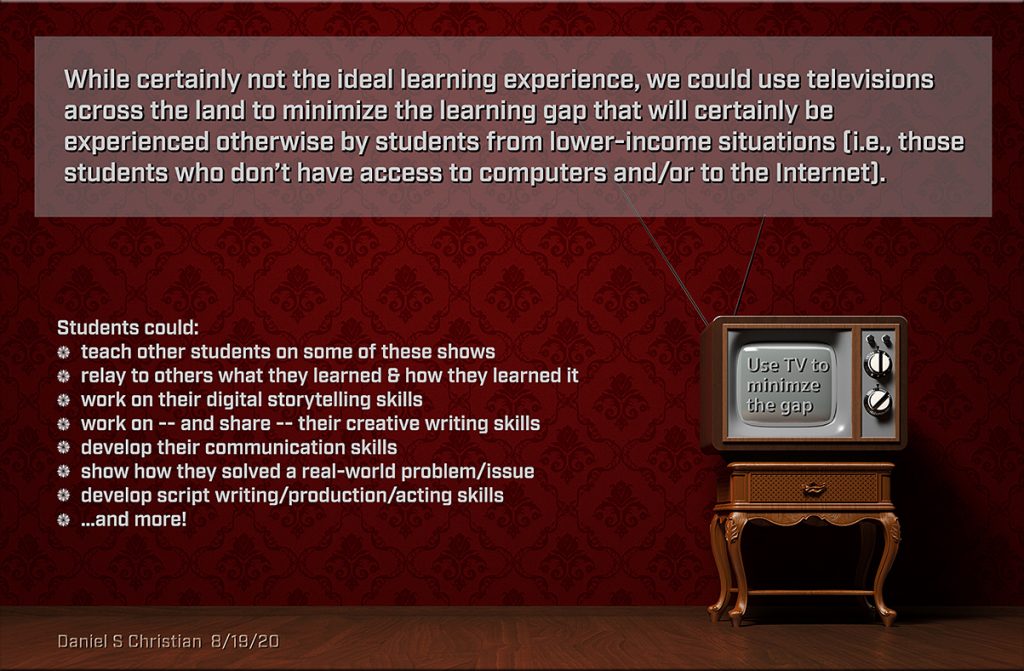
From DSC:
This looks like an interesting set of educational resources!

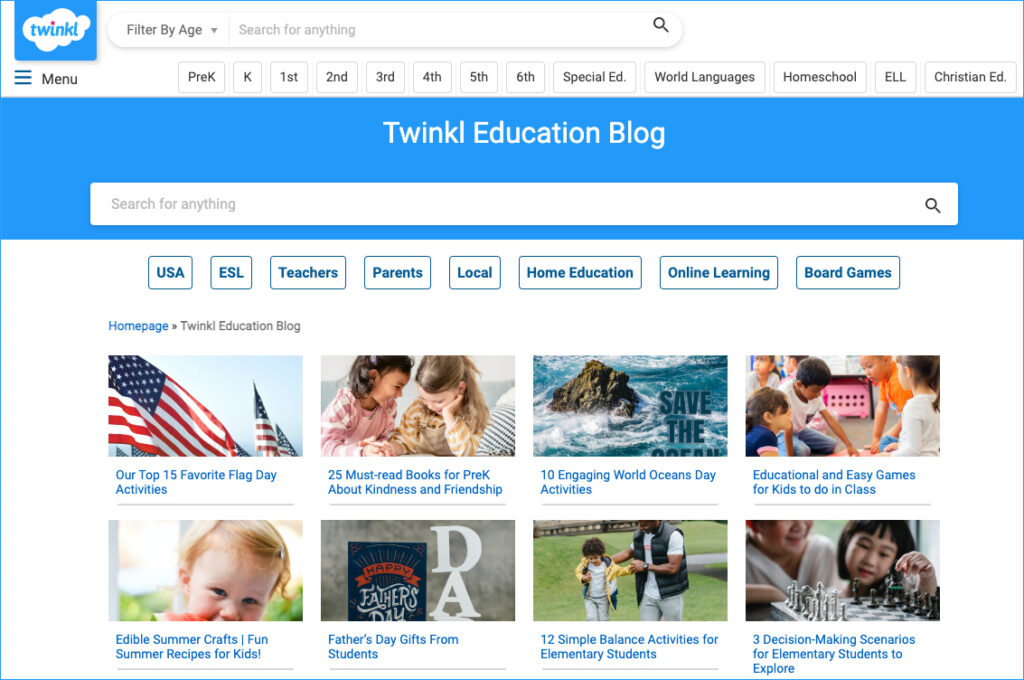
This is a screenshot of the Twinkl Education Blog


From DSC:
One of our daughters — the one who is going to be teaching third graders next year — said that the above siteand resources reminded her of Teachers Pay Teachers. So I thought I’d include that here as well.

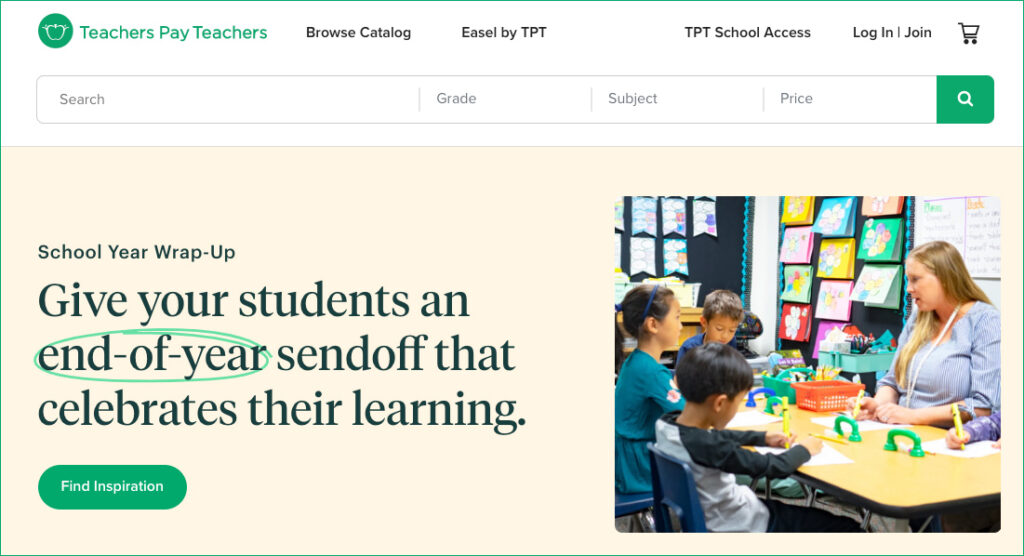
This is a screenshot of the Teachers Pay Teachers website


As Challenges in Education Persist, Our Coverage Will Elevate Educator Voices — from edsurge.com by EdSurge Staff

Excerpt:

Elevating the diverse voices of educators—particularly the perspectives of those traditionally marginalized—is critical for making change. That’s especially important at this moment, during what appears to be an inflection point in the history of American education.

During this period of upheaval, we’ve amplified the voices of educators as they navigate the fallout from the pandemic through our Voices of Change project, creating opportunities for educators to reflect, share and learn from one another through journalism, storytelling and research.

From DSC:
This is great to see, especially seeing as we are in a game-changing environment. These folks are on the front lines, so to speak. As such, we need to listen to them very carefully. Their voices should be the first to be considered and heard as we move forward into the future of education.


Also relevant/see:

Teachers of the Year Say Educators Deserve More Trust — — from edsurge.com by Rebecca Koenig

Excerpt:

“We have this idea that they’ve lost learning, but I really want to change that narrative into: Their learning has shifted,” she explains. “They learned a lot. It might not have been the science I wanted them to learn, but they learned how to learn online and in person; they learned how to change at a moment’s notice, they learned how to keep themselves and … their family safe. I’m pretty sure they all have graduate degrees in technology at this point.”

Rivera believes that education would improve if leaders at every level listened to teachers more, trusted them as experts and drew on their insight when making decisions.


CLASSROOM AND AT-HOME ACCOMMODATIONS FOR DYSLEXIA — from thetechedvocate.org by Matthew Lynch

Excerpt:

For most kids of school age, recognizing letters and learning to pronounce them comes as easy as possible. However, for children living with Dyslexia, it is typically an uphill task to achieve. Dyslexia is a reading disorder that impedes a child’s early academic development by significantly decreasing the ability to process graphic symbols, especially where it concerns language. Such children may struggle with language development before school age and experience difficulties learning to spell when they eventually enroll in school. Some symptoms commonly exhibited by dyslexic children include reversed letter and word sequences, weak literacy skills, and poor handwriting.

In all these, the good news for parents and educators with dyslexic children in their care is that with early diagnosis and suitable accommodations, they can learn to read like the other children.

CLASSROOM AND AT-HOME ACCOMMODATIONS FOR DYSCALCULIA — from thetechedvocate.org by Matthew Lynch

Excerpt:

If you have a child struggling with basic math skills and you’ve done everything else to resolve the situation yet it persists, the child might be suffering from Dyscalculia. Dyscalculia is a learning disorder typified by an inability to grasp basic math skills. The peculiar thing about this learning disorder is how it seems only to concern itself with foundational math skills. Lots of people living with this disorder will go on to learn advanced mathematical principles and concepts without any problems. Although manifestations of Dyscalculia will differ from person to person, another symptom commonly associated with the disorder is visual-spatial struggles or difficulty in processing what they hear.

It does not matter whether you are a parent or a teacher; if you are looking for the right accommodations needed to aid students with Dyscalculia, you have come to the right post. These are some steps you can take both in the classroom and at home to ease learning for students with Dyscalculia.

CLASSROOM AND AT-HOME ACCOMMODATIONS FOR DYSNOMIA — from thetechedvocate.org by Matthew Lynch

Excerpt:

When kids struggle with recalling words, numbers, names, etc., off the top of their heads without recourse to a visual or verbal hint, they might likely be suffering from Dysnomia. Dysnomia is a learning disability marked by an inability to recollect essential aspects of the oral or written language.

CLASSROOM AND AT-HOME ACCOMMODATIONS FOR DYSGRAPHIA — from thetechedvocate.org by Matthew Lynch

Excerpt:

Like most learning disabilities, Dysgraphia makes learning difficult for students. In this case, this learning disorder is peculiar to handwriting and motor skills proficiency. Students living with Dysgraphia can suffer from problems ranging from forming letters accordingly, transferring their thoughts onto paper, tying their shoelaces, and zipping a jack. It is pretty standard that Dysgraphia sufferers compensate for their struggles with handwriting by developing remarkable verbal skills. However, this disorder is prone to misdiagnosis. It is due to a lack of sufficient research on the subject.

As a parent or an educator, if you have students who live with Dysgraphia, this post will show you which accommodations you need to put in place to help them learn correctly.


Also relevant/see:

EARLY INTERVENTION: A GUIDE — from thetechedvocate.org by Matthew Lynch

Excerpt:

Educators must effectively identify a student who needs early intervention, whether for autism, learning disorders, or even reading difficulties. The more serious the issue, the more essential early action becomes.


From DSC:
The items below made me reflect on the need to practice some serious design thinking to rethink/redesign the cradle-to-grave learning ecosystems out there.


Real World Learning in Action — from gettingsmart.com by Shawnee Caruthers

Key Points

  • The Real World Learning initiative was created to address a simple, but equally complex challenge: How do you prepare students for life after high school?
  • The traditional, go to classes, earn some credits, participate in some activities and earn a diploma wasn’t working, at least not equitably.

Creating a new high school experience starts with innovative thinking and advocates willing to say yes. As a result of collaborations, visiting best practice sites and numerous convenings, the Kansas City region is now a hub for pathways, wall-to-wall academies, microschools, innovation academies, student-run businesses, strong client-connected project examples and more. Educational stakeholders can now go across state lines to see future-forward thinking for students.

Also relevant/see:

Framing and Designing the HOW — from gettingsmart.com by Rebecca Midles

Key Points (emphasis DSC):

  • The referenced circle graphic is intended to guide how we talk about our work as a system, internal and externally.
  • It also is about understanding our why on a personal level.
  • Learning systems are specifically designed to get the results they have, and to change results, we have to redesign the system.

Also relevant/see:

Fewer People Are Getting Teacher Degrees. Prep Programs Sound the Alarm — from edweek.org by Madeline Wil

Excerpt (emphasis DSC):

As teacher dissatisfaction rates rise and concerns about teacher shortages intensify, colleges of education are sounding the alarm: Enrollment has been steadily declining for the past decade, and the pandemic has likely made things worse.

Smaller and Restructured: How the Pandemic Is Changing the Higher Education IT Workforce — from educause.edu by Jenay Robert

Excerpt:

Several prominent themes emerged from the analysis of these responses and are supported by other recent EDUCAUSE research:

  • Though most respondents reported a reduction in force, some were able to justify adding new positions to their units in 2021, primarily to meet new institutional needs.
  • Budget cuts were the main cause of reductions in force.
  • Work factors such as flexible, remote work options and competitive salaries are playing a central role in attrition and recruitment.
  • Increased workloads and personal stressors related to the pandemic have resulted in widespread burnout among staff.
  • IT units have plans to reorganize in 2022 to become more agile and efficient and to respond to the evolving needs of their organizations.

Allan: With $175G Grants, Accelerate ED Looks to Better Link K-12, College & Work — from the74million.org by Sara Allan

Excerpt:

Today, most states require high school students to complete a set of defined courses, assessments and experiences in order to graduate on a career-ready pathway. However, the number of schools that fully embrace coherent programs of study that connect K-12, higher education and employment remains frustratingly small.

.


What if every high school student had the chance to take an additional year of courses related to their interests and earn enough credits to complete their associate degree one year after high school while gaining valuable experience and career preparation—at little to no cost?

— from Seamless Pathways to Degrees and Careers

From DSC:
The above quote is the type of “What if…” question/thinking that we need to redesign our cradle-to-grave/lifelong learning ecosystems.


A relevant addendum on 6/1/22:


The Science of Learning: Research Meets Practice — from the-learning-agency-lab.com by Alisa Cook and Ulrich Boser; with thanks to Learning Now TV for this resource
Six Research-Based Teaching Practices Are Put Into Practice

Excerpt:

For the nation’s education system, though, the bigger question is: How do we best educate our children so that they learn better, and learn how to learn, in addition to learning what to learn? Additionally, and arguably just as challenging, is: How do we translate this body of research into classroom practice effectively?

Enter the “Science of Learning: Research Meets Practice.” The goal of the project is to get the science of learning into the hands of teaching professionals as well as to parents, school leaders, and students.


Michigan Learning Channel: A Free Tool for Summer Learning — from michiganvirtual.org

Excerpt:

In this course, you will:

  • Recognize the what, why, and how of Michigan Learning Channel (MLC) resources.
  • Identify opportunities for family engagement that align with literacy, math, and science learning goals.
  • Consider ways to share these fun and free activities with students and families.

Also relevant/see:

FUTURE OF ME — from michiganlearning.org
Explore STEM careers by meeting women who work in those fields.

AGE RANGE: 6th – 12th Grade
SUBJECT: Career Exploration, Math, Science

TV Schedule — from michiganlearning.org


The Pandemic’s Lasting Lessons for Colleges, From Academic Innovation Leaders — from edsurge.com by Nadia Tamez-Robledo, Rebecca Koenig, and Jeffrey R. Young

Excerpts:

“Universities are in the business of knowledge, but universities do a very poor job of managing their own knowledge and strategy,” says Brian Fleming, associate vice chancellor of learning ecosystem development at Northeastern University. “You may have faculty members who study organizational development, but none of that gets applied to the university.”
…
University leaders should learn to think more like futurists, he argues, working to imagine scenarios that might need planning for but are beyond the usual one-year or five-year planning cycles.

The pandemic prompted more faculty to ask the question, “What do we actually want to use class time for?” says Tyler Roeger, director of the center for the enhancement of teaching and learning at Elgin Community College. And the answer many of them are landing on, he adds, is: “Actual face-to-face time can be dedicated to problem-working, and working in groups together.”


4 Online Tactics to Improve Blended Learning — from campustechnology.com by Megan Burke, CPA, Ph.D.
An accounting professor shares how best practices from online pedagogy have helped her create a blended learning environment that supports student success.

Excerpts:

Now that students are back in the classroom, I have been combining these tactics with in-person instruction to create a blended learning environment that gives my students the best of both worlds.

The right activities, on the other hand, can make a significant difference. For example:

  • Breakout rooms (for think/pair/share);
  • Polls and quizzes that are low-stakes and anonymous to encourage full engagement;
  • Using the whiteboard option; and
  • Having reviews of material at the end of class.

I also encourage faculty (and myself!) to get out and meet with employers and ask what we can do to better prepare students, so that we can get a better feel for what first-year staff really need to know — and ensure that we present that knowledge and information in the classroom.


Teacher Moves That Cultivate Learner Agency — from edutopia.org by Paul Emerich France
Helping students become independent, questioning thinkers begins with stepping back and guiding them to take the lead in their learning.

Excerpt:

Cultivating learner agency is an endless journey. It not only entails knowing our students as human beings but also requires identifying and unlearning patterns in our teaching that unknowingly engender dependence in learners.

The term agency comes from the Latin agere, meaning “to set in motion.” It is precisely what agency should do in our classrooms: empower learners so that their minds and hearts become the engines that drive learning in our classrooms. This isn’t as simple as some might believe. Providing too much voice and choice without proper scaffolds can be counterproductive, resulting in chaos in the classroom.

Consider the following moves that cultivate learner agency—and choose one to try in your classroom.


A Rubric for Selecting Active Learning Technologies — from er.educause.edu by Katie Bush, Monica Cormier, and Graham Anthony
A rubric can be an invaluable aid in evaluating how well technologies support active learning.

Excerpt:

Because the use of active learning is characterized by a broad range of activities in the classroom, comparing technology and determining which option provides more benefit to an active learning classroom can be difficult. The Rubric for Active Learning Technology Evaluation can provide some differentiation when comparing technology offerings. It has been designed to reveal subtle but impactful differences between technology in the context of active learning. The rubric was designed to be a tool for comparative technology evaluation and as such should be quick to use when comparing similar technologies. It is freely available to use and adapt under a Creative Commons license.


How to integrate storytelling as design thinking in your classroom — from bookcreator.com by Michael Hernandez

Excerpt:

I’ve been thinking a lot about the need to prepare my students for their future and how I can help develop the skills and mindset they’ll need to solve some pretty big global challenges we now face.

While I see my STEM and science colleagues integrating skills like creativity, problem-solving and ideation, technology use and innovation, I often wondered how I could integrate these skills into my journalism, film and photography classes.

Until I realized that I already do.

Often thought of as either a frivolous hobby during our downtime, or a one-way fire hydrant of information from textbooks in school, working with student storytellers over the past 23 years has illuminated the idea that, if done right, student-made digital stories can be a powerful learning experience and creative problem solving exercise.


Entrepreneur Education Platform GeniusU Raises $1.5M Seed Funding at $250M Valuation — from edtechreview.in ed by Stephen Soulunii

Excerpt (emphasis DSC):

Genius Group has recently announced that its EdTech arm, GeniusU Ltd, has raised $1.5 million in a seed round to support the development of its Genius Metaversity virtual learning plans.
…
With the fresh funding, GeniusU plans to extend its courses and programs to interactive learning environments in the metaverse, with students and faculty connecting and learning in global classrooms and virtual 3D environments. It also plans to integrate each student’s AI-based virtual assistant ‘Genie’ into the metaverse as 3D virtual assistants that accompany each student on their personalized journey and integrate its GEMs (Genius Education Merits) student credits into the metaverse. GEMs are earned by students as they learn and can be spent on products and services within GeniusU and counting towards their certifications.


Best Free Virtual Escape Rooms for Schools — from techlearning.com by Diana Restifo
Virtual escape rooms incorporate riddles, puzzles, math, logic, and literacy skills to create an exciting adventure in education.

Excerpt:

Virtual escape rooms are a form of gamified learning that incorporates riddles, puzzles, math, logic, and literacy skills to create an exciting adventure in education. Students demonstrate their skills and knowledge in order to unlock each level, eventually earning their liberation. Some escape rooms are one-page affairs, while others weave an intricate backstory to enthrall players. Many also offer hints when an incorrect answer is given, thereby encouraging kids to persevere until success is achieved.

There’s no charge for any of these virtual escape rooms, so feel free to free yourself, for free!

Also relevant/see:

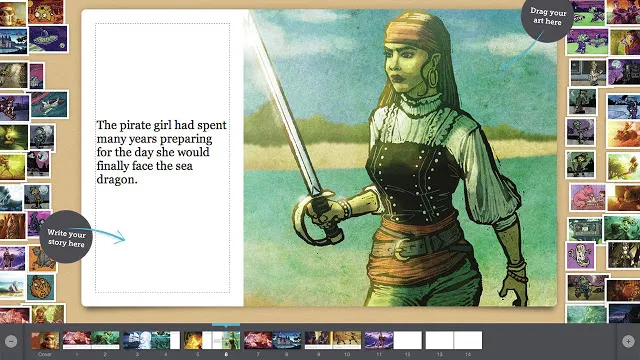
Storybird Lesson Plan — from techlearning.com by Stephanie Smith Budhai, Ph.D.
This Storybird Lesson Plan is designed to help educators utilize a digital learning platform to support teaching and learning

Excerpt:

Storybird is an attractive and easy-to-use reading and writing online edtech tool with beautiful images to inspire students as they develop their literacy skills. Storybird goes beyond reading online books, and provides an accessible platform for learners of all ages to engage in a wide variety of reading and writing genres including descriptive, creative, and persuasive writing as well as longform stories, flash fiction, poetry, and comics.

For an overview of Storybird, check out What is Storybird for Education? Best Tips and Tricks. This sample lesson plan is geared toward fiction storytelling writing instruction for elementary students.

 
© 2025 | Daniel Christian