‘Accessibility is a journey’: A DEI expert on disability rights — from hrdive.com by Caroline Colvin
Employers can wait for a worker to request reasonable accommodation under the ADA, but Kelly Hermann asks: Why not be accommodating from the start?

Excerpt:

Often, employers jump to the obstacles that exist in physical spaces: nonexistent ramps for wheelchairs, manual doors that lack motion sensors, and the like. But the digital world presents challenges as well. Hermann and the U Phoenix accessibility team likes to “demystify” disability for campus members seeking their counsel, she said.

“Are you making those links descriptive and are you using keywords? Or are you just saying ‘click here’ and that’s your link?” Hermann asked. Like a sighted person, an individual with a disability can also scan a webpage for links with assistive technology, but this happens audibly, Hermann said, “They tell that tool to skip by link and this is what they hear: ‘Click here.’ ‘Click here.’ ‘Click here.’ ‘Click here.’ With four links on the page all hyperlinked with ‘click here,’ [they] don’t know where [they’re] going.”


5 creative ways to share your passions (with classroom ideas, too!) — from classtechtips.com by Dr. Monica Burns

Excerpt:

If we’re anything alike, there are topics you just can’t stop talking about. I am definitely guilty of being “that” person who talks about the latest piece of advice they heard on a podcast or a recipe from TikTok that they can’t wait to try out. You might also find me going on and on about how fun it was to visit a new school, a new lesson idea I want to try out, or an EdTech tool that totally changed the way I think about [fill in the blank]. In today’s blog post, I put together a list of five creative ways to share your passions. You’ll also find creative classroom ideas to go along with each one.

Some of these are part of my regular practice of sharing things I’m passionate about. Others I’ve tried a few times and loved, even if they’re not my daily, weekly, or monthly way of sharing.

Best of all… all of these ideas are ones your students can try, too.


Also relevant/see:

Liven up your lesson with a comic strip twist — from classtechtips.com by Dr. Monica Burns


How to Use Backward Chaining to Differentiate Instruction — from cultofpedagogy.com Jennifer Gonzalez

Excerpt:

Backward chaining is a specific kind of scaffolding that has the student begin a task closer to the end, rather than starting it from the beginning. Where the starting point is depends on the student’s particular needs. “There’s no telling where the gum in the straw might be for somebody getting stuck doing something,” Meehan explains. So finding it will require assessment and experimentation.

For example, if you are teaching a child how to brush their teeth, and that child doesn’t quite have the fine motor skills to put the toothpaste on the brush, you’d do that step for them and have them start with the brushing itself. Eventually, as they build confidence with brushing, you’d have them move backward and add on the skill of toothpaste application.


The state of teaching and learning in K12 — from Instructure

What began as an unplanned shift to remote learning two years ago has grown into a movement—a transformation, really—that has given way to a more measured approach to intentionally designed digital learning. The adoption of new educational technologies and instructional strategies has evolved teaching and learning as we know it at an unprecedented pace.

The state of teaching and learning in K12

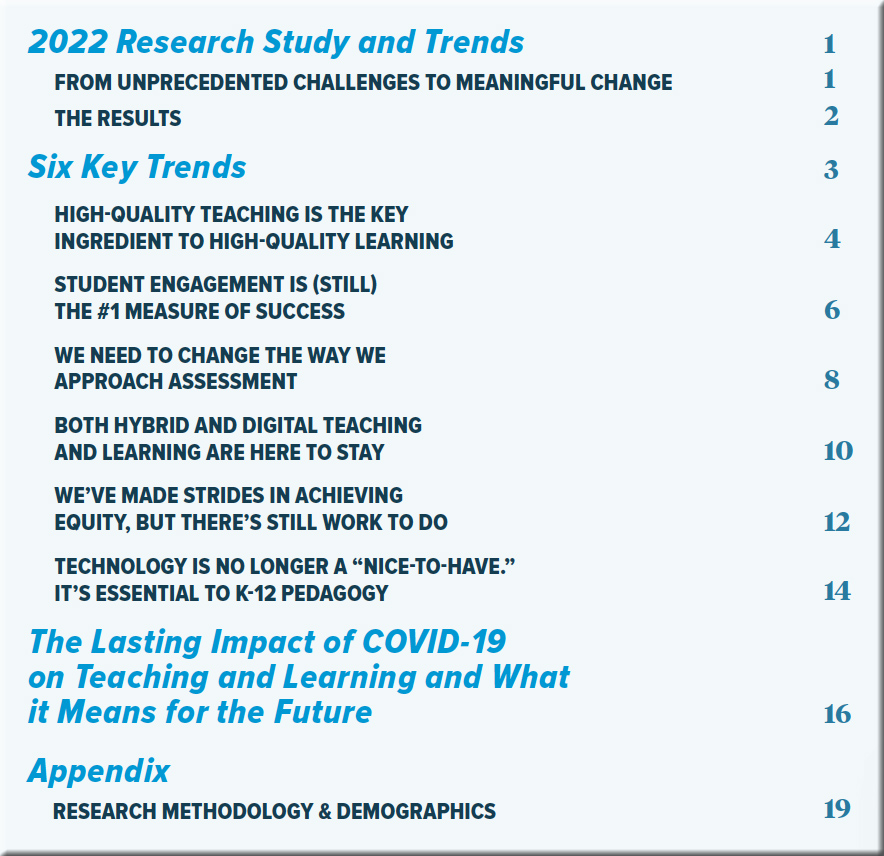
TOC for the state of teaching and learning in K12


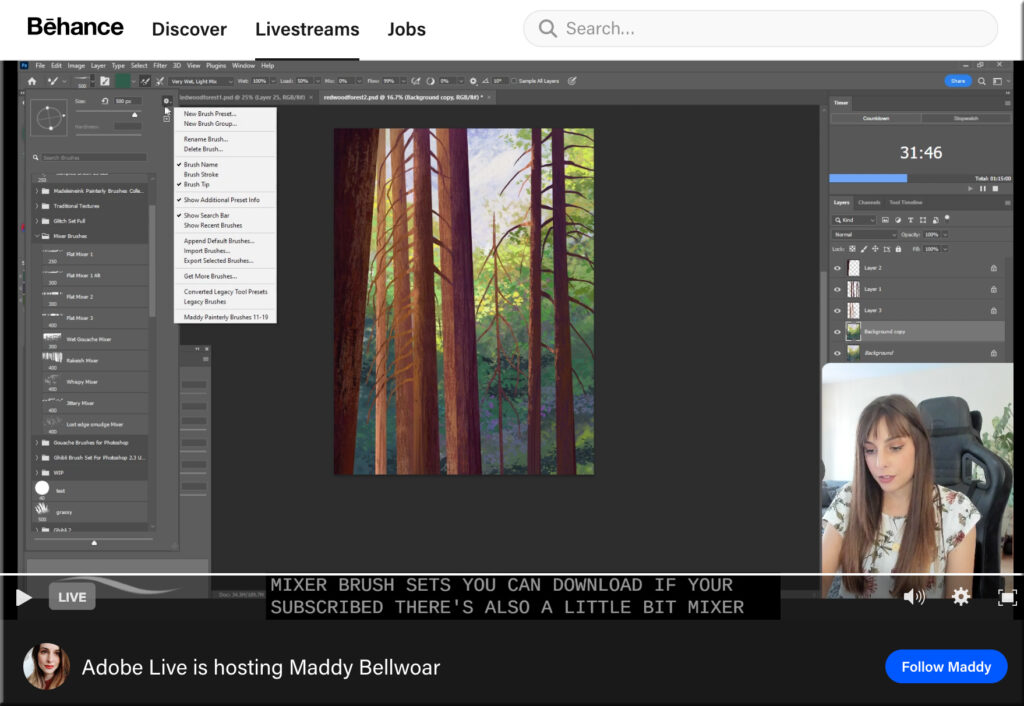
Screenshot of Adobe Live -- is Adobe Live a type of component of our future learning ecosystems?

From DSC:
It seems to me that this is one of the types of learning experiences that we will have in the future — i.e., where you can tap into a variety of live/virtual streams of content whereby you can peer over the shoulder of experts using products and/or services.

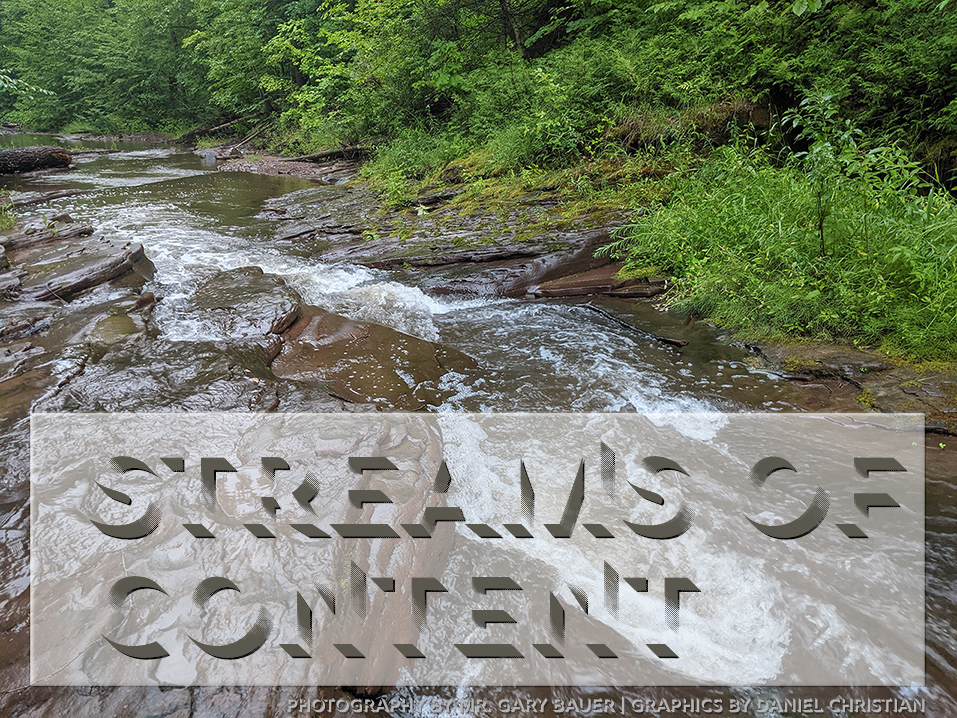
streams of content are ever flowing by -- we need to tap into them and contribute to them


Meet the metaverse: Creating real value in a virtual world — from mckinsey.com with Eric Hazan and Lareina Yee

Excerpt (emphasis DSC):

Welcome to the metaverse. Now, where exactly are we? Imagine for a moment the next iteration of the internet, seamlessly combining our physical and digital lives. It’s many things: a gaming platform, a virtual retail spot, a training tool, an advertising channel, a digital classroom, a gateway to entirely new virtual experiences. While the metaverse continues to be defined, its potential to unleash the next wave of digital disruption is clear. In the first five months of 2022, more than $120 billion have been invested in building out metaverse technology and infrastructure. That’s more than double the $57 billion invested in all of 2021.

How would you define the metaverse?
Lareina: What’s exciting is that the metaverse, like the internet, is the next platform on which we can work, live, connect, and collaborate. It’s going to be an immersive virtual environment that connects different worlds and communities. There are going to be creators and alternative currencies that you can buy and sell things with. It will have a lot of the components of Web3 and gaming and AR, but it will be much larger.

Also relevant/see:


Also relevant/see:


Top Sites for Educator Professional Development — from techlearning.com by Diana Restifo
These professional development sites for education will help teachers refresh and update their practice

Excerpt:

The learning never stops for teachers. Even if continuing education were not required by law, educators would still strive toward deepening their subject knowledge, keeping up with the latest research, sharpening their classroom skills, and learning to use education technology tools.

The following professional development sites for education will help teachers refresh and update their practice, connect with fellow educators and, in some cases, earn continuing education credits. All provide substantial free or modestly priced content.


And for you higher ed folks, see the Tweet below; my thanks to Becky Supiano for this resource out at The Chronicle of Higher Education


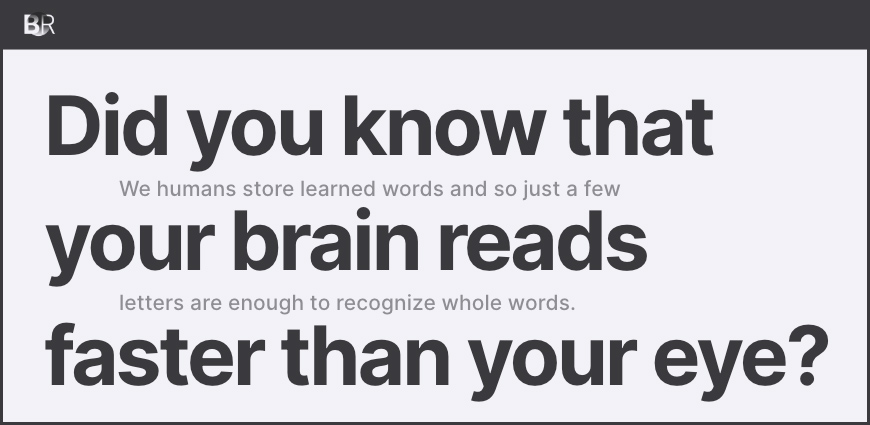
Bionic Reading

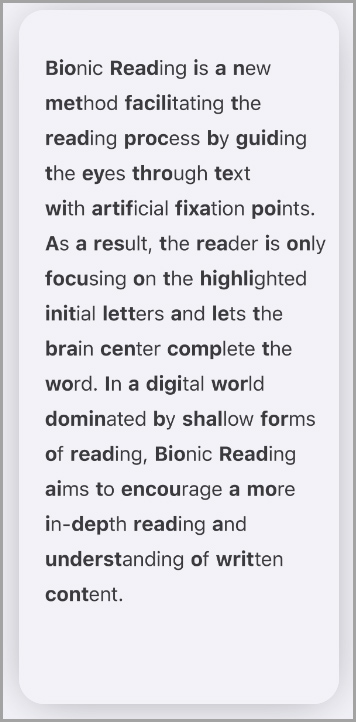
Bionic Reading


From DSC:
Thanks to my good friend Chris for this resource. By the way, this Chrome Extension, Converter, and API remind me a bit of Microsoft’s Immersive Reader.

Also related, see:


From DSC:
Inflation way up. Real wages way down. Not a good mix for higher education. And faculty members aren’t the only ones impacted here. These developments may cause the rise of additional alternatives to institutions of traditional higher education out there. 


One of the resources mentioned in Isha Trivedi’s article out at The Chronicle of Higher Education that’s entitled “Faculty-Pay Survey Records the Largest One-Year Drop Ever” was this one:

The Annual Report on the Economic Status of the Profession, 2021-22 — from the American Association of University Professors (AAUP)

Key Findings (emphasis DSC):
Provisional results were released in early April 2022, including summary tables and institution-level datasets. Key findings include:

  • From 2020–21 to 2021–22, average salaries for full-time faculty members increased 2.0 percent, consistent with the flat wage growth observed since the Great Recession of the late 2000s.
  • Real wages for full-time faculty fell below Great Recession levels in 2021, with average salary falling to 2.3 percent below the 2008 average salary, after adjusting for inflation.
  • Real wages for full-time faculty members decreased 5.0 percent after adjusting for inflation, the largest one-year decrease on record since the AAUP began tracking this measure in 1972.
  • In 2021–22, 97.2 percent of full-time faculty members were covered by retirement plans, a 2.8 percentage point increase from 2020–21.
  • Institutions reported full-time faculty salaries for women that are 81.9 percent of those for men in 2021–22, on average. The gender pay gap is greatest at the full professor rank.
  • From 2019–20 to 2021–22, the number of full-time women faculty members increased 1.6 percent, compared with a 2.5 percent decrease for men.
  • In 2020–21, average pay for adjunct faculty members to teach a course section ranged from $2,979 in public associate’s institutions without ranks to $5,557 in public doctoral institutions.
  • In fall 2020, about three in five (61.5 percent) faculty members were on contingent appointments.

Also relevant, see:


How parents can set up a productive home learning space for students — from blog.neolms.com by Charlie Fletcher

Excerpt:

Most schools have now reopened, and students across the nation and the world are back to learning in person. But, that doesn’t mean that remote learning is over. Plenty of schools still follow a hybrid model, and some students who fared better in remote learning conditions have stuck with virtual classrooms. This means that parents must know how to set up a productive learning space, both for remote learning and as a great study area.

Fortunately, there are plenty of resources to help parents and guardians who want to create a home learning space. This means that whatever your budget, every student can have their own space to study for exams and complete homework.


Top 10 Google Slides Add-Ons To Help Your Work — from graphicmama.com by Nikolay Kaloyanov

Excerpt:

In this article, we will review the top 10 Google Slides add-ons which are worth a shot. But first, we need to mention how to get access to these “miraculous” difference makers.

Article Overview:

How to install Add-Ons in Google Slides?

1. PearDeck
2. Slido
3. Extensis Fonts
4. Slides Toolbox
5. Math Equations

Also from graphicmama.com see:


How to Learn about Learning Science — from christytuckerlearning.com by Christy Tucker
How do you learn about learning science? Recommendations for people to follow, books to read, and other resources.

Excerpt:

I have written before about how research informs my work. As instructional designers, LXDs, and other L&D professionals, I think it’s important for us to learn how to design more effective learning experiences. Our work should be informed by research and evidence. But, how do you learn about learning science, especially if you don’t have a graduate degree in instructional design? These are my recommendations for people to follow, books to read, and other resources.


What I Learned When Visiting a Colleague’s Hybrid Class — from edsurge.com by Bonni Stachowiak (Columnist)

Excerpt:

Though I usually use this space to offer answers to teaching advice questions from professors, I wanted to try something different. So for my next few installments, I’m writing letters to people who have exemplified what it means to be an effective teacher. This column, the first in the series, is to my friend and colleague, Elizabeth Powell. Her discipline is psychology and she invited me to come observe one of her final classes at our university.

 
© 2025 | Daniel Christian