10 Arguments for Inciting Learning — from insidehighered.com by Cathy N. Davidson and Christina Katopodis
Active learning has been clearly shown to be more effective than traditional modes, write Cathy N. Davidson and Christina Katopodis, who outline its many merits to those who continue to resist it.

Excerpts:

So what can we do to convince more instructors to actually support and use active learning? Over the past several years, we’ve been researching and interviewing faculty members around the world for our upcoming book on teaching and learning, The New College Classroom. And a number of those faculty have asked us how they can best explain the merits of active learning to colleagues and administrators—and even to students and their parents— who continue to be resistant to it. Here are 10 principles, or convincing arguments, that we’ve shared with them.

“Nothing will change until faculty incentives do.
Until we change our academic reward structures for hiring and promotion, faculty members have no reason to take valuable time out from writing monographs or refereed papers to rethink their role in the classroom. We cannot incite students to learn without inciting—and incentivizing—their instructors first so they will invest in understanding and applying active learning. We’ve already made the case for why such an educational approach is vitally important, so we now say simply to top administrators: let’s do it!

Audre Lorde


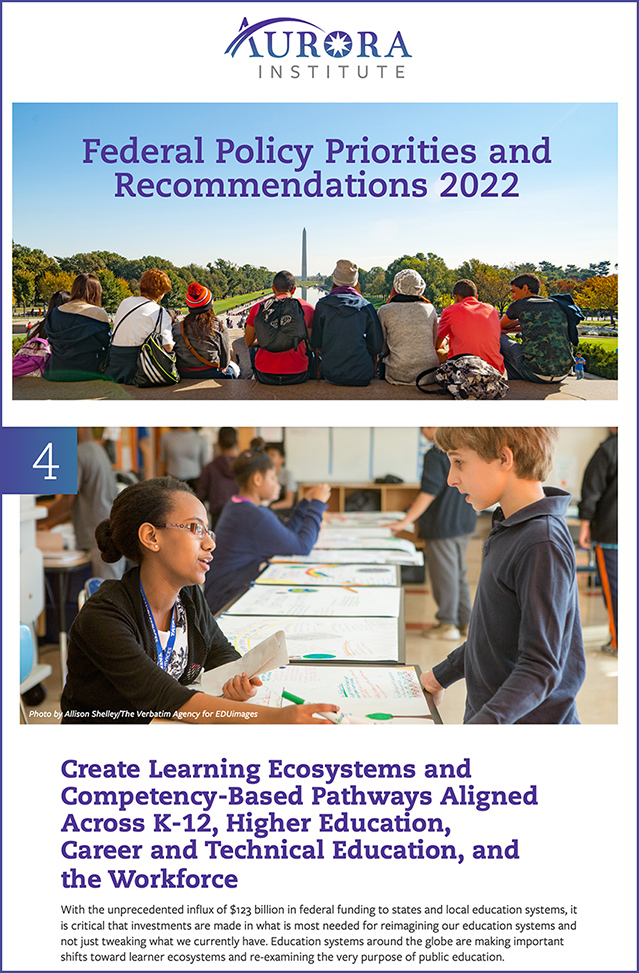
Aurora Institute: Federal Policy Priorities and Recommendations 2022 — from aurora-institute.org

Introduction:

It is critically important for our country to reimagine education and focus on investing in our future, not our past. The current K-12 education system has not produced equitable outcomes for all students. We must change policies and invest in innovation to transform our education systems. Student-centered policies are needed for true systems change and innovations for equity. We must challenge frames and investments that perpetuate tinkering with the existing system, rather than reimagining it. The time is ripe to redesign education to align with future needs and purposes to achieve human flourishing.

To ensure all learners are prepared for life’s uncertainties, as well as a more knowledge-driven workforce and economy, we must restructure the education system to universally recognize anytime, anywhere learning. Many states and districts have taken steps to move in new and improved directions, but more work must be done to meet students where they are and accelerate them to successful futures and prosperity. We must question the fundamental purposes of our education system, align our goals to that purpose, and expand learning to anytime and anyplace, with greater opportunities for next generation learning.

Aurora Institute’s latest Federal Policy Priorities represent an equity-oriented and future-focused set of recommendations designed to ensure that the nation’s education system moves from its current state to a system capable of preparing all learners with the knowledge and skills necessary to achieve lifelong success.


From DSC:
I post this because I like the design thinking exhibited herein. I love the idea of greater collaboration between K-12, higher education, vocational training, and the workforce/workplace. We should consider eliminating — or at least building much better bridges between the — existing silos. These silos seem to be easier to put up than they are to take down.


Should you Switch from Teacher to Instructional Designer? — from teamedforlearning.com
It takes more than a new headline on your resume to transition from teacher to instructional designer.

Excerpts:

If you’re a teacher you may be looking for ways to make the most of the boom in digital learning job opportunities. You’ve developed some new skills in elearning and want to put them to use. It may be tempting to rebrand yourself as an instructional designer. Not so fast. The shift to instructional design is more than a title change, it demands additional credentials and skills that you might not have yet.

Before you try to make the leap, you should understand the real differences between the two roles. You may need to seek out new skills and credentials. It takes more than a new headline on your resume to transition from teacher to instructional designer.
…
You Can Make The Switch From Teacher To Instructional Designer

By now, we hope you understand why instructional design is more than a title, it’s a unique role in the digital learning ecosystem. Although switching roles isn’t as easy as just using new vocabulary, it can be done. With a little planning and the right credentials, you can make the switch from teacher to instructional designer.

The digital learning industry is evolving everyday.


Higher Ed Is Looking to Refill Jobs. But It’s Finding a ‘Shallow and Weak’ Candidate Pool. — from chronicle.com by Megan Zahneis

Excerpt (emphasis DSC):

While higher education has largely recovered nearly all of its pandemic-associated job losses, the task of recruiting and hiring administrators and staff members has become a daunting one, according to a Chronicle survey of college leaders, hiring managers, and administrators that was conducted with support from the Huron Consulting Group.

Nearly 80 percent of the 720 respondents said their campus has more open positions this year than last, and 84 percent said that hiring for administrative and staff jobs has been more difficult in the last year.

Those positions are harder than ever to fill, too: 78 percent of leaders said their campus had received fewer applications for open jobs in the last year, and 82 percent agreed that they’d fielded fewer applications from qualified candidates. Said one person who took the survey: “The pools have been shallow and weak.”

From DSC:
Ask any ***staff*** member who has been working within higher education these last 10-20 years if this development is surprising to them, and they would tell you, “No, this is not a surprise to me at all.” Working within higher education has lost much of its value and appeal:

  • Budgets have been shrinking for years — so important/engaging new projects get taken off the plate (or indefinitely postponed). So opportunities for personal growth and new knowledge for staff members have been majorly curtailed. Also, members of administrations may decide to outsource those exciting projects that do survive to external consultants.
  • Oftentimes, salaries don’t match inflation — and they were never stellar to begin with.
  • Staff are second-class citizens within the world of higher education
    • They aren’t part of the governing bodies (i.e., the Faculty Senates out there don’t include staff). Faculty members have much more say, control, and governance over things and get the opportunities to travel, learn, present, grow, share their knowledge, etc. much more so than staff members.
    • There are few — if any — sabbaticals for staff members.
    • Even those working within teaching and learning centers and instructional designers don’t have their hands on many steering wheels out there. Many faculty members prefer to hold their own steering wheels and they won’t listen to others who aren’t people they consider their “peers” (i.e., essentially other faculty members).
    • They often don’t get the chance to do research and to make money off that research, like faculty members do
  • Staffing levels are inadequate, so one takes on an ever-increasing amount of work for the same pay.

And others could add more items to this list. So no, this is not a surprise to me at all. In a potential future where team-based content creation may thrive, it appears that some team members are dropping out.


Accommodations for students with ADHD — from thetechedvocate.org by Matthew Lynch

Accommodations for students with Dyspraxia — from thetechedvocate.org by Matthew

Excerpt:

Dyspraxia, also known as Apraxia, is a learning disability that is noticeable by difficulty in carrying out routines that need balance, fine motor skills, and coordination. Often, we think of these kids as being ordinarily “clumsy” or “awkward.” Kids with Dyspraxia need to be that an occupational therapist treats them to help boost their fine gross motor skills. Verbal Dyspraxia describes a reduction in the capacity to use speech sounds, which is commonly the sign of a developmental delay. Verbal Dyspraxia can either be separate or accompany Dyspraxia. Children with Dyspraxia may also suffer from a bit of impediment in speech and short-term memory loss.

From DSC:
If you don’t think teaching is incredibly tough, check out these lists of potential accommodations for just a few of the potential students in a classroom.


Encourage Learning Over the Summer with Buncee & PebbleGo Create — from rdene915.com by Rachelle Dene Poth

Excerpts:

In each of these, there are opportunities for students to take a close look at the world around them and become curious about learning. Students can connect with things that are happening in the real world.

Another item from Rachelle:

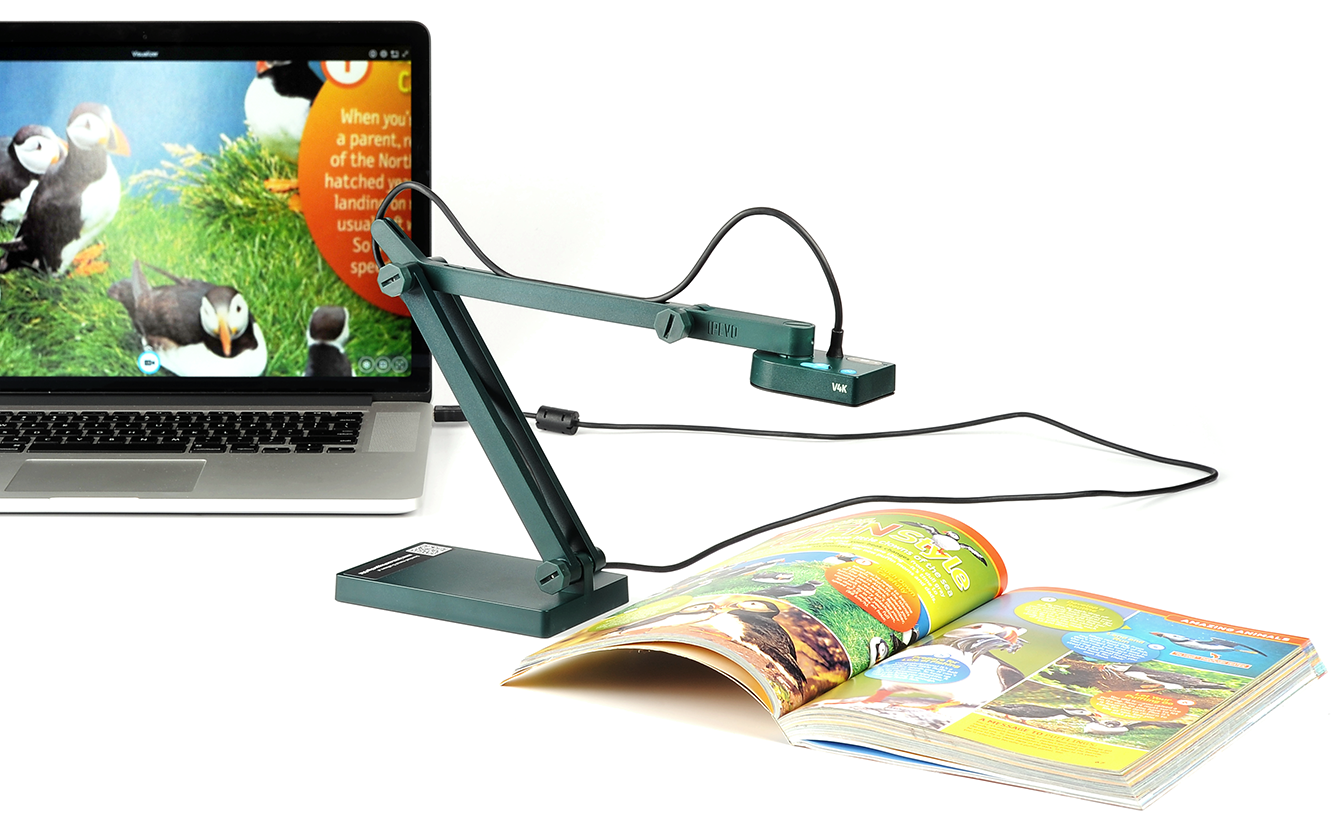
Enhanced Learning with IPEVO!

From DSC:
In my last position, we used IPEVO devices as well. I purchased one for my sister last year as well. They do the job quite well — at a very decent price.


7 Surprising Ways ADHD Shows Up in the Classroom — from additudemag.com by Mark Bertin, M.D., Beverley Holden Johns, Kathy Kuhl
ADHD in the classroom is easy to mistake for carelessness, defiance, laziness, or a learning difference. Here are the 7 ADD symptoms that educators seldom recognize at school — and solutions for each.

Excerpt:

ADHD sometimes manifests in obvious ways — like when a second grader blurts out an answer (again) or when a high school student forgets her completed assignment at home (again). Just as often, though, signs of ADHD in the classroom are more subtle and easily overlooked because they don’t align with stereotypes. Here are seven less-recognized ways ADHD symptoms show up at school, and productive ways to address each one.


Also relevant/see:


Survey Shows Teachers See Play and Choice in Learning Methods As Key to Student Engagement — from thejournal.com by Kristal Kuykendall

Excerpt:

A recent survey of teachers by Kahoot reveals that educators see playful learning and student choice in learning methods as vital to helping boost student engagement and outcomes, according to a new report from the ed tech company.

Kahoot’s May survey of over 8,000 K–16 educators nationwide found that teachers are still concerned about drops in student engagement during the pandemic, and they consider more student-centered approaches as the path forward.


12 Learning Myths Exposed — from ivypanda.com by IvyPanda; with thanks to Irene Fenswick for this resource

Excerpt:

Many people come to us searching for the answer to the question, “What’s the right way to learn?” First of all, we want to clarify: there is no right or wrong way to study. Still, we can list quite a few misconceptions regarding how the human brain works and what methods can help you memorize material. These are so widespread that it takes time and effort to recognize how unjustified and misguided they are.

That’s exactly how this article will help you.

On this page, we’ve busted all the myths surrounding your learning abilities. Our team has collected all the popular misconceptions about studying and explored why they are inaccurate. Besides, we’ve provided some practical (and time-tested) study tips for you to try out.


From DSC:
Below are several observations re: our learning ecosystems — and some ideas on how we can continue to improve them.


It takes years to build up the knowledge and skills in order to be a solid teacher, faculty member, instructional designer, and/or trainer. It takes a lot of studying to effectively research how the brain works and how we learn. Then we retire…and the knowledge is often lost or not passed along. And the wheel gets reinvented all over again. And again. And again.

Along these lines — and though we’re making progress in this area — too often we separate the research from the practical application of that research. So we have folks working primarily in learning science, neuroscience, cognitive psychology, and related fields. But their research doesn’t always get practically applied within our learning spaces. We have researchers…and then we have practitioners. So I greatly appreciate the likes of Pooja Agarwal and Patrice Bain out at RetrievalPractice.org, Daniel Willingham, Eva Keiffenheim, The Learning Scientists, James Lang, and several others who bridge this gap.
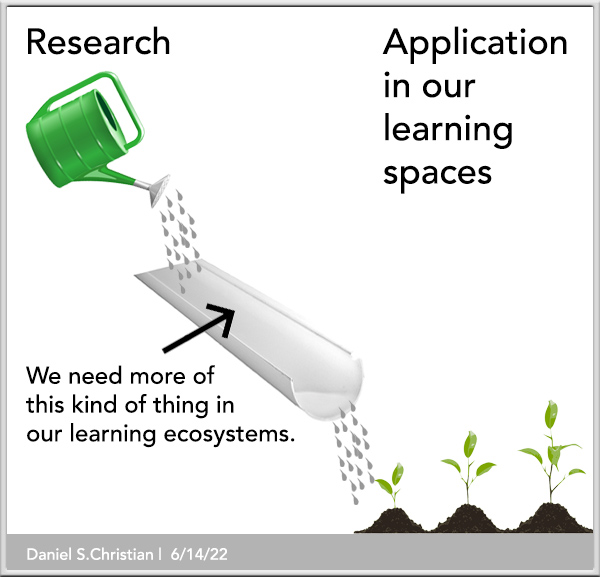
We need to take more of the research from learning science and apply it in our learning spaces.

Perhaps more researchers, faculty members, teachers, trainers, instructional designers, principals, provosts, etc. could blog or be active out on social media.

***

Along these lines, we need to spend more time helping people know how best to study and to learn.
If that type of thing is ever to be learned, it seems like it’s often learned or discussed in the mid- to later years of one’s life…often after one’s primary and secondary days are long gone.

Instead, we should consider putting these easy-to-understand posters from the Learning Scientists in every K-12 school, college, and university in the nation — or something like them.

***

To provide the most effective engaging learning experiences, we should consider using more team-based approaches. As appropriate, that could include the students themselves.

***

We put way too much emphasis on grades — which produces gameplayers who seek only to do the minimum amount of work necessary to get the A’s.  Doing so creates systems whereby learning is not the goal — getting a 4.0+ is.

***
As we are now required to be lifelong learners, our quality of life as a whole goes waaaay up if we actually enjoy learning.  Many people discover later in life that they like to learn…they just didn’t like school. Perhaps we could place greater emphasis within K-16 on whether students enjoyed their learning experiences or not. And if not, what might have made that topic more enjoyable to them? Or what other topics would they like to dive into (that weren’t’ on the original learning menu)?

This could also apply in the corporate training/L&D space as well. Such efforts could go a long way in helping establish stronger learning cultures.

***

We don’t provide enough choice to our students. We need to do a better job of turning over more control to them in their learning journey. We turn students off to learning because we try to cram information that they don’t care about down their throats. So then we have to use the currency of grades to force them into doing the work that they could care less about doing. Their experience with learning/school can easily get soured.
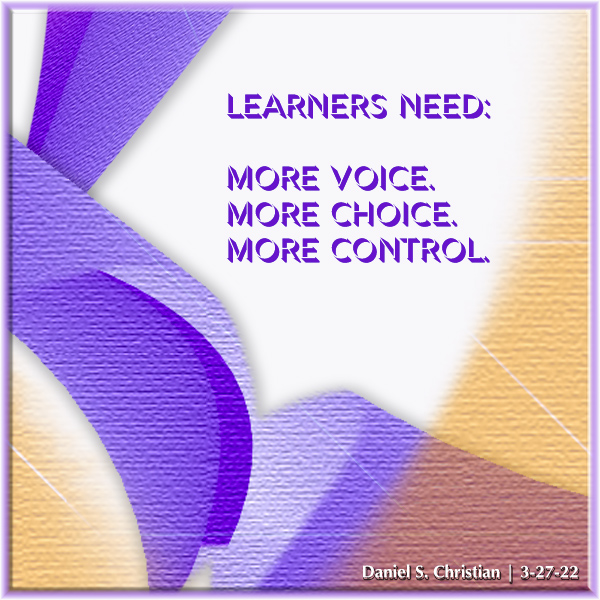
Learners need: More voice. More choice. More control. -- this image was created by Daniel Christian

We need to be more responsive with our curricula. And we need to explain how the information we’re trying to relay is relevant in the real world and will be relevant in their futures.

***

So those are some ideas that I wanted to relay. Thanks for your time and for your shared interests here!


The Post-Covid New Normal is Looking Bipolar — from philonedtech.com by Phil Hill

Excerpt:

I think it is important to deal with evidence on enrollment trends on their own terms and not just in the context of Covid recovery, and not just based on pre-Covid trends. The data we’re seeing recently have some big implications for the health of institutions, for online and hybrid education, and for alternative educational programs (and even alternative scheduling of programs).

The observation that higher education fortunes differ between elites and more open access institutions is not new, but what is becoming clear is that increasing separation cannot be explained away by Covid.


Also relevant/see:

Supporting Students and Faculty in the New Normal — from campustechnology.com by Thomas Hoover, Richard Shrubb, Donna Johnson
As classrooms evolve to accommodate the flexibility and innovation of new learning models, it’s important to provide ample training and resources for all constituents. Here are three key areas to consider.


© 2025 | Daniel Christian