Excerpts from Josh’s Quick Take section (i.e., TL;DR)
As a legal professional, you need to know two things about local AI—right now:
1. It’s Already Here (and You Might Not Know It) Someone in your organization—maybe on your team—is likely experimenting with local AI. Running AI models directly on personal devices is becoming common (and easier), whether for work projects or productivity hacks.
… 2. It’s a Game-Changer (If You Use It Right) You should try it! Local AI offers unmatched privacy and control—a personalized tool that can supercharge your productivity.
… Bottom Line: Local AI is here. Whether you’re managing its risks or leveraging its transformative power, you need to take action—now.
In May 2023, LexisNexis did something unusual for a company in the legal industry: It posed a question to normal people. “Have you used Generative AI tools like ChatGPT to obtain legal advice or assistance with a legal question?” it asked 1,765 American consumers. In what Lexis called a “stunning” result, more than 27% of them (48% of the 57% who were aware of these tools) said yes.
That was 20 months ago. I can almost guarantee that number is substantially higher now.
We should be aiming for legally reliable general-access LLMs with which people can forge their own legal solutions. “In years to come, the principal role of AI in law will not be to enhance today’s largely unaffordable legal and justice systems,” said Richard Susskind recently. “It will be to place the law in the hands of everyone.” He is exactly right.
The rapid evolution of e-discovery presents both opportunities and challenges for e-discovery teams. Almost half (49%) of the participants in the 2024 E-Discovery Unfiltered report expected the number of litigation matters to increase, while more than a third (34%) expected it to remain the same. 83% expected their outside providers to have sufficient skill in handling most data types. And 71% noted that the amount of data in a typical case has increased in the past year.
As organizations enhance their processes and infrastructure, the expectation to leverage technology to maximize service delivery increases. However, legal professionals must balance innovation with humanity. That was the consensus of a recent webinar for ACEDS, which you can watchhere.
I am always happy when my work generates a public discussion. That happened after a January column I wrote about a prominent scholar’s critique of the evidence for including children with disabilities in general education classrooms. Advocates, parents and teachers argued for inclusion, against inclusion and for some hybrid of the two. The director of education at the Learning Disabilities Association of America weighed in, as did the commissioner of special education research at the U.S. Department of Education. More than 160 people commented on one Reddit discussion about the story. Here’s a sampling of views I received or saw on social media.
With that out of the way, I prefer Claude.ai for writing. For larger projects like a book, create a Claude Project to keep all context in one place.
Copy [the following] prompts into a document
Use them in sequence as you write
Adjust the word counts and specifics as needed
Keep your responses for reference
Use the same prompt template for similar sections to maintain consistency
Each prompt builds on the previous one, creating a systematic approach to helping you write your book.
Using NotebookLM to Boost College Reading Comprehension— from michellekassorla.substack.com by Michelle Kassorla and Eugenia Novokshanova This semester, we are using NotebookLM to help our students comprehend and engage with scholarly texts
We were looking hard for a new tool when Google released NotebookLM. Not only does Google allow unfettered use of this amazing tool, it is also a much better tool for the work we require in our courses. So, this semester, we have scrapped our “old” tools and added NotebookLM as the primary tool for our English Composition II courses (and we hope, fervently, that Google won’t decide to severely limit its free tier before this semester ends!)
If you know next-to-nothing about NotebookLM, that’s OK. What follows is the specific lesson we present to our students. We hope this will help you understand all you need to know about NotebookLM, and how to successfully integrate the tool into your own teaching this semester.
AFTER two years of working closely with leadership in multiple institutions, and delivering countless workshops, I’ve seen one thing repeatedly: the biggest challenge isn’t the technology itself, but how we lead through it. Here is some of my best advice to help you navigate generative AI with clarity and confidence:
Break your own AI policies before you implement them. …
Fund your failures. …
Resist the pilot program. …
Host Anti-Tech Tech Talks …
…+ several more tips
While generative AI in higher education obviously involves new technology, it’s much more about adopting a curious and human-centric approach in your institution and communities. It’s about empowering learners in new, human-oriented and innovative ways. It is, in a nutshell, about people adapting to new ways of doing things.
Maria Anderson responded to Clay’s posting with this idea:
Here’s an idea: […] the teacher can use the [most advanced] AI tool to generate a complete solution to “the problem” — whatever that is — and demonstrate how to do that in class. Give all the students access to the document with the results.
And then grade the students on a comprehensive followup activity / presentation of executing that solution (no notes, no more than 10 words on a slide). So the students all have access to the same deep AI result, but have to show they comprehend and can iterate on that result.
In this age of distrust, misinformation, and skepticism, you may wonder how to demonstrate your sources within a Google Document. Did you type it yourself, copy and paste it from a browser-based source, copy and paste it from an unknown source, or did it come from generative AI?
You may not think this is an important clarification, but if writing is a critical part of your livelihood or life, you will definitely want to demonstrate your sources.
That’s where the new Grammarly feature comes in.
The new feature is called Authorship, and according to Grammarly, “Grammarly Authorship is a set of features that helps users demonstrate their sources of text in a Google doc. When you activate Authorship within Google Docs, it proactively tracks the writing process as you write.”
AI Agents Are Coming to Higher Education — from govtech.com AI agents are customizable tools with more decision-making power than chatbots. They have the potential to automate more tasks, and some schools have implemented them for administrative and educational purposes.
Custom GPTs are on the rise in education. Google’s version, Gemini Gems, includes a premade version called Learning Coach, and Microsoft announced last week a new agent addition to Copilot featuring use cases at educational institutions.
Generative Artificial Intelligence and Education: A Brief Ethical Reflection on Autonomy— from er.educause.edu by Vicki Strunk and James Willis Given the widespread impacts of generative AI, looking at this technology through the lens of autonomy can help equip students for the workplaces of the present and of the future, while ensuring academic integrity for both students and instructors.
The principle of autonomy stresses that we should be free agents who can govern ourselves and who are able to make our own choices. This principle applies to AI in higher education because it raises serious questions about how, when, and whether AI should be used in varying contexts. Although we have only begun asking questions related to autonomy and many more remain to be asked, we hope that this serves as a starting place to consider the uses of AI in higher education.
This November 2024 guidebook offers higher education practitioners actionable strategies for building and sustaining partnerships that both meet regional needs and support students, families, and communities. This work was based on the design and delivery of dual enrollment pathways as part of the Lab’s Designers in Residence 2.0: Accelerating Pathways project.
…
The practices and case studies shared here are informed by higher education leaders across six community colleges as part of the Lab’s Designers in Residence program.
We have organized the guidebook based on core elements of a strong partnerships strategy, alongside how to establish a strong foundation and sustain and maintain the partnerships you’ve built. Through our research, we’ve identified four key elements of strong partnerships:
+ Communication and collaboration
+ Shared vision
+ Adaptive and responsive
+ Action-oriented
You will find guiding questions, tools, and case studies within each of the four elements. .
Now is the time for visionary leadership in education.The era of artificial intelligence is reshaping the demands on education systems. Rigid policies, outdated curricula, and reliance on obsolete metrics are failing students. A recent survey from Resume Genius found that graduates lack skills in communication, collaboration, and critical thinking. Consequently, there is a growing trend in companies hiring candidates based on skills instead of traditional education or work experience. This underscores the urgent need for educational leaders to prioritize adaptability and innovation in their systems. Educational leaders must embrace a transformative approach to keep pace.
…
[Heretical leaders] bring courage, empathy, and strategic thinking to reimagine education’s potential. Here are their defining characteristics:
Visionary Thinking: They identify bold, innovative paths to progress.
Courage to Act: These leaders take calculated risks to overcome resistance and inertia.
Relentless Curiosity: They challenge assumptions and seek better alternatives.
Empathy for Stakeholders: Understanding the personal impact of change allows them to lead with compassion.
Strategic Disruption: Their deliberate actions ensure systemic improvements.
These qualities enable Heretical leaders to reframe challenges as opportunities and drive meaningful change.
From DSC: Readers of this blog will recognize that I believe visionary leadership is extremely important — in all areas of our society, but especially within our learning ecosystems. Vision trumps data, at least in my mind. There are times when data can be used to support a vision, but having a powerful vision is more lasting and impactful than relying on data to drive the organization.
So while I’d vote for a different term other than “heretical leaders,” I get what Dan is saying and I agree with him. Such leaders are going against the grain. They are swimming upstream. They are espousing perspectives that others often don’t buy into (at least initially or for some time).
Such were the leaders who introduced online learning into the K-16 educational systems back in the late ’90s and into the next two+ decades. The growth of online-based learning continues and has helped educate millions of people. Those leaders and the people who worked for such endeavors were going against the grain.
We haven’t seen the end point of online-based learning. I think it will become even more powerful and impactful when AI is used to determine which jobs are opening up, and which skills are needed for those jobs, and then provide a listing of sources of where one can obtain that knowledge and develop those skills. People will be key in this vision. But so will AI and personalized learning. It will be a collaborative effort.
By the way, I am NOT advocating for using AI to outsource our thinking. Also, having basic facts and background knowledge in a domain is critically important, especially to use AI effectively. But we should be teaching students about AI (as we learn more about it ourselves). We should be working collaboratively with our students to understand how best to use AI. It’s their futures at stake.
While “polarization” was Merriam-Webster’s word of the year for 2024, we have some early frontrunners for 2025 — especially when it comes to higher education. Change. Agility. Uncertainty. Flexibility. As we take a deep dive into the trends on tap for higher education in the coming year, it’s important to note that, with an incoming administration who has vowed to shake things up, the current postsecondary system could be turned on its head. With that in mind, we wade into our yearly look at the topics and trends that will be making headlines — and making waves — in the year ahead.
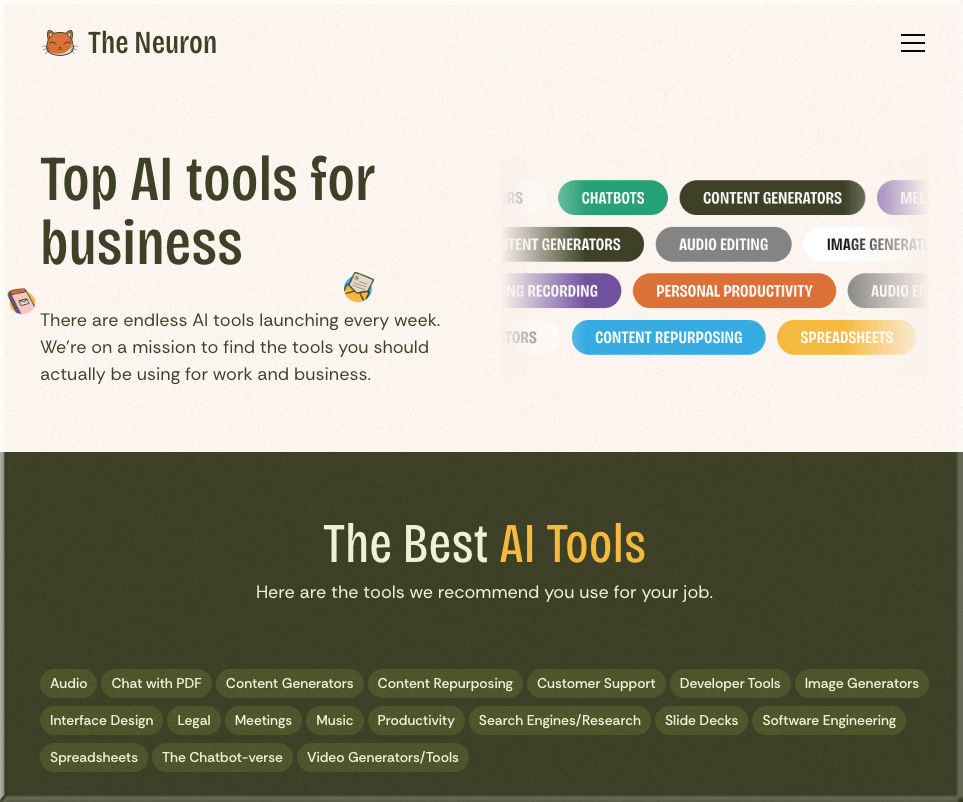
NVIDIA’s Apple moment?! — from theneurondaily.com by Noah Edelman and Grant Harvey PLUS: How to level up your AI workflows for 2025…
NVIDIA wants to put an AI supercomputer on your desk (and it only costs $3,000). … And last night at CES 2025, Jensen Huang announced phase two of this plan: Project DIGITS, a $3K personal AI supercomputer that runs 200B parameter models from your desk. Guess we now know why Apple recently developed an NVIDIA allergy…
… But NVIDIA doesn’t just want its “Apple PC moment”… it also wants its OpenAI moment. NVIDIA also announced Cosmos, a platform for building physical AI (think: robots and self-driving cars)—which Jensen Huang calls “the ChatGPT moment for robotics.”
NVIDIA is bringing AI from the cloud to personal devices and enterprises, covering all computing needs from developers to ordinary users.
At CES 2025, which opened this morning, NVIDIA founder and CEO Jensen Huang delivered a milestone keynote speech, revealing the future of AI and computing. From the core token concept of generative AI to the launch of the new Blackwell architecture GPU, and the AI-driven digital future, this speech will profoundly impact the entire industry from a cross-disciplinary perspective.
From DSC: I’m posting this next item (involving Samsung) as it relates to how TVs continue to change within our living rooms. AI is finding its way into our TVs…the ramifications of this remain to be seen.
The Rundown: Samsung revealed its new “AI for All” tagline at CES 2025, introducing a comprehensive suite of new AI features and products across its entire ecosystem — including new AI-powered TVs, appliances, PCs, and more.
The details:
Vision AI brings features like real-time translation, the ability to adapt to user preferences, AI upscaling, and instant content summaries to Samsung TVs.
Several of Samsung’s new Smart TVs will also have Microsoft Copilot built in, while also teasing a potential AI partnership with Google.
Samsung also announced the new line of Galaxy Book5 AI PCs, with new capabilities like AI-powered search and photo editing.
AI is also being infused into Samsung’s laundry appliances, art frames, home security equipment, and other devices within its SmartThings ecosystem.
Why it matters: Samsung’s web of products are getting the AI treatment — and we’re about to be surrounded by AI-infused appliances in every aspect of our lives. The edge will be the ability to sync it all together under one central hub, which could position Samsung as the go-to for the inevitable transition from smart to AI-powered homes.
***
“Samsung sees TVs not as one-directional devices for passive consumption but as interactive, intelligent partners that adapt to your needs,” said SW Yong, President and Head of Visual Display Business at Samsung Electronics. “With Samsung Vision AI, we’re reimagining what screens can do, connecting entertainment, personalization, and lifestyle solutions into one seamless experience to simplify your life.” — from Samsung
The following framework I offer for defining, understanding, and preparing for agentic AI blends foundational work in computer science with insights from cognitive psychology and speculative philosophy. Each of the seven levels represents a step-change in technology, capability, and autonomy. The framework expresses increasing opportunities to innovate, thrive, and transform in a data-fueled and AI-driven digital economy.
The Rise of AI Agents and Data-Driven Decisions — from devprojournal.com by Mike Monocello Fueled by generative AI and machine learning advancements, we’re witnessing a paradigm shift in how businesses operate and make decisions.
AI Agents Enhance Generative AI’s Impact Burley Kawasaki, Global VP of Product Marketing and Strategy at Creatio, predicts a significant leap forward in generative AI. “In 2025, AI agents will take generative AI to the next level by moving beyond content creation to active participation in daily business operations,” he says. “These agents, capable of partial or full autonomy, will handle tasks like scheduling, lead qualification, and customer follow-ups, seamlessly integrating into workflows. Rather than replacing generative AI, they will enhance its utility by transforming insights into immediate, actionable outcomes.”
Everyone’s talking about the potential of AI agents in 2025 (and don’t get me wrong, it’s really significant), but there’s a crucial detail that keeps getting overlooked: the gap between current capabilities and practical reliability.
Here’s the reality check that most predictions miss: AI agents currently operate at about 80% accuracy (according to Microsoft’s AI CEO). Sounds impressive, right? But here’s the thing – for businesses and users to actually trust these systems with meaningful tasks, we need 99% reliability. That’s not just a 19% gap – it’s the difference between an interesting tech demo and a business-critical tool.
This matters because it completely changes how we should think about AI agents in 2025. While major players like Microsoft, Google, and Amazon are pouring billions into development, they’re all facing the same fundamental challenge – making them work reliably enough that you can actually trust them with your business processes.
Think about it this way: Would you trust an assistant who gets things wrong 20% of the time? Probably not. But would you trust one who makes a mistake only 1% of the time, especially if they could handle repetitive tasks across your entire workflow? That’s a completely different conversation.
In the tech world, we like to label periods as the year of (insert milestone here). This past year (2024) was a year of broader experimentation in AI and, of course, agentic use cases.
As 2025 opens, VentureBeat spoke to industry analysts and IT decision-makers to see what the year might bring. For many, 2025 will be the year of agents, when all the pilot programs, experiments and new AI use cases converge into something resembling a return on investment.
In addition, the experts VentureBeat spoke to see 2025 as the year AI orchestration will play a bigger role in the enterprise. Organizations plan to make management of AI applications and agents much more straightforward.
Here are some themes we expect to see more in 2025.
AI agents take charge
Jérémy Grandillon, CEO of TC9 – AI Allbound Agency, said “Today, AI can do a lot, but we don’t trust it to take actions on our behalf. This will change in 2025. Be ready to ask your AI assistant to book a Uber ride for you.” Start small with one agent handling one task. Build up to an army.
“If 2024 was agents everywhere, then 2025 will be about bringing those agents together in networks and systems,” said Nicholas Holland, vice president of AI at Hubspot. “Micro agents working together to accomplish larger bodies of work, and marketplaces where humans can ‘hire’ agents to work alongside them in hybrid teams. Before long, we’ll be saying, ‘there’s an agent for that.'”
… Voice becomes default
Stop typing and start talking. Adam Biddlecombe, head of brand at Mindstream, predicts a shift in how we interact with AI. “2025 will be the year that people start talking with AI,” he said. “The majority of people interact with ChatGPT and other tools in the text format, and a lot of emphasis is put on prompting skills.
Biddlecombe believes, “With Apple’s ChatGPT integration for Siri, millions of people will start talking to ChatGPT. This will make AI so much more accessible and people will start to use it for very simple queries.”
Get ready for the next wave of advancements in AI. AGI arrives early, AI agents take charge, and voice becomes the norm. Video creation gets easy, AI embeds everywhere, and one-person billion-dollar companies emerge.
To better understand the types of roles that AI is impacting, ZoomInfo’s research team looked to its proprietary database of professional contacts for answers. The platform, which detects more than 1.5 million personnel changes per day, revealed a dramatic increase in AI-related job titles since 2022. With a 200% increase in two years, the data paints a vivid picture of how AI technology is reshaping the workforce.
Why does this shift in AI titles matter for every industry?
“I mean, that’s what I’ll always want for my own children and, frankly, for anyone’s children,” Khan said. “And the hope here is that we can use artificial intelligence and other technologies to amplify what a teacher can do so they can spend more time standing next to a student, figuring them out, having a person-to-person connection.”
…
“After a week you start to realize, like, how you can use it,” Brockman said. “That’s been one of the really important things about working with Sal and his team, to really figure out what’s the right way to sort of bring this to parents and to teachers and to classrooms and to do that in a way…so that the students really learn and aren’t just, you know, asking for the answers and that the parents can have oversight and the teachers can be involved in that process.”
More than 100 colleges and high schools are turning to a new AI tool called Nectir, allowing teachers to create a personalized learning partner that’s trained on their syllabi, textbooks, and assignments to help students with anything from questions related to their coursework to essay writing assistance and even future career guidance.
…
With Nectir, teachers can create an AI assistant tailored to their specific needs, whether for a single class, a department, or the entire campus. There are various personalization options available, enabling teachers to establish clear boundaries for the AI’s interactions, such as programming the assistant to assist only with certain subjects or responding in a way that aligns with their teaching style.
“It’ll really be that customized learning partner. Every single conversation that a student has with any of their assistants will then be fed into that student profile for them to be able to see based on what the AI thinks, what should I be doing next, not only in my educational journey, but in my career journey,” Ghai said.
How Will AI Influence Higher Ed in 2025? — from insidehighered.com by Kathryn Palmer No one knows for sure, but Inside Higher Ed asked seven experts for their predictions.
As the technology continues to evolve at a rapid pace, no one knows for sure how AI will influence higher education in 2025. But several experts offered Inside Higher Ed their predictions—and some guidance—for how colleges and universities will have to navigate AI’s potential in the new year.
In the short term, A.I. will help teachers create lesson plans, find illustrative examples and generate quizzes tailored to each student. Customized problem sets will serve as tools to combat cheating while A.I. provides instant feedback.
…
In the longer term, it’s possible to imagine a world where A.I. can ingest rich learner data and create personalized learning paths for students, all within a curriculum established by the teacher. Teachers can continue to be deeply involved in fostering student discussions, guiding group projects and engaging their students, while A.I. handles grading and uses the Socratic method to help students discover answers on their own. Teachers provide encouragement and one-on-one support when needed, using their newfound availability to give students some extra care.
Let’s be clear: A.I. will never replace the human touch that is so vital to education. No algorithm can replicate the empathy, creativity and passion a teacher brings to the classroom. But A.I. can certainly amplify those qualities. It can be our co-pilot, our chief of staff helping us extend our reach and improve our effectiveness.
Today, I want to reflect on two recent OpenAI developments that highlight this evolution: their belated publication of advice for students on integrating AI into writing workflows, and last week’s launch of the full GPTo1 Pro version. When OpenAI released their student writing guide, there were plenty of snarky comments about how this guidance arrives almost a year after they thoroughly disrupted the educational landscape. Fair enough – I took my own side swipes initially. But let’s look at what they’re actually advising, because the details matter more than the timing.
Tutoring programs exploded in the last five years as states and school districts searched for ways to counter plummeting achievement during COVID. But the cost of providing supplemental instruction to tens of millions of students can be eye-watering, even as the results seem to taper off as programs serve more students.
That’s where artificial intelligence could prove a decisive advantage. A report circulated in October by the National Student Support Accelerator found that an AI-powered tutoring assistant significantly improved the performance of hundreds of tutors by prompting them with new ways to explain concepts to students. With the help of the tool, dubbed Tutor CoPilot, students assigned to the weakest tutors began posting academic results nearly equal to those assigned to the strongest. And the cost to run the program was just $20 per pupil.
Faculty must have the time and support necessary to come to terms with this new technology and that requires us to change how we view professional development in higher education and K-12. We cannot treat generative AI as a one-off problem that can be solved by a workshop, an invited talk, or a course policy discussion. Generative AI in education has to be viewed as a continuum. Faculty need a myriad of support options each semester:
Course buyouts
Fellowships
Learning communities
Reading groups
AI Institutes and workshops
Funding to explore the scholarship of teaching and learning around generative AI
Education leaders should focus on integrating AI literacy, civic education, and work-based learning to equip students for future challenges and opportunities.
Building social capital and personalized learning environments will be crucial for student success in a world increasingly influenced by AI and decentralized power structures.
Per The Rundown: OpenAI just launched a surprising new way to access ChatGPT — through an old-school 1-800 number & also rolled out a new WhatsApp integration for global users during Day 10 of the company’s livestream event.
Agentic AI represents a significant evolution in artificial intelligence, offering enhanced autonomy and decision-making capabilities beyond traditional AI systems. Unlike conventional AI, which requires human instructions, agentic AI can independently perform complex tasks, adapt to changing environments, and pursue goals with minimal human intervention.
This makes it a powerful tool across various industries, especially in the customer service function. To understand it better, let’s compare AI Agents with non-AI agents.
… Characteristics of Agentic AI
Autonomy: Achieves complex objectives without requiring human collaboration.
Language Comprehension: Understands nuanced human speech and text effectively.
Rationality: Makes informed, contextual decisions using advanced reasoning engines.
Adaptation: Adjusts plans and goals in dynamic situations.
Workflow Optimization: Streamlines and organizes business workflows with minimal oversight.
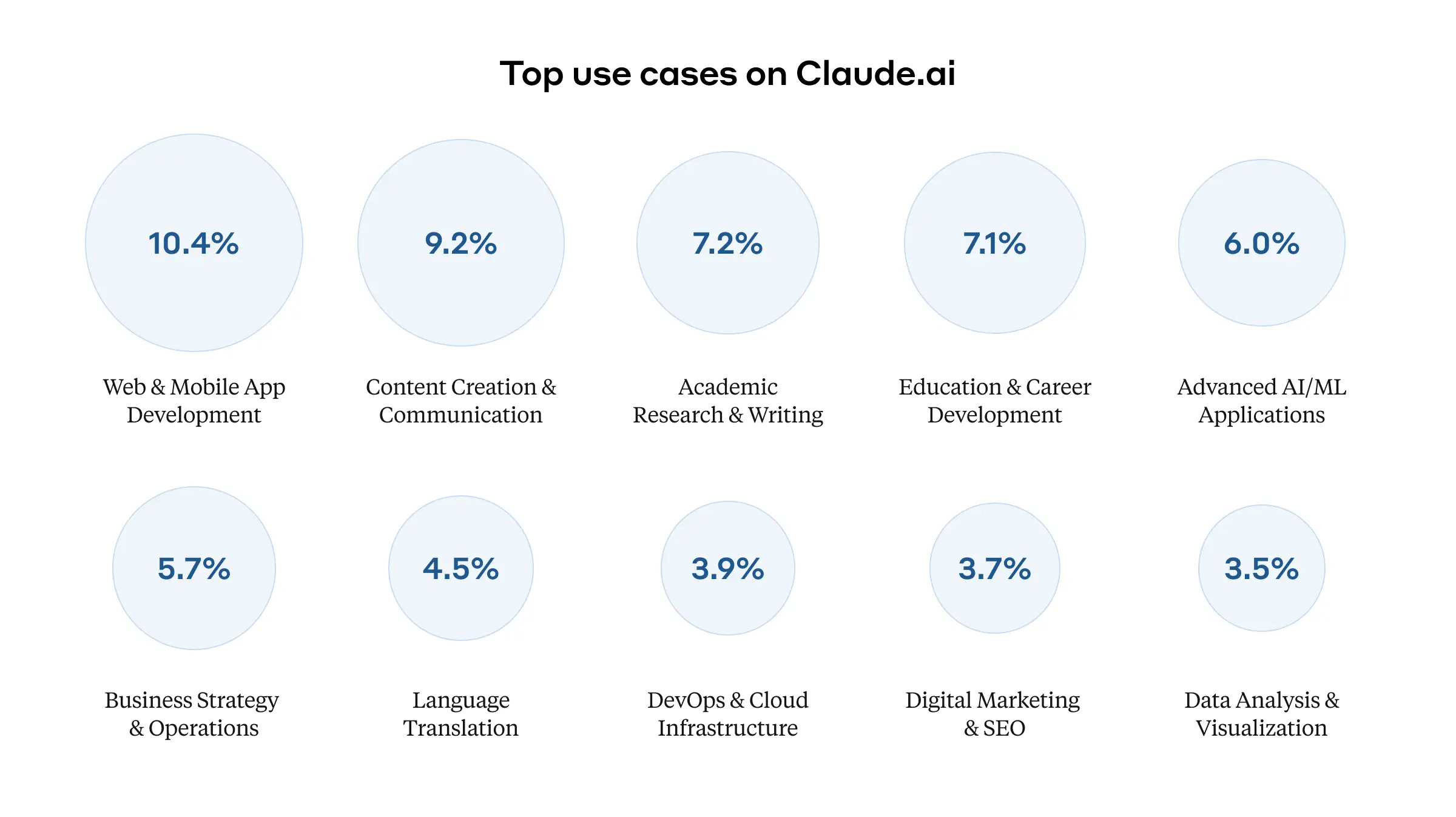
How, then, can we research and observe how our systems are used while rigorously maintaining user privacy?
Claude insights and observations, or “Clio,” is our attempt to answer this question. Clio is an automated analysis tool that enables privacy-preserving analysis of real-world language model use. It gives us insights into the day-to-day uses of claude.ai in a way that’s analogous to tools like Google Trends. It’s also already helping us improve our safety measures. In this post—which accompanies a full research paper—we describe Clio and some of its initial results.
Evolving tools redefine AI video — from heatherbcooper.substack.com by Heather Cooper Google’s Veo 2, Kling 1.6, Pika 2.0 & more
AI video continues to surpass expectations
The AI video generation space has evolved dramatically in recent weeks, with several major players introducing groundbreaking tools.
Here’s a comprehensive look at the current landscape:
Veo 2…
Pika 2.0…
Runway’s Gen-3…
Luma AI Dream Machine…
Hailuo’s MiniMax…
OpenAI’s Sora…
Hunyuan Video by Tencent…
There are several other video models and platforms, including …
How Can Remote or Hybrid Teaching Help?
A shift to virtual learning can help close the gaps.
First, remote work can draw more people into the field. “For some folks, particularly with the pandemic and teaching for a year or more online, they found that model appealing to them from a professional and personal standpoint,” Carbaugh says.
While many educators still prefer face-to-face interactions, he says, others may find the ability to work from home appealing.
Virtual learning can also broaden the candidate pool in hard-to-fill roles. In STEM, for instance, “you might have someone who is willing to teach a class for you in addition to their normal job,” Speegle says. “They can teach computer science, biology or calculus for an hour a day, and they’re done.”
With one in five school-age children engaged in homeschooling, Blount County Schools decided in 2018 to offer an option aimed at bridging the best of both homeschooling and public school, while offering a flexible schedule and college preparatory academics.
…
While the hybrid schooling model is not necessarily new, two developments have emerged in recent years. First, interest in attending, founding, and working at these schools has increased since the Covid pandemic; and second, conventional public-school systems are starting to get into the game.
Launchpad Jobs highlights how nondegree workers can achieve career success through strategic job choices. It reveals that nearly 2 million workers without college degrees earn six-figure salaries, demonstrating that fulfilling and well-paying careers are accessible without a traditional four-year education.
The report identifies key 73 roles, termed “Launchpad Jobs,” that offer a combination of strong wages, job stability, and upward mobility. These include positions such as EMTs, electricians, and bank tellers, which often serve as steppingstones to long-term success. Using big data analysis of career histories this report maps the trajectories of workers starting in various roles, showcasing how initial job choices influence future earnings and advancement potential.
China has established the world’s largest online education system, according to a document sent by the Ministry of Education to the Global Times on Wednesday.
As of now, the country has developed over 30 various online course platforms, with more than 97,000 massive open online courses (MOOCs) made available, 483 million registered users, and 1.39 billion learning instances. Additionally, 440 million instances of students obtaining course credits have been recorded, making China’s number of MOOCs and learners the highest in the world, according to the document.
Furthermore, a national smart education platform – the Smart Education of China in Higher Education – has launched 31,000 high-quality online courses, with 78,000 teachers participating in teaching and over 16.82 million users visiting, with more than 93 million visits, covering 183 countries and regions worldwide.
Many of these courses have garnered high praise among global students.
Uncover the fastest-growing skills with the Job Skills Report 2025. This practical resource draws on data from Coursera’s 5 million enterprise learners to highlight the skills and learning experiences that employees, students, and job seekers will prioritize for career success* in 2025.
This year’s report reveals that generative AI (GenAI) is the most in-demand skill, with enterprise course enrollments soaring by 866% year-over-year.By upskilling learners globally, industry, higher education, and governments can unlock AI’s potential $15.7 trillion in global economic value ?by 2030.**
Access the report to:
Identify the fastest-growing skills in AI, business, data science, and technology.
Compare skill priorities of students, employees, and job seekers.
Understand how learners engage with AI learning experiences.
Break the monopoly on higher education pathways — from fastcompany.com by Antonio Gutierrez; via GSV New models prove that younger and underserved populations are finding success with skills-based programs and hybrid educational models.
The Duet-SNHU model proves that accessible, flexible, and cost-effective alternatives are possible and scalable. Meanwhile, the explosion of nondegree credentials offers additional pathways to skills-focused career readiness, reflecting a growing appetite for innovation in education. To remain competitive in the global economy, the U.S. must embrace these alternatives while reforming traditional institutions.
Policymakers must prioritize funding based on performance metrics like graduation rates and job placements, and accreditors must hold institutions accountable for real-world outcomes. Business leaders, educators, and community stakeholders must champion scalable models that deliver equity and opportunity. The stakes are too high to cling to an outdated system. By disrupting the status quo, we can create an education system that serves all Americans and strengthens the economy for generations to come.
Picture your enterprise as a living ecosystem,where surging market demand instantly informs staffing decisions, where a new vendor’s onboarding optimizes your emissions metrics, where rising customer engagement reveals product opportunities. Now imagine if your systems could see these connections too! This is the promise of AI agents — an intelligent network that thinks, learns, and works across your entire enterprise.
Today, organizations operate in artificial silos. Tomorrow, they could be fluid and responsive. The transformation has already begun. The question is: will your company lead it?
The journey to agent-enabled operations starts with clarity on business objectives. Leaders should begin by mapping their business’s critical processes. The most pressing opportunities often lie where cross-functional handoffs create friction or where high-value activities are slowed by system fragmentation. These pain points become the natural starting points for your agent deployment strategy.
Artificial intelligence has already proved that it can sound like a human, impersonate individuals and even produce recordings of someone speaking different languages. Now, a new feature from Microsoft will allow video meeting attendees to hear speakers “talk” in a different language with help from AI.
What Is Agentic AI? — from blogs.nvidia.com by Erik Pounds Agentic AI uses sophisticated reasoning and iterative planning to autonomously solve complex, multi-step problems.
The next frontier of artificial intelligence is agentic AI, which uses sophisticated reasoning and iterative planning to autonomously solve complex, multi-step problems. And it’s set to enhance productivity and operations across industries.
Agentic AI systems ingest vast amounts of data from multiple sources to independently analyze challenges, develop strategies and execute tasks like supply chain optimization, cybersecurity vulnerability analysis and helping doctors with time-consuming tasks.
From DSC: I opened up a BRAND NEW box of cereal from Post the other day. As I looked down into the package, I realized that it was roughly half full. (This has happened many times before, but it struck me so much this time that I had to take pictures of it and post this item.) .
. Looks can be deceiving for sure. It looks like I should have been getting a full box of cereal…but no…only about half of the package was full. It’s another example of the shrinkflation of things — which can also be described as people deceptively ripping other people off.
“As long as I’m earning $$, I don’t care how it impacts others.”<– That’s not me talking, but it’s increasingly the perspective that many Americans have these days. We don’t bother with ethics and morals…how old-fashioned can you get, right? We just want to make as much money as possible and to hell with how our actions/products are impacting others.
Another example from the food industry is one of the companies that I worked for in the 1990’s — Kraft Foods. Kraft has not served peoples’ health well at all. Even when they tried to take noble steps to provide healthier foods, other food executives/companies in the industry wouldn’t hop on board. They just wanted to please Wall Street, not Main Street. So companies like Kraft have contributed to the current situations that we face which involve obesity, diabetes, heart attacks, and other ailments. (Not to mention increased health care costs.)
Bottom line reflection: There are REAL ramifications when we don’t take Christ’s words/commands to love one another seriously (or even to care about someone at all). We’re experiencing such ramifications EVERY DAY now.
What We Talk about When We Talk about Networking— from michelleweise.substack.com by Dr. Michelle Weise, Julia Freeland Fisher, and Nitzan Pelman Networking, Social Capital & the Goldilocks Ask
I recently had a chance to sit down with Julia Freeland Fisher, Director of Education at the Christensen Institute, and Nitzan Pelman, CEO of Climb Together and founder of Climb Hire, for a live CGN webinar on tapping into our networks (some of you may recall, I wrote about these two phenomenal women in my post, “Who You Know … A Little Bit: The Power of Weak Ties”).
I love getting to learn from their constantly evolving thinking on cultivating and mobilizing social capital. And in this episode, we get super tactical on the how-to’s of networking for young people.
From DSC: Tell your kids or grandkids to watch this. I didn’t have a CLUE about networking when I graduated from high school — and even from college. It took me years to get an accurate understanding of the place and power of networking. And that it’s not all about looking out for #1 and taking from/manipulating/exploiting others. But it’s about sharing resources, learning and connecting with others, helping others connect with relevant others, and more.
I hope that we can produce more items like this to help the next generation get started and navigate their careers.
Client expectations have shifted significantly in today’s technology-driven world. Quick communication and greater transparency are now a priority for clients throughout the entire case life cycle. This growing demand for tech-enhanced processes comes not only from clients but also from staff, and is set to rise even further as more advances become available.
…
I see the shift to cloud-based digital systems, especially for small and midsized law firms, as evening the playing field by providing access to robust tools that can aid legal services. Here are some examples of how legal professionals are leveraging tech every day…
Just 10% of law firms and 21% of corporate legal teams have now implemented policies to guide their organisation’s use of generative AI, according to a report out today (2 December) from Thomson Reuters.
Artificial Intelligence (AI) has been rapidly deployed around the world in a growing number of sectors, offering unprecedented opportunities while raising profound legal and ethical questions. This symposium will explore the transformative power of AI, focusing on its benefits, limitations, and the legal challenges it poses.
AI’s ability to revolutionize sectors such as healthcare, law, and business holds immense potential, from improving efficiency and access to services, to providing new tools for analysis and decision-making. However, the deployment of AI also introduces significant risks, including bias, privacy concerns, and ethical dilemmas that challenge existing legal and regulatory frameworks. As AI technologies continue to evolve, it is crucial to assess their implications critically to ensure responsible and equitable development.
The role of legal teams in creating AI ethics guardrails — from legaldive.com by Catherine Dawson For organizations to balance the benefits of artificial intelligence with its risk, it’s important for counsel to develop policy on data governance and privacy.
How Legal Aid and Tech Collaboration Can Bridge the Justice Gap — from law.com by Kelli Raker and Maya Markovich “Technology, when thoughtfully developed and implemented, has the potential to expand access to legal services significantly,” write Kelli Raker and Maya Markovich.
Challenges and Concerns Despite the potential benefits, legal aid organizations face several hurdles in working with new technologies:
1. Funding and incentives: Most funding for legal aid is tied to direct legal representation, leaving little room for investment in general case management or exploration of innovative service delivery methods to exponentially scale impact.
2. Jurisdictional inconsistency: The lack of a unified court system or standardized forms across regions makes it challenging to develop accurate and widely applicable tech solutions in certain types of matters.
3. Organizational capacity: Many legal aid organizations lack the time and resources to thoroughly evaluate new tech offerings or collaboration opportunities or identify internal workflows and areas of unmet need with the highest chance for impact.
4. Data privacy and security: Legal aid providers need assurance that tech protects client data and avoids misuse of sensitive information.
5. Ethical considerations: There’s significant concern about the accuracy of information produced by consumer-facing technology and the potential for inadvertent unauthorized practice of law.
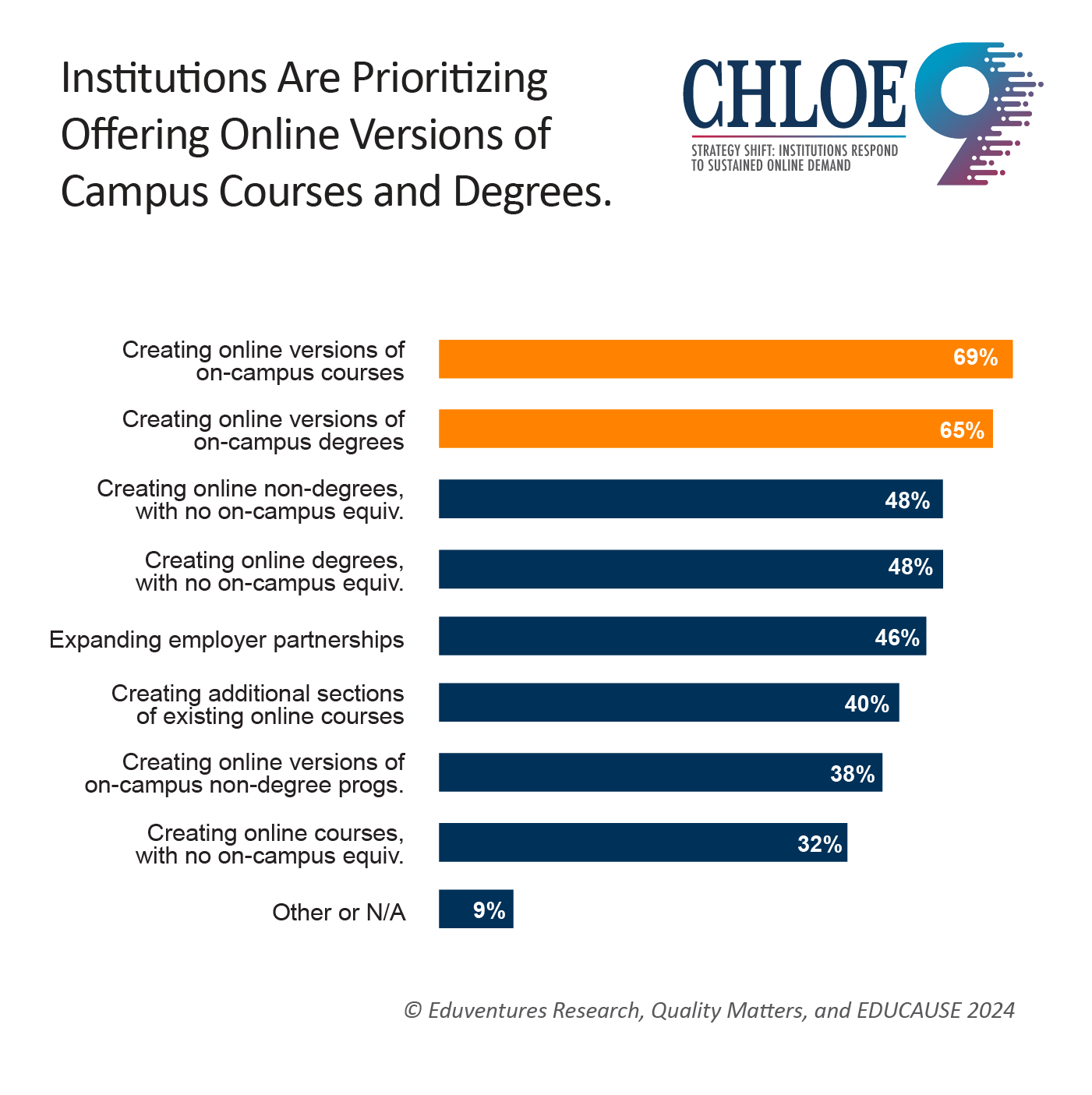
Institutions are balancing capacity issues and rapid technological advancements—including artificial intelligence—while addressing a loss of trust in higher education.
To adapt to the future, technology and data leaders must work strategically to restore trust, prepare for policy updates, and plan for online education growth.