It’s popular these days to complain that college teaching hasn’t changed in hundreds of years. And sure, it’s possible to find some professors on any campus holding yellowed lecture notes, or clinging to dusty chalk. But the reality is that the internet and digital technologies have already brought profound changes to instructional styles and tools in higher education.
So what are the new teaching approaches catching on at today’s campuses? And what are the broader cultural changes around college teaching?
We set out to answer those questions over the past year, with a series of articles and interviews exploring what teaching in the 21st century looks like. Some show the nuances of the challenges of teaching with technology by telling stories of innovative professors, including how a water agency official who teaches an online community college course got started in creating open educational resources when her class was incorporated into a zero-cost textbook degree program. Others dive into research on the culture of teaching, like a talk with an anthropologist studying how professors react to (and sometimes resist) research on teaching practices.
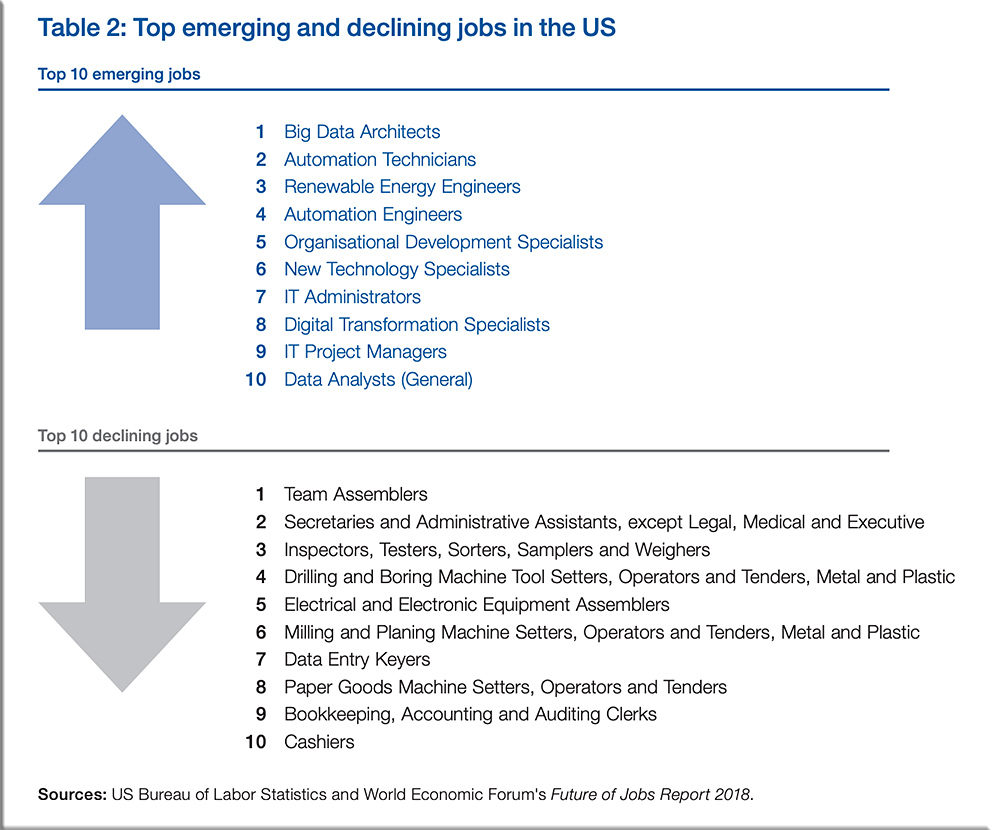
As the Fourth Industrial Revolution impacts skills, tasks and jobs, there is growing concern that both job displacement and talent shortages will impact business dynamism and societal cohesion. A proactive and strategic effort is needed on the part of all relevant stakeholders to manage reskilling and upskilling to mitigate against both job losses and talent shortages.
Through the Preparing for the Future of Work project, the World Economic Forum provides a platform for designing and implementing intra-industry collaboration on the future of work, working closely with the public sector, unions and educators. The output of the project’s first phase of work, Towards a Reskilling Revolution: A Future of Jobs for All, highlighted an innovative method to identify viable and desirable job transition pathways for disrupted workers. This second report, Towards a Reskilling Revolution: Industry-Led Action for the Future of Work extends our previous research to assess the business case for reskilling and establish its magnitude for different stakeholders. It also outlines a roadmap for selected industries to address specific challenges and opportunities related to the transformation of their workforce.
Tiny robots modeled after bacteria could be used to deliver drugs to hard to reach areas of the human body. Scientists at École polytechnique fédérale de Lausanne (EPFL) and the Swiss Federal Institute of Technology in Zurich (ETH Zurich) have developed what they call elastic microbots that can change shape depending on their environment.
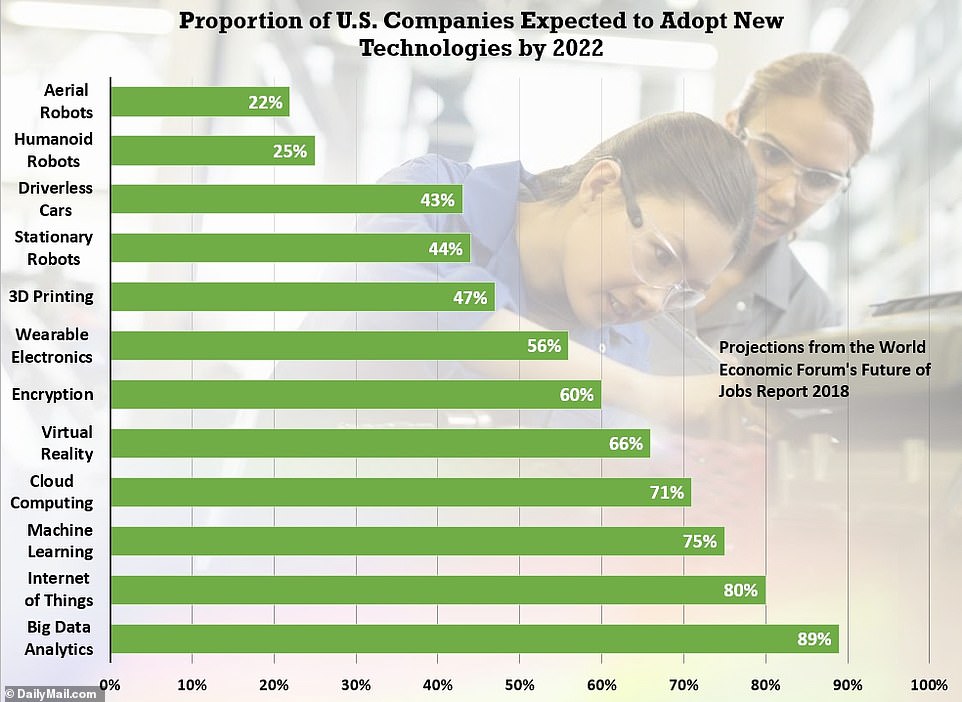
Careers that used to safely dodge the high-tech bullet will soon require at least a basic grasp of things like web design, computer programming and robotics – presenting a new challenge for colleges and universities
A projected 85 percent of the jobs that today’s college students will have in 2030 haven’t been invented yet
The coming high-tech changes are expected to touch a wider variety of career paths than ever before
Many experts say American universities aren’t ready for the change because the high-tech skills most workers will need are currently focused just on people specializing in science, technology, engineering and math
Yoshua Bengio is a grand master of modern artificial intelligence.
Alongside Geoff Hinton and Yann LeCun, Bengio is famous for championing a technique known as deep learning that in recent years has gone from an academic curiosity to one of the most powerful technologies on the planet.
Deep learning involves feeding data to large neural networks that crudely simulate the human brain, and it has proved incredibly powerful and effective for all sorts of practical tasks, from voice recognition and image classification to controlling self-driving cars and automating business decisions.
Bengio has resisted the lure of any big tech company. While Hinton and LeCun joined Google and Facebook, respectively, he remains a full-time professor at the University of Montreal. (He did, however, cofound Element AI in 2016, and it has built a very successful business helping big companies explore the commercial applications of AI research.)
Bengio met with MIT Technology Review’s senior editor for AI, Will Knight, at an MIT event recently.
What do you make of the idea that there’s an AI race between different countries?
I don’t like it. I don’t think it’s the right way to do it.
We could collectively participate in a race, but as a scientist and somebody who wants to think about the common good, I think we’re better off thinking about how to both build smarter machines and make sure AI is used for the well-being of as many people as possible.
When Chinese researchers first edited the genes of a human embryo in a lab dish in 2015, it sparked global outcry and pleas from scientists not to make a baby using the technology, at least for the present.
It was the invention of a powerful gene-editing tool, CRISPR, which is cheap and easy to deploy, that made the birth of humans genetically modified in an in vitro fertilization (IVF) center a theoretical possibility.
Now, it appears it may already be happening.
Where some see a new form of medicine that eliminates genetic disease, others see a slippery slope to enhancements, designer babies, and a new form of eugenics.
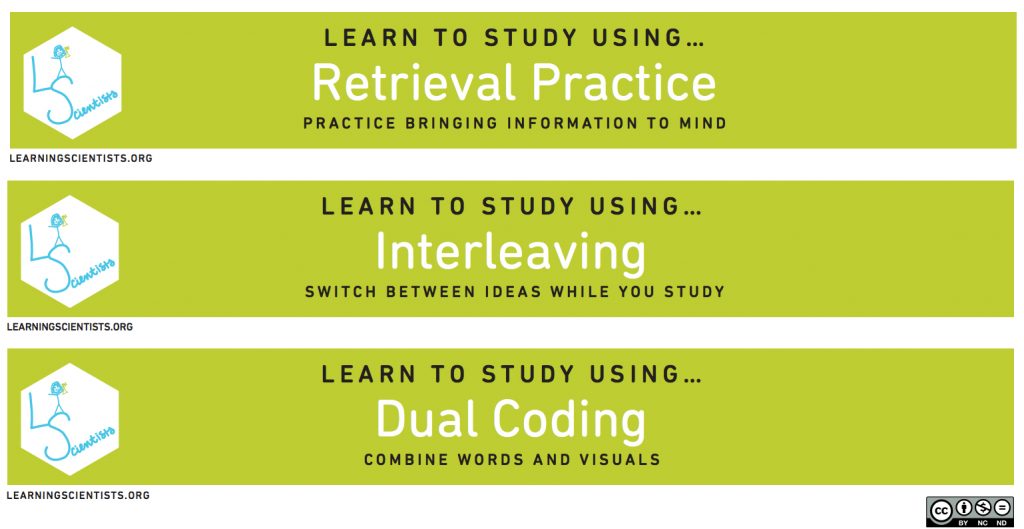
Punchline: Scientists demonstrated that when college students used a quizzing program that combined retrieval practice, spacing, and feedback, exam performance increased by nearly a letter grade.
—-
Abstract
The most effective educational interventions often face significant barriers to widespread implementation because they are highly specific, resource intense, and/or comprehensive. We argue for an alternative approach to improving education: leveraging technology and cognitive science to develop interventions that generalize, scale, and can be easily implemented within any curriculum. In a classroom experiment, we investigated whether three simple, but powerful principles from cognitive science could be combined to improve learning. Although implementation of these principles only required a few small changes to standard practice in a college engineering course, it significantly increased student performance on exams. Our findings highlight the potential for developing inexpensive, yet effective educational interventions that can be implemented worldwide.
…
In summary, the combination of spaced retrieval practice and required feedback viewing had a powerful effect on student learning of complex engineering material. Of course, the principles from cognitive science could have been applied without the use of technology. However, our belief is that advances in technology and ideas from machine learning have the potential to exponentially increase the effectiveness and impact of these principles. Automation is an important benefit, but technology also can provide a personalized learning experience for a rapidly growing, diverse body of students who have different knowledge and academic backgrounds. Through the use of data mining, algorithms, and experimentation, technology can help us understand how best to implement these principles for individual learners while also producing new discoveries about how people learn. Finally, technology facilitates access. Even if an intervention has a small effect size, it can still have a substantial impact if broadly implemented. For example, aspirin has a small effect on preventing heart attacks and strokes when taken regularly, but its impact is large because it is cheap and widely available. The synergy of cognitive science, machine learning, and technology has the potential to produce inexpensive, but powerful learning tools that generalize, scale, and can be easily implemented worldwide.
Keywords: Education. Technology. Retrieval practice. Spacing. Feedback. Transfer of learning.
1) Augmented reality can save lives through showing defibrillators nearby
2) Google Glass might help new mothers struggling with breastfeeding
3) Patients can describe their symptoms better through augmented reality
4) Nurses can find veins easier with augmented reality
5) Motivating runners through zombies
6) Pharma companies can provide more innovative drug information
7) Augmented reality can assist surgeons in the OR
8) Google’s digital contact lens can transform how we look at the world
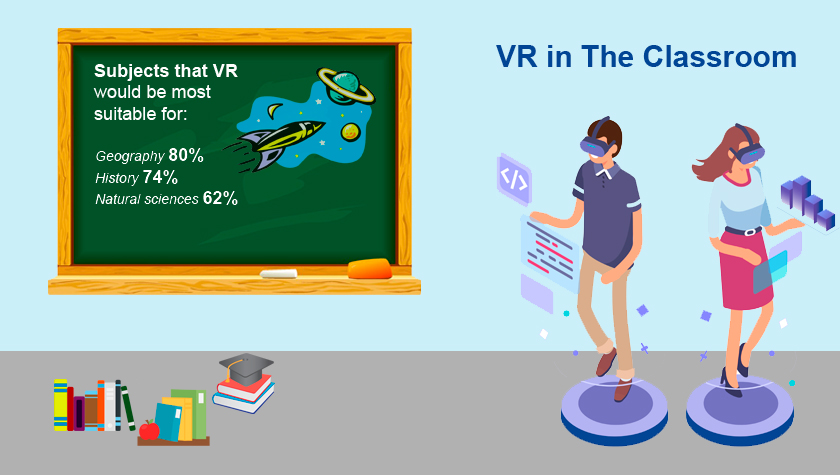
No doubt about it. Virtual reality isn’t just for gamers and gadget geeks anymore. In fact, as the technology gets better and cheaper, VR is the wave of the future when it comes to creating a truly memorable and effective learning experience – and for good reason.
Multiple Learning Attributes. To begin with, it empowers us to create any number of safely immersive virtual learning environments that feel and respond much as they would in real life, as students engage and explore, interact with and manipulate objects within these worlds. Imagine teleporting your students to re-enact historic battles; explore outer space; or travel the inner workings of the human body. What’s more, using sophisticated controls, they can actually “practice” complex procedures like cardiac surgery, or master difficult concepts, such as the molecular properties of brain cells.
Likewise, VR gives new meaning to the term “field trip,” by enabling students to virtually experience first-hand some of the world’s great museums, natural wonders and notable landmarks. You can also embed 360-degree objects within the virtual classroom to support course content, much as Drexel University Online is doing after assembling its one-of-a-kind VRtifacts+ repository. And you can use it to live-stream events, guest lectures and campus tours, in addition to hosting virtual community spaces where learners can meet and connect in a seemingly “real” environment.
At EduTECH Asia 2018 this week in Singapore, EON Reality spent two full days speaking, promoting, and demonstrating the latest updates to the AVR Platform to the thousands of education and technology professionals in attendance.
With a focus on how the AVR Platform can best be used in the education world, EON Reality’s discussion, ‘Augmented and Virtual Reality in Education: The Shift to Classroom 3.0,’ highlighted Wednesday’s offerings with a full presentation and hands-on demos of the new tools in Creator AVR. Over the course of both days, visitors filled the EON Reality booth to get their own one-on-one experience of Creator AVR, Virtual Trainer, and the ways in which AR Assist can help out in the classroom.
The AVR Platform’s three products are the fundamental tools of EON Reality’s Classroom 3.0 vision for the Immersed Flipped Classrooms of the future. With Creator AVR — a SaaS-based learning and content creation solution — leading the way, the AVR Platform empowers Classroom 3.0 by providing teachers and educators of all types with the tools needed to create Augmented and Virtual Reality learning modules.
Bringing Asian educators from all over the continent together, EON Reality’s presence at EduTECH showed just how significantly Augmented Reality and Virtual Reality can elevate the overall educational experience going forward. After two full days of demonstrations, EON Reality introduced the AVR Platform to approximately 1500 teachers, school administration officials, and other decision-makers in Asia’s education industry.
As the AVR Platform expands to educational markets around the world, EON Reality’s revolutionary spin on traditional learning branches into new cultures and nations. With local Singaporean educational institutions like Temasek Polytechnic already onboard, the EduTECH Asia 2018 conference marked the continued spread of Classroom 3.0 and the AVR Platform on both a regional and global level.
“We had to create an alternative that gives students the foundational experience of being in a lab where they can maneuver a microscope’s settings and adjust the images just as they would in a face-to-face environment,” said Shannon Riggs, the Ecampus director of course development and training.
Multimedia developers mounted a camera on top of an actual microscope and took pictures of what was on the slides. Using 3D modeling software, the photos were interweaved to create 3D animation. Using game development software enabled students to adjust lighting, zoom and manipulate the images, just like in a traditional laboratory. The images were programmed to create a virtual simulation.
The final product is “an interactive web application that utilizes a custom 3D microscope and incorporates animation and real-life slide photos,” according to Victor Yee, an Ecampus assistant director of course development and training.
Also see:
YouTube to Invest $20 Million in Educational Content — from campustechnology.com by Dian Schaffhauser Excerpt:
YouTube, a Google company, has announced plans to invest $20 million in YouTube Learning, an initiative hinted at during the summer. The goal: “to support education-focused creators and expert organizations that create and curate high-quality learning content on the video site.” Funding will be spent on supporting video creators who want to produce education series and wooing other education video providers to the site.
But for physicians like me in primary care, managing 1,500 to 2,000 patients, AI presents an opportunity. I went to medical school to connect with people and make a difference. Today I often feel like an overpaid bookkeeper instead, taking in information and spitting it back to patients, prescribing drugs and adjusting doses, ordering tests. But AI in the exam room opens up the chance to recapture the art of medicine. It could let me get to know my patients better, learn how a disease uniquely affects them, and give me time to coach them toward a better outcome.
…
AI might also help to manage asthma flares. For many patients, asthma gets worse as air pollution levels rise, as happened this past summer when brush fires swept through Northern California. AI could let us take environmental information and respond proactively.
…
Not long ago, in the Journal of the American Medical Association, I saw a colorful picture drawn by a child in crayon. It portrayed her pediatrician, eyes glued to the computer, while she sat on the exam table, looking wide-eyed. I hope that AI will soon allow me to turn my attention back to that little girl.
Rahul Parikh is a pediatrician in the San Francisco Bay area.
The Massachusetts Institute of Technology is creating a College of Computing with the help of a $350 million gift from billionaire investor Stephen A. Schwarzman, who is the CEO and co-founder of the private equity firm Blackstone, in a move the university said is its “most significant reshaping” since 1950.
Featuring 50 new faculty positions and a new headquarters building, the $1 billion interdisciplinary initiative will bring together computer science, artificial intelligence (AI), data science and related programs across the institution. MIT will establish a new deanship for the college.
The new college…will explore and promote AI’s use in non-technology disciplines with a focus on ethical considerations, which are a growing concernas the technology becomes embedded in many fields.
Excerpts — with an eye towards where this might be leading in terms of learning spaces:
Alexa and AWS IoT — Voice is a natural interface to interact not just with the world around us, but also with physical assets and things, such as connected home devices, including lights, thermostats, or TVs. Learn how you can connect and control devices in your home using the AWS IoT platform and Alexa Skills Kit.
Connect Any Device to Alexa and Control Any Feature with the Updated Smart Home Skill API — Learn about the latest update to the Smart Home Skill API, featuring new capability interfaces you can use as building blocks to connect any device to Alexa, including those that fall outside of the traditional smart home categories of lighting, locks, thermostats, sensors, cameras, and audio/video gear. Start learning about how you can create a smarter home with Alexa.
Workshop: Build an Alexa Skill with Multiple Models — Learn how to build an Alexa skill that utilizes multiple interaction models and combines functionality into a single skill. Build an Alexa smart home skill from scratch that implements both custom interactions and smart home functionality within a single skill. Check out these resources to start learning:
Teaching AI will be a great tool for teachers and educational institutions, as it will help educators figure out how to personalize curriculum based on each student’s competence, progress, aptitude, and temperament. However, teaching will still need to be oriented around helping students figure out their interests, teaching students to learn independently, and providing one-on-one mentorship. These are tasks that can only be done by a human teacher. As such, there will still be a great need for human educators in the future.
Criminal defense law Top lawyers will have nothing to worry about when it comes to job displacement. reasoning across domains, winning the trust of clients, applying years of experience in the courtroom, and having the ability to persuade a jury are all examples of the cognitive complexities, strategies, and modes of human interaction that are beyond the capabilities of AI. However, a lot of paralegal and preparatory work like document review, analysis, creating contracts, handling small cases, packing cases, and coming up with recommendations can be done much better and more efficiently with AI. The costs of law make it worthwhile for AI companies to go after AI paralegals and AI junior lawyers, but not top lawyers.
From DSC: In terms of teaching, I agree that while #AI will help personalize learning, there will still be a great need for human teachers, professors, and trainers. I also agree w/ my boss (and with some of the author’s viewpoints here, but not all) that many kinds of legal work will still need the human touch & thought processes. I diverge from his thinking in terms of scope — the need for human lawyers will go far beyond just lawyers involved in crim law.
Fifteen members of Forbes Technology Council discuss some of the latest applications they’ve found for AI/ML at their companies. Here’s what they had to say…