Ten Trends in Data Science 2015 — from linkedin.com by Kurt Cagle

Excerpt:

Data Science Teams
I see the emergence within organizations of data science teams. Typically, such teams will be made up of a number of different specialties:

  • Integrator. A programmer or DBA that specializes in data ingestion and ETL from multiple different sources. Their domain will tend to be services and databases, and as databases become data application platforms, their role primarily shifts from being responsible for schemas to being responsible for building APIs. Primary focus: Data Acquisition
  • Data Translation Specialist. This will typically be a person focused on Hadoop, Map/Reduce and similar intermediate processing necessary to take raw data and clean it, transform it, and simplify it. They will work with both integrators and ontologists, Primary Focus: Data Acquiisition
  • Ontologist. The ontologist is a data architect specializing in building canonical models, working with different models, and establishing relationships between data sets. They will often have semantics or UML backgrounds. Primary focus: Data Awareness.
  • Curators. These people are responsible for the long term management, sourcing and provenance of data. This role is often held by librarians or archivists. They will often work closely with the ontologists. Primary Focus: Data Awareness.
  • Stochastic Analyst (Data Scientist?). This role is becoming a specialist one, in which people versed with increasingly sophisticated stochastic and semantic analysis tools take the contextual data and extraction trends, patterns and anti-patterns from this. They usually have a strong mathematical or statistical background, and will typically work with domain experts. Primary Focus: Data Analysis
  • Domain Expert. Typically these are analysts who know their particular domain, but aren’t necessarily expert on informatics. These may be financial specialists, business analysts, researchers, and so forth, depending upon the specific enterprise focus. Primary Focus: Data Analysis
  • Visualizers. These are typically going to be web interface developers with skills in areas such as SVG or Canvas and the suites of visualization tools that are emerging in this area. Their role is typically to take the data at hand and turn it into usable, meaningful information. They will work closely with both domain experts and stochastic analysts, as well as with the ontologist to better coerce the information coming from the data systems into meaningful patterns. Primary Focus:Data Analysis
  • Data Science Manager. This person is responsible for managing the team, understanding all of the domains reasonably well enough to interface with the client, and coordinating efforts. This person also is frequently the point person for establishing governance. Primary Focus: All.


Infographic: What’s Hot in Data Science in 2015 — from data-informed.com; with thanks to Michael Caveretta’s tweet on this


Michigan State Wants a Big Data Professor on Campus — from edtechmagazine.com by D. Frank Smith; back from Nov 2014
Explosive growth in the data science field is pushing higher education to extend its analytics expertise.

Excerpt:

There is a torrent of information flooding today’s higher education institutions. Michigan State University is hoping to find Big Data experts to turn it into results.

Putting Big Data to use in an educational setting takes a special set of skills. MSU’s College of Communication Arts and Sciences recently held a search for an assistant professor of Big Data and health, a position that will lead courses on data analytics and IT in the Department of Media and Information.

“We seek a scholar conducting cutting-edge social and/or technical research utilizing big data approaches — including theory-building, analytics, applications, and effects,” according to MSU’s job listing, which has expired, but is still available on LinkedIn.


Is Data Science a buzzword? Modern Data Scientist defined — from marketingdistillery.com by Krzysztof Zawadzki


.       


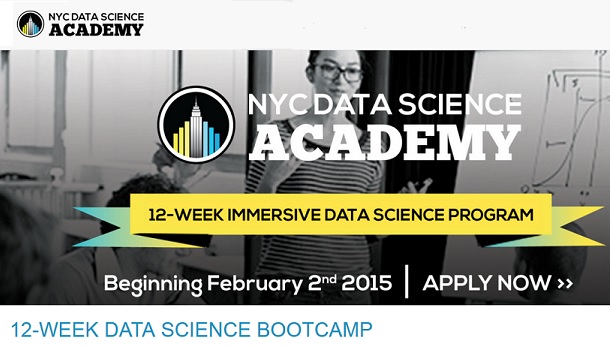
From DSC: Those working in higher ed – take note of this 12 week bootcamp:  

.

..   12week-boot-camp-data-scientist   .          
 .


Should Big Data Skills Be Taught in K–12 Classrooms? — from by D. Frank Smith
A new report recommends that schools begin preparing students to think like data scientists at an earlier age.

Excerpt:

The skills necessary for the data analytics jobs of tomorrow aren’t being taught in K–12 schools today, according to a new report released by the Education Development Center, Inc.’s (EDC) Oceans of Data Institute. The Profile of the Big-Data Enabled Specialist projects a workforce shortage for data-driven positions. Based on a 2011 McKinsey & Co. report cited by the Oceans of Data Institute, ”By 2018, the United States alone could face a shortage of 140,000 to 190,000 people with deep analytical skills as well as 1.5 million managers and analysts with the know-how to use the analysis of big data to make effective decisions.”              


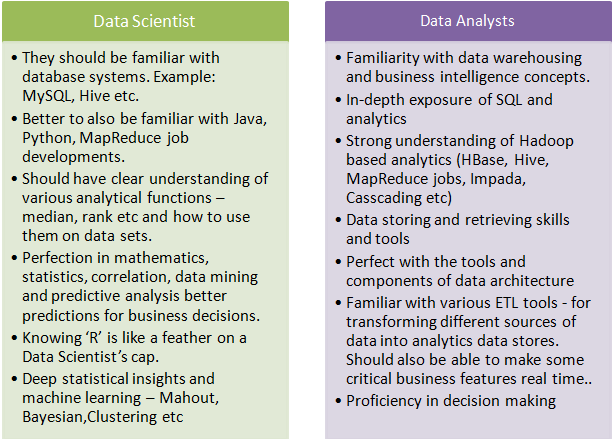
Difference between Data Scientist and Data Analyst — from edureka.co; again, with thanks to Michael Caveretta’s tweet on this

Excerpt: .

.  Qualifications of Data Scientist and Data Analyst
    .


The Data Scientist’s Toolbox — course from coursera.org
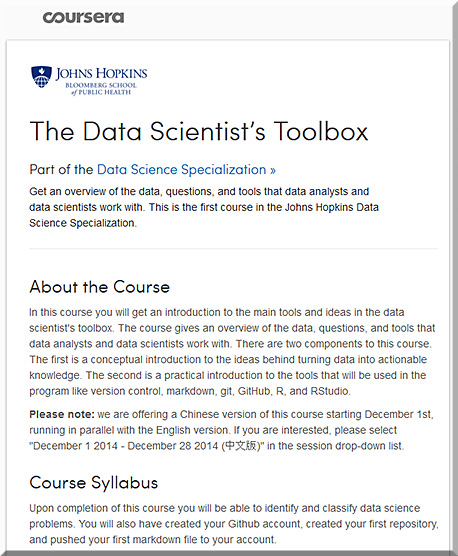
 

TheDataScientistToolbox-Coursera-Dec2014


The 25 Hottest Skills That Got People Hired in 2014 — from linkedin.com

Excerpts:

  • Statistical analysis and data mining
  • Business intelligence
  • Data engineering and data warehousing


16 analytic disciplines compared to data science — from datasciencecentral.com by Vincent Granville

Excerpt:

What are the differences between data science, data mining, machine learning, statistics, operations research, and so on?

Here I compare several analytic disciplines that overlap, to explain the differences and common denominators. Sometimes differences exist for nothing else other than historical reasons. Sometimes the differences are real and subtle. I also provide typical job titles, types of analyses, and industries traditionally attached to each discipline. Underlined domains are main sub-domains. It would be great if someone can add an historical perspective to my article.


Tech 2015: Deep Learning And Machine Intelligence Will Eat The World — from forbes.com by Anthony Wing Kosner; with thanks to Pedro for his tweet on this

Excerpt:

Despite what Stephen Hawking or Elon Musk say, hostile Artificial Intelligence is not going to destroy the world anytime soon. What is certain to happen, however, is the continued ascent of the practical applications of AI, namely deep learning and machine intelligence. The word is spreading in all corners of the tech industry that the biggest part of big data, the unstructured part, possesses learnable patterns that we now have the computing power and algorithmic leverage to discern—and in short order.

The effects of this technology will change the economics of virtually every industry.


The rise of machines that learn — from infoworld.com by Eric Knorr; with thanks to Oliver Hansen for his tweet on this
A new big data analytics startup, Adatao, reminds us that we’re just at the beginning of a new phase of computing when systems become much, much smarter


Shivon Zilis, Machine Intelligence Landscape


Data Science Dojo — @DataScienceDojo
Stanford startup focused on all things data science.


The 2 Types Of Data Scientists Everyone Should Know About — from datasciencecentroal.com by Bernard Marr

Excerpt:

It depends entirely on how broadly you categorize them. In reality, of course – there are as many “types” of data scientist as there are people working in data science. I’ve worked with a lot, and have yet to meet two who are identical.

But what I have done here is separate data scientists into groups, containing individuals who share similar skills, methods, outlooks and responsibilities. Then I grouped those groups together, again and again, until I was left with just two quite distinctly different groups.

I’ve decided to call these two types strategic data scientists and operational data scientists.


Deep learning Reading List — from jmozah.github.io


Changing role of the CLO — from business-standard.com by Gurprriet Singh

Excerpt:

The ownership for keeping skills and competencies sharpened will move to the employee. With the emergence of MOOCs, social media enabled knowledge and connections, which facilitate you to identify and appoint mentors across dimensions and distance, the role of L&D as the provider of knowledge and provider of resource is soon becoming extinct. Individuals need to own their own development and leverage the resources available in social media. Just recently, IBM cut salaries by 10 per cent, of employees who had not kept their skills updated.

…

As Jack Welch said, “If the rate of change inside your organisation is slower than the rate of change outside, the end is near”. In such a scenario, the thinking and orientation must shift from being able to manage change TO being able to change on a dime which means Dynamism. The role of L&D thus becomes key in influencing the above cultural pillars. And to do so, is to select for the relevant traits, focus on interventions that help hone those traits. Traits and skills are honed by Experience. And that brings me to the 70:20:10.


From DSC:
I think Gurprriet is right when he says that there’s a shift in the ownership of our learning.  We as individuals need to own our own development and leverage social media, MOOCs, online and/or F2F-based courses, other informal/on-the-job resources, our personal learning networks, and our Communities of Practice.  Given the pace of change, each of us needs to be constantly building/expanding our own learning ecosystems.  We need to be self-directed, lifelong learners (for me, this is where learning hubs and learning from our living rooms will also play a role in the future). One approach might be for those in L&D/corporate training-related functions to help employees know what’s out there — introduce them to the streams of content that are constantly flowing by. Encourage them to participate, teach them how to contribute, outline some of the elements of a solid learning ecosystem, create smaller learning hubs within a company.


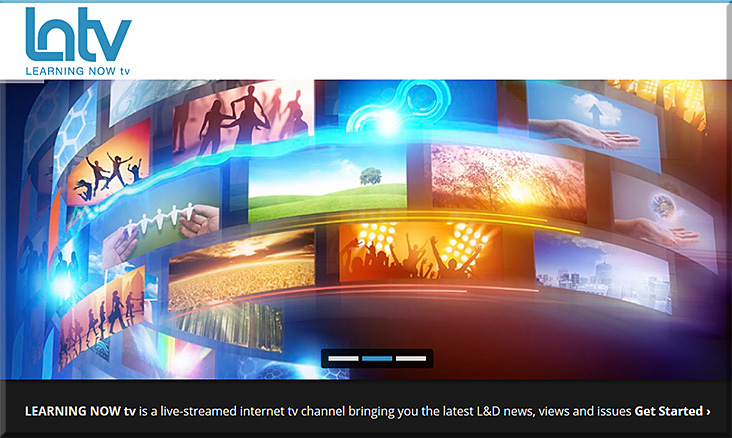
LearningNowTV-Nov2014


From their website:
(emphasis DSC)

LEARNING NOW tv is a live-streamed internet tv channel bringing you inspirational interviews, debates and round tables, and advice and guidance on real world issues to keep you up-to date in the world of learning and development.

Membership to the channel is FREE. You will be able to interact with us on our social channel during the live stream as well as having a resource of the recorded programmes to refer to throughout the year.

Learning Now tv is run and produced by some of the L&D world’s leading experts who have many years’ experience of reporting the real-world issues for today’s learning and development professionals.


I originally saw this at Clive Sheperd’s posting:
TV very much alive for learning professionals


Also see:


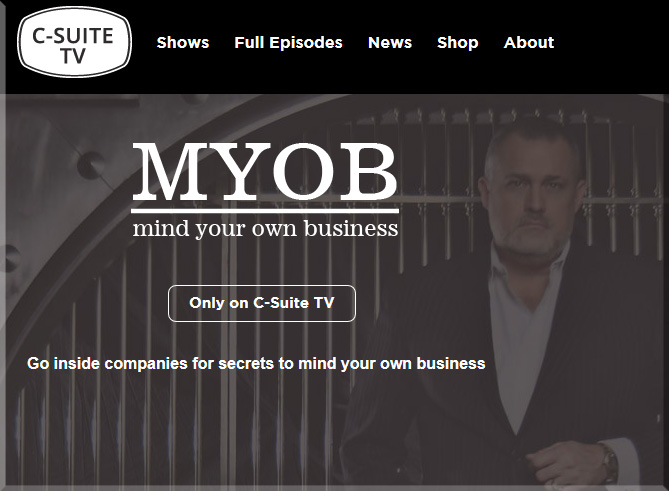
MYOB-July2014


This new service makes me think of some related graphics:


MoreChoiceMoreControl-DSC


StreamsOfContent-DSC


The Living [Class] Room -- by Daniel Christian -- July 2012 -- a second device used in conjunction with a Smart/Connected TV


Addendum on 12/2/14 — from Learning TRENDS by Elliott Masie – December 2, 2014 | #857

Idea – Courses in the Air:
There were representatives from airlines, Aviation Authorities and even Panasonic – which makes the interactive movie and TV systems on long distance airplanes.  So, I rolled out one of my “aha ideas” that I would love to see invented sometime: Courses in the Air.

What if a passenger could choose to take a mini-course on a 4 to 14 hour flight. It would be a MOOC in the Sky – with video, reading and interactive elements – and someday might even include a real time video chat function as well.  The learner could strive to earn a “badge” or roll them up into a certificate or degree program – that they pursued over several years of flights.  It would be an intriguing element to add to international travel.


President Obama supports free, two-year Coursera Verified Certificates to teachers for district professional development — from blog.coursera.org

Excerpt:

The President of the United States, Barack Obama shared his support today to over 3 million teachers across the US with Coursera. In front of a packed house at the Superintendents’ Summit in DC today to promote the Future Ready Pledge as part of the ConnectEd Initiative, President Obama disclosed a new offering by Coursera to give teachers free Coursera Verified Certificates for district-approved professional development.


Addendum on 11/20/14:
Cousera pledges free MOOC certificates for military vets — from educationdive.com by Keith Button


Following up on yesterday’s posting, History Channel bringing online courses to higher ed, I wanted to thank Mr. Rob Kingyens, President at Qubed Education, for alerting me to some related work that Qubed Education is doing. Below is an example of that work:

The University of Southern California, Condé Nast and WIRED launch Master of Integrated Design, Business and Technology — from qubededucation.com
New Learning Model Combines Network and Access of WIRED with Academic Strength and Vision of the USC Roski School of Art and Design

Excerpt (emphasis DSC):

MARIN, Calif., October 1, 2014 – The University of Southern California, Condé Nast and WIRED today announced a partnership to create a new online Master’s degree in Integrated Design, Business and Technology. The partnership creates an unprecedented learning experience, combining the expertise of the editors, writers, and designers at WIRED with the academic rigor of USC, a leading research university known for its pioneering interdisciplinary programs. The aim of the 18-24 month degree is to educate creative thinkers and technologists to better equip them to transform the world of industry and enterprise. The first cohort is scheduled to begin in the 2015-2016 academic year.

…

“The pace of technology development requires higher education to continue to respond with programs that are flexible and adaptable, and that meet the needs of future cultural and business leaders,” said Dean Muhl.

“We’ve been thinking for years about what a university curriculum with WIRED would look like, and now we have a chance to build it with a terrific partner,” said Dadich. “Taking the best from USC and WIRED, we can teach discipline and disruption, business fundamentals, and the very latest innovation models from Silicon Valley. This is going to be thrilling.”

…

USC’s program development and build out will be powered by higher education partners Synergis Education and Qubed Education.


From Qubed’s website:

Qubed is the gateway for world-class, global brands to enter the education market with top tier universities.


From DSC:
I’ve long wondered if institutions of higher education will need to pool resources and/or form more partnerships and collaborations — either with other universities/colleges or with organizations outside of higher education. This reflection grows stronger for me when I:

  • Think that team-based content creation and delivery is pulling ahead of the pack
  • Hear about the financial situations of many institutions of higher education today (example1; example2)
  • See the momentum building up behind Competency Based Education (CBE)
  • Witness the growth of alternatives like Ideo Futures, Yieldr Academy, Lessons Go Where, ClassDo, Udemy, C-Suite TV.com and others
  • Hear about the potential advantages of learning analytics
  • See the pace of change accelerating — challenging higher education to keep up

For some institution(s) of higher education out there with deep pockets and a strong reputation, I could see them partnering up with an IBM (Watson), Google (Deepmind), Apple (Siri), Amazon (Echo), or Microsoft (Cortana) to create some next generation learning platforms. In fact, this is one of the areas I see occurring as lifelong learning/self-directed learning opportunities hit our living rooms. The underlying technologies these companies are working on could be powerful allies in the way people learn in the future — doing some heavy lifting to build the foundations in a variety of disciplines, and leaving the higher-order learning and the addressing of gaps to professors, teachers, trainers, and others.


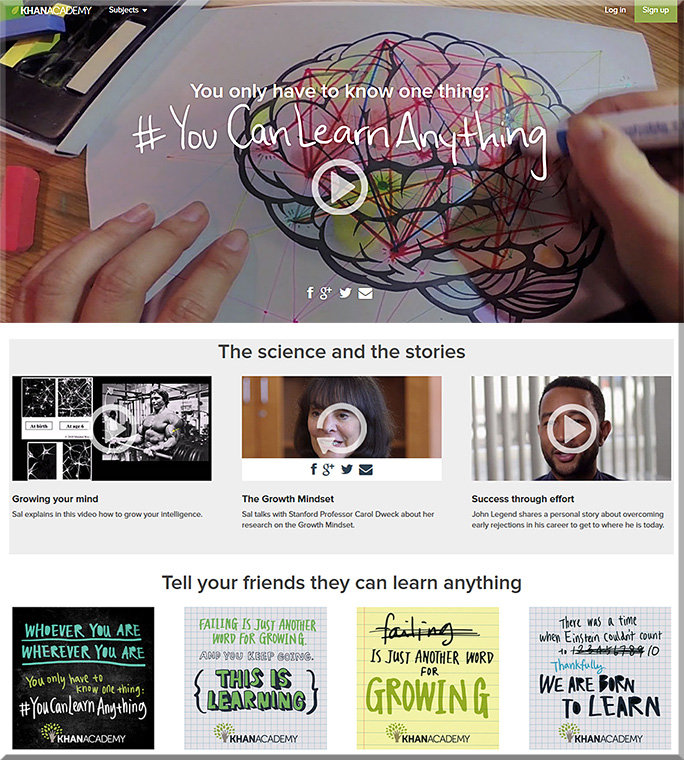
YouCanLearnAnything-KhanAcademy-Aug2014


Also see:

Excerpt:

In a fixed mindset, people believe their basic qualities, like their intelligence or talent, are simply fixed traits. They spend their time documenting their intelligence or talent instead of developing them. They also believe that talent alone creates success—without effort. They’re wrong.

In a growth mindset, people believe that their most basic abilities can be developed through dedication and hard work—brains and talent are just the starting point. This view creates a love of learning and a resilience that is essential for great accomplishment. Virtually all great people have had these qualities.

Teaching a growth mindset creates motivation and productivity in the worlds of business, education, and sports. It enhances relationships.


From DSC:
This belief that we can grow and learn is critically important — for people of all ages.  Let’s help folks stay encouraged and keep trying! Keep failing! Keep trying! You’ll/we’ll get it!


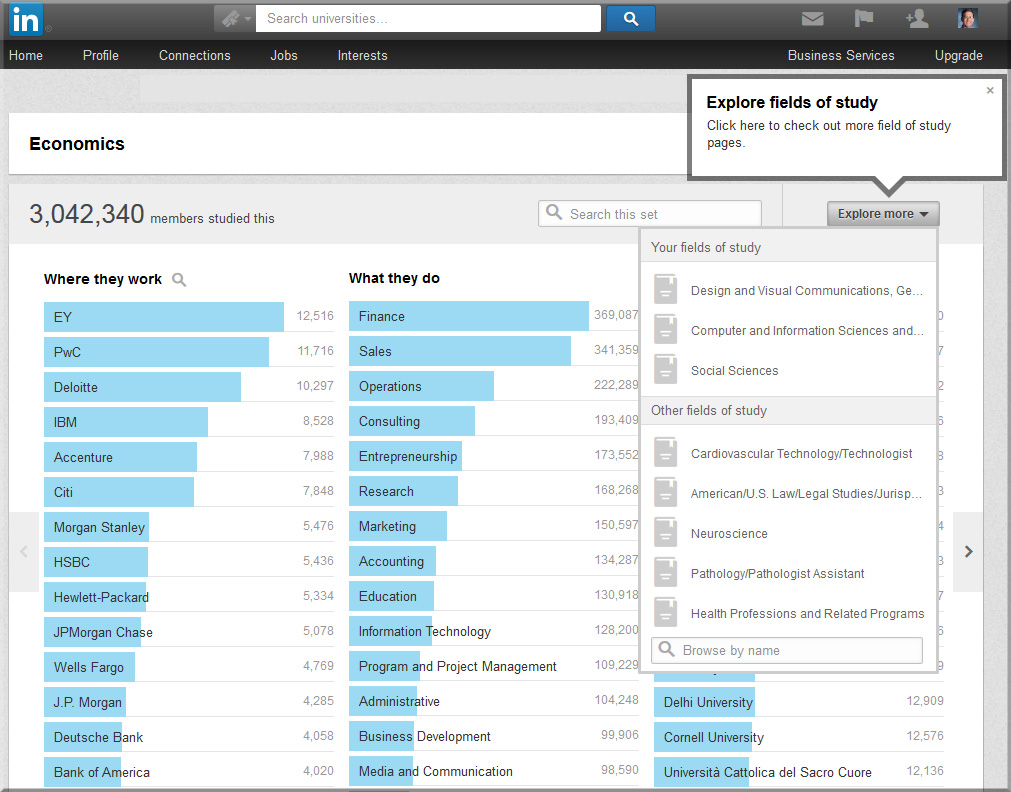
Does Studying Fine Art = Unemployment? Introducing LinkedIn’s Field of Study Explorer — from LinkedIn.com by Kathy Hwang

Excerpt:

[On July 28, 2014], we are pleased to announce a new product – Field of Study Explorer – designed to help students like Candice explore the wide range of careers LinkedIn members have pursued based on what they studied in school.

So let’s explore the validity of this assumption: studying fine art = unemployment by looking at the careers of members who studied Fine & Studio Arts at Universities around the world. Are they all starving artists who live in their parents’ basements?


LinkedInDotCom-July2014-FieldofStudyExplorer


Also see:

The New Rankings? — from insidehighered.com by Charlie Tyson

Excerpt:

Who majored in Slovak language and literature? At least 14 IBM employees, according to LinkedIn.

Late last month LinkedIn unveiled a “field of study explorer.” Enter a field of study – even one as obscure in the U.S. as Slovak – and you’ll see which companies Slovak majors on LinkedIn work for, which fields they work in and where they went to college. You can also search by college, by industry and by location. You can winnow down, if you desire, to find the employee who majored in Slovak at the Open University and worked in Britain after graduation.


Everyone needs to be a futurist — from innovationexcellence.co by Reuven Gorsht

Excerpts (emphasis DSC):

While most of us work on the day-to-day operational details and focus on hitting the metrics, we often assume that there must be someone in the company that is thinking about the future. Whether we assume it’s the board, senior executives or perhaps the corporate strategy team, we somewhat believe that somewhere above our level, both the foresight and plans exist to stave disruption, capitalize on new opportunities and figure out exactly how the company needs to change to either survive or achieve the next paradigm of growth.

This, however, is a fallacy that lands organizations and individuals in a lot of hot water. While most of us are in roles where we are focused on exploiting the current business model, nowadays, everyone’s job, regardless of level, is to be somewhat of a futurist who is able to foresee where the business is going and internalize the change by creating and executing their individual plans.

Everyone needs to be a futurist.

…

Yes, we all have full-time jobs and enough on our plates to keep us busy, but without an investment in gaining the foresight and our own personal meaning on where our company, industry and roles are going, how might we proactively keep ourselves relevant? Sometimes ignorance is bliss, and most of us prefer to be in our comfort zones, but we’ve all seen the recent wake-up calls from companies such as Nokia, New York Times and Blackberry.

When it gets to a point that senior leadership has to write a manifesto that calls for drastic change, it is likely too late to start shifting yourself to adjust to the new realities of your company. Only by being proactive, can we effectively internalize what it may mean for us individually and create the runway necessary to make the shift.

Bottom line: If you’re not spending some time understanding the future and what it means to you personally, you are effectively putting yourself in the position of being tapped on the shoulder one day and being told that you are no longer relevant to where the company is headed.


The New Digital Learning Playbook, Advancing College and Career Ready Skill Development in K-12 Schools | from tomorrow.org | June 2014
The second in a two part series to document the key national findings from Speak Up 2013.


Key Findings from this year’s report include:


  • Infographic: The New Digital Learning Playbook: The Digital Content Story
  • More than 40 percent of high school principals are now offering online classes for students in math, science, history and English/language arts. Only 17 percent of high schools are not offering online classes, according to school principals.
  • Principals are offering online learning for multiple reasons, including providing academic remediation (66 percent), keeping students engaged in staying in school (63 percent) and providing options for students that need credit recovery (61 percent).
  • Teachers who teach online classes, in particular, see a strong correlation between the use of technology and students’ college and career ready skill development. More than half of these teachers say technology use helps students understand how to apply academic concepts to real world problems (58 percent), take ownership of their learning (57 percent) and develop problem solving and critical thinking skills (57 percent).
  • The professional development requests of teachers are fairly common among new and veteran teachers. Even new teachers, who are presumed to be more digitally native and comfortable with technology, have a wish list of professional development support. The rookie teachers have a greater interest than other teachers in learning more about incorporating games and using social media with both students and parents.
  • Parental support of mobile device as part of learning does not appear to have an economic, community type or grade level bias. Around 60 percent of all parents said they would like their children to be in a class where using one’s own mobile device was allowed. Two-thirds said they would purchase a mobile device for their child to use within class, if that was allowed by the school.
  • Two-thirds of community members and a similar number of parents of school-aged children expressed support for paying $.50 more per month on their phone bill if those funds were used to increase school access to the Internet for student learning.
  • One-third of elementary school teachers (32 percent) report using games in their classrooms. The top two reasons given for using games within instruction were increasing student engagement in learning (79 percent) and providing a way for teachers to address different learning styles in the classroom (72 percent).
 

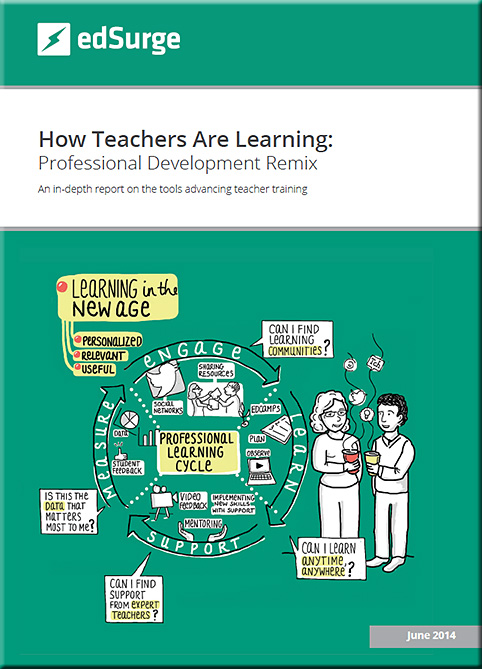
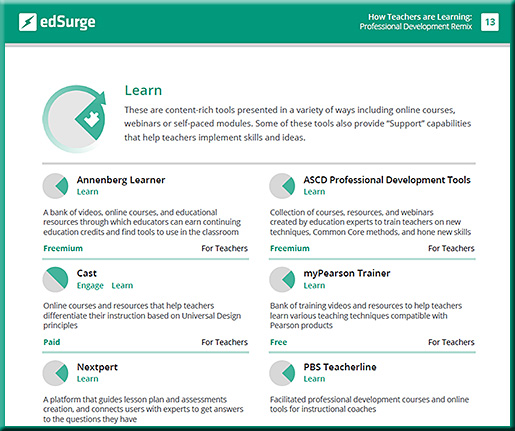
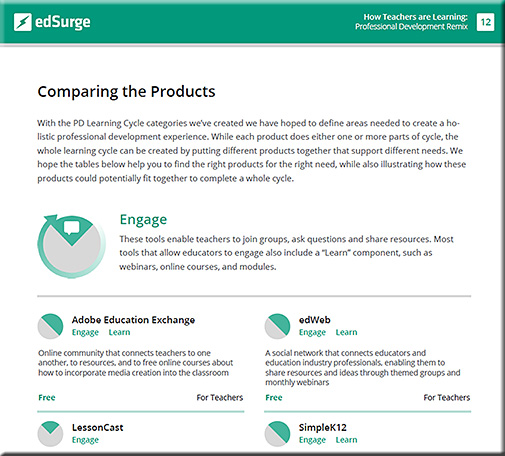
How teachers are learning: Professional development remix — from edSurge, June 2014


ProfDev1-EdSurge-June2014


Excerpts:


ProfDev2-EdSurge-June2014


ProfDev3-EdSurge-June2014


Addendum, also from edSurge today:


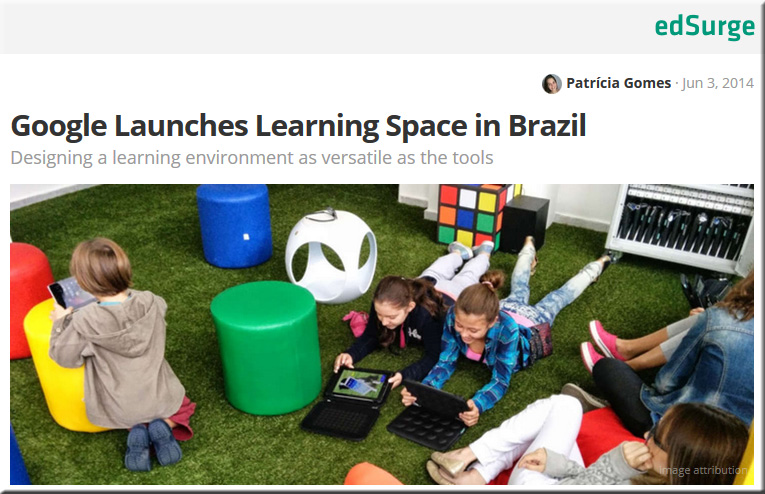
GoogleLearningSpace-Brazil-June2014


What educationally-related affordances might we enjoy from these TV-related developments?

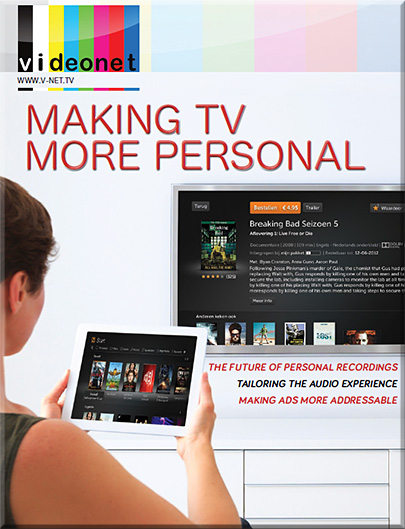
MakingTVMorePersonal-V-NetTV-April2014


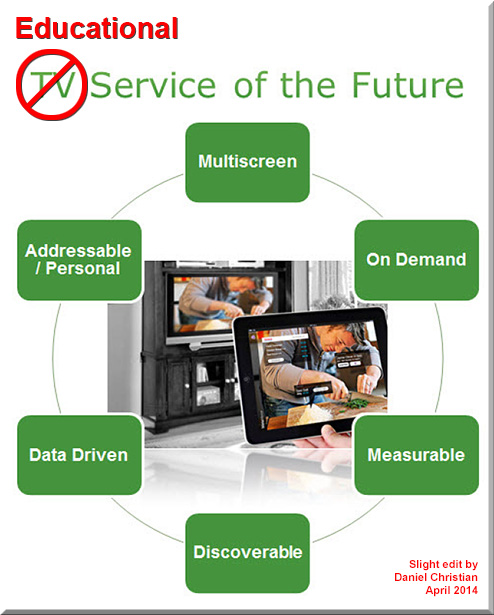
EducationServiceOfTheFutureApril2014


CONTENTS

  • Content discovery and synchronization
    With access to rich data about their subscribers and what they do, operators can improve recommendation, encourage social TV and exploit second screen synchronization.
  • Recordings get more personal
    One of the next big steps in multiscreen TV is giving people access to their personal recordings on every screen. This is the moment for nPVR to finally make its entrance.
  • Evolving the User Experience
    As service providers go beyond household level and address individuals, the role of log-ins or context will become important. There is a place for social TV and big data.
  • The role of audio in personalization
    Audio has a huge impact on how much we enjoy video services. Now it can help to personalize them. ‘Allegiance’ based audio choices are one possibility.
  • Making advertising more targeted
    Addressable advertising is in its infancy but has a bright future, helping to fund the growth of on-demand and multiscreen viewing.


Some excerpts from this report:

Good content should be matched by good content discovery , including recommendations. The current state-of -the-art is defined by Netflix.

…

Today’s TV experience is worlds apart from the one we were talking about even five years ago. We’ve witnessed exponential growth in services such as HD and have moved from a model in which one screen is watched by many, to many screens (and devices) being available to the individual viewer, what is today called TV Everywhere.  Having multiscreen access to content is driving the demand for a more personalised experience, in which the viewer can expect to see what they want, where, and when. While video on-demand (VOD) has been a great method for delivering compelling content to viewers, it is not always a truly seamless TV-like experience, and traditionally has been limited to the living room. The growing demand for the personalised experience is driving seismic change within the TV industry, and we’ve seen great strides made already, with time-shifted TV and nPVR as just two examples of how we in the industry can deliver content in the ways viewers want to watch. The next step is to move towards more advanced content discovery, effectively creating a personalised channel or playlist for the individual user.

…

As the tools become available to deliver personalized experiences to consumers, content owners can better create experiences that leverage their content. For example, for sports with multiple points of action, like motor racing, multiple camera angles and audio feeds will allow fans to follow the action that is relevant to their favourite racing team. And for movies, access to additional elements such as director’s commentaries, which have been available on Blu-ray discs for some time, can be made available over broadcast networks.


From DSC:
Some words and phrases that come to my mind:

  • Personalization.
  • Data driven.
  • Content discovery and recommendation engines (which could easily relate to educational playlists)
  • Training on demand
  • Learning agents
  • Web-based learner profiles
  • Learning hubs
  • What MOOCs morph into
  • More choice. More control.
  • Virtual tutoring
  • Interactivity and participation
  • Learning preferences
  • Lifelong learning
  • Reinventing oneself
  • Streams of content
  • Learning from The Living [Class] Room


The Living [Class] Room -- by Daniel Christian -- July 2012 -- a second device used in conjunction with a Smart/Connected TV


streams-of-content-blue-overlay


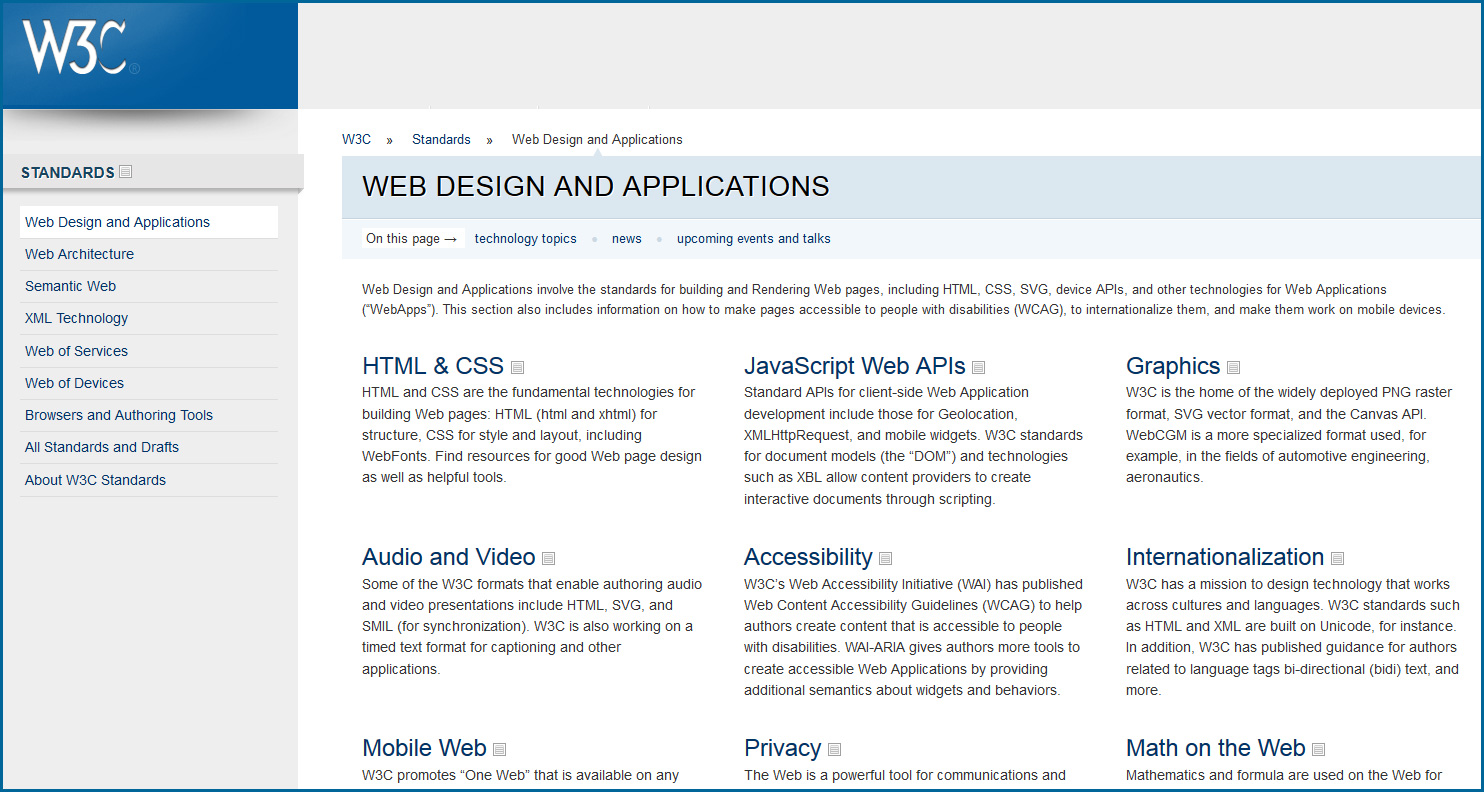
W3C: Web Design & Applications

W3C-WebDesignMarch2014


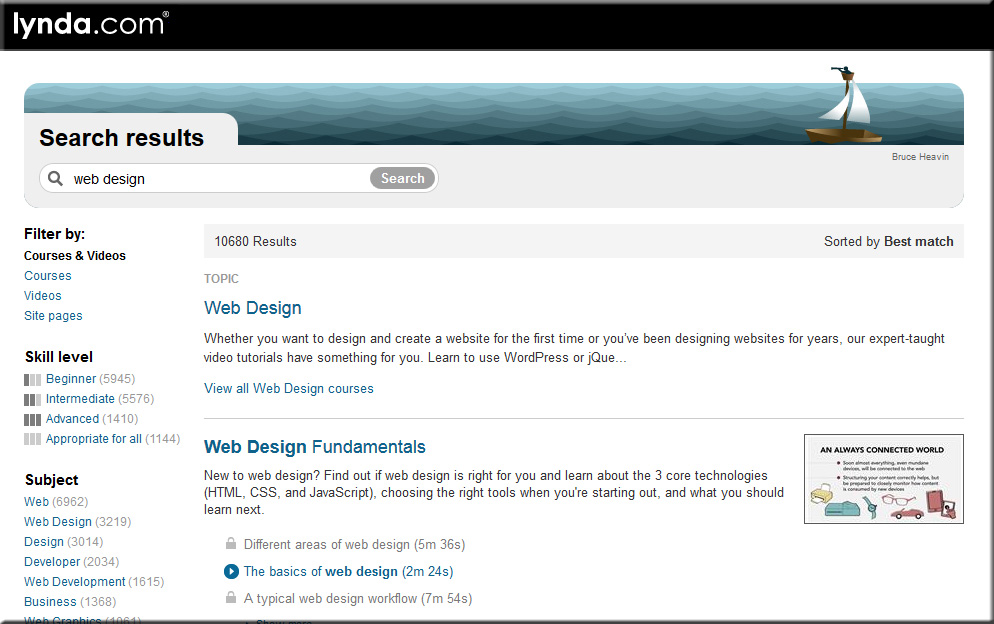
Lynda.com

LyndaDotComWebDesign-March2014


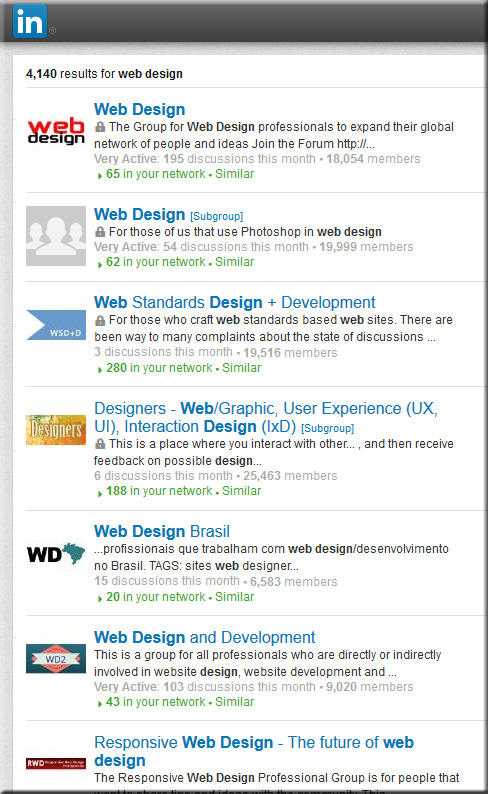
Web Design Groups on LinkedIn.com

LinkedInWebDesignGroups-March2014


Relevant hashtags on Twitter:


Top Designer Google+ Communities You Should Follow — from hongkiat.com by Charnita Fance. Filed in Web Design.

Excerpt:

If you are active on Google+ there are a lot of communities for web designers or UI designers to join. Google+ Communities are like online groups or forums where people can come together to talk about a common hobby, interest or career (such as Design). Only members of a given community can see your posts in their stream. As a designer, this is great because you can share your work and get feedback from thousands of other designers, for free.

In the design communities below, you’ll find lots of great information, freebies, tips and tricks, and personal design work from members. Plus, you can ask for help or offer help to others. Let’s find the perfect Google+ design community for you.


Fresh Resources for Designers and Developers — March 2014 — from hongkiat.com


Infographic: HTML5 vs. native mobile app development [updated] — from kony.com by Dipesh Mukerji — also see his posting: Developing apps with HTML5: benefits and challenges


Responsive e-learning in a Multi-Device World — from elearning-reviews.traineasy.com

Excerpt:

“Day by day, the number of devices, platforms, and browsers that need to work with your site grows. Responsive web design represents a fundamental shift in how we’ll build websites for the decade to come,” says Jeffrey Veen, CEO & Cofounder of Typekit.


New ebook all about web design for Google Glass — from glassalmanac.com by Christian Bullock

Excerpt:

Well that was fast.

As someone who didn’t really know too many people were currently all about ensuring a site’s web design was fit for Google Glass browsing, there’s now an eBook by author Joe Casabona (known for his blog People Reacting to Glass) that’s a guide to web design for Glass.

Pretty cool idea and something I could see as being crucial when Glass launches publicly. I’m sure Glass adoption won’t be as high as tablet or smartphone adoption rates, but as we’re seeing now, it’s necessary for web designers to think of other ways people are interacting with websites aside from normal desktop or laptop computers.


Webmonkey.com


WebDesignerDepot.com


WebDesign.Tutsplus.com


 Addendums on 4/1/14:


IT under pressure: McKinsey Global Survey results — from mckinsey.com by Naufal Khan and Johnson Sikes
Recognition of IT’s strategic importance is growing, but so is dissatisfaction with its effectiveness, according to our eighth annual survey on business and technology strategy.

Excerpts (emphasis DSC):

More and more executives are acknowledging the strategic value of IT to their businesses beyond merely cutting costs. But as they focus on and invest in the function’s ability to enable productivity, business efficiency, and product and service innovation, respondents are also homing in on the shortcomings many IT organizations suffer. Among the most substantial challenges are demonstrating effective leadership and finding, developing, and retaining IT talent.

These are among the key findings from our most recent survey on business technology, which asked executives from all functions about their companies’ priorities for, spending on, and satisfaction with IT. Overall, respondents are more negative about IT performance than they were in 2012 and, notably, IT executives judge their own effectiveness more harshly than their business counterparts do. Compared with executives from the business side, they are more than twice as likely to suggest replacing IT management as the best remedy.


From DSC:
It seems to me that an organization or team can’t expect to extract significant value from someone or something that they haven’t cultivated.  That is, a sports team shouldn’t expect a player who has sat on the bench most of the year to come in and light the world on fire.  That player needs actual time playing in the games/matches/meets/etc.   They need experience. They need practice in developing strategy as well as some experiments — to find out what’s working and what’s not. 

IT organizations are key these days; and becoming more important in leading the organizations that they function in.  It is short-sighted not to develop IT employees in both technical and business-related skills. As our world is increasingly being impacted by technological advances (occurring at exponential — not linear — trajectories), those companies who have leadership from the technical sides of the house should do quite well in the future.

Key  items to work on:

  • Creating tighter integrations with the rest of the business/organization; get more IT-based reps into situations where they can pull up chairs at more business-oriented tables/discussions/projects (product development/R&D, sales, marketing, customer service, other); affect the culture of the organization so that they can actually lead the organization
  • Develop innovative, strategic thinking — thinking BIG!
  • Understanding the changing landscapes and what opportunities might exist as a result of those changing landscapes
  • Ability to develop potential scenarios and form responses to those scenarios
  • Stop thinking about cutting costs, start using your skills/knowledge to develop new income streams, new products, and new markets!  Stop seeing IT departments as cost centers, but rather key revenue generators!
  • Moving more visionaries and those with the ability to persuade/sell into the IT organization
  • Create/give IT staff more chances to get in the game!


Regarding the graphic below:


IT-based personnel should be kicking out a lot more new, innovative products and services.  That’s where their new/additional value should come from.  But that doesn’t seem to be happening.

Why is that? Is the rest of the business so used to looking at IT in certain ways? Does IT have a seat at the senior-most level/table? Are folks in the business listening or even approaching IT for their input? Are some cultural changes necessary?

Also see:

CIO ‘confessions’: 5 critical attributes of the best IT leaders — from hp.com
A new book profiles leading CIOs to learn how they thrive. It’s not about technology—it’s about guts.

What: CIOs are taking on more and more responsibilities, and while technology matters, leadership makes all the difference.
Why: Tech trends come and go, but the challenge of bridging the gap between IT and the business—and demonstrating how IT can deliver real value—remain the heart of the job.
More: Read Confessions of a Successful CIO, set for March 2014 release.


By the way, all of this is true within the world of higher education as well. Consider, for example, the need for IT/technical leadership in the worlds of online learning, blended learning, distance education, as well as in creating new revenue streams based upon technologies and the affordances that these technologies provide.


Also see:

Top 10 Strategic Issues for Boards, 2013-2014 — from The Association of Governing Boards of Universities and Colleges
Excerpt (emphasis DSC):

Those top issues include:

  1. The Revenue Model
  2. Productivity and Efficiency
  3. Student Aid
  4. Educational Delivery
  5. Student Learning
  6. Student Success
  7. Market and Mission
  8. The Academic Workforce
  9. Globalization
  10. Institutional Risk


Top-Ten IT Issues, 2014: Be the Change You See — from educause.edu by Susan Grajek

Excerpt (emphasis DSC):

  1. Improving student outcomes through an institutional approach that strategically leverages technology
  2. Establishing a partnership between IT leadership and institutional leadership to develop a collective understanding of what information technology can deliver
  3. Assisting faculty with the instructional integration of information technology
  4. Developing an IT staffing and organizational model to accommodate the changing IT environment and facilitate openness and agility
  5. Using analytics to help drive critical institutional outcomes
  6. Changing IT funding models to sustain core service, support innovation, and facilitate growth
  7. Addressing access demand and the wireless and device explosion
  8. Sourcing technologies and services at scale to reduce costs (via cloud, greater centralization of institutional IT services and systems, cross-institutional collaborations, and so forth)
  9. Determining the role of online learning and developing a strategy for that role
  10. Implementing risk management and information security practices to protect institutional IT resources/data and respond to regulatory compliance mandates*
  1. Developing an enterprise IT architecture that can respond to changing conditions and new opportunities*

* Tie

 
© 2025 | Daniel Christian