


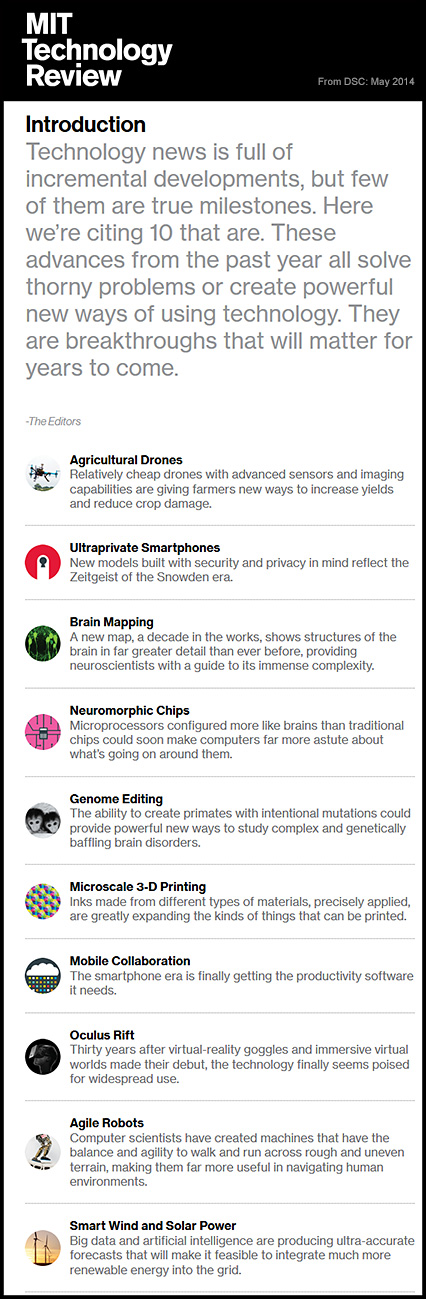
10 Breakthrough Technologies for 2014 — from MIT Technology Review
Also see:
- MIT Lists its 10 Breakthrough Technologies for 2014 – Part 1 — from WFS.org
10 Breakthrough Technologies for 2014 — from MIT Technology Review
Also see:
Microsoft expands cloud services for mobile scenarios — from Microsoft.com
Office for iPad and Enterprise Mobility Suite showcase Microsoft’s mobile-first, cloud-first approach.
Excerpt:
SAN FRANCISCO — March 27, 2014 — Microsoft Corp. on Thursday announced several new and updated applications and services including Microsoft Office for iPad and free Office Mobile apps for iPhone and Android phones. Microsoft also announced the Enterprise Mobility Suite, a comprehensive set of cloud services to help businesses manage corporate data and services on the devices people use at work and at home. In addition, the company announced the upcoming availability of Microsoft Azure Active Directory Premium and enhancements to Windows Intune.
“Microsoft is focused on delivering the cloud for everyone, on every device. It’s a unique approach that centers on people — enabling the devices you love, work with the services you love, and in a way that works for IT and developers,” said Satya Nadella, chief executive officer for Microsoft.

Microsoft CEO Nadella pulls the trigger on long-gestating Office apps for iPad — from businessweek.com by Joshua Brustein
Excerpt:
Read-only versions of the iPad apps are available for free. To create and edit documents, customers will need a subscription to Microsoft’s Office 365 software, which costs individual users $99 a year. By making the iPad app part of its wider software package, Microsoft avoids splitting revenue with Apple (AAPL), which takes a cut of the money that developers make through its App Store. Because the full versions are only offered as part of a wider package, it also means all those bosses who want their employees tapping out spreadsheets on their iPads while they wait in the airport will have to start ponying up for Office 365.
Microsoft and Office in a multi-platform world — from techcrunch.com by Alex Wilhelm
Microsoft finally brings Office to the iPad — from forbes.com by Parmy Olson
Excerpt:
Microsoft Office is at last coming to the iPad, marking an important step for the software giant as it races to catch up with the move to mobile. Microsoft general manager Julia White said that as of 11am Pacific Time on Thursday, key Office programs Word, Excel and PowerPoint would be available on the App Store for the iPad.
Microsoft’s popular email application, Outlook, was notably absent from the list of available programs. The apps are free but users will require a subscription to Microsoft’s Office 365 service to use them.
Office for iPad review: Surprisingly worth the wait — from techcrunch.com by Darrell Etherington (@drizzled)
Tapping M2M: The Internet of Things — from zdnet.com
Excerpt:
The rise of objects that connect themselves to the internet — from cars to heart monitors to stoplights — is unleashing a wave of new possibilities for data gathering, predictive analytics, and IT automation. We discuss how to tap these nascent solutions.

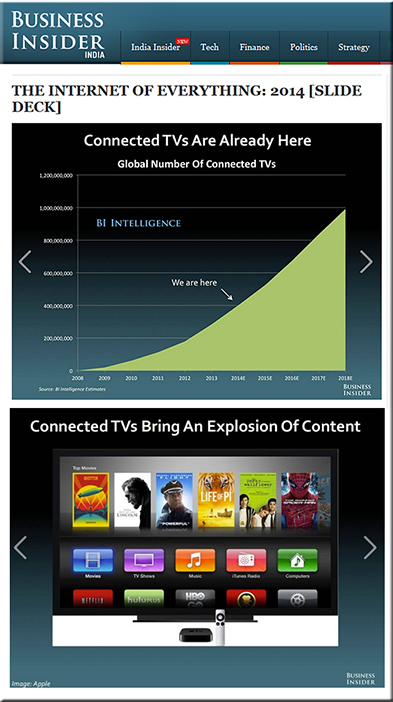
TVs are becoming the next app battleground — from by Emily Adler
Excerpt:
The app store phenomenon, centered on smartphones and tablets, has been the biggest story in software for the past five years.
Its next logical destination: the living room, via smart TVs and set-top boxes connected to the Internet.
…
From DSC:
![The Living [Class] Room -- by Daniel Christian -- July 2012 -- a second device used in conjunction with a Smart/Connected TV](http://danielschristian.com/learning-ecosystems/wp-content/uploads/2012/07/The-Living-Class-Room-Daniel-S-Christian-July-2012.jpg)

Addendum/also see:
Excerpt:
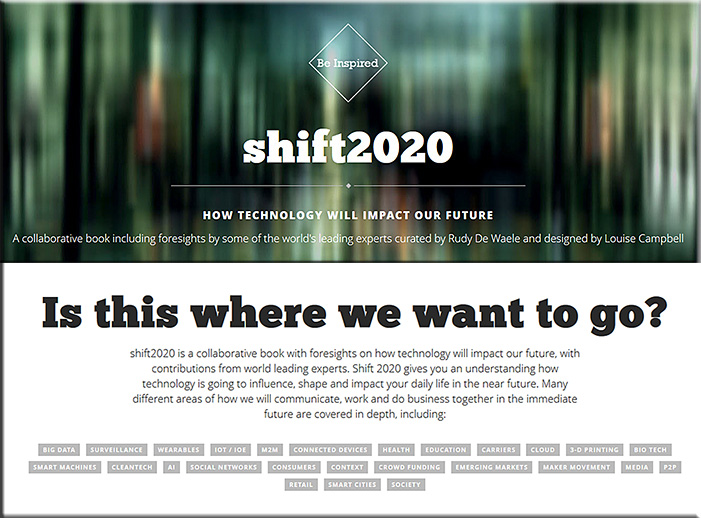
An 80 page eBook, paperback or hardcover photobook including insights, quotes and articles from industry leaders on the future of mobile technology and how it can change our world.
In addition to most of the original Mobile Trends 2020 contributors, the content is now extended with contributions of some 50 new experts from around the globe who are prominent futurists and trend-predictors and industry leaders.
From DSC:
I see the following items in the classrooms/learning spaces/”learning hubs” of the future:
Below are some other recent items on this topic:
To Inspire Learning, Architects Reimagine Learning Spaces — from MindShift by Allison Arieff

Excerpt:
As K–12 schools refocus on team-based, interdisciplinary learning, they are moving away from standardized, teach-to-test programs that assume a one-size-fits-all approach to teaching. Instead, there is a growing awareness that students learn in a variety of ways, and the differences should be supported. The students often learn better by doing it themselves, so teachers are there to facilitate, not just to instruct. Technology is there as a tool and resource, not as a visual aid or talking head.
3D printers and laser cutters?… it’s the classroom of the future — from standard.co.uk by Miranda Bryant

Rethinking our learning spaces — from rtschuetz.blogspot.com by Robert Schuetz

CC Wikimedia – Thelmadatter
Excerpt:
Heutagogy, unlike pedagogy, focuses on self-directed learning. As learning and education become more heutaogical, shouldn’t our learning spaces accommodate this shift? What are the features and characteristics that define a modern learning space? Notice, that I have not used the word classroom. Several days of researching this topic has challenged my thinking on the concept of classroom. This verbiage has been replaced with terms like; ideation lab, innovation space, maker pods, gamer zone, and learning sector. The concept of specific learning zones is not new.
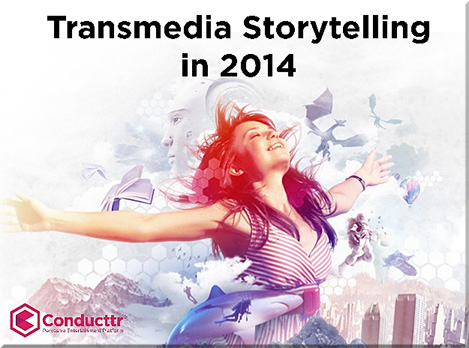
Transmedia Storytelling: Trends for 2014 — from Robert Pratten, CEO at Transmedia Storyteller Ltd on Dec 06, 2013
Excerpt:
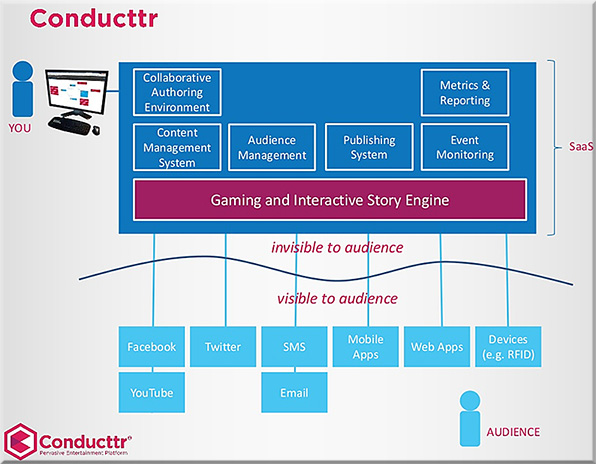
From DSC:
Something here for education/learning? With the creativity, innovation, interactivity, participation, and opportunities for more choice/more control being offered here, I would say YES!
Also see:
The year ahead: ten amazing science and technology innovations coming up in 2014 — from telegraph.co.uk by Paul Kendall and Chris Bell
From the world’s largest underground hotel to Star Wars-style holographic communication, the coming year is set to unveil an array of incredible advances in science and technology

Former Windows leader Steven Sinofsky presents 10 Mega Trends in Tech for 2014 — from businessinsider.com by Jay Yarow; via Graeme Codrington (@FuturistGraeme) and Laura Goodrich (@LauraGoodrich)
Top Technology Trends for 2014 — from computer.org
Excerpt:
Supporting New Learning Styles
Online courses demand seamless, ubiquitous approach.
These days, students from all corners of the world can sign up for online classes to study everything from computer science, digital signal processing, and machine learning to European history, psychology, and astronomy–and all for free. As interest in Massive Open Online Courses (MOOCs) continues to explode, there will be a corresponding need for technology to support these new learning systems and styles. Platforms such as Coursera, with more than 3 million users and 107 partners; and edX, a partnership between Massachusetts Institute of Technology and Harvard University with 1.7 million users; are hosting classes with thousands of online enrollees each. And although lectures are still the mainstay of MOOCs, the classes require web forums, online meetups, and keystroke loggers to check identities, as well as powerful servers to handle the volumes. MOOCs and other new online classes are creating a demand for learning that is seamless—happening continuously via different technologies; ubiquitous—drawing from pervasive and embedded technologies; and contextual—drawing awareness from location-based and other sensor-based technologies.
5 Higher-Education Trends for 2014 — from theatlantic.com by Sophie Quinton
Expect an increased emphasis on teacher effectiveness, technical education, and more.
Headings include:
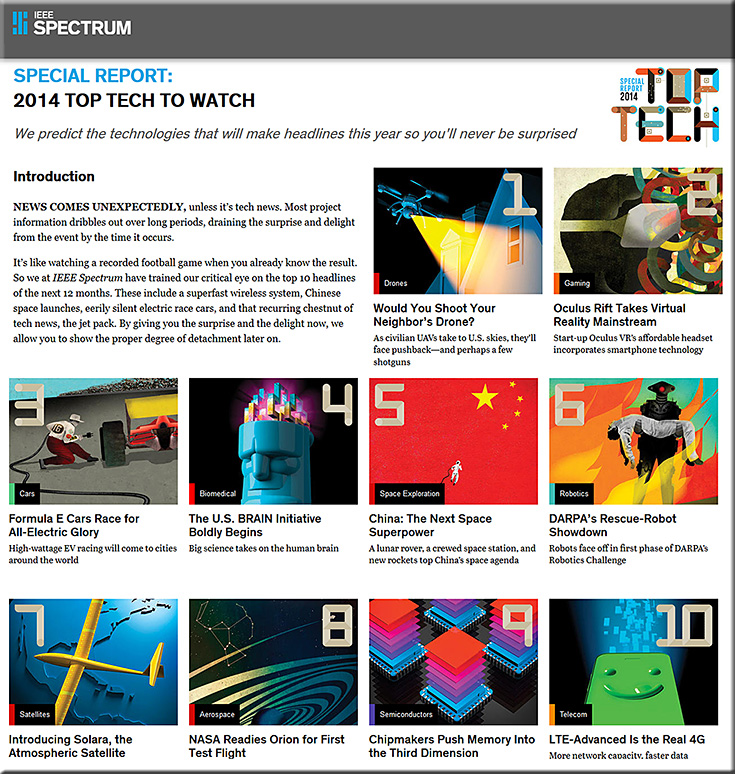
Special Report: 2014 Top Tech to Watch — from spectrum.ieee.org
NMC Horizon Report — 2014 Higher Education Preview
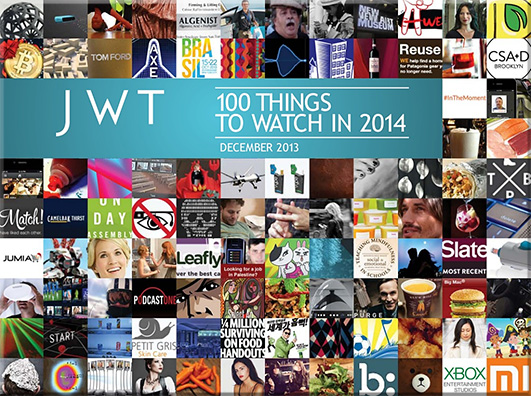
JWT’s 100 things to watch in 2014
IBM internal experts club together to offer 2014 predictions — from siliconangle.com by Bert Latamore
Headings include:
2014 Technology Predictions Series: RadiumOne on Mobile — from siliconangle.com by Suzanne Kattau
Internet of Things may strangle enterprise bandwidth — from informationweek.comby Deepak Kumar
The Internet of Things is poised to bring a flood of WAN traffic and new Internet-enabled devices to enterprise WANs. Be sure your corporate network is ready for it.
7 things you should expect from your leaders in 2014 — from forbes.com by Glenn Llopis
10 Jobs for tomorrow that barely exist today (Infographic) — from jobmarketmonitor.com by Michel Cournoyer and Thomas Frey
Addendum on 1/4/14:

Forrester: Top technology trends for 2014 & beyond — from forbes.com by Peter High
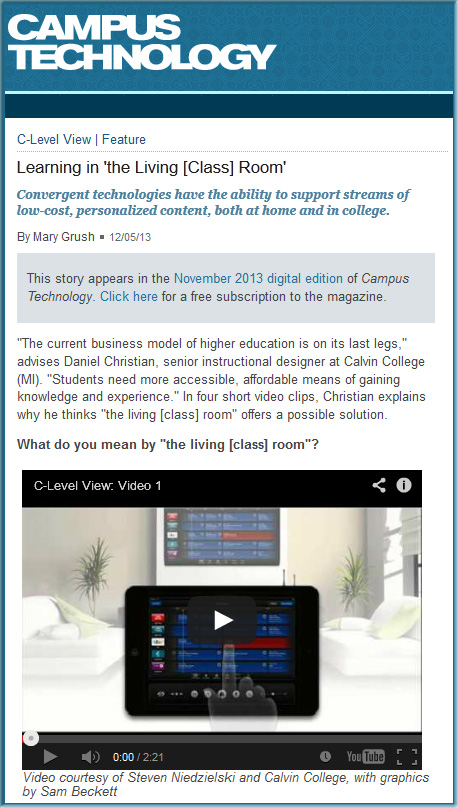
Learning in ‘the Living [Class] Room’
From campustechnology.com by Mary Grush and Daniel Christian
Convergent technologies have the ability to support streams of low-cost, personalized content, both at home and in college.
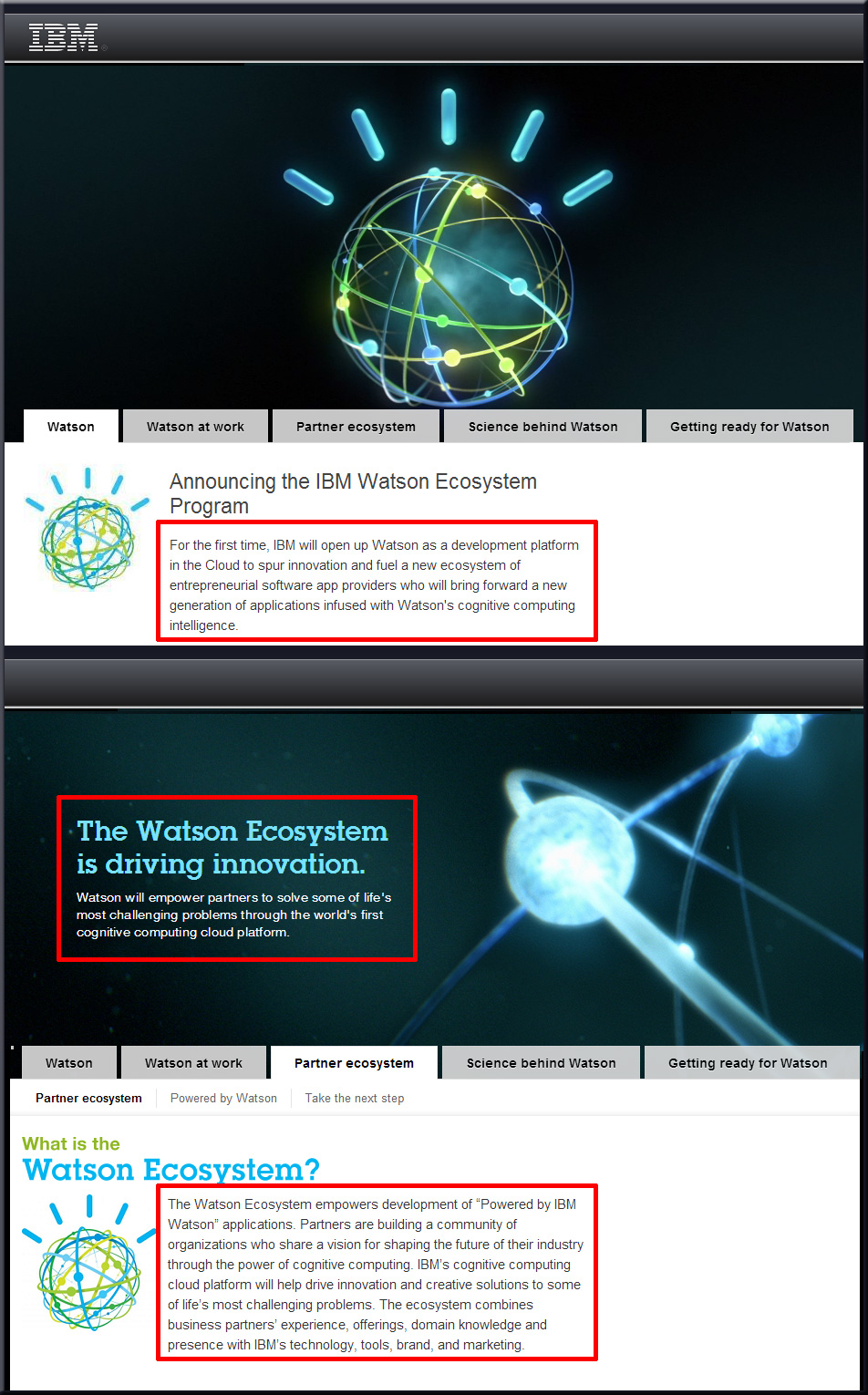
Excerpts (emphasis DSC):
For the first time, IBM will open up Watson as a development platform in the Cloud to spur innovation and fuel a new ecosystem of entrepreneurial software app providers who will bring forward a new generation of applications infused with Watson’s cognitive computing intelligence.
…
The Watson Ecosystem empowers development of “Powered by IBM Watson” applications. Partners are building a community of organizations who share a vision for shaping the future of their industry through the power of cognitive computing. IBM’s cognitive computing cloud platform will help drive innovation and creative solutions to some of life’s most challenging problems. The ecosystem combines business partners’ experience, offerings, domain knowledge and presence with IBM’s technology, tools, brand, and marketing.
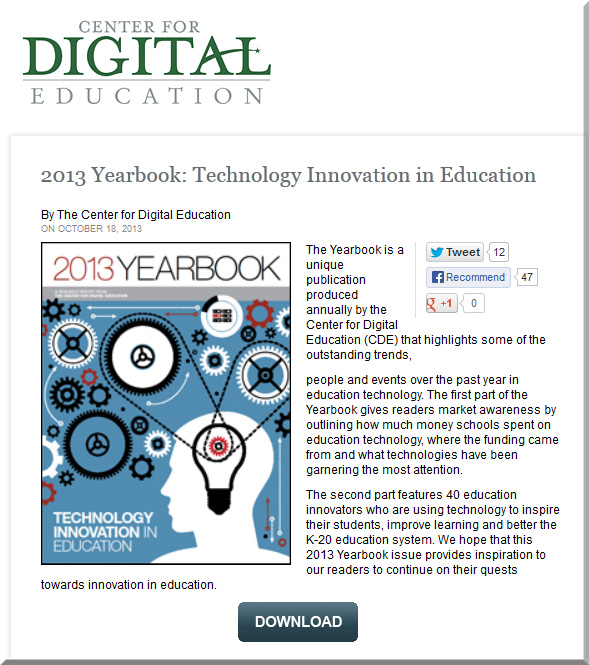
Description:
The Yearbook is a unique publication produced annually by the Center for Digital Education (CDE) that highlights some of the outstanding trends,
people and events over the past year in education technology. The first part of the Yearbook gives readers market awareness by outlining how much money schools spent on education technology, where the funding came from and what technologies have been garnering the most attention.
The second part features 40 education innovators who are using technology to inspire their students, improve learning and better the K-20 education system. We hope that this 2013 Yearbook issue provides inspiration to our readers to continue on their quests towards innovation in education.
From DSC:
My quote in the Center for Digital Education’s 2013 Yearbook reads:
“Educational technologists need to be bold, visionary and creative. They need to be in tune with the needs, missions and visions of their organizations. We have the opportunity — and responsibility — to make lasting and significant contributions within our fields and for the organizations that we work for.”
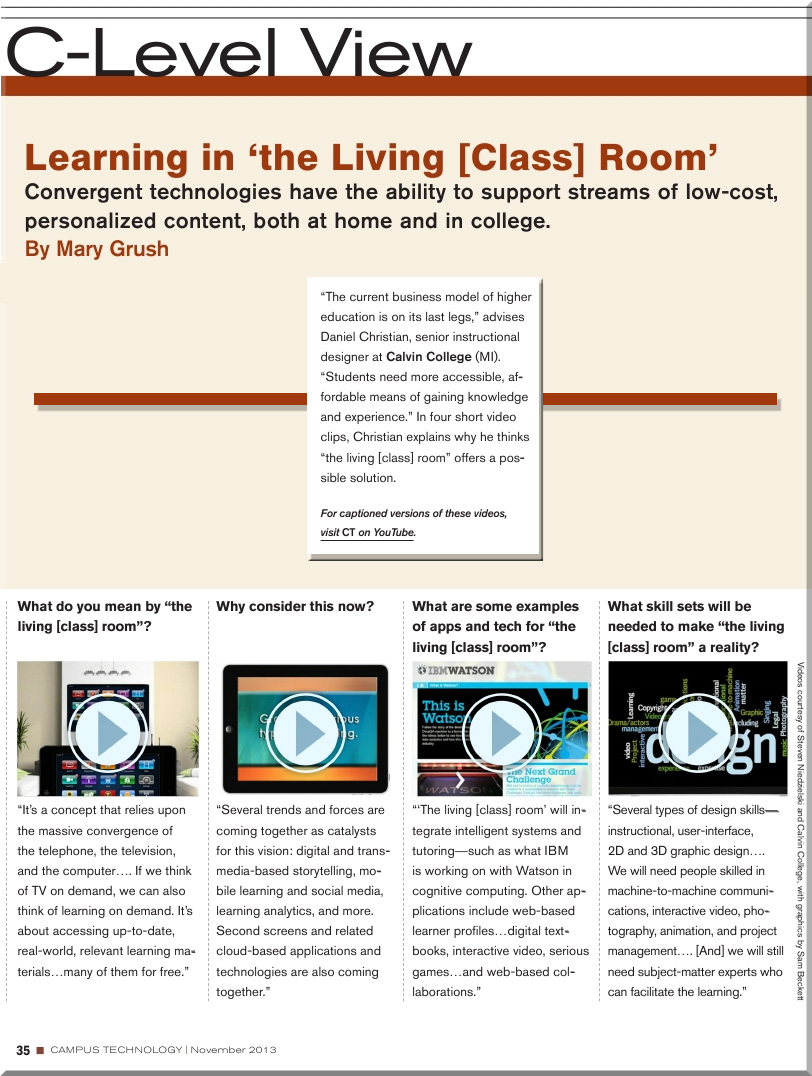
Learning from the Living [Class] Room — from Campus Technology by Daniel Christian and Mary Grush; with a huge thanks also going out to Mr. Steven Niedzielski (@Marketing4pt0) and to Mr. Sam Beckett (@SamJohnBeck) for their assistance and some of the graphics used in making these videos.
From DSC:
These 4 short videos explain what I’m trying to relay with a vision I’m entitling, Learning from the Living [Class] Room. I’ve been pulse checking a variety of areas for years now, and the pieces of this vision continue to come into fruition. This is what I see Massive Open Online Courses (MOOCs) morphing into (though there may be other directions/offshoots that they go in as well).
After watching these videos, I think you will see why I think we must move to a team–based approach.
(It looks like the production folks for Campus Technology had to scale things way back in terms of video quality to insure an overall better performance for the digitally-based magazine.)
To watch these videos in a higher resolution, please use these links:
Alternatively, these videos can be found at:
.
Description:
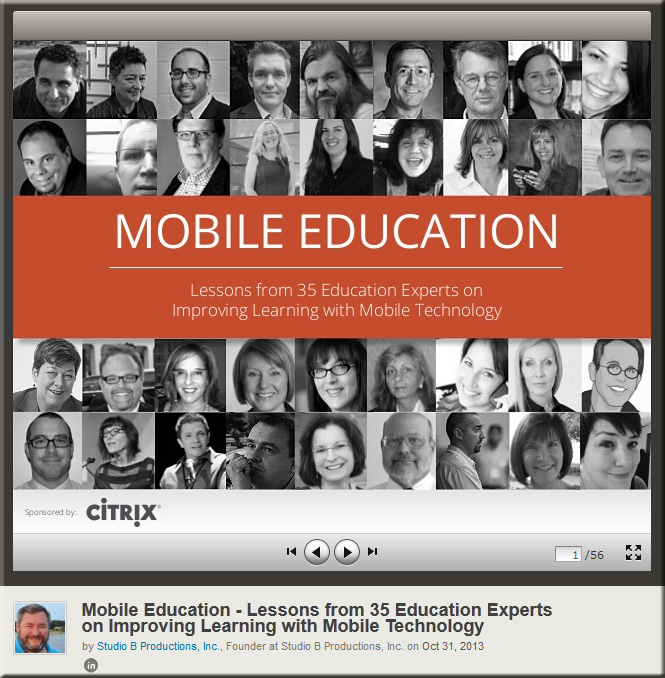
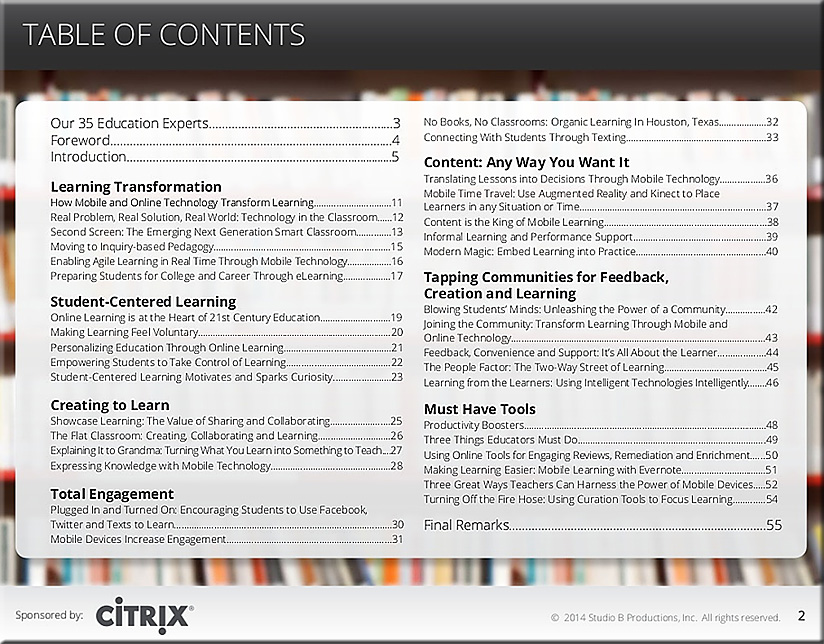
Education is at a tipping point. From the rising cost of a college education and the financial pressures upon local districts and state agencies to fund K-12 schools and programs, to the questions of how to employ mobile technologies and leverage social platforms to support the growing trend toward mobile, collaborative learning models, educators face an almost overwhelming set of challenges. While there are no easy answers to these and other issues, Citrix believes strongly that online learning technologies can help enhance and extend the teaching and learning process and provide greater, more wide-spread access to education to students. We are committed to developing and delivering learning solutions that will meet the evolving needs of teachers and students in this changing landscape. We hope that our sponsorship of this ebook and other projects will help you, the reader, gain a better understanding of the opportunities that online learning technologies provide, increase your mastery of these solutions, and enable you to put them to productive use. We look forward to working with you as we explore new and effective ways to help teachers teach and learners learn.
CaIlin Pitcher
Product Line Director, Collaboration, Citrix
Comments/disclosure from DSC:
I do not work for Citrix — I have been at Calvin College since
March 2007. I was not paid to develop/contribute this piece.
I’d like to thank David Rogelberg for his work on this project.