From DSC: In the future, I’d like to see holograms provide stunning visual centerpieces for the entrance ways into libraries, or in our classrooms, or in our art galleries, recital halls, and more. The object(s), person(s), scene(s) could change into something else, providing a visually engaging experience that sets a tone for that space, time, and/or event.
Eventually, perhaps these types of technologies/setups will even be a way to display artwork within our homes and apartments.
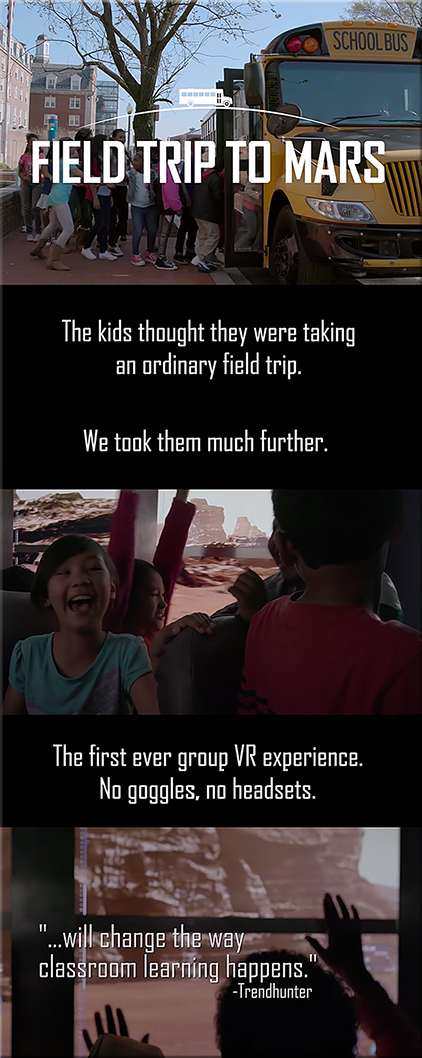
A school bus, virtual reality, & an out-of-this-world journey — from goodmenproject.com “Field Trip To Mars” is the barrier-shattering outcome of an ambitious mission to give a busload of people the same, Virtual Reality experience – going to Mars.
Excerpt:
Inspiration was Lockheed‘s goal when it asked its creative resources, led by McCann, to create the world’s first mobile group Virtual Reality experience. As one creator notes, VR now is essentially a private, isolating experience. But wouldn’t it be cool to give a busload of people the same, simultaneous VR experience? And then – just to make it really challenging – put the whole thing on wheels?
“Field Trip To Mars” is the barrier-shattering outcome of this ambitious mission.
From DSC: This is incredible! Very well done. The visual experience tracks the corresponding speeds of the bus and even turns of the bus.
The United States Department of Education (ED) has formally kicked off a new competition designed to encourage the development of virtual and augmented reality concepts for education.
Dubbed the EdSim Challenge, the competition is aimed squarely at developing students’ career and technical skills — it’s funded through the Carl D. Perkins Career and Technical Education Act of 2006 — and calls on developers and ed tech organizations to develop concepts for “computer-generated virtual and augmented reality educational experiences that combine existing and future technologies with skill-building content and assessment. Collaboration is encouraged among the developer community to make aspects of simulations available through open source licenses and low-cost shareable components. ED is most interested in simulations that pair the engagement of commercial games with educational content that transfers academic, technical, and employability skills.”
Virtual reality boosts students’ results— from raconteur.net by Edwin Smith Virtual and augmented reality can enable teaching and training in situations which would otherwise be too hazardous, costly or even impossible in the real world
Excerpt:
More recently, though, the concept described in Aristotle’s Nicomachean Ethics has been bolstered by further scientific evidence. Last year, a University of Chicago study found that students who physically experience scientific concepts, such as the angular momentum acting on a bicycle wheel spinning on an axel that they’re holding, understand them more deeply and also achieve significantly improved scores in tests.
Virtual and augmented reality are shaking up sectors — from raconteur.net by Sophie Charara Both virtual and augmented reality have huge potential to leap from visual entertainment to transform the industrial and service sectors
Microsoft might not have envisioned its HoloLens headset as a war helmet, but that’s not stopping Ukrainian company LimpidArmor from experimenting. Defence Blog reports that LimpidArmor has started testing military equipment that includes a helmet with Microsoft’s HoloLens headset integrated into it.
The helmet is designed for tank commanders to use alongside a Circular Review System (CRS) of cameras located on the sides of armored vehicles. Microsoft’s HoloLens gathers feeds from the cameras outside to display them in the headset as a full 360-degree view. The system even includes automatic target tracking, and the ability to highlight enemy and allied soldiers and positions.
Bring your VR to work— from itproportal.com by Timo Elliott, Josh Waddell 4 hours ago With all the hype, there’s surprisingly little discussion of the latent business value which VR and AR offer.
Excerpt:
With all the hype, there’s surprisingly little discussion of the latent business value which VR and AR offer — and that’s a blind spot that companies and CIOs can’t afford to have. It hasn’t been that long since consumer demand for the iPhone and iPad forced companies, grumbling all the way, into finding business cases for them. Gartner has said that the next five to ten years will bring “transparently immersive experiences” to the workplace. They believe this will introduce “more transparency between people, businesses, and things” and help make technology “more adaptive, contextual, and fluid.”
If digitally enhanced reality generates even half as much consumer enthusiasm as smartphones and tablets, you can expect to see a new wave of consumerisation of IT as employees who have embraced VR and AR at home insist on bringing it to the workplace. This wave of consumerisation could have an even greater impact than the last one. Rather than risk being blindsided for a second time, organisations would be well advised to take a proactive approach and be ready with potential business uses for VR and AR technologies by the time they invade the enterprise.
In Gartner’s latest emerging technologies hype cycle, Virtual Reality is already on the Slope of Enlightenment, with Augmented Reality following closely.
One place where students are literally immersed in VR is at Carnegie Mellon University’s Entertainment Technology Center (ETC). ETC offers a two-year Master of Entertainment Technology program (MET) launched in 1998 and cofounded by the late Randy Pausch, author of “The Last Lecture.”
MET starts with an intense boot camp called the “immersion semester” in which students take a Building Virtual Worlds (BVW) course, a leadership course, along with courses in improvisational acting, and visual storytelling. Pioneered by Pausch, BVW challenges students in small teams to create virtual reality worlds quickly over a period of two weeks, culminating in a presentation festival every December.
Apple patents augmented reality mapping system for iPhone — from appleinsider.com by Mikey Campbell Apple on Tuesday was granted a patent detailing an augmented reality mapping system that harnesses iPhone hardware to overlay visual enhancements onto live video, lending credence to recent rumors suggesting the company plans to implement an iOS-based AR strategy in the near future.
Virtual reality is a combination of life-like images, effects and sounds that creates an imaginary world in front of our eyes.
But what if we could also imitate more complex sensations like the feeling of falling rain, a beating heart or a cat walking? What if we could distinguish, between a light sprinkle and a heavy downpour in a virtual experience?
Disney Research?—?a network of research laboratories supporting The Walt Disney Company, has announced the development of a 360-degree virtual reality application offering a library of feel effects and full body sensations.
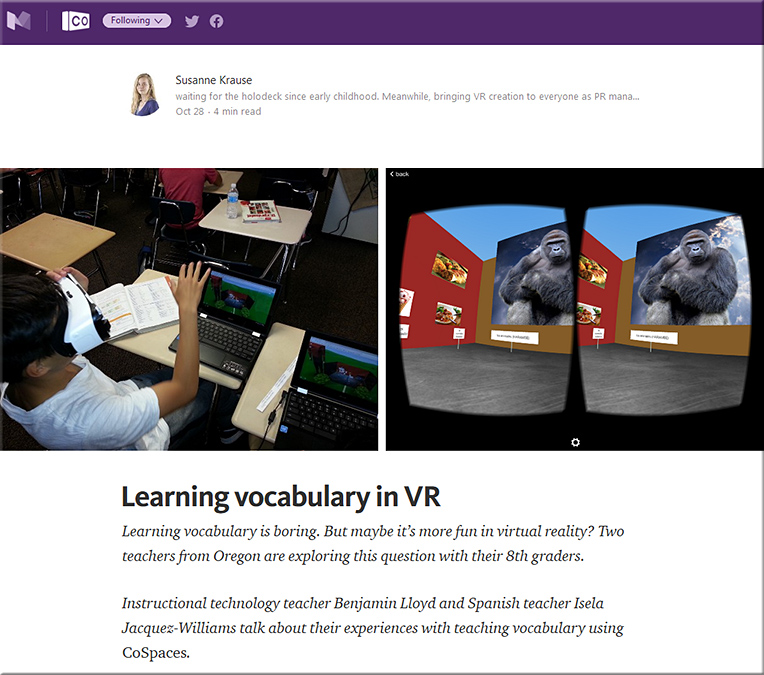
Literature class meets virtual reality — from blog.cospaces.io by Susanne Krause Not every student finds it easy to let a novel come to life in their imagination. Could virtual reality help? Tiffany Capers gave it a try: She let her 7th graders build settings from Lois Lowry’s “The Giver” with CoSpaces and explore them in virtual reality. And: they loved it.
After generations of peering into a microscope to examine cells, scientists could simply stroll straight through one.
Calling his project the “stuff of science fiction,” director of the 3D Visualisation Aesthetics Lab at the University of New South Wales (UNSW) John McGhee is letting people come face-to-face with a breast cancer cell.
In contrast, VR has been described as the “ultimate empathy machine.” It gives us a way to virtually put us in someone else’s shoes and experience the world the way they do.
This isn’t meant to be an exhaustive list, but if I missed something major, please tell me and I’ll add it. Also, please reach out if you’re working on anything cool in this space à sarah(at)accomplice(dot)co.
Hand and finger tracking, gesture interfaces, and grip simulation:
Eric Florenzano is a VR consultant and game designer who lives in the San Francisco Bay area. He is currently working on new game ideas with a small team spread out across the US.
So far, so normal, right?. But what you don’t know is that Florenzano is one of a handful of advocates pioneering something they claim could transform work, end commuting, and even lead to a mass exodus from large cities: the virtual office.
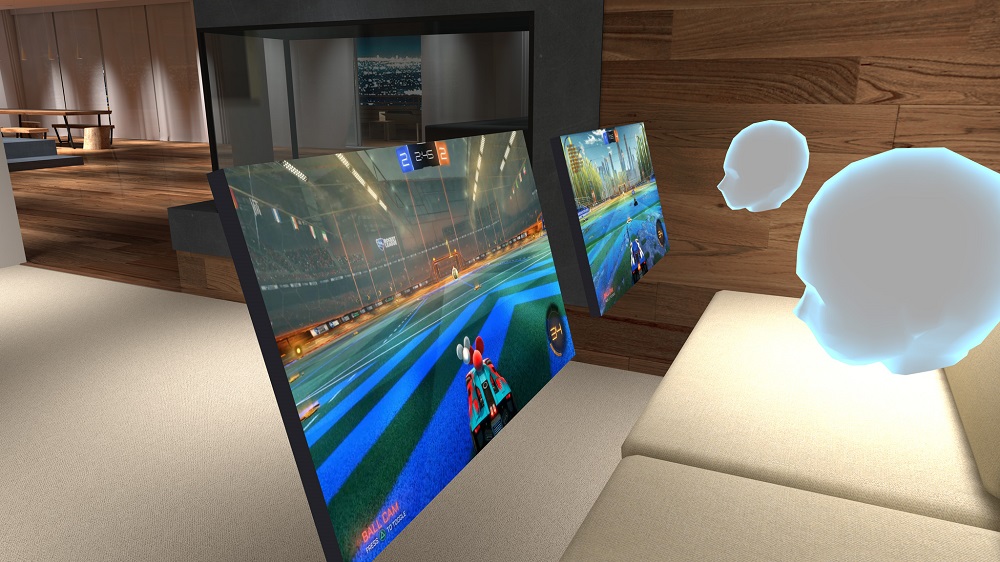
“There’s no physical office [for us.] It’s all virtual. That’s the crazy thing,” explains Florenzano. Rather than meeting in person or arranging a conference call, his team jumps into Bigscreen, which allows users, who are represented by floating heads and controllers, to share their monitors in virtual rooms.
Recently, I wrote about how the future of surgery is going to be robotic, data-driven and artificially intelligent.
Although it’s approaching fast, that future is still in the works. In the meantime, there is a real need to train surgeons in a more scalable way, according to Dr. Shafi Ahmed, a surgeon at the Royal London and St. Bartholomew’s hospitals and cofounder of Medical Realities, a company developing a new virtual reality platform for surgical training.
…
In April of 2016, he live-streamed a cancer surgery in virtual reality. The procedure, a low-risk removal of a colon tumor in a man in his 70s, was filmed in 360 video and streamed live across the world. The high-def 4K camera captured the doctors’ every movement, and those watching could see everything that was happening in immersive detail.
“Since we can manipulate a hologram without actually touching anything, we have access to everything we need without breaking a sterile field. In the end, this is actually an improvement over the current OR system because the image is directly overlaid on the patient, without having to look to computer screens for aid,” said Cutler in a Duke news release.
Oculus and OTOY may have achieved a breakthrough in social VR functionality.
VR headset owners should soon be able to share a variety of environments and Web-based content with one another in virtual reality. For example, friends can feel like they are together on the bridge of the Enterprise, and on the viewscreen of the ship they see a list of Star Trek episodes to watch with one another.
We have yet to test all of this functionality first-hand, but we’ve seen some of it live in the Gear VR — accessing, for example, a Star Trek environment inside OTOY’s ORBX Media Player app from within the Oculus Social Beta.
“Whether it be HoloLens, mixed reality, or Surface, our goal is to invent new computers and new computing,” he added. This also includes investing in artificial intelligence, which is now its own group within the company.
Nadella admitted that for a long time, Microsoft was complacent. “Early success is probably the worst thing that can happen in life,” he said. But now, he wants Microsoft to be more of a “learn-it-all” culture rather than a “know-it-all” culture.
These networks keep growing. One of the hosts of the conference, ARinChina, brought me over along with a group of about a half-dozen Westerners. This media company connects a community of 60,000 developers, all of whom are invested in staying ahead of breakthrough technologies like virtual reality (VR), augmented reality (AR) and the hybrid known as mixed reality (MR). The AR track where I presented was hosted by RAVV, a new technology think tank that is pulling together subject matter experts across robotics, artificial intelligence, autonomous vehicles, VR and AR. RAVV is building an international ecosystem that includes its own approaches for startup incubation, knowledge sharing and other collaborative endeavors.
…
To get a sense of how global the emerging mixed reality field is, consider that, in February, China’s e-commerce giant Alibaba led the $800 million Series C round for Florida-based Magic Leap, an MR startup. As our daily reality becomes more virtual and augmented, it doesn’t matter where someone is on the map. This field is connecting far-flung practitioners, hinting at a time, soon, when AR, VR and MR will connect people in ways never before possible.
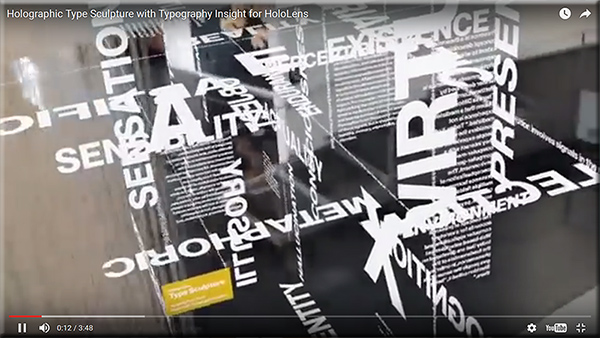
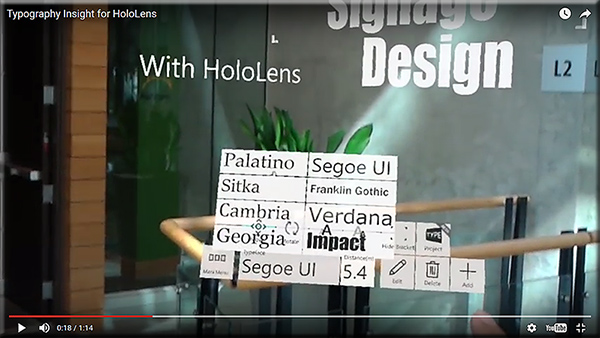
Recently, I visited Bellevue Arts Museum http://www.bellevuearts.org/ and conceived of a ‘Holographic art sculpture’ for installation in the museum’s beautiful atrium. Using my app Typography Insight for HoloLens, http://typeinsight.org/hololens.html, I created a ‘Holographic Type Sculpture’ and placed it in Bellevue Arts Museum’s atrium and rooftop sculpture garden (coincidentally, its name is ‘Court of Light’). You can experience the Mixed Reality Capture below.
2016 has been promoted as the year of virtual reality. In the space of a few months, we have seen brands like Facebook, Samsung and Sony have all come out with VR products of their own. But another closely related industry has been making a growing presence in the tech industry. Augmented reality, or simply AR, is gaining ground among tech companies and even consumers. Google was the first contender for coolest AR product with its Google Glass. Too bad that did not work out; it felt like a product too ahead of its time. Companies like Microsoft, Magic Leap and even Apple are hoping to pick up from where Google left off. They are creating their own smart glasses that will, hopefully, do better than Google Glass. In our article, we look at some of the coolest Augmented Reality smart glasses around.
Some of them are already out while others are in development.
It’s no secret that we here at Labster are pretty excited about VR. However, if we are to successfully introduce VR into education and training we need to know how to create VR simulations that unlock these new great ways of learning.
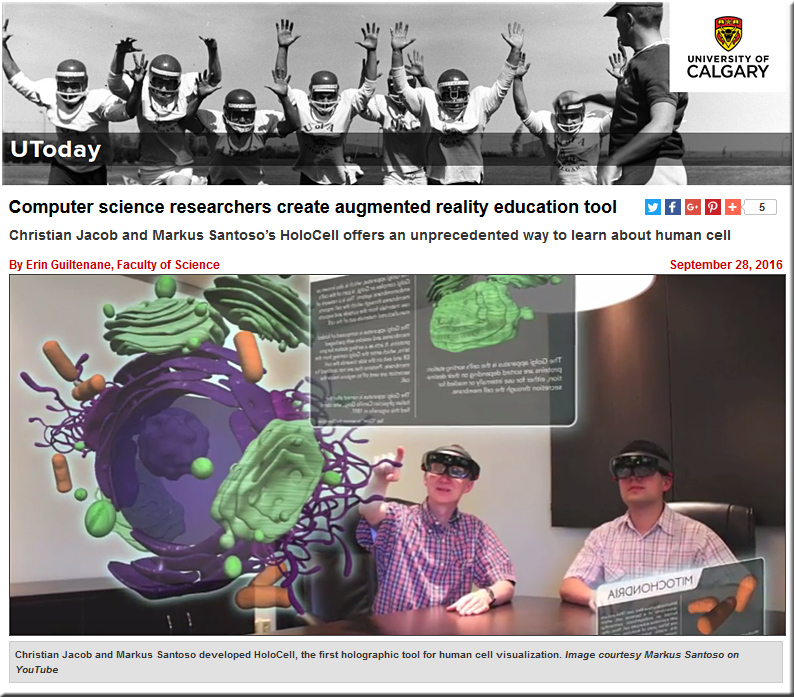
Christian Jacob and Markus Santoso are trying to re-create the experience of the aforementioned agents in Fantastic Voyage. Working with 3D modelling company Zygote, they and recent MSc graduate Douglas Yuen have created HoloCell, an educational software. Using Microsoft’s revolutionary HoloLens AR glasses, HoloCell provides a mixed reality experience allowing users to explore a 3D simulation of the inner workings, organelles, and molecules of a healthy human cell.
Upload is teaming up with Udacity, Google and HTC to build an industry-recognized VR certification program.
…
According to Udacity representatives, the organization will now be adding a VR track to its “nanodegree”program. Udacity’s nanodegrees are certification routes that can be completed completely online at a student’s own pace. These courses typically take between 6-12 months and cost $199 per month. Students will also receive half of their tuition back if they complete a course within six months. The new VR course will follow this pattern as well.
The VR nanodegree program was curated by Udacity after the organization interviewed dozens of VR savvy companies about the type of skills they look for in a potential new hire. This information was then built into a curriculum through a joint effort between Google, HTC and Upload.
Virtual reality helps Germany catch last Nazi war criminals — from theguardian.com by Agence France-Presse Lack of knowledge no longer an excuse as precise 3D model of Auschwitz, showing gas chambers and crematoria, helps address atrocities
Excerpt:
German prosecutors and police have developed 3D technology to help them catch the last living Nazi war criminals with a highly precise model of Auschwitz.
German prosecutors and police have begun using virtual reality headsets in their quest to bring the last remaining Auschwitz war criminals to justice, AFP reported Sunday.
Using the blueprints of the death camp in Nazi-occupied Poland, Bavarian state crime office digital imaging expert Ralf Breker has created a virtual reality model of Auschwitz which allows judges and prosecutors to mimic moving around the camp as it stood during the Holocaust.
Technology is hoping to turn empathy into action. Or at least, the United Nations is hoping to do so. The intergovernmental organization is more than seven decades old at this point, but it’s constantly finding new ways to better the world’s citizenry. And the latest tool in its arsenal? Virtual reality.
Last year, the UN debuted its United Nations Virtual Reality, which uses the technology to advocate for communities the world over. And more recently, the organization launched an app made specifically for virtual reality films. First debuted at the Toronto International Film Festival, this app encourages folks to not only watch the UN’s VR films, but to then take action by way of donations or volunteer work.
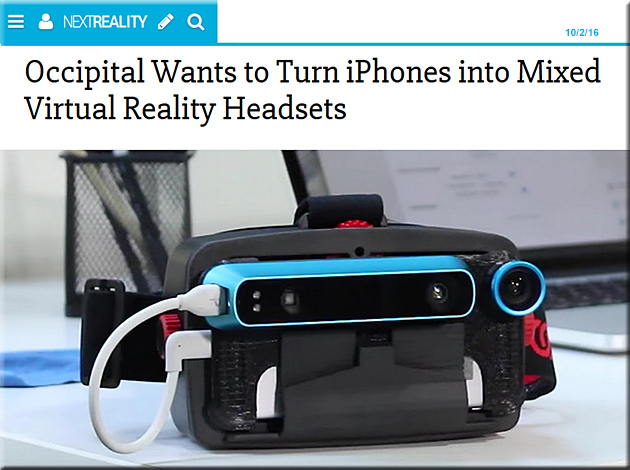
If you’re an Apple user and want an untethered virtual reality system, you’re currently stuck with Google Cardboard, which doesn’t hold a candle to the room scale VR provided by the HTC Vive (a headset not compatible with Macs, by the way). But spatial computing company Occipital just figured out how to use their Structure Core 3D Sensor to provide room scale VR to any smartphone headset—whether it’s for an iPhone or Android.
The Body VR is a great example of how the Oculus Rift and Gear VR can be used to educate as well as entertain. Starting today, it’s also a great example of how the HTC Vive can do the same.
The developers previously released this VR biology lesson for free back at the launch of the Gear VR and, in turn, the Oculus Rift. Now an upgraded version is available on Valve and HTC’s Steam VR headset. You’ll still get the original experience in which you explore the human body, travelling through the bloodstream to learn about blood cells and looking at how organelles work. The piece is narrated as you go.
For a moment, students were taken into another world without leaving the great halls of Harvard. Some students had a great time exploring the ocean floor and saw unique underwater animals, others tried their hand in hockey, while others screamed as they got into a racecar and sped on a virtual speedway. All of them, getting a taste of what virtual and augmented reality looks like.
All of these, of course, were not just about fun but on how especially augmented and virtual reality can transform every kind of industry. This will be discussed and demonstrated at the i-lab in the coming weeks with Rony Abovitz, CEO of Magic Leap Inc., as the keynote speaker.
Abovitz was responsible for developing the “Mixed Reality Lightfield,” a technology that combines augmented and virtual reality. According to Abovitz, it will help those who are struggling to “transfer two-dimensional information or text into “spatial learning.”
“I think it will make life easier for a lot of people and open doors for a lot of people because we are making technology fit how our brains evolved into the physics of the universe rather than forcing our brains to adapt to a more limited technology,” he added.
From DSC: I have attended theNext Generation Learning Spaces Conferencefor the past two years. Both conferences were very solid and they made a significant impact on our campus, as they provided the knowledge, research, data, ideas, contacts, and the catalyst for us to move forward with building a Sandbox Classroom on campus. This new, collaborative space allows us to experiment with different pedagogies as well as technologies. As such, we’ve been able to experiment much more with active learning-based methods of teaching and learning. We’re still in Phase I of this new space, and we’re learning new things all of the time.
For the upcoming conference in February, I will be moderating a New Directions in Learning panel on the use of augmented reality (AR), virtual reality (VR), and mixed reality (MR). Time permitting, I hope that we can also address other promising, emerging technologies that are heading our way such as chatbots, personal assistants, artificial intelligence, the Internet of Things, tvOS, blockchain and more.
The goal of this quickly-moving, engaging session will be to provide a smorgasbord of ideas to generate creative, innovative, and big thinking. We need to think about how these topics, trends, and technologies relate to what our next generation learning environments might look like in the near future — and put these things on our radars if they aren’t already there.
Key takeaways for the panel discussion:
Reflections regarding the affordances that new developments in Human Computer Interaction (HCI) — such as AR, VR, and MR — might offer for our learning and our learning spaces (or is our concept of what constitutes a learning space about to significantly expand?)
An update on the state of the approaching ed tech landscape
Creative, new thinking: What might our next generation learning environments look like in 5-10 years?
I’m looking forward to catching up with friends, meeting new people, and to the solid learning that I know will happen at this conference. I encourage you to check outthe conferenceandregister soon to take advantage of the early bird discounts.
Virtual reality technology holds enormous potential to change the future for a number of fields, from medicine, business, architecture to manufacturing.
Psychologists and other medical professionals are using VR to heighten traditional therapy methods and find effective solutions for treatments of PTSD, anxiety and social disorders. Doctors are employing VR to train medical students in surgery, treat patients’ pains and even help paraplegics regain body functions.
In business, a variety of industries are benefiting from VR. Carmakers are creating safer vehicles, architects are constructing stronger buildings and even travel agencies are using it to simplify vacation planning.
Google has unveiled a new interactive online exhibit that take users on a tour of 10 Downing street in London — home of the U.K. Prime Minister.
The building has served as home to countless British political leaders, from Winston Churchill and Margaret Thatcher through to Tony Blair and — as of a few months ago — Theresa May. But, as you’d expect in today’s security-conscious age, gaining access to the residence isn’t easy; the street itself is gated off from the public. This is why the 10 Downing Street exhibit may capture the imagination of politics aficionados and history buffs from around the world.
The tour features 360-degree views of the various rooms, punctuated by photos and audio and video clips.
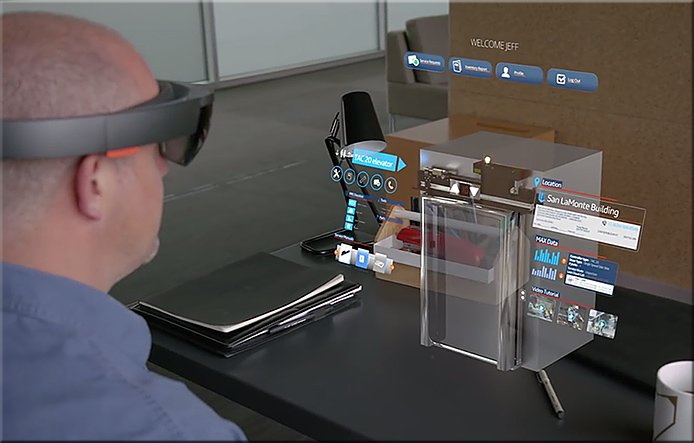
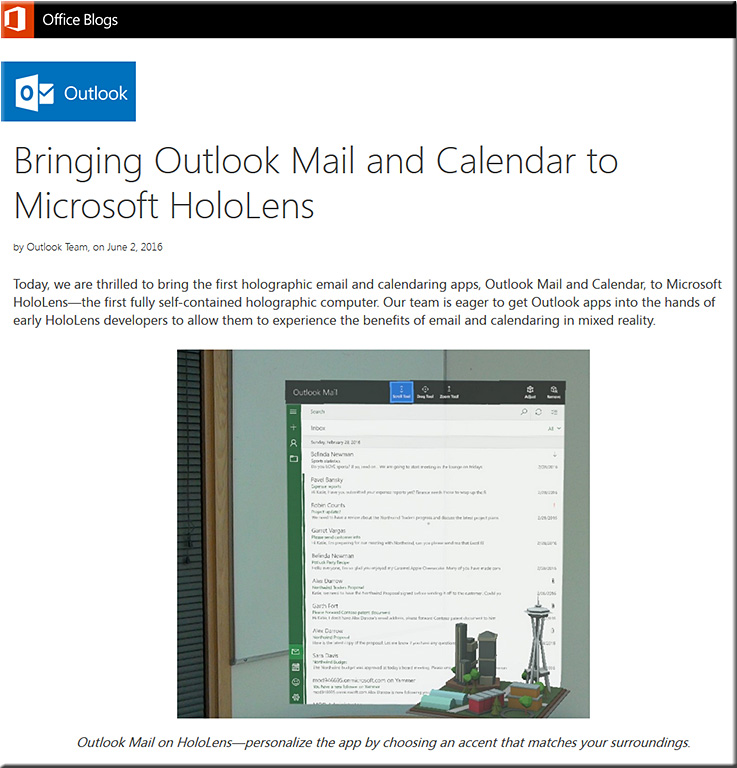
In a slightly more grounded environment, the HoloLens is being used to assist technicians in elevator repairs.
Traversal via elevator is such a regular part of our lifestyles, its importance is rarely recognized…until they’re not working as they should be. ThyssenKrupp AG, one of the largest suppliers for elevators, recognizes how essential they are as well as how the simplest malfunctions can deter the lives of millions. Announced on their blog, Microsoft is partnering with Thyssenkrupp to equip 24,000 of their technicians with HoloLens.
Insert from DSC re: the above piece re: HoloLens:
Will technical communicators need to augment their skillsets? It appears so.
But in a world where no moment is too small to record with a mobile sensor, and one in which time spent in virtual reality keeps going up, interesting parallels start to emerge with our smartphones and headsets.
Let’s look at how the future could play out in the real world by observing three key drivers: VR video adoption, mobile-video user needs and the smartphone camera rising tide.
“Individuals with autism may become overwhelmed and anxious in social situations,” research clinician Dr Nyaz Didehbani said.
“The virtual reality training platform creates a safe place for participants to practice social situations without the intense fear of consequence,” said Didehbani.
The participants who completed the training demonstrated improved social cognition skills and reported better relationships, researchers said.
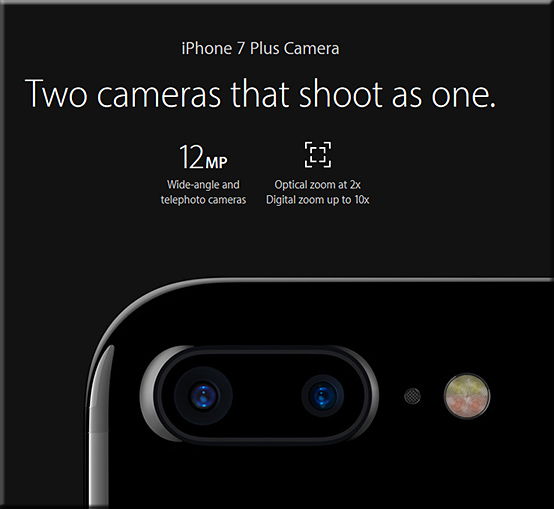
iPhone 7 Plus doesn’t have just one entirely new camera system — it has two. The same 12MP wide-angle camera that’s on iPhone 7 works with a 12MP telephoto camera that can get even closer. That means you can get higher-quality zoom from farther away. And with an all-new depth-of-field effect (coming soon), portrait shots will look better than ever. Say hello to the world’s best photo op.
… Depth-of-field effect.
Depth of field allows you to keep faces sharp while creating a blurred effect in the background. When you take a shot with iPhone 7 Plus, the dual-camera system uses both cameras and advanced machine learning to make your subject sharp while creating the same out-of-focus blur in the background — known as the bokeh effect — previously reserved for DSLR cameras. So no matter what’s behind your subject, it’s easy to create a great portrait.
Smartphones boasting “dual cameras” are becoming more common, and news that they will feature on the just-announced iPhone 7 Plus indicates the arrival into the mainstream. But while dual cameras may stem from efforts to improve picture quality, it has the potential to lead us down much more interesting paths: the real story may be that Apple is using dual cameras to position itself for the augmented reality world ushered in by the Pokemon Go phenomenon.
…
The iPhone uses machine learning algorithms to scan objects within a scene, building up a real-time 3D depth map of the terrain and objects. Currently, the iPhone uses this to separate the background from the foreground in order to selectively focus on foreground objects. This effect of blurring out background details, known as bokeh, is a feature of DLSRs and not readily available on smaller cameras such as those in smartphones. The depth map allows the iPhone to simulate a variable aperture which provides the ability to display areas of the image out of focus. While an enviable addition for smartphone camera users, this is a gimmick compared to what the depth map can really do.
What Apple has is the first step toward a device like Microsoft’s HoloLens, an augmented reality head-mounted display currently in development.
Software that provides similar analysis of people’s poses and location within a scene for dual camera smartphones would provide a virtual window onto the real world. Using hand gesture recognition, users could naturally interact with a mixed reality world, with the phone’s accelerometer and GPS data detecting and driving changes to how that world is presented and updated.
Apple has not arrived here by accident. In addition to acquiring Linx, Apple alsopurchased augmented reality pioneer Metaioin 2015, suggesting a game plan to develop a mixed reality platform.
Grush: Is there a signpost you might point to that would indicate that there’s going to be more product development in AR/VR/MR?
Christian: There’s a significant one. Several major players — with very deep pockets — within the corporate world are investing in new forms of HCI, including Microsoft, Google, Apple, Facebook, Magic Leap, and others. In fact, according to an article on engadget.com from 6/16/16, “Magic Leap has amassed an astounding $1.39 billion in funding without shipping an actual product.” So to me, it’s just not likely that the billions of dollars being invested in a variety of R&D-related efforts are simply going to evaporate without producing any impactful, concrete products or services. There are too many extremely smart, creative people working on these projects, and they have impressive financial backing behind their research and product development efforts. So, I think we can expect an array of new choices in AR/VR/MR.
…
Just the other day I was talking to Jason VanHorn, an associate professor in our geology, geography, and environmental studies department. After finishing our discussion about a particular learning space and how we might implement active learning in it, we got to talking about mixed reality. He related his wonderful dreams of being able to view, manipulate, maneuver through, and interact with holographic displays of our planet Earth.
When I mentioned a video piece done by Case Western and the Cleveland Clinic that featured Microsoft’s Hololens technology, he knew exactly what I was referring to. But this time, instead of being able to drill down through the human body to review, explore, and learn about the various systems composing our human anatomy, he wanted to be able to drill down through the various layers of the planet Earth. He also wanted to be able to use gestures to maneuver and manipulate the globe — turning the globe to just the right spot before using a gesture to drill down to a particular place.
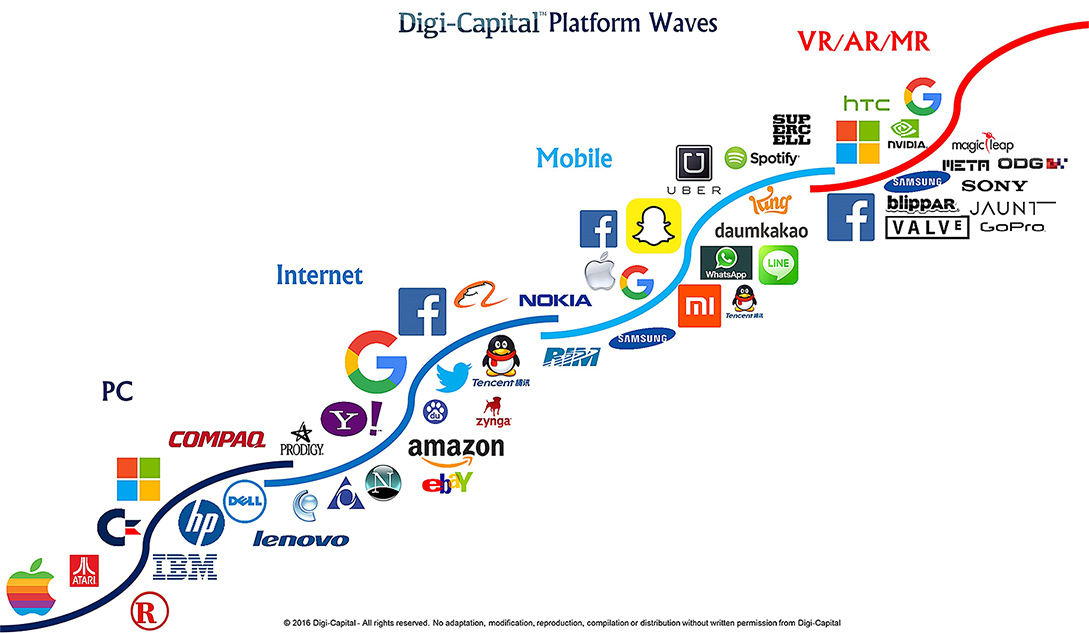
Consumer computing platform changes aren’t straight lines, they’re waves. PC, internet and mobile were the first 3 waves, and each was faster, larger and more disruptive than the last. Now the fourth wave of virtual, augmented and mixed reality is bearing down on us, so let’s dive in. The water’s fine.
From DSC: As you might suppose, waves are best experienced when riding on top of one — versus getting crushed by one or having to try to swim after a wave once it’s passed you by. Though much of this wave is forthcoming, the point in posting this now is to encourage us to put these Human Computer Interaction (HCI)-related changes on our radars…or, to go with the former analogy, to encourage us to grab our surfboards!
Creating high-quality online courses is getting increasingly complex—requiring an ever-growing set of skills. Faculty members can’t do it all, nor can instructional designers, nor can anyone else. As time goes by, new entrants and alternatives to traditional institutions of higher education will likely continue to appear on the higher education landscape—the ability to compete will be key.
…
For example, will there be a need for the following team members in your not-too-distant future?
Human Computer Interaction (HCI) Specialists: those with knowledge of how to leverage Virtual Reality (VR), Augmented Reality (AR), and Mixed Reality (MR) in order to create fun and engaging learning experiences (while still meeting the learning objectives)
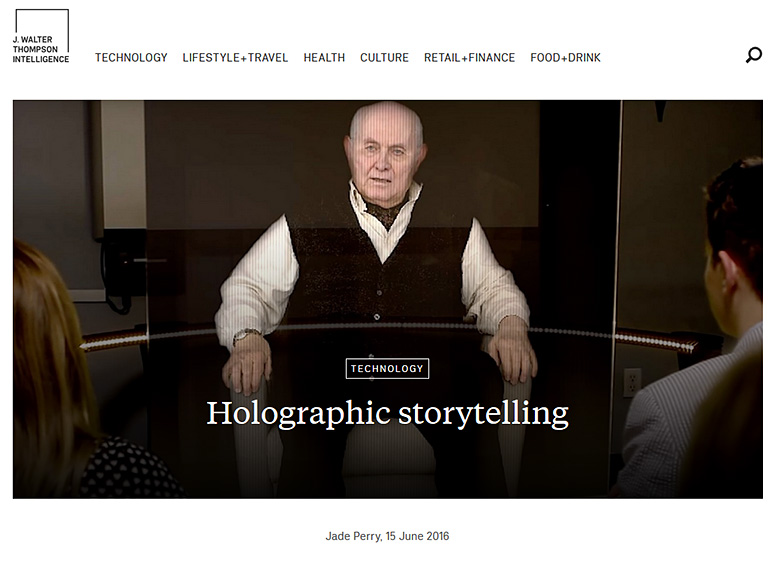
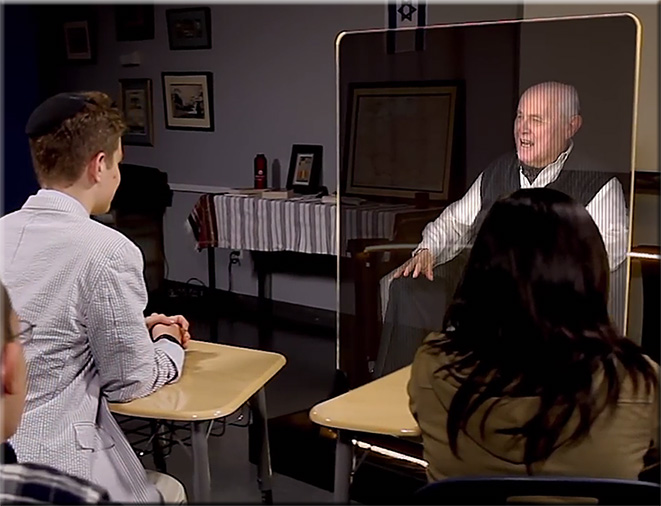
The stories of Holocaust survivors are brought to life with the help of interactive 3D technologies.
‘New Dimensions in Testimony’ is a new way of preserving history for future generations. The project brings to life the stories of Holocaust survivors with 3D video, revealing raw first-hand accounts that are more interactive than learning through a history book.
Holocaust survivor Pinchas Gutter, the first subject of the project, was filmed answering over 1000 questions, generating approximately 25 hours of footage. By incorporating natural language processing fromConscience Display,viewers were able to ask Gutter’s holographic image questions that triggered relevant responses.
From DSC: I wonder…is this an example of a next generation, visually-based chatbot*?
With the growth of artificial intelligence (AI), intelligent systems, and new types of human computer interaction (HCI), this type of concept could offer an on-demand learning approach that’s highly engaging — and accessible from face-to-face settings as well as from online-based learning environments. (If it could be made to take in some of the context of a particular learner and where a learner is in the relevant Zone of Proximal Development (via web-based learner profiles/data), it would be even better.)
As an aside, is this how we will obtain customer service from the businesses of the future? See below.
What are chatbots? Why are they such a big opportunity? How do they work? How can I build one? How can I meet other people interested in chatbots?
These are the questions we’re going to answer for you right now.
… What is a chatbot? A chatbot is a service, powered by rules and sometimes artificial intelligence, that you interact with via a chat interface. The service could be any number of things, ranging from functional to fun, and it could live in any major chat product (Facebook Messenger, Slack, Telegram, Text Messages, etc.).
…
A chatbot is a service, powered by rules and sometimes artificial intelligence, that you interact with via a chat interface.
Examples of chatbots
Weather bot. Get the weather whenever you ask.
Grocery bot. Help me pick out and order groceries for the week.
News bot. Ask it to tell you when ever something interesting happens.
Life advice bot. I’ll tell it my problems and it helps me think of solutions.
Personal finance bot. It helps me manage my money better.
Scheduling bot. Get me a meeting with someone on the Messenger team at Facebook.
A bot that’s your friend. In China there is a bot called Xiaoice, built by Microsoft, that over 20 million people talk to.
Blipparsphere is our new proprietary knowledge graph baked right into the Blippar app as of today. It builds on our existing computer vision and machine learning technology to capture deeper and more rich information about the world around you.
This technology startup, which specializes in augmented reality, artificial intelligence and computer vision, launched Blipparsphere. This is a new proprietary knowledge graph technology, which is live now on the Blippar app. Blipparsphere builds on the company’s existing machine learning and computer vision capabilities to deepen and personalize information about a user’s physical surroundings, providing a true visual discovery browser through the app.
What are the top Virtual Reality and Augmented Reality technology trends for 2016?
2015 was a year of tantalizing promise for Virtual Reality and Augmented Reality technology, with plenty of new hardware announced and initial content forays hitting the mainstream. 2016 is shaping up as the year that promise is fulfilled, with previously drooled over hardware finally making its way into the hands of consumers, and exciting new content providing unique experiences to a public hungry to experience this new technology. So where are Virtual Reality and Augmented Reality headed in 2016? Here’s our top 5 emerging trends…
PIONEERS Case Study: Lowe’s Innovation Labs
By following the PIONEERS framework, Lowe’s Innovation Labs was able to create a brand new buying experience that is wowing customers. A project of Lowe’s Innovation Labs, the Lowe’s Holoroom is powered by Marxent’s VisualCommerce™, which enables Lowe’s to fill the Holoroom’s 3D space with virtual renderings of real products stocked by the home improvement retailer. Shoppers can design their perfect kitchen and then literally walk into it, share it via YouTube 360, and then buy the products that they’ve selected and turn their virtual design into reality.
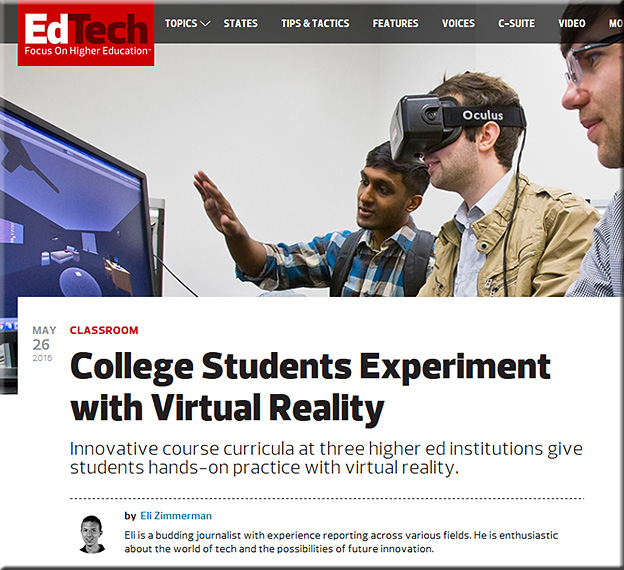
College students experiment with virtual reality— from edtechmagazine.com by Eli Zimmerman Innovative course curricula at three higher ed institutions give students hands-on practice with virtual reality.
The Cleveland Clinic has partnered with Case Western Reserve University to release a Microsoft HoloLens app that allows users to explore the human body using augmented reality technology. The HoloLens is a headset that superimposes computer generated 3D graphics onto a person’s field of view, essentially blending reality with virtual reality.
The HoloAnatomy app lets people explore a virtual human, to walk around it looking at details of different systems of the body, and to select which are showing. Even some sounds are replicated, such as that of the beating heart.