MyLab – A Mixed Reality Chemistry App for the HoloLens
Adobe unveils new Microsoft HoloLens and Amazon Alexa integrations — from geekwire.com by Nat Levy
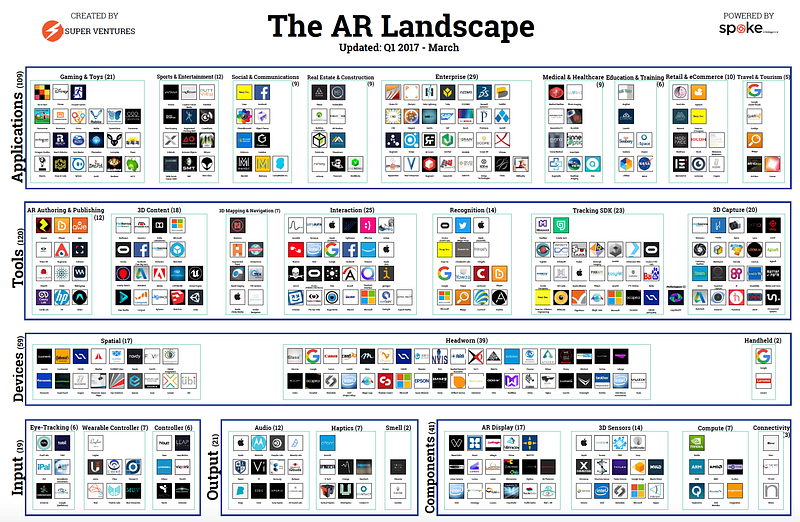
Introducing the AR Landscape — from medium.com by Super Ventures
Mapping out the augmented reality ecosystem
Alibaba leads $18M investment in car navigation augmented reality outfit WayRay — from siliconangle.com by Kyt Dotson
Excerpt:
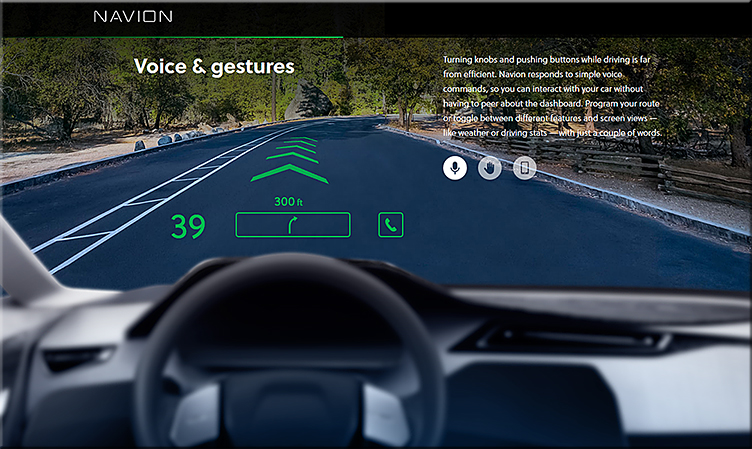
WayRay boasts the 2015 launch of Navion, what it calls the “first ever holographic navigator” for cars that uses AR technology to project a Global Positioning System, or GPS, info overlay onto the car’s windshield.
Just like a video game, users of the GPS need only follow green arrows projected as if onto the road in front of the car providing visual directions. More importantly, because the system displays on the windscreen, it does not require a cumbersome headset or eyewear worn by the driver. It integrates directly into the dashboard of the car.
The system also recognizes simple voice and gesture commands from the driver — eschewing turning of knobs or pressing buttons. The objective of the system is to allow the driver to spend more time paying attention to the road, with hands on the wheel. Many modern-day onboard GPS systems also recognize voice commands but require the driver to glance over at a screen.
Viro Media Is A Tool For Creating Simple Mobile VR Apps For Businesses — from uploadvr.com by Charles Singletary
Excerpt:
Viro Media is supplying a platform of their own and their hope is to be the simplest experience where companies can code once and have their content available on multiple mobile platforms. We chatted with Viro Media CEO Danny Moon about the tool and what creators can expect to accomplish with it.
Listen to these podcasts to dive into virtual reality — from haptic.al by Deniz Ergürel
We curated some great episodes with our friends at RadioPublic
Excerpt:
Virtual reality can transport us to new places, where we can experience new worlds and people, like no other. It is a whole new medium poised to change the future of gaming, education, health care and enterprise. Today we are starting a new series to help you discover what this new technology promises. With the help of our friends at RadioPublic, we are curating a quick library of podcasts related to virtual reality technology.
Psychologists using virtual reality to help treat PTSD in veterans — from kxan.com by Amanda Brandeis
Excerpt:
AUSTIN (KXAN) — Virtual reality is no longer reserved for entertainment and gamers, its helping solve real-world problems. Some of the latest advancements are being demonstrated at South by Southwest.
Dr. Skip Rizzo directs the Medical Virtual Reality Lab at the University of Southern California’s Institute for Creative Technologies. He’s helping veterans who suffer from post-traumatic stress disorder (PTSD). He’s up teamed with Dell to develop and spread the technology to more people.
NVIDIA Jetson Enables Artec 3D, Live Planet to Create VR Content in Real Time — from blogs.nvidia.com
While VR revolutionizes fields across everyday life — entertainment, medicine, architecture, education and product design — creating VR content remains among its biggest challenges.
Excerpt:
At NVIDIA Jetson TX2 launch [on March 7, 2017], in San Francisco, [NVIDIA] showed how the platform not only accelerates AI computing, graphics and computer vision, but also powers the workflows used to create VR content. Artec 3D debuted at the event the first handheld scanner offering real-time 3D capture, fusion, modeling and visualization on its own display or streamed to phones and tablets.
Project Empathy
A collection of virtual reality experiences that help us see the world through the eyes of another
Excerpt:
Benefit Studio’s virtual reality series, Project Empathy is a collection of thoughtful, evocative and surprising experiences by some of the finest creators in entertainment, technology and journalism.
Each film is designed to create empathy through a first-person experience–from being a child inside the U.S. prison system to being a widow cast away from society in India. Individually, each of the films in this series presents its filmmaker’s unique vision, portraying an intimate experience through the eyes of someone whose story has been lost or overlooked and yet is integral to the larger story of our global society. Collectively, these creatively distinct films weave together a colorful tapestry of what it means to be human today.
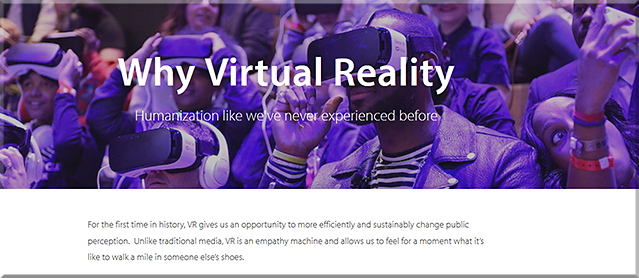
Work in a high-risk industry? Virtual reality may soon become part of routine training — from ibtimes.cok.uk by Owen Hughes
Immersive training videos could be used to train workers in construction, mining and nuclear power.
At Syracuse University, more students are getting ahold of virtual reality — from dailyorange.com by Haley Kim
As Instructors Experiment With VR, a Shift From ‘Looking’ to ‘Interacting’ — from edsurge.com by Marguerite McNeal
Excerpt:
Most introductory geology professors teach students about earthquakes by assigning readings and showing diagrams of tectonic plates and fault lines to the class. But Paul Low is not most instructors.
“You guys can go wherever you like,” he tells a group of learners. “I’m going to go over to the epicenter and fly through and just kind of get a feel.”
Low is leading a virtual tour of the Earth’s bowels, directly beneath New Zealand’s south island, where a 7.8 magnitude earthquake struck last November. Outfitted with headsets and hand controllers, the students are “flying” around the seismic hotbed and navigating through layers of the Earth’s surface.
Low, who taught undergraduate geology and environmental sciences and is now a research associate at Washington and Lee University, is among a small group of profs-turned-technologists who are experimenting with virtual reality’s applications in higher education.
These University Courses Are Teaching Students the Skills to Work in VR — from uploadvr.com
Excerpt:
“As virtual reality moves more towards the mainstream through the development of new, more affordable consumer technologies, a way needs to be found for students to translate what they learn in academic situations into careers within the industry,” says Frankie Cavanagh, a lecturer at Northumbria University. He founded a company called Somniator last year with the aim not only of developing VR games, but to provide a bridge between higher education and the technology sector. Over 70 students from Newcastle University, Northumbria University and Gateshead College in the UK have been placed so far through the program, working on real games as part of their degrees and getting paid for additional work commissioned.
Working with VR already translates into an extraordinarily diverse range of possible career paths, and those options are only going to become even broader as the industry matures in the next few years.
Scope AR Brings Live, Interactive AR Video Support to Caterpillar Customers — from augmented.reality.news by Tommy Palladino
Excerpt:
Customer service just got a lot more interesting. Construction equipment manufacturer Caterpillar just announced official availability of what they’re calling the CAT LIVESHARE solution to customer support, which builds augmented reality capabilities into the platform. They’ve partnered with Scope AR, a company who develops technical support and training documentation tools using augmented reality. The CAT LIVESHARE support system uses Scope AR’s Remote AR software as the backbone.
New virtual reality tool helps architects create dementia-friendly environments — from dezzen.com by Jessica Mairs
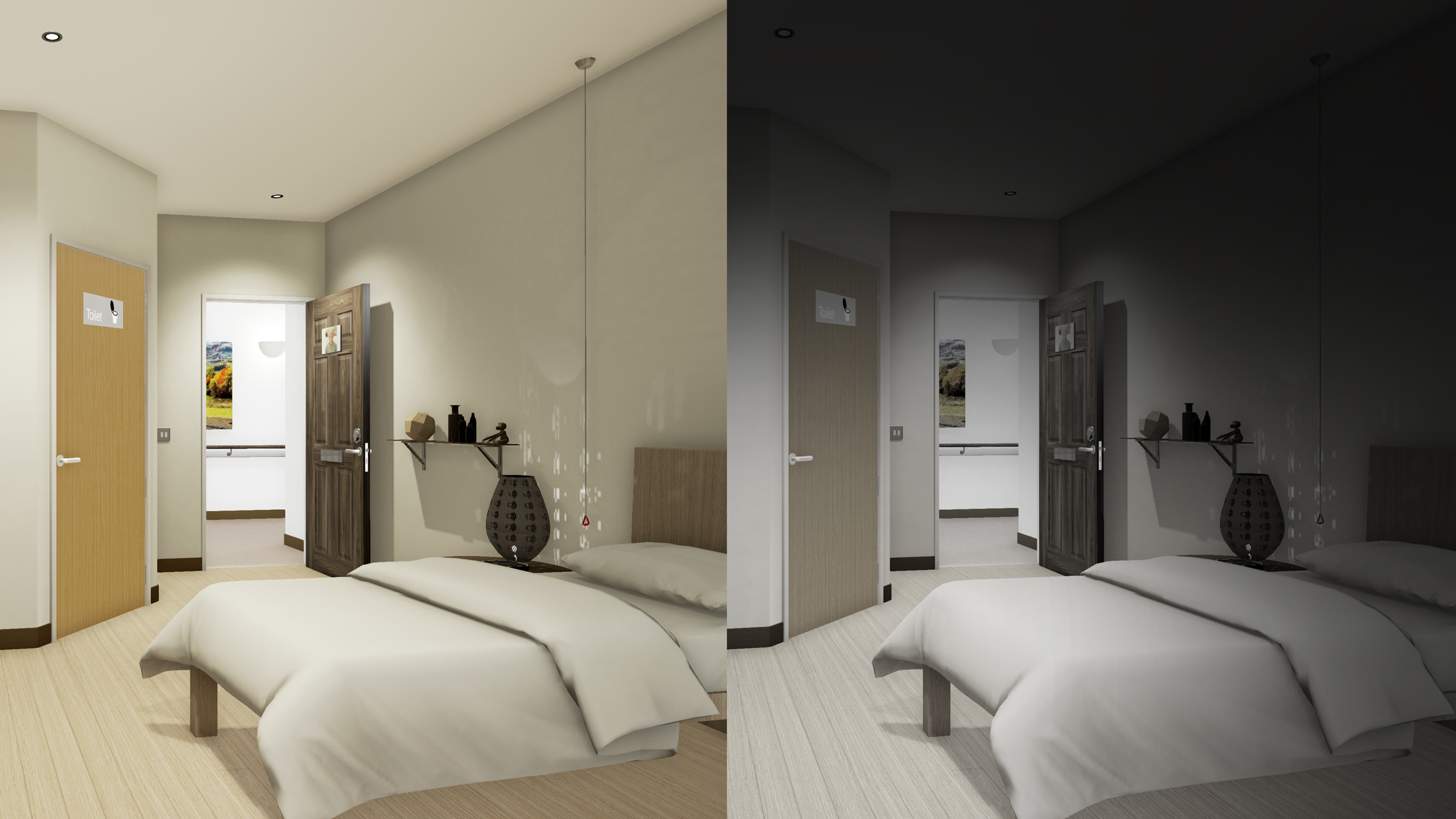
Visual showing appearance of a room without and with the Virtual Reality Empathy Platform headset
From DSC:
As I was putting together a PowerPoint slideshow for our Teaching & Learning Digital Studio, I figured I might as well make it available for others to see and use as well. So here it is as a PowerPoint slideshow (.ppsx file). Alternatively, if this works better for you on that end, here’s a PDF file of that information.
From DSC:
At the Next Generation Learning Spaces Conference, held recently in San Diego, CA, I moderated a panel discussion re: AR, VR, and MR. I started off our panel discussion with some introductory ideas and remarks — meant to make sure that numerous ideas were on the radars at attendees’ organizations. Then Vinay and Carrie did a super job of addressing several topics and questions (Mary was unable to make it that day, as she got stuck in the UK due to transportation-related issues).
That said, I didn’t get a chance to finish the second part of the presentation which I’ve listed below in both 4:3 and 16:9 formats. So I made a recording of these ideas, and I’m relaying it to you in the hopes that it can help you and your organization.
Presentations/recordings:
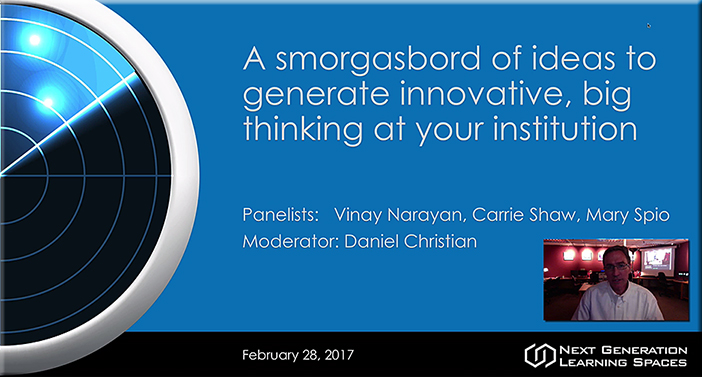
Audio/video recording (187 MB MP4 file)
Again, I hope you find this information helpful.
Thanks,
Daniel
From DSC:
In the future, will Microsoft — via data supplied by LinkedIn and Lynda.com — use artificial intelligence, big data, and blockchain-related technologies to match employers with employees/freelancers? If so, how would this impact higher education? Badging? Credentialing?
It’s something to put on our radars.

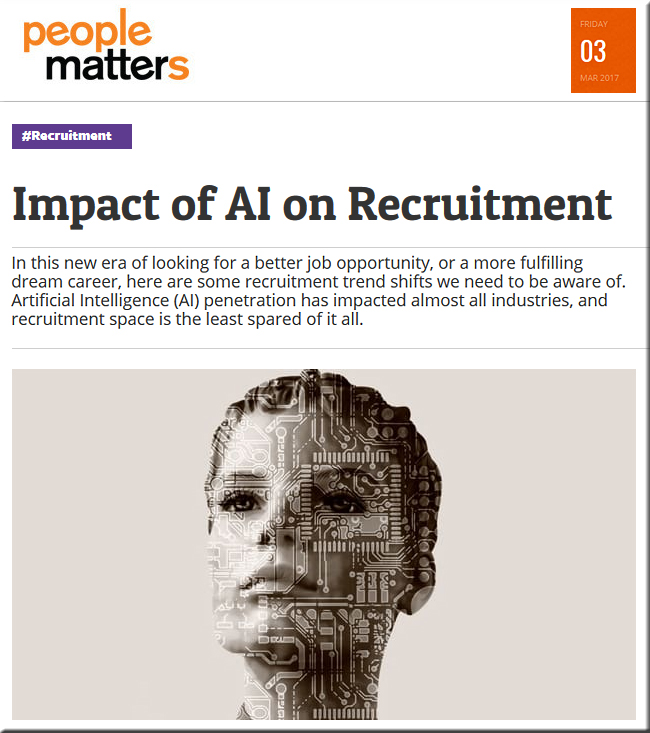
Excerpt:
A sneak peak on Recruitment in AI era
With global talent war at its peak, organisations are now looking at harnessing Artificial Intelligence (AI) capabilities, to use search optimisation tools, data analytics, and talent mapping to reach out to the right talent for crucial job roles. Technology has been revolutionising the way recruitment works with the entire process being now automated with ATS and other talent management softwares. This saves time and costs involved with recruiting for HR managers, whilst allowing them to do away with third-party service providers for talent sourcing such as employment bureaus and traditional recruitment agencies. With modern talent acquisition technology empowered by AI, the time taken for recruitment is halved and search narrowed to reach out to only the best talent that matches job requirements. There is no need for human intervention and manual personality matching to choose the best candidates for suitable job roles.
…
Talent mapping, with the help of big data, is definitely the next step in recruitment technology. With talent mapping, recruiters can determine their candidate needs well in advance and develop a strategic plan for hiring long-term. This includes filling any skill gaps, bolstering the team for sudden changes in the workplace, or just simply having suitable talent in mind for the future. All of these, when prepared ahead of time, can save companies the trouble and time in future. Recruiters who are able to understand how AI works, harness the technology to save on time and costs will be rewarded with improved quality of hires, enhanced efficiency, more productive workforce and less turnover.
Video via:
Acer’s Windows Holographic headset will ship to developers this month — from theverge.com by Nick Statt
From DSC:
At the recent Next Generation Learning Spaces Conference, in my introductory piece for our panel discussion, I relayed several ideas/areas that should be on our institutions’ radars. That is, at least someone at each of our institutions of higher education should be aware of these things and be pulse-checking them as time goes by.

One of these ideas/areas involved the use of blockchain technologies:
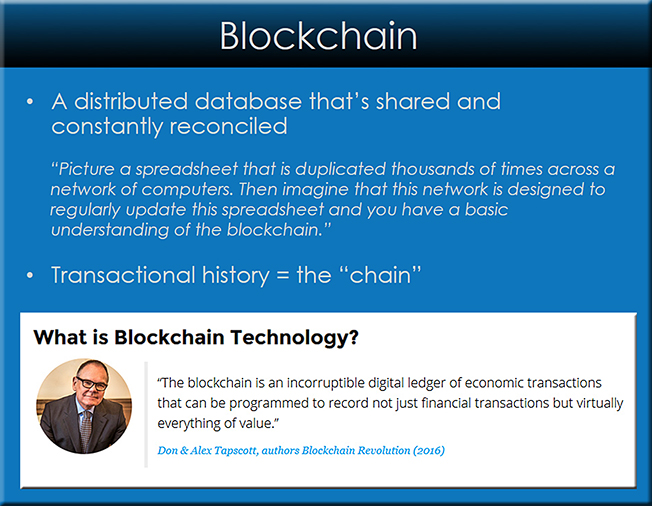
If #blockchain technologies are successful within the financial/banking world, then it’s highly likely that other use cases will be developed as well (i.e., the trust in blockchain-enabled applications will be there already).
Along those lines, if that occurs, then colleges and universities are likely to become only 1 of the feeds into someone’s cloud-based, lifelong learning profile. I’ve listed several more sources of credentials below:
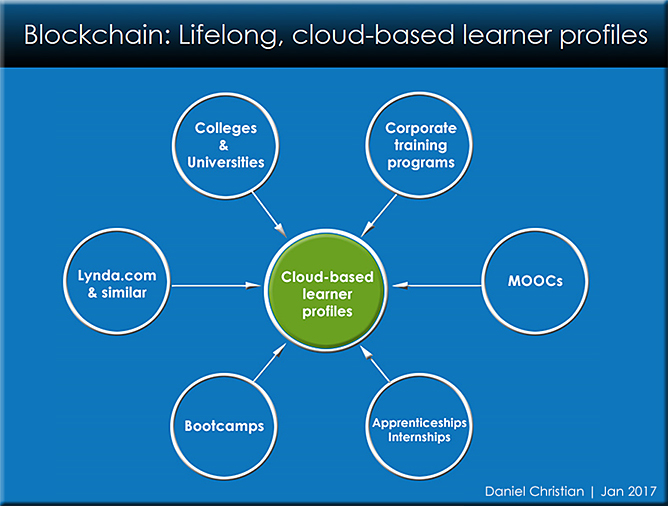
Given the trend towards more competency-based education (CBE) and the increased experimentation with badges, blockchain could increasingly move onto the scene.
In fact, I could see a day when an individual learner will be able to establish who can and can’t access their learner profile, and who can and can’t feed information and updates into it.
Artificial intelligence and big data also come to mind here…and I put Microsoft on my radar a while back in this regard; as Microsoft (via LinkedIn and Lynda.com) could easily create online-based marketplaces matching employers with employees/freelancers.
Along these lines, see:
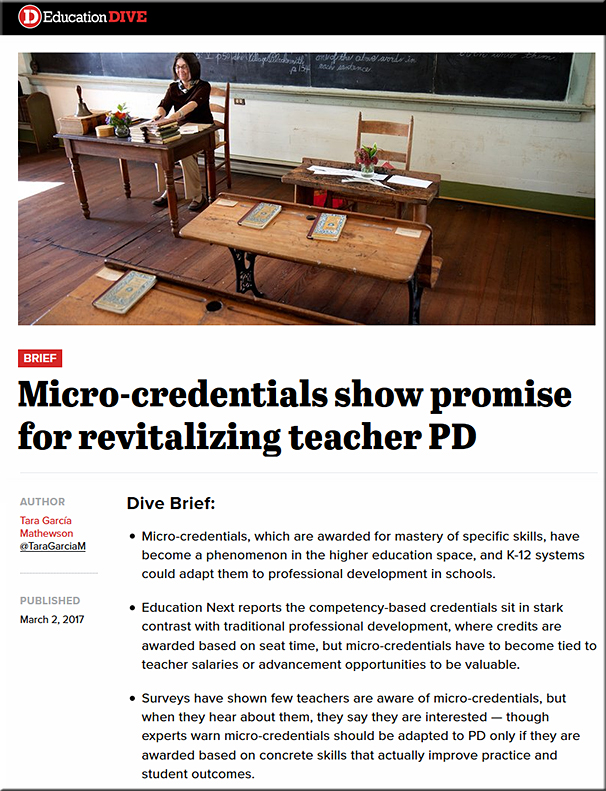
Addendums added on 3/4/17, that show that this topic isn’t just for higher education, but could involve K-12 as well:
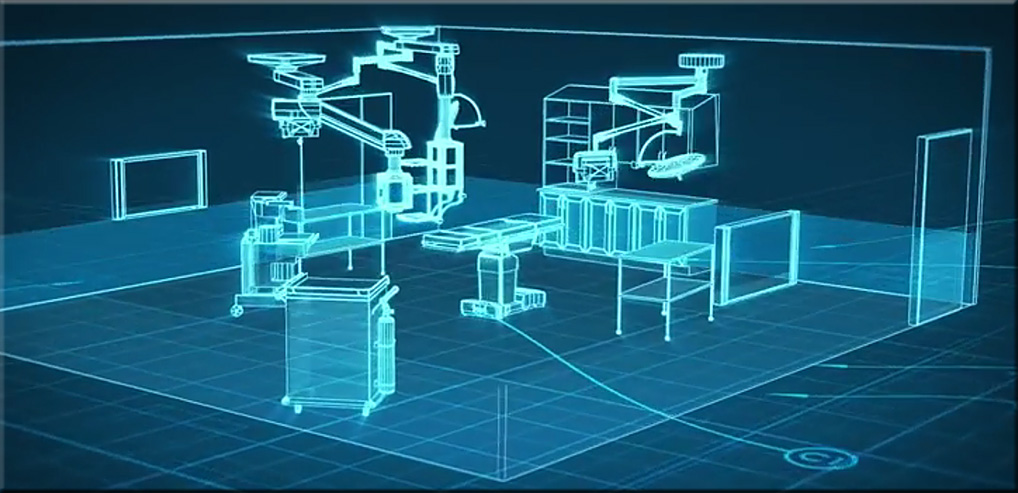
Stryker is using Microsoft’s HoloLens to design operating rooms of the future — from digitaltrends.com by Mark Coppock
Excerpt:
Augmented reality has a number of increasingly important applications in a variety of industries, from engineering to retail to interior design. One of the most exciting applications of AR, and the one that promises perhaps the most immediate impact on our lives, is in medicine, where AR can help educate, diagnose, and even treat disease in new and innovative ways.
Microsoft’s HoloLens AR solution is perhaps the most advanced today in terms of becoming a part of the real world, even while it’s not yet a retail option aimed at consumers. Global medical technology company Stryker, which is using HoloLens to redesign the operating room, provides a clear example of the potential of AR in this setting.
From DSC:
Microsoft uses the term “mixed reality” when they are discussing their Hololens product:
Using HoloLens and Stryker’s new By Design solution, hospital stakeholders are now able to envision the ideal operating room configuration with the power of holograms and the benefit of mixed reality.
Microsoft Accelerates HoloLens V3 Development, Sidesteps V2 — from thurrott.com by Brad Sams

Excerpt:
Back when the first version of Hololens came out, Microsoft created a roadmap that highlighted several release points for the product. This isn’t unusual, you start with the first device, second generation devices are typically smaller and more affordable and then with version three you introduce new technology that upgrades the experience; this is a standard process path in the technology sector. Microsoft, based on my sources, is sidelining what was going to be version two of HoloLens and is going straight to version three.
…
While some may see this as bad news that a cheaper version of HoloLens will not arrive this year or likely next year, by accelerating the technology that will bring us the expanded field of view with a smaller footprint, the new roadmap allows for a device that is usable in everyday life to arrive sooner.
Microsoft is playing for the long-term with this technology to make sure they are well positioned for the next revolution in computing. By adjusting their path today for HoloLens, they are making sure that they remain the segment leader for years to come.
The Most Innovative Companies of 2017 — from fastcompany.com
Excerpt:
This year marks the 10th edition of the Fast Company World’s Most Innovative Companies ranking. Our reporting team sifts through thousands of enterprises each year, searching for those that tap both heartstrings and purse strings and use the engine of commerce to make a difference in the world. Impact is among our key criteria.
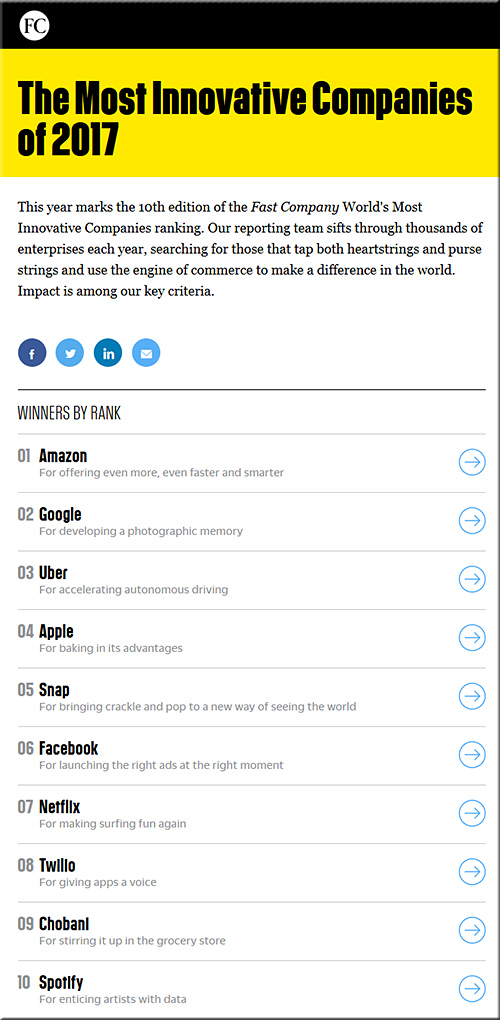
Speaking of innovation, this article is about innovation within the world of higher education:
Crafting an Innovation Landscape — from er.educause.edu by Shirley Dugdale and Brian Strawn
Key Takeaways
LinkedIn debuts new desktop version with ‘chatbots’, new search and more — from techcrunch.com by Ingrid Lunden
Excerpts:
After a short preview in September last year, and the small matter of getting acquired for $26.2 billion by Microsoft, today LinkedIn — the social network for the professional world with close to 470 million users — is finally unveiling its redesign of its desktop site, complete with a simpler, app-like look; a new messaging experience that appears as a pop-up on the homepage; and updated search features. LinkedIn said the new desktop version will be rolling out globally over the next few weeks.
…
Two of the most notable changes in this new version are how LinkedIn is approaching private messaging, and also how it’s moving to make its public messaging — its feeds — better and more used.
…
And now, LinkedIn is introducing its own form of ‘chatbots’. To be clear, I’m referring to these as chatbots, but LinkedIn is not — it doesn’t follow you and steer the whole conversation, but it’s a little helper that will suggest things to talk about to “break the ice” with people. It will also suggest people you can chat with at companies if you aren’t even at the ice-breaking point.
The feed itself is going to be filled with significantly more algorithms to suggest content to you — both organic and sponsored, “native” content — a new ad unit that LinkedIn is hoping to expand. Among the organic content, you’ll be seeing more suggestions of people to follow, as well as more content from influencers alongside news curated by LinkedIn itself and its editorial team.
CES 2017: Key trends — from jwtintelligence.com by Sheperd Laughlin
Excerpt:
Fifty years since the inception of CES, “consumer electronics” doesn’t begin to describe the full scope of the event.
“It’s no longer a technology show; it’s a connected life show and an advertising and media show,” said Shawn DuBravac of CTA, the trade organization that organizes CES. And it changes quickly: three years ago, he said, 20% of this year’s exhibitors didn’t exist.
This year, among big tech companies Amazon was the clear winner—though Amazon itself kept a low profile, letting others announce a multitude of new uses for Alexa, its virtual assistant.
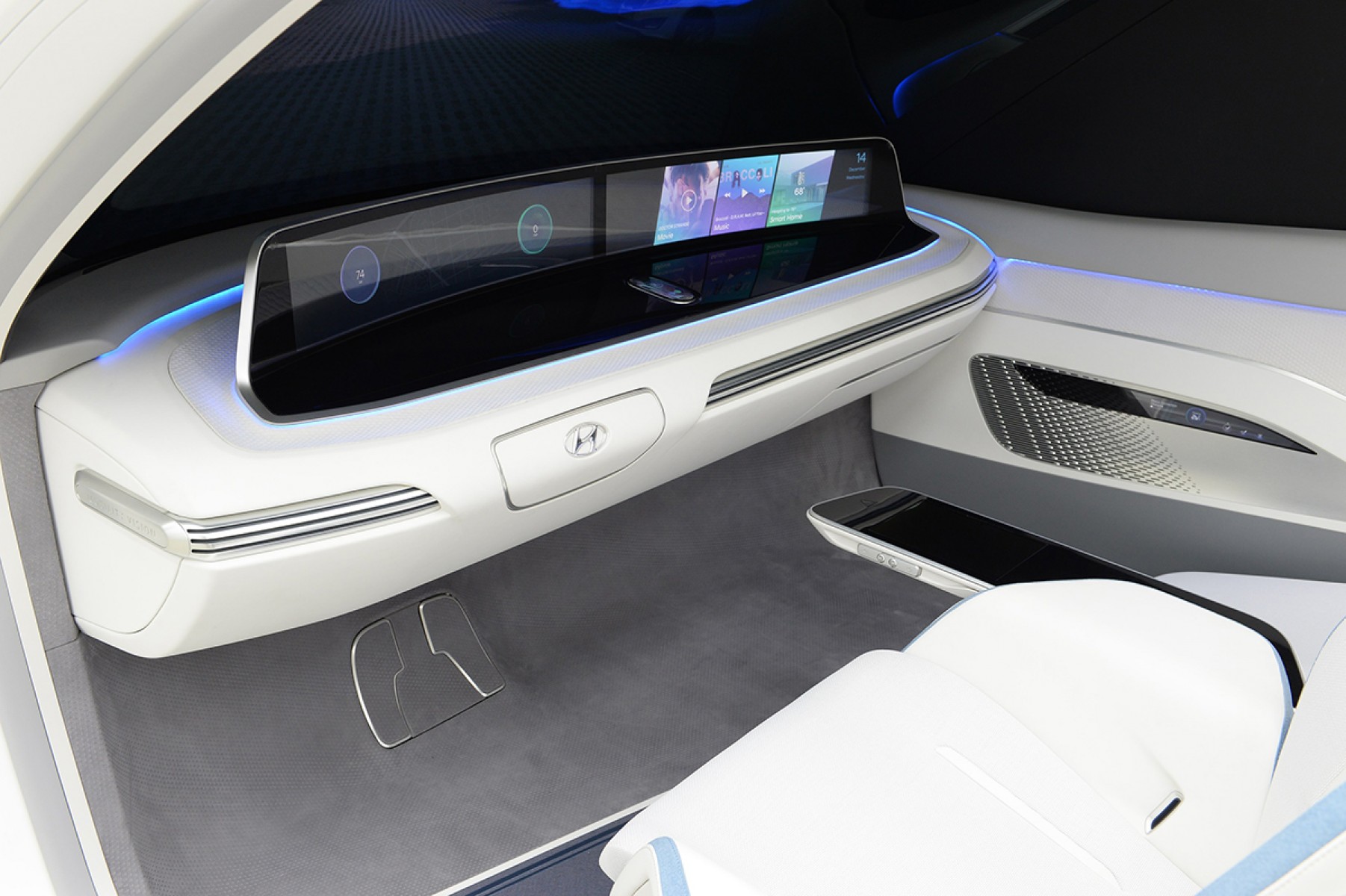
Electric and self-driving cars were everywhere. Taking a page from Apple and Microsoft, which pulled out of CES years ago, Tesla sat out the conference as rival auto makers tried to mount convincing challenges to its dominance of the electric car market.
What about exciting new “gadgets”? Farhad Manjoo of the New York Times declared them “gone” in December, killed by the iPhone and cheap knockoffs. Category-changing devices were in short supply at the show, and Alexa, this year’s most talked-about product, was actually an invisible service.
But there were signs that Internet of Things products that had once been isolated were talking to each other in interesting new ways. And devices aimed at specific needs and populations—from new mothers to vacationers to the disabled—showed that gadgets might not be done for just yet.
Addendum: