Learning channels of the future will offer us more choice. More control. [Christian]


From DSC:
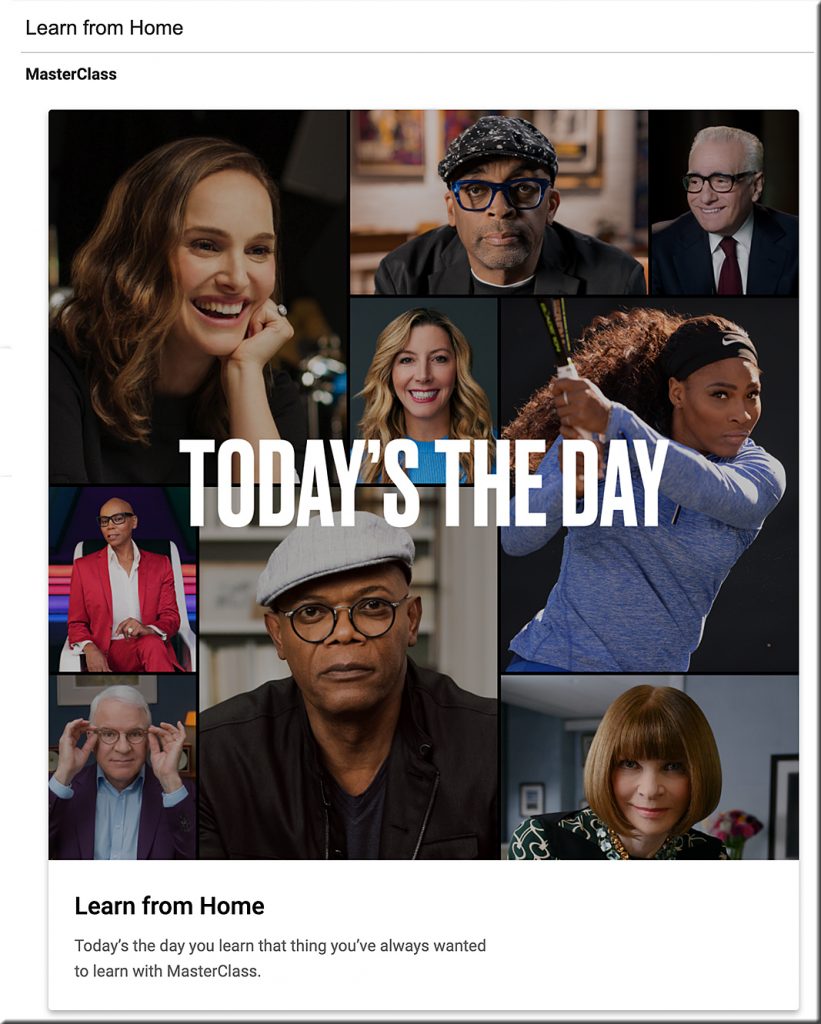
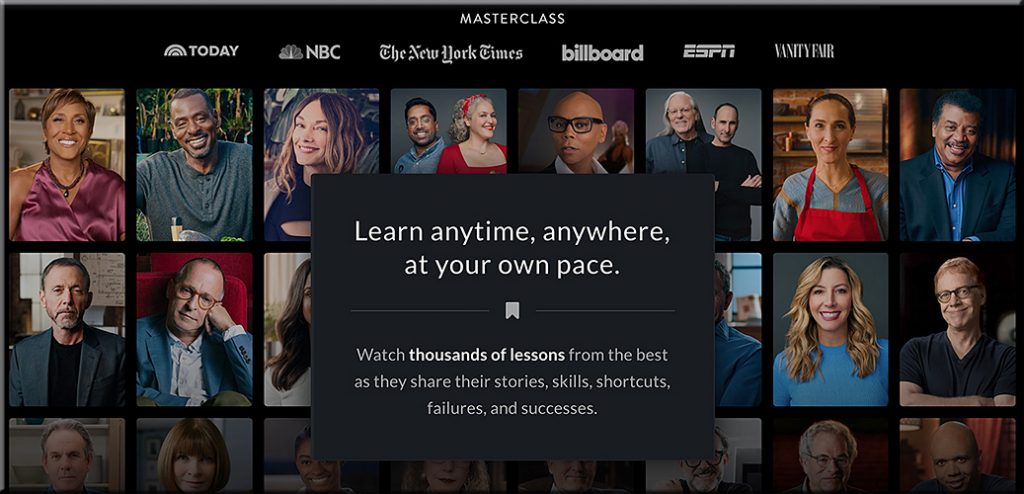
And this phenomenon of learning from the living [class] room will likely pick up steam; some learning-related services are already heading that way.


Learning from home -- masterclass dot com

Learning from home -- masterclass dot com


Also see:

Preparing Students for a Lifelong Disruptive Future: The 60-Year Curriculum — from evolllution.com by Chris Dede | Professor of Learning Technologies in the Graduate School of Education, Harvard University and John Richards | Professor in the Graduate School of Education, Harvard University

Although written before the pandemic, a just-published book, The 60-Year Curriculum: New Models for Lifelong Learning in the Digital Economy (Dede and Richards, 2020), describes the looming challenge/opportunity of a coming, epic half-century whose intensity of disruption will rival the historic period civilization faced from 1910-1960: two world wars, a global pandemic, a long-lasting economic depression and unceasing conflicts between capitalism and communism.
…
In our tactical responses to moving teaching online because of the pandemic, we have the strategic opportunity to develop a new model that blends higher and continuing education and realizes the potential of next-generation methods of instruction and assessment (National Academy of Sciences, Engineering and Medicine, 2018) to focus on lifelong learning.


Homework gap a growing focus for nonprofits, lawmakers as closures persist — from educationdive.com by Shawna De La Rosa

Excerpt:

Dive Brief:

  • After declaring success in the goal of connecting most schools to fast, reliable internet, nonprofit EducationSuperHighway is turning its attention to the “homework gap,” according to The Hechinger Report. More than 9 million students still lack internet access at home.
  • Evan Marwell, CEO and founder of EducationSuperHighway, said school closures triggered a change in attitude about the importance of home internet service for students. Now, some lawmakers indicate they are willing to spend billions of dollars to bridge that gap.
  • The organization launched digitalbridgeK12.org to provide detailed information on the problem, as well as recommendations for policymakers and school leaders, and advice and best practices on topics like how to collect data on connectivity at the district level or purchase in bulk.
 

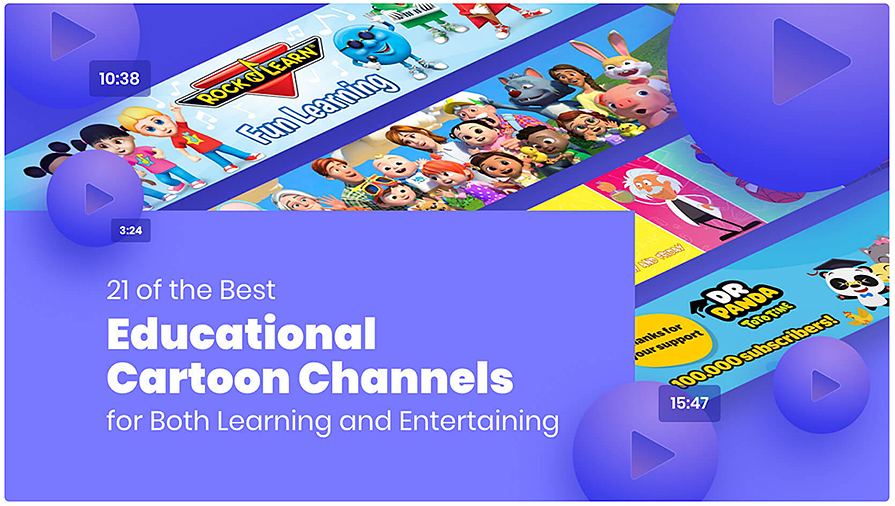
21 of the Best Educational Cartoon Channels for Both Learning and Entertaining

21 of the Best Educational Cartoon Channels for Both Learning and Entertaining — from graphicmama.com by Lyudmil Enchev

Excerpt:

Whether you are teaching online or homeschooling there are plenty of options available to liven up your lessons and vary the approach. One such method is educational animations or cartoons. They have the immediate benefit of attractive to the child or young learner, they don’t see it as work. The skill, style, and variation available for free is incredibly impressive, there are channels aimed at all age groups and covering an enormous range of subjects from the curriculum to social skills, often mixed together. Now is exactly the right time to take advantage and fill their screen time with something entertaining, fun, and worthwhile.

Also see:


Remote Therapy for Special Needs Students Finally Viewed as Viable Option — from thejournal.com by Dian Schaffhauser

Excerpt:

“If there is a silver lining to this terrible virus, it is that out of necessity school districts have become more open to remote learning,” noted CEO Geneve Milne in a blog post. “This is a really important evolution because now school districts that have struggled to recruit speech language pathologists are likely to be more comfortable offering teletherapy to their students. This will help ease the lack of trained, licenses speech-language pathologists available to districts and help districts be more prepared when external forces keep students away from their special needs educator.”


From DSC:
THIS is what active learning looks like for professors, teachers, and trainers who have been making the switch to remote/online-based teaching and learning.


What is unschooling? A parents guide to child-led home education — from yahoo.com by Nicole Harris

Excerpt:

Unschooling is a form of homeschooling that emphasizes a child’s interests, rather than a structured academic curriculum. “It’s a curiosity-led approach to education that relies on the natural creativity of young people,” says Krystal Dillard, co-director of the Natural Creativity Center, an unschooling center in Philadelphia. “There is no prescribed curriculum; rather, children are empowered to explore with adults offering guidance along the way.”

Parents who practice unschooling don’t set aside hours or places for education. Instead, they encourage learning as a natural part of everyday life. “As a result, self-directed education looks different for everyone, and can constitute anything from climbing a tree to building a computer to producing a film,” says Dillard. Unschooling can happen in the home, in the yard, at unschooling centers, or virtually anywhere else.

“As a result, self-directed education looks different for everyone, and can constitute anything from climbing a tree to building a computer to producing a film,” says Dillard. Unschooling can happen in the home, in the yard, at unschooling centers, or virtually anywhere else.


From DSC:
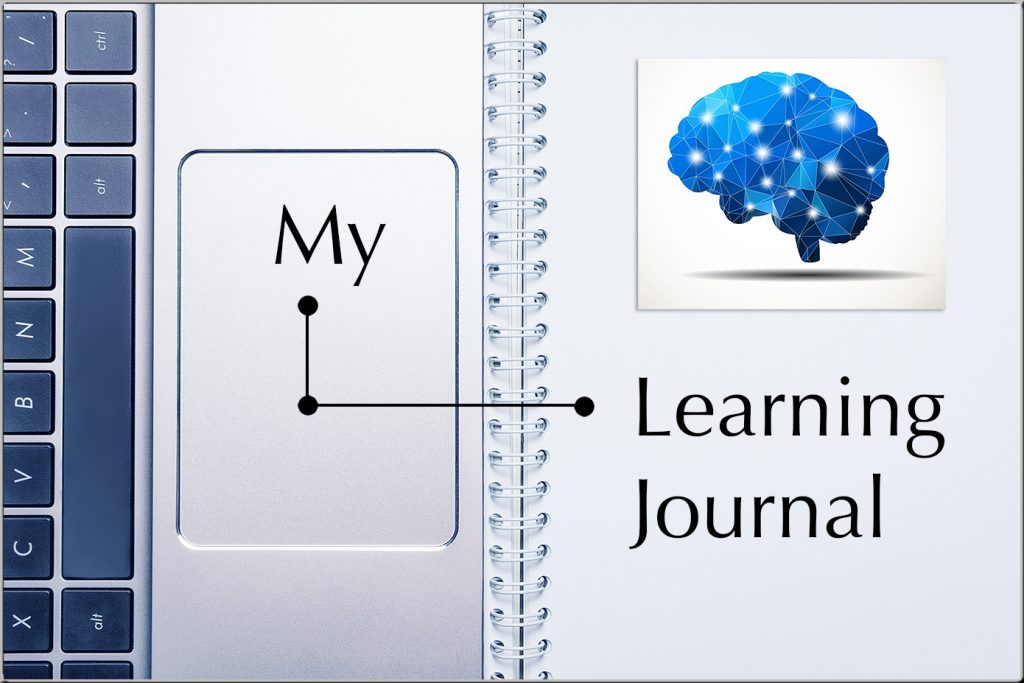
Here’s an idea that I’ve been thinking about for quite some time now. It’s not necessarily a new idea, but the seed got planted in me by a former colleague, Quin Schultze (which I blogged about in January of 2018). I’m calling it, “My Learning Journal.” The purpose of this device is to promote your metacognition  — helping you put things into your own words and helping you identify your knowledge gaps.

I realize that such a learning strategy/tool could take some time to complete. But it could pay off — big time! Give it a try for a few weeks and see what you think.

And, with a shout-out to Mr. James McGrath, the President of the WMU-Cooley Law School, the article listed below explains the benefits of taking the time for such reflection:

Reflective learning – reflection as a strategic study technique — from open.edu

Excerpts:

Rather than thinking of reflection as yet another task to be added to your ‘to do’ list or squeezed into a busy study schedule, view it as something to practice at any stage. The emphasis is on being a reflective learner rather than doing reflective learning. 

Developing a habit of reflective learning will help you to:

  • evaluate your own progress
  • monitor and manage your own performance
  • self-motivate
  • keep focus on your learning goals
  • think differently about how you can achieve your goals by evaluating your study techniques, learning strategies and whether these best fit your current needs, identifying your skills development needs or gaps in knowledge
  • think about and overcome what may be blocking your learning by using a different approach, or setting more pragmatic (realistic/achievable) goals
  • support and enrich your professional practice ensuring that you are better placed to respond to and manage new, unexpected and complex situations – a key requirement at Master’s level.

From DSC:
Pastors, trainers, K-12 educators, student teachers, coaches, musical teachers, and others: Perhaps a slightly modified version of this tool might be beneficial to those with whom you work as well…?

And for educators and trainers, perhaps we should use such a tool to think about our own teaching and training methods — and what we are (or aren’t) learning ourselves.

Addendum on 5/14/20:

Perhaps someone will build a bot for this type of thing, which prompts us to reflect upon these things. Here are some examples of what I’m talking about or something like Woebot, which Jeremy Caplan mentioned here.


Dawn of the Age of Digital Learning [Moe & Rajendran]

Dawn of the Age of Digital Learning — from medium.com by Michael Moe and Vignesh Rajendran
An Acceleration of Trends That Have Been Building for Years

Excerpts:

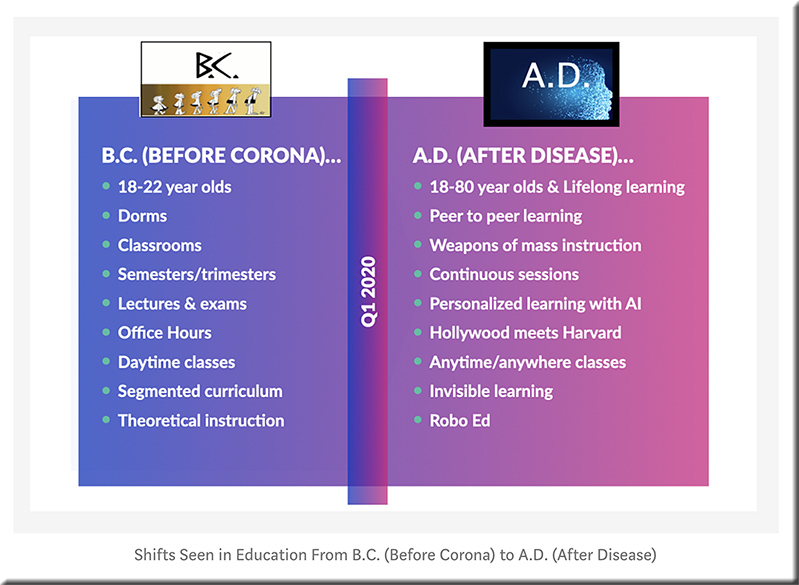
Some of these new online learners will sink. Some will crawl out of the pool and never go back in. But we believe most will get the hang of it, like it, and will no longer be confined to the shore. Effectively, the genie is not going back in the bottle… digital learning has come of age. We have a B.C. (Before Coronavirus) world transitioning to A.D. (After Disease).
…

The Coronavirus has brought forth the Dawn of the Age of Digital Learning — a time for builders to create the platforms, tools, and technology to propel society forward.

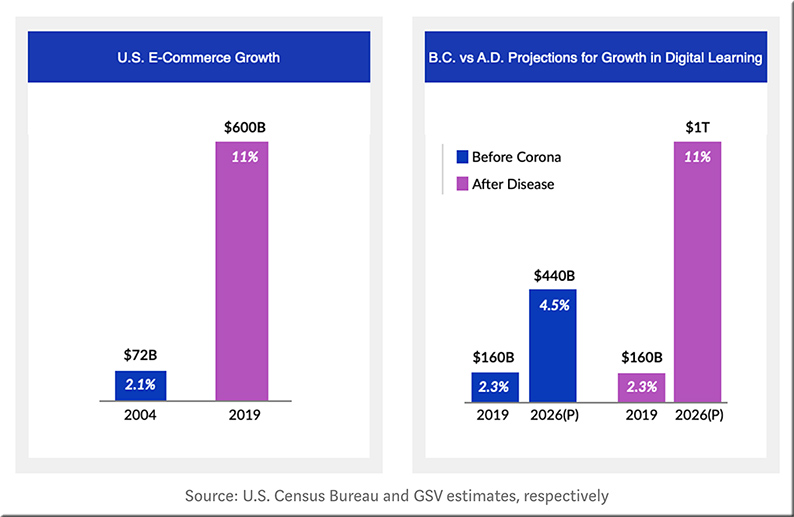
We now believe Digital Learning will reach 11% of the education market by 2026, representing a ~$1 Trillion market and a 30% CAGR, close to double the rate of growth projected in Before Covid-19


From DSC:
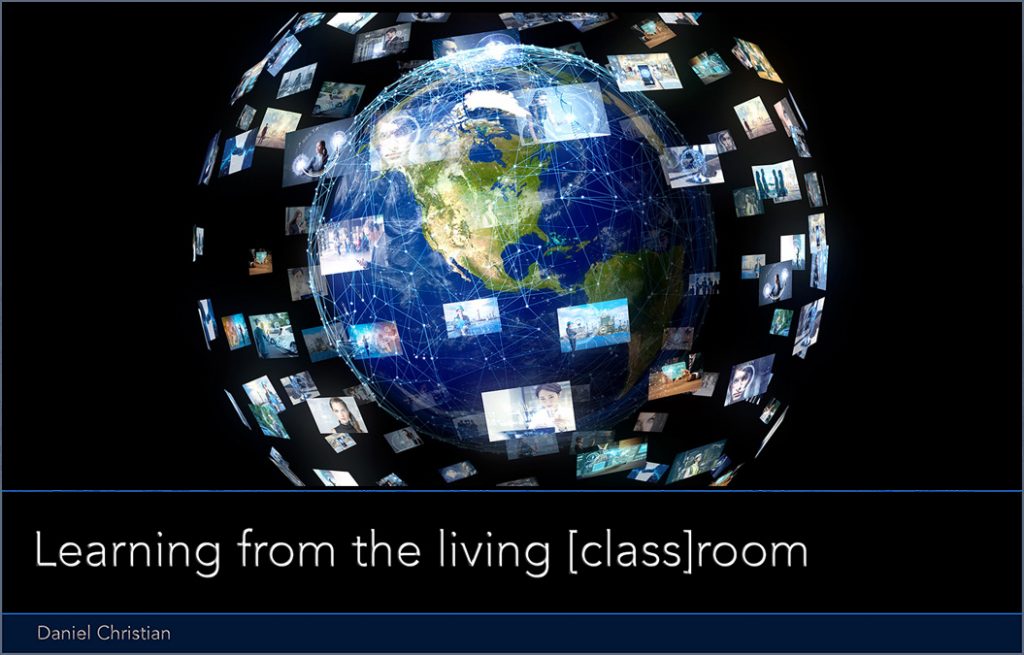
So many of the things in this article reminded me of the things, developments, trends, needs, and possibilities that I have been tracking for years in this vision of a next-generation, global learning platform that I have entitled:

We need a next gen learning platform -- I call this vision Learning from the Living Class Room

My guess is that the large, primarily online institutions/organizations will come out of this ordeal in much better shape than the majority of the traditional institutions of higher education. It won’t matter what faculty members at liberal arts institutions think about online learning. And as much as some faculty members won’t like to see or hear about it, students will no longer need for such faculty members to be sold on it. Students will come to realize that it was under those faculty members watch that their own enormous gorillas of debt were created. And they are beginning to witness and hear that it’s taking (or will take) older family members decades to pay down their debt.

So, I think that the market will decide the fate of many traditional institutions of higher education. Lifelong learners will vote with their feet — and fingers actually, by typing in a new URL — and simply move to the SNHU’s, ASU’s, UMass Online’s, WGU’s, and Liberty University’s of the world. After 5-10 years of investments in online learning, there will likely be some pretty amazing learning experiences out there.


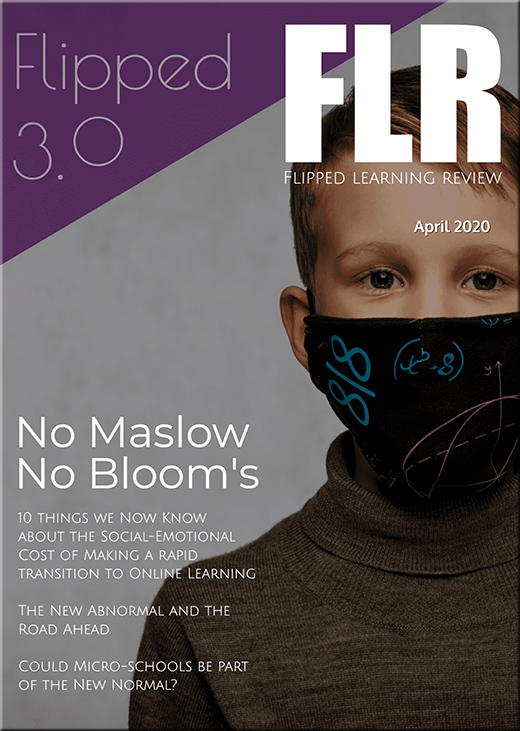
Flipped Learning -- April 2020 -- from flr.flglobal.org

The April issue of FLR looks at how we’re all managing the social-emotional cost of making a rapid transition to online learning.

Featured articles include:

  • Teaching From Home Is Exhausting: How Are You Keeping Your Spirits Up?
  • Why Is Online Teaching and Learning So Awesome and So Awful?
  • 10 Ways to Help Students Cope With How COVID-19 Is Disrupting School Life.
  • What Teachers Need From Administrators While Shifting to Remote Learning.
  • Why the Two Most Important Online Teaching Skills Today Are Grace and Choice.
  • We Miss Seeing Our Students, How Can We Fill That Hole in Our Soul?
  • Unmasking the Social-emotional Cost of Going Online Overnight?
  • Teaching During a Pandemic Is Fragile: Self-care Is Good, Self-compassion Is Better.
 

How the research on learning can drive change — from gettingsmart.com by Chris Sturgis

Excerpt (emphasis DSC):

#2 Learning results from the interplay of cognition, emotion, and motivation.
The brain does not clearly separate cognitive from emotional functioning so that optimal learning environments will engage both. It’s important that students feel safe if learning is to be optimized. When we are afraid, our amygdala becomes activated making it harder to learn. Do students feel valued? Relationships matter in creating a culture of inclusivity and belonging. Are schools designed so that teachers and professors have the opportunity to build strong relationships with students? Do students feel that the school and teachers want them to be successful? Do they have chances to receive feedback and revise or do grading practices simply judge them?


From DSC:
Two instances — plus a simmering question — instantly stand out in my mind when I read the above paragraph.

First instance:
It was years ago and I was working at a Fortune 500 company outside of Chicago. I was given the chance to learn how to program in one of the divisions of this company. I was in a conference room with my brand new boss. I had asked him a question about a piece of code, which clearly must have let him know I had some serious misunderstandings.

But instead of being patient, he grew increasingly frustrated at my lack of understanding. The madder he got, the worse my learning became. My focus shifted from processing the expected syntax of the code — and the content/instruction overall that he was trying to relay — to almost completely being concerned with his anger. My processing shut down and things deteriorated from there.

Second instance:
My mom was a classical piano teacher for decades. Though she was often loved by her students, she could be very tough, strong, and forceful. (This was true of several of my siblings’ music teachers as well.) Most of the time, she developed wonderful, strong relationships with the vast majority of her students, many of which came back to our house around Christmastime / New Year’s to visit with her (even long after “graduating”).

I mention that as background to a different context…when I observed my mom trying to teach one of my nieces how to do a math problem in the kitchen of our old house. Again, the teacher in this case kept getting increasingly frustrated, while the student kept shrinking back into their shell…trying to deflect the increasingly hot anger coming at them. The cognitive processing stopped. The amount of actual learning taking place quickly declined. I finally intervened to say that they should come back to this topic later on.

(The counselors/therapists out there would probably rightly connect these two scenarios for what was happening in my mind (i.e., not wanting to deal with the other person’s growing anger). But this applies to many more of us than just me, I’m afraid.)

A simmering question involving law schools and a common teaching method:
In law schools, one of the long-standing teaching methods is the Socratic Method.

Depending upon the professor and their teaching style, one student could be under intense pressure to address the facts, rules, the legal principles of a case, and much more. They often have to stand up in front of the class.

In those instances, I wonder how much capacity to actually process information gets instantly reduced within many of the students’ brains when they get the spotlight shown on them? Do the more introverted and/or less confident students start to sweat? Do their fear levels and heart rates increase? With the issue of having other students attempting to learn from this grilling aside, I wonder what happens to the amygdalas of the students that were called upon?

You can probably tell that I’m not a big fan of the Socratic Method IF it begins to involve too much emotion…too much anger or fear. Not good. The amount of learning taking place can be significantly impacted.

A professor, teacher, or trainer can’t know all of the underlying background, psychology, personality differences, emotional makeup, and experiences of each learner. But getting back to the article, I appreciate what the author was saying about the importance of establishing a SAFE learning environment. The more fear, anger, and a sense of being threatened or scared are involved, the less learning/processing can occur.
 

Healthy looks different on every body...and learning looks different with every mind.


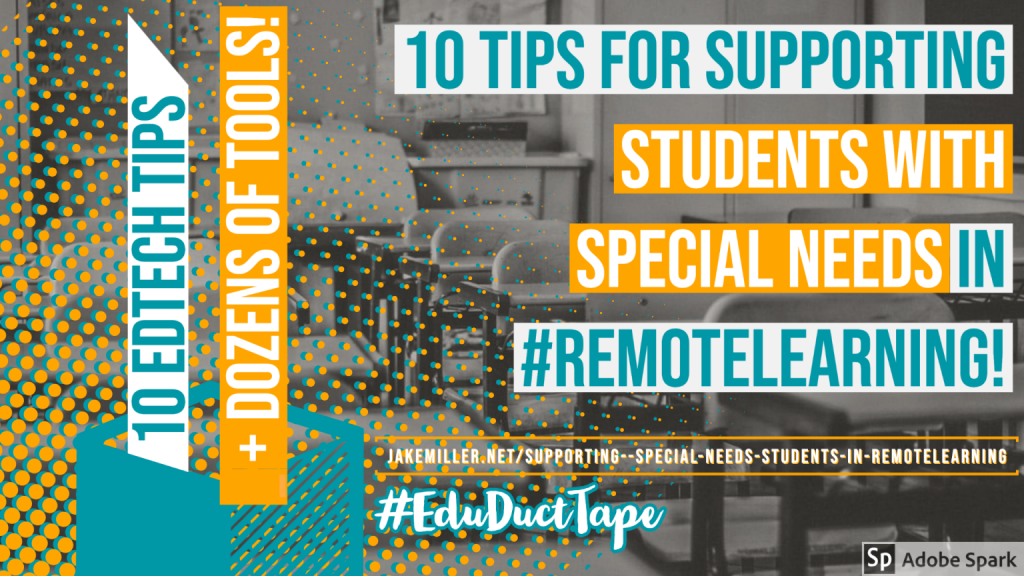
10 Tips for Supporting Students with Special Needs in #RemoteLearning — from jakemiller.net by Jake Miller

Excerpt:

How can we support learners with special needs in remote learning?

While, certainly, some educators are doing great things to support these students, from my observations, this has taken a backseat to other elements of remote learning.  And these students NEED OUR HELP.

Unfortunately, I am not an expert in special education, accessibility features or assistive technology. I am, however, skilled at asking other people to share their expertise. ? So, in episode 40 of the Educational Duct Tape podcast and in the 4.8.20 #EduDuctTape Twitter Chat I asked educators one simple question:

How can we support learners with special needs in remote learning?

And they DELIVERED. I mean, the awesome suggestions and resources, all from a perspective of support rather than judgment, POURED in. And so, here they are.

10 Tips for Supporting Students with Special Needs in Remote Learning


Student-Centered Remote Teaching: Lessons Learned from Online Education — from  er.educause.edu by Shannon Riggs

Excerpt:

Student-content interaction is all about having students DO something with the course content or topic. Reading and listening to lectures will be part of many classes, but the passive receipt of information isn’t sufficient to help students engage with the course and meet course learning outcomes. Instead, we should create opportunities for active learning, which is when students DO something meaningful related to the course content and then reflect on their learning.

After students complete a course reading, ask them to do a follow-up assignment. Here are a few examples:

  • Write a summary.
  • Create an annotated visual on a PowerPoint slide that shows your key take-away from the reading.
  • List five of your take-aways and one question you have based on the reading.
  • Identify what you as a reader find to be the clearest point in the reading and the muddiest point
  • Diagram a process.
  • Make an infographic.
  • Write an op-ed based on the content.

After students attend a synchronous lecture via web conference, ask them to complete a follow-up activity:

  • Participate in a “think-pair-share” activity: The instructor poses a question, asks students to jot some notes down independently to form initial thoughts, distributes students into breakout rooms to discuss, and then pulls the class back together as a group to discuss and synthesize.
  • Complete a poll to check comprehension.
  • Illustrate ideas on the web conference whiteboard.
  • Flip the web conference “lecture” by asking students to come prepared to discuss topics they have already read up on.
  • Give students the opportunity to lead a discussion.
 

From DSC:
Some of the areas likely to see such tools integrated into their arenas, operations, and ecosystems:

 
© 2025 | Daniel Christian