


Check out @mediagazer, which is like Techmeme, but for content industries/journalism: https://t.co/7nWaAKglCe
— Techmeme (@Techmeme) September 24, 2021
Check out @mediagazer, which is like Techmeme, but for content industries/journalism: https://t.co/7nWaAKglCe
— Techmeme (@Techmeme) September 24, 2021
Striking Photojournalism Shots from the Andrei Stenin Contest — from fubiz.net

Excerpt:
The Andrei Stenin International Photo Contest is an annual contest for young photojournalists aged between 18 and 33 years old. It is Russia’s only platform for discovering new photojournalists and for allowing them to make a name for themselves on the world photojournalism stage.
OpenAI’s text-to-image engine, DALL-E, is a powerful visual idea generator — from venturebeat.com by Gary Grossman; with thanks to Tim Holt for sharing this resource

Excerpt:
OpenAI chose the name DALL-E as a hat tip to the artist Salvador Dalí and Pixar’s WALL-E. It produces pastiche images that reflect both Dalí’s surrealism that merges dream and fantasy with the everyday rational world, as well as inspiration from NASA paintings from the 1950s and 1960s and those for Disneyland Tomorrowland by Disney Imagineers.
From DSC:
I’m not a big fan of having AI create the music that I listen to, or the artwork that I take in. But I do think there’s potential here in giving creative artists some new fodder for thought! Perhaps marketers and/or journalists could also get their creative juices going from this type of service/offering.
Speaking of art, here are a couple of other postings that caught my eye recently:

Also see:
From DSC:
After seeing the following two items, I wondered…should more professors, teachers, and staff members be on Substack?
Heather Cox Richardson Offers a Break From the Media Maelstrom. It’s Working. — from nytimes.com by Ben Smith
She is the breakout star of the newsletter platform Substack, doing the opposite of most media as she calmly situates the news of the day in the long sweep of American history.
Excerpt:
Last Wednesday, I broke the news to Heather Cox Richardson that she was the most successful individual author of a paid publication on the breakout newsletter platform Substack.
Early that morning, she had posted that day’s installment of “Letters From an American” to Facebook, quickly garnering more than 50,000 reactions and then, at 2:14 a.m., she emailed it to about 350,000 people.
…
The news of her ranking seemed to startle Dr. Richardson, who in her day job is a professor of 19th century American history at Boston College. The Substack leader board, a subject of fascination among media insiders, is a long way from her life on a Maine peninsula — particularly as the pandemic has ended her commute — that seems drawn from the era she studies.
Is Substack the Media Future We Want? — from newyorker.com by Anna Wiener
The newsletter service is a software company that, by mimicking some of the functions of newsrooms, has made itself difficult to categorize.
Excerpt:
…Substack, a service that enables writers to draft, edit, and send e-mail newsletters to subscribers. Writers can choose whether subscriptions are free or paid; the minimum charge for paid subscriptions is five dollars a month or thirty dollars a year, and Substack takes ten percent of all revenue.
ICYMI: Legaltech Journalists Pick the Top Stories of 2020 — from lawsitesblog.com by Bob Ambrogi with numerous panelists.
Also see:
20 For 2020: The Legal Tech Trends that Defined the Year — from legaltechmonitor.com by Bob Ambrogi
Excerpt:
As never before, we have been forced to rethink how legal services are delivered and how justice is administered.
Not only have we been forced to rethink, but we have been forced to act.
The silver lining of 2020 is that we have been forced to consider changes that were long overdue and then given the opportunity to implement those changes.
We will all be beneficiaries of these changes – but those who will benefit the most are those the legal system is meant to serve.
So in this year of tragedies and challenges, silver linings and opportunities, here are my candidates — in no particular order — for the year’s top 20 developments in legal technology and innovation.
From DSC…by the way, another title for this blog could have been:
WIN-WIN situations all around! The Theatre Departments out there could collaborate with other depts/disciplines to develop highly engaging, digitally-based learning experiences!
The future of drama and the theatre — as well as opera, symphonies, and more — will likely include a significant virtual/digital component to them. While it’s too early to say that theatre needs to completely reinvent itself and move “the stage” completely online, below is an idea that creates a variety of WIN-WIN situations for actors, actresses, stage designers, digital audio/video editors, fine artists, graphic designers, programmers, writers, journalists, web designers, and many others as well — including the relevant faculty members!
A new world of creative, engaging, active learning could open up if those involved with the Theatre Department could work collaboratively with students/faculty members from other disciplines. And in the end, the learning experiences and content developed would be highly engaging — and perhaps even profitable for the institutions themselves!
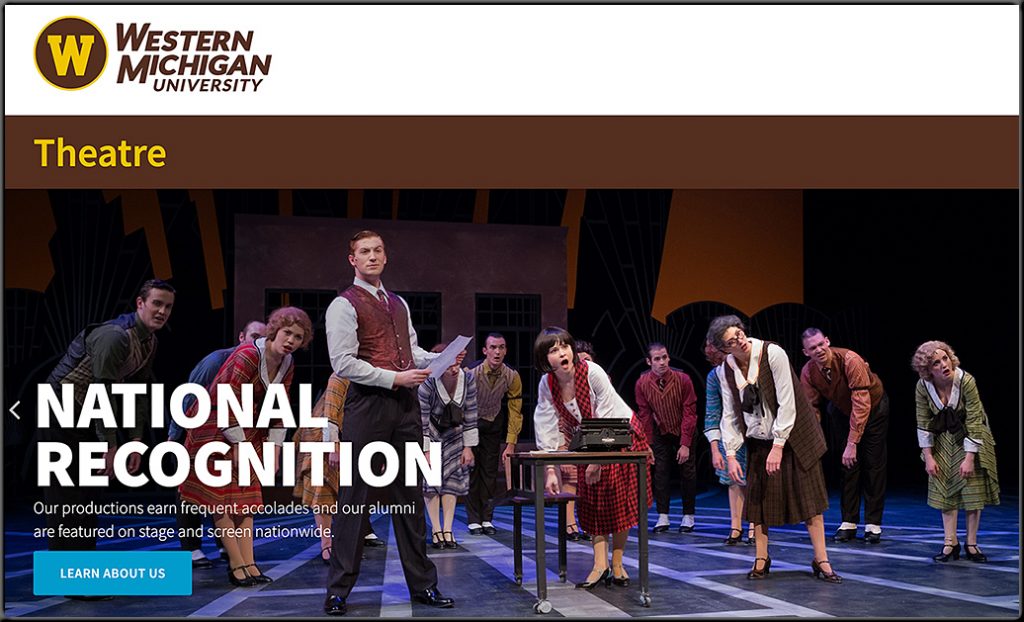
Though the integration of acting with online-based learning materials is not a new idea, this post encourages a far more significant interdisciplinary collaboration between the Theatre Department and other departments/disciplines.
Consider a “Dealing with Bias in Journalism” type of topic, per a class in the Digital Media and Journalism Major.
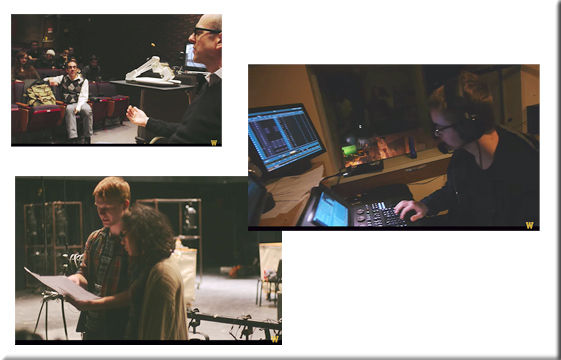
Colleges and universities could share content with each other and/or charge others for their products/content/learning experiences. In the future, I could easily see a marketplace for buying and selling such engaging content. This could create a needed new source of revenue — especially given that those large auditoriums and theaters are likely not bringing in as much revenue as they typically do.
Colleges and universities could also try to reach out to local acting groups to get them involved and continue to create feeders into the world of work.
Other tags/categories could include:
Also see:
What improv taught me about failure: As a teacher and academic — from scholarlyteacher.com by Katharine Hubbard

In improv, the only way to “fail” is to overthink and not have fun, which reframed what failure was on a grand scale and made me start looking at academia through the same lens. What I learned about failure through improv comes back to those same two core concepts: have fun and stop overthinking.
…
Students are more engaged when the professor is having fun with the materials (Keller, Hoy, Goetz, & Frenzel, 2016), and teaching is more enjoyable when we are having fun ourselves.
AP Style Rules: Correct Uses for Race-Related Terms, Gender-Neutral Words, and Election Lingo — from mediablog.prnewswire.com
We know journalists are busy, and it can be difficult to keep up with recent AP Stylebook changes. So we’ve done the work for you, rounding up a few of the recent significant — and just plain interesting — updates to the AP Stylebook.
Excerpt:
It’s hard to believe it’s only been a few months since our last AP Style roundup. So much has happened since then.
Let’s recap some of the recent AP Style rule reminders. And with the presidential election quickly approaching, we’ll review some of the writing rules on that topic as well.
From DSC:
After reading the following item from Jeremy Caplan’s most recent e-newsletter entitled, “Tiny Stuff I Love“…
Alfred = Saves me time on copying and pasting
If you copy and paste stuff frequently, get a clipboard manager. I use Alfred throughout every workday. It keeps the last 100+ things I’ve copied in a neat list so I can paste anything I’ve used recently into a browser, document, or wherever else.
This is super-handy when I’m copying and pasting things repeatedly from one place to another. Sometimes I’m moving a bunch of stuff from a document into an email. Or putting several links or notes into a Zoom chat window.
Lots of tools do something similar. I also like the Copied App, $8 on the Mac App store. It has a companion iPhone app.
…I instantly thought of how useful this type of tool would be for teachers, professors, and perhaps trainers as well — especially when grading!
From this page (emphasis DSC):
What Does a Clipboard Manager Do?
The default clipboard in Windows works well, but it’s quite basic. The biggest limitation is that it can only hold one item at a time. If you copy a piece of text, forget to use it, then copy an image later, the text will be gone. Another hassle is that you can’t view what you’ve copied without pasting it.
For anyone who copies and pastes all the time, these are big problems. Thankfully, this is where clipboard managers come in. They greatly expand the functionality of your clipboard by remembering dozens of entries, allowing you to pin frequently used snippets for easy access, and much more.

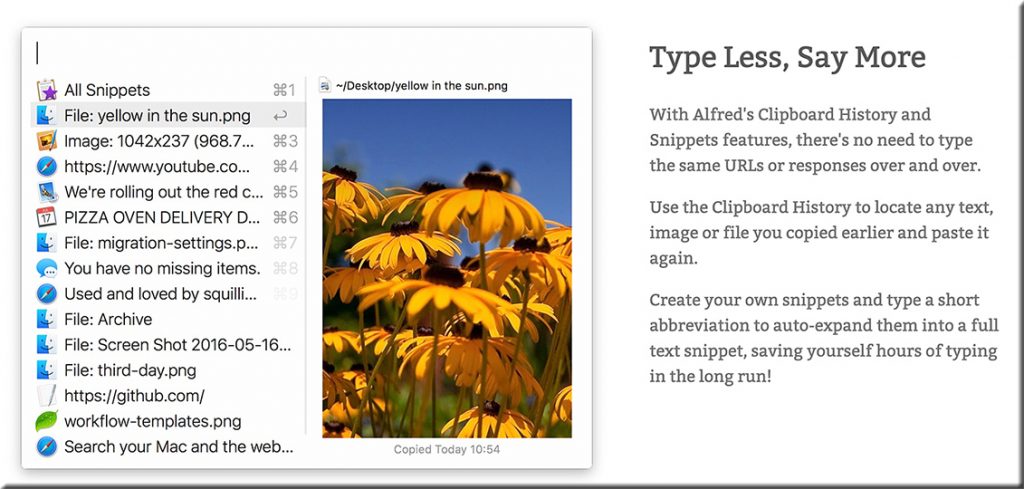
Readers of this blog might also be interested in some of the other tools that Jeremy mentions, including:
Why local news outlets may be among this pandemic’s victims — from medium.com by Sue Ellen Christian
The healthy functioning of our communities depends on the survival of our local news systems. Here’s how to start resuscitating close-to-home journalism, now.
Excerpt:
Just as we thought it couldn’t get worse for the survival of local news outlets, it has. Covid-19 is attacking what was left of the advertising base for local news outlets. Local retailers are the foundational advertisers for online news outlets. With shelter-in-place orders enacted throughout the country, retailers are struggling to pay the rent; low on their priorities for financial solvency is buying ads in a local newspaper, online news outlet, local television news show or community magazine.
Furthermore, those same retailers, such as book stores and restaurants, where single-sale print copies of local magazines and newspapers are often available, aren’t open, further hurting the already meager revenue streams of local news providers.
New York has the Times. Los Angeles has its Times. The nation’s capital has the Post. We in smaller and mid-size communities not only deserve our close-to-home updates and information, our local democracies rely on it.
…
Daily digital and print news outlets in particular offer citizens a public service: News about the schools our children attend, how our taxes are spent, what is happening in court systems and park districts and local elections. They fight for public documents to be released and public meetings to remain open — to be sure, all vital parts to democracy. But these outlets also offer our communities a reflection of ourselves.
Join the fight against COVID-19 misinformation — from newslit.org
Excerpt:
This rich collection of guides and resources can help you make a real difference in the battle against dangerous COVID-19 misinformation; it can also inspire and empower your students to enlist in that fight. Doing so [is] one of the most powerful actions we can all take.
Also see:
Gartner: 10 ways technology will change what it means to be human — from campustechnology.com by Rhea Kelly
Excerpts:
Gartner’s top 10 strategic predictions for technology are:
Facial recognition, location tracking and big data will allow organizations to monitor individual behavior and link that behavior to other digital actions, Gartner said, noting that “The Internet of Things (IoT) – where physical things are directed to do a certain thing based on a set of observed operating parameters relative to a desired set of operating parameters — is now being extended to people, known as the Internet of Behavior (IoB).”
From DSC:
That last quote about the “Internet of Behavior (IoB)” should disturb us. I don’t want that kind of world for the next generation.
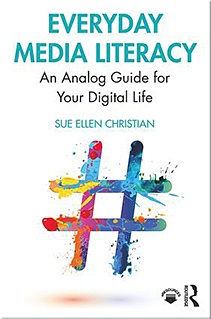
Everyday Media Literacy — from routledge.com by Sue Ellen Christian
An Analog Guide for Your Digital Life, 1st Edition
Description:
In this graphic guide to media literacy, award-winning educator Sue Ellen Christian offers students an accessible, informed and lively look at how they can consume and create media intentionally and critically.
The straight-talking textbook offers timely examples and relevant activities to equip students with the skills and knowledge they need to assess all media, including news and information. Through discussion prompts, writing exercises, key terms, online links and even origami, readers are provided with a framework from which to critically consume and create media in their everyday lives. Chapters examine news literacy, online activism, digital inequality, privacy, social media and identity, global media corporations and beyond, giving readers a nuanced understanding of the key concepts and concerns at the core of media literacy.
Concise, creative and curated, this book highlights the cultural, political and economic dynamics of media in our contemporary society, and how consumers can mindfully navigate their daily media use. Everyday Media Literacy is perfect for students (and educators) of media literacy, journalism, education and media effects looking to build their understanding in an engaging way.