Achieving a quick “Pair & Share” method of teaching using the Cisco Webex Meeting Center [Christian]
On 04/07/2020,
in active learning, adjunct faculty, adult learning, cloud-based computing / apps / other cloud-related, collaboration, colleges, communications, community colleges, corporate / business world, corporate universities / corporate training, Daniel S. Christian, digital learning, education, education technology, engagement / engaging students, faculty/staff, ideas, innovation, instructional design, interactivity, internet, IT in HE, K-12 related, law schools, learning, learning ecosystem, Learning from the Living [Class] Room, online learning, participation, pedagogy, platforms, productivity / tips and tricks, professional development, social learning / networks, student-related, teachers, teaching & learning, teaching online, technologies for your home, telecommunications, tools, universities, usability, user experience (UX), user interface design, vendors, videoconferencing, virtual K-12 schools,
by Daniel Christian
From DSC:
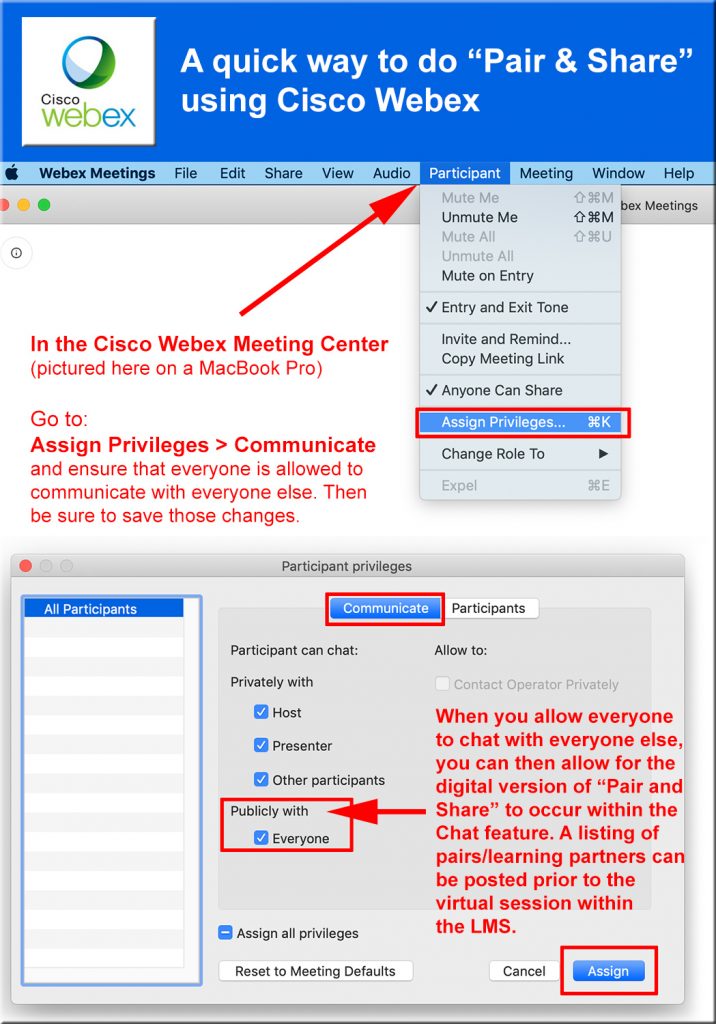
The “Pair & Share” method allows students to find a fellow student to talk about the question/topic at hand. Then, depending upon time and your learning objectives/lesson plans, some students can report back to the larger classroom about what they discussed. In the digital, synchronous realm, one can achieve this with private chat rooms — given that you’ve changed a setting to allow this to occur. Posting the pairings ahead of time should help establish a quick, smooth transition.
(The graphic below is for the Cisco Webex Meeting Center on a MacBook Pro).
On 03/06/2020,
in 21st century, 24x7x365 access, A/V -- audio/visual, Amazon, analytics, Artificial Intelligence/Agents/LLMs/and Related, assistive technologies, bots, career development, cloud-based computing / apps / other cloud-related, CMS/LMS, communications, content development, aggregation, repositories, convergence, Daniel S. Christian, digital learning, education technology, emerging technologies, future, human-computer interaction (HCI), innovation, intelligent systems, intelligent tutoring, interaction design, interactivity, internet, languages and translation, learning, learning agents, learning ecosystem, Learning from the Living [Class] Room, learning hubs & pods & microschooling, learning spaces, lifelong learning, mobile learning, mobile technologies, MOOCs -- Massive Open Online Courses, more voice more choice more control, multimedia, Natural Language Processing (NLP), new business models, online learning, online media, online tutoring, personalized/customized learning, platforms, podcasting, productivity / tips and tricks, smart classrooms, teaching online, technologies for your home, telecommunications, tools, trends, TVs, United States, vendors, voice recognition / voice enabled interfaces,
by Daniel Christian
How innovations in voice technology are reshaping education — from edsurge.com by Diana Lee
Voice is the most accessible form you can think of when you think about any interface. In education, it’s already started to take off.
It could be basic questions about, “Am I taking a class to become X?” or “How strong are my skills relative to other people?” An assistant can help with that. It could potentially be a coach, something that follows you the rest of your life for education. I’m excited about that. People that can’t normally get access to this kind of information will get access to it. That’s the future.
From DSC:
The use of voice will likely be a piece of a next-generation learning platform.

On 02/20/2020,
in 24x7x365 access, 3D, accessibility / UDL, colleges, community colleges, design, immersion, innovation, intelligent systems, interactivity, interface design, learning hubs & pods & microschooling, learning spaces, neurodivergent/special needs, platforms, tools, universities, usability, user experience (UX), vendors,
by Daniel Christian
Concept3D introduces wheelchair wayfinding feature to support campus accessibility — from concept3d.echoscomm.com with thanks to Delaney Lanker for this resource
System makes wheelchair friendly campus routes easy to find and follow
Excerpt:
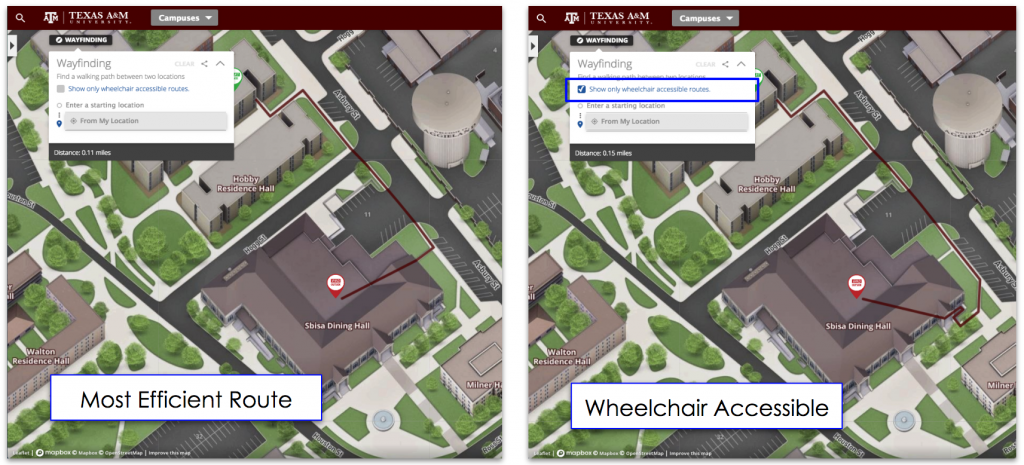
Concept3D, a leader in creating immersive online experiences with 3D modeling, interactive maps and virtual tour software, today announced the launch of a new wheelchair wayfinding feature that adds a new level of accessibility to the company’s interactive map and tour platform.
With the new wheelchair accessible route functionality, Concept3D clients are able to offer a separate set of wayfinding routes specifically designed to identify the most efficient and easiest routes.
Concept3D’s wayfinding system uses a weighted algorithm to determine the most efficient route between start and end points, and the new system was enhanced to factor in routing variables like stairs, curb cuts, steep inclines, and other areas that may impact accessibility.
Also see:
Wayfinding :: Wheelchair Accessible Routes — from concept3d.com
On 12/17/2019,
in 3D, A/V -- audio/visual, adjunct faculty, attention, Augmented Reality (AR), digital audio, digital learning, education technology, emerging technologies, engagement / engaging students, experimentation, faculty/staff, ideas, immersion, innovation, interaction design, interactivity, interface design, IT in HE, law schools, learning ecosystem, Learning from the Living [Class] Room, learning hubs & pods & microschooling, learning spaces, Mixed Reality (MR), multimedia, participation, pedagogy, platforms, play, simulations, teaching & learning, technologies for your home, tools, usability, user experience (UX), Virtual Reality (VR) / worlds / learning, XR - extended reality,
by Daniel Christian
XR for Teaching and Learning — from educause
Key Findings
- XR technologies are being used to achieve learning goals across domains.
- Effective pedagogical uses of XR technologies fall into one of three large categories: (1) Supporting skills-based and competency-based teaching and learning, such as nursing education, where students gain practice by repeating tasks. (2) Expanding the range of activities with which a learner can gain hands-on experience—for example, by enabling the user to interact with electrons and electromagnetic fields. In this way, XR enables some subjects traditionally taught as abstract knowledge, using flat media such as illustrations or videos, to be taught as skills-based. (3) Experimenting by providing new functionality and enabling new forms of interaction. For example, by using simulations of materials or tools not easily available in the physical world, learners can explore the bounds of what is possible in both their discipline and with the XR technology itself.
- Integration of XR into curricula faces two major challenges: time and skills.
- The adoption of XR in teaching has two major requirements: the technology must fit into instructors’ existing practices, and the cost cannot be significantly higher than that of the alternatives already in use.
- The effectiveness of XR technologies for achieving learning goals is influenced by several factors: fidelity, ease of use, novelty, time-on-task, and the spirit of experimentation.
On 12/03/2019,
in accessibility / UDL, active learning, adjunct faculty, adult learning, analytics, attention, blended learning, CMS/LMS, colleges, community colleges, corporate universities / corporate training, Daniel S. Christian, data related items, digital learning, education technology, engagement / engaging students, face-to-face, faculty/staff, flipping -- inverted learning, formal learning, higher education, hybrid learning, instructional design, interactivity, internet, IT in HE, learning, learning ecosystem, learning preferences, online learning, pedagogy, platforms, student teaching/teacher education, student-related, teaching & learning, teaching online, training / L&D, United States, universities,
by Daniel Christian
2019 study of undergraduate students & information technology — from library.educause.edu
Excerpts:
Drawing on survey data from more than 40,000 students across 118 US institutions, this report highlights a number of important findings related to students’ technology preferences, supports, and experiences, with the goal of aiding technology and higher education professionals in improving student learning experiences and success.
…
But they want to be more than in-class spectators:
- “I want my professors to stop reading PowerPoint slides word-for-word off of a screen, and to start using the technology at hand to create a different kind of lecture that will engage their students in the learning process.”
- “I’d love for there to be more interactive polling and questions during class. Even though I don’t like the idea of being in lecture every day, that would keep me more engaged if the instructors were more dynamic with their tech use.”
- “Integrate [technology] more into lectures. It’s very difficult to sit and watch you talk. Technology can be so beneficial to learning if used in the right ways to enhance and complement lectures. Use collaborative quizzes (Kahoot, etc.), let us research in class, etc.”
- “Provide more online learning tools such as interactive lectures where people on laptops or tablets can also engage with the material being presented.”
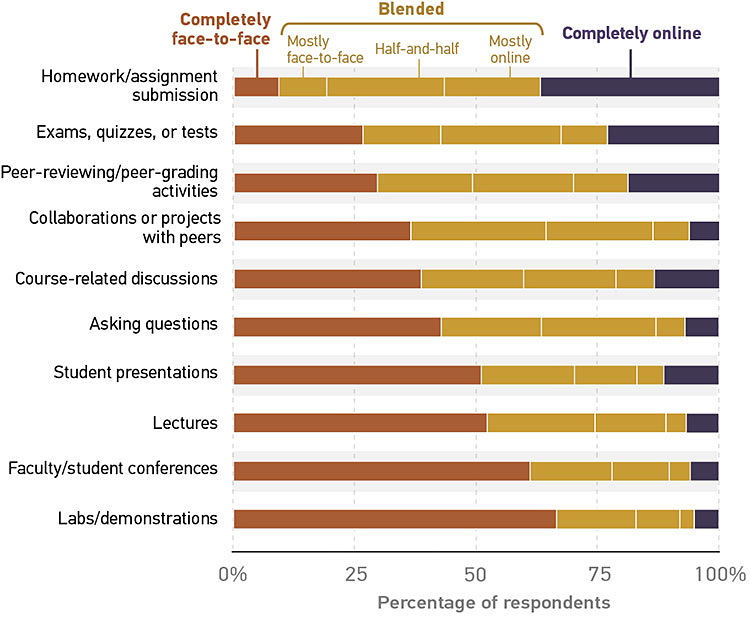
Figure 2. Student learning environment preferences for specific course-related activities and assignments
Recommendations
- Leverage analytics to gain a greater understanding of the student demographics that influence learning environment preferences.
- Continue to promote online success tools and provide training to students on their use through orientations and advisement sessions.
- Expand efforts to improve Wi-Fi reliability in campus housing and outdoor spaces.
- Allow students to use the devices that are most important to their academic success in the classroom.
- Establish a campus community to address accessibility issues and give “accessibility evangelists” a seat at the table.
From DSC:
Well students…you might find that you have a major surprise ahead of you — as a significant amount of your future learning/training will take place completely online. Go ask some folks who have graduated about their onboarding experiences. Then go ask people who have been in the workplace for over a decade. You’ll see what I mean.
On 11/18/2019,
in digital audio, emerging technologies, engagement / engaging students, human-computer interaction (HCI), ideas, innovation, interactivity, interface design, Learning from the Living [Class] Room, Mixed Reality (MR), multimedia, music, platforms, technologies for your home, tools, vendors, XR - extended reality,
by Daniel Christian
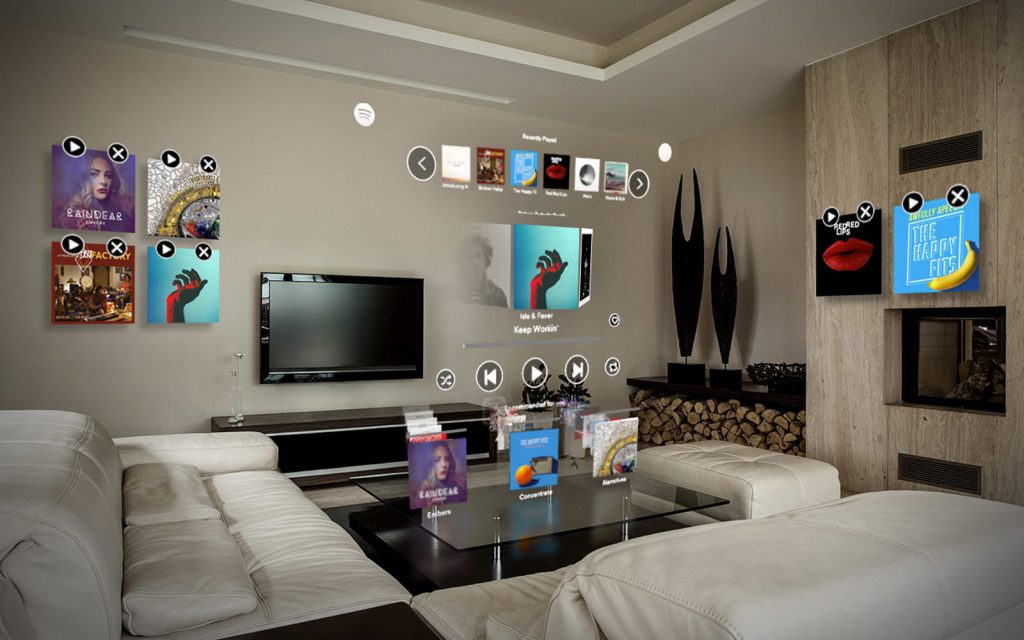
Turn Your Home Into A Mixed Reality Record Store With Spotify On Magic Leap — from vrscout.com by Kyle Melnick
“We see a time in the not too distant future when spatial computing will extend into the wider world of podcasts, audiobooks and storytelling,” continues Magic Leap in their post. “And this is just the beginning. The launch of Spotify marks an evolution in the way you can see, hear and experience the bands and artists that you love. It’s an exciting time for music. For musicians. For developers. And for music-lovers the world over.”
On 11/13/2019,
in 21st century, 24x7x365 access, 3D, A/V -- audio/visual, Amazon, analytics, Apple, Artificial Intelligence/Agents/LLMs/and Related, Asia, Augmented Reality (AR), Australia, Blockchain, bots, business, Canada, career development, change, changing business models, cloud-based computing / apps / other cloud-related, collaboration, communications, computer science, content development, aggregation, repositories, convergence, corporate / business world, creativity, digital audio, digital photography, digital video, drama/theater, education technology, educational games / serious games, emerging technologies, engagement / engaging students, engineering, entrepreneurship, Europe, experimentation, Facebook / Meta Platforms, future, game-changing environment, generational differences, global, Google, human-computer interaction (HCI), IBM, ideas, immersion, India, innovation, intelligent systems, interactivity, internet, law schools, leadership, learning ecosystem, legislatures / government / legal, media/film, Microsoft, Mixed Reality (MR), multimedia, Natural Language Processing (NLP), Near Field Communication (NFC), parents/guardians, photography, platforms, policy, privacy, programming, psychology, publishing, robotics, social learning / networks, social media, society, strategy, streams of content, technology (general), telecommunications, television, tools, trends, TVs, United States, vendors, Virtual Reality (VR) / worlds / learning, vision/possibilities, voice recognition / voice enabled interfaces, wearables, workplace, XR - extended reality, youth,
by Daniel Christian
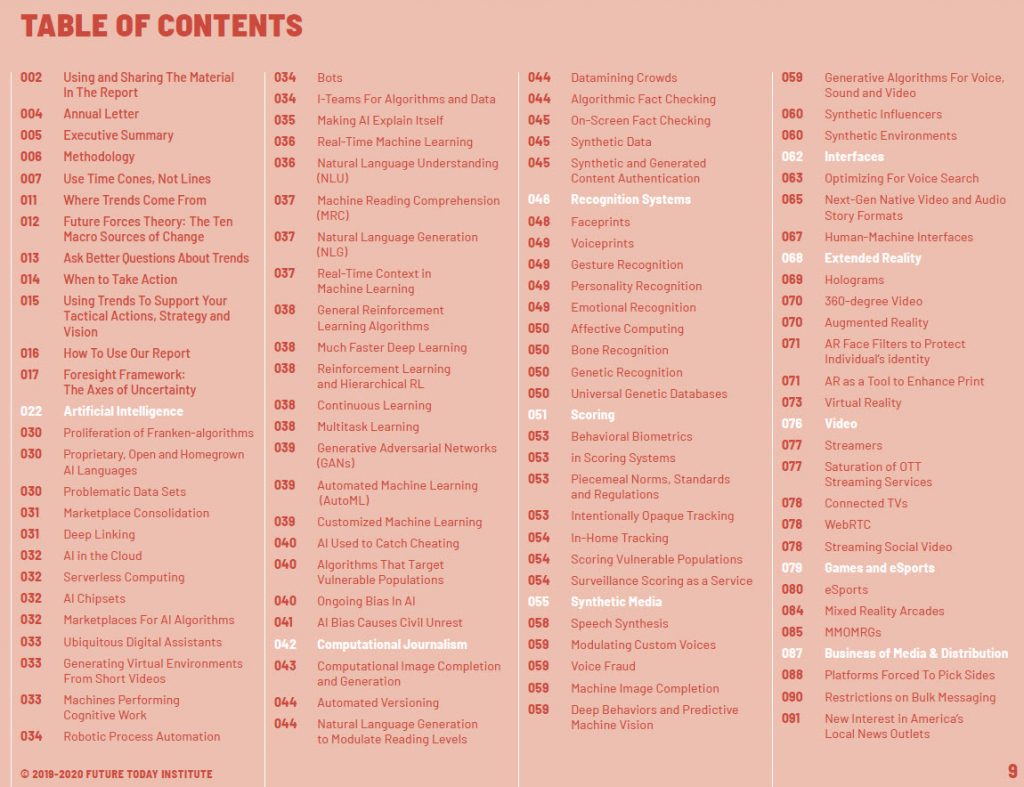
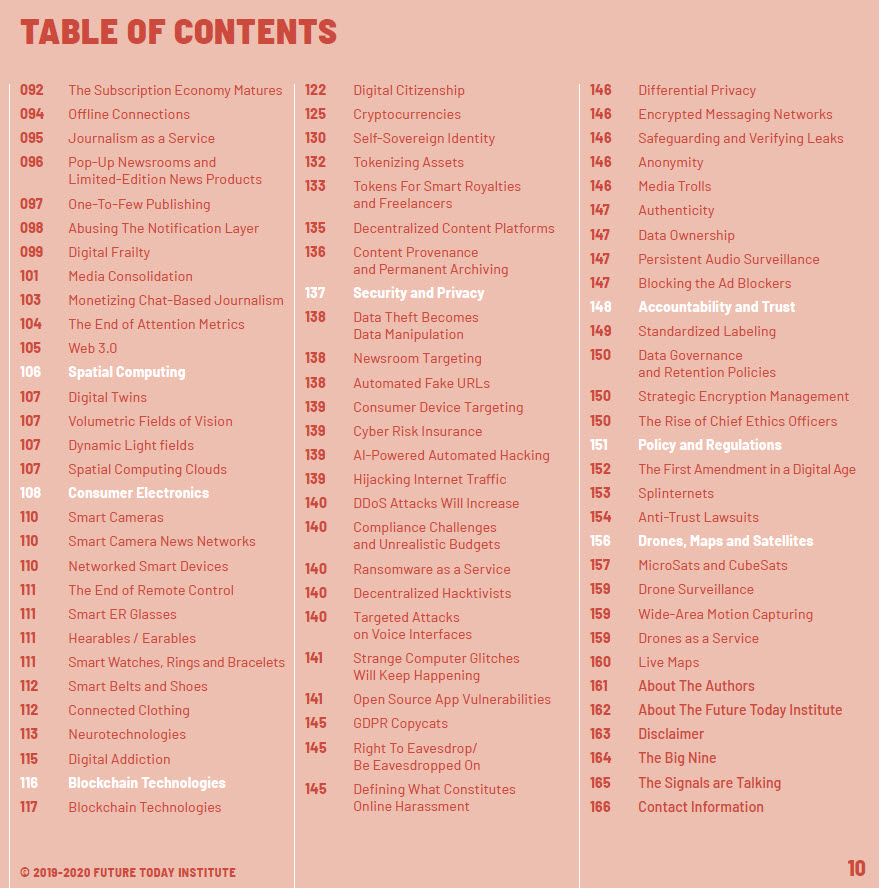
FTI 2020 Trend Report for Entertainment, Media, & Technology — from futuretodayinstitute.com
Our 3rd annual industry report on emerging entertainment, media and technology trends is now available.
- 157 trends
- 28 optimistic, pragmatic and catastrophic scenarios
- 10 non-technical primers and glossaries
- Overview of what events to anticipate in 2020
- Actionable insights to use within your organization
KEY TAKEAWAYS
- Synthetic media offers new opportunities and challenges.
- Authenticating content is becoming more difficult.
- Regulation is coming.
- We’ve entered the post-fixed screen era.
- Voice Search Optimization (VSO) is the new Search Engine Optimization (SEO).
- Digital subscription models aren’t working.
- Advancements in AI will mean greater efficiencies.
On 10/03/2019,
in cloud-based computing / apps / other cloud-related, computer science, Cost of legal services - including access, ideas, interactivity, law schools, legal technologies, legislatures / government / legal, platforms, productivity / tips and tricks, programming, society, tools,
by Daniel Christian
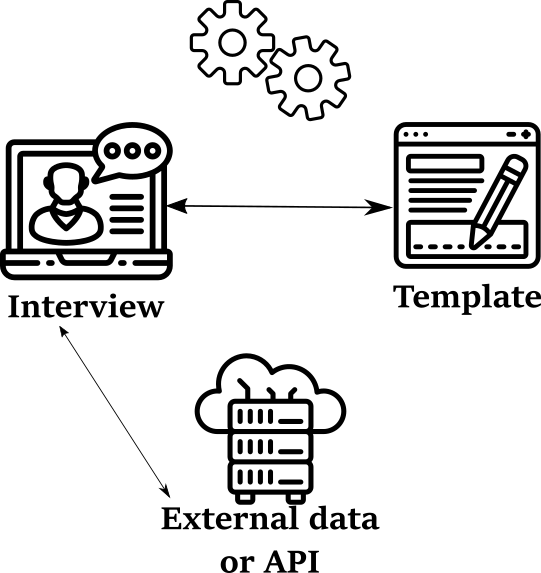
Basic elements of an interactive legal application — from nonprofittechy.com by Quinten Steenhuis
Excerpt:
So, you want to create your first interactive legal application (sometimes also called guided interview or wizard). Congratulations! Whether you are creating the next TurboTax for drafting a will or a blockbuster access to justice app for pro se debtors, there are some standard elements of the application that it will help you to understand, whether you are a developer yourself or managing an outsourced project. This will be the first in a small series of blogs about getting started in interactive app building. As I’ve built these apps both for non-profits and law firms over the last few years, I realized it can help for everyone to share the same vocabulary. This guide applies to one kind of legal app–a linear wizard-like interview that helps a pro se user create a letter, fill out a form, or perhaps complete an intake.
For the most part, these concepts apply whether you are using Docassemble, HotDocs, A2J Author, Contract Express, or any of a number of different platforms. Of course, they also hold true for platforms built on Docassemble, such as Documate and Community.Lawyer.
On 10/02/2019,
in attention, design, digital learning, digital storytelling, education technology, educational games / serious games, elearning, engagement / engaging students, graphics, human-computer interaction (HCI), instructional design, interaction design, interactivity, internet, learning, learning ecosystem, Learning from the Living [Class] Room, learning preferences, lifelong learning, mobile learning, multimedia, online learning, online media, platforms, play, productivity / tips and tricks, professional development, simulations, tools, training / L&D, user experience (UX), vendors, workplace,
by Daniel Christian

Top eLearning Gamification Companies 2019 — from elearningindustry.com by Christopher Pappas
Excerpt:
The Top Performing eLearning Gamification Companies 2019
As community leaders, here at eLearning Industry, we have evaluated hundreds of eLearning content development companies in the past. As we are constantly on the lookout for new advancements and trends in the eLearning field that are relevant to the industry, we decided to take a very close look at outstanding providers of gamification. We have focused on prestige, influence, application of gamification tools, activity in the eLearning field, gamification innovations, and many more subcategories.
For the list of the Top eLearning Gamification Companies 2019, we chose and ranked the best gamification companies based on the following 7 criteria:
- Gamification eLearning quality
- Customer reviews
- eLearning expertise
- Niche specialization on gamification
- Gamification industry innovation
- Company’s social responsibility
- Gamification features and capabilities
On 08/29/2019,
in A/V -- audio/visual, attention, biology, chemistry, communications, education technology, emerging technologies, engagement / engaging students, history, human-computer interaction (HCI), innovation, interactivity, user experience (UX), vendors, Virtual Reality (VR) / worlds / learning, XR - extended reality, youth,
by Daniel Christian
On 08/07/2019,
in 21st century, 3D, A/V -- audio/visual, art, attention, Augmented Reality (AR), communications, creativity, digital learning, digital storytelling, education, education technology, educational games / serious games, emerging technologies, engagement / engaging students, higher education, ideas, innovation, interaction design, interactivity, K-12 related, platforms, play, presentations, tools, usability, user experience (UX), user interface design, vendors, XR - extended reality, youth,
by Daniel Christian
Per Jacob Strom at HeraldPR.com:
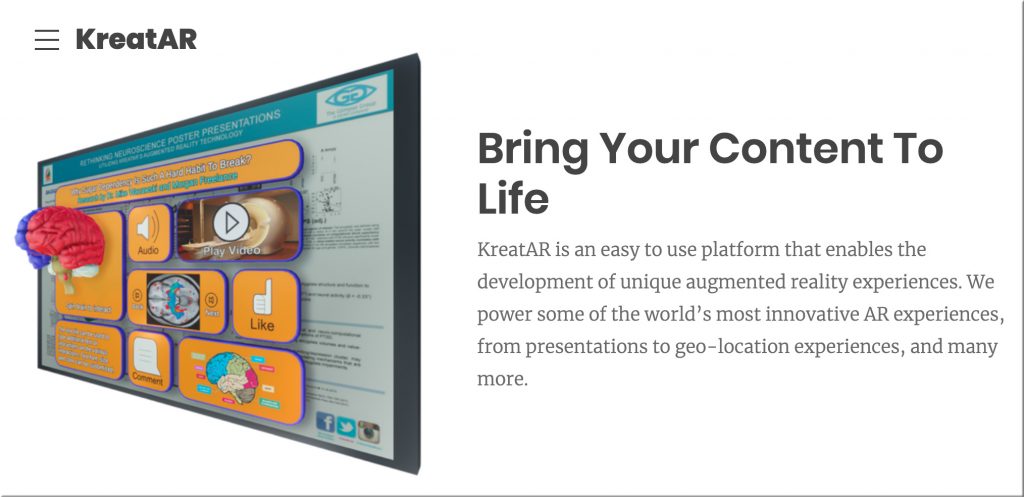
KreatAR, a subsidiary of The Glimpse Group, is helping change the way students and teachers are using augmented reality technology with PostReality, to help make learning more interactive with poster boards.
See:
Also see: