On 03/01/2019,
in 3D, A/V -- audio/visual, Artificial Intelligence/Agents/LLMs/and Related, attention, bots, digital learning, education, education technology, educational games / serious games, emerging technologies, engagement / engaging students, heutagogy, higher education, human-computer interaction (HCI), ideas, innovation, intelligent systems, intelligent tutoring, K-12 related, languages and translation, learning, learning ecosystem, multimedia, social learning / networks, social media, tools, ubiquitous learning, usability, user experience (UX), user interface design, vendors, XR - extended reality,
by Daniel Christian
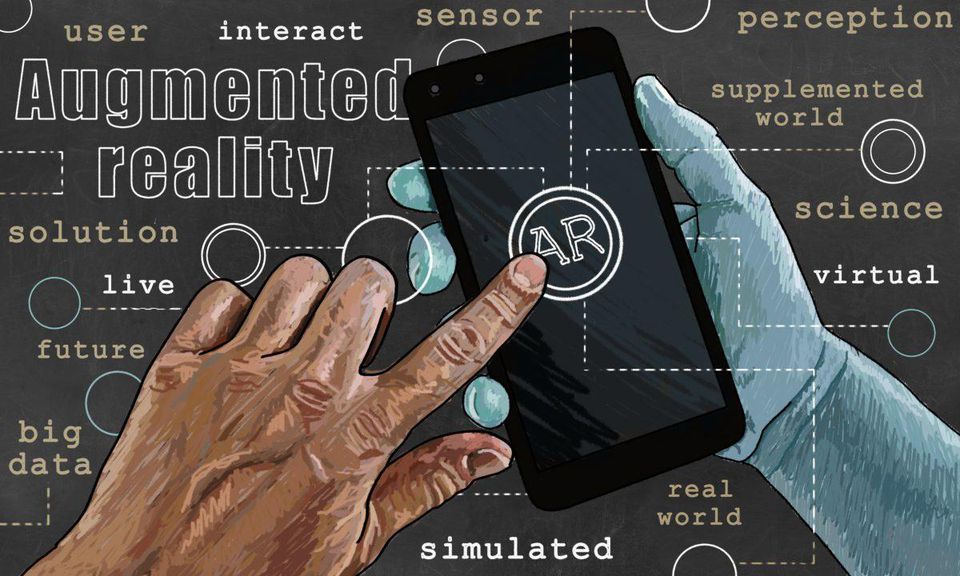
The 10+ best real-world examples of augmented reality — from forbes.com by Bernard Marr
Excerpt:
Augmented reality (AR) can add value, solve problems and enhance the user experience in nearly every industry. Businesses are catching on and increasing investments to drive the growth of augmented reality, which makes it a crucial part of the tech economy.
As referenced by Bernard in his above article:
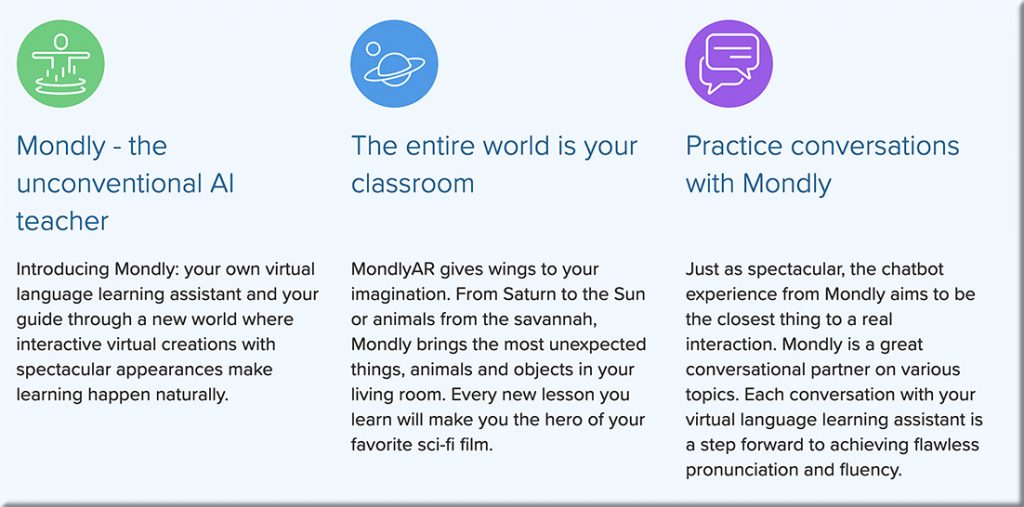
From DSC:
Along these lines, I really appreciate the “translate” feature within Twitter. It helps open up whole new avenues of learning for me from people across the globe. A very cool, practical, positive, beneficial feature/tool!!!
On 02/28/2019,
in analytics, Artificial Intelligence/Agents/LLMs/and Related, blended learning, Blockchain, change, changing business models, colleges, community colleges, competency-based learning/education, credentialing, digital learning, education technology, future, future of higher education, higher education, human-computer interaction (HCI), hybrid learning, ideas, innovation, instructional design, learner profiles, learning, learning ecosystem, mobile learning, new business models, new media literacies, society, student-related, teaching & learning, tools, trends, XR - extended reality,
by Daniel Christian
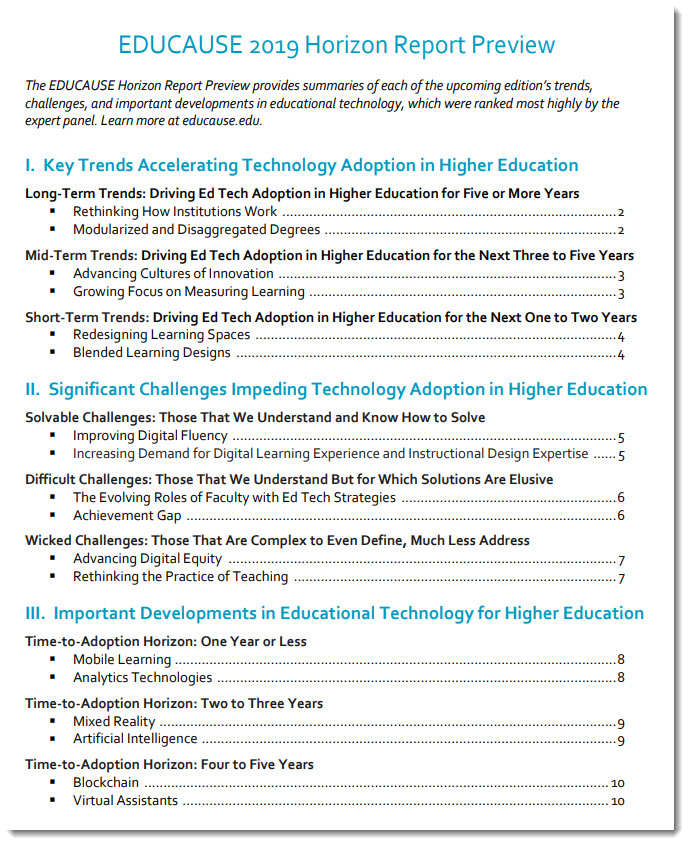
Horizon Report Preview 2019 — from library.educause.edu
Analytics, Artificial Intelligence (AI), Badges and Credentialing, Blended Learning, Blockchain, Digital Learning, Digital Literacy, Extended Reality (XR), Instructional Design, Instructional Technologies, Learning Analytics, Learning Space, Mobile Learning, Student Learning Support, Teaching and Learning
Abstract
The EDUCAUSE Horizon Report Preview provides summaries of each of the upcoming edition’s trends, challenges, and important developments in educational technology, which were ranked most highly by the expert panel. This year’s trends include modularized and disaggregated degrees, the advancing of digital equity, and blockchain.
For more than a decade, EDUCAUSE has partnered with the New Media Consortium (NMC) to publish the annual Horizon Report – Higher Education Edition. In 2018, EDUCAUSE acquired the rights to the NMC Horizon project.

On 02/27/2019,
in 21st century, 3D, A/V -- audio/visual, business, corporate / business world, corporate universities / corporate training, emerging technologies, human-computer interaction (HCI), Microsoft, Mixed Reality (MR), workplace,
by Daniel Christian
Microsoft’s HoloLens 2: A $3,500 mixed reality headset for the factory, not the living room — from theverge.com by Dieter Bohn
Excerpt:
The HoloLens 2 is only being sold to corporations, not to consumers. It’s designed for what Kipman calls “first-line workers,” people in auto shops, factory floors, operating rooms, and out in the field fixing stuff. It’s designed for people who work with their hands and find it difficult to integrate a computer or smartphone into their daily work. Kipman wants to replace the grease-stained Windows 2000 computer sitting in the corner of the workroom. It’s pretty much the same decision Google made for Google Glass.
“If you think about 7 billion people in the world, people like you and I — knowledge workers — are by far the minority,” he replies. To him, the workers who will use this are “maybe people that are fixing our jet propulsion engine. Maybe they are the people that are in some retail space. Maybe they’re the doctors that are operating on you in an operating room.”
He continues, saying it’s for “people that have been, in a sense, neglected or haven’t had access to technology [in their hands-on jobs] because PCs, tablets, phones don’t really lend themselves to those experiences.”
Also see:
Microsoft is making a new HoloLens headset, called HoloLens 2. But, it’s only getting sold to companies, not consumers. Meant for professionals who work with their hands and not on computers, the new HoloLens has an improved field of view and doesn’t clip as much as the original. Dieter Bohn visited Microsoft’s campus to get an early look at the new HoloLens 2 headset.
Say hello to #HoloLens2. pic.twitter.com/eVBQ9OUeM1
— Microsoft HoloLens (@HoloLens) February 24, 2019
Addendum on 2/28/19:
Microsoft launches HoloLens 2 mixed-reality headset, betting on holograms in the workplace — from cnbc.com by Elizabeth Schulze
Excerpts:
- Microsoft unveiled HoloLens 2, an upgraded version of its mixed-reality headset, on Sunday at Mobile World Congress in Barcelona.
- The new headset will cost $3500, lower than the cost of the earlier version.
- The HoloLens 2 launch comes amid controversy over Microsoft’s $480 million deal to sell 100,000 of its mixed reality headsets to the U.S. Army.
Microsoft unveiled HoloLens 2, an upgraded version of its mixed-reality headset, on Sunday in Barcelona, in a bet that doubles down on the idea that businesses will increasingly use hologram technology in the workplace.
The HoloLens 2 headset will cost $3500 —$1500 less than the commercial price of the first HoloLens device Microsoft released more than four years ago.
On 02/26/2019,
in 21st century, 3D, A/V -- audio/visual, Artificial Intelligence/Agents/LLMs/and Related, biology, emerging technologies, health, human-computer interaction (HCI), ideas, innovation, Microsoft, vendors, visualizing information, wearables,
by Daniel Christian
Philips, Microsoft Unveils Augmented Reality Concept for Operating Room of the Future — from hitconsultant.net by Fred Pennic
Excerpt:
Health technology company Philips unveiled a unique mixed reality concept developed together with Microsoft Corp. for the operating room of the future. Based on the state-of-the-art technologies of Philips’Azurion image-guided therapy platform and Microsoft’s HoloLens 2 holographic computing platform, the companies will showcase novel augmented reality applications for image-guided minimally invasive therapies.

On 02/21/2019,
in computer science, emerging technologies, engineering, ethics, human-computer interaction (HCI), India, intelligent systems, law schools, legislatures / government / legal, morals/values, pace of change, platforms, programming, robotics, society,
by Daniel Christian
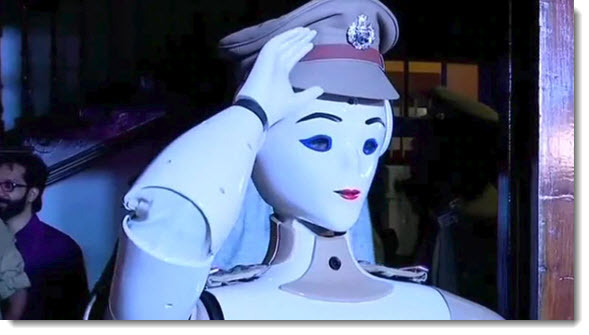
India Just Swore in Its First Robot Police Officer — from futurism.com by Dan Robitzski
RoboCop, meet KP-Bot.
Excerpt:
RoboCop
India just swore in its first robotic police officer, which is named KP-Bot.
The animatronic-looking machine was granted the rank of sub-inspector on Tuesday, and it will operate the front desk of Thiruvananthapuram police headquarters, according to India Today.
From DSC:
Whoa….hmmm…note to the ABA and to the legal education field — and actually to anyone involved in developing laws — we need to catch up. Quickly.
My thoughts go to the governments and to the militaries around the globe. Are we now on a slippery slope? How far along are the militaries of the world in integrating robotics and AI into their weapons of war? Quite far, I think.
Also, at the higher education level, are Computer Science and Engineering Departments taking their responsibilities seriously in this regard? What kind of teaching is being done (or not done) in terms of the moral responsibilities of their code? Their robots?
On 02/12/2019,
in 21st century, 24x7x365 access, A/V -- audio/visual, adult learning, career development, cloud-based computing / apps / other cloud-related, CMS/LMS, colleges, communities of practice, community colleges, consortiums, content development, aggregation, repositories, corporate / business world, corporate universities / corporate training, cost of getting a degree, credentialing, Daniel S. Christian, digital learning, disruption, distance education, education, education technology, elearning, emerging technologies, future, future of higher education, global, heutagogy, higher education, homeschooling/homeschoolers, human-computer interaction (HCI), ideas, innovation, instructional design, intelligent systems, intelligent tutoring, internet, K-12 related, law schools, learning, learning agents, learning ecosystem, Learning from the Living [Class] Room, learning hubs & pods & microschooling, learning preferences, learning spaces, library / librarians, lifelong learning, love of learning, MBA, media/film, microlearning, MOOCs -- Massive Open Online Courses, more voice more choice more control, multimedia, Natural Language Processing (NLP), online learning, online media, online tutoring, personalized/customized learning, platforms, professional development, smart classrooms, social learning / networks, society, staying relevant, streams of content, teaching & learning, technologies for your home, technology (general), television, tools, training / L&D, TVs, user experience (UX), user interface design, vendors, videoconferencing, virtual field trips, virtual K-12 schools, Virtual Reality (VR) / worlds / learning, virtual tutoring, vision/possibilities, web-based collaboration,
by Daniel Christian
From DSC:
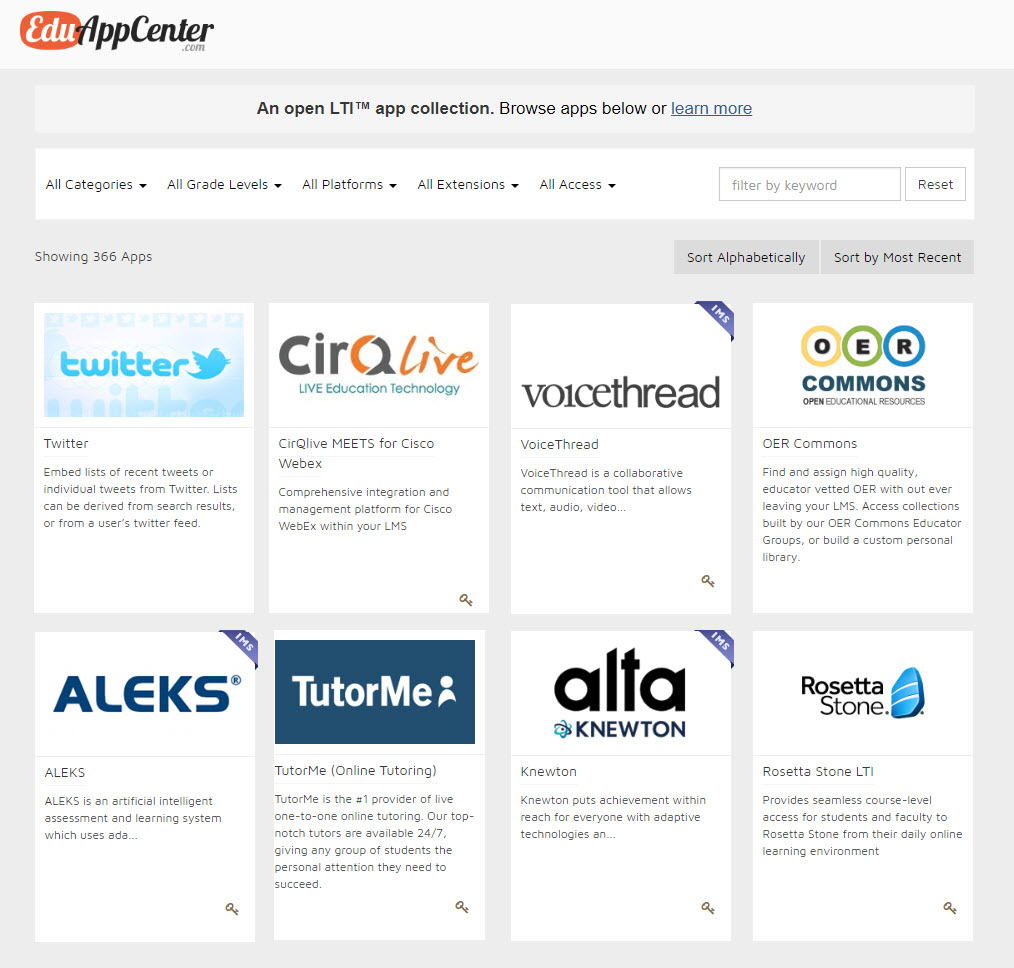
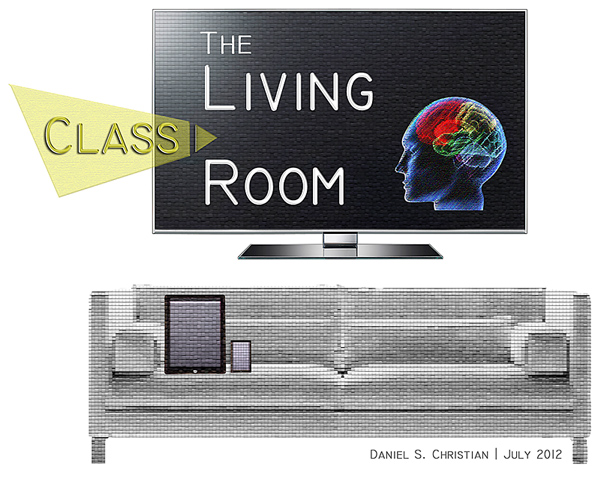
In a next generation learning system, it would be sharp/beneficial to have a Netflix-like interface to check out potential functionalities that you could turn on and off (at will) — as one component of your learning ecosystem that could feature a setup located in your living room or office.
For example, put a Netflix-like interface to the apps out at eduappcenter.com (i.e., using a rolling interface at first, then going to a static page/listing of apps…again…similar to Netflix).
On 01/30/2019,
in 21st century, analytics, Artificial Intelligence/Agents/LLMs/and Related, bots, business, career development, change, cloud-based computing / apps / other cloud-related, corporate / business world, disruption, emerging technologies, future, human-computer interaction (HCI), innovation, intelligent systems, IT in HE, marketing/social marketing, technology (general), tools, trends, United States, user experience (UX), workplace,
by Daniel Christian
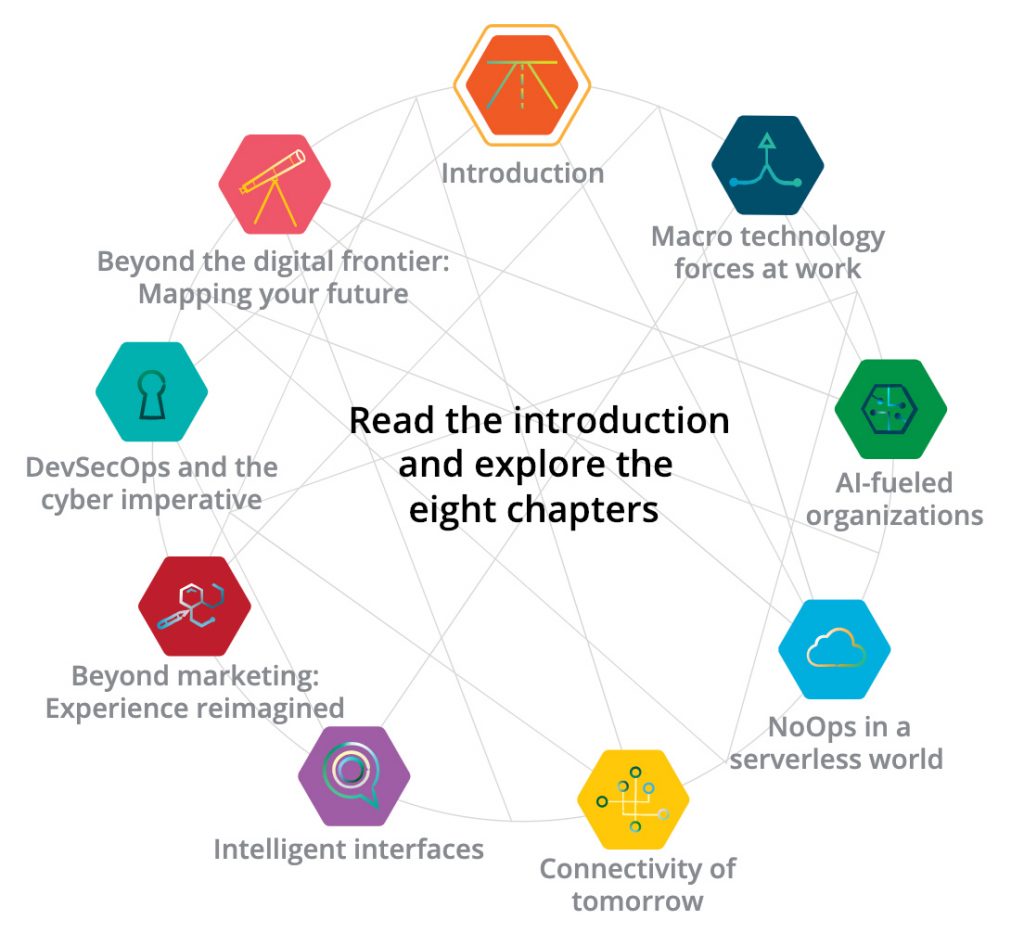
Emerging technology trends can seem both elusive and ephemeral, but some become integral to business and IT strategies—and form the backbone of tomorrow’s technology innovation. The eight chapters of Tech Trends 2019 look to guide CIOs through today’s most promising trends, with an eye toward innovation and growth and a spotlight on emerging trends that may well offer new avenues for pursuing strategic ambitions.
On 01/23/2019,
in 21st century, 24x7x365 access, Amazon, Artificial Intelligence/Agents/LLMs/and Related, bots, business, career development, cloud-based computing / apps / other cloud-related, CMS/LMS, computer science, corporate / business world, corporate universities / corporate training, Daniel S. Christian, digital audio, digital learning, education technology, emerging technologies, experimentation, future, game-changing environment, global, homeschooling/homeschoolers, human-computer interaction (HCI), ideas, innovation, intelligent systems, intelligent tutoring, interactivity, internet, K-12 related, law schools, learning, learning agents, learning ecosystem, Learning from the Living [Class] Room, learning spaces, lifelong learning, microlearning, mobile learning, Natural Language Processing (NLP), Near Field Communication (NFC), personalized/customized learning, platforms, productivity / tips and tricks, smart classrooms, society, technologies for your home, tools, training / L&D, trends, TVs, United States, using teams, vendors, vision/possibilities, voice recognition / voice enabled interfaces, workplace,
by Daniel Christian
Amazon has 10,000 employees dedicated to Alexa — here are some of the areas they’re working on — from businessinsider.com by Avery Hartmans
Summary (emphasis DSC):
- Amazon’s vice president of Alexa, Steve Rabuchin, has confirmed that yes, there really are 10,000 Amazon employees working on Alexa and the Echo.
- Those employees are focused on things like machine learning and making Alexa more knowledgeable.
- Some employees are working on giving Alexa a personality, too.

From DSC:
How might this trend impact learning spaces? For example, I am interested in using voice to intuitively “drive” smart classroom control systems:
- “Alexa, turn on the projector”
- “Alexa, dim the lights by 50%”
- “Alexa, open Canvas and launch my Constitutional Law I class”
On 01/23/2019,
in 21st century, Asia, Augmented Reality (AR), Australia, Canada, collaboration, communications, convergence, corporate / business world, corporate universities / corporate training, education technology, elearning, emerging technologies, Europe, future, human-computer interaction (HCI), ideas, India, innovation, intelligent systems, internet, IT in HE, Learning from the Living [Class] Room, machine-to-machine communications, Mixed Reality (MR), online learning, platforms, society, technologies for your home, technology (general), telecommunications, telepresence, tools, trends, UK, United States, user experience (UX), vendors, Virtual Reality (VR) / worlds / learning, web-based collaboration, XR - extended reality,
by Daniel Christian
What is 5G? Everything you need to know — from techradar.com by Mike Moore
The latest news, views and developments in the exciting world of 5G networks.
Excerpt:
What is 5G?
5G networks are the next generation of mobile internet connectivity, offering faster speeds and more reliable connections on smartphones and other devices than ever before.
Combining cutting-edge network technology and the very latest research, 5G should offer connections that are multitudes faster than current connections, with average download speeds of around 1GBps expected to soon be the norm.
The networks will help power a huge rise in Internet of Things technology, providing the infrastructure needed to carry huge amounts of data, allowing for a smarter and more connected world.
With development well underway, 5G networks are expected to launch across the world by 2020, working alongside existing 3G and 4G technology to provide speedier connections that stay online no matter where you are.
So with only a matter of months to go until 5G networks are set to go live, here’s our run-down of all the latest news and updates.
From DSC:
I wonder…
- What will Human Computer Interaction (HCI) look like when ~1GBps average download speeds are the norm?
- What will the Internet of Things (IoT) turn into (for better or for worse)?
- How will Machine-to-Machine (M2M) Communications be impacted?
- What will that kind of bandwidth mean for XR-related technologies (AR VR MR)?
On 01/09/2019,
in 21st century, A/V -- audio/visual, accessibility / UDL, adjunct faculty, adult learning, Artificial Intelligence/Agents/LLMs/and Related, business, career development, change, changing business models, cloud-based computing / apps / other cloud-related, collaboration, colleges, communications, communities of practice, community colleges, computer science, content development, aggregation, repositories, corporate / business world, corporate universities / corporate training, cost of getting a degree, dangers of the status quo, Daniel S. Christian, disruption, distance education, education, education technology, emerging technologies, engagement / engaging students, faculty/staff, future, future of higher education, game-changing environment, global, higher education, homeschooling/homeschoolers, human-computer interaction (HCI), ideas, innovation, languages and translation, learner profiles, learning, learning ecosystem, Learning from the Living [Class] Room, learning spaces, Microsoft, neurodivergent/special needs, online learning, personalized/customized learning, platforms, productivity / tips and tricks, second screen apps, teachers, teaching & learning, tools, training / L&D, universities, usability, user experience (UX), vendors, web-based collaboration,
by Daniel Christian
Presentation Translator for PowerPoint — from Microsoft (emphasis below from DSC:)
Presentation Translator breaks down the language barrier by allowing users to offer live, subtitled presentations straight from PowerPoint. As you speak, the add-in powered by the Microsoft Translator live feature, allows you to display subtitles directly on your PowerPoint presentation in any one of more than 60 supported text languages. This feature can also be used for audiences who are deaf or hard of hearing.
Additionally, up to 100 audience members in the room can follow along with the presentation in their own language, including the speaker’s language, on their phone, tablet or computer.
From DSC:
Up to 100 audience members in the room can follow along with the presentation in their own language! Wow!
Are you thinking what I’m thinking?! If this could also address learners and/or employees outside the room as well, this could be an incredibly powerful piece of a next generation, global learning platform!
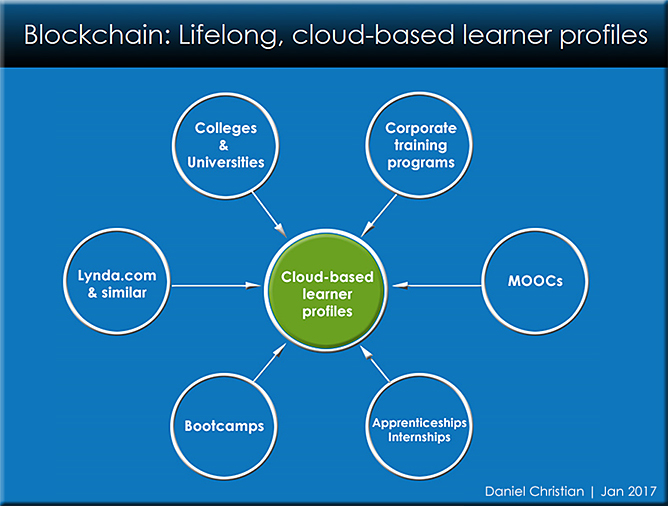
Automatic translation with subtitles — per the learner’s or employee’s primary language setting as established in their cloud-based learner profile. Though this posting is not about blockchain, the idea of a cloud-based learner profile reminds me of the following graphic I created in January 2017.
A couple of relevant quotes here:
A number of players and factors are changing the field. Georgia Institute of Technology calls it “at-scale” learning; others call it the “mega-university” — whatever you call it, this is the advent of the very large, 100,000-plus-student-scale online provider. Coursera, edX, Udacity and FutureLearn (U.K.) are among the largest providers. But individual universities such as Southern New Hampshire, Arizona State and Georgia Tech are approaching the “at-scale” mark as well. One could say that’s evidence of success in online learning. And without question it is.
But, with highly reputable programs at this scale and tuition rates at half or below the going rate for regional and state universities, the impact is rippling through higher ed. Georgia Tech’s top 10-ranked computer science master’s with a total expense of less than $10,000 has drawn more than 10,000 qualified majors. That has an impact on the enrollment at scores of online computer science master’s programs offered elsewhere. The overall online enrollment is up, but it is disproportionately centered in affordable scaled programs, draining students from the more expensive, smaller programs at individual universities. The dominoes fall as more and more high-quality at-scale programs proliferate.
Education goes omnichannel. In today’s connected world, consumers expect to have anything they want available at their fingertips, and education is no different. Workers expect to be able to learn on-demand, getting the skills and knowledge they need in that moment, to be able to apply it as soon as possible. Moving fluidly between working and learning, without having to take time off to go to – or back to – school will become non-negotiable.
From DSC:
Is there major change/disruption ahead? Could be…for many, it can’t come soon enough.
On 01/08/2019,
in 21st century, 24x7x365 access, Artificial Intelligence/Agents/LLMs/and Related, bots, digital learning, education technology, emerging technologies, future, Google, human-computer interaction (HCI), innovation, internet, learning ecosystem, Learning from the Living [Class] Room, Natural Language Processing (NLP), platforms, society, student-related, technologies for your home, tools, vendors, voice recognition / voice enabled interfaces,
by Daniel Christian
Google says there will be 1 billion devices with Assistant by the end of the month — from marketwatch.com by Emily Bary