Reflections on “DIY Mindset Reshaping Education” [Schaffhauser]

DIY Mindset Reshaping Education — from campustechnology.com by Dian Schaffhauser

Excerpt:

A do-it-yourself mindset is changing the face of education worldwide, according to new survey results. Learners are “patching together” their education from a “menu of options,” including self-teaching, short courses and bootcamps, and they believe that self-service instruction will become even more prevalent for lifelong learning. In the United Sates specifically, 84 percent of people said learning would become even more self-service the older they get.

Among those who have needed to reskill in the last two years to continue doing their jobs, 42 percent found information online and taught themselves and 41 percent took a course or training offered by their employers, a professional association or bootcamp, compared to just 28 percent who pursued a professional certification program, 25 percent who enrolled in a university-level degree program or 12 percent who did nothing.

If people had to learn something new for their career quickly, they said they would be more likely turn to a short training program (47 percent), followed by access to a free resource such as YouTube, Lynda.com or Khan Academy (33 percent). A smaller share (20 percent) would head to an accredited university or college.


From DSC:
This is why the prediction from Thomas Frey carries weight and why I’ve been tracking a new learning platform for the 21st century. Given:

  • The exponential pace of technological change occurring in many societies throughout the globe

  • That emerging technologies are game-changers in many industries
  • That people will need to learn about those emerging technologies and how to leverage/use them <– if they want to remain marketable/employed
  • That people need to reinvent themselves quickly, efficiently, and cost-effectively
  • That many people can’t afford the time nor the funding necessary these days to acquire a four-year higher ed degree
  • That running new courses, programs, etc. through committees, faculty senates, etc. takes a great deal of time…and time is something we no longer have (given this new pace of change)

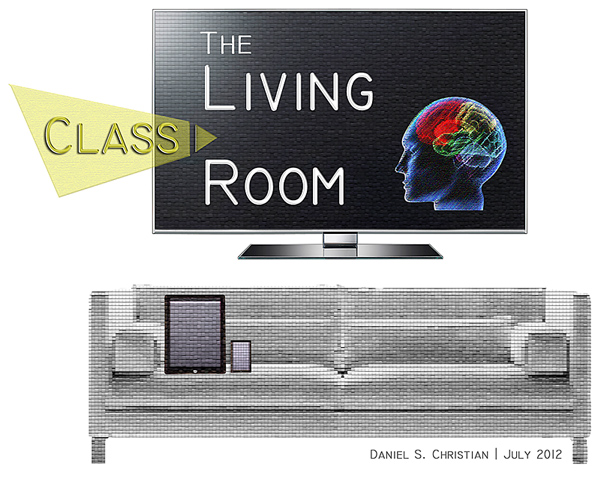
…there needs to be a new, up-to-date, highly responsive, inexpensive learning-related platform for the 21st century. I call this learning platform of the future, “Learning from the Living [Class] Room.” And while it requires subject matter experts / humans in significant ways, AI and other technologies will be embedded throughout such a platform.


“I’ve been predicting that by 2030 the largest company on the internet is going to be an education-based company that we haven’t heard of yet,” Frey, the senior futurist at the DaVinci Institute think tank, tells Business Insider.

source


Addendum on 9/18/19:

For $400 per course, students will be able to gain access to course videos that are cinematically filmed and taught by “some of the brightest minds in academia.” Outlier.org students will also have access to problem sets, one-on-one tutoring and assessments proctored through artificial intelligence.


Is virtual reality the future of online learning? — from builtin.com by Stephen Gossett; with thanks to Dane Lancaster for his tweet on this (see below)
Education is driving the future of VR more than any other industry outside of gaming. Here’s why virtual reality gets such high marks for tutoring, STEM development, field trips and distance education.


Screen Mirroring, Screencasting and Screen Sharing in Higher Education — from edtechmagazine.com by Derek Rice
Digital learning platforms let students and professors interact through shared videos and documents.

Excerpt (emphasis DSC):

Active learning, collaboration, personalization, flexibility and two-way communication are the main factors driving today’s modern classroom design.

Among the technologies being brought to bear in academic settings are those that enable screen mirroring, screencasting and screen sharing, often collectively referred to as wireless presentation solutions.

These technologies are often supported by a device and app that allow users, both students and professors, to easily share content on a larger screen in a classroom.

“The next best thing to a one-to-one conversation is to be able to share what the students create, as part of the homework or class activity, or communicate using media to provide video evidence of class activities and enhance and build out reading, writing, speaking, listening, language and other skills,” says Michael Volpe, marketing manager for IOGEAR.


Technology as Part of the Culture for Legal Professionals -- a Q&A with Mary Grush and Daniel Christian


Technology as Part of the Culture for Legal Professionals A Q&A with Daniel Christian — from campustechnology.com by Mary Grush and Daniel Christian

Excerpt (emphasis DSC):

Mary Grush: Why should new technologies be part of a legal education?

Daniel Christian: I think it’s a critical point because our society, at least in the United States — and many other countries as well — is being faced with a dramatic influx of emerging technologies. Whether we are talking about artificial intelligence, blockchain, Bitcoin, chatbots, facial recognition, natural language processing, big data, the Internet of Things, advanced robotics — any of dozens of new technologies — this is the environment that we are increasingly living in, and being impacted by, day to day.

It is so important for our nation that legal professionals — lawyers, judges, attorney generals, state representatives, and legislators among them — be up to speed as much as possible on the technologies that surround us: What are the issues their clients and constituents face? It’s important that legal professionals regularly pulse check the relevant landscapes to be sure that they are aware of the technologies that are coming down the pike. To help facilitate this habit, technology should be part of the culture for those who choose a career in law. (And what better time to help people start to build that habit than within the law schools of our nation?)


There is a real need for the legal realm to catch up with some of these emerging technologies, because right now, there aren’t many options for people to pursue. If the lawyers, and the legislators, and the judges don’t get up to speed, the “wild wests” out there will continue until they do.


Justice for Some — from theatlantic.com and the American Bar Association (ABA)

Excerpts:

Today in the United States, millions of people like Carol lack access to basic legal resources for a variety of reasons. They forgo legal action because they find the system too overwhelming, for example, or because they perceive it to be too expensive. Many simply do not know when they qualify for legal services in the first place. And it isn’t an issue that affects only the elderly. Middle-class Americans, recent college graduates, first-generation immigrants, and new parents can all experience barriers to accessing the legal resources they need.

This issue affects lawyers, too.

DEFENDANTS FACING JAIL TIME in criminal cases have a constitutional right to be provided an attorney, but many people are surprised to learn there is no equivalent guarantee for individuals in civil cases. Typically, defendants in such cases—including divorces, domestic violence orders, home foreclosures, evictions, wills, and immigration applications—are responsible for attaining their own legal representation. And therein lies the gap.

By one estimate from the Legal Services Corporation1, 86 percent of low-income people with civil legal problems received inadequate or no legal help in the past year. Between 2015 and 2018, roughly 80 percent to 90 percent of domestic relations cases in Philadelphia involved at least one self-represented party. In 2016, 75 percent of low-income rural households experienced a civil legal problem, but only 22 percent sought professional legal help. And in 2017, 90 percent of evicted tenants in New York City never made an appearance in court.


“Search results have a huge influence on what people trust,” Hagan says. “If Google tells someone that an answer to their legal question is the number-one hit, people assume that it’s correct, unaware that it may be based on laws in another state. We have seen people click on Australian legal advice even if they’re in California.”


“We know the most successful technological solutions to the access-to-justice gap involve collaboration with lawyers, with technologists, with entrepreneurs and, hopefully to an increasing extent, with consumers,” Rodriguez says. “The object of what we’re doing is to improve the ability of lawyers to provide representation, not to supplant their businesses.”


Israeli tech co. uses virtual & augmented reality tech to help Christians engage with the Bible — with thanks to Heidi McDow for the resource
Compedia Partners with U.S. Clients to Utilize Company’s Biblical Knowledge and Technological Expertise

TEL AVIV, Israel, Aug. 7, 2019 – Compedia, an Israel-based business-to-business tech company, is using virtual reality technology to service Christian clients with products that help users engage with the Bible in a meaningful way.

Compedia partnered with The Museum of the Bible in Washington, D.C., which attracted more than 1 million visitors during its first year of operation, to help bring the museum’s exhibits to life. With the help of Compedia’s innovation, visitors to the museum can immerse themselves in 34 different biblical sites through augmented reality tours, allowing them to soar across the Sea of Galilee, climb the stairs of the Temple Mount, explore the Holy Sepulchre and so much more. In addition to creating on-site attractions for The Museum of the Bible, Compedia also created a Bible curriculum for high-school students that includes interactive maps, 3-D guides, quizzes, trivia and more.

“Many people are dubious of augmented and virtual reality, but we see how they can be used for God’s glory,” said Illutowich. “When clients recognize how attentive users are to the Bible message when it’s presented through augmented and virtual reality, they see the power of it, too.”

In addition to their passion for furthering Bible education, Compedia is committed to developing products that help educators engage students of all types. The company is currently in partnership with a number of educational institutions and schools around the U.S. to utilize its interactive technology both in the classroom and in the online learning space. Other client collaborations include Siemens, Sony and Intel, to name a few.

About Compedia
Compedia uses cutting-edge technology to help students succeed by making education more fun, engaging, and meaningful. With over 30 years of experience in developing advanced learning solutions for millions of people in 50 countries and 35 languages, Compedia offers expertise in visual computing, augmented reality, virtual reality and advanced systems, as well as instructional design and UX.


A handful of US cities have banned government use of facial recognition technology due to concerns over its accuracy and privacy. WIRED’s Tom Simonite talks with computer vision scientist and lawyer Gretchen Greene about the controversy surrounding the use of this technology.


China has started a grand experiment in AI education. It could reshape how the world learns. — from technologyreview.com by Karen Hao
In recent years, the country has rushed to pursue “intelligent education.” Now its billion-dollar ed-tech companies are planning to export their vision overseas.

Excerpt:

Zhou Yi was terrible at math. He risked never getting into college. Then a company called Squirrel AI came to his middle school in Hangzhou, China, promising personalized tutoring. He had tried tutoring services before, but this one was different: instead of a human teacher, an AI algorithm would curate his lessons. The 13-year-old decided to give it a try. By the end of the semester, his test scores had risen from 50% to 62.5%. Two years later, he scored an 85% on his final middle school exam.

“I used to think math was terrifying,” he says. “But through tutoring, I realized it really isn’t that hard. It helped me take the first step down a different path.”


The strategy has fueled mind-boggling growth. In the five years since it was founded, the company has opened 2,000 learning centers in 200 cities and registered over a million students—equal to New York City’s entire public school system. It plans to expand to 2,000 more centers domestically within a year. To date, the company has also raised over $180 million in funding. At the end of last year, it gained unicorn status, surpassing $1 billion in valuation.


DC: Holy smokes!!! How might this be applied to education/learning/training in the 21st century!?!


“What if neither distance nor language mattered? What if technology could help you be anywhere you need to be and speak any language? Using AI technology and holographic experiences this is possible, and it is revolutionary.”


Also see:

Microsoft has a wild hologram that translates HoloLens keynotes into Japanese — from theverge.com by
Azure and HoloLens combine for a hint at the future

Excerpt:

Microsoft has created a hologram that will transform someone into a digital speaker of another language. The software giant unveiled the technology during a keynote at the Microsoft Inspire partner conference [on 7/17/19] in Las Vegas. Microsoft recently scanned Julia White, a company executive for Azure, at a Mixed Reality capture studio to transform her into an exact hologram replica.

The digital version appeared onstage to translate the keynote into Japanese. Microsoft has used its Azure AI technologies and neural text-to-speech to make this possible. It works by taking recordings of White’s voice, in order to create a personalized voice signature, to make it sound like she’s speaking Japanese.


Pearson moves away from print textbooks — from campustechnology.com by Rhea Kelly

Excerpt:

All of Pearson’s 1,500 higher education textbooks in the U.S. will now be “digital first.” The company announced its big shift away from print today, calling the new approach a “product as a service model and a generational business shift to be much more like apps, professional software or the gaming industry.”

The digital format will allow Pearson to update textbooks on an ongoing basis, taking into account new developments in the field of study, new technologies, data analytics and efficacy research, the company said in a news announcement. The switch to digital will also lower the cost for students: The average e-book price will be $40, or $79 for a “full suite of digital learning tools.”


Bigscreen TV launches with 50+ channels of video content — from vrscout.com by Allison Hollender

Excerpts:

Bigscreen, an immersive social platform that allows you to access your computer in VR, aims to continue revolutionizing the TV viewing experience with Bigscreen TV — a VR streaming experience that opens up access to over 50 major television providers.


“With Bigscreen, users can watch a Netflix show or a Twitch stream in an IMAX-like virtual movie theater,” Bigscreen reports. This means users from around the world can gather together to watch big championship games or their favorite shows with their friends as though they are together on the same couch.


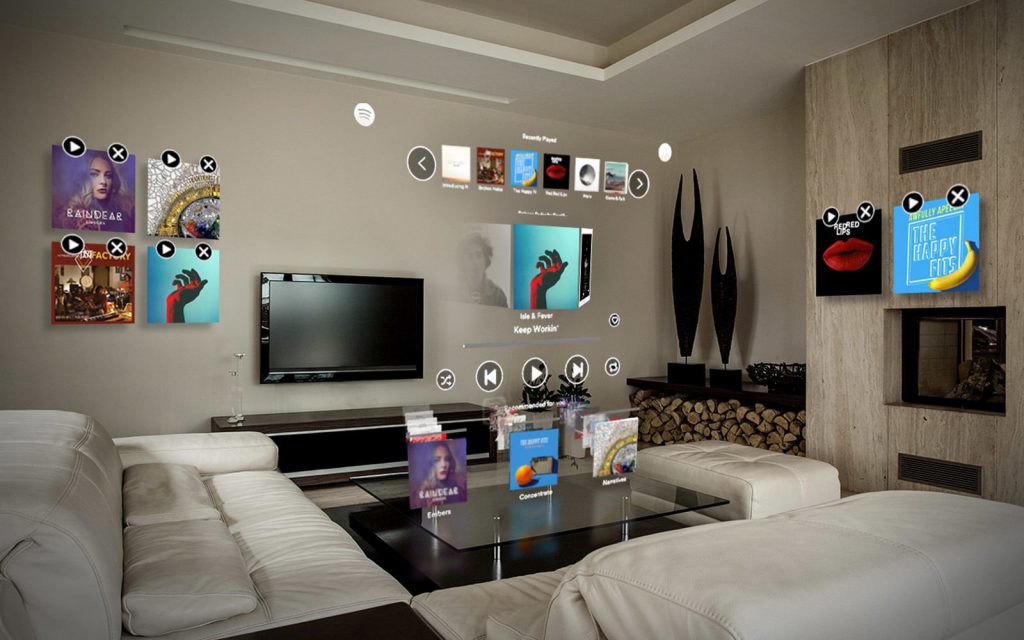
How might immersive techs like those found in BigScreen TV impact teaching and learning related experiences?


From DSC:
Interesting…how might technologies and vendors like Bigscreen TV impact learning-related experiences? Hmmm….time will tell.


Reflections on “Clay Shirky on Mega-Universities and Scale” [Christian]

Clay Shirky on Mega-Universities and Scale — from philonedtech.com by Clay Shirky
[This was a guest post by Clay Shirky that grew out of a conversation that Clay and Phil had about IPEDS enrollment data. Most of the graphs are provided by Phil.]

Excerpts:

Were half a dozen institutions to dominate the online learning landscape with no end to their expansion, or shift what Americans seek in a college degree, that would indeed be one of the greatest transformations in the history of American higher education. The available data, however, casts doubt on that idea.

Though much of the conversation around mega-universities is speculative, we already know what a mega-university actually looks like, one much larger than any university today. It looks like the University of Phoenix, or rather it looked like Phoenix at the beginning of this decade, when it had 470,000 students, the majority of whom took some or all of their classes online. Phoenix back then was six times the size of the next-largest school, Kaplan, with 78,000 students, and nearly five times the size of any university operating today.

From that high-water mark, Phoenix has lost an average of 40,000 students every year of this decade.


From DSC:
First of all, I greatly appreciate both Clay’s and Phil’s thought leadership and their respective contributions to education and learning through the years. I value their perspectives and their work.  Clay and Phil offer up a great article here — one worth your time to read.  

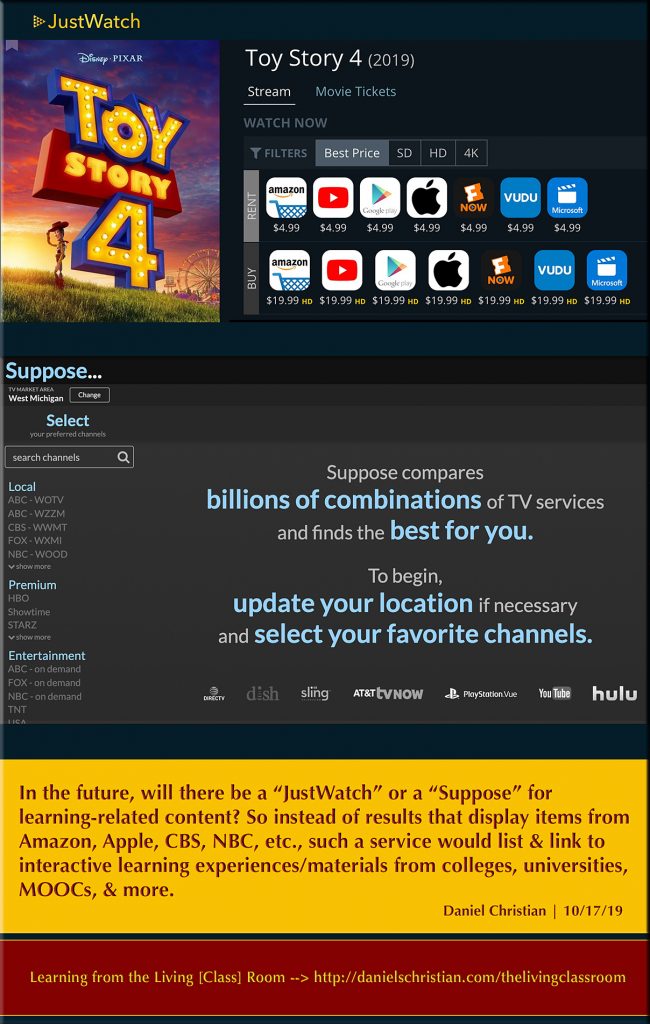
The article made me reflect on what I’ve been building upon and tracking for the last decade — a next generation ***PLATFORM*** that I believe will represent a powerful piece of a global learning ecosystem. I call this vision, “Learning from the Living [Class] Room.” Though the artificial intelligence-backed platform that I’m envisioning doesn’t yet fully exist — this new era and type of learning-based platform ARE coming. The emerging signs, technologies, trends — and “fingerprints”of it, if you will — are beginning to develop all over the place.

Such a platform will:

  • Be aimed at the lifelong learner.
  • Offer up major opportunities to stay relevant and up-to-date with one’s skills.
  • Offer access to the program offerings from many organizations — including the mega-universities, but also, from many other organizations that are not nearly as large as the mega-universities.
  • Be reliant upon human teachers, professors, trainers, subject matter experts, but will be backed up by powerful AI-based technologies/tools. For example, AI-based tools will pulse-check the open job descriptions and the needs of business and present the top ___ areas to go into (how long those areas/jobs last is anyone’s guess, given the exponential pace of technological change).

Below are some quotes that I want to comment on:

Not nothing, but not the kind of environment that will produce an educational Amazon either, especially since the top 30 actually shrank by 0.2% a year.


Instead of an “Amazon vs. the rest” dynamic, online education is turning into something much more widely adopted, where the biggest schools are simply the upper end of a continuum, not so different from their competitors, and not worth treating as members of a separate category.


Since the founding of William and Mary, the country’s second college, higher education in the U.S. hasn’t been a winner-take-all market, and it isn’t one today. We are not entering a world where the largest university operates at outsized scale, we’re leaving that world; 


From DSC:
I don’t see us leaving that world at all…but that’s not my main reflection here. Instead, I’m not focusing on how large the mega-universities will become. When I speak of a forthcoming Walmart of Education or Amazon of Education, what I have in mind is a platform…not one particular organization.

Consider that the vast majority of Amazon’s revenues come from products that other organizations produce. They are a platform, if you will. And in the world of platforms (i.e., software), it IS a winner take all market. 

Bill Gates reflects on this as well in this recent article from The Verge:

“In the software world, particularly for platforms, these are winner-take-all markets.

So it’s all about a forthcoming platform — or platforms. (It could be more than one platform. Consider Apple. Consider Microsoft. Consider Google. Consider Facebook.)

But then the question becomes…would a large amount of universities (and other types of organizations) be willing to offer up their courses on a platform? Well, consider what’s ALREADY happening with FutureLearn:

Finally…one more excerpt from Clay’s article:

Eventually the new ideas lose their power to shock, and end up being widely copied. Institutional transformation starts as heresy and ends as a section in the faculty handbook. 

From DSC:
This is a great point. Reminds me of this tweet from Fred Steube (and I added a piece about Western Telegraph):


Some things to reflect upon…for sure.

 
© 2025 | Daniel Christian