This Copyright Lawsuit Could Shape the Future of Generative AI — from wired.com by Will Knight
Algorithms that create art, text, and code are spreading fast—but legal challenges could throw a wrench in the works.

Excerpts:

A class-action lawsuit filed in a federal court in California this month takes aim at GitHub Copilot, a powerful tool that automatically writes working code when a programmer starts typing. The coder behind the suit argues that GitHub is infringing copyright because it does not provide attribution when Copilot reproduces open-source code covered by a license requiring it.
…
Programmers have, of course, always studied, learned from, and copied each other’s code. But not everyone is sure it is fair for AI to do the same, especially if AI can then churn out tons of valuable code itself, without respecting the source material’s license requirements. “As a technologist, I’m a huge fan of AI ,” Butterick says. “I’m looking forward to all the possibilities of these tools. But they have to be fair to everybody.”

Whatever the outcome of the Copilot case, Villa says it could shape the destiny of other areas of generative AI. If the outcome of the Copilot case hinges on how similar AI-generated code is to its training material, there could be implications for systems that reproduce images or music that matches the style of material in their training data. 

Also legal-related, see:


Also related to AI and art/creativity from Wired.com, see:


How AI will change Education: Part I | Transcend Newsletter #59 — from transcend.substack.com by Alberto Arenaza; with thanks to GSV’s Big 10 for this resource

Excerpt:

You’ve likely been reading for the last few minutes my arguments for why AI is going to change education. You may agree with some points, disagree with others…

Only, those were not my words.

An AI has written every single word in this essay up until here.

The only thing I wrote myself was the first sentence: Artificial Intelligence is going to revolutionize education. The images too, everything was generated by AI.


Using Virtual Reality for Career Training — from techlearning.com by Erik Ofgang
The Boys & Girls Clubs of Indiana have had success using virtual reality simulations to teach students about career opportunities.

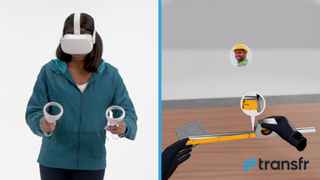
a Woman with a virtual reality set on occupies one half of the screen. The other shows virtual tools that she is controlling.

Excerpts:

Virtual reality can help boost CTE programs and teach students about potential careers in fields they may know nothing about, says Lana Taylor from the Indiana Alliance of Boys & Girls Clubs of America.
…
One of those other resources has been a partnership with Transfer VR to provide students access to headsets to participate in career simulations that can give them a tactile sense of what working in certain careers might be like.

“Not all kids are meant to go to college, not all kids want to do it,” Taylor says. “So it’s important to give them some exposure to different careers and workforce paths that maybe they hadn’t thought of before.” 


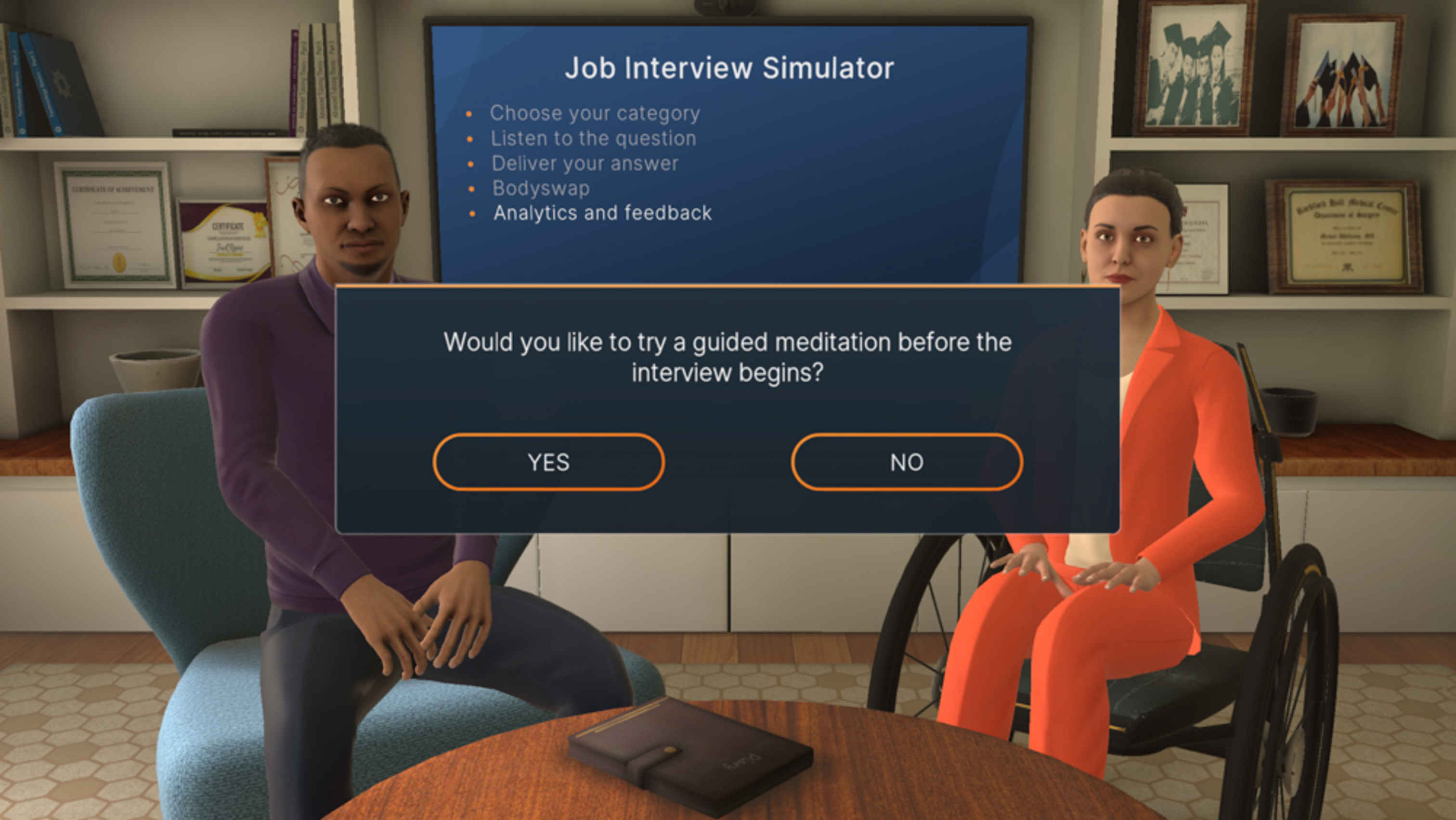
AI interviews in VR prepare students for real jobseeking — from inavateonthenet.net


Get Ready to Relearn How to Use the Internet — from bloomberg.com by Tyle Cowen; with thanks to Sam DeBrule for this resource
Everyone knows that an AI revolution is coming, but no one seems to realize how profoundly it will change their day-to-day life.

Excerpts:

This year has brought a lot of innovation in artificial intelligence, which I have tried to keep up with, but too many people still do not appreciate the import of what is to come. I commonly hear comments such as, “Those are cool images, graphic designers will work with that,” or, “GPT-3 is cool, it will be easier to cheat on term papers.” And then they end by saying: “But it won’t change my life.”

This view is likely to be proven wrong — and soon, as AI is about to revolutionize our entire information architecture. You will have to learn how to use the internet all over again.
…
Change is coming. Consider Twitter, which I use each morning to gather information about the world. Less than two years from now, maybe I will speak into my computer, outline my topics of interest, and somebody’s version of AI will spit back to me a kind of Twitter remix, in a readable format and tailored to my needs.

The AI also will be not only responsive but active. Maybe it will tell me, “Today you really do need to read about Russia and changes in the UK government.” Or I might say, “More serendipity today, please,” and that wish would be granted.

Of course all this is just one man’s opinion. If you disagree, in a few years you will be able to ask the new AI engines what they think.

Some other recent items from Sam DeBrule include:

Natural Language Assessment: A New Framework to Promote Education — from ai.googleblog.com by Kedem Snir and Gal Elidan

Excerpt:

In this blog, we introduce an important natural language understanding (NLU) capability called Natural Language Assessment (NLA), and discuss how it can be helpful in the context of education. While typical NLU tasks focus on the user’s intent, NLA allows for the assessment of an answer from multiple perspectives. In situations where a user wants to know how good their answer is, NLA can offer an analysis of how close the answer is to what is expected. In situations where there may not be a “correct” answer, NLA can offer subtle insights that include topicality, relevance, verbosity, and beyond. We formulate the scope of NLA, present a practical model for carrying out topicality NLA, and showcase how NLA has been used to help job seekers practice answering interview questions with Google’s new interview prep tool, Interview Warmup.

How AI could help translate extreme weather alerts — from axios.com by Ayurella Horn-Muller

Excerpt:

A startup that provides AI-powered translation is working with the National Weather Service to improve language translations of extreme weather alerts across the U.S.

Using GPT-3 to augment human intelligence — from escapingflatland.substack.com by Henrik Karlsson

Excerpt:

When I’ve been doing this with GPT-3, a 175 billion parameter language model, it has been uncanny how much it reminds me of blogging. When I’m writing this, from March through August 2022, large language models are not yet as good at responding to my prompts as the readers of my blog. But their capacity is improving fast and the prices are dropping.

Soon everyone can have an alien intelligence in their inbox.


How Long Should a Branching Scenario Be?— from christytuckerlearning.com by Christy Tucker
How long should a branching scenario be? Is 45 minutes too long? Is there an ideal length for a branching scenario?

Excerpt:

Most of the time, the branching scenarios and simulations I build are around 10 minutes long. Overall, I usually end up at 5-15 minutes for branching scenarios, with interactive video scenarios being at the longer end.

From DSC:
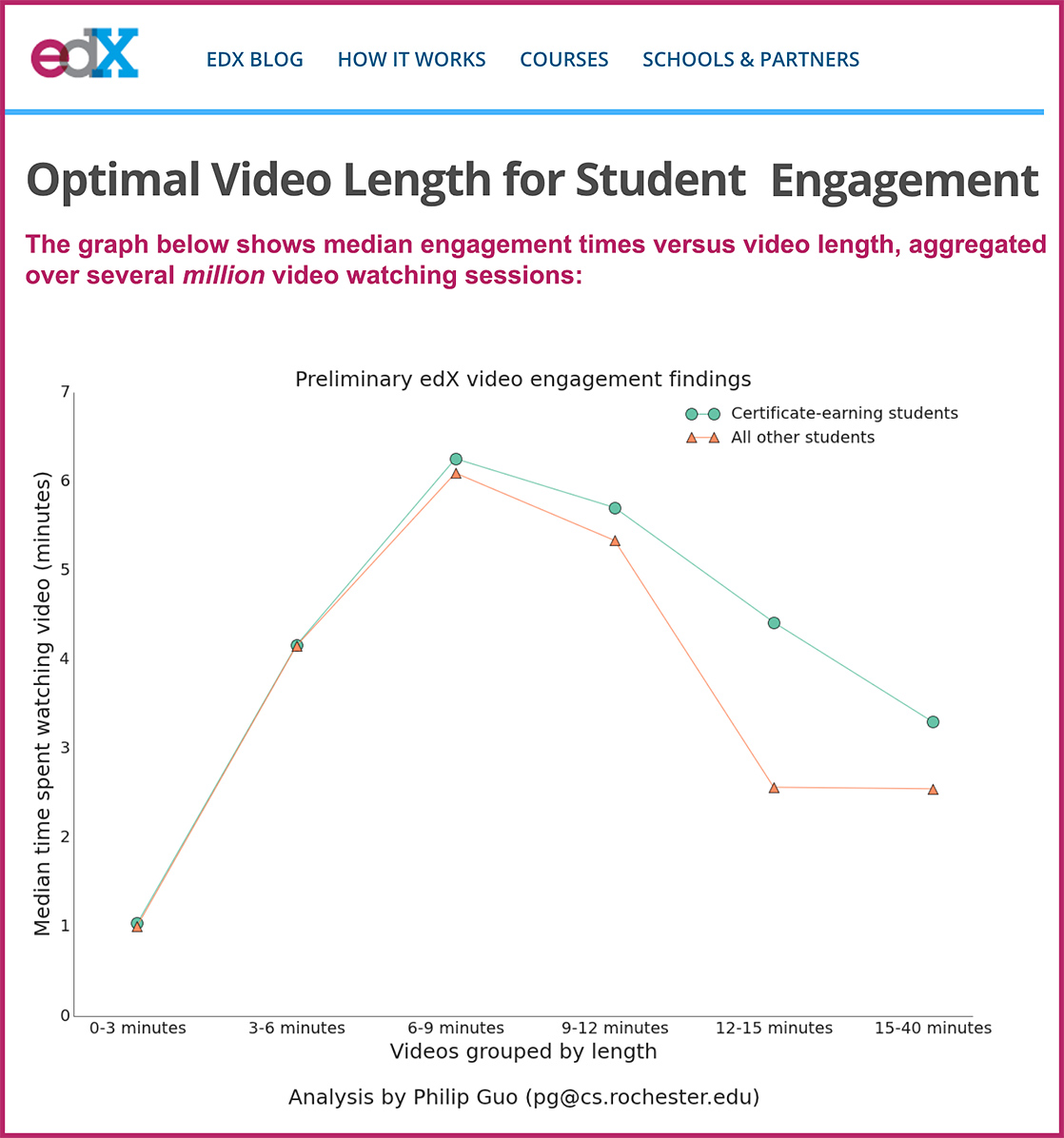
This makes sense to me, as (up to) 6 minutes turned out to be an ideal length for videos.

Excerpt from Optimal Video Length for Student Engagement — from blog.edx.org

The optimal video length is 6 minutes or shorter — students watched most of the way through these short videos. In fact, the average engagement time of any video maxes out at 6 minutes, regardless of its length. And engagement times decrease as videos lengthen: For instance, on average students spent around 3 minutes on videos that are longer than 12 minutes, which means that they engaged with less than a quarter of the content. Finally, certificate-earning students engaged more with videos, presumably because they had greater motivation to learn the material. (These findings appeared in a recent Wall Street Journal article, An Early Report Card on Massive Open Online Courses and its accompanying infographic.)

The take-home message for instructors is that, to maximize student engagement, they should work with instructional designers and video producers to break up their lectures into small, bite-sized pieces.


What might the ramifications be for text-to-everything? [Christian]

From DSC:

  • We can now type in text to get graphics and artwork.
  • We can now type in text to get videos.
  • There are several tools to give us transcripts of what was said during a presentation.
  • We can search videos for spoken words and/or for words listed within slides within a presentation.

Allie Miller’s posting on LinkedIn (see below) pointed these things out as well — along with several other things.


This raises some ideas/questions for me:

  • What might the ramifications be in our learning ecosystems for these types of functionalities? What affordances are forthcoming? For example, a teacher, professor, or trainer could quickly produce several types of media from the same presentation.
  • What’s said in a videoconference or a webinar can already be captured, translated, and transcribed.
  • Or what’s said in a virtual courtroom, or in a telehealth-based appointment. Or perhaps, what we currently think of as a smart/connected TV will give us these functionalities as well.
  • How might this type of thing impact storytelling?
  • Will this help someone who prefers to soak in information via the spoken word, or via a podcast, or via a video?
  • What does this mean for Augmented Reality (AR), Mixed Reality (MR), and/or Virtual Reality (VR) types of devices?
  • Will this kind of thing be standard in the next version of the Internet (Web3)?
  • Will this help people with special needs — and way beyond accessibility-related needs?
  • Will data be next (instead of typing in text)?

Hmmm….interesting times ahead.


3D Scanner Lets You Capture The Real World In VR — from vrscout.com by Kyle Melnick

Excerpt:

VR is about to get a whole lot more real.

Imagine having the power to capture your real-world environment as a hyper-realistic 3D model from the palm of your hand. Well, wonder no more, as peel 3d, a developer of professional-grade 3D scanners, today announced the launch of peel 3 and peel 3.CAD, two new easy-to-use 3D scanners capable of generating high-quality 3D scans for a wide variety of digital mediums, including VR and augmented reality (AR).


NASA & Google Partner To Create An AR Solar System — from vrscout.com by Kyle Melnick

Excerpt:

[On 9/14/22], Google Arts & Culture announced that is has partnered with NASA to further extend its virtual offerings with a new online exhibit featuring a collection of new-and-improved 3D models of our universe brought to life using AR technology.

These 3D models are for more than just entertainment, however. The virtual solar system exhibit features historical annotations that, when selected, display valuable information. Earth’s moon, for example, features landing sites for Apollo 11 and China’s Chang’e-4.


What if smart TVs’ new killer app was a next-generation learning-related platform? [Christian]

TV makers are looking beyond streaming to stay relevant — from protocol.com by Janko Roettgers and Nick Statt

A smart TV's main menu listing what's available -- application wise

Excerpts:

The search for TV’s next killer app
TV makers have some reason to celebrate these days: Streaming has officially surpassed cable and broadcast as the most popular form of TV consumption; smart TVs are increasingly replacing external streaming devices; and the makers of these TVs have largely figured out how to turn those one-time purchases into recurring revenue streams, thanks to ad-supported services.
…
What TV makers need is a new killer app. Consumer electronics companies have for some time toyed with the idea of using TV for all kinds of additional purposes, including gaming, smart home functionality and fitness. Ad-supported video took priority over those use cases over the past few years, but now, TV brands need new ways to differentiate their devices.

Turning the TV into the most useful screen in the house holds a lot of promise for the industry. To truly embrace this trend, TV makers might have to take some bold bets and be willing to push the envelope on what’s possible in the living room.


From DSC:
What if smart TVs’ new killer app was a next-generation learning-related platform? Could smart TVs deliver more blended/hybrid learning? Hyflex-based learning?
.

The Living [Class] Room -- by Daniel Christian -- July 2012 -- a second device used in conjunction with a Smart/Connected TV

.

Or what if smart TVs had to do with delivering telehealth-based apps? Or telelegal/virtual courts-based apps?


From DSC:
I need to learn a lot more about the benefits and the threats/downsides of blockchain-based technologies. Here are two different takes on whether blockchain should be implemented or not — though the second one may be a prime example of the first article (a scam, hyping a tech up for investment purposes, other):

1) ‘Blockchain is bunk’: Crypto critics find their voice — from protocol.com by Benjamin Pimentel
John Stark, founding chief of the SEC’s Office of Internet Enforcement, is joining other experts in a major gathering of crypto skeptics.

Excerpts:

More than 20 years later, Stark is speaking out against what he considers a new wave of fraud. But this time he’s also taking aim at the technology that he says the scammers are using: cryptocurrencies and blockchain.
…
There are so many aspects to it, whether you’re talking about bitcoin and the greater fool theory, or the externalities of ransomware and drug dealing and human sex trafficking, or the financial systemic risk created by cryptocurrency or the real bluster, hype and nonsensical belief in blockchain. There’s so many reasons to be skeptical of cryptocurrency.

Seven or eight years ago, I was willing to entertain the thought that this might be something someday. But I’m just done with that. Because there came a point in my research, my writing and my experience, where I just felt like it’s really shameless.
…
From my perspective, I think the magnificence of this conference is that it’s the first in history to really present these experts who are going to come together for the first time in a way that presents every angle. Because it’s a multifaceted situation. There are hundreds of cryptocurrency conferences, and they are all these lovefests where everyone just sits around and talks about how great it is, because they’re all getting rich from it.

I don’t mean to sound cynical, but that’s the truth. That’s the reality. So it’s a bit of an antidote for that illness, which plagues the space right now.


2) The Biggest Change to our Financial System in 50 Years is Happening in November… — from medium.com by Richard Knight
International Payments are moving to the blockchain (ISO 20022)

Excerpt:

Many cryptocurrency investors are looking to reap massive returns as the 50-year-old international payments system moves onto the blockchain beginning in November 2022.

This is part of what is known as ISO 20022, a single standardization approach to be used by all financial standards initiatives. The new standardization is set to officially begin in November 2022 and be fully implemented by November 2025.

There are many cryptocurrencies that will be integrated into this new financial system, referred to as ISO 20022 compliment cryptocurrencies and there is much speculation these cryptocurrencies will soar in price once the standard is implemented.


Also relevant/see:


How to Use Edtech to Engage Introverted Learners — from edsurge.com by Stacey Roshan

Excerpts:

But we can leverage technology to create more equitable and empowering forums for discussion—to shift from a culture that praises the first person to raise their hand, to one where every individual has a platform to make their ideas seen and heard. I’m talking about using simple web apps.

As an introverted perfectionist who needed time to process and formulate a response before I was ready to share, I began to confuse faster with smarter. Because I saw my peers answering more questions than I was in class—and getting praised for it—I struggled to feel like I measured up.

And so, as a math teacher, it has become my mission to find ways to spotlight all of the unique voices and personalities in my classroom, and to celebrate the diverse approaches students choose to share, rather than valuing one.


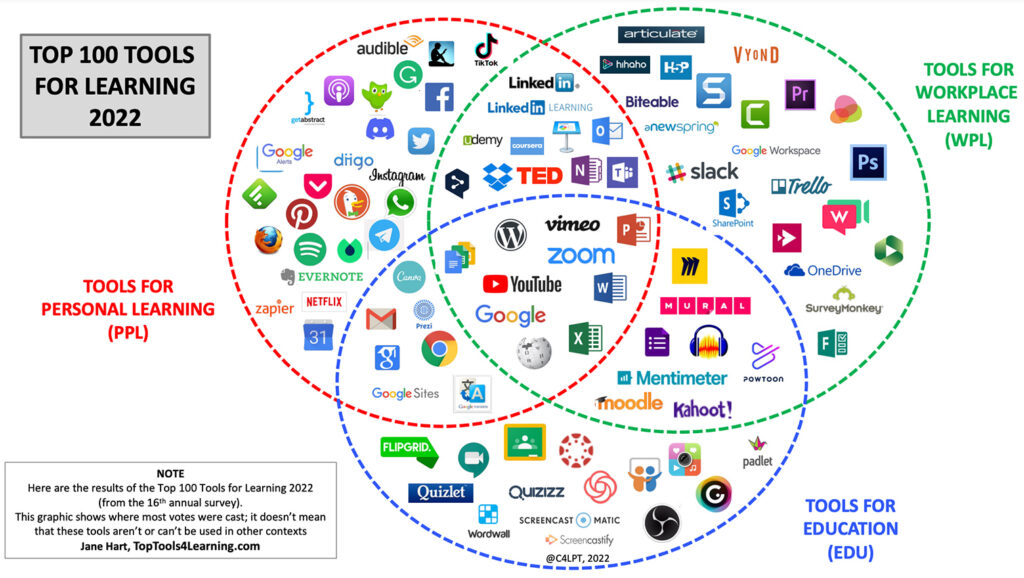
Top Tools for Learning 2022 [Jane Hart]

Top Tools for Learning 2022


Top tools for learning 2022 — from toptools4learning.com by Jane Hart

Excerpt:

In fact, it has become clear that whilst 2021 was the year of experimentation – with an explosion of tools being used as people tried out new things, 2022 has been the year of consolidation – with people reverting to their trusty old favourites. In fact, many of the tools that were knocked off their perches in 2021, have now recovered their lost ground this year.


Also somewhat relevant/see:


Third edition of Teaching at a Distance is now published — from tonybates.ca by Tony Bates

Excerpts:

The book has been up-dated to take account of the impact of the pandemic on teaching and learning, and with more emphasis for those in k-12 education to balance the post-secondary focus.
.

20 Things To Remember About Forgetting — from theelearningcoach.com by Connie Malamed
What Causes Us To Forget

Excerpt:

Even though we use it all day and night, we are usually not aware of our memory’s processes until they fail. Yet remembering and forgetting are crucial aspects of learning. In learning design, it’s important to know what causes us to forget. Here are some key facts about the forgetting process that relate to learning, instruction and creativity.

Jigsaw Explorer — Free Online Jigsaw Puzzles for Students — from educatorstechnology.com by Med Kharbach, PhD

Excerpt:

Jigsaw Explorer is a website that offers a wide variety of online jigsaw puzzles that you can use with kids and students in and out of class. Jigsaw Explorer also allows you to create your own puzzles based on your photos and you can share these puzzles with others via email or through social media websites.

Help All Students Be Seen: Five Tips for Stronger Connections — from blog.edmentum.com by Amy Collins

Excerpt:

I began to challenge myself to set aside my preconceived boxes for them and see each one as a person—complex, with parts they reveal to the world easily and parts they hide. As I did this more and more, I was amazed at how my strategies needed to change in order to truly see each student and make those strong connections that lead to more effective learning. In this blog post, I hope to share some thoughts on how to adjust your own thinking to see the true student within.

An excerpt from Eva Keiffenheim’s recent Learn Letter| learning science to make the most of your mind

Resources for Evidence-Based Teaching
Are you an educator who wants to improve teaching? This website can be a great help. You can access proven, practical and free educational articles on psychology, assessment, behavior, and social-emotional learning. One of my favorite articles include 6 high-impact teaching strategies.
.

This YouTube Star Says AI Will Become a Creative ‘Collaborator’ With Students — from soundcloud.com by Jeff Young and Taryn Southern

Description:

Taryn Southern is a pioneering YouTuber who these days experiments with how cutting edge tech might transform human expression. She’s recorded a pop album that she co-wrote with some AI code, for instance, and she’s created a digital clone of herself that she can use to make videos for her popular YouTube channel. Here’s what she sees coming for education.

#convergence #AR #VR #MR #AI #blockchain #HCI #Metaverse
.

Teacher shortage? Here’s one way around it — from edcircuit.com by EdCircuit Staff

Excerpt:

After seeing the teacher shortage first hand in China, Jessie Sullivan and Isla Iago launched an innovative new start-up that teaches children how to read and write through YouTube – without the need for adult expertise or attention. Since the release in July, the start-up called See Say Write is already being used by schools, homes, and children’s charities in seven different countries.

[Administrator Tips] Sharing the Benefits of Virtual Learning with Homeschooling Families — from blog.edmentum.com

Excerpt:

One of the long-lasting results of the pandemic is the number of ongoing virtual learning programs that have been created, allowing schools to retain students who found that they need or prefer to learn in a virtual environment. Another segment of students who have been increasingly turning to online learning is homeschoolers.

Virtual learning programs offered through the school district have a great deal of benefits to offer homeschooling families. Promoting these benefits and showing families that a district virtual program offers the best of both worlds can help bring families back from independent homeschooling.

While there certainly are differences between traditional homeschooling and online schooling, it is helpful to point out the similarities and benefits so that homeschooling families can make an educated decision about the options available to them.


Addendums on 8/22/22:


Dive Into AI, Avatars and the Metaverse With NVIDIA at SIGGRAPH — from blogs.nvidia.com

Excerpt:

Innovative technologies in AI, virtual worlds and digital humans are shaping the future of design and content creation across every industry. Experience the latest advances from NVIDIA in all these areas at SIGGRAPH, the world’s largest gathering of computer graphics experts, [which ran from Aug. 8-11].

At SIGGRAPH, NVIDIA CEO Jensen Huang Illuminates Three Forces Sparking Graphics Revolution — from blogs.nvidia.com by Rick Merritt
NVIDIA unveils new products and research to transform industries with AI, the metaverse and digital humans.

NVIDIA AI Makes Performance Capture Possible With Any Camera — from blogs.nvidia.com by Isha Salian
Derivative, Notch, Pixotope and others use NVIDIA Vid2Vid Cameo and 3D body-pose estimation tools to drive performances in real time.

How to Start a Career in AI — from blogs.nvidia.com by Brian Caulfield
Four most important steps to starting a career in AI, seven big questions answered.

As Far as the AI Can See: ILM Uses Omniverse DeepSearch to Create the Perfect Sky — from blogs.nvidia.com by Richard Kerris
Omniverse AI-enabled search tool lets legendary studio sift through massive database of 3D scenes.

Future of Creativity on Display ‘In the NVIDIA Studio’ During SIGGRAPH Special Address — from blogs.nvidia.com by Gerardo Degaldo
Major NVIDIA Omniverse updates power 3D virtual worlds, digital twins and avatars, reliably boosted by August NVIDIA Studio Driver; #MadeInMachinima contest winner revealed.

What Is Direct and Indirect Lighting? — from blogs.nvidia.com by JJ Kim
In computer graphics, the right balance between direct and indirect lighting elevates the photorealism of a scene.

NVIDIA Studio Laptops Offer Students AI, Creative Capabilities That Are Best in… Class — from blogs.nvidia.com by Gerardo Degaldo
Designed for creativity and speed, Studio laptops are the ultimate creative tool for aspiring 3D artists, video editors, designers and photographers.

Design in the Age of Digital Twins: A Conversation With Graphics Pioneer Donald Greenberg — from blogs.nvidia.com by Rick Merritt
From his Cornell office, home to a career of 54 years and counting, he shares with SIGGRAPH attendees his latest works in progress.


© 2025 | Daniel Christian