The Metaverse Is Not a Place — from oreilly.com by Tim O’Reilly
It’s a communications medium.

Excerpt:

Foundations of the metaverse
You can continue this exercise by thinking about the metaverse as the combination of multiple technology trend vectors progressing at different speeds and coming from different directions, and pushing the overall vector forward (or backward) accordingly. No new technology is the product of a single vector.

So rather than settling on just “the metaverse is a communications medium,” think about the various technology vectors besides real-time communications that are coming together in the current moment. What news from the future might we be looking for?

  • Virtual Reality/Augmented Reality…
  • Social media…
  • Gaming…
  • AI…
  • Cryptocurrencies and “Web3”…
  • Identity…

#metaverse #AI #communications #gaming #socialmedia #cryptocurrencies #Web3 #identity #bots #XR #VR #emergingtechnologies


How will the Metaverse Influence Business and Legal Processes? — from jdsupra.com

Excerpt:

While some will be hesitant to use the metaverse and adoption is difficult to predict, it is not going away and will undoubtedly affect internal processes, business dealings, case strategy, and more. Organizations should start thinking about the possibilities now to be better prepared for future challenges. Below are some predictions on how the metaverse will influence operations, strategy, and investments across different areas of the enterprise.

Lawyers & the Metaverse — from joetechnologist.com by Elizabeth Beattie and Joseph Raczynski

Excerpt:

In a new Q&A interview, Thomson Reuters’ technologist and futurist Joseph Raczynski offers his insight about the Metaverse and how it will impact the legal industry.

I have likely spoken to thousands of lawyers over the last several years. They are extraordinarily bright, but with one limiting factor — their dedication to their craft. This means that they do not have the time to lift their heads to see what is coming. All these emerging technologies will impact their practices in some way, as well as the business of law. At a minimum, lawyers need the opportunity to focus on the big four: AI, blockchain, workflow, and the grab bag of general emerging technology. There are a multitude of places to learn about these things, but I would include some of the classics such as Google Alerts, Twitter threads on these topics, and magazines like Wired, which should be a staple for everyone.

These legal issues should be on college business officers’ radars — from highereddive.com by Rick Seltzer
A panel at the National Association of College and University Business Officers’ annual meeting covered legal questions spanning many offices on campus.

Let’s not presume that virtual hearings are the best solution in family law — from canadianlawyermag.com by John Silvester

Excerpts:

Proponents argue that virtual hearings are less expensive for clients, leading to enhanced access to justice for those who cannot afford to pay for their lawyers to travel to a courthouse and then sit and wait for hearings to commence. Sounds reasonable, right?

Not so fast.
…
Virtual hearings are advantageous in some scenarios, but there are at least three reasons why moving to an almost entirely virtual legal world may prove problematic.

LawNext Podcast: CALI Executive Director John Mayer on Using Tech to Advance Legal Education and Access to Justice — from lawnext.com by Bob Ambrogi and John Mayer

Excerpt:

In this episode of LawNext, Mayer joins host Bob Ambrogi to discuss the history and mission of CALI and to share his thoughts on the use of technology to enhance legal education. They also talk about how and why A2J Author was developed and how it is used by courts and legal services organizations to help those who are without legal representation. Mayer also shares his thoughts on the future of innovation in law and on the future of CALI.

Louisiana Approves Virtual Custody Services and Proposes Virtual Currency Business Licensing Rules — from natlawreview.com by Moorari Shah and A.J. S. Dhaliwal

Excerpt:

Recently, the Louisiana lawmakers and regulators have taken steps to legalize operations in the state involving virtual currencies. On June 15, the Louisiana governor signed a bill that, effective August 1, 2022, will allow financial institutions and trust companies to provide virtual currency custody services to their customers as long as they satisfy certain requirements on risk-management and compliance. On June 20, the Louisiana Office of Financial Institutions (OFI) published proposed rules on licensing and regulation of virtual currency businesses in the state pursuant to the Louisiana Virtual Currency Business Act, which went into effect on August 1, 2020.


I think we’ve run out of time to effectively practice law in the United States of America [Christian]


From DSC:
Given:

  • the accelerating pace of change that’s been occurring over the last decade or more
  • the current setup of the legal field within the U.S. — and who can practice law
  • the number of emerging technologies now on the landscapes out there

…I think we’ve run out of time to effectively practice law in the U.S. — at least in terms of dealing with emerging technologies. Consider the following items/reflections.


Inside one of the nation’s few hybrid J.D. programs — from highereddive.com by Natalie Schwartz
Shannon Gardner, Syracuse law school’s associate dean for online education, talks about the program’s inaugural graduates and how it has evolved.

Excerpt (emphasis DSC):

In May, Syracuse University’s law school graduated its first class of students earning a Juris Doctor degree through a hybrid program, called JDinteractive, or JDi. The 45 class members were part of almost 200 Syracuse students who received a J.D. this year, according to a university announcement.

The private nonprofit, located in upstate New York, won approval from the American Bar Association in 2018 to offer the three-year hybrid program.

The ABA strictly limits distance education, requiring a waiver for colleges that wish to offer more than one-third of their credits online. To date, the ABA has only approved distance education J.D. programs at about a dozen schools, including Syracuse.

Many folks realize this is the future of legal education — not that it will replace traditional programs. It is one route to pursue a legal education that is here to stay. I did not see it as pressure, and I think, by all accounts, we have definitely proven that it is and can be a success.

Shannon Gardner, associate dean for online education  


From DSC:
It was March 2018. I just started working as a Director of Instructional Services at a law school. I had been involved with online-based learning since 2001.

I was absolutely shocked at how far behind law schools were in terms of offering 100% online-based programs. I was dismayed to find out that 20+ years after such undergraduate programs were made available — and whose effectiveness had been proven time and again — that there were no 100%-online based Juris Doctor (JD) programs in the U.S. (The JD degree is what you have to have to practice law in the U.S. Some folks go on to take further courses after obtaining that degree — that’s when Masters of Law programs like LLM programs kick in.)

Why was this I asked? Much of the answer lies with the extremely tight control that is exercised by the American Bar Association (ABA). They essentially lay down the rules for how much of a law student’s training can be online (normally not more than a third of one’s credit hours, by the way).

Did I say it’s 2022? And let me say the name of that organization again — the American Bar Association (ABA).

Graphic by Daniel S. Christian

Not to scare you (too much), but this is the organization that is supposed to be in charge of developing lawyers who are already having to deal with issues and legal concerns arising from the following technologies:

  • Artificial Intelligence (AI) — Machine Learning (ML), Natural Language Processing (NLP), algorithms, bots, and the like
  • The Internet of Things (IoT) and/or the Internet of Everything (IoE)
  • Extended Reality (XR) — Augmented Reality (AR), Mixed Reality (MR), Virtual Reality (VR)
  • Holographic communications
  • Big data
  • High-end robotics
  • The Metaverse
  • Cryptocurrencies
  • NFTs
  • Web3
  • Blockchain
  • …and the like

I don’t think there’s enough time for the ABA — and then law schools — to reinvent themselves. We no longer have that luxury. (And most existing/practicing lawyers don’t have the time to get up the steep learning curves involved here — in addition to their current responsibilities.)

The other option is to use teams of specialists, That’s our best hope. If the use of what’s called nonlawyers* doesn’t increase greatly, the U.S. has little hope of dealing with legal matters that are already arising from such emerging technologies. 

So let’s hope the legal field catches up with the pace of change that’s been accelerating for years now. If not, we’re in trouble.

* Nonlawyers — not a very complimentary term…
I hope they come up with something else.
Some use the term Paralegals.
I’m sure there are other terms as well. 


From DSC:
There is hope though. As Gabe Teninbaum just posted the resource below (out on Twitter). I just think the lack of responsiveness from the ABA has caught up with us. We’ve run out of time for doing “business as usual.”

Law students want more distance education classes, according to ABA findings — from abajournal.com by Stephanie Francis Ward

Excerpt:

A recent survey of 1,394 students in their third year of law school found that 68.65% wanted the ability to earn more distance education credits than what their schools offered.


Matthew Ball on the metaverse: We’ve never seen a shift this enormous — protocol.com by Janko Roettgers
The leading metaverse theorist shares his thoughts on the sudden rise of the concept, its utility for the enterprise and what we still get wrong about the metaverse.

Excerpts:

What are the biggest misconceptions about the metaverse?
First, the idea that the metaverse is immersive virtual reality, such as an Oculus or Meta Quest. That’s an access device. It would be akin to saying the mobile internet is a smartphone.

We should think of the metaverse as perhaps changing the devices we use, the experiences, business models, protocols and behaviors that we enjoy online. But we’ll keep using smartphones, keyboards. We don’t need to do all video conferences or all calls in 3D. It’s supplements and complements, doesn’t replace everything.

Also relevant/see:

A former Amazon exec thinks Disney will win the metaverse — from protocol.com by

Excerpt:

This month, Ball is publishing his book, “The Metaverse: And How It Will Revolutionize Everything.” The work explains in detail what the metaverse is all about and which shifts in tech, business and culture need to fall into place for it to come into existence.

How will the metaverse change Hollywood? In his book, Ball argues that people tend to underestimate the changes new technologies will have on media and entertainment.

  • Instead of just seeing a movie play out in 360 degrees around us, we’ll want to be part of the movie and play a more active role.
  • One way to achieve that is through games, which have long blurred the lines between storytelling and interactivity. But Ball also predicts there will be a wide range of adjacent content experiences, from virtual Tinder dates in the “Star Wars” universe to Peloton rides through your favorite movie sets.

Addendum on 7/24/22:

Neurodiversity, Inclusion And The Metaverse — from workdesign.com by Derek McCallum

Excerpt:

Innovation in virtual and augmented reality platforms and the vast opportunities connected to the metaverse are driving innovation in nearly every industry. In the workplace, future-focused companies are increasingly exploring ways to use this nascent technology to offer workers more choices and better support for neurodiverse employees.

It would be nearly impossible to list all the challenges and opportunities associated with this technology in a single article, so I’ll keep things focused on an area that is top-of-mind right now as many of us start to make our way back into the office—the workplace. The truth is, while we can use our expertise and experience to anticipate outcomes, no one truly knows what the metaverse will become and what the wide-ranging effects will be. At the moment, the possibilities are exciting and bring to mind more questions than answers. As a principal and hands-on designer in a large, diverse practice, my hope is that we will be able to collectively harness the inherent opportunities of the metaverse to support richer, more accessible human experiences across all aspects of the built environment, and that includes the workplace.


‘Hologram patients’ and mixed reality headsets help train UK medical students in world first — from uk.news.yahoo.com

Excerpts:

Medical students in Cambridge, England are experiencing a new way of “hands-on learning” – featuring the use of holographic patients.

Through a mixed reality training system called HoloScenarios, students at Addenbrooke’s Hospital, part of the Cambridge University Hospitals NHS Foundation Trust, are now being trained via immersive holographic patient scenarios in a world first.
…
The new technology is aimed at providing a more affordable alternative to traditional immersive medical simulation training involving patient actors, which can demand a lot of resources.

Developers also hope the technology will help improve access to medical training worldwide.


Top Content Providers For Immersive Learning (2022) — from elearningindustry.com by Christopher Pappas

Summary: 

Immersive learning experiences allow learners to interact by simulating real-life scenarios. Are you ready to offer engaging virtual environments and experiences to your workforce? Dive right into this thoroughly curated top list featuring the best content providers for VR training and bring your teams one step closer to the Metaverse.


‘Accessibility is a journey’: A DEI expert on disability rights — from hrdive.com by Caroline Colvin
Employers can wait for a worker to request reasonable accommodation under the ADA, but Kelly Hermann asks: Why not be accommodating from the start?

Excerpt:

Often, employers jump to the obstacles that exist in physical spaces: nonexistent ramps for wheelchairs, manual doors that lack motion sensors, and the like. But the digital world presents challenges as well. Hermann and the U Phoenix accessibility team likes to “demystify” disability for campus members seeking their counsel, she said.

“Are you making those links descriptive and are you using keywords? Or are you just saying ‘click here’ and that’s your link?” Hermann asked. Like a sighted person, an individual with a disability can also scan a webpage for links with assistive technology, but this happens audibly, Hermann said, “They tell that tool to skip by link and this is what they hear: ‘Click here.’ ‘Click here.’ ‘Click here.’ ‘Click here.’ With four links on the page all hyperlinked with ‘click here,’ [they] don’t know where [they’re] going.”


What’s next for online education? — from educationalist.substack.com by Alexandra Mihai

Excerpt (emphasis DSC):

An ecosystem not a dichotomy
As you’re hopefully already getting from my thoughts so far, I personally see our options for quality education in the future more like an ecosystem and not a series of mutually exclusive paths. It’s time to discard- or at least question-the “online vs. in person” dichotomy, almost always unfavourable to online education. It’s time to think in a more nuanced way about this. And, yes, you’ve guessed, more nuanced is always more difficult. Seeing the shades of grey requires a critical lens that we don’t need to see black and white.

The extent to which online education will be used in the future does not depend only on people (micro level), it depends on institutions (meso level) and policies (macro level).

The learning ecosystem, in my view:

    • includes various modalities used in a complementary way and as a continuum;
    • serves a multitude of audiences, at different stages of learning, with different aims and degrees of engagement;
    • requires comprehensive and interconnected support structures at institutional level, for students and faculty.

Also from educationalist.substack.com by Alexandra Mihai, see:

Intentional learning design — from educationalist.substack.com by Alexandra Mihai

Excerpt:

My definition
Let’s start with a definition. By intentional learning design I mean designing learning experiences:

    • Focusing on the “why”: ensuring that any decision taken at the design stage is aligned with the overall narrative of the course and, more precisely, with the learning objectives; this requires self-reflection, at least some knowledge of the main pedagogical principles, attention to detail and openness to see learning design as an iterative process and not a box on a checklist;
    • Focusing on students’ experience: designing a course/ programme that is well tailored to students’ needs; this requires knowing your students well, making your design choices explicit to them and involving them in an ongoing dialogue.

Mid-term reflections on my American adventure

Excerpt:

A sneak peek into my research on Centres for Teaching and Learning (CTLs)
With a big part of the data collection already behind me, I thought I’d briefly share here some of my most important- and sometimes surprising- findings so far. While still pretty superficial, this can hopefully give you an insight into the discussions I’ve been having and hopefully make you curious to find out more once I’ll get to publish my results.

    • Positioning of CTLs.
    • Sense of CTL vulnerability.
    • The backgrounds and personalities of CTL leaders.
    • Integrated CTLs.
    • Credibility.
    • Who works in CTLs?
    • Professional development and career paths in CTLs.
    • CTL offer and programming.
    • Graduate student support.
    • Online education.
 

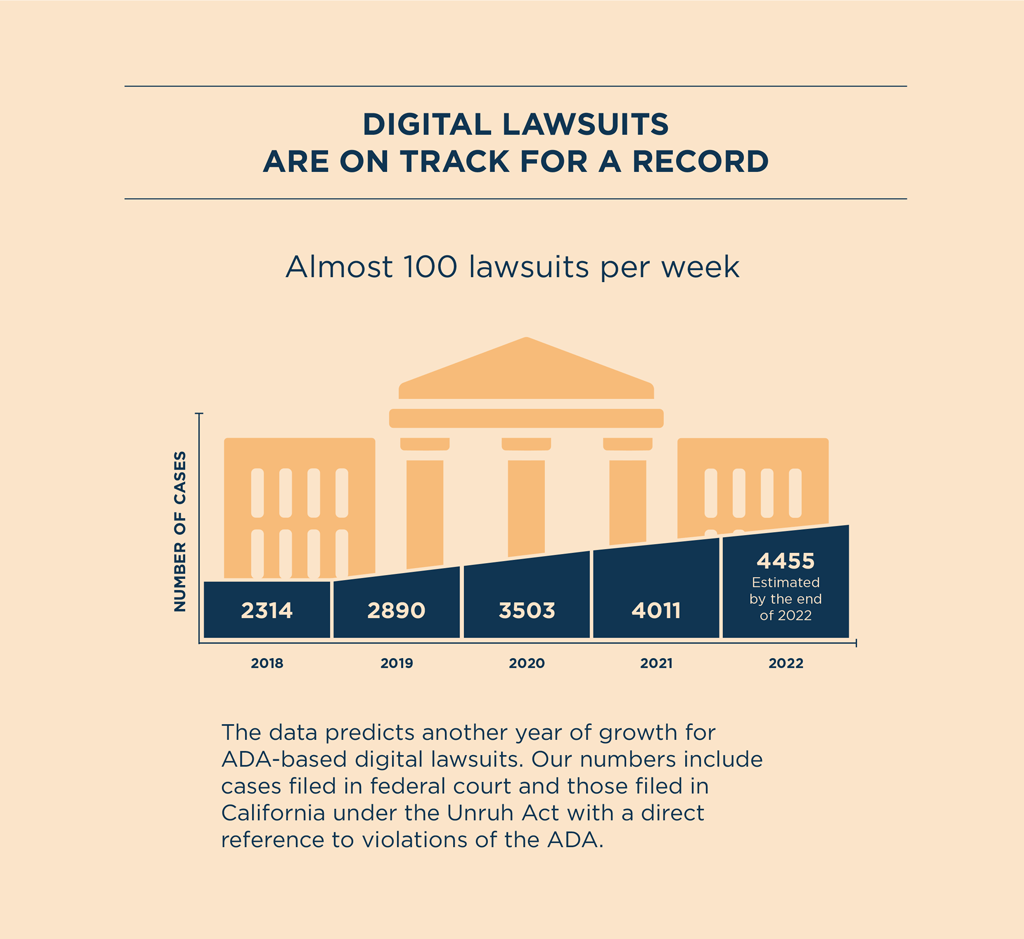
6 ADA accessibility trends revealed in our mid-year 2022 report — from blog.usablenet.com by Jason Taylor

Excerpt:

We just published our mid-year ADA web and App report created by the UsableNet research team reviewing all lawsuits filed in federal courts under the ADA and California state court under Unruh. We review the cases to identify where a digital property, including websites, mobile apps, and video, is the subject of the claim. Our bi-annual reports let UsableNet inform our clients and provide them with the most up-to-date advice for planning their digital accessibility initiatives.

Here is my main take on some key numbers based on what we have seen in 2022 and what’s driving those numbers. 


 WEB ACCESSIBILITY LAWSUIT NUMBERS ARE HIGH AND SET TO ONLY GET HIGHER.


From DSC:
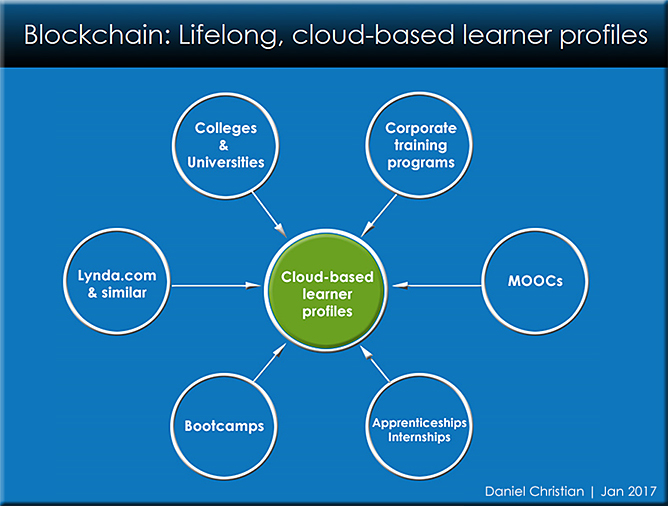
An AI-backed platform will constantly search all job postings and present the most desired skills in the marketplace and then how to get those skills. The providers will be individuals, organizations, training providers, traditional institutions of higher education, vendors and more.

Depending upon what happens with blockchain — and if a much more energy-efficient/environmentally-friendly solution can be implemented — blockchain may be a part of that equation.


Meet the metaverse: Creating real value in a virtual world — from mckinsey.com with Eric Hazan and Lareina Yee

Excerpt (emphasis DSC):

Welcome to the metaverse. Now, where exactly are we? Imagine for a moment the next iteration of the internet, seamlessly combining our physical and digital lives. It’s many things: a gaming platform, a virtual retail spot, a training tool, an advertising channel, a digital classroom, a gateway to entirely new virtual experiences. While the metaverse continues to be defined, its potential to unleash the next wave of digital disruption is clear. In the first five months of 2022, more than $120 billion have been invested in building out metaverse technology and infrastructure. That’s more than double the $57 billion invested in all of 2021.

How would you define the metaverse?
Lareina: What’s exciting is that the metaverse, like the internet, is the next platform on which we can work, live, connect, and collaborate. It’s going to be an immersive virtual environment that connects different worlds and communities. There are going to be creators and alternative currencies that you can buy and sell things with. It will have a lot of the components of Web3 and gaming and AR, but it will be much larger.

Also relevant/see:


Also relevant/see:


Some learning-related tips from Eva Keiffenheim’s Learn Letter


Excerpts from Eva’s 6/15/22 letter re: learning a language — with Mathias Barra, who “has studied about 20 languages and is fluent in six”

2) The best way to mastery is by making language learning part of your life
There’s no single best way to study languages. Mathias approached every language differently.

The most important thing is to find some activities that you actually enjoy in the language. For example, you can:

  • watch a Netflix series with double subtitles with the free Language Reactor extension
  • reading a book in the language you’re learning, for example with easy readers?
  • go to radio.garden and listen to the language you’re learning
  • switch your phone settings to another language
  • write your diary in the language you’re learning

“The best way to study languages is not to limit it to study time, but to make it part of your life, for example, through exposure.”
…
Some tools and resources Mathias recommends:

  • iTalki offers 1-on-1 lessons in more than 150 languages
  • Journaly allows you to type a text that natives correct
  • Slowly connects you with a language tandem for writing letters
  • HiNative gets you answers from native speakers
  • Speechling helps you work on listening comprehension

See the full interview here.

And from Eva’s 6/22/22 Learn Letter:

According to this concept, there’s an optimal arousal level for task performance. The Yerkes-Dodson Law says there is an empirical relationship between stress and performance. Yerkes and Dodson discovered that the optimal arousal level depends on the complexity and difficulty of the task.

From DSC:
Reading a bit about the Yerkes-Dodson Law, I was reminded of a bad learning experience from years ago. I recall sitting in a conference room at Baxter Healthcare and I was trying to learn more about programming.  I had just been switched into a new group and my new supervisor was trying to teach me some basic items (basic to him, anyway). He was getting increasingly frustrated at me for not understanding some things. The more frustrated he got, the less I could even concentrate on what he was saying and trying to teach me. 

Along these lines, I also remember a relative trying to teach another relative some new things. Again, the more upset the “teacher” got, the less able the “learner” was able to concentrate. It didn’t end well. 

Oh…what’s that?! I’m hearing a loud “Amen!!!” coming from countless music teachers and students out there too. 

For these kinds of reasons, I want to learn more about the place of emotion in our learning ecosystems.

 
© 2025 | Daniel Christian