Bookless public library opens in Texas — from npr.org by Bill Chappell with thanks to Laura Goodrich/Don Tapscott for this resource
Excerpt:
.

If this is successful and takes off, can this also be achieved/made available from our living rooms…?
Bookless public library opens in Texas — from npr.org by Bill Chappell with thanks to Laura Goodrich/Don Tapscott for this resource
Excerpt:
.

7:00 a.m.
REGISTRATION
7:45 – 8:45 a.m. The Hall
BREAKFAST PANEL: BRIDGING THE KNOWLEDGE GAP
Technology is giving educators and students more tools to promote the exchange of ideas and expertise. That exchange is key to improved knowledge and empowerment, but without a level playing field, equal access and the right tools, we will never take full advantage of the opportunity to connect. Panelists will discuss the knowledge gap and how new technologies and motivated citizens are bridging that gap to support formal education as well as lifelong learning.
Sponsored by Bank of America
Aditya Bhasin, consumer marketing, analytics and digital banking executive, Bank of America
Gov. Jack Markell, Governor of Delaware
Ted Mitchell, President and C.E.O., NewSchools Venture Fund
Jennifer Tescher, President and C.E.O., The Center for Financial Services Innovation
Joanne Weiss, Former Chief of Staff to the Secretary, U.S. Department of Education
Moderated by John Merrow, Education Correspondent, PBS NewsHour
9 – 9:10 a.m.
WELCOME
Arthur Sulzberger Jr., publisher, The New York Times
9:10 – 9:45 a.m.
KEYNOTE ADDRESS
Sal Khan, founder of the Khan Academy
including 9:30-9:45 audience questions
9:45 – 10:30 a.m.
DEBATE: HAS THE UNIVERSITY AS AN INSTITUTION HAD ITS DAY?
Higher education has always been an array of autonomous institutions, each with their own courses, their own faculty, and their own requirements for their own degrees. But online education is starting to break down those lines in ways that are likely to lead to a lot more shared courses, consortia and credit transfers. In addition, there are a growing number of companies (not schools) providing higher education courses outside of the traditional higher education institutions. As we move towards the possibility of a multi-institution, multicredit qualification, is the traditional higher education institution in danger of losing applicants, income and identity?
Anant Agarwal, president, edX
Sal Khan, founder, The Khan Academy
Biddy Martin, president, Amherst College
Nancy Zimpher, Chancellor, SUNY
Moderated by David Leonhardt, Washington bureau chief, The New York Times
including 10:15 – 10:30 audience questions
10:30 – 11 a.m.
COFFEE BREAK
11 – 11:45 a.m.
THE DEALBOOK PANEL: WHAT’S THE NEW ERA BUSINESS MODEL FOR HIGHER EDUCATION?
The traditional idea that education is something the government provides, free, for the public good, is coming under assault from an increasing assortment of new ventures offering for-profit schools, for-profit online courses, tests, curricula, interactive whiteboard, learning management systems, paid-for verified certificates of achievement, e-books, e-tutoring, e-study groups and more. Which areas have the most potential growth — and where is the smart investment going?
Donn Davis, co-founder, Revolution
Tony Florence, general partner, NEA
Deborah Quazzo, founder and managing partner, GSV Advisors
Moderated by Andrew Ross Sorkin, columnist/editor DealBook, The New York Times
Including 11:30 – 11:45 audience questions
11:45 a.m. – 12:10 p.m.
CONVERSATION: THE DISRUPTION OF HIGHER EDUCATION
Michael Horn, co-founder, The Clayton Christenen Institute for Disruptive Innovation
In conversation with David Leonhardt, Washington bureau chief, The New York Times
12:10 – 12:45 p.m.
AUDIENCE DISCUSSION: INCREASING STUDENT ENGAGEMENT
Student attrition is as high as 90 percent for some of the biggest online courses, and remains a problem even
in smaller-scale courses when compared with traditional face-to-face classes. The problem is exacerbated for
community college students who enroll in online courses, or for low-performing students. How can we increase student engagement in online classes, particularly among students who lack competence or confidence?
Yvonne Chan, principal, Vaughn Next Century Learning Center
John Palfrey Jr, head of school, Phillips Academy, Andover
Diane Tavenner, founder and C.E.O., Summit Public Schools
Moderated by Bill Keller, Op-Ed columnist, The New York Times
12:45 – 1:15 p.m.
COLUMNIST CONVERSATION
Senator Bob Kerrey, executive chairman, Minerva Institute
in conversation with Bill Keller, Op-Ed columnist, The New York Times
1:15 – 3:00 p.m.
LUNCH PANEL A: INCREASING HIGHER EDUCATION AFFORDABILTY AND COMPLETION THROUGH ONLINE INNOVATIONS
A thoughtful conversation about innovative online models that are lowering the cost of degrees and increasing degree completion. How do these models work – and where are they going?
Sponsored by Capella
(Held in The Hall)
Mark Becker, President, Georgia State University
Scott Kinney, President, Capella University
Jamie Merisotis, President and C.E.O., Lumina Foundation
Burck Smith, Founder and C.E.O., StraighterLine
Moderated by Melody Barnes, C.E.O., Melody Barnes Solutions (former Director of the White House Domestic Policy Council)
1:15 – 3:00 p.m.
LUNCH PANEL B: A MATHEMATICIAN, SCIENTIST, DOCTOR, AND SOCIOLOGIST WALK INTO A ZOMBIE APOCALYPSE…WHO SURVIVES?
What skills give you the best shot at surviving a zombie apocalypse? Can you do anything to increase your odds of survival? Get an extended preview of UC Irvine’s MOOC “Society, Science, Survival: Lessons from AMC’s The Walking Dead” as we explore what math, science, public health, and sociology have to do with a zombie apocalypse and, in particular, survival. At the end of the panel, the audience will vote on who stands the best chance of survival: mathematician, scientist, doctor, or sociologist.
Sponsored by Instructure
(Held on 15th Floor)
Joanne Christopherson, Associate Director of the Demographic and Social Analysis M.A. Program, University of California, Irvine
Michael Dennin, Professor of physics and astronomy, University of California, Irvine
Sarah Eichhorn, Assistant Vice Chair for undergraduate studies in the mathematics department, University of California, Irvine
Melissa Loble, Associate Dean of distance learning, University of California, Irvine
Moderated by Josh Coates, CEO, Instructure
3 – 3:30 p.m.
COLUMNIST CONVERSATION
In an increasingly connected world, how do we ensure our students are being prepared to compete in a knowledge-based, global economy? What role does technology play in education, and what does the future of learning look like?
Arne Duncan, US Secretary of Education
interviewed by David Leonhardt, Washington bureau chief, The New York Times
3:30 – 4:15 p.m.
IS ONLINE THE GREAT EQUALIZER?
There is no doubt that we are in the middle of an online education revolution, which offers huge potential to broaden access to education and therefore, in theory, level the playing field for students from lower-income, lower-privileged backgrounds. But evidence to date shows that the increasing number of poorly designed courses could actually have the reverse effect and put vulnerable students at an even bigger disadvantage.
Karen Cator, C.E.O., Digital Promise
Dean Florez, president, 20 Million Minds Foundation
Candace Thille, director of the Open Learning Initiative (OLI) and assistant professor of education, Stanford University
David Wiley, founder, Lumen Learning
Moderated by Tina Rosenberg, Op-Ed Columnist, The New York Times
Including 4:00 – 4:15 p.m. audience questions
4:15 – 4:45 p.m.
COFFEE BREAK
4:45 – 5 p.m.
COLUMNIST CONVERSATION
Daphne Koller, co-founder, Coursera
in conversation with Ethan Bronner, Deputy National Editor, The New York Times
5 – 5:45 p.m
GAMECHANGERS: HOW WILL ONLINE EDUCATION REVOLUTIONIZE WHAT WE KNOW AND UNDERSTAND ABOUT LEARNING?
Traditionally, pedagogical research has been done in tiny groups; but new-generation classes of 60,000 students make it possible to do large scale testing and provide potentially game-changing research on how students learn best. Using the Big Data from online courses, we have access to new information about what pedagogical approaches work best. MOOCs, and many more traditional online classes, can track every keystroke, every homework assignment and every test answer a student provides. This can produce a huge amount of data on how long students pay attention to a lecture, where they get stuck in a problem set, what they do to get unstuck, what format and pacing of lectures, demonstrations, labs and quizzes lead to the best outcomes, and so on. How can we use Big Data for the good of the education profession, and not for “Big Brother”?
Daphne Koller, co-founder, Coursera
Alec Ross, senior advisor on innovation and former senior advisor to Secretary Hillary Clinton at the U.S. State Department
Paula Singer, C.E.O. Global Products and Services, Laureate Education
Moderated by Ethan Bronner, Deputy National Editor, The New York Times
including 5:30 – 5:45 p.m. audience questions
5:45 – 6 p.m.
COLUMNIST CONVERSATION
Amol Bhave, student, MIT
in conversation with Tina Rosenberg, Op-Ed Columnist, The New York Times
6 p.m.
CLOSING REMARKS
Gerald Marzorati, editorial director and general manager, conferences, The New York Times
ChemDraw ~ Favorite Things Series — from collegiatecareercoach.com by Mignon Brooks
Excerpt:
Also see:
From DSC:
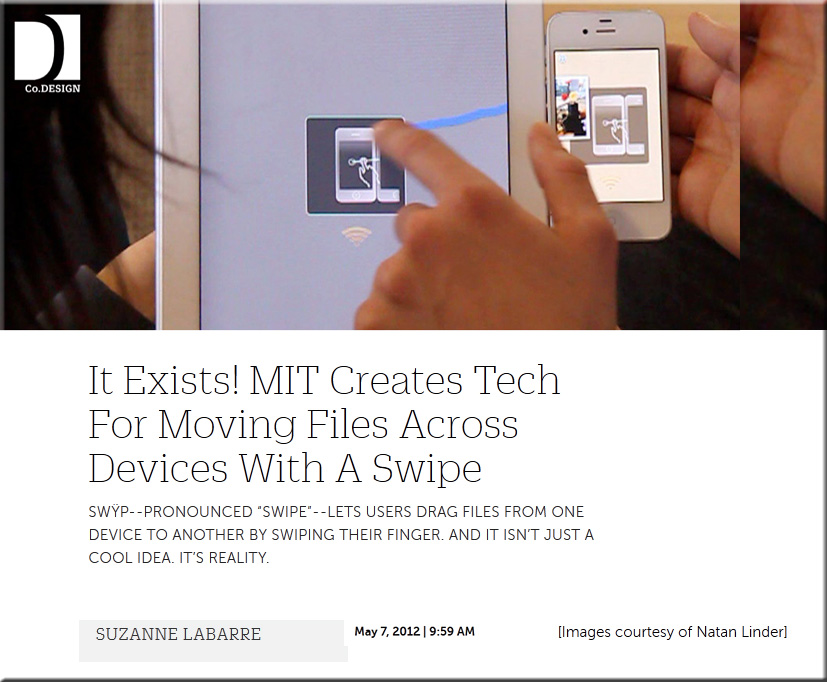
I couldn’t locate the relevant information for Flick-to-Share (or did they mean Flick and Share?); however, the idea of swiping to easily and efficiently share files most assuredly is part of the future Smart Classroom. see:
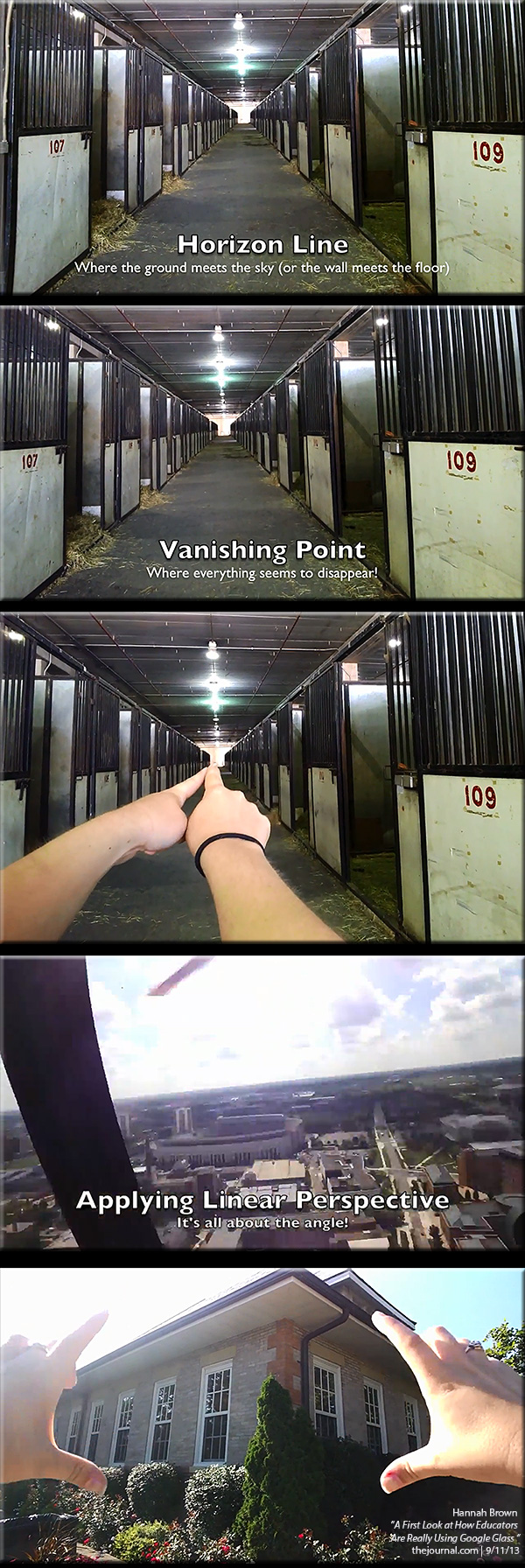
A first look at how educators are really using Google Glass — from by Stephen Noonoo
Excerpts (emphasis DSC):
Per Andrew Vanden Heuvel:
What Glass does offer, Vanden Heuvel said, is a shift in perspective, particularly because teachers can use it as a tool to engage students faster and more easily than before. After returning from Geneva, Vanden Heuvel launched a YouTube channel devoted to his experiments with science–and Glass–called STEMBite. To date, in more than two dozen videos, he’s guided viewers through the physics of ball spin on the tennis court to the polarization of light through (appropriately enough) a pair of glasses.
“What I’m excited by making these videos is not only that they’re filmed with Google Glass, but they’re high engagement videos, so they’re meant to be really short and to get kids to think about how math and science is all around,” he said. “I suppose I could have done that before, but it’s just so easy now.”
Per Hanna Brown:
“I’ve had videos in my classroom before–that’s not a novel thing–but I’ve never been able to take a video from my eye perspective,” said Hannah Brown, another early Glass adopter who works as a high school art teacher at Electronic Classroom of Tomorrow, an all-online statewide charter school in Ohio.
From DSC:
Virtual field trips, mobile learning, videoconferencing, web-based collaboration, Human Computer Interaction (HCI), and other topics come to my mind when I see this.
Born Digital: Meet the college class of 2017 — from Yahoo! News by Liz Goodwin
Excerpt:
Here are some of the emerging trends that may come to define the class of 2017.
Also see:
From DSC:
IBM Watson continues to expand into different disciplines/areas, which currently include:
But Watson is also entering the marketing and education/research realms.
I see a Watson-type-of-tool as being a key ingredient for future MOOCs and the best chance for MOOCs to morph into something very powerful indeed — offloading the majority of the workload to computers/software/intelligent tutoring/learning agents, while at the same time allowing students to connect with each other and/or to Subject Matter Experts (SME’s) as appropriate.
The price of education could hopefully come way down — depending upon the costs involved with licensing Watson or a similar set of technologies — as IBM could spread out their costs to multiple institutions/organizations. This vision represents another important step towards the “Walmart of Education” that continues to develop before our eyes.
Taking this even one step further, I see this system being available to us on our mobile devices as well as in our living rooms — as the telephone, the television, and the computer continue to converge. Blended learning on steroids.
What would make this really powerful would be to provide:
Such an architecture could be applied towards lifelong learning opportunities — addressing what we now know as K-12, higher education, and corporate training/development.
.
![The Living [Class] Room -- by Daniel Christian -- July 2012 -- a second device used in conjunction with a Smart/Connected TV](http://danielschristian.com/learning-ecosystems/wp-content/uploads/2012/07/The-Living-Class-Room-Daniel-S-Christian-July-2012.jpg)
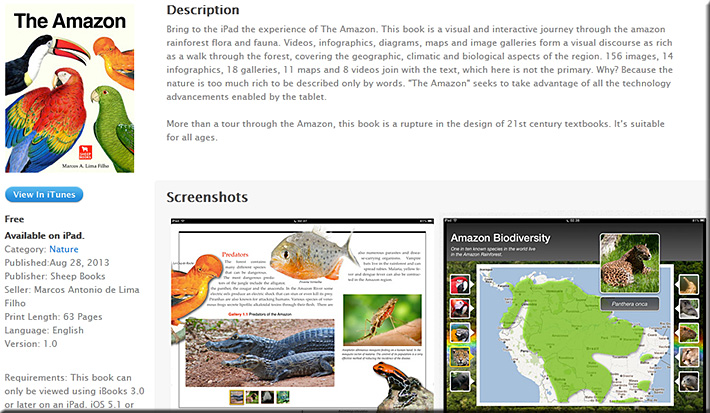
The Amazon
By Marcos Antonio de Lima Filho | Master in Design | Federal University of Pernambuco – Brazil
This is a free book which is available in iBooks 3.0+ on the iPad and/or using iTunes on your computer. Marcos designed this book to take advantage of all the interaction enabled by iPads.
156 images, 14 infographics, 18 galleries, 11 maps and 8 videos join with the text, which here is not the primary. Why? Because the nature is much too rich to be described only by words. The Amazon seeks to take advantage of all the technology advancements enabled by the tablet.
Great work Marcos! Nice interactivity, use of digital audio and video, graphics, and more. Check it out!
.
About the program (emphasis DSC):
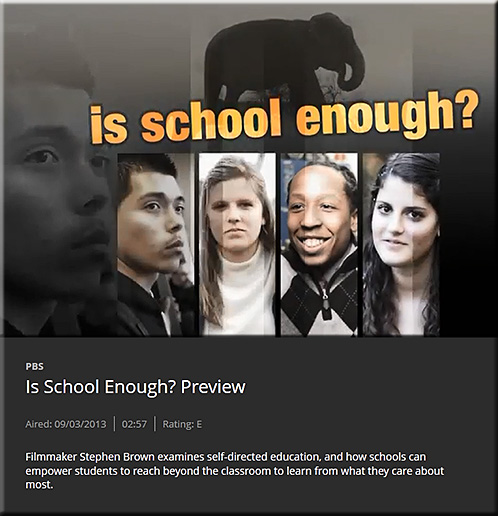
Thanks to digital media, the Internet and new advances in understanding how students learn, educators are beginning to appreciate the importance of breaking out of the classroom and into the wider world. There’s a growing understanding that learning should not just be preparation for life, but is actually “life itself.”
Is School Enough? documents vivid examples of where new modes of learning and engagement are taking hold and flourishing. Featuring nationally recognized educators and researchers, Stephen Brown’s powerful stories show that when students have the opportunity to explore real interests and problems, they step up and perform at the highest level. This new approach reaches motivated students as well as kids that educators call “the bright and bored,” helping these learners tune in rather than drop out.
Is School Enough? introduces parents, educators, and everyone passionate about learning to:
• Students in Maine who work with veterinary experts and digital apps to prepare a new home for a retired circus elephant.
• Young people worldwide who use the online Harry Potter Alliance to launch meaningful social justice initiatives.
• A curious and creative teen who crafts her own educational experience based on her passion for natural healing and yoga.
• A young man in Oakland who produces state-of-the-art music videos to engage his community—and himself.
Through the voices of these inspired students and America’s foremost education thought leaders, Is School Enough? provides insight into an essential new understanding of what education can be in the 21st century. Is School Enough? is the second in a series of programs about kids, digital media and education. The first program, Digital Media: New Learners of the 21st Century explores students claiming digital media as a means of connecting, communicating, creating, and learning, while interpreting its importance and providing a window into 21st-century education.
E-books could be the future of social media — from fastcolabs.com by Michael Grothaus
Excerpt (emphasis DSC):
Both Apple and Amazon were designing e-book readers by copying the 2,500-year-old idea of books as self-contained collections of words, completely missing how readers share and discuss content online today. While most e-readers allow you to share passages or links to the book you are reading, and sites like Goodreads let you share what you’ve read, their implementations treat the book and the discussions around them as separate collections. Worse, these apps force users to venture into the distracting world of the open Internet when they want to share, making it hard to stay focused on reading.
This didn’t sit well with Berggren, so he came up with an ingenious solution: Make each and every book its own self-contained social network.
From DSC:
When people urge us to do things differently due to the technologies at our disposal, this is a great example of that. It rethinks what can be done now vs. how it has been done in the past. I like the increased opportunities this type of big-thinking, innovative solution offers for increased participation, collaboration, and discussion.
Questions that come to my mind:
Also see:
.
Also see:
Addendum on 9/10/13:
Content as a Service (CaaS) — from knowledgestarblog.wordpress.com by David Grebow
Excerpt:
The etextbook in 2018 will be dramatically different than the etextbook of today. It will be coupled to an app that will provide you with Content as a Service (CaaS). CaaS will include many of the following features (and more that have yet to be imagined):
Multimedia
Simulations
Educational Games
Animations
Pre- and post-tests
Formative and Summative Quizzes
Adaptive testing
Networked Social Learning
Study groups
Analytic Datasets
Virtual and Flipped classes
Communities of Learning and Practice
Virtual classes.
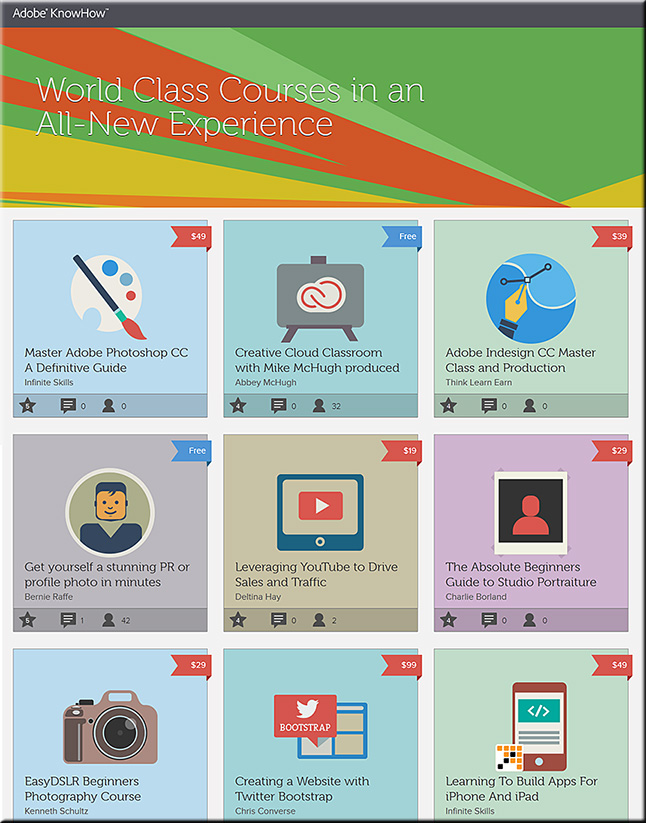
Adobe launches a new learning service – KnowHow — from blogs.adobe.com; with thanks to Dr. Tony Karrer (@elearningPosts) for posting this on Twitter
Excerpt:
If you have been learning through video playlists and always thought:
You are not alone.
Also see:
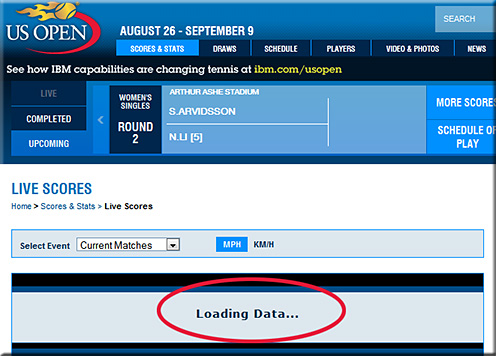
IBM and USTA captivate tennis fans with immersive second screen experience — from MarketWatch.com
Analytics, cloud, mobile and social computing technologies deliver US Open to fans’ fingertips
Excerpt:
The innovative digital US Open environment provides fans, players, broadcasters and media with access to a range of Big Data insights streaming from the courts, including stats, facts, videos, live scoring, and historical and real-time analysis of tennis data served to tablets, smartphones, PCs and other devices.
Also see:
.
From DSC:
Questions I wonder about:
Somewhat-related items:
College students bring targeted media to doctors’ waiting rooms — from entrepreneur.com by Michelle Goodman
Excerpt:
Their idea was to sell doctors’ offices prepackaged video segments containing tips on diet, exercise and other lifestyle tweaks patients could make to improve their health. A TV screen in the reception area would broadcast this programming, modeled after segments on shows such as Today, while patients waited for appointments.
To test the idea, Agarwal, Shah and classmate Derek Moeller bought TVs and DVD players, culled content from the internet and distributed the equipment and “shows” to 50 doctors in five states.
Inside Higher Ed 2013 Survey of Faculty Attitudes on Technology — by Scott Jaschik and Doug Lederman
From DSC:
I would like to propose some additional — and/or different — questions for next year’s survey:
Original question:
Another potential question:
Original questions:
Another question:
Original question:
Another potential question (to students, ed tech staff, admins, faculty members):
Other questions:
Transmedia stories and games explained — from splash.abc.net.au by Dr. Christy Dena; with thanks to The Digital Rocking Chair for Scooping this onto Transmedia: Storytelling for the Digital Age
Opportunity abounds in the area of ‘transmedia projects’, or stories and games that span more than one medium or artform. Dr Christy Dena explains this evolving area of education. This is Part 1 in her blog series.
Excerpt:
One of the areas I work in is ‘transmedia’ or ‘cross-media’ writing and design. I work in the area as a practitioner, and also as an educator for industry professionals and undergraduate students. Transmedia or cross-media fundamentally refers to projects that span more than one medium; for example, a book and computer. I work in creating transmedia stories and games, and so also teach students about making their own. Over my two articles for ABC Splash, I share some of the approaches I use when giving students the opportunity to make their own transmedia stories and games.
Opening the door to transmedia projects — from splash.abc.net.au by Dr. Christy Dena
In her second article on transmedia projects, Dr Christy Dena shares the guidelines she’s created to open the door to this form of education in schools.
Excerpt:
It is important that students are given at least two media locations to work with, such as a website and poster. I always include a live event of some kind as well.
From DSC:
The massive convergence of the telephone, the television, and the computer continues. How that media gets to us is also changing (i.e. the cord cutting continues).
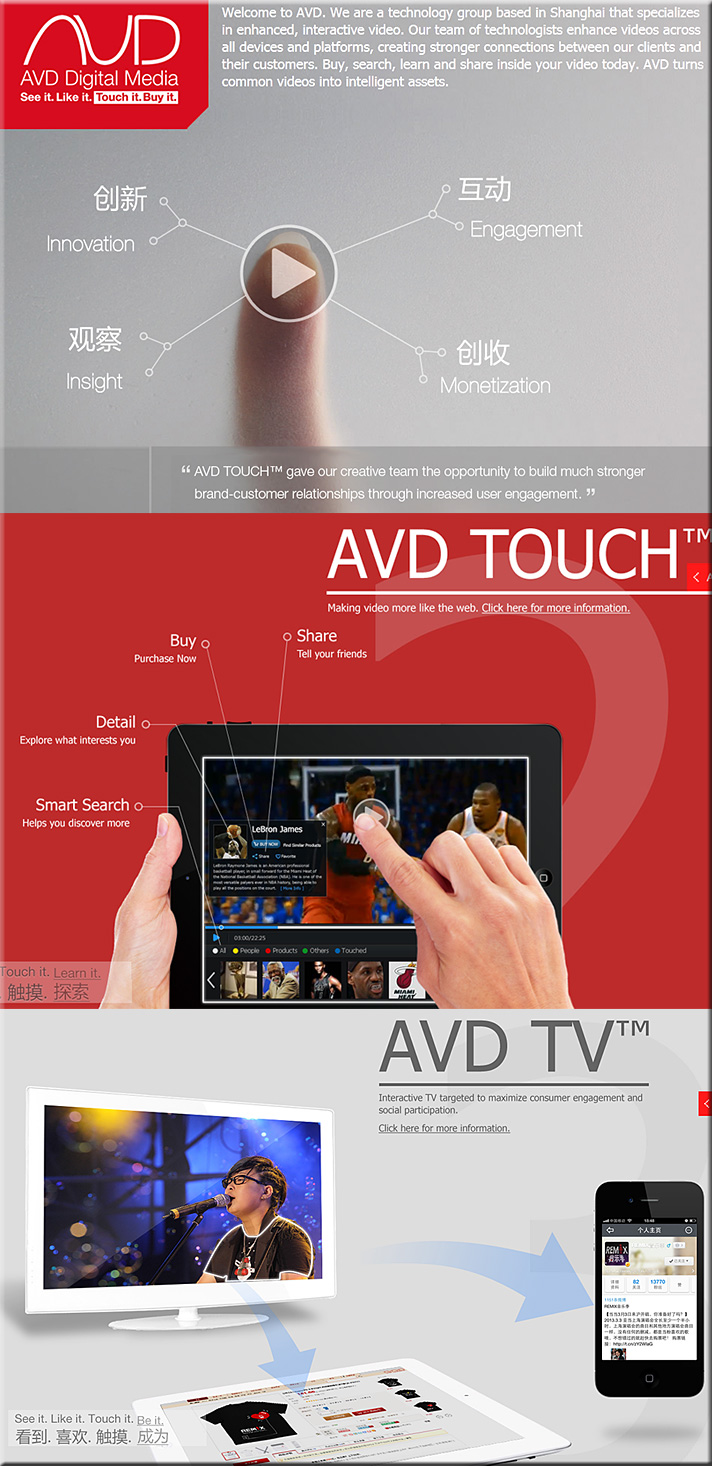
What types of innovative learning experiences can be crafted as “TV” becomes more interactive, participatory, and engaging? What happens if technologies like WebRTC make their way into our browsers and we can videoconference with each other without having to download anything?
What doors open for for us when Google, Apple, or an Amazon.com delivers your “shows” vs. NBC/ABC/CBS/etc.?
The items below cause me to reflect on those questions…
.
Streaming devices lead the way to Smart TV — from nytimes.com by Brian Stelter
.
Is Google ready to buy its way into TV with an NFL deal? — from allthingsd.com by Peter Kafka
Excerpt:
Here’s a fun combination to ponder: The world’s most powerful media company and America’s most popular sport.
That could happen if Google buys the rights to the NFL’s Sunday Ticket package, the all-you-can-eat subscription-TV service currently owned by DirecTV.
Cord Cliff Coming: What happens to TV when Netflix streams live events? — from allthingsd.com by Ben Elowitz, CEO, Wetpaint
Addendums on 8/22/13: