Readmill makes each and every book its own self-contained social network, allowing readers to discuss, share and review from inside of the e-book.


Readmill: Redefining the Ebook

Excerpt:

The books of the modern-day have progressed far beyond just containing stories, they are now social networks in their own right – generating vast reams of data offering insight into not only what we read, but how, when and where we are reading it. At the forefront of this movement is Readmill, an app staking its future on being the great reading app.

Readmill makes each and every book its own self-contained social network, allowing readers to discuss, share and review from inside of the e-book. If you find a passage you like, you can highlight it and comment on it right from within the book. Other users reading the book and even the author can see these comments and add their own thoughts, starting a discussion within the book, without ever having to leave it.

…

Readmill has positioned itself as a company which detaches itself from ‘the selling of the book” to focus on the “social experience.”


Connected! Readmill redefines ebooks as social networks — from futureofthebook.blogspot.com


From DSC:
Two things come to mind when I read this:

1)  What if we applied the same concept towards electronically-delivered streams of content? What if, instead of an e-book, we presented a particular topic of discussion or a particular lesson to kick things off and then have Communities of Practice take over from there?  (This could fit nicely into the “Learning from the Living Class [Room] vision, enabled by the Smart/Connected TV.)

2)  What if we could have “layers” on a digital “textbook”?


DanielSChristian-TextbookConcept-May2011-Layers


Some items re: Steam and OUYA — with a thanks going out to Mr. Steven Chevalia for the information here

For the past 20 years, the video game industry has been controlled by three primary companies:

  1. Nintendo (Nintendo, Gamecube, Wii)
  2. Sony (Playstation)
  3. Microsoft (Xbox)

However, the past two years have shown an increased interest in hardware solutions from 3rd parties, such as:

  • OUYA is a 3rd party console that was designed to be a gaming system with a lower cost and was meant for all open-source games.
    (Further details at wikipedia.org)
     
  • Steam is a 3rd party that sells and updates all their games digitally. They offer all the same games as most of the consoles (listed above) and will soon be offering their own console, which will connect to the internet and allow you to play any game that you own on their service.
    (Further details at wikipedia.org)


STEAM-Expanding2014


These smaller, lesser known devices are prime targets for educational and kid-friendly material. (NOTE: Not all of the games available via these sites are appropriate for kids, as many of the games therein are meant for older audiences.) It is likely that iTunes U, YouTube, etc. will all be viewable on these consoles and the games made for them will be able to be made by smaller companies that can’t compete on the market with Nintendo, Playstation, or Xbox-based games.


U.S. teams up with operator of 0nline courses to plan a global network — from nytimes.com by Tamar Lewin

Excerpt (emphasis DSC):

Coursera, a California-based venture that has enrolled five million students in its free online courses, announced on Thursday a partnership with the United States government to create “learning hubs” around the world where students can go to get Internet access to free courses supplemented by weekly in-person class discussions with local teachers or facilitators.

The learning hubs represent a new stage in the evolution of “massive open online courses,” or MOOCs, and address two issues: the lack of reliable Internet access in some countries, and the growing conviction that students do better if they can discuss course materials, and meet at least occasionally with a teacher or facilitator.

“Our mission is education for everyone, and we’ve seen that when we can bring a community of learners together with a facilitator or teacher who can engage the students, it enhances the learning experience and increases the completion rate,” said Lila Ibrahim, the president of Coursera. “It will vary with the location and the organization we’re working with, but we want to bring in some teacher or facilitator who can be the glue for the class.”


From DSC:
Some thoughts here:

1)  When institutions of higher education cling to the status quo and disregard the disturbing trajectories at play*…when we don’t respond, people — and governments it seems — will find other options/alternatives.

* Such as middle class incomes that continue to decline
while the price of higher education continues to escalate

2)  I wonder if this type of setup might predominate in some countries.
i.e. blended learning types of setups in learning centers around the world where people can come in at any time to learn with a relevant Community of Practice, aided by faculty, teachers, trainers, coaches, etc.   Some of the content is “beamed in” and shared electronically, while some of the learning involves face-to-face discussions/work. Will schools become more community centers where we will pool resources and offer them to people 24×7?

Also see:

  • The New Innovator’s Dilemma — from huffingtonpost.com by Michael Moe and Ben Wallerstein; with thanks to Lisa Duty for the Tweet on this
    Excerpt (emphasis DSC):
    Increasingly, we’re worried that a generation of entrepreneurs is facing a “new innovators dilemma” — where innovation is stymied by regulatory and political environments focused on outdated needs and the wrong set of “customers.” The truth is, Silicon Valley investors and techies will get by just fine without addressing our big, societal problems. But if we encourage our nation’s top entrepreneurs to join search engines and social networks, we will miss the opportunity to apply their genius to solving society’s most pressing problems.
    …
    This isn’t about the classic political divide of right versus left. This is about policies and regulations written in a different era that are not easily translated to modern technology. It’s no secret that the challenge stems, in part, from the motivations of regulators and the politics of protecting the status quo.
    …
    Change is difficult. And no one is arguing that the transportation, hospitality, and higher education industries don’t need to be regulated. New approaches, in particular, warrant close scrutiny. But if we are ever going to experience the sort of revolutionary change that technology might afford to virtually every sector of the American economy, we need to be willing to rethink the traditional ways of regulation to make innovation easier and more responsive to the consumers and students these regulations were originally enacted to protect.


Addendum 11/1/13:


23 iPad alternatives to the book report — from ipadders.eu by Suzanne Lustenhouwer; with thanks to Jackie Gerstein for the tweet this.

Excerpt:

  1. If a journey was involved, draw a map with explanatory notes of significant places. (Google Earth, Notability, Showme)
  2. Dramatize a scene from the book. Write a script and have several rehearsals before performing it to the class or recording it. Include stage directions in your script. (Screenplay, iMovie, Puppet Pals)
  3. Lead a small group discussion with other readers of the same book. Focus on a specific topic and report your group’s conclusion to the class. (Notability)


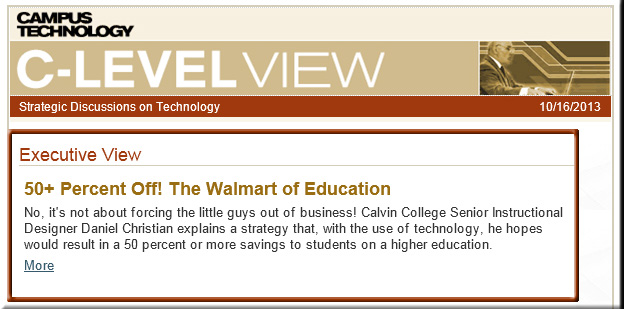
DanielChristianWalmartOfEducationCampusTechnology-C-Level-10-16-13


From DSC:
This piece is from a recent interview I did with Mary Grush (Campus Technology; @Campus_Tech) re: The Walmart of Education.  Though this vision dates back to 2008, we are most assuredly seeing signs of this vision taking place today.  Thanks Mary for your time!

It’s important to note that this vision also aligns with what I’ve been saying about Learning from the Living [Class] Room.  Videos regarding this vision have been designed, shot, edited — and they are forthcoming.  I’d like to thank Mr. Steven Niedzielski (@marketing4pt0) here at Calvin College and also Mr. Sam Beckett (@samjohnbeck) for their help and assistance with those videos. 


Behind the scenes in the making of a MOOC — from forbes.com by Michael Horn

A couple of thoughts hit me here:

1) This article is a great example of the use of TEAMS of people to create and deliver learning materials. Consider some quotes:

…we’ve been working for the past few months with Silicon Schools Fund and the New Teacher Center to create a MOOC on Coursera about high-quality blended learning.

…

Without the hard work of an entire team—from our team at the Clayton Christensen Institute to our partners and friends at the Silicon Schools Fund and New Teacher Center and from our videographer Eric L. Wong to The Learning Accelerator, which provided support—it’s been clear to me that we could not have pulled this off.

…

We could not have created this course without the amazing cooperation and insights from the students, teachers, and leaders at these schools.


Also see this posting on this topic.


2) There is no silver bullet in how to achieve learning objectives. Again, consider some quotes:

What we’ve learned–and what emerges in the course–is that there is no definitive way to do blended learning. The schools that we profile have made many different decisions and all produced wonderful results for students.

…

In the process, we believe that they will create a host of new innovations and make a series of novel choices around blended-learning design.


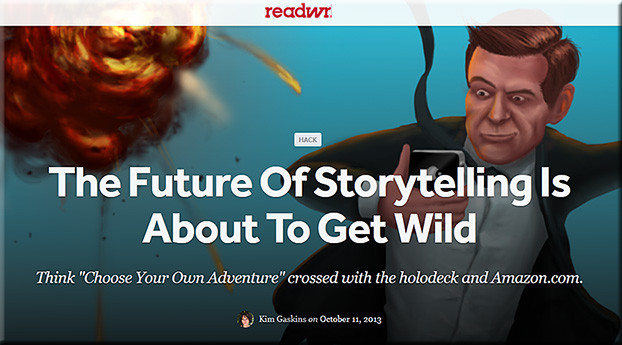
FutureOfStorytellingGaskins-Oct2013


Excerpt:

Many of us go about our lives constantly surrounded by screens, immersed in various “stories”: movies, TV shows, books, plot-driven video games, news articles, advertising, and more. Whether we realize it or not, we’re creating new behaviors, routines, mindsets, and expectations around what we watch, read or play—which in turn presents new challenges and opportunities for creators and marketers.

In other words, while the fundamentals of good storytelling remain the same, technology is changing how stories can be told. But what does that mean exactly?


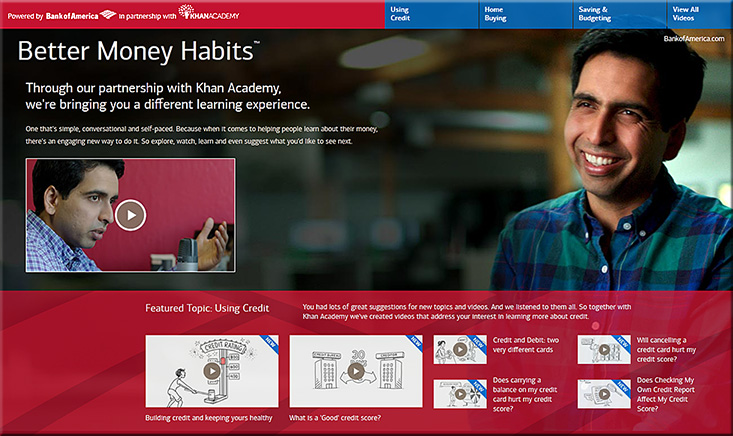
BetterMoneyHabits-BoA-KhanAcademy-Octo2013

From DSC:
Thanks to Krista Spahr, Senior Instructional Designer at Calvin College, for this resource.

It’s interesting to see the lines blurring between the workplace, higher education, and even K-12. Pooling resources, establishing more collaborations, etc. may be part of our future — especially if it initially costs a lot create the materials. But then — as with the Walmart of Education — there is some serious volume underlying these trends.

It appears from the introductory piece here that Sal’s not out to make money with this — he’s trying to stay true to their mission.


Harvard Business School launching online learning initiative — from businessweek.com by Louis Lavelle and Erin Zlomek

Excerpt:

Harvard Business School is quietly developing its first online learning initiative, which it hopes will make HBS the world’s top provider of high quality online business education.

The move has the potential to shake up the nascent online education market and give the elite business school a toehold  in the world of MOOCs, or massive open online courses.  It’s a high-stakes gamble for HBS, which has one of the world’s best-known—and carefully burnished—educational brands.


Berklee online degrees would cost half of campus study programs — from bostonglobe.com by Matt Rocheleau

Excerpt (emphasis DSC):

Berklee College of Music announced Wednesday that it will begin offering bachelor’s degrees online in fall 2014 that will cost less than half of what students pay to take courses on its Boston campus.

The college said it will become the first nonprofit music institution to offer accredited bachelor’s degrees online. The degrees include professional studies in music business and music production.

“This is all about expanding access,” said Debbie Cavalier, vice president of online learning and continuing education for Berklee Online. “This is a way to provide access to people across the world who want to learn from Berklee faculty, but aren’t able to study here on our campus in Boston.”

From DSC:
This is yet another example of The Walmart of Education trend that continues to develop.


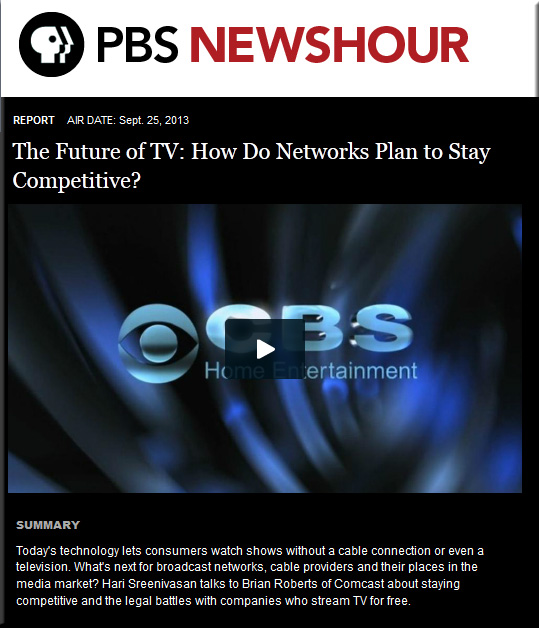
TheFutureOfTV-PBSSept2013


From DSC:
What does this have to do with learning? Keep your eye on the convergence of the television, the telephone, and the computer.  This involves the software side of things as well (with technologies like WebRTC).  I have it that in the future, it will have everything to do with learning and will greatly accelerate one of the other massive trends on my radar, the “Walmart of Education.”


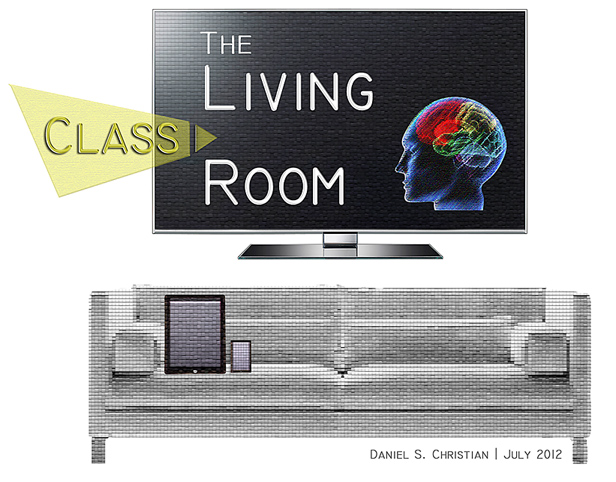
The Living [Class] Room -- by Daniel Christian -- July 2012 -- a second device used in conjunction with a Smart/Connected TV


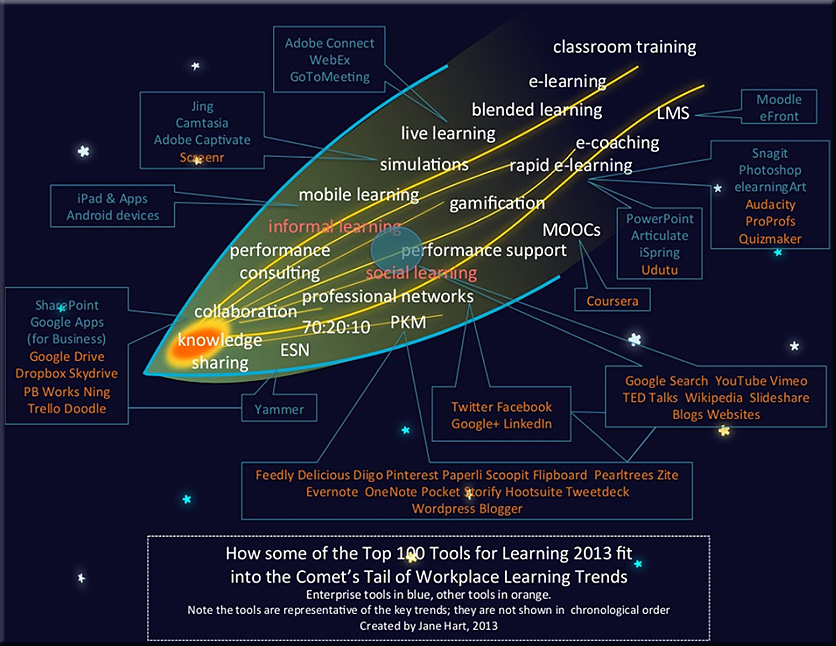
Here it is: The Top 100 Tools for Learning 2013 — from c4lpt.co.uk by Jane Hart

Excerpt:

The Top 100 Tools for Learning 2013 list (released today, 30 September 2013) was compiled from the votes of over 500 learning professionals (from education and workplace learning) from 48 countries. Here are some of the highlights from this year’s list. For a fuller analyis, visit Analysis 2013

  • Twitter retains its no 1 position for the 5th year running
  • Google Drive/Docs moves up to #2.
  • PowerPoint moves up to #5.
  • Evernote moves into the top 10 at #6.
  • Google +/Hangouts moves into the top 10 at #10.
  • There are 10 new tools on the list topped by Feedly (an RSS reader/aggregator) at #19 and Coursera (a MOOC platform) at #38, and 3 returning tools to the list, including Storify at #58.
  • The highest movers within the list are Skydrive (Windows file storage area) at #43 up 55 places since last year, and Keynote and iMovie up 40 and 32 places respectively (showing the increase in popularity of Apple software).
  • A significant descent down the list for some tools including Google Sites (down 60 places) and Wikispaces (down 50 places).
  • Tools moving off the list include Google Reader (now retired by Google), Bing and Scribd.
  • Although the list is still dominated by free online social tools, a number of e-learning authoring tools have had a good showing this year.
  • As for trends over the last 5 years, it is interesting to note that Firefox (#1 in 2007) is now at #97 on the list, and Delicious (#1 in 2008) is now at #60.  What will topple Twitter from the top of the list?
 
© 2025 | Daniel Christian