Top 10 IT Issues, 2018: The Remaking of Higher Education – from er.educause.edu by Susan Grajek and the 2017–2018 Educause IT Issues Panel

2018 Top 10 IT Issues

  1. Information Security: Developing a risk-based security strategy that keeps pace with security threats and challenges
  2. Student Success: Managing the system implementations and integrations that support multiple student success initiatives
  3. Institution-wide IT Strategy: Repositioning or reinforcing the role of IT leadership as an integral strategic partner of institutional leadership in achieving institutional missions
  4. Data-enabled Institutional Culture: Using BI and analytics to inform the broad conversation and answer big questions
  5. Student-centered Institution: Understanding and advancing technology’s role in defining the student experience on campus (from applicants to alumni)
  6. Higher Education Affordability: Balancing and rightsizing IT priorities and budget to support IT-enabled institutional efficiencies and innovations in the context of institutional funding realities
  7. IT Staffing and Organizational Models: Ensuring adequate staffing capacity and staff retention in the face of retirements, new sourcing models, growing external competition, rising salaries, and the demands of technology initiatives on both IT and non-IT staff
  8. (tie) Data Management and Governance: Implementing effective institutional data governance practices
  9. (tie) Digital Integrations: Ensuring system interoperability, scalability, and extensibility, as well as data integrity, standards, and governance, across multiple applications and platforms
  10. Change Leadership: Helping institutional constituents (including the IT staff) adapt to the increasing pace of technology change


Also see:

2018 Top 10 IT Issues — from educause.edu

Excerpt:

The Remaking of Higher Education
Higher education’s biggest concerns are converging with technology’s greatest capabilities. Evidence is mounting that digital technology is a major differentiator and a key to productivity and success within higher education. The 2018 Top 10 Issues reveal the broader strategic impact of technology on the entire institution.

IT organizations will be focusing on four areas this year:

  • Institutional adaptiveness
  • IT adaptiveness
  • Improved student outcomes
  • Improved decision-making

IT organizations won’t focus on these areas alone. Leaders from across campus are invested collaborators with IT. When information technology brings strategic value, the solutions and the technologies that power them are less important than the people, processes, and culture—which make all the difference in the 2018 Top 10 IT Issues.


Also see:

Strategic IT and the 2018 Top 10 IT Issues — from er.educause.edu by John O’Brien
While those of us in campus IT organizations have long considered the topic of technology as a strategic asset, this year—the 20th anniversary of EDUCAUSE—may well mark a far broader realization of information technology as a strategic asset for higher education.

Excerpt:

Still, the landscape and strategic placement of technology has changed. IT advances are constant, not occasional, and technology on campus is ubiquitous and enterprise-critical. Meanwhile, presidents, provosts, and boards — under considerable pressure to improve student success — appreciate that technology offers some of the brightest hopes for moving this hard-to-move needle. For this reason, among others, student success became the foundational focus of the 2017 Top 10 IT Issues. And the 2016 Top 10 IT Issues stressed the degree to which information technology is an institutional differentiator when it comes to not only student success but also affordability, teaching, and research excellence.

It’s one thing, of course, to ask ourselves about the strategic nature of information technology and quite another to find evidence that those outside the IT organization are experiencing this strategic sea change. Yet in recent months we’ve seen exactly that. One example is the American College President Study 2017, from the American Council on Education (ACE). Written by and for college and university presidents, the report advises presidents to attend fully to technology, especially “using analytics functions to make better decisions and leveraging technology to scale out quality, cost-effective best practices.”


From DSC:
I appreciate the following statement — and have often reflected upon its truth:

While those of us in campus IT organizations have long considered the topic of technology as a strategic asset, this year—the 20th anniversary of EDUCAUSE—may well mark a far broader realization of information technology as a strategic asset for higher education.


On a separate note…while obtaining and reviewing data / analytics certainly helps, often that isn’t enough.

Steve Jobs didn’t acquire data or do focus groups before introducing the Macintosh, nor before introducing the iPod, nor before introducing the iPad, nor before introducing the iPhone. But these devices literally changed the world.

Solid vision and innovation are what really count — they bring about the real game-changers.


Top 10 Technology Trends for 2018: IEEE Computer Society Predicts the Future of Tech — from computer.org

Excerpts:

The top 10 technology trends predicted to reach adoption in 2018 are:

  1. Deep learning (DL)
  2. Digital currencies.
  3. Blockchain.
  4. Industrial IoT.
  5. Robotics.
  6. Assisted transportation.
  7. Assisted reality and virtual reality (AR/VR).
  8. Ethics, laws, and policies for privacy, security, and liability.
  9. Accelerators and 3D.
  10. Cybersecurity and AI.

Existing Technologies: We did not include the following technologies in our top 10 list as we assume that they have already experienced broad adoption:

A. Data science
B. “Cloudification”
C. Smart cities
D. Sustainability
E. IoT/edge computing


Also relevant/see:


eLearning: Predictions for 2018 — from news.elearninginside.com by Cait Etherington

Excerpts:

The educational technology sector grew substantially in 2017 and all signs point to even greater growth in 2018. Over the past year, the sector was buoyed by several key factors, including a growing recognition that as big data restructures work at an unprecedented pace, there is an urgent need to rethink how education is delivered. In fact, there is now growing evidence that colleges and universities, especially if they continue to operate as they have in the past, will simply not be able to produce the workers needed to fill tomorrow’s jobs. Ed tech, with its capacity to make education more affordable, flexible, and relevant, is increasingly being embraced as the answer to the Fourth Industrial Revolution’s growing talent pipeline challenges.

  • K-12 virtual schools will become a preferred choice
  • Voice-activation will transform the Learning Management System (LMS) sector
  • Data will drive learning
  • Higher ed will increase online course and program offerings


12 tech trends that will define 2018 — from businessinsider.com by Chris Weller

Excerpts:

No one can predict how the future will shake out, but we can make some educated guesses.

Global design and strategy firm frog has shared with Business Insider its forecasts for the technologies that will define the upcoming year. Last year, the firm correctly predicted that buildings would harness the power of nature and that businesses would continue using artificially-intelligent bots to run efficiently.

Get ready to step into the future.

  • Artificial intelligence will inspire how products are designed
  • Other companies will join Google in the ‘Algorithm Hall of Fame’
  • Virtual and augmented reality will become communal experiences
  • Democracy will cozy up to the blockchain
  • Augmented reality will invite questions about intellectual property
  • Consumer tech will feel even friendlier
  • Tech will become inclusive for all
  • Anonymous data will make life smarter but still private
  • Ultra-tiny robots will replace medicine for certain patients
  • The way we get around will fundamentally transform
  • Businesses will use data and machine learning to cater to customers
  • Social media will take on more corporate responsibility


 LinkedIn’s 2017 U.S. Emerging Jobs Report


LinkedIn’s 2017 U.S. Emerging Jobs Report — from economicgraph.linkedin.com

Excerpt:

Here’s what we found:

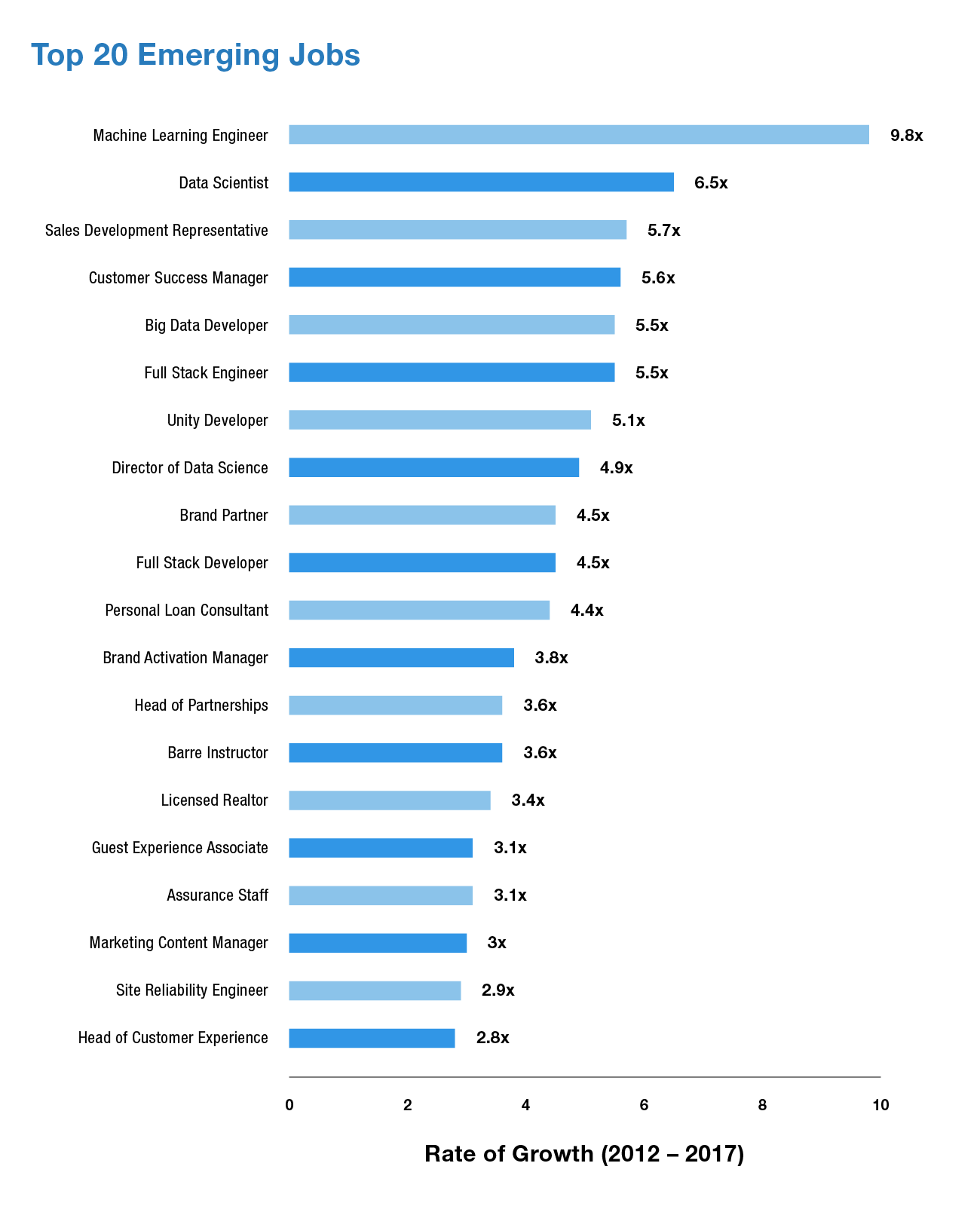
  • Tech is king: Jobs with the top growth potential are tech-focused, with demand coming from tech and non-tech companies alike. Machine learning engineer, data scientist, and big data engineers rank among the top emerging jobs — with companies in a wide range of industries seeking those skills.
  • Soft skills matter: Not all of the emerging tech jobs require technical skills. Sales development representative, customer success manager, and brand partner rank among the top emerging jobs at companies where a technical background is not a necessity. Traditional soft skills like communication and management underpin all of these emerging jobs.
  • Jobs with high mobility on the rise: Several top emerging jobs reflect broader societal trends, such as wellness, flexibility and location mobility. More people are getting healthy which could explain why barre instructor featured among our emerging jobs. Not quite as surprising, licensed realtors ranked highly as the post-Great Recession recovery of the real estate market rolls forward. Just in the past year, the number of licensed realtors has surged 40 percent. These type of roles tend to be more widely distributed across U.S. regions.
  • Low supply of talent for top jobs: Data scientist roles have grown over 650 percent since 2012, but currently 35,000 people in the US have data science skills, while hundreds of companies are hiring for those roles – even those you may not expect in sectors like retail and finance – supply of candidates for these roles cannot keep up with demand.
  • Future-proofing skills is critical: Some of these emerging skills didn’t even exist five years ago, and many professionals are not confident their current skill set will be relevant within the next 1-2 years.


top 20 fastest growing jobs in the united states


Software engineers are feeding into nearly all of these emerging jobs.


Even further, it’s estimated that 65% of children entering primary school today will ultimately hold jobs that don’t yet exist.


Future-proofing skills is critical: Some of these emerging skills didn’t even exist five years ago, and many professionals are not confident their current skill set will be relevant within the next 1-2 years.


Also see:


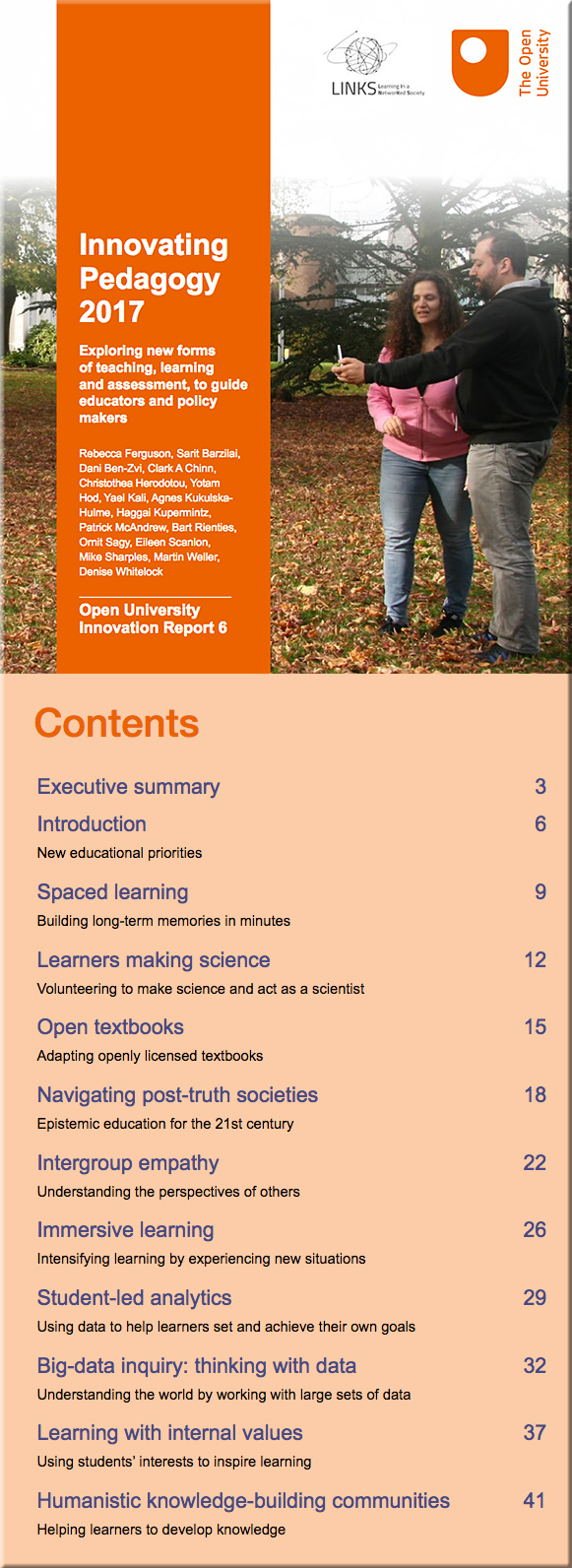
Innovating Pedagogy 2017 — from iet.open.ac.uk

Excerpt:

This series of reports explores new forms of teaching, learning and assessment for an interactive world, to guide teachers and policy makers in productive innovation. This sixth report proposes ten innovations that are already in currency but have not yet had a profound influence on education. To produce it, a group of academics at the Institute of Educational Technology in The Open University collaborated with researchers from the Learning In a NetworKed Society (LINKS) Israeli Center of Research Excellence (I-CORE). We proposed a long list of new educational terms, theories, and practices. We then pared these down to ten that have the potential to provoke major shifts in educational practice, particularly in secondary and tertiary education. Lastly, we drew on published and unpublished writings to compile the ten sketches of new pedagogies that might transform education. These are summarised below in an approximate order of immediacy and timescale to widespread implementation.


Google, Amazon Find Not Everyone Is Ready for AI — from wired.com by Tom Simonite

Excerpt:

Yet as Amazon and Google seek greater riches by infusing the world with artificial intelligence, they’ve started their own consulting operations, lending out some of their prized AI talent to customers. The reason: Those other businesses lack the expertise to take advantage of techniques such as machine learning.

The expertise shortage upsets the usual dynamic of the cloud market, where Amazon, Google, and others mostly compete on price and technical features. “If you’re a random manufacturing company in the midwest you may have money, but it’s hard to attract a $250,000-a-year Stanford PhD to work for you,” says Diego Oppenheimer, whose Google-backed startup provides tools that help companies deploy machine-learning software. Companies in that situation may be more swayed by an offer of help building AI, than pricing and performance, he says.


Ask About AI: The Future of Learning and Work — from gettingsmart.com by Tom Vander Ark

Excerpts:

Code that learns may prove to be the most important invention in human history. But in 2016, there was almost no discussion of the implications of artificial intelligence (AI) in K-12 education—either the immense implications for the employment landscape or the exciting potential to improve learning.

We spent two years studying the implications of AI and concluded that machine intelligence turbocharged by big data and enabling technologies like robotics is the most significant change force facing humanity. Given enormous benefits and challenges we’re just beginning to understand, we believe it is an important time to Ask About AI (#AskAboutAI).

After interviewing experts, hosting a dozen community conversations, and posting more than 50 articles we’re summarizing what we’ve learned in a new paper Ask About AI: The Future of Learning and Work.

The paper explores what’s happening in the automation economy, the civic and social implications, and how to prepare ourselves and our children for exponential change.

With this launch we’re also launching a new microsite on Future of Work.


To initiate lifelong learning, secondary schools should encourage students to be reflect on how they learn, and build habits of success. There are an increasing number of organizations interested in being lifelong learning partners for students—college alumni associations, professional schools and private marketplaces among them.

Self-directed learning is most powerfully driven by a sense of purpose. In our study of Millennial employment, Generation Do It Yourself, we learned that it is critical for young people to develop a sense of purpose before attending college to avoid the new worst-case scenario—racking up college debt and dropping out. A sense of purpose can be developed around a talent or issue, or their intersection; both can be cultivated by a robust guidance system.

We’ve been teaching digital literacy for two decades, but what’s new is that we all need to appreciate that algorithms curate every screen we see. As smart machines augment our capabilities, they will increasingly influence our perceptions, opportunities and decisions. That means that to self- and social awareness, we’ll soon need to add AI awareness.

Taken together, these skills and dispositions create a sense of agency—the ability to take ownership of learning, grow through effort and work with other people in order to do the learning you need to do.


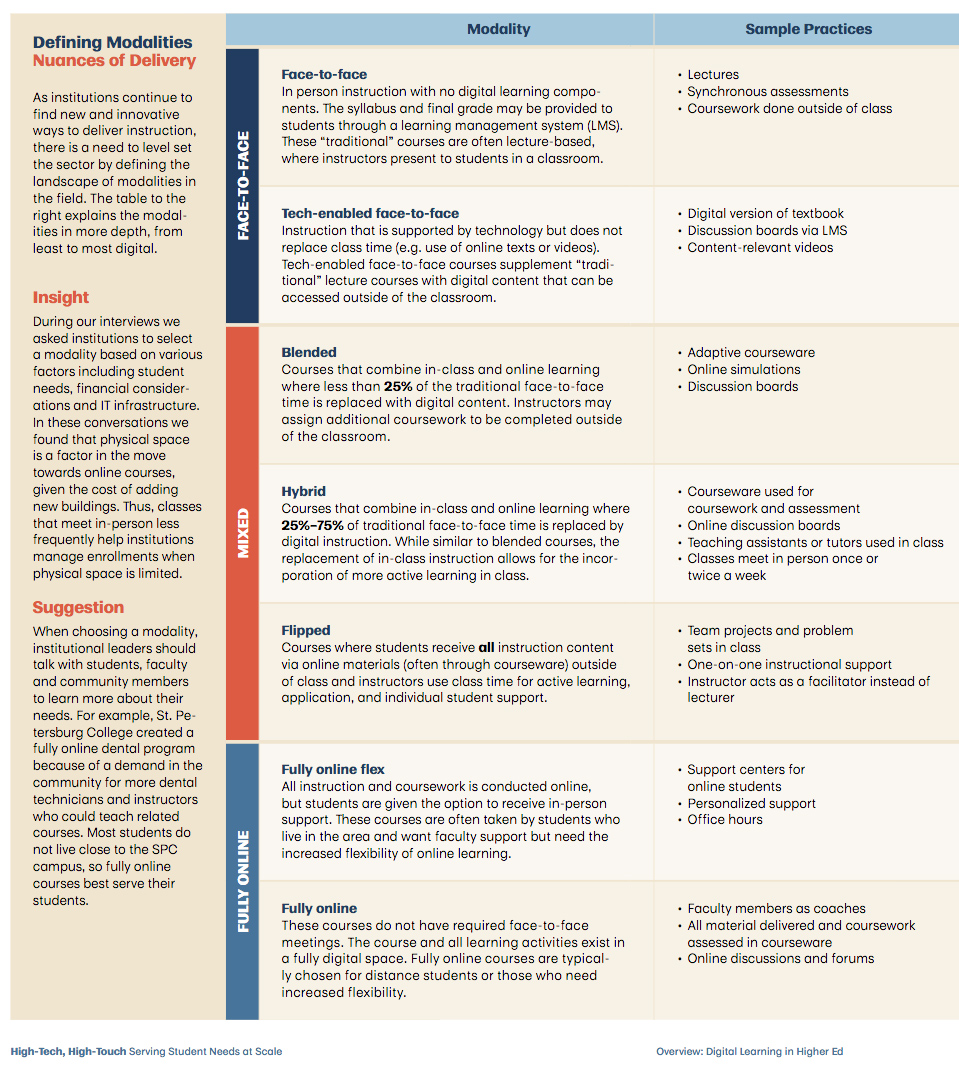
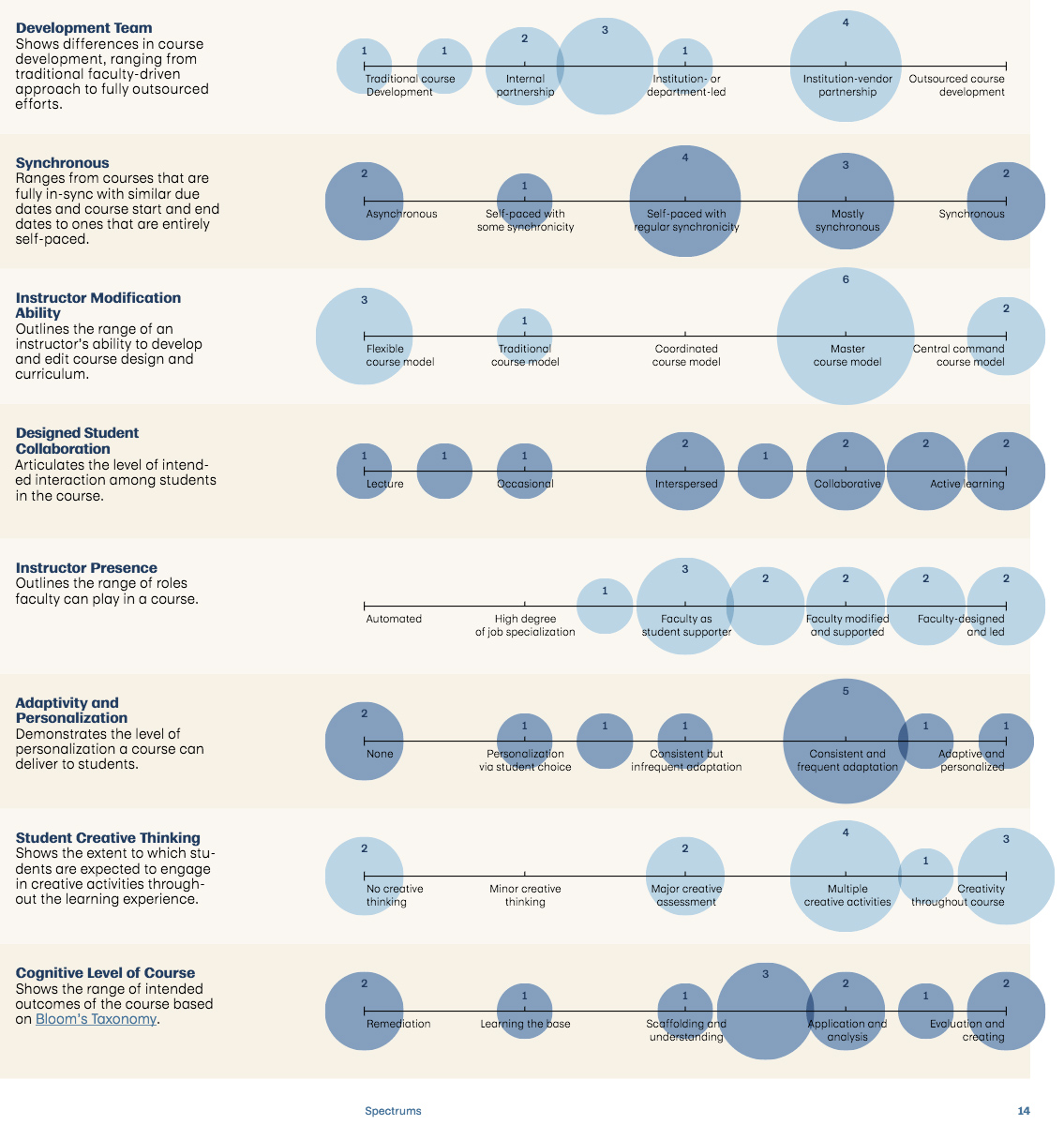
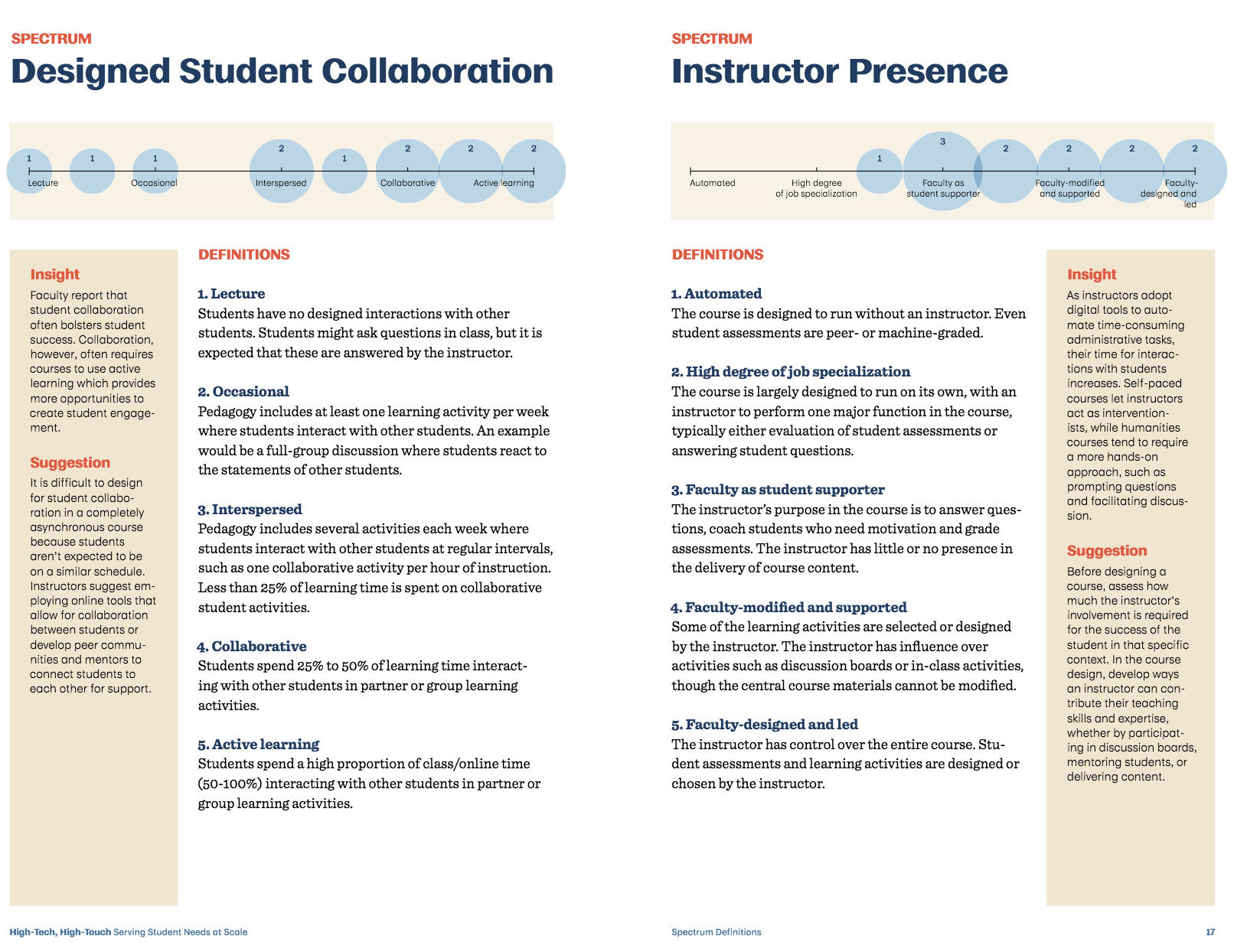
High-Tech, High Touch: Digital Learning Report and Workbook, 2017 Edition — from Intentional Futures, with thanks to Maria Andersen on Linkedin for her posting therein which was entitled, “Spectrums to Measure Digital Learning
Excerpt (emphasis DSC):

Our work uncovered five high-tech strategies employed by institutions that have successfully implemented digital learning at scale across a range of modalities. The strategies that underscore the high-tech, high-touch connection are customizing through technology, leveraging adaptive courseware, adopting cost-efficient resources, centralizing course development and making data-driven decisions.

Although many of the institutions we studied are employing more than one of these strategies, in this report we have grouped the institutional use cases according to the strategy that has been most critical to achieving digital learning at scale. As institutional leaders make their way through this document, they should watch for strategies that target challenges similar to those they hope to solve. Reading the corresponding case studies will unpack how institutions employed these strategies effectively.

Digital learning in higher education is becoming more ubiquitous as institutions realize its ability to support student success and empower faculty. Growing diversity in student demographics has brought related changes in student needs, prompting institutions to look to technology to better serve their students. Digital courseware gives institutions the ability to build personalized, accessible and engaging content. It enables educators to provide relevant content and interventions for individual students, improve instructional techniques based on data and distribute knowledge to a wider audience (MIT Office of Digital Learning, 2017).

PARTICIPATION IN DIGITAL LEARNING IS GROWING
Nationally, the number of students engaged in digital learning is growing rapidly. One driver of this growth is rising demand for distance learning, which often relies on digital learning environments. Distance learning programs saw enrollment increases of approximately 4% between 2015 and 2016, with nearly 30% of higher education students taking at least one digital distance learning course (Allen, 2017). Much of this growth is occurring at the undergraduate level (Allen, 2017). The number of students who take distance learning courses exclusively is growing as well. Between 2012 and 2015, both public and private nonprofit institutions saw an increase in students taking only distance courses, although private, for-profit institutions have seen a decrease (Allen, 2017).


AI: Embracing the promises and realities — from the Allegis Group

Excerpts:

What will that future be? When it comes to jobs, the tea leaves are indecipherable as analysts grapple with emerging technologies, new fields of work, and skills that have yet to be conceived. The only certainty is
that jobs will change. Consider the conflicting predictions put forth by the analyst community:

  • According to the Organization of Economic Cooperation and Development, only 5-10% of labor would be displaced by intelligent automation, and new job creation will offset losses.  (Inserted comment from DSC: Hmmm. ONLY 5-10%!? What?! That’s huge! And don’t count on the majority of those people becoming experts in robotics, algorithms, big data, AI, etc.)
  • The World Economic Forum27 said in 2016 that 60% of children entering school today will work in jobs that do not yet exist.
  • 47% of all American job functions could be automated within 20 years, according to the Oxford Martin School on Economics in a 2013 report.
  • In 2016, a KPMG study estimated that 100 million global knowledge workers could be affected by robotic process automation by 2025.

Despite the conflicting views, most analysts agree on one thing: big change is coming. Venture Capitalist David Vandergrift has some words of advice: “Anyone not planning to retire in the next 20 years should be paying pretty close attention to what’s going on in the realm of AI. The supplanting (of jobs) will not happen overnight: the trend over the next couple of decades is going to be towards more and more automation.”30

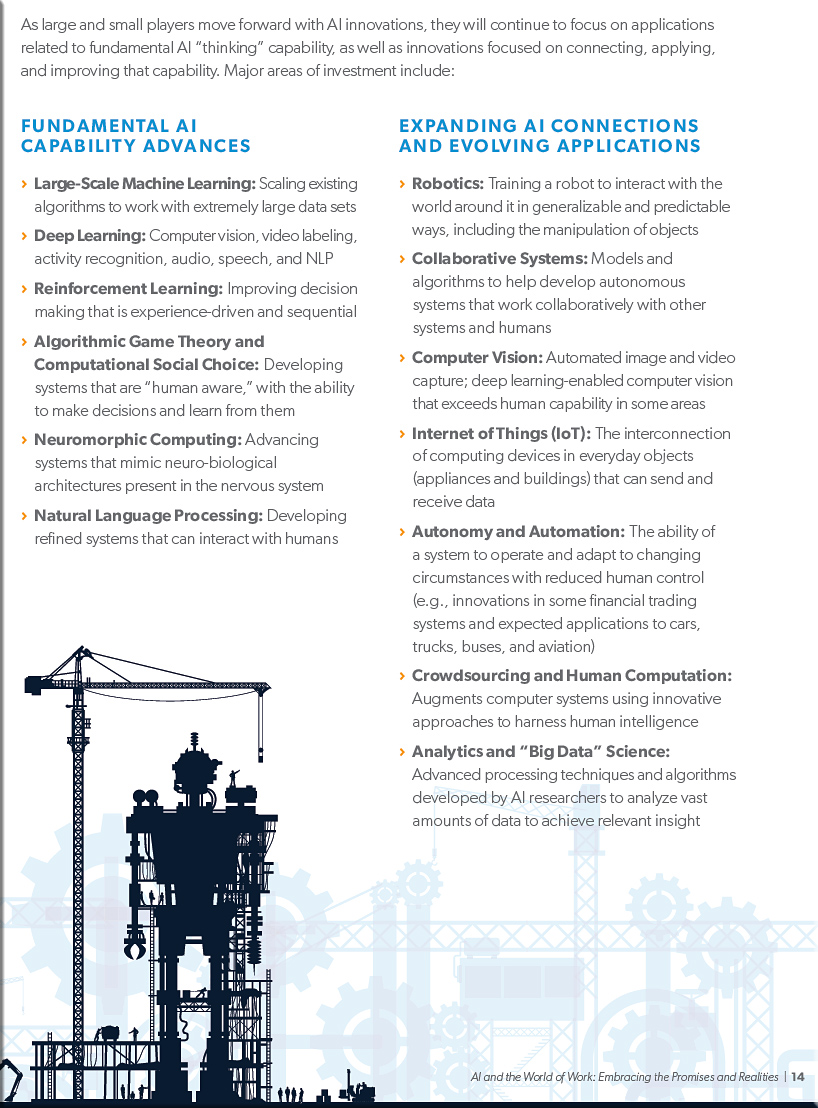
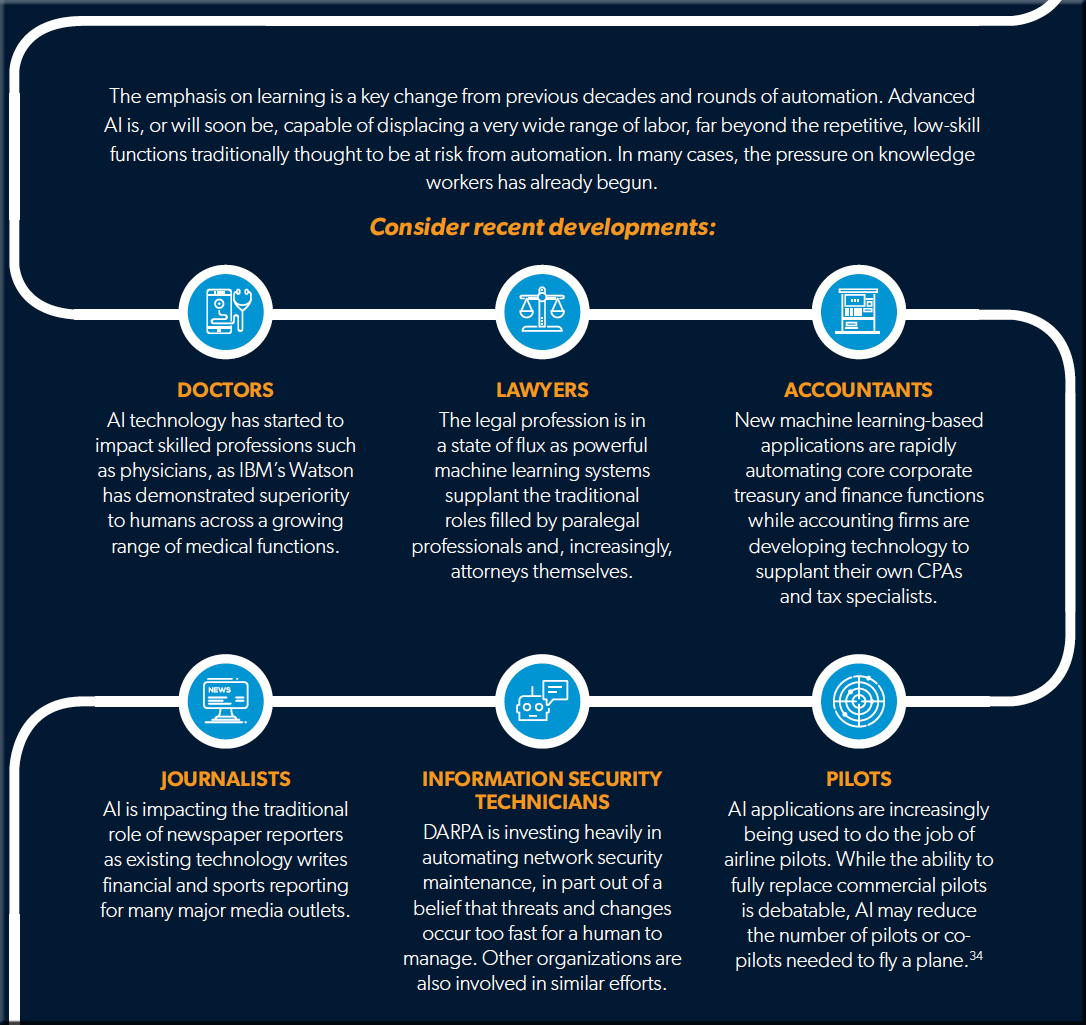
While analysts may not agree on the timing of AI’s development in the economy, many companies are already seeing its impact on key areas of talent and business strategy. AI is replacing jobs, changing traditional roles, applying pressure on knowledge workers, creating new fields of work, and raising the demand for certain skills.


The emphasis on learning is a key change from previous decades and rounds of automation. Advanced AI is, or will soon be, capable of displacing a very wide range of labor, far beyond the repetitive, low-skill functions traditionally thought to be at risk from automation. In many cases, the pressure on knowledge workers has already begun.


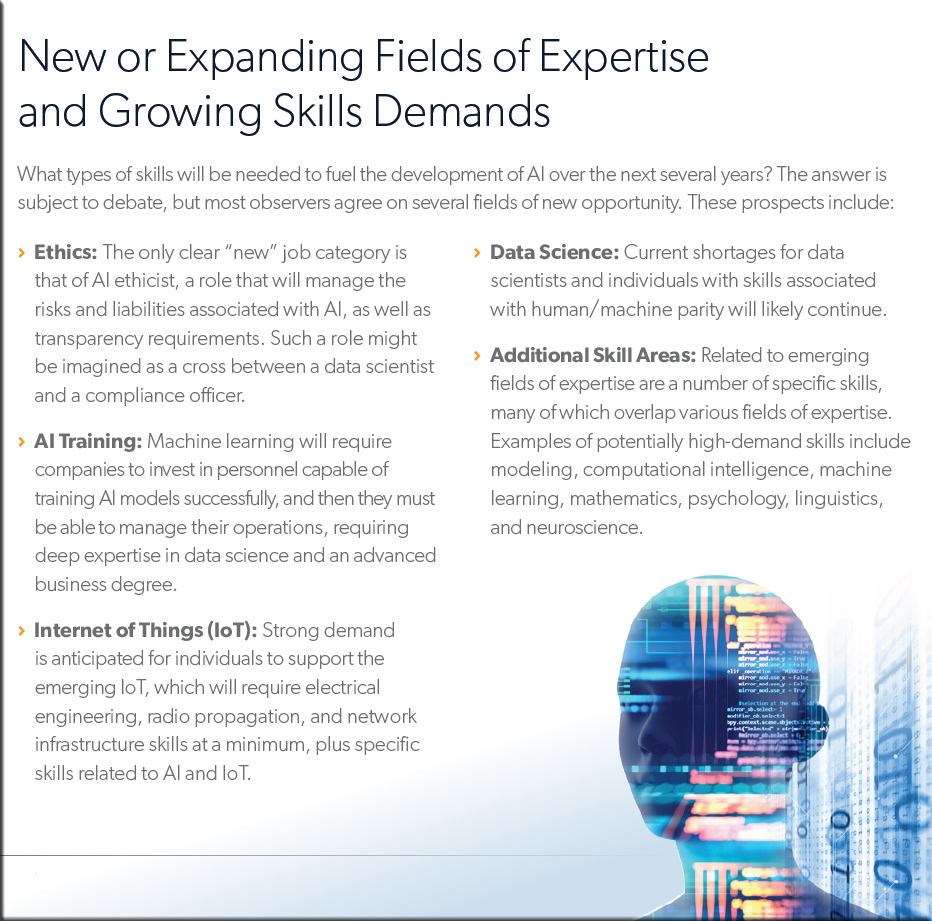
Regardless of industry, however, AI is a real challenge to today’s way of thinking about work, value, and talent scarcity. AI will expand and eventually force many human knowledge workers to reinvent their roles to address issues that machines cannot process. At the same time, AI will create a new demand for skills to guide its growth and development. These emerging areas of expertise will likely be technical or knowledge-intensive fields. In the near term, the competition for workers in these areas may change how companies focus their talent strategies.


Updating Education for the Evolving Job Market: Learning at the Pace of Life and Work — from huffingtonpost.com by Sophie Wade

Excerpt (emphasis DSC):

A technology-stimulated, connected, and accelerated marketplace is generating different roles and additional skills requirements for us as workers. The traditional model of completing our lifelong education needs before we enter the workforce is now obsolete. On-the-job experience must now be supplemented as business and technological requirements evolve significantly and rapidly. Compelling new multilevel learning options are emerging to cater to the new necessity of updating important knowledge and capabilities at work. Many new offerings are online and modular in order to be accessible and flexible, giving labor force participants greater opportunity to remain relevant and competitive.

Since the beginning of the Industrial Era, evolution typically occurred from generation to generation. New developments were adopted by incoming cohorts, adding to and then replacing well-established workers’ existing practices of which could be phased out gradually. However, the exponential pace that is characteristic of the Fourth Industrial Revolution is requiring modifications to be absorbed and adapted within a generation accompanied by frequent incremental updates and revisions. Innovative learning models and modules that target incoming and existing working populations are being built out to respond to business-related requirements as new fields, disciplines, and roles appear and are established.

I talked to Anant Agarwal, CEO and Founder of edX, and Professor of Electrical Engineering and Computer Science at MIT about the situation for new workforce entrants and the future education of workers. He spoke of what he called “MOOC 2.0” as the next phase of evolution of this high-profile MOOC (Massively Open Online Course) platform and the strategic rationale and content of edX’s new MicroMasters program offerings.


As a member of the International Education Committee, at edX we are extremely aware of the changing nature of work and jobs. It is predicted that 50 percent of current jobs will disappear by 2030.

Anant Agarwal, CEO and Founder of edX, and
Professor of Electrical Engineering and Computer Science at MIT


From DSC:
We are moving towards providing up-to-date, relevant “streams of content” (which will in many cases represent unbundled content/courses). Mark my words, that’s the future that we’re heading for — and the future that we’ll need to successfully adapt to the new, exponential pace of change. Organizations offering such streams will be providing a valuable service in terms identifying, presenting, curating the most relevant, up-to-date content.


WE ARE NOT READY FOR THIS! Per Forrester Research: In US, a net loss of 7% of jobs to automation — *in 2018*!

Forrester predicts that AI-enabled automation will eliminate 9% of US jobs in 2018 — from forbes.com by Gil Press

Excerpt (emphasis DSC):

A new Forrester Research report, Predictions 2018: Automation Alters The Global Workforce, outlines 10 predictions about the impact of AI and automation on jobs, work processes and tasks, business success and failure, and software development, cybersecurity, and regulatory compliance.

We will see a surge in white-collar automation, half a million new digital workers (bots) in the US, and a shift from manual to automated IT and data management. “Companies that master automation will dominate their industries,” Forrester says. Here’s my summary of what Forrester predicts will be the impact of automation in 2018:

Automation will eliminate 9% of US jobs but will create 2% more.
In 2018, 9% of US jobs will be lost to automation, partly offset by a 2% growth in jobs supporting the “automation economy.” Specifically impacted will be back-office and administrative, sales, and call center employees. A wide range of technologies, from robotic process automation and AI to customer self-service and physical robots will impact hiring and staffing strategies as well as create a need for new skills.


Your next entry-level compliance staffer will be a robot.


From DSC:

Are we ready for a net loss of 7% of jobs in our workforce due to automation — *next year*? Last I checked, it was November 2017, and 2018 will be here before we know it.


***Are we ready for this?! ***


AS OF TODAY, can we reinvent ourselves fast enough given our current educational systems, offerings, infrastructures, and methods of learning?


My answer: No, we can’t. But we need to be able to — and very soon!


There are all kinds of major issues and ramifications when people lose their jobs — especially this many people and jobs! The ripple effects will be enormous and very negative unless we introduce new ways for how people can learn new things — and quickly!

That’s why I’m big on trying to establish a next generation learning platform, such as the one that I’ve been tracking and proposing out at Learning from the Living [Class] Room. It’s meant to provide societies around the globe with a powerful, next generation learning platform — one that can help people reinvent themselves quickly, cost-effectively, conveniently, & consistently! It involves providing, relevant, up-to-date streams of content that people can subscribe to — and drop at any time. It involves working in conjunction with subject matter experts who work with teams of specialists, backed up by suites of powerful technologies. It involves learning with others, at any time, from any place, at any pace. It involves more choice, more control. It involves blockchain-based technologies to feed cloud-based learner profiles and more.

But likely, bringing such a vision to fruition will require a significant amount of collaboration. In my mind, some of the organizations that should be at the table here include:

  • Some of the largest players in the tech world, such as Amazon, Google, Apple, IBM, Microsoft, and/or Facebook
  • Some of the vendors that already operate within the higher ed space — such as Salesforce.com, Ellucian, and/or Blackboard
  • Some of the most innovative institutions of higher education — including their faculty members, instructional technologists, instructional designers, members of administration, librarians, A/V specialists, and more
  • The U.S. Federal Government — for additional funding and the development of policies to make this vision a reality


The Living [Class] Room -- by Daniel Christian -- July 2012 -- a second device used in conjunction with a Smart/Connected TV


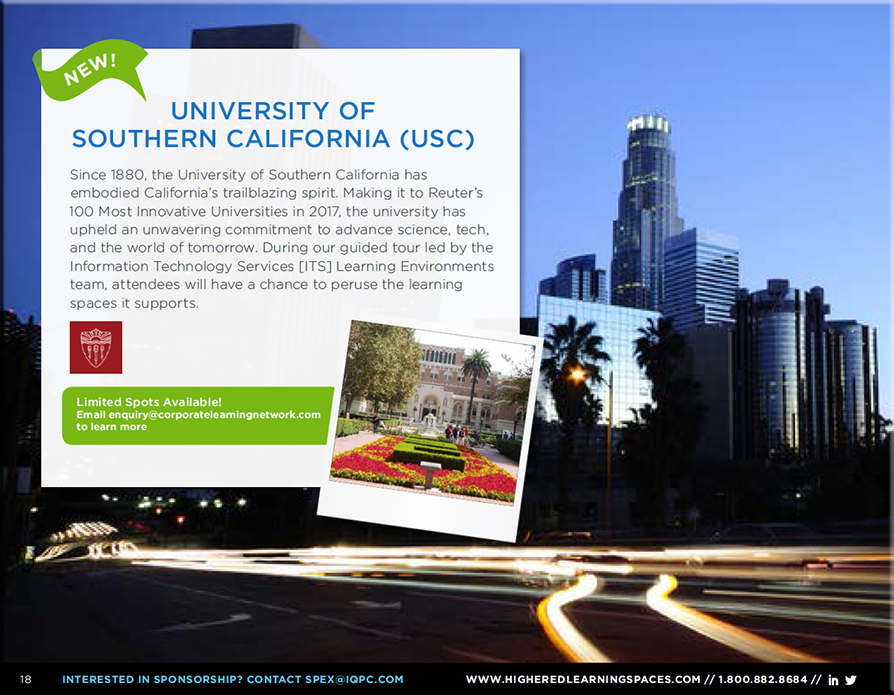
Plan now to attend the 2018 Next Generation Learning Spaces Conference — tour USC’s campus!

From DSC:
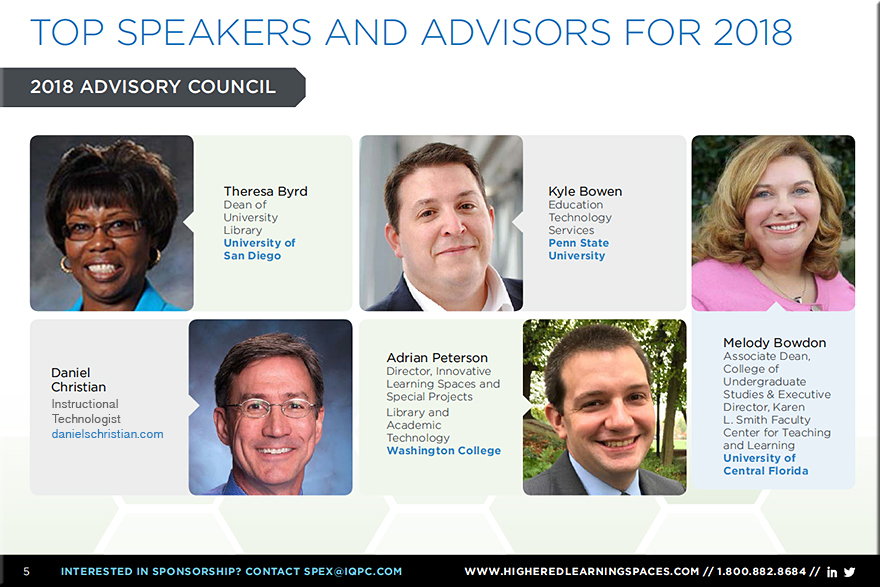
I am honored to be currently serving on the 2018 Advisory Council for the Next Generation Learning Spaces Conference with a great group of people. Missing — at least from my perspective — from the image below is Kristen Tadrous, Senior Program Director with the Corporate Learning Network. Kristen has done a great job these last few years planning and running this conference.


The Advisory Board for the 2018 Next Generation Learning Spaces Conference

NOTE:
The above graphic reflects a recent change for me. I am still an Adjunct Faculty Member
at Calvin College, but I am no longer a Senior Instructional Designer there.
My brand is centered around being an Instructional Technologist.


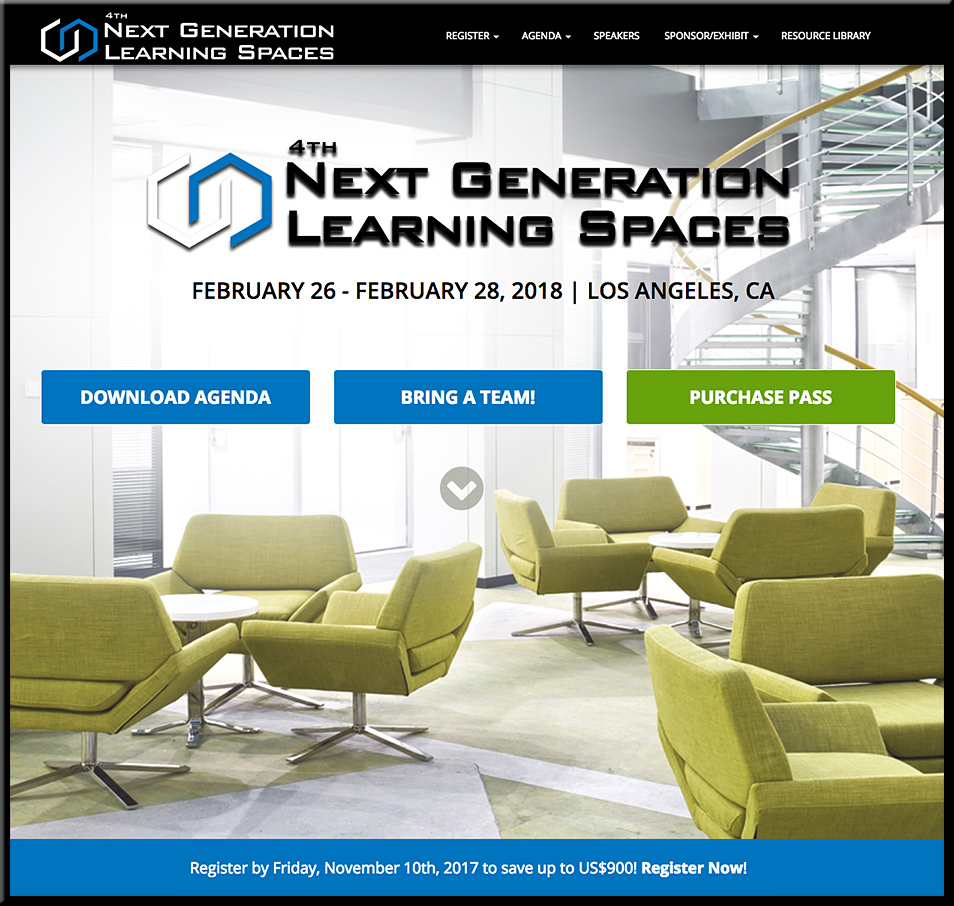
This national conference will be held in Los Angeles, CA on February 26-28, 2018. It is designed to help institutions of higher education develop highly-innovative cultures — something that’s needed in many institutions of traditional higher education right now.

I have attended the first 3 conferences and I moderated a panel at the most recent conference out in San Diego back in February/March of this year. I just want to say that this is a great conference and I encourage you to bring a group of people to it from your organization! I say a group of people because a group of 5 of us (from a variety of departments) went one year and the result of attending the NGLS Conference was a brand new Sandbox Classroom — an active-learning based, highly-collaborative learning space where faculty members can experiment with new pedagogies as well as with new technologies. The conference helped us discuss things as a diverse group, think out load, come up with some innovative ideas, and then build the momentum to move forward with some of those key ideas.

If you haven’t already attended this conference, I highly recommend that you check it out. You can obtain the agenda/brochure for the conference by providing some basic contact information here.


The 2018 Next Generational Learning Spaces Conference- to be held in Los Angeles on Feb 26-28, 2018


Tour the campus at UCLA

Per Kristen Tadrous, here’s why you want to check out USC:

  • A true leader in innovation: USC made it to the Top 20 of Reuter’s 100 Most Innovative Universities in 2017!
  • Detailed guided tour of leading spaces led by the Information Technology Services Learning Environments team
  • Benchmark your own learning environments by getting a ‘behind the scenes’ look at their state-of-the-art spaces
  • There are only 30 spots available for the site tour


Building Spaces to Inspire a Culture of Innovation — a core theme at the 4th Next Generation Learning Spaces summit, taking place this February 26-28 in Los Angeles. An invaluable opportunity to meet and hear from like-minded peers in higher education, and continue your path toward lifelong learning. #ngls2018 http://bit.ly/2yNkMLL


Nearly all prospective students want a tech-savvy institution — from campustechnology.com by Joshua Bolkan

Excerpt:

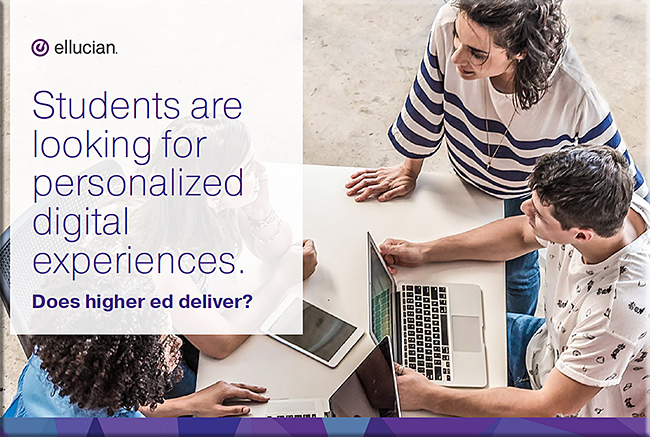
Nearly nine in 10 college students — 87 percent — said it was important to them that the institutions they applied for were technologically savvy, according to a new survey from ed tech provider Ellucian.

The report, “Students Are Looking for Personalized Digital Experiences: Do Colleges Deliver?” is based on responses of 1,000 students, including 265 from two-year institutions and 735 from four-year schools, who were invited to take the survey online via email.

More than half of students surveyed, 58 percent, said that of all the companies and institutions they engage with, their college is the one least likely to have personalized their experience.


Also see:


From DSC:
With our students using Uber, Lyft, AirBnB, and other such personalized services from Amazon.com and others, expectations are now being impacted. That is, what they expect in terms of their learning experiences are being influenced from other areas of their every day lives. This impacts credibility, which impacts enrollments.

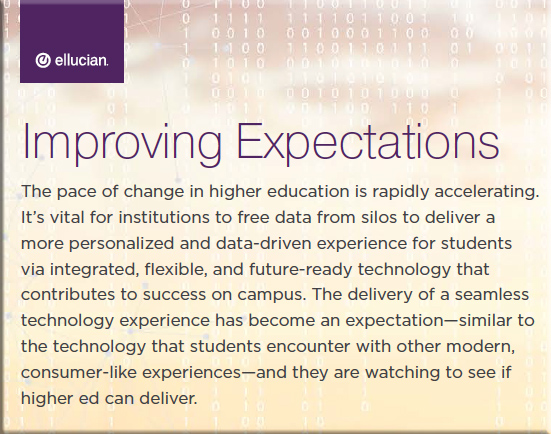
As Ellucian asserts:


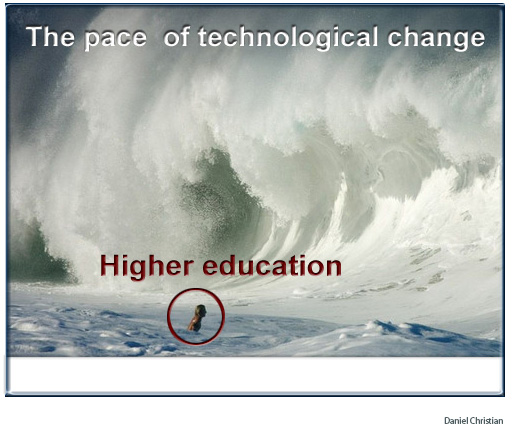
For those who would minimize or outright discard the impacts that technologies have on higher education, or the impacts of — and relevance of — technologies within higher education, how are you going to deal with this tidal wave?


From Daniel S. Christian


AI and Internet of Things will drive digital transformation through 2020 — from zdnet.com by Courtney Sato
Research study reveals IoT, AI and synchronous ledger tech (blockchain) priorities.

Excerpt:

Businesses are investing heavily in the Internet of Things (IoT) while remaining cautious about investments in artificial intelligence (AI), reveals the Constellation Research 2017 Digital Transformation Study. However, Constellation expects AI to emerge in 2018 as the predominant area of technological experimentation due to the increasing availability of AI development kits and frameworks.

Nearly half of respondents of the Constellation 2017 Digital Transformation Survey said their organization either had an established IoT strategy with applications in production (19 percent) or have pilot projects underway (28 percent). In contrast, just 25 percent of executives said they were investing in AI.


Investmet in AI Digital Transformation


Highlights:

  • Charging ahead with IoT
  • Cautious about AI for now
  • Blockchain remains enigmatic
  • Appetite for cloud and big data grow to support digital transformation
  • Digital transformation goes mainstream
  • Digital transformation focuses on digital business
  • The war for talent intensifies


From DSC:
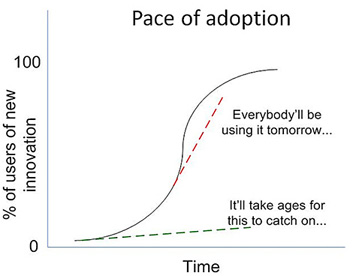
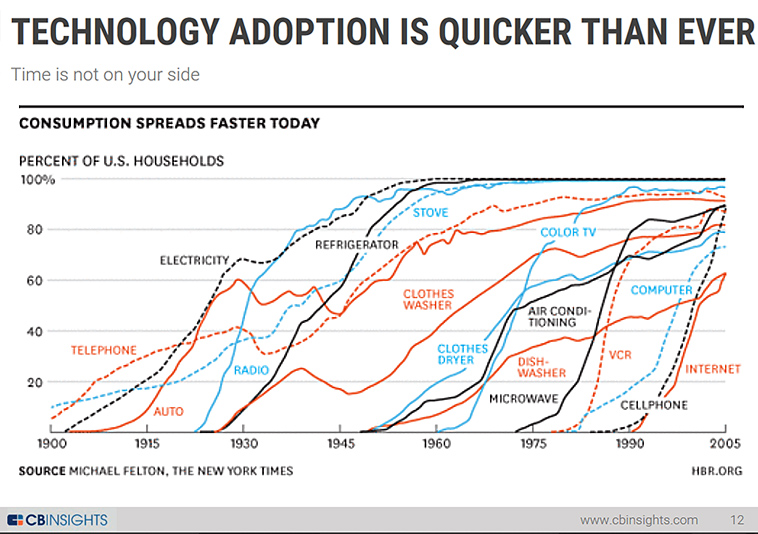
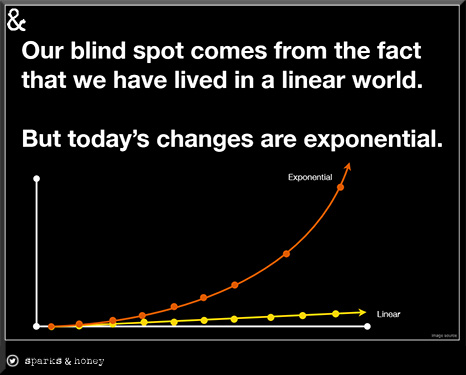
In Part I, I looked at the new, exponential pace of change that colleges, community colleges and universities now need to deal with – observing the enormous changes that are starting to occur throughout numerous societies around the globe. If we were to plot out the rate of change, we would see that we are no longer on a slow, steady, incremental type of linear pathway; but, instead, we would observe that we are now on an exponential trajectory (as the below graphic from sparks & honey very nicely illustrates).


How should colleges and universities deal with this new, exponential pace of change?

1) I suggest that you ensure that someone in your institution is lifting their gaze and peering out into the horizons, to see what’s coming down the pike. That person – or more ideally, persons – should also be looking around them, noticing what’s going on within the current landscapes of higher education. Regardless of how your institution tackles this task, given that we are currently moving at an incredibly fast pace, this trend analysis is very important. The results from this analysis should immediately be integrated into your strategic plan. Don’t wait 3-5 years to integrate these new findings into your plan. The new, exponential pace of change is going to reward those organizations who are nimble and responsive.

2) I recommend that you look at what programs you are offering and consider if you should be developing additional programs such as those that deal with:

  • Artificial Intelligence (Natural Language Processing, deep learning, machine learning, bots)
  • New forms of Human Computer Interaction such as Augmented Reality, Virtual Reality, and Mixed Reality
  • User Experience Design, User Interface Design, and/or Interaction Design
  • Big data, data science, working with data
  • The Internet of Things, machine-to-machine communications, sensors, beacons, etc.
  • Blockchain-based technologies/systems
  • The digital transformation of business
  • Freelancing / owning your own business / entrepreneurship (see this article for the massive changes happening now!)
  • …and more

3) If you are not already doing so, I recommend that you immediately move to offer a robust lineup of online-based programs. Why do I say this? Because:

  • Without them, your institution may pay a heavy price due to its diminishing credibility. Your enrollments could decline if learners (and their families) don’t think they will get solid jobs coming out of your institution. If the public perceives you as a dinosaur/out of touch with what the workplace requires, your enrollment/admissions groups may find meeting their quotas will get a lot harder as the years go on. You need to be sending some cars down the online/digital/virtual learning tracks. (Don’t get me wrong. We still need the liberal arts. However, even those institutions who offer liberal arts lineups will still need to have a healthy offering of online-based programs.)
  • Online-based learning methods can expand the reach of your faculty members while offering chances for individuals throughout the globe to learn from you, and you from them
  • Online-based learning programs can increase your enrollments, create new revenue streams, and develop/reach new markets
  • Online-based learning programs have been proven to offer the same learning gains – and sometimes better learning results than – what’s being achieved in face-to-face based classrooms
  • The majority of pedagogically-related innovations are occurring within the online/digital/virtual realm, and you will want to have built the prior experience, expertise, and foundations in order to leverage and benefit from them
  • Faculty take their learning/experiences from offering online-based courses back into their face-to-face courses
  • Due to the increasing price of obtaining a degree, students often need to work to help get them (at least part of the way) through school; thus, flexibility is becoming increasingly important and necessary for students
  • An increasing number of individuals within the K-12 world as well as the corporate world are learning via online-based means. This is true within higher education as well, as, according to a recent report from Digital Learning Compass states that “the number of higher education students taking at least one distance education course in 2015 now tops six million, about 30% of all enrollments.”
  • Families are looking very closely at their return on investments being made within the world of higher education. They want to see that their learners are being prepared for the ever-changing future that they will encounter. If people in the workforce often learn online, then current students should be getting practice in that area of their learning ecosystems as well.
  • As the (mostly) online-based Amazon.com is thriving and retail institutions such as Sears continue to close, people are in the process of forming more generalized expectations that could easily cross over into the realm of higher education. By the way, here’s how our local Sears building is looking these days…or what’s left of it.


4) I recommend that you move towards offering more opportunities for lifelong learning, as learners need to constantly add to their skillsets and knowledge base in order to remain marketable in today’s workforce. This is where adults greatly appreciate – and need – the greater flexibility offered by online-based means of learning. I’m not just talking about graduate programs or continuing studies types of programs here. Rather, I’m hoping that we can move towards providing streams of up-to-date content that learners can subscribe to at any time (and can drop their subscription to at any time). As a relevant side note here, keep your eyes on blockchain-based technologies here.

5) Consider the role of consortia and pooling resources. How might that fit into your strategic plan?

6) Consider why bootcamps continue to come onto the landscape.  What are traditional institutions of higher education missing here?

7) And lastly, if one doesn’t already exist, form a small, nimble, innovative group within your organization — what I call a TrimTab Group — to help identify what will and won’t work for your institution.


© 2025 | Daniel Christian