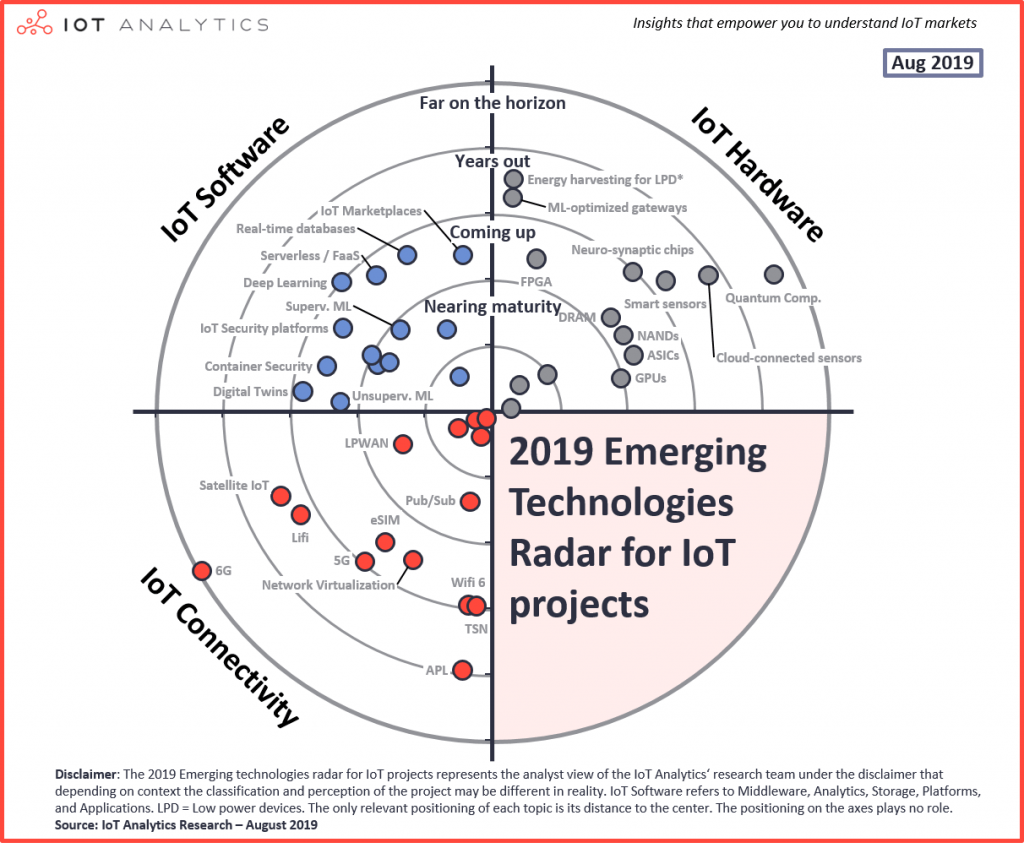
40+ Emerging IoT Technologies you should have on your radar — from iot-analytics.com by Knud Lasse Lueth

Excerpt:

As part of the “State of the IoT – Summer 2019 Update”, the analyst team at IoT Analytics handpicked 43 of the most promising technologies that are relevant to IoT projects around the globe. The team ranked the IoT technologies according to their perceived maturity (based on expert interviews, vendor briefings, secondary research, and conference attendances).


Eight tips to thrive in the evolving legal landscape — from lawtechnologytoday.org by Bethany Runyon

Excerpt:

There is no question that technology has changed the way lawyers work, shaped how law firms operate and affected organizational culture. The business of law is more complex and competitive than ever, and it will only continue to evolve as alternative service providers gain ground, pricing structures change and client expectations shift.

To get you prepared, our team at HighQ would like to offer eight tips to thrive in the evolving legal landscape.


Uh-oh: Silicon Valley is building a Chinese-style social credit system — from fastcompany.com by Mike Elgan
In China, scoring citizens’ behavior is official government policy. U.S. companies are increasingly doing something similar, outside the law.

Excerpts (emphasis DSC):

Have you heard about China’s social credit system? It’s a technology-enabled, surveillance-based nationwide program designed to nudge citizens toward better behavior. The ultimate goal is to “allow the trustworthy to roam everywhere under heaven while making it hard for the discredited to take a single step,” according to the Chinese government.

In place since 2014, the social credit system is a work in progress that could evolve by next year into a single, nationwide point system for all Chinese citizens, akin to a financial credit score. It aims to punish for transgressions that can include membership in or support for the Falun Gong or Tibetan Buddhism, failure to pay debts, excessive video gaming, criticizing the government, late payments, failing to sweep the sidewalk in front of your store or house, smoking or playing loud music on trains, jaywalking, and other actions deemed illegal or unacceptable by the Chinese government.

IT CAN HAPPEN HERE
Many Westerners are disturbed by what they read about China’s social credit system. But such systems, it turns out, are not unique to China. A parallel system is developing in the United States, in part as the result of Silicon Valley and technology-industry user policies, and in part by surveillance of social media activity by private companies.

Here are some of the elements of America’s growing social credit system.


If current trends hold, it’s possible that in the future a majority of misdemeanors and even some felonies will be punished not by Washington, D.C., but by Silicon Valley. It’s a slippery slope away from democracy and toward corporatocracy.


From DSC:
Who’s to say what gains a citizen points and what subtracts from their score? If one believes a certain thing, is that a plus or a minus? And what might be tied to someone’s score? The ability to obtain food? Medicine/healthcare? Clothing? Social Security payments? Other?

We are giving a huge amount of power to a handful of corporations…trust comes into play…at least for me. Even internally, the big tech co’s seem to be struggling as to the ethical ramifications of what they’re working on (in a variety of areas). 

Is the stage being set for a “Person of Interest” Version 2.0?


Google brings AI to studying with Socratic — from zdnet.com by Stephanie Condon
Ahead of the new school year, Google is re-launching a mobile learning app it acquired last year.

Excerpt:

Google this week started rolling out a revamped version of a mobile learning app, called Socratic, that the tech giant acquired last year. The updated app, with new machine learning-powered features, coincides with the start of the school year, as well as other Google for Education initiatives.

Socratic aims to help both high school and university students in their studies outside of the classroom. If students need help answering a study question, they can now use the Socratic app to ask a question with their voice, or to take a picture of a question in their study materials. The app will then find relevant material from across the web.


Also see:

  • The School of Tomorrow Will Revolve Around AI — from datafloq.com
    Excerpt:
    We live in exponential times, and merely having a digital strategy focused on continuous innovation is no longer enough to thrive in a constantly changing world. To transform an organisation and contribute to building a secure and rewarding networked society, collaboration among employees, customers, business units and even things is increasingly becoming key.Especially with the availability of new technologies such as artificial intelligence, organisations now, more than ever before, need to focus on bringing together the different stakeholders to co-create the future. Big data empowers customers and employees, the Internet of Things will create vast amounts of data and connects all devices, while artificial intelligence creates new human-machine interactions. In today’s world, every organisation is a data organisation, and AI is required to make sense of it all.

Addendum on 8/23/19


A handful of US cities have banned government use of facial recognition technology due to concerns over its accuracy and privacy. WIRED’s Tom Simonite talks with computer vision scientist and lawyer Gretchen Greene about the controversy surrounding the use of this technology.


Salesforce completes $15.7B acquisition of Tableau Software, creating new enterprise tech force — from geekwire.com by Nat Levy; with thanks to Keesa Johnson for this resource out on LinkedIn

Excerpt:

Salesforce has wrapped up its $15.7 billion acquisition of Seattle’s Tableau Software, creating a powerful force in the lucrative enterprise software world.

The deal shakes up the Seattle tech scene and instantly makes Salesforce a major player for talent in the region. Making Seattle, and its plentiful tech talent, a key strategic part of Salesforce has long been a company goal, Salesforce Co-CEO Marc Benioff has said. The company even referred to Seattle as its new “HQ2.”


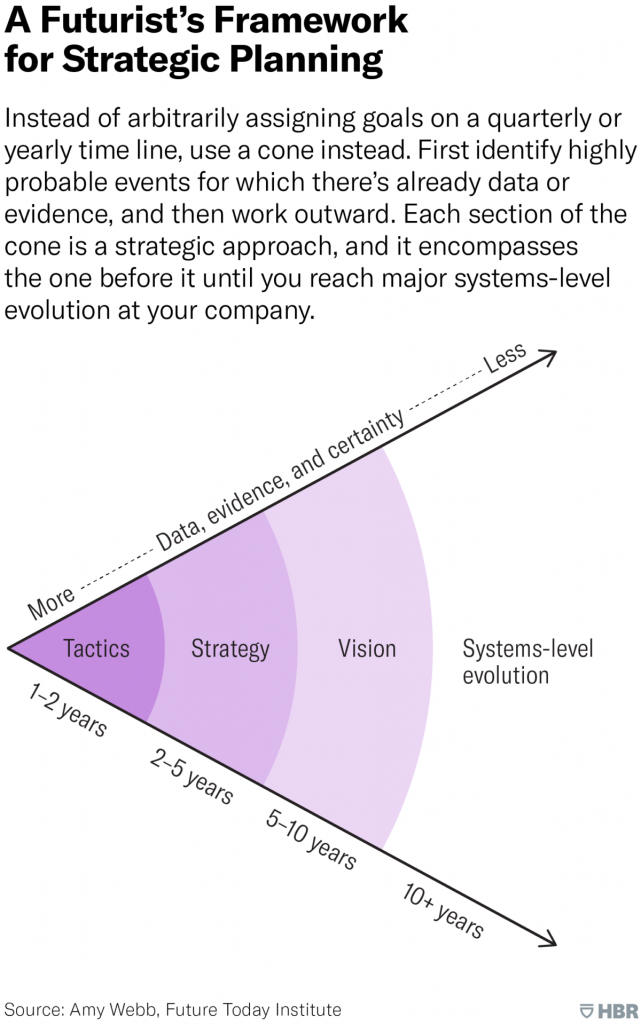
How to do strategic planning like a futurist — from hbr.org by Amy Webb

Excerpt:

Nice, linear timelines offer a certain amount of assurance: that events can be preordained, chaos can be contained, and success can be plotted and guaranteed. Of course, the real world we all inhabit is a lot messier. Regulatory actions or natural disasters are wholly outside of your control, while other factors — workforce development, operations, new product ideas — are subject to layers of decisions made throughout your organization. As all those variables collide, they shape the horizon.

Chief strategy officers and those responsible for choosing the direction of their organizations are often asked to facilitate “visioning” meetings. This helps teams brainstorm ideas, but it isn’t a substitute for critical thinking about the future. Neither are the one-, three-, or five-year strategic plans that have become a staple within most organizations, though they are useful for addressing short-term operational goals. Deep uncertainty merits deep questions, and the answers aren’t necessarily tied to a fixed date in the future. Where do you want to have impact? What it will take to achieve success? How will the organization evolve to meet challenges on the horizon? These are the kinds of deep, foundational questions that are best addressed with long-term planning.


Pearson moves away from print textbooks — from campustechnology.com by Rhea Kelly

Excerpt:

All of Pearson’s 1,500 higher education textbooks in the U.S. will now be “digital first.” The company announced its big shift away from print today, calling the new approach a “product as a service model and a generational business shift to be much more like apps, professional software or the gaming industry.”

The digital format will allow Pearson to update textbooks on an ongoing basis, taking into account new developments in the field of study, new technologies, data analytics and efficacy research, the company said in a news announcement. The switch to digital will also lower the cost for students: The average e-book price will be $40, or $79 for a “full suite of digital learning tools.”


Amazon pledges $700 million to teach its workers to code — from wired.com by Louise Matsakis

Excerpt:

Amazon announced Thursday that it will spend up to $700 million over the next six years retraining 100,000 of its US employees, mostly in technical skills like software engineering and IT support. Amazon is already one of the largest employers in the country, with almost 300,000 workers (and many more contractors) and it’s particularly hungry for more new talent. The company currently has more than 20,000 vacant US roles, over half of which are at its headquarters in Seattle. Meanwhile, the US economy is booming, and there are now more open jobs than there are unemployed people who can fill them, according to the Bureau of Labor Statistics.


Against that backdrop, Amazon’s jobs skills efforts provide some reassurance that—in theory at least—you could be retrained into a new role when the robots arrive.


From the announcement:

Based on a review of its workforce and analysis of U.S. hiring, Amazon’s fastest growing highly skilled jobs over the last five years include data mapping specialist, data scientist, solutions architect and business analyst, as well as logistics coordinator, process improvement manager and transportation specialist within our customer fulfillment network.


Also see:

  • Amazon to Invest $700M to Retrain 100,000 Workers for New Jobs — from pcmag.com by Michael Kan Icon
    ‘There is a greater need for technical skills in the workplace than ever before. Amazon is no exception,’ the company said. The goal is to ‘upskill’ one third of Amazon’s total work force by 2025 through free retraining programs.
 

Reflections on “Clay Shirky on Mega-Universities and Scale” [Christian]

Clay Shirky on Mega-Universities and Scale — from philonedtech.com by Clay Shirky
[This was a guest post by Clay Shirky that grew out of a conversation that Clay and Phil had about IPEDS enrollment data. Most of the graphs are provided by Phil.]

Excerpts:

Were half a dozen institutions to dominate the online learning landscape with no end to their expansion, or shift what Americans seek in a college degree, that would indeed be one of the greatest transformations in the history of American higher education. The available data, however, casts doubt on that idea.

Though much of the conversation around mega-universities is speculative, we already know what a mega-university actually looks like, one much larger than any university today. It looks like the University of Phoenix, or rather it looked like Phoenix at the beginning of this decade, when it had 470,000 students, the majority of whom took some or all of their classes online. Phoenix back then was six times the size of the next-largest school, Kaplan, with 78,000 students, and nearly five times the size of any university operating today.

From that high-water mark, Phoenix has lost an average of 40,000 students every year of this decade.


From DSC:
First of all, I greatly appreciate both Clay’s and Phil’s thought leadership and their respective contributions to education and learning through the years. I value their perspectives and their work.  Clay and Phil offer up a great article here — one worth your time to read.  

The article made me reflect on what I’ve been building upon and tracking for the last decade — a next generation ***PLATFORM*** that I believe will represent a powerful piece of a global learning ecosystem. I call this vision, “Learning from the Living [Class] Room.” Though the artificial intelligence-backed platform that I’m envisioning doesn’t yet fully exist — this new era and type of learning-based platform ARE coming. The emerging signs, technologies, trends — and “fingerprints”of it, if you will — are beginning to develop all over the place.

Such a platform will:

  • Be aimed at the lifelong learner.
  • Offer up major opportunities to stay relevant and up-to-date with one’s skills.
  • Offer access to the program offerings from many organizations — including the mega-universities, but also, from many other organizations that are not nearly as large as the mega-universities.
  • Be reliant upon human teachers, professors, trainers, subject matter experts, but will be backed up by powerful AI-based technologies/tools. For example, AI-based tools will pulse-check the open job descriptions and the needs of business and present the top ___ areas to go into (how long those areas/jobs last is anyone’s guess, given the exponential pace of technological change).

Below are some quotes that I want to comment on:

Not nothing, but not the kind of environment that will produce an educational Amazon either, especially since the top 30 actually shrank by 0.2% a year.


Instead of an “Amazon vs. the rest” dynamic, online education is turning into something much more widely adopted, where the biggest schools are simply the upper end of a continuum, not so different from their competitors, and not worth treating as members of a separate category.


Since the founding of William and Mary, the country’s second college, higher education in the U.S. hasn’t been a winner-take-all market, and it isn’t one today. We are not entering a world where the largest university operates at outsized scale, we’re leaving that world; 


From DSC:
I don’t see us leaving that world at all…but that’s not my main reflection here. Instead, I’m not focusing on how large the mega-universities will become. When I speak of a forthcoming Walmart of Education or Amazon of Education, what I have in mind is a platform…not one particular organization.

Consider that the vast majority of Amazon’s revenues come from products that other organizations produce. They are a platform, if you will. And in the world of platforms (i.e., software), it IS a winner take all market. 

Bill Gates reflects on this as well in this recent article from The Verge:

“In the software world, particularly for platforms, these are winner-take-all markets.

So it’s all about a forthcoming platform — or platforms. (It could be more than one platform. Consider Apple. Consider Microsoft. Consider Google. Consider Facebook.)

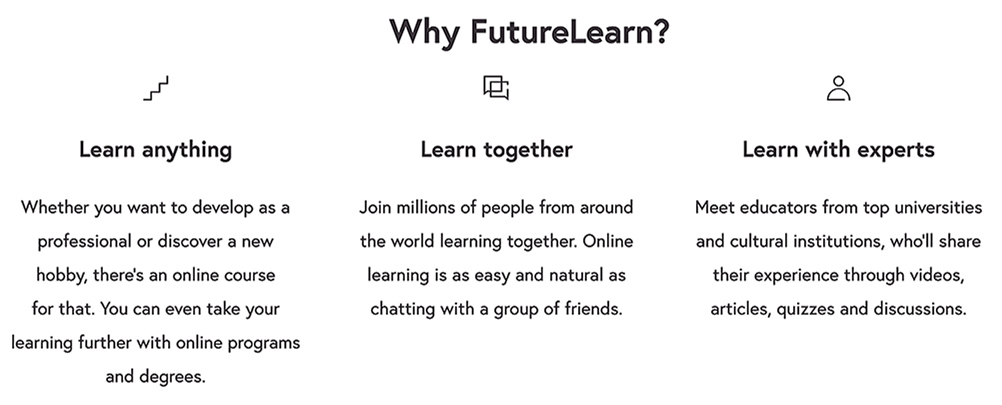
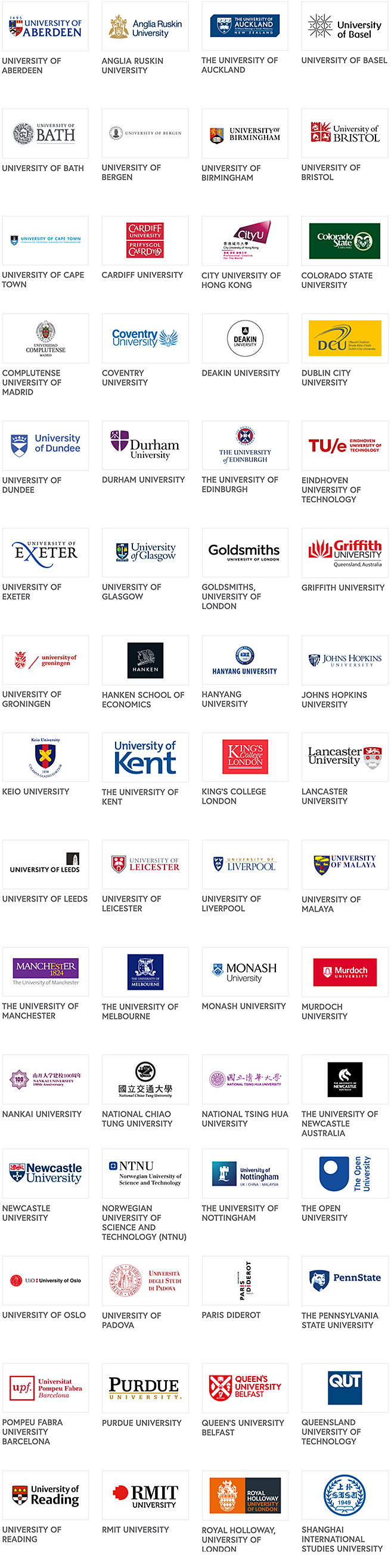
But then the question becomes…would a large amount of universities (and other types of organizations) be willing to offer up their courses on a platform? Well, consider what’s ALREADY happening with FutureLearn:

Finally…one more excerpt from Clay’s article:

Eventually the new ideas lose their power to shock, and end up being widely copied. Institutional transformation starts as heresy and ends as a section in the faculty handbook. 

From DSC:
This is a great point. Reminds me of this tweet from Fred Steube (and I added a piece about Western Telegraph):


Some things to reflect upon…for sure.


Facial recognition smart glasses could make public surveillance discreet and ubiquitous — from theverge.com by James Vincent; with thanks to Mr. Paul Czarapata, Ed.D. out on Twitter for this resource
A new product from UAE firm NNTC shows where this tech is headed next. <– From DSC: though hopefully not!!!

Excerpt:

From train stations and concert halls to sport stadiums and airports, facial recognition is slowly becoming the norm in public spaces. But new hardware formats like these facial recognition-enabled smart glasses could make the technology truly ubiquitous, able to be deployed by law enforcement and private security any time and any place.

The glasses themselves are made by American company Vuzix, while Dubai-based firm NNTC is providing the facial recognition algorithms and packaging the final product.


From DSC…I commented out on Twitter:

Thanks Paul for this posting – though I find it very troubling. Emerging technologies race out ahead of society. It would be interested in knowing the age of the people developing these technologies and if they care about asking the tough questions…like “Just because we can, should we be doing this?”


Addendum on 6/12/19:


Salesforce launches blockchain channel — from techradar.com Anthony Spadafora
Salesforce brings low-code blockchain to CRM

Excerpt:

At its fourth annual TrailheaDX developer conference, Salesforce announced its new low-code platform called Salesforce Blockchain that enables organizations to share verified, distributed data sets across a trusted network of partners and third parties.

By bringing blockchain to its CRM platform, the company is enabling organizations to create blockchain networks, workflows and apps that have the potential to deliver entirely new customer experiences.


Also see:

The D/SRUPTION Blockchain 50 — from disruptionhub.com

Excerpt:

What are the most impactful applications of blockchain in business?

Blockchain is changing how we keep records, manage relationships, and do business. Decentralised, automated systems powered by the blockchain increase the security of operations, as well as breaking down barriers to business by creating trust between diverse parties.

As the concept of blockchain becomes ever more familiar to business leaders, its real world applications are growing in number and impact.

In this exclusive report, D/SRUPTION analyses 50 game changing uses of blockchain technology in business. The range of industries featured include:

Shipping
Charity
Ecommerce
Real Estate
Finance
Government
Energy
Healthcare

Blockchain in Education


10 things we should all demand from Big Tech right now — from vox.com by Sigal Samuel
We need an algorithmic bill of rights. AI experts helped us write one.

We need an algorithmic bill of rights. AI experts helped us write one.

Excerpts:

  1. Transparency: We have the right to know when an algorithm is making a decision about us, which factors are being considered by the algorithm, and how those factors are being weighted.
  2. Explanation: We have the right to be given explanations about how algorithms affect us in a specific situation, and these explanations should be clear enough that the average person will be able to understand them.
  3. Consent: We have the right to give or refuse consent for any AI application that has a material impact on our lives or uses sensitive data, such as biometric data.
  4. Freedom from bias: We have the right to evidence showing that algorithms have been tested for bias related to race, gender, and other protected characteristics — before they’re rolled out. The algorithms must meet standards of fairness and nondiscrimination and ensure just outcomes. (Inserted comment from DSC: Is this even possible? I hope so, but I have my doubts especially given the enormous lack of diversity within the large tech companies.)
  5. Feedback mechanism: We have the right to exert some degree of control over the way algorithms work.
  6. Portability: We have the right to easily transfer all our data from one provider to another.
  7. Redress: We have the right to seek redress if we believe an algorithmic system has unfairly penalized or harmed us.
  8. Algorithmic literacy: We have the right to free educational resources about algorithmic systems.
  9. Independent oversight: We have the right to expect that an independent oversight body will be appointed to conduct retrospective reviews of algorithmic systems gone wrong. The results of these investigations should be made public.
  10. Federal and global governance: We have the right to robust federal and global governance structures with human rights at their center. Algorithmic systems don’t stop at national borders, and they are increasingly used to decide who gets to cross borders, making international governance crucial.


This raises the question: Who should be tasked with enforcing these norms? Government regulators? The tech companies themselves?


© 2025 | Daniel Christian