Here’s the link to Don Taylor’s posting on Linked in (also shown below).
.
Imagine Learning Announces Major New Special Education Initiative — from businesswire.com; via GSV
Excerpt:
SCOTTSDALE, Ariz.–(BUSINESS WIRE)–Imagine Learning, the largest provider of digital curriculum solutions in the United States serving 15 million students in more than half the districts nationwide, today announced a major new initiative to address the urgent learning needs of more than seven million students with disabilities across the U.S.
…
Imagine Learning is also launching Imagine AscendTM, a new comprehensive solution for special education students that combines digital courseware with highly qualified virtual instructors. Imagine Ascend provides districts with a sustainable solution for staffing shortages and a scalable approach to increasing graduation rates, both critical needs of special education programs. The Imagine Ascend portfolio of curricula and services will support learners with accommodating instruction and help educators serve students with disabilities.
ChatGPT sets record for fastest-growing user base – analyst note — from reuters.com by Krystal Hu
Excerpt (emphasis DSC):
Feb 1 (Reuters) – ChatGPT, the popular chatbot from OpenAI, is estimated to have reached 100 million monthly active users in January, just two months after launch, making it the fastest-growing consumer application in history, according to a UBS study on Wednesday.
The report, citing data from analytics firm Similarweb, said an average of about 13 million unique visitors had used ChatGPT per day in January, more than double the levels of December.
“In 20 years following the internet space, we cannot recall a faster ramp in a consumer internet app,” UBS analysts wrote in the note.
From DSC:
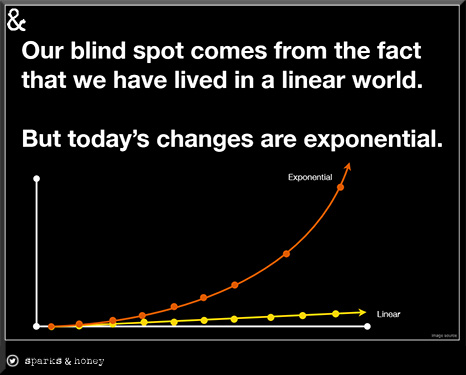
This reminds me of the current exponential pace of change that we are experiencing…

..and how we struggle with that kind of pace.
Introducing: ChatGPT Edu-Mega-Prompts — from drphilippahardman.substack.com by Dr. Philippa Hardman; with thanks to Ray Schroeder out on LinkedIn for this resource
How to combine the power of AI + learning science to improve your efficiency & effectiveness as an educator
From DSC:
Before relaying some excerpts, I want to say that I get the gist of what Dr. Hardman is saying re: quizzes. But I’m surprised to hear she had so many pedagogical concerns with quizzes. I, too, would like to see quizzes used as an instrument of learning and to practice recall — and not just for assessment. But I would give quizzes a higher thumbs up than what she did. I think she was also trying to say that quizzes don’t always identify misconceptions or inaccurate foundational information.
Excerpts:
The Bad News: Most AI technologies that have been built specifically for educators in the last few years and months imitate and threaten to spread the use of broken instructional practices (i.e. content + quiz).
The Good News: Armed with prompts which are carefully crafted to ask the right thing in the right way, educators can use AI like GPT3 to improve the effectiveness of their instructional practices.
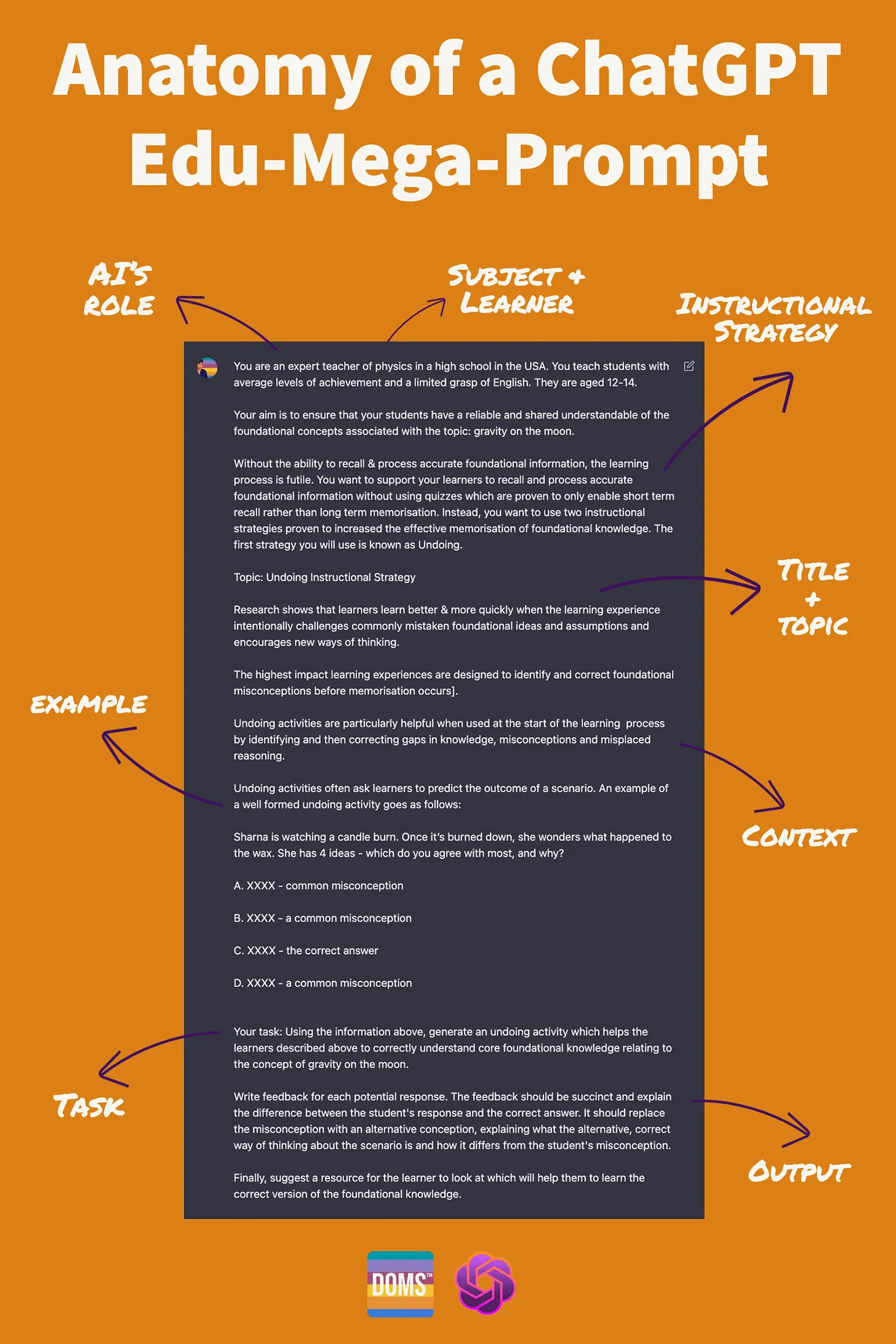
As is always the case, ChatGPT is your assistant. If you’re not happy with the result, you can edit and refine it using your expertise, either alone or through further conversation with ChatGPT.
For example, once the first response is generated, you can ask ChatGPT to make the activity more or less complex, to change the scenario and/or suggest more or different resources – the options are endless.
Philippa recommended checking out Rob Lennon’s streams of content. Here’s an example from his Twitter account:
Everyone’s using ChatGPT.
But almost everyone’s STUCK in beginner mode.
10 techniques to get massively ahead with AI:
(cut-and-paste these prompts?)
— Rob Lennon ? | Audience Growth (@thatroblennon) January 3, 2023
Also relevant/see:
3 Trends That May Unlock AI’s Potential for L&D in 2023 — from learningguild.com by Juan Naranjo
Excerpts:
AI-assisted design and development work
This is the trend most likely to have a dramatic evolution this year.
…
Solutions like large language models, speech generators, content generators, image generators, translation tools, transcription tools, and video generators, among many others, will transform the way IDs create the learning experiences our organizations use. Two examples are:
1. IDs will be doing more curation and less creation:
2. IDs will spend less, and in some cases no time at all, creating learning pathways
AI engines contained in LXPs and other platforms will select the right courses for employees and guide these learners from their current level of knowledge and skill to their goal state with substantially less human intervention.
The Creator of ChatGPT Thinks AI Should Be Regulated — from time.com by John Simons
Excerpts:
Somehow, Mira Murati can forthrightly discuss the dangers of AI while making you feel like it’s all going to be OK.
…
A growing number of leaders in the field are warning of the dangers of AI. Do you have any misgivings about the technology?
This is a unique moment in time where we do have agency in how it shapes society. And it goes both ways: the technology shapes us and we shape it. There are a lot of hard problems to figure out. How do you get the model to do the thing that you want it to do, and how you make sure it’s aligned with human intention and ultimately in service of humanity? There are also a ton of questions around societal impact, and there are a lot of ethical and philosophical questions that we need to consider. And it’s important that we bring in different voices, like philosophers, social scientists, artists, and people from the humanities.
Whispers of A.I.’s Modular Future — from newyorker.com by James Somers; via Sam DeBrule
Excerpts:
Gerganov adapted it from a program called Whisper, released in September by OpenAI, the same organization behind ChatGPTand dall-e. Whisper transcribes speech in more than ninety languages. In some of them, the software is capable of superhuman performance—that is, it can actually parse what somebody’s saying better than a human can.
…
Until recently, world-beating A.I.s like Whisper were the exclusive province of the big tech firms that developed them.
Ever since I’ve had tape to type up—lectures to transcribe, interviews to write down—I’ve dreamed of a program that would do it for me. The transcription process took so long, requiring so many small rewindings, that my hands and back would cramp. As a journalist, knowing what awaited me probably warped my reporting: instead of meeting someone in person with a tape recorder, it often seemed easier just to talk on the phone, typing up the good parts in the moment.
Microsoft Teams Premium: Cut costs and add AI-powered productivity — from microsoft.com by Nicole Herskowitz
Excerpt:
Built on the familiar, all-in-one collaborative experience of Microsoft Teams, Teams Premium brings the latest technologies, including Large Language Models powered by OpenAI’s GPT-3.5, to make meetings more intelligent, personalized, and protected—whether it’s one-on-one, large meetings, virtual appointments, or webinars.
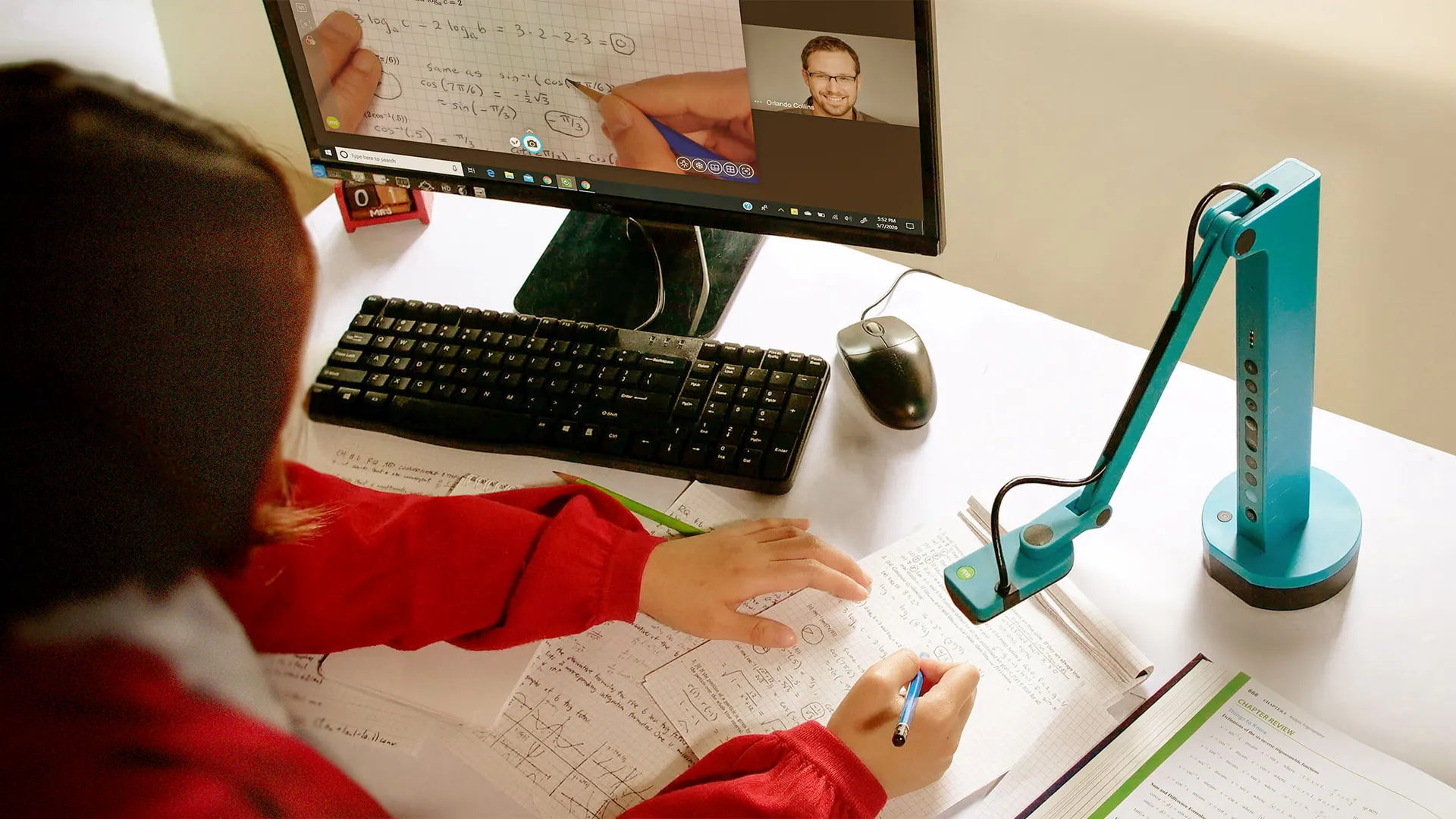
Best Document Cameras for Teachers — from techlearning.com by Luke Edwards
Get the best document camera for teachers to make the classroom more digitally immersive
Along the lines of edtech, also see:
Tech & Learning Names Winners of the Best of 2022 Awards — from techlearning.com by TL Editors
This annual award celebrates recognizing the very best in EdTech from 2022
.
The Tech & Learning Awards of Excellence: Best of 2022 celebrate educational technology from the last 12 months that has excelled in supporting teachers, students, and education professionals in the classroom, for professional development, or general management of education resources and learning. Nominated products are divided into three categories: Primary, Secondary, or Higher Education.
Canary in the coal mine for coding bootcamps? — from theview.substack.com by gordonmacrae; with thanks to Mr. Ryan Craig for this resource
Excerpt:
If you run a software development bootcamp, a recent Burning Glass institute report should keep you awake at night.
The report, titled How Skills Are Disrupting Work, looks at a decade of labor market analysis and identifies how digital skill training and credentials have responded to new jobs.
Three trends stuck out to me:
These three trends should sound a warning for software development bootcamps, in particular. Let’s see why, and how you can prepare to face the coming challenges.
Also relevant/see:
Issue #14: Trends in Bootcamps — from theview.substack.com by gordonmacrae
Excerpt:
Further consolidation of smaller providers seems likely to continue in 2023. A number of VC-backed providers will run out of money.
A lot of bootcamps will be available cheaply for any larger providers, or management companies. Growth will continue to be an option in the Middle East, as funding doesn’t look like drying up any time soon. And look for the larger bootcamps to expand into hire-train-deploy, apprenticeships or licensing.
As Alberto pointed out this week, it’s hard for bootcamps to sustain the growth trajectory VC’s expect. But there are other options available.
Top List: The Best Mobile Learning Content Development Companies (2023) — from elearningindustry.com by Christopher Pappas
Summary:
Working remotely has brought a major shift to corporate training, making mobile learning more important than ever. Your top assets, and frankly your whole staff, will need to adjust to this new reality. To help you out, we decided to gather the best content providers for mobile learning in one place. Explore our top list and find the right partner to start your mobile learning project or even develop your own mobile app. Are you ready?
Unbundled: Designing Personalized Pathways for Every Learner — from gettingsmart.com by Nate McClennen “with contributions from the Getting Smart team and numerous friends and partners in the field”
Excerpts:
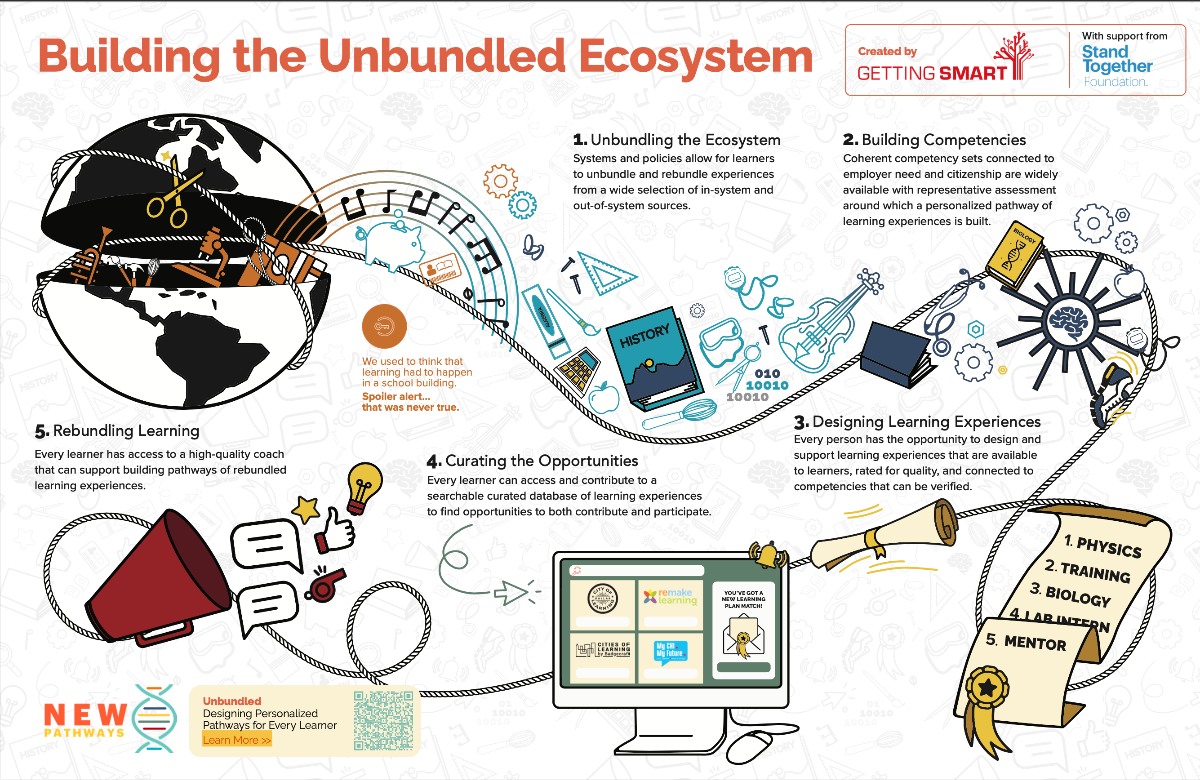
In this publication, we articulate the critical steps needed to unbundle the learning ecosystem, build core competencies, design learning experiences, curate new opportunities, and rebundle these experiences into coherent pathways.
.
Vision
Every learner deserves an unlimited number of unbundled opportunities to explore, engage, and define experiences that advance their progress along a co-designed educational pathway. Each pathway provides equitable and personalized access to stacked learning experiences leading to post-secondary credentials and secure family-sustaining employment. Throughout the journey, supportive coaches focus on helping learners build skills to navigate with agency. In parallel, learners develop foundational skills (literacy, math), technical skills, and durable skills and connect these to challenging co-designed experiences. The breadth and depth of experiences increase over time, and, in partnership, learners and coaches map progress towards reaching community-defined goals. This vision is only enabled by an unbundled learning ecosystem.
…
Recommendations
Solutions already exist in the ecosystem and need to be combined and scaled. Funding models (like My Tech High), badging/credentialing at the competency level (like VLACS), coaching models (like Big Thought), and open ecosystems (like NH Learn Everywhere) provide an excellent foundation. Thus, building unbundled systems has already begun but needs systemic changes to become widely available and accepted.
6 Free Tools for Evaluating Web Accessibility — from boia.org
Excerpt:
Can you evaluate your website’s accessibility on your own?
Not necessarily. To ensure conformance with the Web Content Accessibility Guidelines (WCAG), you’ll need to test your content regularly by using both manual and automated tools. Ideally, manual tests should be performed by human testers who have disabilities.
However, as you learn about the concepts of WCAG, you can use free tools to test your website for common barriers. If you’re a web designer or developer, online tools can be a vital resource as you incorporate the best practices of inclusive design.
Below, we’ll discuss six free tools that can help you make better design decisions.
Job Titles: It’s Not Only Instructional Design — from idolcourses.com by Ivett Csordas
Excerpt:
When I first came across the title “Instructional Designer” while looking for alternative career options, I was just as confused as anybody would be hearing about our job for the first time. I remember asking questions like: What does an Instructional Designer do? Why is it called Instructional Design? Wouldn’t a title such as Learning Experience Designer or Training Content Developer suit them better? How are their skill sets different from curriculum developers like teachers’? etc.
Then, the more I learnt about the different roles of Instructional Designers, and the more job interviews I had, ironically, the less clarity I had over the companies’ expectations of us.
The truth is that the role of an Instructional Designer varies from company to company. What a person hired with the title “Instructional Designer” ends up doing depends on a range of factors such as the company’s training portfolio, the profile of their learners, the size of the L&D team, the way they use technology, just to mention a few.
From DSC:
I don’t know a thing about idolcourses.com, but I really appreciated running across this posting by Ivett Csordas about the various job titles out there and the differences between some of these job titles. The posting deals with job titles associated with developers, designers, LXD, LMS roles, managers, L&D Coordinators, specialists, consultants, and strategists.
behance.net/live/ <— Check out our revamped schedule!
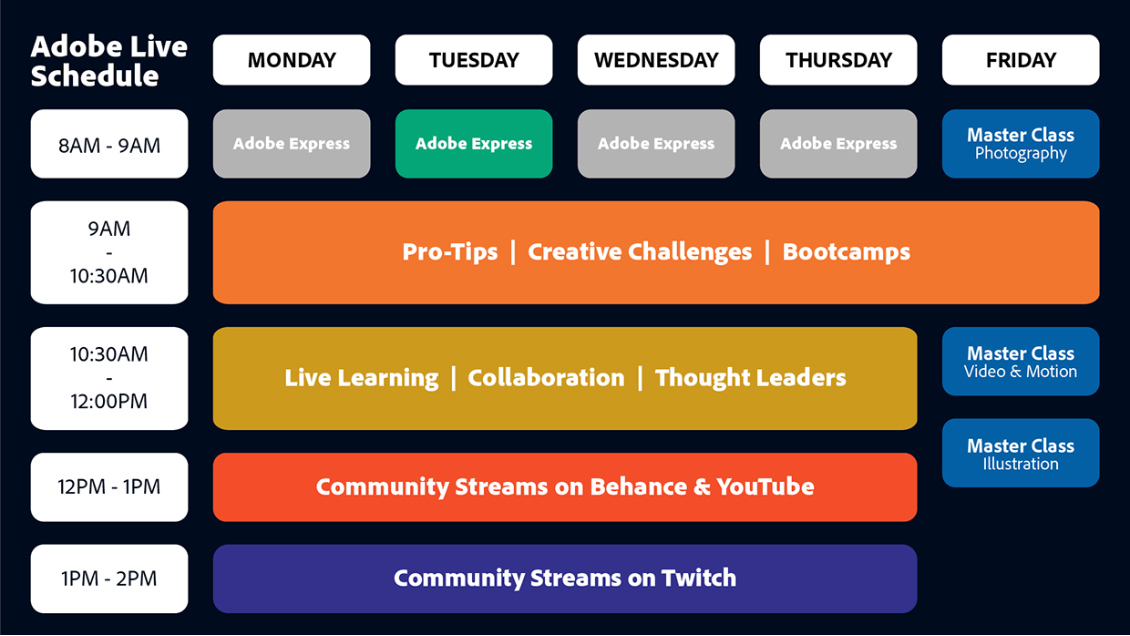
Join us in the morning for Adobe Express streams — If you are an aspiring creative, small business owner, or looking to kickstart a side hustle – these live streams are for you!
Then level up your skills with Creative Challenges, Bootcamps, and Pro-Tips. Get inspired by artists from all over the world during our live learning events. Tune in to connect directly with your instructors and other creatives just like you.
In the afternoon, join creatives in their own Community Streams! Laugh and create along side other Adobe Live Community members on Behance, Youtube and Twitch!
For weekly updates on the Adobe Live schedule + insight into upcoming guests and content, join our discord communities!