From DSC:
The other day I had posted some ideas in regards to how artificial intelligence, machine learning, and augmented reality are coming together to offer some wonderful new possibilities for learning (see: “From DSC: Amazing possibilities coming together w/ augmented reality used in conjunction w/ machine learning! For example, consider these ideas.”) Here is one of the graphics from that posting:
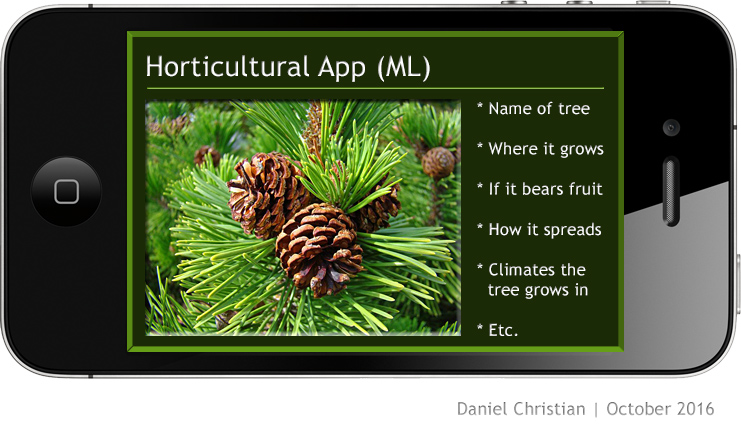
 

horticulturalapp-danielchristian

These affordances are just now starting to be uncovered as machines are increasingly able to ascertain patterns, things, objects…even people (which calls for a separate posting at some point).

But mainly, for today, I wanted to highlight an excellent comment/reply from Nikos Andriotis @ Talent LMS who gave me permission to highlight his solid reflections and ideas:
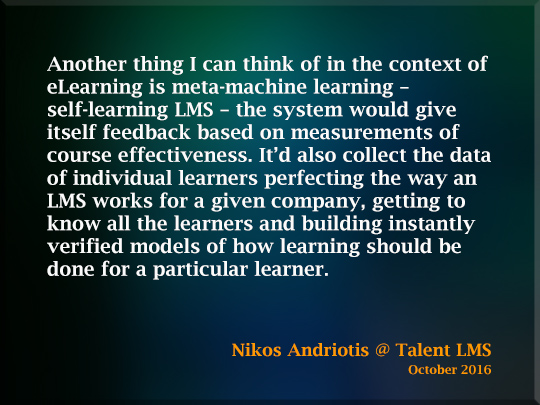
 

nikosandriotisidea-oct2016

https://www.talentlms.com/blog/author/nikos-andriotis


From DSC:
Excellent reflection/idea Nikos — that would represent some serious personalized, customized learning!

Nikos’ innovative reflections also made me think about his ideas in light of their interaction or impact with web-based learner profiles, credentialing, badging, and lifelong learning.  What’s especially noteworthy here is that the innovations (that impact learning) continue to occur mainly in the online and blended learning spaces.

How might the ramifications of these innovations impact institutions who are pretty much doing face-to-face only (in terms of their course delivery mechanisms and pedagogies)?

Given:

  • That Microsoft purchased LinkedIn and can amass a database of skills and open jobs (playing a cloud-based matchmaker)
  • Everyday microlearning is key to staying relevant (RSS feeds and tapping into “streams of content” are important here, and so is the use of Twitter)
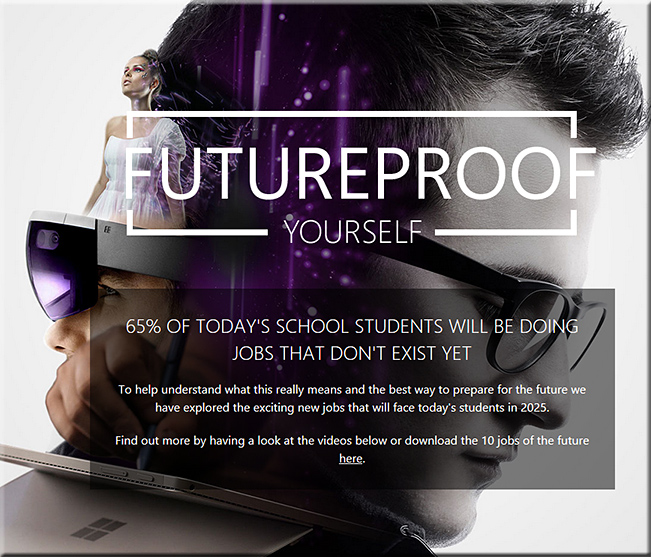
  • 65% of today’s students will be doing jobs that don’t even exist yet (per Microsoft & The Future Laboratory in 2016)
 

futureproofyourself-msfuturelab-2016

  • The exponential pace of technological change
  • The increasing level of experimentation with blockchain (credentialing)
  • …and more

…what do the futures look like for those colleges and universities that operate only in the face-to-face space and who are not innovating enough?


LinkedIn announced several things yesterday (9/22/16). Below are some links to these announcements:


Introducing LinkedIn Learning, a Better Way to Develop Skills and Talent — from learning.linkedin.com

Excerpt (emphasis DSC):

Today, we are thrilled to announce the launch of LinkedIn Learning, an online learning platform enabling individuals and organizations to achieve their objectives and aspirations. Our goal is to help people discover and develop the skills they need through a personalized, data-driven learning experience.

LinkedIn Learning combines the industry-leading content from Lynda.com with LinkedIn’s professional data and network. With more than 450 million member profiles and billions of engagements, we have a unique view of how jobs, industries, organizations and skills evolve over time. From this, we can identify the skills you need and deliver expert-led courses to help you obtain those skills. We’re taking the guesswork out of learning.

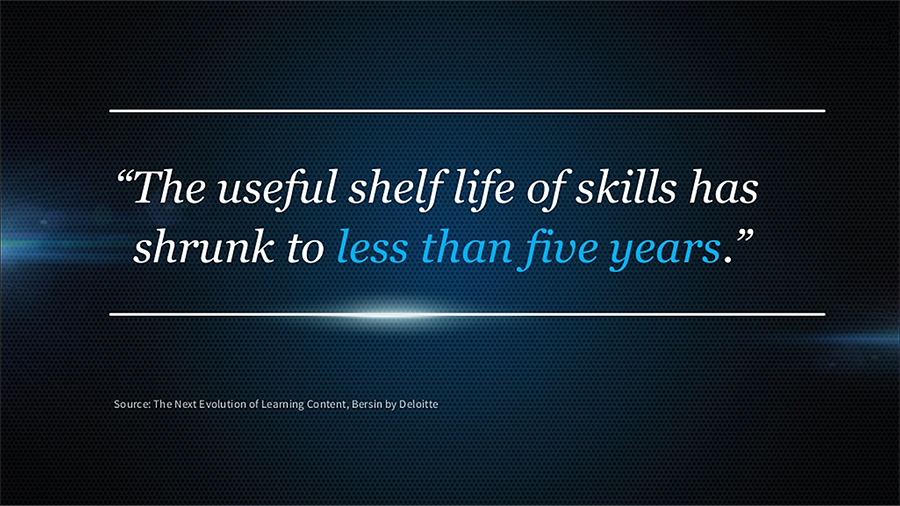
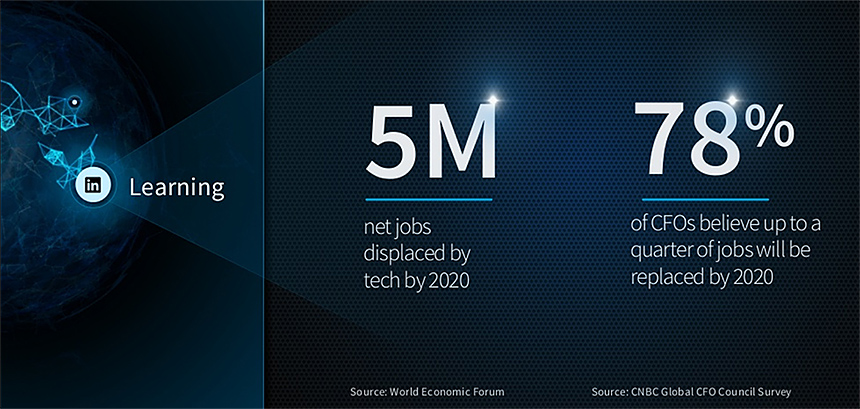
The pressure on individuals and organizations to adapt to change has never been greater. The skills that got you to where you are today are not the skills to prepare you for tomorrow. In fact, the shelf-life of skills is less than five years, and many of today’s fastest growing job categories didn’t even exist five years ago.

To tackle these challenges, LinkedIn Learning is built on three core pillars:

Data-driven personalization: We get the right course in front of you at the right time. Using the intelligence that comes with our network, LinkedIn Learning creates personalized recommendations, so learners can efficiently discover which courses are most relevant to their goals or job function. Organizations can use LinkedIn insights to customize multi-course Learning Paths to meet their specific needs. We also provide robust analytics and reporting to help you measure learning effectiveness.


linkedinlearning-announced-9-22-16


LinkedIn’s first big move since the $26.2 billion Microsoft acquisition is basically a ‘school’ for getting a better job — from finance.yahoo.com

Excerpt:

Today, LinkedIn has launched LinkedIn Learning — its first major product launch since the news last June that Microsoft would be snapping up the social network for $26.2 billion in a deal that has yet to close.

LinkedIn Learning takes the online skills training classes the company got in its 2015 acquisition of Lynda.com for $1.5 billion.

The idea, says LinkedIn CEO Jeff Weiner, is to help its 433 million-plus members get the skills they need to stay relevant in a world that’s increasingly reliant on digital skills.


LinkedIn’s New Learning Platform to Recommend Lynda Courses for Professionals — from edsurge.com by Marguerite McNeal

Excerpt:

Companies will also be able to create their own “learning paths”—bundles of courses around a particular topic—to train employees. A chief learning officer, for instance, might compile a package of courses in product management and ask 10 employees to complete the assignments over the course of a few months.

LinkedIn is also targeting higher-education institutions with the new offering. It is marketing the solution as a professional development tool that can help faculty learn how to use classroom tools such as Moodle, Adobe Captivate and learning management systems.


“Increasingly predictions of tech displacing workers are coming to fruition,” he added. “The idea that you can study a skill once and have a job for the rest of your life—those days are over.”


LinkedIn Learning for higher education


Accelerating LinkedIn’s Vision Through Innovation — from slideshare.net

linkeinlearning-sept2016


linkeinlearning2-sept2016


LinkedIn adding new training features, news feeds and ‘bots’ — from finance.yahoo.com

Excerpt:

LinkedIn is also adding more personalized features to its news feed, where members can see articles and announcements posted by their professional contacts. A new “Interest Feed” will offer a collection of articles, posts and opinion pieces on major news events or current issues.


How might these enhancements to Siri and tvOS 10 impact education/training/learning-related offerings & applications? [Christian]

From DSC:
I read the article mentioned below.  It made me wonder how 3 of the 4 main highlights that Fred mentioned (that are coming to Siri with tvOS 10) might impact education/training/learning-related applications and offerings made possible via tvOS & Apple TV:

  1. Live broadcasts
  2. Topic-based searches
  3. The ability to search YouTube via Siri

The article prompted me to wonder:

  • Will educators and trainers be able to offer live lectures and training (globally) that can be recorded and later searched via Siri? 
  • What if second screen devices could help learners collaborate and participate in active learning while watching what’s being presented on the main display/”TV?”
  • What if learning taken this way could be recorded on one’s web-based profile, a profile that is based upon blockchain-based technologies and maintained via appropriate/proven organizations of learning? (A profile that’s optionally made available to services from Microsoft/LinkedIn.com/Lynda.com and/or to a service based upon IBM’s Watson, and/or to some other online-based marketplace/exchange for matching open jobs to potential employees.)
  • Or what if you could earn a badge or prove a competency via this manner?

Hmmm…things could get very interesting…and very powerful.

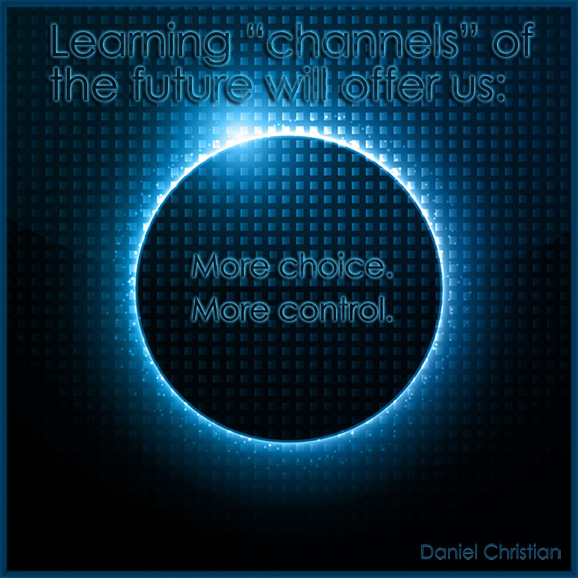
More choice. More control. Over one’s entire lifetime.

Heutagogy on steroids.

Micro-learning.

Perhaps this is a piece of the future for MOOCs…


MoreChoiceMoreControl-DSC


The Living [Class] Room -- by Daniel Christian -- July 2012 -- a second device used in conjunction with a Smart/Connected TV


StreamsOfContent-DSC


Apple TV gets new Siri features in tvOS 10 — from iphonefaq.org by Fred Straker

Excerpt:

The forthcoming update to Apple TV continues to bring fresh surprises for owners of Apple’s set top box. Many improvements are coming to tvOS 10, including single-sign-on support and an upgrade to Siri’s capabilities. Siri has already opened new doors thanks to the bundled Siri Remote, which simplifies many functions on the Apple TV interface. Four main highlights are coming to Siri with tvOS 10, which is expected to launch this fall.


Addendum on 7/17/16:

CBS News Launches New Apple TV App Designed Exclusively for tvOS — from macrumors.com

Excerpt:

CBS today announced the launch of an all-new Apple TV app that will center around the network’s always-on, 24-hour “CBSN” streaming network and has been designed exclusively for tvOS. In addition to the live stream of CBSN, the app curates news stories and video playlists for each user based on previously watched videos.

The new app will also take advantage of the 4th generation Apple TV’s deep Siri integration, allowing users to tell Apple’s personal assistant that they want to “Watch CBS News” to immediately start a full-screen broadcast of CBSN. While the stream is playing, users can interact with other parts of the app to browse related videos, bookmark some to watch later, and begin subscribing to specific playlists and topics.


From DSC:
As I read the article below, I couldn’t help but think of Microsoft’s recent announcement to purchase LinkedIn.com (who had already acquired Lynda.com last year).  Perhaps Microsoft’s purchase of LinkedIn (and with it, Lynda.com) will bring big data to lifelong learning, career building, and matching job providers with job seekers (i.e., online-based marketplaces/exchanges). If Microsoft doesn’t do this, perhaps IBM’s Watson will. But this is where blockchain could come in as well…to verify that someone actually took this or that module, course, training, etc.


How Microcredentials are Changing the Landscape of Higher and Technical Education — from evolllution.com by Michael Netzer, Associate Provost & SVP of Academic Program Development and Outreach, American Public University System

Excerpts:

Just ten years ago, one would never have considered the portability of credentials that could follow a person from location to location, allowing potential employers to verify a job candidate’s fit for a position quickly. However, that is just what has happened, and the explosion of interest in digital badging and microcredentials is changing the landscape of higher education.

Digital badges encoded with microcredentials contain meta data that links back to the issuer, performance criteria, and verification of evidence.

Ultimately, badging offers portability of acknowledged skills and abilities that can be carried anywhere to demonstrate competency. Learners can accumulate badges across institutional platforms, and the badges can be sorted, shown, or hidden by the learner to reflect achievement in the particular skills or knowledge which the learner wishes to exhibit.


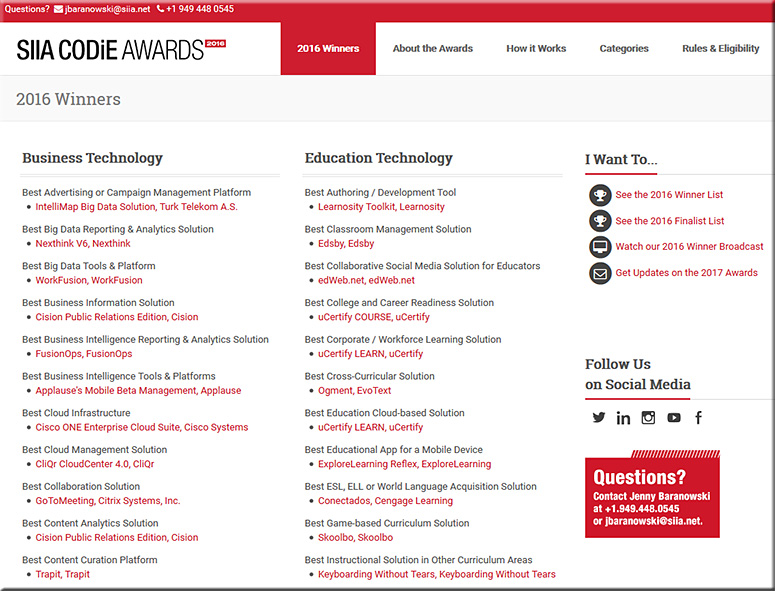
The SIIA CODiE Awards for 2016 — with thanks to Neha Jaiswal from uCertify for this resource; uCertify, as you will see, did quite well

Since 1986, the SIIA CODiE Awards have recognized more than 1,000 software and information companies for achieving excellence. The CODiE Awards remain the only peer-recognized program in the content, education, and software industries so each CODiE Award win serves as incredible market validation for a product’s innovation, vision, and overall industry impact.


SIIA-CODiE-Awards-for-2016


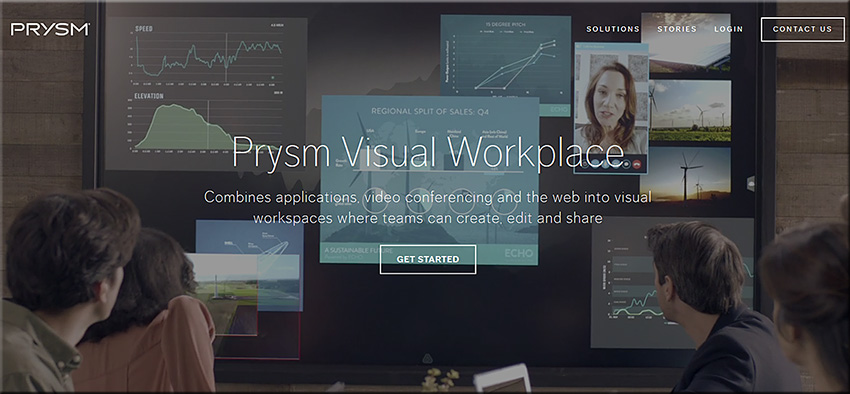
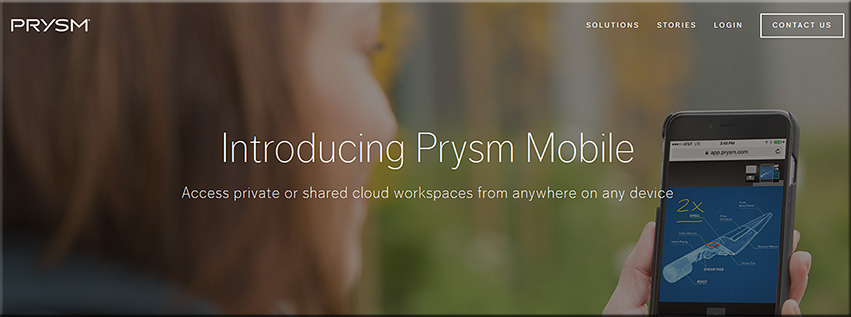
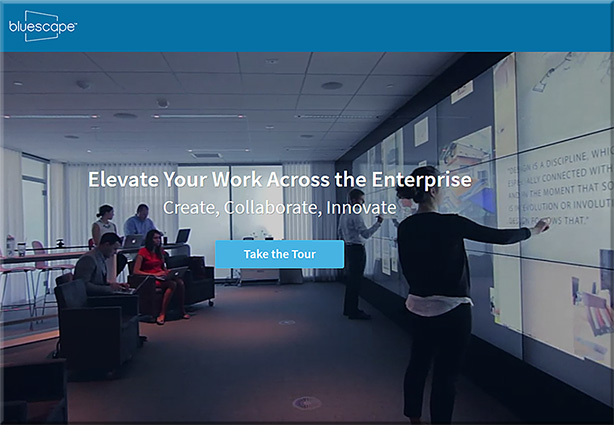
Will “class be in session” soon on tools like Prysm & Bluescape? If so, there will be some serious global interaction, collaboration, & participation here! [Christian]

From DSC:
Below are some questions and thoughts that are going through my mind:

  • Will “class be in session” soon on tools like Prysm & Bluescape?
  • Will this type of setup be the next platform that we’ll use to meet our need to be lifelong learners? That is, will what we know of today as Learning Management Systems (LMS) and Content Management Systems (CMS) morph into this type of setup?
  • Via platforms/operating systems like tvOS, will our connected TVs turn into much more collaborative devices, allowing us to contribute content with learners from all over the globe?
  • Prysm is already available on mobile devices and what we consider a television continues to morph
  • Will second and third screens be used in such setups? What functionality will be assigned to the main/larger screens? To the mobile devices?
  • Will colleges and universities innovate into such setups?  Or will organizations like LinkedIn.com/Lynda.com lead in this space? Or will it be a bit of both?
  • How will training, learning and development groups leverage these tools/technologies?
  • Are there some opportunities for homeschoolers here?

Along these lines, are are some videos/images/links for you:


PrysmVisualWorkspace-June2016


PrysmVisualWorkspace2-June2016


BlueScape-2016


BlueScape-2015


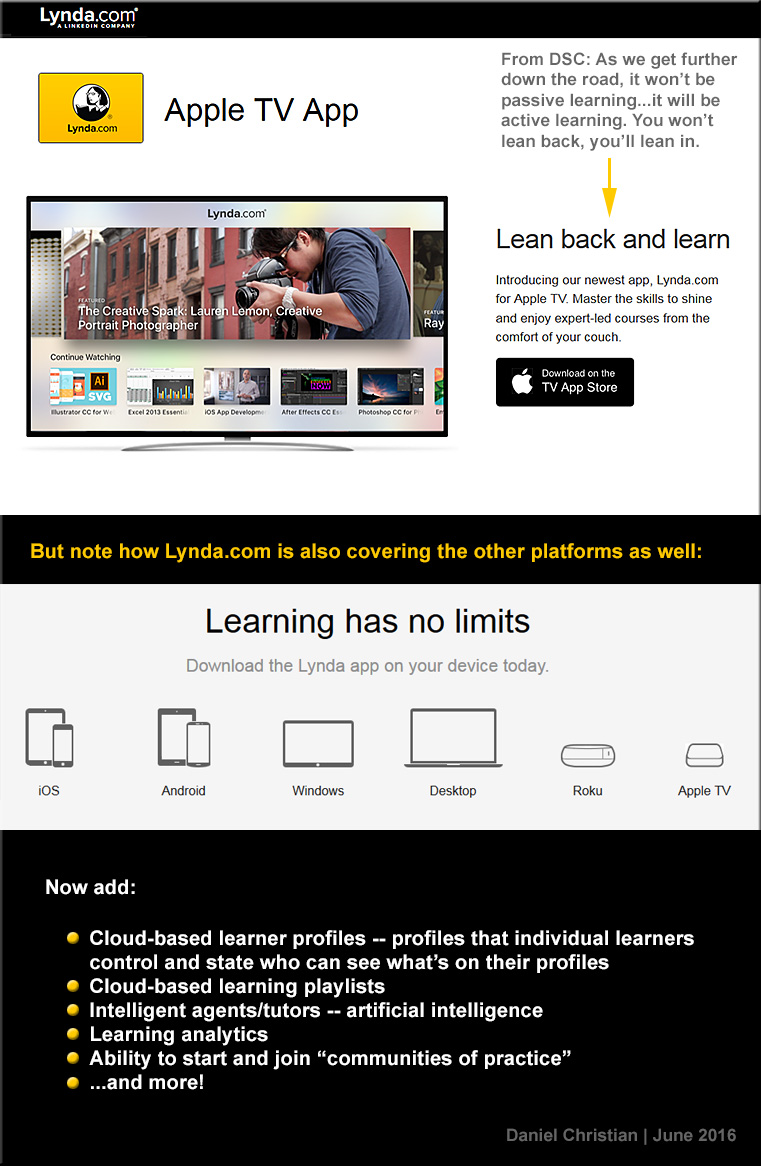
DSC-LyndaDotComOnAppleTV-June2016


The Living [Class] Room -- by Daniel Christian -- July 2012 -- a second device used in conjunction with a Smart/Connected TV


Also see:

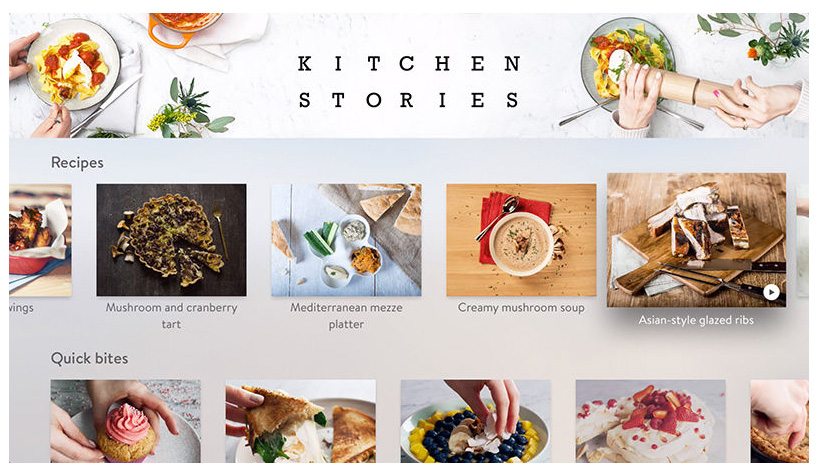
kitchenstories-AppleTV-May2016


Also see:


Prysm Adds Enterprise-Wide Collaboration with Microsoft Applications — from ravepubs.com by Gary Kayye

Excerpt:

To enhance the Prysm Visual Workplace, Prysm today announced an integration with Microsoft OneDrive for Business and Office 365. Using the OneDrive for Business API from Microsoft, Prysm has made it easy for customers to connect Prysm to their existing OneDrive for Business environments to make it a seamless experience for end users to access, search for, and sync with content from OneDrive for Business. Within a Prysm Visual Workplace project, users may now access, work within and download content from Office 365 using Prysm’s built-in web capabilities.


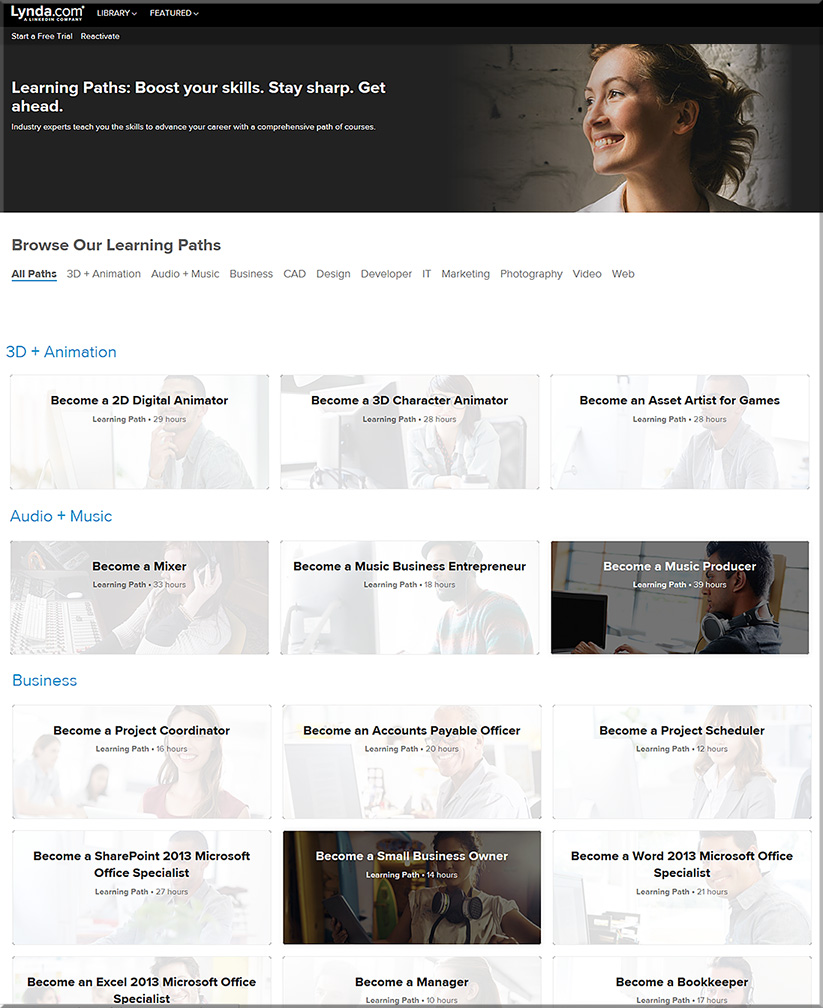
Start your journey: Lynda.com introduces Learning Paths to help you stay ahead — from linkedin.com

Excerpt:

We all know that the knowledge and skills required to be successful in our jobs today is accelerating. This rate of change challenges all of us to stay ahead in our roles and sets a high bar for those looking to start or change their careers. Today we are introducing more than 50 new learning paths to help you stay ahead in your current job or if you’re looking to make a career pivot.


LearningPathsLyndaDotCom-April2016


Learning paths are step-by-step structured courses, supported with quizzes, practice, and learning reminders to encourage you and support you as you make progress towards your goal. These new learning paths include how to become a Web Developer, a Manager, a Bookkeeper, a Project Manager, a Small Business Owner, a Digital Marketer, a Digital Illustrator. Check out the full list here.

Learning paths are also a great way to continue expanding on your existing skill set. If you’re embarking on a new career, you can take advantage of these learning paths to become more knowledgeable about the skills and experience needed to secure your dream job. If  you’re a marketing manager who needs to quickly get up to speed on how to leverage social media for your job, you could take the digital marketing learning path to continue grooming and adding new skills.

We know that making the commitment to learn is incredibly tough; sticking with it can be even harder. To ensure your hard work gets noticed,  you’ll receive a certification of completion at the end of a learning path that you can share with your professional network on LinkedIn. Whether you’re looking to transform your current career path, jump into a new career, or sharpen your skills in your current job, Lynda.com can be your guide.

These new learning paths will be available starting today in English around the world and we are working towards adding new paths for you to take. We look forward to hearing about your learning path stories.


Also see:

LinkedIn launches Lynda.com ‘Learning Paths’ in push to grow education business — from forbes.com by Kathleen Chaykowski

Excerpt:

On Thursday, the Mountain View, Calif.-based company launched more than 50 Lynda.com “Learning Paths,” a package of ordered courses intended to prepare users for a specific role or to update users’ skills for their current job. Some of the new “Learning Paths” include how to become a digital marketer, photographer, digital illustrator, small business owner, project manager, bookkeeper or web developer.

“Whether you’re looking to transform your current career path, jump into a new career, or sharpen your skills in your current job, Lynda.com can be your guide,” Arthur Nicholls, a senior product manager at LinkedIn said. ”We all know that the knowledge and skills required to be successful in our jobs today is accelerating. This rate of change challenges all of us to stay ahead in our roles and sets a high bar for those looking to start or change their careers.”


Fuller profiles on candidates’ skills and qualifications will also advance LinkedIn’s efforts in building an economic graph, a digital map of the skills, economic needs, jobs, companies and people around the world.


4 ed-tech ideas face The Chronicle’s version of ‘Shark Tank’ — from chronicle.com by Goldie Blumenstyk

Excerpt:

Four innovators with four very different ideas for improving higher education brought their pitches to The Chronicle’s second-annual Shark Tank: Edu Edition during the South by Southwest Edu conference in March.

They included a professor with technology that turns students into moving elements of classroom visualizations, an entrepreneur whose company aims to ease the process of hiring adjunct instructors, a nonprofit organization supporting working-adult students as they pursue competency-based degrees, and a consulting organization proposing the establishment of a new kind of educational advisers, supported with federal dollars, to help students navigate an increasingly “unbundled” education system.


Also see:

What Compels People to Pursue Radical Innovations in Education — from etale.org by Bernard Bull

Excerpt:

What compels people to pursue more radical innovations in education? It has now been almost two decades since I started to more seriously and systematically study innovations in education and innovative learning organizations. Many of the musings about that show up in the chapters of my book on Missional Moonshots (not to mention the many articles on this blog), but since my exploration started, I can’t think of a single day that has passed without some thought experiment or reflection about educational innovation. In that sense, it has become a consuming passion for me because I see educational innovation as an important social good, and I have immense respect for those who tap into the courage, creativity and hard work necessary to pursue revolutionary or radical innovations in education.

As such, I’ve spent plenty of time thinking about what compels people to pursue such innovations. What is it that happens inside or outside of people that draws, drives or inspires them to get off the paved roads of legacy education models and frameworks and do the hard work of helping to create completely new roadways? Under what conditions is this more likely to happen for a person? While some of this has to do with how people are wired (both genetically wired and wired through a longstanding set of life experiences), there are other aspects at work as well. That is what leads me to start to put into words some of what I’ve seen. Amid many observations, conversations, formal and informal interviews, and my study of educational innovators and entrepreneurs, the following six consistently show up as conditions that often catapult people into trying something more radical in the education space.


Equipped for EQUIP? Here’s a primer — from edsurge.com by Bart Epstein and Ben Wallerstein (on 11/9/15)

Excerpt:

On October 15th, the Department of Education launched a new Experimental Site called Educational Quality through Innovative Partnerships (EQUIP), which creates a pathway to federal aid for unaccredited education providers–including the fast-growing bootcamp sector. Here’s what you need to know.

The US Department of Education’s Experimental Sites Initiative (ESI) is a policymaker’s dream. The authority granted though the ESI allows the Secretary of Education to waive certain rules governing federal financial aid to experiment with new models and test their impact. The goal: improve access for low-income students, and increase the return on our $130 billion annual investment in student aid.

As a policy “lab,” Experimental Sites have allowed the Department of Education to provide Title IV access for self-paced and competency-based programs, decouple aid from the credit hour, and fund students who demonstrate prior learning through assessments.


From DSC:
As higher ed (as an industry) doesn’t seem to be able to decrease the costs of obtaining a degree, alternatives continue to crop up.

If…

  • The prices don’t start coming down from institutions of traditional higher education
  • Alternatives continue to crop up and gather steam
  • The U.S. Federal Government gets behind such alternatives

…then higher ed (again, as an industry) can only blame itself for not responding more significantly than we did.

We need to respond. We need to address this growing wave of unrest regarding higher ed. We need more innovation. We need lower prices. Towards that end, that’s why I’ve been saying that we need more TrimTab Groups to find ways to maintain quality, but reduce the price.


TheTrimtabInHigherEducation-DanielChristian


Will Lynda.com/LinkedIn.com pursue this powerful vision with an organization like IBM? If so, look out!

From DSC:
Back in July of 2012, I put forth a vision that I called Learning from the Living [Class]Room


The Living [Class] Room -- by Daniel Christian -- July 2012 -- a second device used in conjunction with a Smart/Connected TV

It’s a vision that involves a multitude of technologies — technologies and trends that we continue to see being developed and ones that could easily converge in the not-too-distant future to offer us some powerful opportunities for lifelong learning! 

Consider that in won’t be very long before a learner will be able to reinvent himself/herself throughout their lifetime, for a very affordable price — while taking ala carte courses from some of the best professors, trainers, leaders, and experts throughout the world, all from the comfort of their living room. (Not to mention tapping into streams of content that will be available on such platforms.)

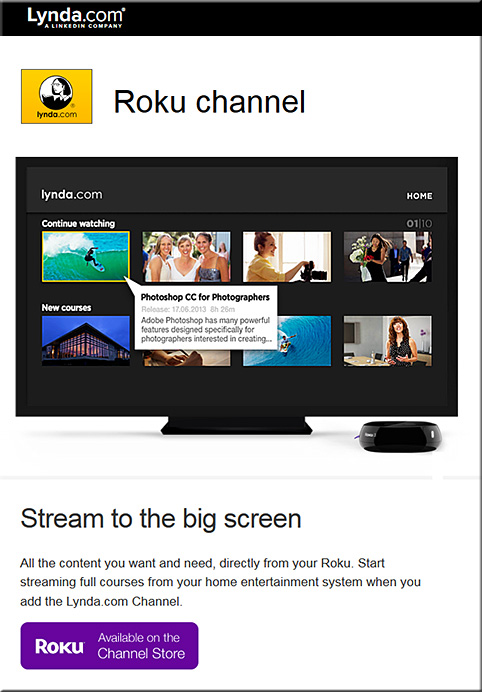
So when I noticed that Lynda.com now has a Roku channel for the big screen, it got my attention.


lyndadotcom-roku-channel-dec2015


Lets add a few more pieces to the puzzle, given that some other relevant trends are developing quite nicely:

  • tvOS-based apps are now possible — and already there are over 2600 of them and it’s only been a month or so since Apple made this new platform available to the masses
  • Now, let’s add the ability to take courses online via a virtual reality interface — globally, at any time; VR is poised to have some big years in 2016 and 2017!
  • Lynda.com and LinkedIn.com’s fairly recent merger and their developing capabilities to offer micro-credentials, badges, and competency-based education (CBE) — while keeping track of the courses that a learner has taken
  • The need for lifelong learning is now a requirement, as we need to continually reinvent ourselves — especially given the increasing pace of change and as complete industries are impacted (broadsided), almost overnight
  • Big data, algorithms, and artificial intelligence (AI) continue to pick up steam; for example, consider the cognitive computing capabilities being developed in IBM’s Watson — which should be able to deliver personalized digital playlists and likely some level of intelligent tutoring as well
  • Courses could be offered at a fraction of the cost, as MOOC-sized classes could distribute the costs over a greater # of people and back end systems could help grade/assess the students’ work; plus the corporate world continues to use MOOCs to cost-effectively train their employees across the globe (MOOCs would thrive on such a tvOS-based platform, whereby students could watch lectures, demonstrations, and simulations on the big screen and then communicate with each other via their second screens*)
  • As the trends of machine-to-machine communications (M2M) and the Internet of Things (IoT) pick up, relevant courses/modules will likely be instantly presented to people to learn about a particular topic or task.  For example, I purchased a crib and I want to know how to put it together. The chip in the crib communicates to my Smart TV or to my augmented reality glasses/headset, and then a system loads up some multimedia-based training/instructions on how to put it together.
  • Streams of content continue to be developed and offered — via blogs, via channels like Periscope and Meerkat, via social media-based channels, and via other channels — and these streams of multimedia-based content should prove to be highly useful to individual learners as well as for communities of practice

Anyway, these next few years will be packed with change — the pace of which will likely take us by surprise. We need to keep our eyes upward and outward — peering into the horizons rather than looking downwards — doing so should reduce the chance of us getting broadsided!

*It’s also possible that AR and VR will create
a future whereby we only need 1 “screen”


The pace has changed significantly and quickly


Addendum:
After I wrote/published the item above…it was interesting to then see the item below:

IBM opens Watson IoT Global Headquarters, extends power of cognitive computing to a connected world — from finance.yahoo.com
1000 Munich-based experts to drive IoT and industry 4.0 innovation
Launches eight new IoT client experience centers worldwide
Introduces Watson API Services for IoT on the IBM Cloud

Excerpt:

MUNICH, Dec. 15, 2015 /PRNewswire/ — IBM (NYSE: IBM) today announced the opening of its global headquarters for Watson Internet of Things (IoT), launching a series of new offerings, capabilities and ecosystem partners designed to extend the power of cognitive computing to the billions of connected devices, sensors and systems that comprise the IoT.  These new offerings will be available through the IBM Watson IoT Cloud, the company’s global platform for IoT business and developers.


66 secondary schools worth visiting — from gettingsmart.com by Getting Smart Staff; with thanks to WWSU Curriculum’s “ED Scoop” postings

Excerpt:

School visits are a great way to learn and are key to developing an innovation mindset. Based on a couple thousand school visits and with help from colleagues and readers, we’ve compiled a list of 66 U.S. secondary schools worth visits. The list includes schools that achieve extraordinary results for underserved communities, create powerful learning experiences, and/or are innovative blended and competency-based models.


Introducing Coursera for Apple TV: Bringing Online Learning to Your Living Room — from blog.coursera.org


Apple TV


Excerpt (emphasis DSC):

We’re thrilled to announce that Coursera content will now be available on Apple TV.

Since our beginning, one of our primary goals has been to make learning more accessible for everyone. Our mobile platform brought an on-demand learning experience to people’s busy, on-the-go lifestyles, and now, we’re extending availability to your home. Regardless of where in the world you are located, you’ll now be able to learn from top university professors and renowned experts without the expense of travel or tuition.

TV availability isn’t only a first for Coursera—it marks Apple TV’s first ever introduction of online learning to its platform. Everything you can do online at Coursera, you’ll now be able to do from the comfort of your own living room: browse our entire catalogue of courses, peruse new topics, and watch videos from some of the top academic and industry experts.


From DSC:
Coursera takes us one step closed to a very powerful learning platform — one that in the future will provide a great deal of intelligence behind the scenes.  It’s likely that we will be using personalized, adaptable, digital learning playlists while enjoying some serious levels of interactivity…while also making use of web-based learner profiles (the data from which will either be hosted at places like LinkedIn.com or will be fed into employers’ and universities’ competency-based databases).  The application development for tvOS should pick up greatly, especially if the collaboration capabilities are there.

For example, can you imagine marrying the functionalities that Bluescape provides with the reach, flexibility, convenience, and affordances that are unfolding with the new Apple TV?

Truly, some mind-blowing possibilities are developing.  In the not too distant future, lifelong learning won’t ever be the same again (not to mention project-related work).

This is why I’m big on the development and use of
team of specialists — as an organization may have
a harder time competing in the future without one.


BlueScape-2015


The Living [Class] Room -- by Daniel Christian -- July 2012 -- a second device used in conjunction with a Smart/Connected TV


FutureOfTV-Apple-Oct2015


The New Apple TV Invigorates the Set-Top Box — from nytimes.com by Brian Chen

Excerpt:

I NEVER imagined I would get hooked on reading comic books on a TV screen. That changed last week after I picked up a new Apple TV.

The new device, which is similar to a set-top box and brings video and music from the Internet to a television, now has an app store. So I downloaded Madefire, one of the first apps available for the new device. Madefire adds a twist to digital comics with sound effects, music and motion, bringing the panels to life on the big screen. Within minutes, I was bingeing on a series about Superman turning into a corrupt dictator.

Playing with apps is just one new feature of the revamped Apple TV, which will ship this week. It’s that plethora of innovations and apps that leads me to conclude that the upgraded $149 box is now the best TV streaming device you can get for your money.


Apple TV challenges developers to take apps to the big screen — from http://finance.yahoo.com by Julia Love

Excerpt:

(Reuters) – Apple’s loyal army of software developers is joining the tech giant in its bid to conquer the living room with a new version of Apple TV, creating apps for the big screen that they hope will attract users and unlock a rich source of revenue.

A long-awaited update to Apple TV, which launched in 2007, will start shipping in 80 countries on Friday.

Apple views apps as the future of television. An App Store is the centerpiece of the new device, and hundreds of apps will be ready at launch, including gaming, shopping and photography.

Although developers have already been able to make apps for smart TV rivals, Apple’s vast base of developers will set the device apart, analysts say. And developers say they relish the opportunity to reach users in a more intimate setting.


tvOS > Developer information


AppleTV-tvOS-Oct2015


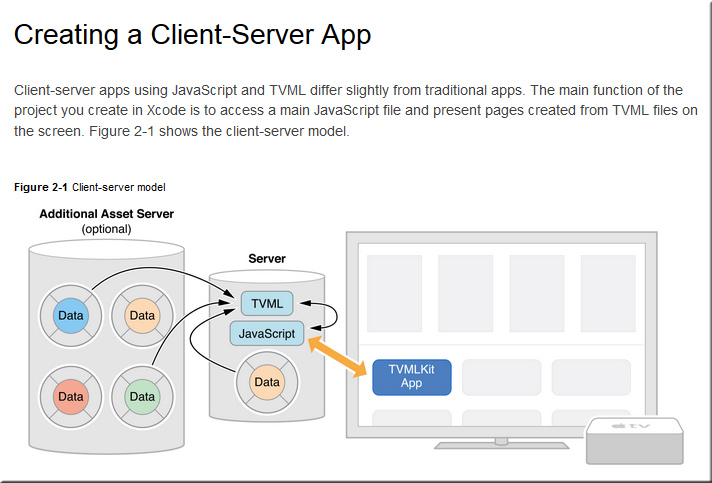
Building Apple TV Apps > Creating a Client-Server App


ClientServerApp-tvOS-Oct2015


Which Apple TV Should You Buy? — from wired.com

Excerpt:

Pre-orders for the new Apple TV have begun. Well, technically, the new Apple TVs; the latest model comes in two sizes. Oh, and the previous version remains available too. For the first time in Apple TV history, you’ve got options. Now it’s time to figure out which one’s right for you.


‘Aerial’ brings beautiful Apple TV video screensavers to your Mac — from 9to5mac.com


screensavers-oct2015


Addendum:


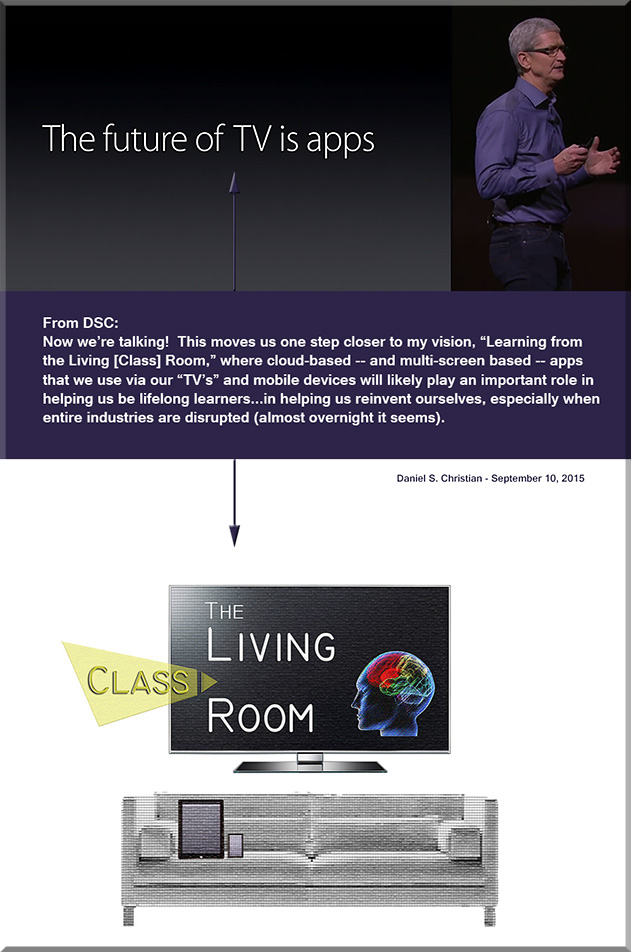
Now we’re talking! One step closer! “The future of TV is apps.” — per Apple’s CEO, Tim Cook

OneStepCloser-DanielChristian-Sept2015


From DSC:
We’ll also be seeing the integration of the areas listed below with this type of “TV”-based OS/platform:

  • Artificial Intelligence (AI)
  • Data mining and analytics
  • Learning recommendation engines
  • Digital learning playlists
  • New forms of Human Computer Interfaces (HCI)
  • Intelligent tutoring
  • Social learning / networks
  • Videoconferencing with numerous other learners from across the globe
  • Virtual tutoring, virtual field trips, and virtual schools
  • Online learning to the Nth degree
  • Web-based learner profiles
  • Multimedia (including animations, simulations, and more)
  • Advanced forms of digital storytelling
  • and, most assuredly, more choice & more control.

Competency-based education and much lower cost alternatives could also be possible with this type of learning environment. The key will be to watch — or better yet, to design and create — what becomes of what we’re currently calling the television, and what new affordances/services the “TV” begins to offer us.


MoreChoiceMoreControl-DSC


From Apple’s website:

Apple Brings Innovation Back to Television with The All-New Apple TV
The App Store, Siri Remote & tvOS are Coming to Your Living Room

Excerpt:

SAN FRANCISCO — September 9, 2015 — Apple® today announced the all-new Apple TV®, bringing a revolutionary experience to the living room based on apps built for the television. Apps on Apple TV let you choose what to watch and when you watch it. The new Apple TV’s remote features Siri®, so you can search with your voice for TV shows and movies across multiple content providers simultaneously.

The all-new Apple TV is built from the ground up with a new generation of high-performance hardware and introduces an intuitive and fun user interface using the Siri Remote™. Apple TV runs the all-new tvOS™ operating system, based on Apple’s iOS, enabling millions of iOS developers to create innovative new apps and games specifically for Apple TV and deliver them directly to users through the new Apple TV App Store™.

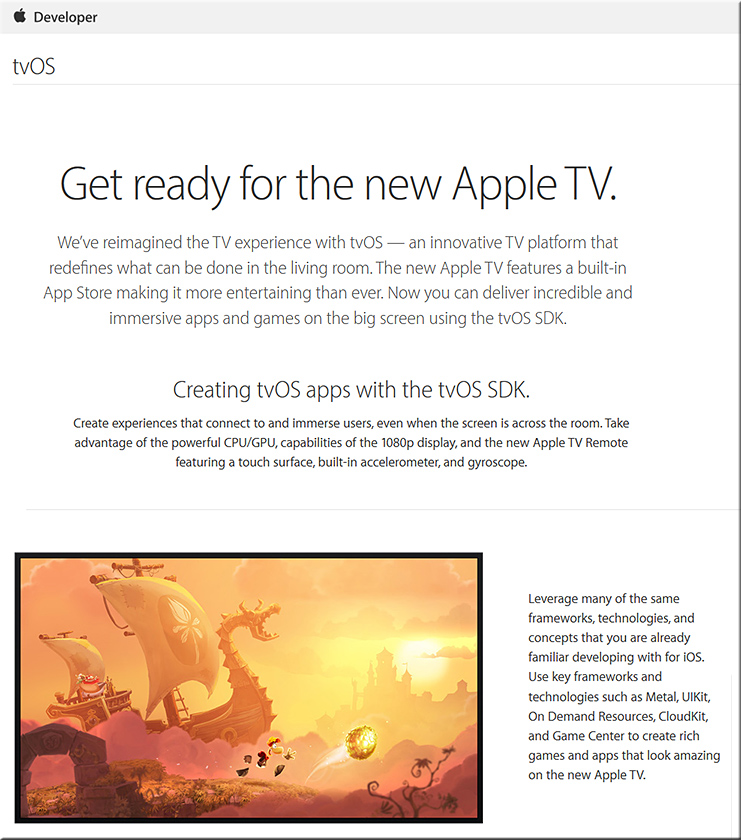
tvOS is the new operating system for Apple TV, and the tvOS SDK provides tools and APIs for developers to create amazing experiences for the living room the same way they created a global app phenomenon for iPhone® and iPad®. The new, more powerful Apple TV features the Apple-designed A8 chip for even better performance so developers can build engaging games and custom content apps for the TV. tvOS supports key iOS technologies including Metal™, for detailed graphics, complex visual effects and Game Center, to play and share games with friends.


Addendum on 9/11/15:


White House: Innovation in Higher Education — from elearnspace.org by George Siemens

Excerpt from George’s posting (emphasis DSC):

A few weeks ago, I received an invitation to the White House. The invitation was somewhat cryptic, but basically stated that the focus on the meeting was on quality and innovation.

2. Higher education generally has no clue about what’s brewing in the marketplace as a whole. The change pressures that exist now are not ones that the existing higher education model can ignore. The trends – competency-based learning, unbundling, startups & capital inflow, new pedagogical models, technology, etc – will change higher education dramatically.

3. No one knows what HE is becoming. Forget the think tanks and the consultants and the keynote speakers. No one knows how these trends will track or what the university will look like in the future. This unknowability stems from HE being a complex systems with many interacting elements. We can’t yet see how these will connect and inter-relate going forward. The best strategy in a time of uncertainty is not to seek or force the way forward, but to enter a cycle of experimentation. The Cynefin Framework provides the best guidance that I’ve seen on how to function in our current context.

7. Expect a future of far greater corporate involvement in HE. VC funds are flowing aggressively and these funders are also targeting policy change at local, state, and national levels. We aren’t used to this level of lobbying and faculty is unprepared to respond to this. Expect it. Your next faculty meeting will involve a new student success system, a personalized learning system, an analytics system, a new integrated bootcamp model, new competency software, new cloud-based computing systems, and so on. Expect it. It’s coming.

8. Expect M & A activities in higher education. I fully anticipate some combination of partnering with companies like General Assembly, creation of in-house bootcamps, or outright acquisitions by innovative universities.


Higher Education is moving from a 4 year relationship to students to a 40 year relationship.


From DSC:

[First of all, if you read this George, thanks for sharing your experiences, reflections, and recommendations from your recent trip to the White House. I/we appreciate it.]

I can’t agree with — and emphasize — George’s second point (above) strongly enough. Too often, I think we have our heads and eyes pointed downward, busy in our work; we fail to look up and see what’s happening all around us. We neglect to see the trends that are occurring and that will likely have an impact on us. If we were doing this, as we should be doing, several of our priorities would instantly change and there would be a much stronger sense of urgency in identifying some new directions/strategic initiatives/experiments within institutions of traditional higher education.

I don’t see our institutions competing with our typical/normal peer groups of the past. More and more, I think that we are competing with the new models, startups, and alternatives to traditional higher education. Yes, traditional institutions of higher education can respond and change — some have been doing so already. But how many of our institutions within the overall learning ecosystems are not experimenting? How many of our institutions have their heads buried in the sand, waiting for the good old days to return? Those days are not going to return. They’re gone. That ride is over. We need to wake up and adapt before the alternatives gain momentum (perhaps even borrowing some strategies from the alternatives, hmm?).

This is why I’m big on experimentation and the implementation of TrimTab Groups within higher education.

Finally, you may not like the word “disruption” and you may think it’s overused. But I don’t think we’ve seen anything yet.

As George warns in his posting, there are dramatic changes to higher education coming down the pike. George is not one to hype things up — he is a level-headed deep thinker. I’d suggest that we listen to what he’s saying to us via his experiences and reflections from participating in his recent meetings/conversations held at the White House.


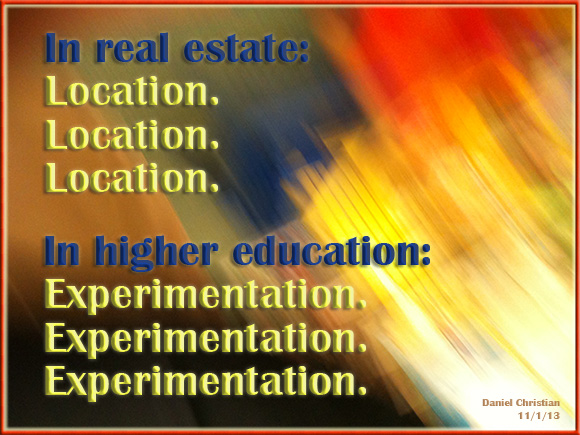
RealEstate-HigherEd-DanielSChristian11-1-13


TheTrimtabInHigherEducation-DanielChristian

 
© 2025 | Daniel Christian