At the most recent NVIDIA GTC conference, held in Washington, D.C. in October 2025, CEO Jensen Huang announced major developments emphasizing the use of AI to “reindustrialize America”. This included new partnerships, expansion of the Blackwell architecture, and advancements in AI factories for robotics and science. The spring 2024 GTC conference, meanwhile, was headlined by the launch of the Blackwell GPU and significant updates to the Omniverse and robotics platforms.

During the keynote in D.C., Jensen Huang focused on American AI leadership and announced several key initiatives.

  • Massive Blackwell GPU deployments: The company announced an expansion of its Blackwell GPU architecture, which first launched in March 2024. Reportedly, the company has already shipped 6 million Blackwell chips, with orders for 14 million more by the end of 2025.
  • AI supercomputers for science: In partnership with the Department of Energy and Oracle, NVIDIA is building new AI supercomputers at Argonne National Laboratory. The largest, named “Solstice,” will deploy 100,000 Blackwell GPUs.
  • 6G infrastructure: NVIDIA announced a partnership with Nokia to develop a U.S.-based, AI-native 6G technology stack.
  • AI factories for robotics: A new AI Factory Research Center in Virginia will use NVIDIA’s technology for building massive-scale data centers for AI.
  • Autonomous robotaxis: The company’s self-driving technology, already adopted by several carmakers, will be used by Uber for an autonomous fleet of 100,000 robotaxis starting in 2027.


Nvidia and Uber team up to develop network of self-driving cars — from finance.yahoo.com by Daniel Howley

Nvidia (NVDA) and Uber (UBER) on Tuesday revealed that they’re working to put together what they say will be the world’s largest network of Level 4-ready autonomous cars.

The duo will build out 100,000 vehicles beginning in 2027 using Nvidia’s Drive AGX Hyperion 10 platform and Drive AV software.


Nvidia stock hits all-time high, nears $5 trillion market cap after slew of updates at GTC event — from finance.yahoo.com by Daniel Howley

Nvidia (NVDA) stock on Tuesday rose 5% to close at a record high after the company announced a slew of product updates, partnerships, and investment initiatives at its GTC event in Washington, D.C., putting it on the doorstep of becoming the first company in history with a market value above $5 trillion.

The AI chip giant is approaching the threshold — settling at a market cap of $4.89 trillion on Tuesday — just months after becoming the first to close above $4 trillion in July.


Resilient by Design: The Future of America’s Community Colleges — from aacc.nche.edu

This report highlights several truths:

  • Leadership capacity must expand. Presidents and leaders are now expected to be fundraisers, policy navigators, cultural change agents, and data-informed strategists. Leadership can no longer be about a single individual—it must be a team sport. AACC is charged with helping you and your teams build these capacities through leadership academies, peer learning communities, and practical toolkits.
  • The strength of our network is our greatest asset. No college faces its challenges alone, because within our membership there are leaders who have already innovated, stumbled, and succeeded. Resilient by Design urges AACC to serve as the connector and amplifier of this collective wisdom, developing playbooks and scaling proven practices in areas from guided pathways to artificial intelligence to workforce partnerships.
  • Innovation in models and tools is urgent. Budgets must be strategic, business models must be reimagined, and ROI must be proven—not only to funders and policymakers, but to the students and communities we serve. Community colleges must claim their role as engines of economic vitality and social mobility, advancing both immediate workforce needs and long-term wealth-building for students.
  • Policy engagement must be deepened. Federal advocacy remains essential, but the daily realities of our institutions are shaped by state and regional policy. AACC will increasingly support members with state-level resources, legislative templates, and partnerships that equip you to advocate effectively in your unique contexts.
  • Employer engagement must become transformational. Students deserve not just degrees, but careers. The report challenges us to create career-connected colleges where employers co-design curricula, offer meaningful work-based learning, and help ensure graduates are not just prepared for today’s jobs but resilient for tomorrow’s.
 

The Bull and Bear Case For the AI Bubble, Explained — from theneuron.ai by Grant Harvey
AI is both a genuine technological revolution and a massive financial bubble, and the defining question is whether miraculous progress can outrun the catastrophic, multi-trillion-dollar cost required to achieve it.

This sets the stage for the defining conflict of our technological era. The narrative has split into two irreconcilable realities. In one, championed by bulls like venture capitalist Marc Andreessen and NVIDIA CEO Jensen Huang, we are at the dawn of “computer industry V2”—a platform shift so profound it will unlock unprecedented productivity and reshape civilization.

In the other, detailed by macro investors like Julien Garran and forensic bears like writer Ed Zitron, AI is a historically massive, circular, debt-fueled mania built on hype, propped up by a handful of insiders, and destined for a collapse that will make past busts look quaint.

This is a multi-layered conflict playing out across public stock markets, the private venture ecosystem, and the fundamental unit economics of the technology itself. To understand the future, and whether it holds a revolution, a ruinous crash, or a complex mixture of both, we must dissect every layer of the argument, from the historical parallels to the hard financial data and the technological critiques that question the very foundation of the boom.


From DSC:
I second what Grant said at the beginning of his analysis:

**The following is shared for educational purposes and is not intended to be financial advice; do your own research! 

But I post this because Grant provides both sides of the argument very well.


“Future of Professionals Report” analysis: Why AI will flip law firm economics — from thomsonreuters.com by Ragunath Ramanathan
AI forces a reinvention of law firm billing models, the market will reward those firms that price by outcome, guarantee efficiency, and are transparent. The question then isn’t whether to change — it’s whether firms will stand on the sidelines or lead

Key insights:

  • Efficiency and cost savings are expected  AI is significantly increasing efficiency and reducing costs in the legal industry, with each lawyer expecting to save 190 work-hours per year by leveraging AI, resulting in approximately $20 billion worth of work-savings in the US alone.
  • Challenges to the billable hour model — The traditional billable hour model is being challenged by AI advancements, as lawyers are now able to complete tasks more efficiently and quickly, leading some law firms to explore alternative pricing models that reflect the value delivered rather than the time spent.
  • Opportunities for smaller law firms — AI presents unique opportunities for smaller law firms to differentiate themselves and compete with larger firms, as AI solutions allow smaller firms to access advanced technology without significant investment and deliver innovative pricing models.

The legal industry is undergoing a significant transformation that’s being driven by the rapid adoption of AI — a shift that is poised to redefine traditional practices, particularly the billable hour model, a cornerstone of law firm operations.

Not surprisingly, AI is anticipated to have the biggest impact on the legal industry over the next five years, with 80% of law firm survey respondents to Thomson Reuters recently published 2025 Future of Professionals report saying that they expect AI to fundamentally alter how they conduct business, especially around how law firms price, staff, and deliver legal work to their clients.


From DSC:
One of my sisters is a Professor of Communication at a major university and she recently sent me the following article. I thought I’d pass it along to those of you who are also interested in this topic. My sister has written several books on media literacy and has created museum-based exhibits to address this topic.


How to find trustworthy news reporting in these times? — from ericdeggans.substack.com by Switching Codes w/Eric Deggans
I don’t have the perfect answer. But here’s a few ideas.

Here’s a few suggestions for how to navigate our new, challenging news media reality.

  • Find individual journalists to trust…
  • Don’t let the perfect be the enemy of the good…
  • Be skeptical of those telling you what you want to hear…
  • Learn what outlets are good at covering…
  • …and more

The above article links to:

My take on why Americans don’t trust journalists anymore — from ericdeggans.substack.com by Switching Codes w/Eric Deggans
It’s more complicated than journalists failing in their mission. And reversing the numbers are key to preserving democracy.
.


On a somewhat-related note, see:

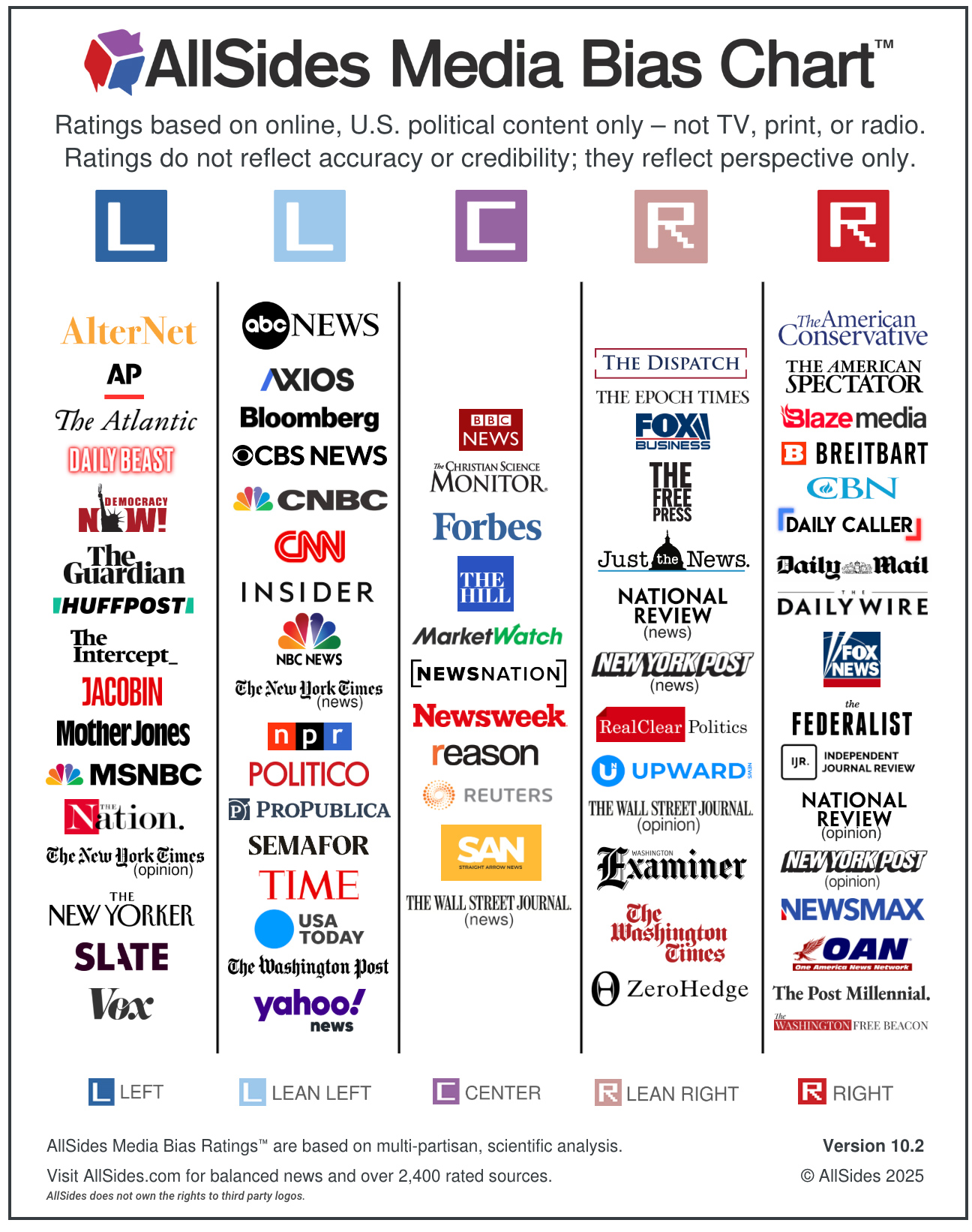
AllSides Media Bias Chart


Amazon’s AWS outage on October 20 knocked services like Alexa, Snapchat, Fortnite, Venmo and more offline for hours — from engadget.com by Kris Holt
A massive outage highlights why relying on a few companies to power much of the internet is far from ideal.

It felt like half of the internet was dealing with a severe hangover on October 20. A severe Amazon Web Services outage took out many, many websites, apps, games and other services that rely on Amazon’s cloud division to stay up and running.

Sites and services that were affected by the AWS outage include:

  • Amazon
  • Amazon Alexa
  • Bank of America
  • Snapchat
  • Reddit
  • Lyft
  • Apple Music
  • Apple TV
  • Pinterest
  • Fortnite
  • Roblox
  • The New York Times
  • Disney+
  • Venmo
  • Doordash
  • Hulu
  • Grubhub
  • PlayStation
  • Zoom

From DSC:
Hmmm…doesn’t this put a bit of alarm in your mind? I can’t help but wonder…if another government wants to wreak havoc on another country — or even the world — that is an increasingly possible situation these days. In fact, its already happened with social media and with cybersecurity-related issues. But taking down banking, commerce, exchanges, utilities, and more is increasingly possible. Or at least that’s my mental image of the state of cyberwarfare. 


Why Co-Teaching Will Be A Hot New Trend In Higher Education — from forbes.com by Brandon Busteed

When it comes to innovation in higher education, most bets are being placed on technology platforms and AI. But the innovation students, faculty and industry need most can be found in a much more human dimension: co-teaching. And specifically, a certain kind of co-teaching – between industry experts and educators.

While higher education has largely embraced the value of interdisciplinary teaching across different majors or fields of study, it has yet to embrace the value of co-teaching between industry and academia. Examples of co-teaching through industry-education collaborations are rare and underutilized across today’s higher ed landscape. But they may be the most valuable and relevant way to prepare students for success. And leveraging these collaborations can help institutions struggling to satisfy unfulfilled student demand for immersive work experiences such as internships.


From DSC:
It’s along these lines that I think that ADJUNCT faculty members should be highly sought after and paid much better — as the up-to-date knowledge and experience they bring into the classroom is very valuable. They should have equal say in terms of curriculum/programs and in the way a college or university is run.


“A new L&D operating system for the AI Era?” [Hardman] + other items re: AI in our learning ecosystems

From 70/20/10 to 90/10 — from drphilippahardman.substack.com by Dr Philippa Hardman
A new L&D operating system for the AI Era?

This week I want to share a hypothesis I’m increasingly convinced of: that we are entering an age of the 90/10 model of L&D.

90/10 is a model where roughly 90% of “training” is delivered by AI coaches as daily performance support, and 10% of training is dedicated to developing complex and critical skills via high-touch, human-led learning experiences.

Proponents of 90/10 argue that the model isn’t about learning less, but about learning smarter by defining all jobs to be done as one of the following:

  • Delegate (the dead skills): Tasks that can be offloaded to AI.
  • Co-Create (the 90%): Tasks which well-defined AI agents can augment and help humans to perform optimally.
  • Facilitate (the 10%): Tasks which require high-touch, human-led learning to develop.

So if AI at work is now both real and material, the natural question for L&D is: how do we design for it? The short answer is to stop treating learning as an event and start treating it as a system.


My daughter’s generation expects to learn with AI, not pretend it doesn’t exist, because they know employers expect AI fluency and because AI will be ever-present in their adult lives.

— Jenny Maxell

The above quote was taken from this posting.


Unlocking Young Minds: How Gamified AI Learning Tools Inspire Fun, Personalized, and Powerful Education for Children in 2025 — from techgenyz.com by Sreyashi Bhattacharya

Table of Contents

Highlight

  • Gamified AI Learning Tools personalize education by adapting the difficulty and content to each child’s pace, fostering confidence and mastery.
  • Engaging & Fun: Gamified elements like quests, badges, and stories keep children motivated and enthusiastic.
  • Safe & Inclusive: Attention to equity, privacy, and cultural context ensures responsible and accessible learning.

How to test GenAI’s impact on learning — from timeshighereducation.com by Thibault Schrepel
Rather than speculate on GenAI’s promise or peril, Thibault Schrepel suggests simple teaching experiments to uncover its actual effects

Generative AI in higher education is a source of both fear and hype. Some predict the end of memory, others a revolution in personalised learning. My two-year classroom experiment points to a more modest reality: Artificial intelligence (AI) changes some skills, leaves others untouched and forces us to rethink the balance.

This indicates that the way forward is to test, not speculate. My results may not match yours, and that is precisely the point. Here are simple activities any teacher can use to see what AI really does in their own classroom.

4. Turn AI into a Socratic partner
Instead of being the sole interrogator, let AI play the role of tutor, client or judge. Have students use AI to question them, simulate cross-examination or push back on weak arguments. New “study modes” now built into several foundation models make this kind of tutoring easy to set up. Professors with more technical skills can go further, design their own GPTs or fine-tuned models trained on course content and let students interact directly with them. The point is the practice it creates. Students learn that questioning a machine is part of learning to think like a professional.


Assessment tasks that support human skills — from timeshighereducation.com by Amir Ghapanchi and Afrooz Purarjomandlangrudi
Assignments that focus on exploration, analysis and authenticity offer a road map for university assessment that incorporates AI while retaining its rigour and human elements

Rethinking traditional formats

1. From essay to exploration 
When ChatGPT can generate competent academic essays in seconds, the traditional format’s dominance looks less secure as an assessment task. The future lies in moving from essays as knowledge reproduction to assessments that emphasise exploration and curation. Instead of asking students to write about a topic, challenge them to use artificial intelligence to explore multiple perspectives, compare outputs and critically evaluate what emerges.

Example: A management student asks an AI tool to generate several risk plans, then critiques the AI’s assumptions and identifies missing risks.


What your students are thinking about artificial intelligence — from timeshighereducation.com by Florencia Moore and Agostina Arbia
GenAI has been quickly adopted by students, but the consequences of using it as a shortcut could be grave. A study into how students think about and use GenAI offers insights into how teaching might adapt

However, when asked how AI negatively impacts their academic development, 29 per cent noted a “weakening or deterioration of intellectual abilities due to AI overuse”. The main concern cited was the loss of “mental exercise” and soft skills such as writing, creativity and reasoning.

The boundary between the human and the artificial does not seem so easy to draw, but as the poet Antonio Machado once said: “Traveller, there is no path; the path is made by walking.”


Jelly Beans for Grapes: How AI Can Erode Students’ Creativity — from edsurge.com by Thomas David Moore

There is nothing new about students trying to get one over on their teachers — there are probably cuneiform tablets about it — but when students use AI to generate what Shannon Vallor, philosopher of technology at the University of Edinburgh, calls a “truth-shaped word collage,” they are not only gaslighting the people trying to teach them, they are gaslighting themselves. In the words of Tulane professor Stan Oklobdzija, asking a computer to write an essay for you is the equivalent of “going to the gym and having robots lift the weights for you.”


Deloitte will make Claude available to 470,000 people across its global network — from anthropic.com

As part of the collaboration, Deloitte will establish a Claude Center of Excellence with trained specialists who will develop implementation frameworks, share leading practices across deployments, and provide ongoing technical support to create the systems needed to move AI pilots to production at scale. The collaboration represents Anthropic’s largest enterprise AI deployment to date, available to more than 470,000 Deloitte people.

Deloitte and Anthropic are co-creating a formal certification program to train and certify 15,000 of its professionals on Claude. These practitioners will help support Claude implementations across Deloitte’s network and Deloitte’s internal AI transformation efforts.


How AI Agents are finally delivering on the promise of Everboarding: driving retention when it counts most — from premierconstructionnews.com

Everboarding flips this model. Rather than ending after orientation, everboarding provides ongoing, role-specific training and support throughout the employee journey. It adapts to evolving responsibilities, reinforces standards, and helps workers grow into new roles. For high-turnover, high-pressure environments like retail, it’s a practical solution to a persistent challenge.

AI agents will be instrumental in the success of everboarding initiatives; they can provide a much more tailored training and development process for each individual employee, keeping track of which training modules may need to be completed, or where staff members need or want to develop further. This personalisation helps staff to feel not only more satisfied with their current role, but also guides them on the right path to progress in their individual careers.

Digital frontline apps are also ideal for everboarding. They offer bite-sized training that staff can complete anytime, whether during quiet moments on shift or in real time on the job, all accessible from their mobile devices.


TeachLM: insights from a new LLM fine-tuned for teaching & learning — from drphilippahardman.substack.com by Dr Philippa Hardman
Six key takeaways, including what the research tells us about how well AI performs as an instructional designer

As I and many others have pointed out in recent months, LLMs are great assistants but very ineffective teachers. Despite the rise of “educational LLMs” with specialised modes (e.g. Anthropic’s Learning Mode, OpenAI’s Study Mode, Google’s Guided Learning) AI typically eliminates the productive struggle, open exploration and natural dialogue that are fundamental to learning.

This week, Polygence, in collaboration with Stanford University researcher Prof Dora Demszky. published a first-of-its-kind research on a new model — TeachLM — built to address this gap.

In this week’s blog post, I deep dive what the research found and share the six key findings — including reflections on how well TeachLM performs on instructional design.


The Dangers of using AI to Grade — from marcwatkins.substack.com by Marc Watkins
Nobody Learns, Nobody Gains

AI as an assessment tool represents an existential threat to education because no matter how you try and establish guardrails or best practices around how it is employed, using the technology in place of an educator ultimately cedes human judgment to a machine-based process. It also devalues the entire enterprise of education and creates a situation where the only way universities can add value to education is by further eliminating costly human labor.

For me, the purpose of higher education is about human development, critical thinking, and the transformative experience of having your ideas taken seriously by another human being. That’s not something we should be in a rush to outsource to a machine.


Sam Altman kicks off DevDay 2025 with a keynote to explore ideas that will challenge how you think about building. Join us for announcements, live demos, and a vision of how developers are reshaping the future with AI.

Commentary from The Rundown AI:

Why it matters: OpenAI is turning ChatGPT into a do-it-all platform that might eventually act like a browser in itself, with users simply calling on the website/app they need and interacting directly within a conversation instead of navigating manually. The AgentKit will also compete and disrupt competitors like Zapier, n8n, Lindy, and others.


AMD and OpenAI announce strategic partnership to deploy 6 gigawatts of AMD GPUs — from openai.com

  • OpenAI to deploy 6 gigawatts of AMD GPUs based on a multi-year, multi-generation agreement
  • Initial 1 gigawatt OpenAI deployment of AMD Instinct™ MI450 Series GPUs starting in 2H 2026

Thoughts from OpenAI DevDay — from bensbites.com by Ben Tossell
When everyone becomes a developer

The event itself was phenomenal, great organisation. In terms of releases, there were two big themes:

  1. Add your apps to ChatGPT
  2. Add ChatGPT to your apps

Everything OpenAI announced at DevDay 2025 — from theaivalley.com by Barsee
PLUS: OpenAI has signed $1T in compute deals

Today’s climb through the Valley reveals:

  • Everything OpenAI announced at DevDay 2025
  • OpenAI has signed $1T in compute deals
  • Plus trending AI tools, posts, and resources

Also relevant/see:


AI agents: Where are they now? From proof of concept to success stories — from hrexecutive.com by Jill Barth

The 4 Rs framework
Salesforce has developed what Holt Ware calls the “4 Rs for AI agent success.” They are:

  1. Redesign by combining AI and human capabilities. This requires treating agents like new hires that need proper onboarding and management.
  2. Reskilling should focus on learning future skills. “We think we know what they are,” Holt Ware notes, “but they will continue to change.”
  3. Redeploy highly skilled people to determine how roles will change. When Salesforce launched an AI coding assistant, Holt Ware recalls, “We woke up the next day and said, ‘What do we do with these people now that they have more capacity?’ ” Their answer was to create an entirely new role: Forward-Deployed Engineers. This role has since played a growing part in driving customer success.
  4. Rebalance workforce planning. Holt Ware references a CHRO who “famously said that this will be the last year we ever do workforce planning and it’s only people; next year, every team will be supplemented with agents.”

Synthetic Reality Unleashed: AI’s powerful Impact on the Future of Journalism — from techgenyz.com by Sreyashi Bhattacharya

Table of Contents

  • Highlights
  • What is “synthetic news”?
  • Examples in action
  • Why are newsrooms experimenting with synthetic tools
  • Challenges and Risks
  • What does the research say
    • Transparency seems to matter. —What is next: trends & future
  • Conclusion

The latest video generation tool from OpenAI –> Sora 2

Sora 2 is here — from openai.com

Our latest video generation model is more physically accurate, realistic, and more controllable than prior systems. It also features synchronized dialogue and sound effects. Create with it in the new Sora app.

And a video on this out at YouTube:

Per The Rundown AI:

The Rundown: OpenAI just released Sora 2, its latest video model that now includes synchronized audio and dialogue, alongside a new social app where users can create, remix, and insert themselves into AI videos through a “Cameos” feature.

Why it matters: Model-wise, Sora 2 looks incredible — pushing us even further into the uncanny valley and creating tons of new storytelling capabilities. Cameos feels like a new viral memetic tool, but time will tell whether the AI social app can overcome the slop-factor and have staying power past the initial novelty.


OpenAI Just Dropped Sora 2 (And a Whole New Social App) — from heneuron.ai by Grant Harvey
OpenAI launched Sora 2 with a new iOS app that lets you insert yourself into AI-generated videos with realistic physics and sound, betting that giving users algorithm control and turning everyone into active creators will build a better social network than today’s addictive scroll machines.

What Sora 2 can do

  • Generate Olympic-level gymnastics routines, backflips on paddleboards (with accurate buoyancy!), and triple axels.
  • Follow intricate multi-shot instructions while maintaining world state across scenes.
  • Create realistic background soundscapes, dialogue, and sound effects automatically.
  • Insert YOU into any video after a quick one-time recording (they call this “cameos”).

The best video to show what it can do is probably this one, from OpenAI researcher Gabriel Peters, that depicts the behind the scenes of Sora 2 launch day…


Sora 2: AI Video Goes Social — from getsuperintel.com by Kim “Chubby” Isenberg
OpenAI’s latest AI video model is now an iOS app, letting users generate, remix, and even insert themselves into cinematic clips

Technically, Sora 2 is a major leap. It syncs audio with visuals, respects physics (a basketball bounces instead of teleporting), and follows multi-shot instructions with consistency. That makes outputs both more controllable and more believable. But the app format changes the game: it transforms world simulation from a research milestone into a social, co-creative experience where entertainment, creativity, and community intersect.


Also along the lines of creating digital video, see:

What used to take hours in After Effects now takes just one text prompt. Tools like Google’s Nano Banana, Seedream 4, Runway’s Aleph, and others are pioneering instruction-based editing, a breakthrough that collapses complex, multi-step VFX workflows into a single, implicit direction.

The history of VFX is filled with innovations that removed friction, but collapsing an entire multi-step workflow into a single prompt represents a new kind of leap.

For creators, this means the skill ceiling is no longer defined by technical know-how, it’s defined by imagination. If you can describe it, you can create it. For the industry, it points toward a near future where small teams and solo creators compete with the scale and polish of large studios.

Bilawal Sidhu


OpenAI DevDay 2025: everything you need to know — from getsuperintel.com by Kim “Chubby” Isenberg
Apps Inside ChatGPT, a New Era Unfolds

Something big shifted this week. OpenAI just turned ChatGPT into a platform – not just a product. With apps now running inside ChatGPT and a no-code Agent Builder for creating full AI workflows, the line between “using AI” and “building with AI” is fading fast. Developers suddenly have a new playground, and for the first time, anyone can assemble their own intelligent system without touching code. The question isn’t what AI can do anymore – it’s what you’ll make it do.


Law Punx: The Future of the Legal Profession, With Electra Japonas — from artificiallawyer.com by Richard Tromans aand Electra Japonas

Takeaways:

  • The legal profession is undergoing significant changes due to AI.
  • Lawyers must adapt their skill sets to thrive in the future.
  • Drafting will become less important as AI takes over.
  • Understanding the ‘why’ behind legal work is crucial.
  • Lawyers will need to design systems and guardrails for AI.
  • The role of lawyers is shifting from executors to architects.
  • Law schools need to teach legal technology and systems design.
  • Client demands are changing the way law firms operate.
  • Law firms must adapt to new client expectations for efficiency.
  • The future of law will require a blend of legal knowledge and tech skills.

“We don’t want an opinion from you. We want a prompt from you.”


Legal Education Must Change Because of AI – Survey — from artificiallawyer.com
.


Guest Column: As AI Helps Close the Justice Gap, Will It Save the Legal Profession or Replace It? — from lawnexts.com by Bob Ambrogi

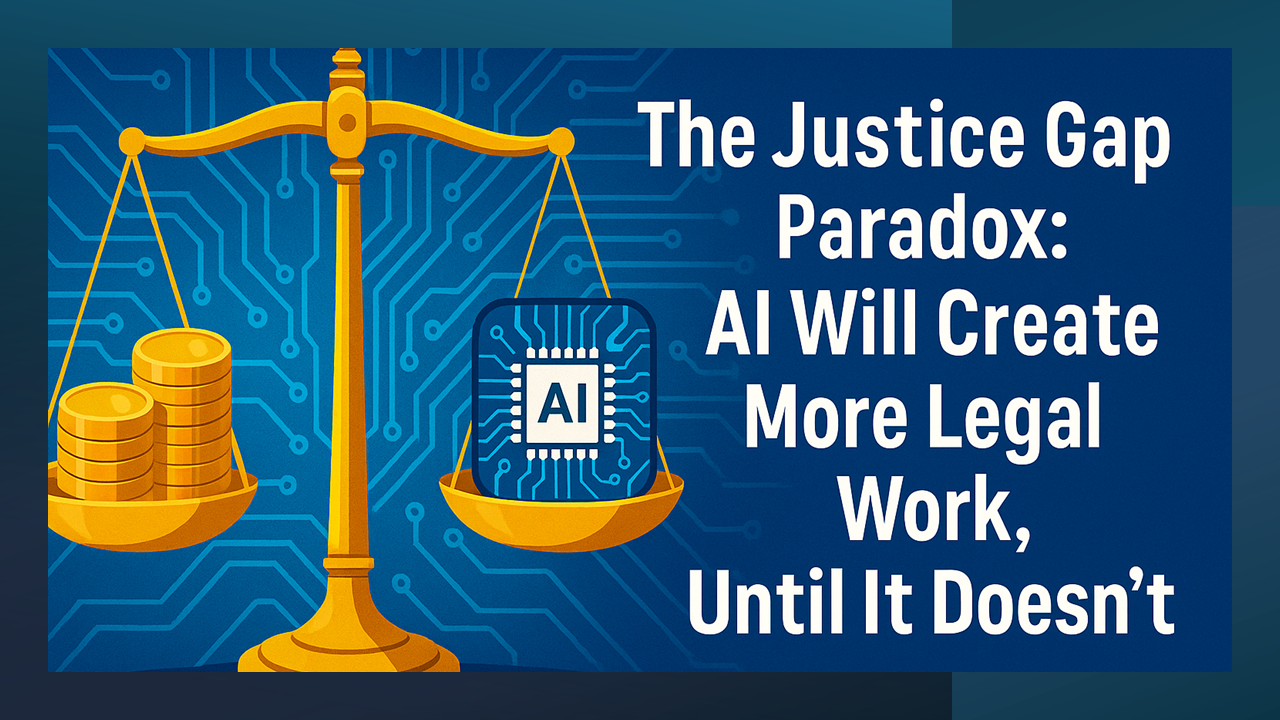
The numbers are stark: 92% of low-income Americans receive no help with substantial civil legal problems, while small claims filings have plummeted 32% in just four years. But AI is changing the game. By making legal procedures accessible to pro se litigants and supercharging legal aid organizations, these tools are reviving dormant disputes and opening courthouse doors that have been effectively closed to millions.


Agentic AI and the New Era of Corporate Learning for 2026 — from hrmorning.com by Carol Warner

That gap creates compliance risk and wasted investment. It leaves HR leaders with a critical question: How do you measure and validate real learning when AI is doing the work for employees?

Designing Training That AI Can’t Fake
Employees often find static slide decks and multiple-choice quizzes tedious, while AI can breeze through them. If employees would rather let AI take training for them, it’s a red flag about the content itself.

One of the biggest risks with agentic AI is disengagement. When AI can complete a task for employees, their incentive to engage disappears unless they understand why the skill matters, Rashid explains. Personalization and context are critical. Training should clearly connect to what employees value most – career mobility, advancement, and staying relevant in a fast-changing market.

Nearly half of executives believe today’s skills will expire within two years, making continuous learning essential for job security and growth. To make training engaging, Rashid recommends:

  • Delivering content in formats employees already consume – short videos, mobile-first modules, interactive simulations, or micro-podcasts that fit naturally into workflows. For frontline workers, this might mean replacing traditional desktop training with mobile content that integrates into their workday.
  • Aligning learning with tangible outcomes, like career opportunities or new responsibilities.
  • Layering in recognition, such as digital badges, leaderboards, or team shout-outs, to reinforce motivation and progress

Microsoft 365 Copilot AI agents reach a new milestone — is teamwork about to change? — from windowscentral.comby Adam Hales
Microsoft expands Copilot with collaborative agents in Teams, SharePoint and more to boost productivity and reshape teamwork.

Microsoft is pitching a recent shift of AI agents in Microsoft Teams as more than just smarter assistance. Instead, these agents are built to behave like human teammates inside familiar apps such as Teams, SharePoint, and Viva Engage. They can set up meeting agendas, keep files in order, and even step in to guide community discussions when things drift off track.

Unlike tools such as ChatGPT or Claude, which mostly wait for prompts, Microsoft’s agents are designed to take initiative. They can chase up unfinished work, highlight items that still need decisions, and keep projects moving forward. By drawing on Microsoft Graph, they also bring in the right files, past decisions, and context to make their suggestions more useful.


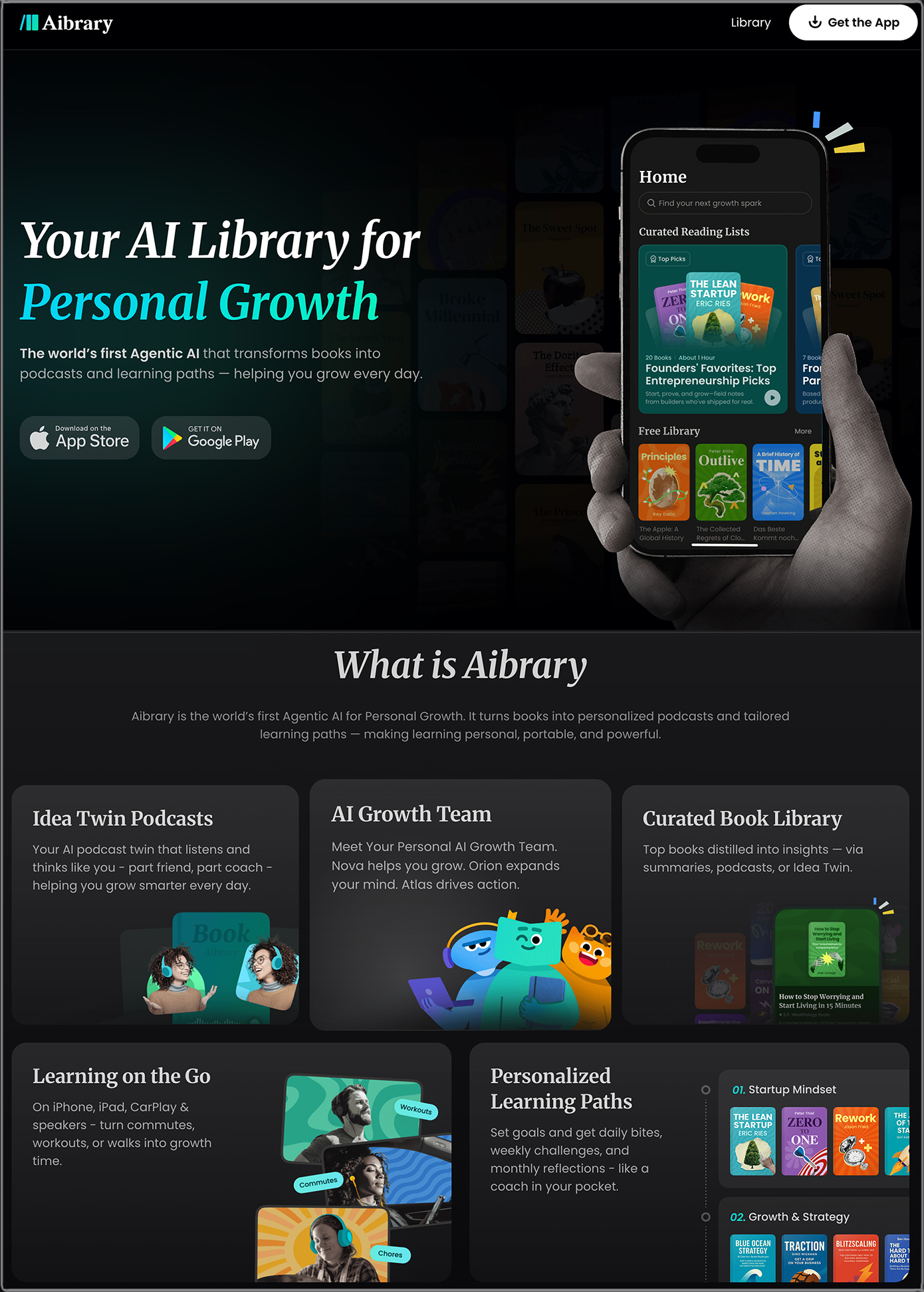
Chris Dede’s comments on LinkedIn re: Aibrary

As an advisor to Aibrary, I am impressed with their educational philosophy, which is based both on theory and on empirical research findings. Aibrary is an innovative approach to self-directed learning that complements academic resources. Expanding our historic conceptions of books, libraries, and lifelong learning to new models enabled by emerging technologies is central to empowering all of us to shape our future.
.

Also see:

Aibrary.ai


Why AI literacy must come before policy — from timeshighereducation.com by Kathryn MacCallum and David Parsons
When developing rules and guidelines around the uses of artificial intelligence, the first question to ask is whether the university policymakers and staff responsible for implementing them truly understand how learners can meet the expectations they set

Literacy first, guidelines second, policy third
For students to respond appropriately to policies, they need to be given supportive guidelines that enact these policies. Further, to apply these guidelines, they need a level of AI literacy that gives them the knowledge, skills and understanding required to support responsible use of AI. Therefore, if we want AI to enhance education rather than undermine it, we must build literacy first, then create supportive guidelines. Good policy can then follow.


AI training becomes mandatory at more US law schools — from reuters.com by Karen Sloan and Sara Merken

Sept 22 (Reuters) – At orientation last month, 375 new Fordham Law students were handed two summaries of rapper Drake’s defamation lawsuit against his rival Kendrick Lamar’s record label — one written by a law professor, the other by ChatGPT.

The students guessed which was which, then dissected the artificial intelligence chatbot’s version for accuracy and nuance, finding that it included some irrelevant facts.

The exercise was part of the first-ever AI session for incoming students at the Manhattan law school, one of at least eight law schools now incorporating AI training for first-year students in orientation, legal research and writing courses, or through mandatory standalone classes.


Workday Acquires Sana To Transform Its Learning Platform And Much More— from joshbersin.com by Josh Bersin

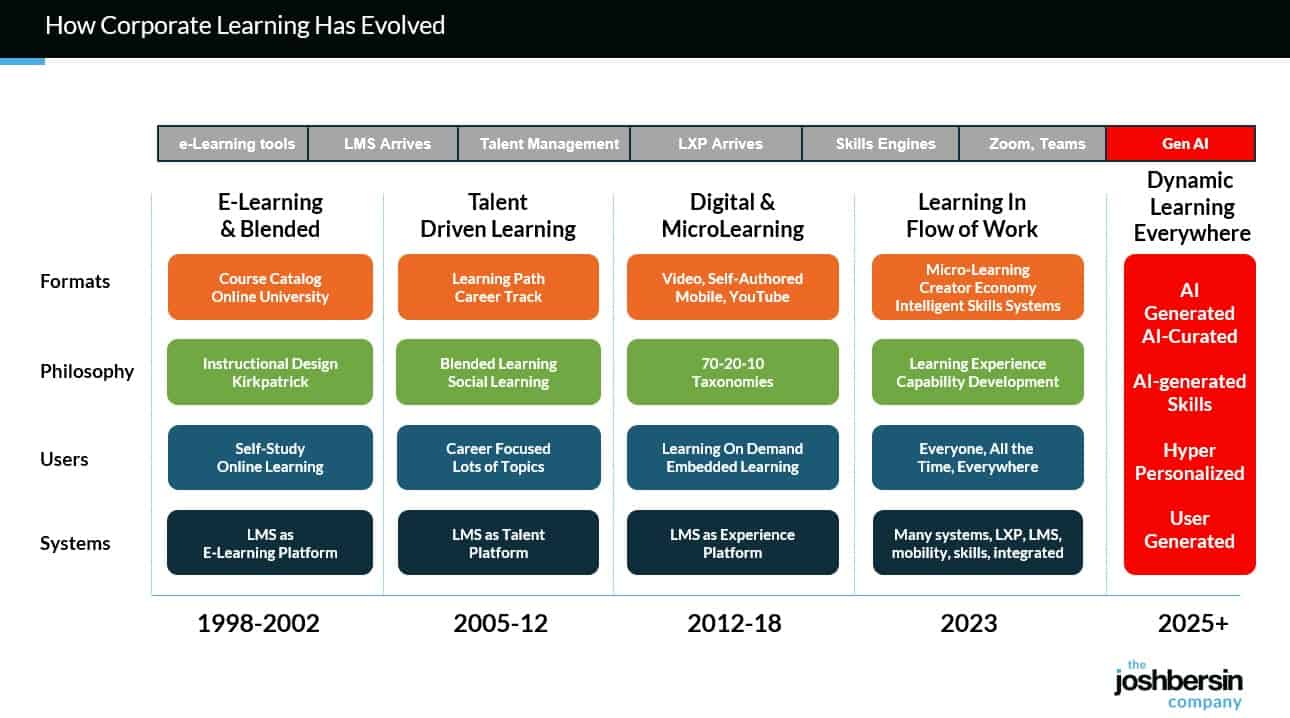
Well now, as the corporate learning market shifts to AI, (read the details in our study “The Revolution in Corporate Learning” ), Workday can jump ahead. This is because the $400 billion corporate training market is moving quickly to an AI-Native dynamic content approach (witness OpenAI’s launch of in-line learning in its chatbot). We’re just finishing a year-long study of this space and our detailed report and maturity model will be out in Q4.
.

.
With Sana, and a few other AI-native vendors (Uplimit, Arist, Disperz, Docebo), companies can upload audios, videos, documents, and even interviews with experts and the system build learning programs in minutes. We use Sana for Galileo Learn (our AI-powered learning academy for Leadership and HR), and we now have 750+ courses and can build new programs in days instead of months.

And there’s more; this type of system gives every employee a personalized, chat-based experience to learn. 

 
© 2025 | Daniel Christian