


Key Technologies That Power The Metaverse — from 101blockchains.com by James Howell
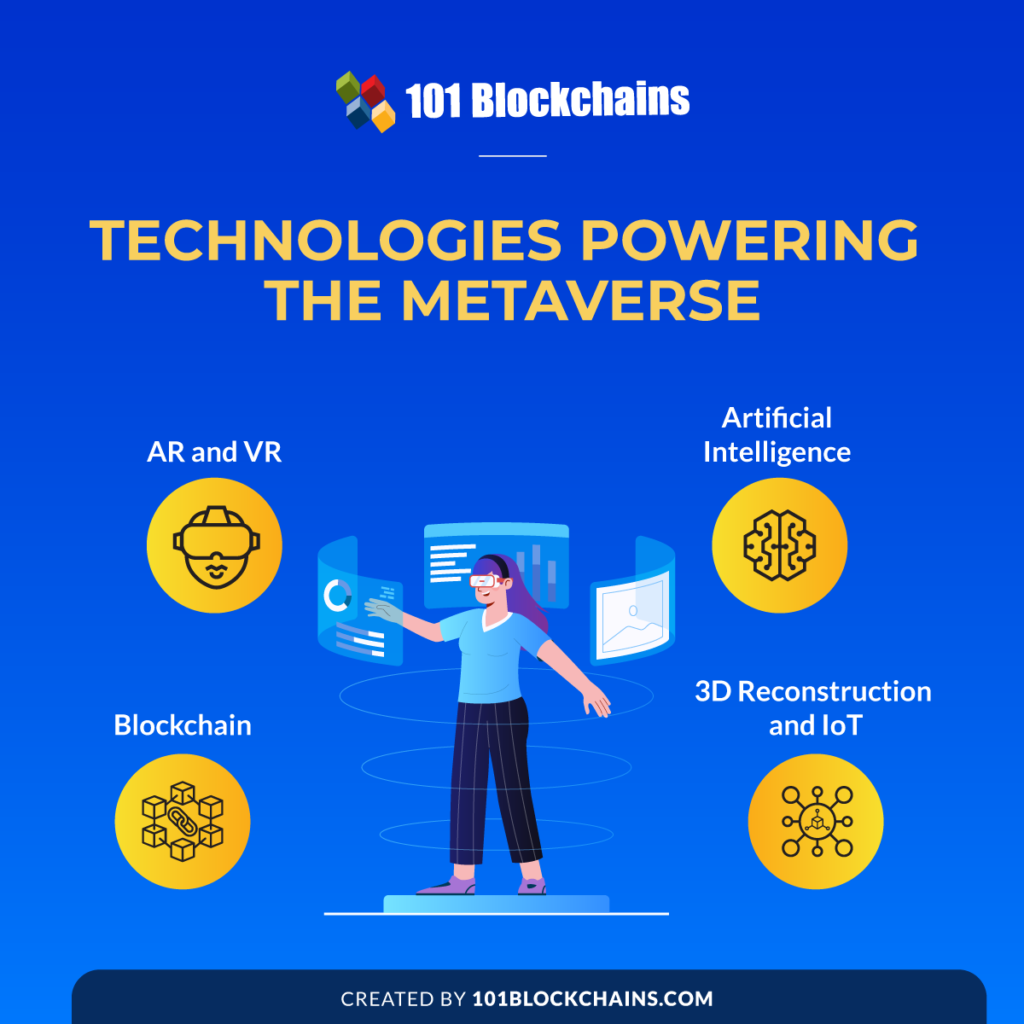
Key Technologies That Power The Metaverse — from 101blockchains.com by James Howell
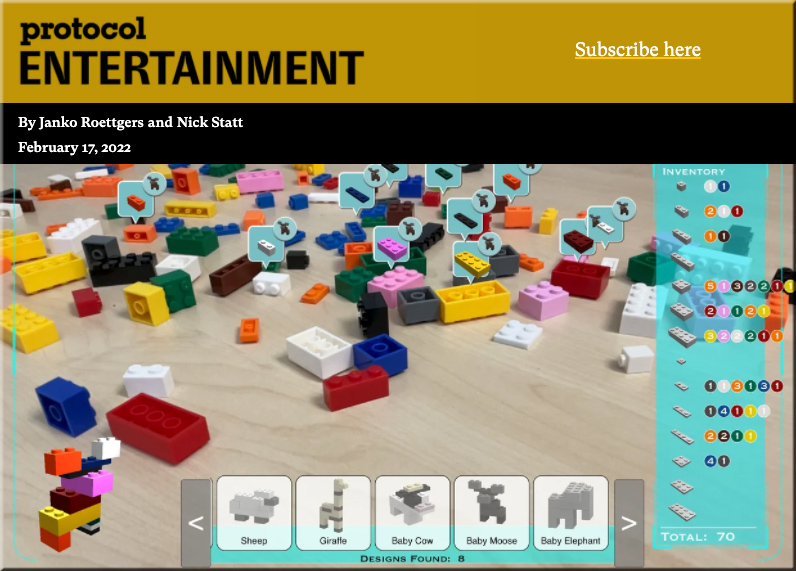
AR object recognition can give you superpowers — from by Janko Roettgers and Nick Statt
Excerpt:
Making sense of AR, one Lego brick at a time
Singulos Research CEO and CTO Brad Quinton poured a bunch of Lego bricks onto his desk during a recent Zoom call. Then, he picked up an iPad, fired up a demo app and opened the app’s camera mode. Immediately, the app began to identify individual bricks, counting and cataloging them by shape and color, and then suggesting different animals he could build with those specific bricks.
The playful and fun demo was meant to show off the capabilities of the Perceptus Platform, an AR object-recognition technology Singulos has been building in stealth over the past three years. The platform could soon help developers build smarter AR apps and services. “It gives AR applications the visual context of what’s around them,” Quinton said, and that could be key to building AR glasses people will actually want to wear.
From DSC:
This is a great use of Augmented Reality (AR)! Very slick! It’s beneficial, practical, and likely an example of what is to come.
A really cool augmented reality 'Piano Learning' experience
By student Dominik Hackl as part of his master thesis#metaverse #augmentedreality #innovation pic.twitter.com/prNb8eb255
— Pascal Bornet (@pascal_bornet) February 14, 2022
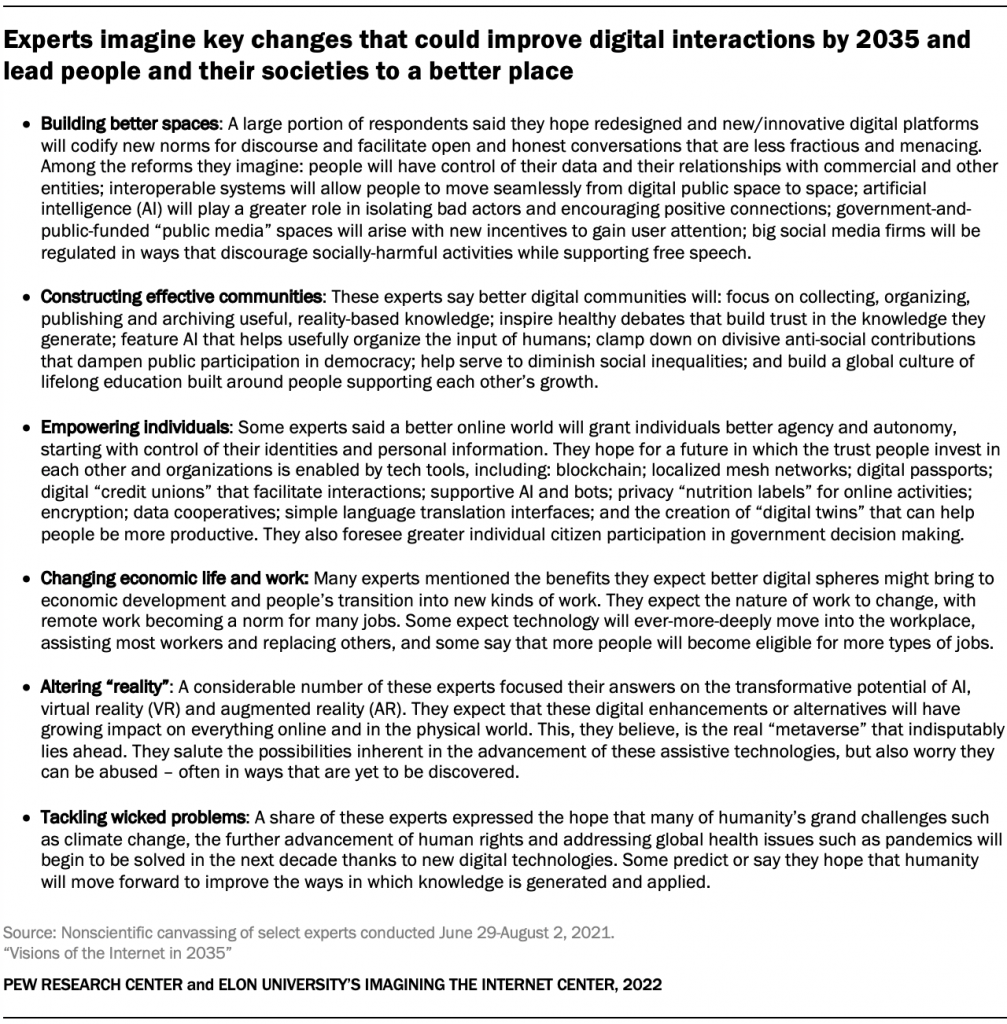
Visions of the Internet in 2035 — from pewresearch.org
Excerpt:
This report is the second of two analyzing the insights of hundreds of technology experts who responded in the summer of 2021 to a canvassing of their predictions about the evolution of online public spaces and their role in democracy in the coming years. In response to the primary research question, many said they expect that these forums will be significantly improved by 2035 if reformers, big technology firms, governments and activists tackle the problems created by misinformation, disinformation and toxic discourse. At the same time, they expressed ongoing concerns about the destructive forces in culture and technology that could continue to plague online life and disrupt beneficial change in the coming years.
The metaverse: three legal issues we need to address — from theconversation.com by Pin Lean Lau
Excerpt:
The “metaverse” seems to be the latest buzzword in tech. In general terms, the metaverse can be viewed as a form of cyberspace. Like the internet, it’s a world – or reality, even – beyond our physical world on Earth.
The difference is that the metaverse allows us to immerse a version of ourselves as avatars in its environment, usually through augmented reality (AR) or virtual reality (VR), which people are and will increasingly be able to access using tools like VR goggles.
While it all seems very exciting, a curious lawyer like me is inclined to ask: who or what governs the metaverse? The way I see it, there are three key areas which, at this stage, are legally murky.
From DSC:
There are a lot more than three legal issues to be addressed with the metaverse, especially as it further develops. That said, I posted this in the hopes of raising the level of awareness within the legal arena on this particular area of emerging technologies.
Why Wall Street thinks the metaverse will be worth trillions — from fortune.com by Bernhard Warner; resource from Ori Inbar on Twitter

Also from Ori Inbar:
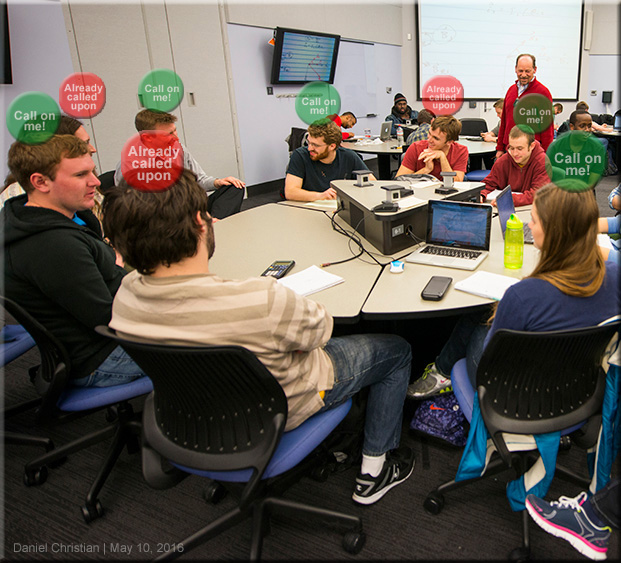
From DSC:
I created this image back in May of 2016.
14 Predictions for Higher Education in 2022 — from campustechnology.com by Dian Schaffhauser
Excerpt:
Ask people working in higher education what they expect will happen in the new year, and the outlook is filled with visions that build on what we’ve been experiencing on college and university campuses for the last two years: a major focus on learning formats; continued exploitation of new technology; and the use of new digital models that move users “beyond Zoom.” Here we present the collective predictions of 14 IT leaders, instructional folks and a student about what they anticipate seeing in 2022. As one put it, “Let’s go, 2022! We have work to do!”
From DSC:
I’d like to thank Dian Schaffhauser, Rhea Kelly, and Mary Grush for letting me contribute some thoughts to the various conversations that Campus Technology Magazine hosts and/or initiates. I inserted some reflections into the above article and I hope that you’ll take a moment to read my and others’ thoughts out there.
Instructional strategies to make your knowledge workers love learning — from blog.commlabindia.com
Excerpt:
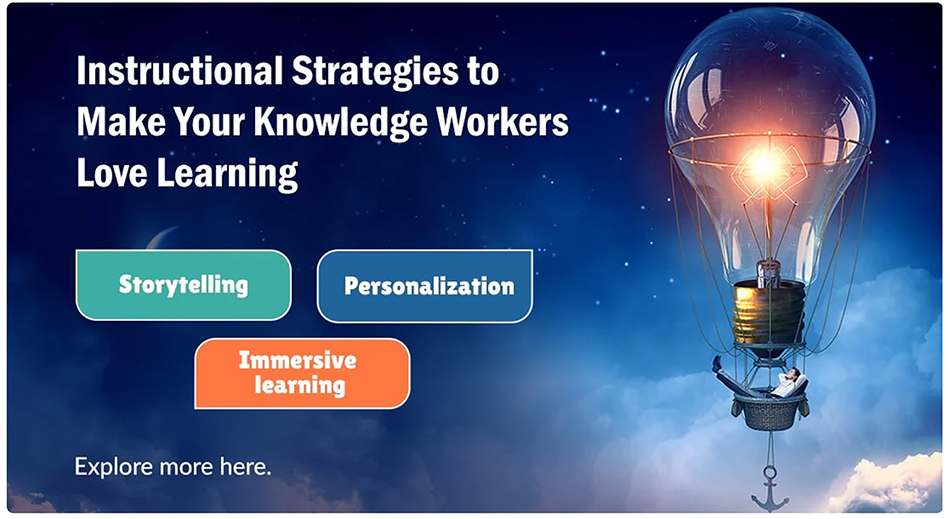
As a training manager, you need to step up your game to cater to the corporate training needs of these thinkers. Functional and creative instructional strategies should be used to engage learners and offer sticky learning, in the classroom and online. The strategies need to involve learners emotionally, offer an experiential set up, and appeal to their creative side.