WWF Free Rivers puts an entire landscape in your hands. Through this immersive, augmented reality experience, you’ll discover a river that flows through the lives of people and wildlife, and how their homes depend on those flows. Dam the river to see what happens, and then try different options for sustainable development that keeps the river healthy and flowing. Collect stories of people and animals along the way!

Features

  • In-depth, educational storytelling experience for environmental science
  • Stunning, animated, augmented reality model users can interact with and learn from
  • Five distinct habitats based on real places: the Himalayan mountains, tropical jungles, African savannah, South American grasslands, and Southeast Asian deltas.
  • Opportunity to get involved and help protect rivers, and the people and wildlife that depend on them
  • An augmented reality map of the world’s rivers—and some of the biggest threats and opportunities they face.
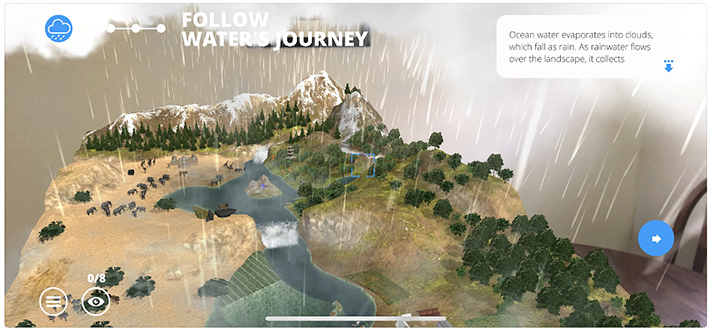
A snapshot from the AR-based app called WWW Free Rivers featauring mountains, trees, and a river running through the terrain


Also see:


Cisco and Google join forces to transform the future of hybrid work — from blog.webex.com by Kedar Ganta

Cisco and Google join forces to transform the future of hybrid work

Excerpts:

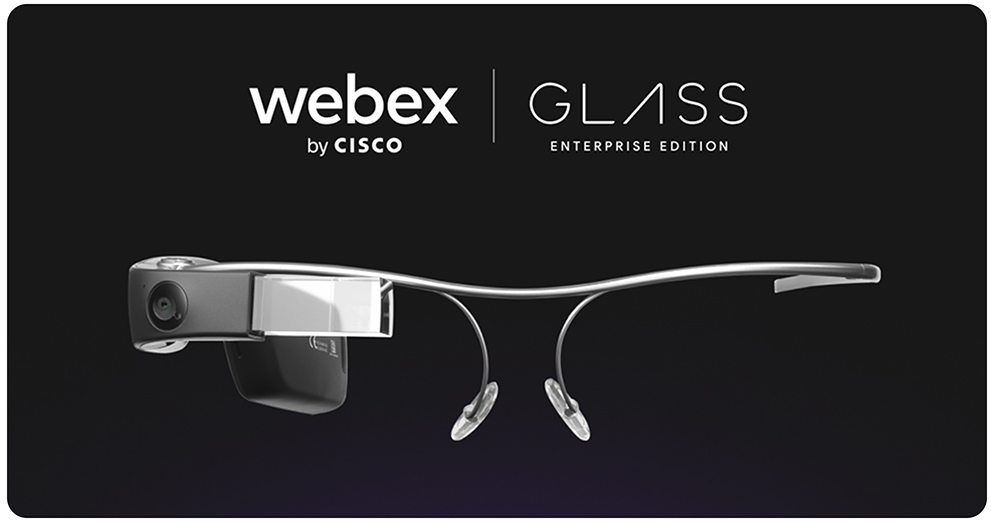
Webex [on 12/7/21] announced the public preview of its native meeting experience for Glass Enterprise Edition 2 (Glass), a lightweight eye wearable device with a transparent display developed by Google. Webex Expert on Demand on Glass provides an immersive collaboration experience that supports natural voice commands, gestures on touchpad, and head movements to accomplish routine tasks.


Native American Students Build STEM Skills While Exploring Their Cultural Stories with VR/AR Design Projects — from campustechnology.com by Mary Grush and Tilanka Chandrasekera

Excerpt:

Through a $1.5million, four-year NSF grant, Oklahoma State University researchers are leveraging their earlier work with proven, college-level design courses that incorporate VR, AR, and 3D printing technologies. But this time, they are helping underserved Native American middle school students develop STEM skills.

Here, Campus Technology talks with Principal Investigator Dr. Tilanka Chandrasekera, who is an endowed professor at OSU and director of the Mixed Reality Lab, to find out more about the grant that the NSF titled, “Engaging Native American Students in STEM Career Development Through a Culturally Responsive After School Program Using Virtual Environments and 3D Printing.”


The Metaverse is Taking Over the Physical World — from interestingengineering.com by Rupendra Brahambhatt; with thanks to Dan Lejerskar for this resource
The virtual world is expanding with real world avatars and digital economy.

Excerpt:

The advent of AR, blockchain, and VR devices in the last few years has sparked the development of the metaverse. Moreover, the unprecedented growth of highly advanced technologies in the gaming industry, which offer immersive gameplay experiences, not only provides us a glimpse of how the metaverse would look like but also indicates that we are closer than ever to experience a virtual world of our own.

What is the metaverse?

The Metaverse is Taking Over the Physical WorldSource: Kelvin Han/Unsplash

A metaverse is a group of persistent, shared 3D virtual environments where you (in the form of your digital avatar) can visit places, shop for products, subscribe to services, work with your colleagues, play games, and even customize the scenes around you to meet your personal tastes and requirements, and the digital assets you own. So essentially, a metaverse is a virtual world or worlds, that would allow you to go inside the digital world — to be in rather than on the digital space.


From DSC:
Again I wonder….on the legal side of things…how will this impact what lawyers, judges, legislators, general counsels, and more need to know? Along these lines see:

To do this well, legal department heads and the lawyers and professionals in the department will have to learn, and practice, some new skills: embracing technology, project management, change management, and adaptability.
…
The first, and likely most obvious, skill an attorney needs in a rapidly evolving business environment is a firm grasp on existing and emerging technology. There are two important categories of technology to consider—the first is legal technology and the second is broader technology trends.


Could AR and/or VR enable a massive 3D-based type of “Voicethread?” [Christian]

From DSC:
What if we could quickly submit items for a group to discuss, annotate, and respond to — using whichever media format is available/preferable for a person — like a massive 3D-based Voicethread? What if this type of discussion could be contributed to and accessed via Augmented Reality (AR) and/or via Virtual Reality (VR) types of devices?

It could be a new 3D format that a person could essentially blow all the way up into the size of a billboard. Think, “Honey, I shrunk the kids” type of stuff.  

Input devices might include:

  • Augmented Reality (AR) glasses
  • Virtual Reality (VR) headsets/glasses
  • Scanners
  • Smartphones
  • Tablets
  • Desktops and laptops
  • SmartTVs
  • Other types of input devices

For example, a person could take a picture of a document or something else and then save that image into a new file format that would be vector-based. I say a vector-based file format so that the image could be enlarged to the size of a billboard without losing any resolution (i.e., wouldn’t become grainy; the image would remain crystal clear regardless of how big the image is). I’m thinking here along the lines of “Honey, I shrunk the kids!”

Other thoughts here:

  • The files could be accessible online for attendees of classes or for audiences of presentations/webinars
  • The files could be displayed on the walls of learning/presentation spaces for marking them up
  • One could manipulate the 3D image if that person was using a virtual/immersive environment
  • Users should be able to annotate on those images and/or be able to save such annotations and notes

A question for phase II:
Could this concept also be used if virtual courts take off?

Hmmmm…just thinking out loud.


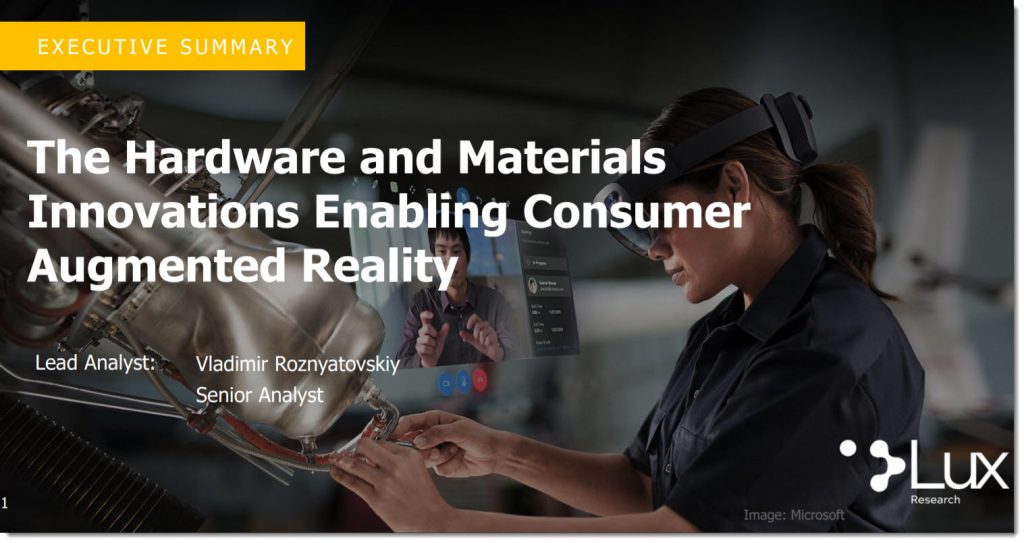
The Hardware and Materials Innovations Enabling Consumer Augmented Reality — from luxresearchinc.com by Vladimir Roznyatovskiy

Excerpt:

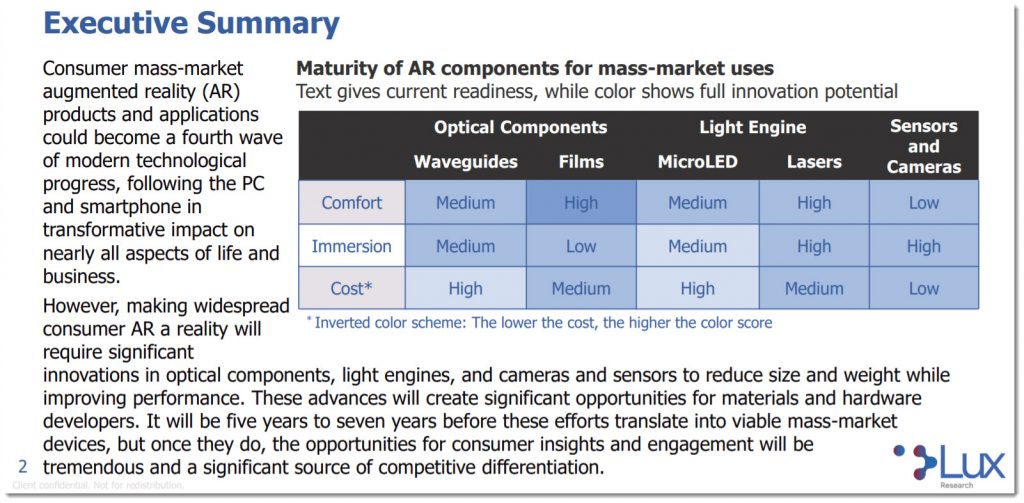
Consumer mass-market augmented reality (AR) products and applications could become a fourth wave of modern technological progress, following the PC and smartphone in transformative impact on nearly all aspects of life and business.

However, making widespread consumer AR a reality will require significant innovations in optical components, light engines, and cameras and sensors to reduce size and weight while improving performance. These advances will create significant opportunities for materials and hardware developers. It will be five years to seven years before these efforts translate into viable mass-market devices, but once they do, the opportunities for consumer insights and engagement will be tremendous and a significant source of competitive differentiation.


Transforming the classroom with augmented learning — from thetechedvocate.org by Matthew Lynch

Excerpt:

Forbes documented the many ways that augmented reality (AR) has come to life in recent years. They list several award-winning apps that use AR. A few are:

  • The “Gatwick Airport Passenger” App, which helps passengers navigate the airport;
  • The “Dulux Visualizer” App, which  lets you virtually scan and paint your room any color you choose;
  • “Envisioned by the Mine” App, which lets you put 3D images of any type of accessory or furnishing in your home that Lowe’s offers;
  • “Sephora Virtual Artist”, which allows you to “put makeup on” without actually touching brush to face;
  • “Accuvein”, which doctors and nurses use to scan a patient’s vein network (it reduces escalations by 45%);
  • And, of course, there are apps like the “BIC DrawyBook App” just for fun.

But what about the classroom? Can we see a future in transforming the classroom with augmented learning?

From DSC:
Along the lines of developing creativity with edtech…

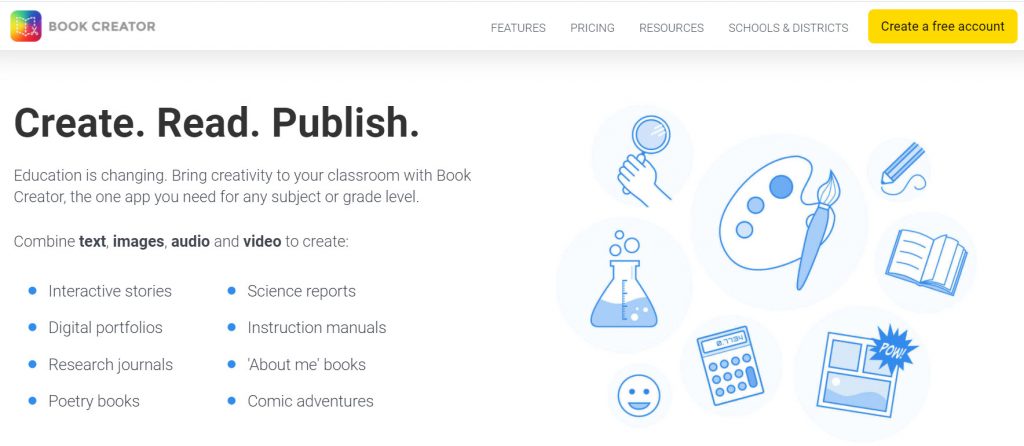
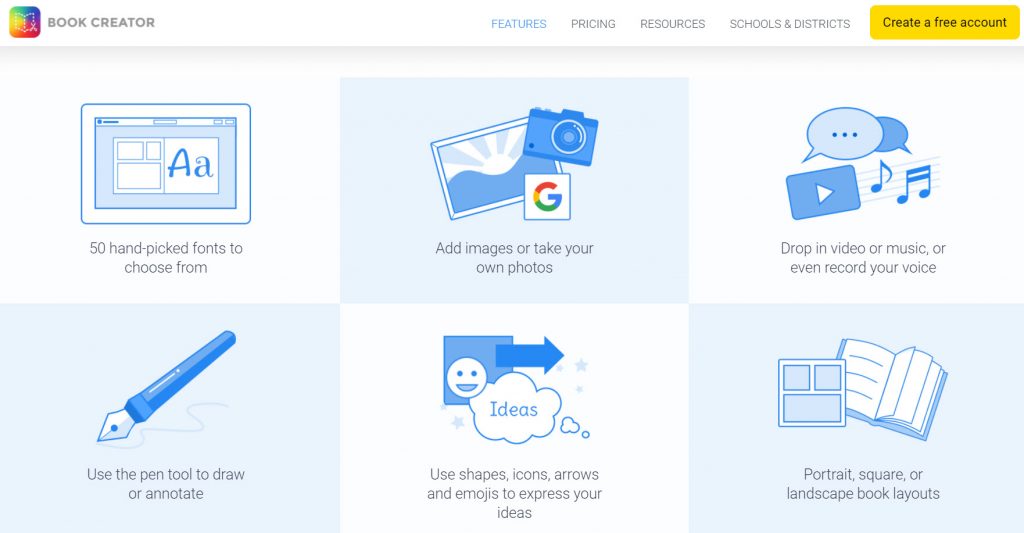
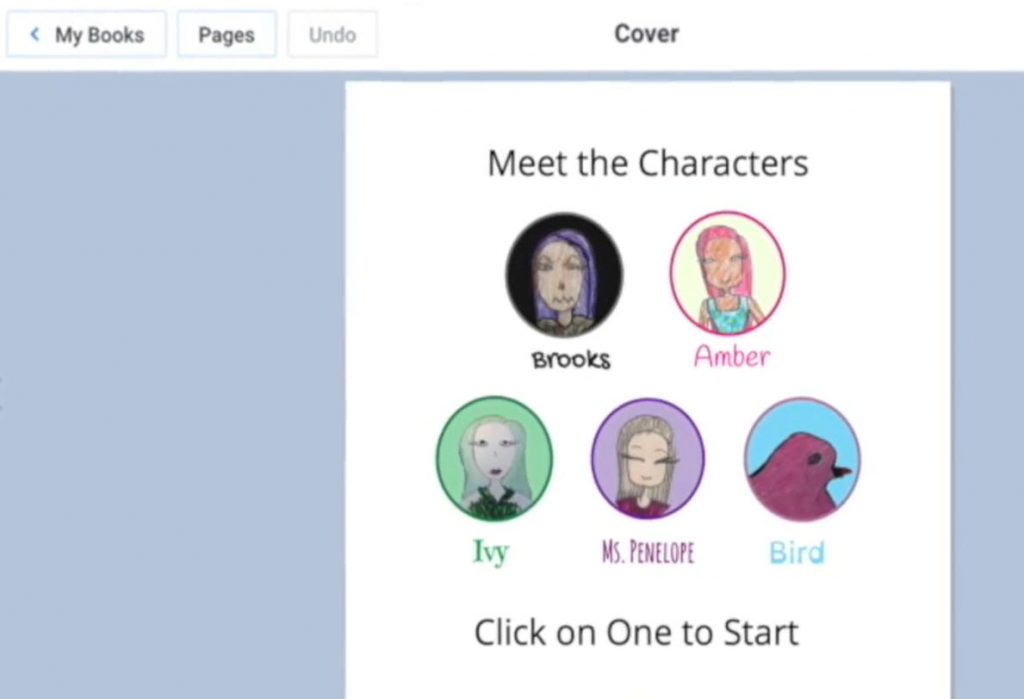
I saw another item recently about Book Creator, something that’s made this blog before. I love that type of tool because it promotes creativity, unleashes a student’s imagination, promotes their artwork and writing/storytelling and their musical or acting abilities, and it develops skills in design and developing multimedia-based artifacts. For teachers, it could be a nice project-based learning exercise. 

I asked our youngest daughter if she would like to use it…we’ll see. You can get a free account that allows you to publish up to 40 books. (Plus there is pricing for schools and districts.)

And who knows…? This type of thing might just produce the next J.K. Rowling or a J.J. Abrams.

Book Creator -- check it out

Book Creator -- check it out

Book Creator -- check it out


As seen in this article:


© 2025 | Daniel Christian