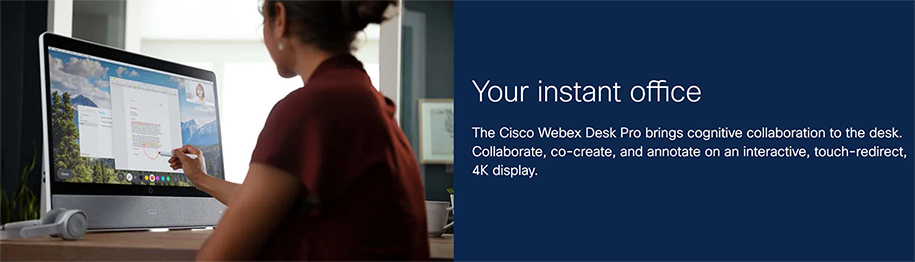
Will AR glasses provide this type of information in real-time? #AI, #NLP, smartclassrooms #edtech [Christian]
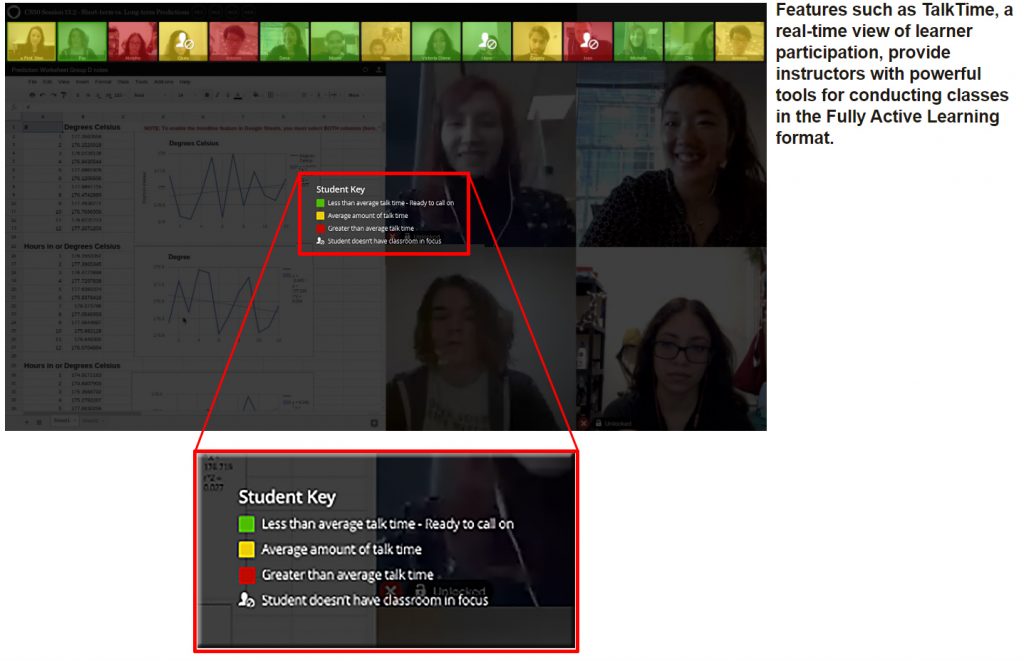
.
DSC:Modified image which was originally from Minerva.com > Forum Learning Environment
Will AR glasses provide this type of information in real-time? #AI, #NLP, smartclassrooms #edtech [Christian]
.
DSC:Modified image which was originally from Minerva.com > Forum Learning Environment
How to Implement Active Learning Strategies and Activities Into Your Classroom — from facultyfocus.com
Excerpt:
Browse the following topics for resources, programs, seminars, free reports, and articles to help guide you in your active learning adventure:
From Skill to Instinct: How Higher Education can Bridge the Gap Between Classroom and Career — from edtechreview.in by Stephen Soulunii
Excerpts:
Higher education has conventionally focused on providing quality education for its students. However, modern students are increasingly attending higher education, not for scholarly pursuits, but to increase their value in an intensely competitive job market.
From DSC:
Funny how that happens when the price of getting a degree has skyrocketed through the years — and then one sees one’s family members struggling with getting out from crushing loads of debt (a process that often can take decades to do).
There is a lot that could be said here, but looking at this article makes me see how misaligned things are these days. The learning objectives that would be put forth from the corporate world don’t match up with the learning objectives as put forth by professors.
No wonder there’s a major disconnect.
One last quote drives the point home — which swims against the current that many faculty members swim in:
65% of HR professionals believe teamwork and collaboration are the most foundational people skills – and 40% believe these skills are the most lacking in new hires.
Also relevant here, this is an excerpt of a piece sent to me by Christina Ioannou:
Skills Union offers accredited cohort-based, active learning courses in partnership with leading universities and employers. Their career-focused content ranges from software engineering and UX/UI design to growth marketing and digital entrepreneurship.
The company announced a US$1.5 million seed investment round, supporting its mission to bridge the global tech skills gap, through university accredited courses that meet the needs of the rapidly growing tech sector. The investment round was led by Online Education Services (OES), part of the Seek group of companies, with notable investors including KDV, Hustle Fund, Koh Boon Hwee, Siu Rui Quek, Ishreth Hassen, Sumardy Ma, Simin Zhou and Anvesh Ramineni.
A LIFETIME OF LEARNING — from continuum.uw.edu
Excerpts:
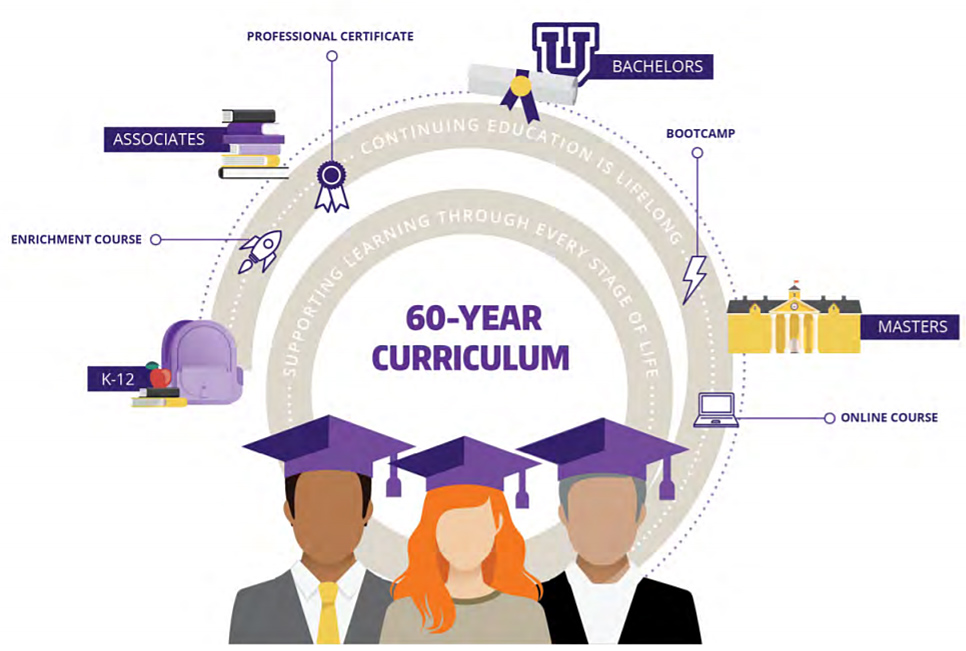
The 60-year curriculum is the modern approach to a lifetime of learning. Getting a degree, getting a job and never setting foot in a classroom again are not today’s reality.
A discussion paper from the McKinsey Global Institute predicts that in the next 10 to 15 years, the need for new tech skills will accelerate. We will also need people who will develop, innovate and adapt those technologies. The paper asserts that, right now, 80% of the workforce doesn’t have the skills for most of the jobs that will be available in the next five to 10 years.
From DSC:
It would be good to integrate more vocational types of pathways/items in here as well.
Today’s Tech Jobs: Skills More Important Than Knowledge — from rtinsights.com by Kwame Yangame; with thanks to Ryan Craig for this resource
New tech jobs require workers skilled in the use of technologies and able to handle the complexities and interconnectedness of today’s world.
What then is needed in terms of tech education?
The tech education that is needed, then, is formed on the basis of active learning, project-based learning, and learning by doing: science and researched-backed learning methods, the efficacy of which has been proven, and the result of which is true preparation for work in tech jobs in the 21st century. It’s clear that companies want skills and are moving towards skills-based hiring, so it’s well past time that education moves into real skills-based learning.
The classroom-type learning was designed for high schools and universities dating back to a point in time when the most advanced technology was the printing press – before the steam engine, penicillin, the telephone, the automobile, and the personal computer.
From DSC:
I remember teaching a class called the Foundations of Information Technology. This class filled a requirement for those who didn’t major in Computer Science or some other disciplines. So several students in the class didn’t really want to be there and didn’t like technology at all. I still remember hearing some students say, “After this class, I don’t see using technology again.” Or, “I don’t see technology as being a part of my future. I don’t like it.”
My thought then and now? Good luck with that.
With a thanks to Ryan for the following resource as well:
By bridging the gap between what high schools teach and industries need, P-TECH, initially a partnership among IBM, the New York City school system and City Tech, has opened doors for thousands of students in communities with high concentrations of poverty. Its 266 schools now operate in 12 U.S. states and 28 countries…
Optimizing High-Quality Digital Learning Experiences A Playbook for Faculty — from onlinelearningconsortium.org
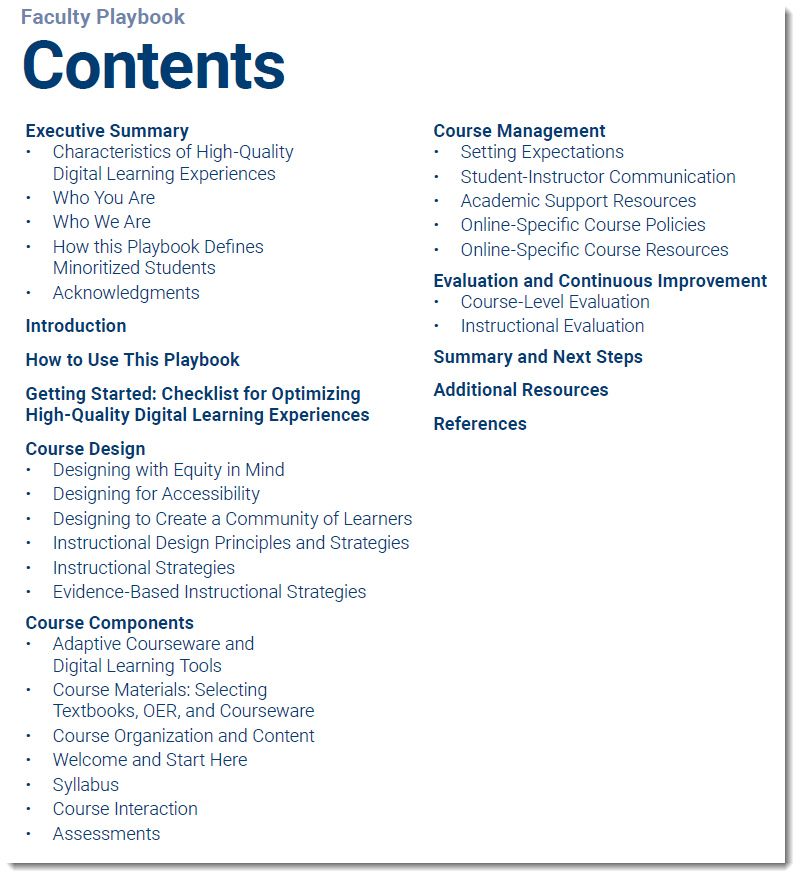
Excerpts:
This playbook is a collaboration between the Online Learning Consortium (OLC), the Association of Public and Land-grant Universities (APLU), and the Every Learner Everywhere Digital Learning Network. This playbook is designed to serve as a concise guide to address faculty needs for online course design, teaching, and continuous improvement.
…
One strategy that can enhance teaching presence in an online course is to provide audio and video content that can be developed with relative ease using multimedia applications. Creating micro-lectures along with other multimedia is a great option for designing online course content.
…
Creating your own closed-caption video content, along with video transcripts, is a practical option for communicating course concepts to students. You might also consider providing supplementary written materials or curating content from other sources to help students master course concepts.
Planning for a blended future: A research-driven guide for educators — from everylearnereverywhere.org by Every Learner Everywhere in partnership with Online Learning Consortium (OLC) & National Research Center for Distance Education and Technological Advancements (DETA)
Excerpt:
The purpose of this guide
This resource is a collaboration among the National Research Center for Distance Education and Technological Advances (DETA), the Online Learning Consortium (OLC), and the Every Learner Everywhere Network. It is designed to serve as a resource for educators — faculty, instructors, instructional staff, instructional improvement staff, instructional designers, learning experience designers and developers, technological support staff, and other stakeholders — to guide strategic planning for blended learning courses and programs.
Therefore, blended learning is instruction that blends technological, temporal, spatial, and pedagogical dimensions to create actualized learning. Students feel they are successful when they actually learn and that does not always equate to grade and course completion.
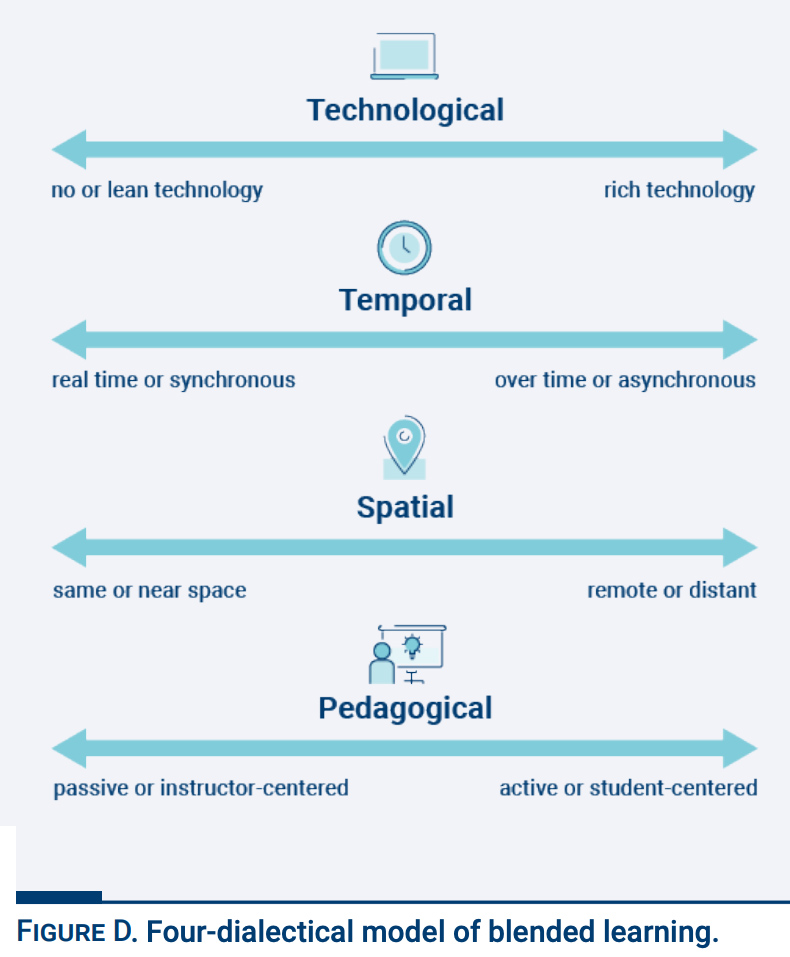
KEY IDEAS
Teaching: Why an Active-Learning Evangelist Is Sold on Online Teaching — from chronicle.com by Beth McMurtrie
Excerpts:
Now, says Mazur, the results are in and he’s convinced: online teaching is better. Not in all circumstances, to be sure. But in his applied-physics courses, students showed larger learning gains and felt more supported than students had in in-person classes. In fact, they appear to have learned so much more effectively in this new format that he wonders if it’s “almost unethical,” to return to the classroom this fall.
“I have never been able to offer a course of the quality that I’m offering now,” he says. “I am convinced that there is no way I could do anything close to what I’m doing in person. Online teaching is better than in person.”
One benefit of this setup, says Mazur, is that students go at their own pace. He has thought a lot about how classroom-based work, even when it is student-led, is hostage to the clock and the instructor. Not every group works at the same pace, yet everyone has to wait until others are ready, or rush ahead when they fall behind. When groups set their own pace, it gives them the space to work through problems or get help as needed. The value of self-paced learning is also evident outside of class, says Mazur, who built more asynchronous work into his online course.
“I have never seen students work this hard for my course,” he says. “Never. And so consistently.”
Also see:
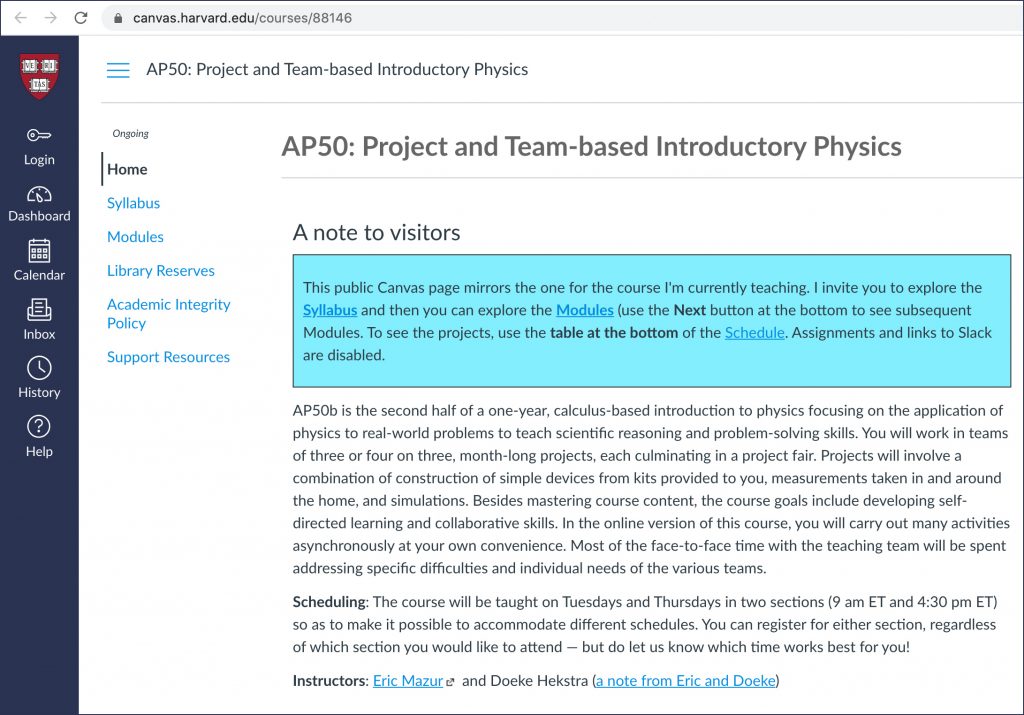
But he’s so convinced of how valuable this model is that he asked Harvard to allow him to keep teaching online this fall.
Also relevant/see:
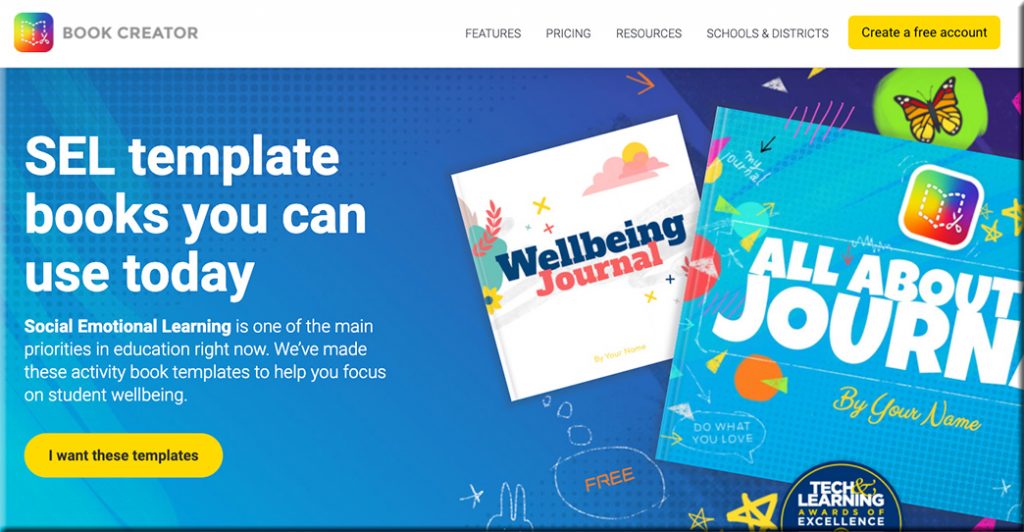
What is Book Creator and How Can Educators Use It? — from techlearning.com by Erik Ofgang
Excerpt:
Book Creator is a free tool that allows educators and their students to create multimedia ebooks based off of class assignments and topics.
Available on Apple and Android tablets and phones, and on Google Chrome for desktop use, Book Creator is a digital resource that helps students explore their creative sides while learning.
The tool lends itself well to active learning and collaborative projects of all kinds, and is appropriate for various subjects and age groups.
Book Creator gives students the ability to upload images, vidoes, audio, and more within the ebooks they create. It also empowers them to draw, take notes, and collaborate in real-time with their classmates and instructor.
Read on to find out everything you need to know about Book Creator.
Also see the Book Creator’s website:
Addendum on 5/21/21:
Addendums on 5/24/21:
As with all of Book Creator we have made the image search fully accessible to screen readers and keyboard navigation. But we thought we could go a bit further with the image search and make it accessible to younger kids or ELL students who aren’t super confident with their spelling by introducing a voice search.
Addendum on 6/7/21:
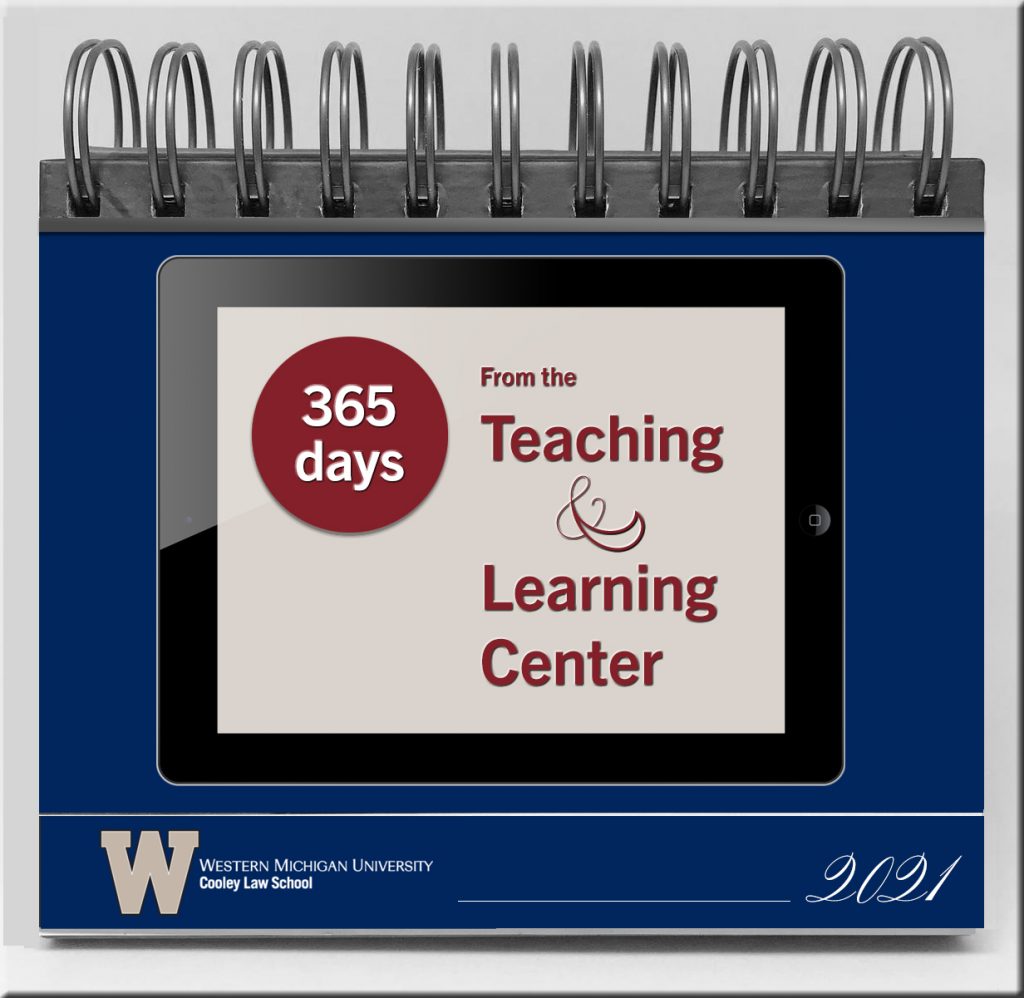
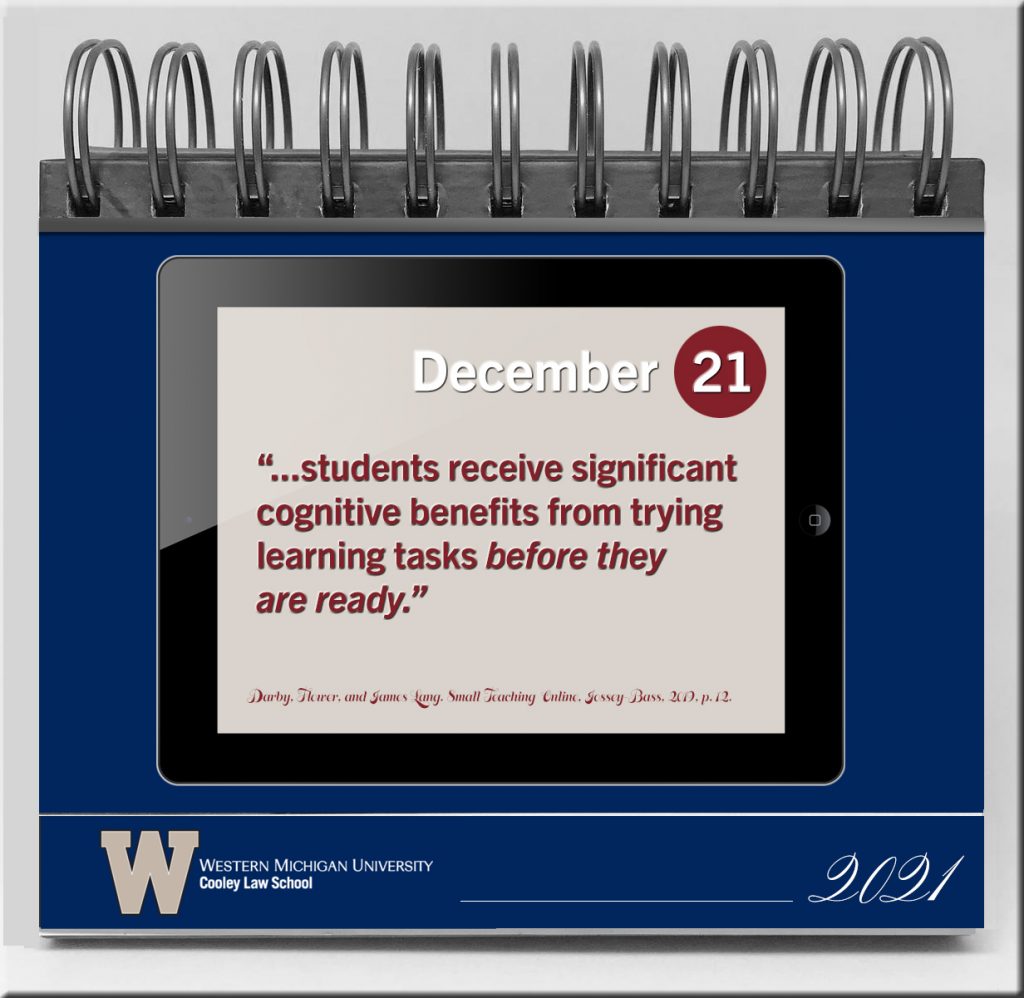
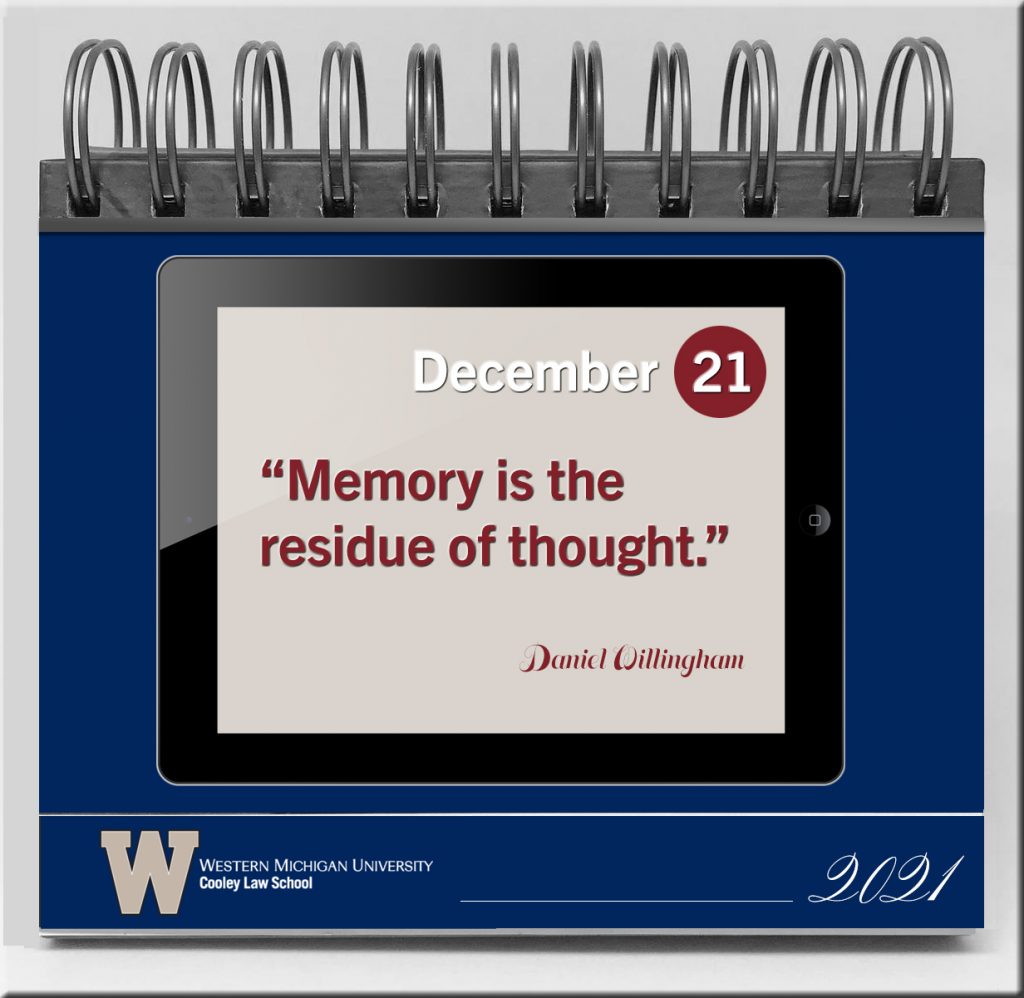
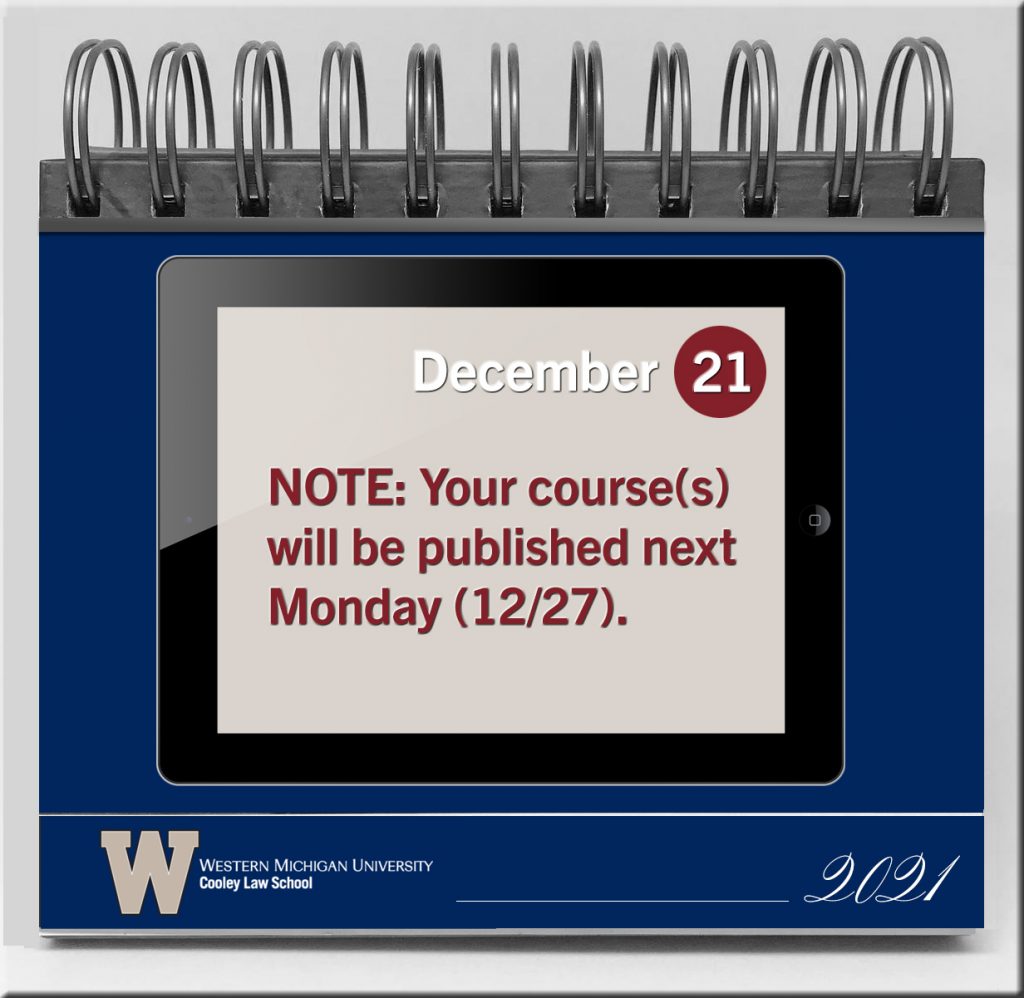
What if we could create these kinds of calendars and/or apps for faculty and staff as well as for students? — idea from Daniel Christian. The vehicles could be developed as analog/physical formats or in digital formats and apps. In the digital realm, one could receive a daily notification.
For faculty/staff:
[The Corporate Training / L&D world could do this as well.]
For students
NJ High School Adds New Recording Studio to Learning Spaces — from spaces4learning.com by Matt Jones
Excerpt:
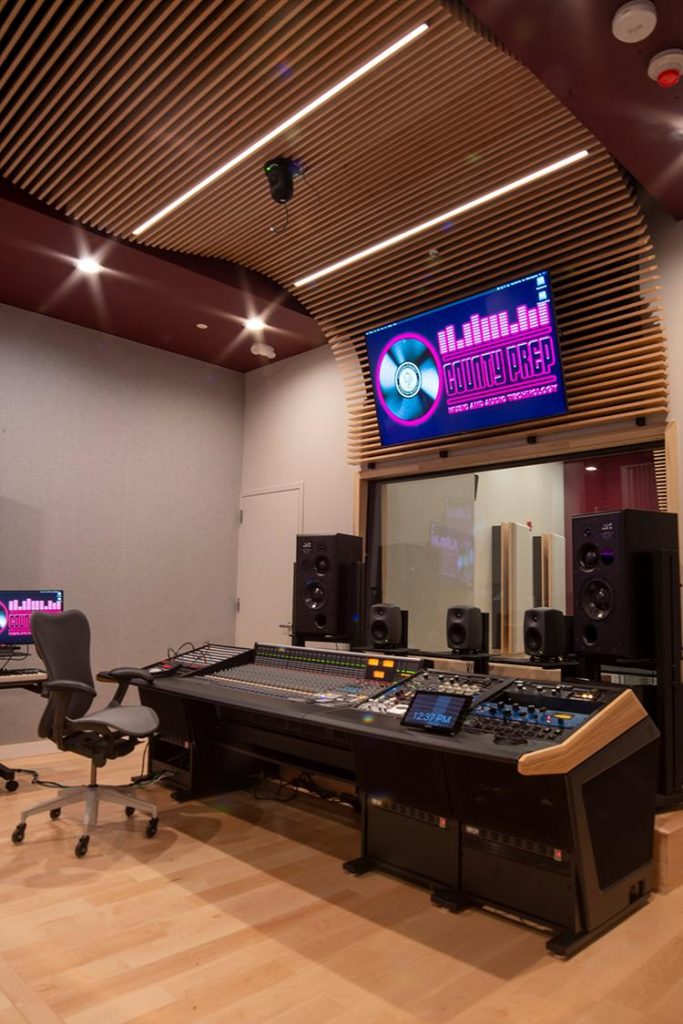
A career and technical high school in New Jersey has added new professional recording gear to one of its teaching spaces. County Prep High School, part of Hudson County Schools of Technology, added hardware from Solid State Logic (SSL), a UK-based company that manufactures analog and digital audio consoles for music and audio production. Students in the music and audio technology program learn how to write their own songs and produce their own music. The senior project involves putting a label together and releasing songs.
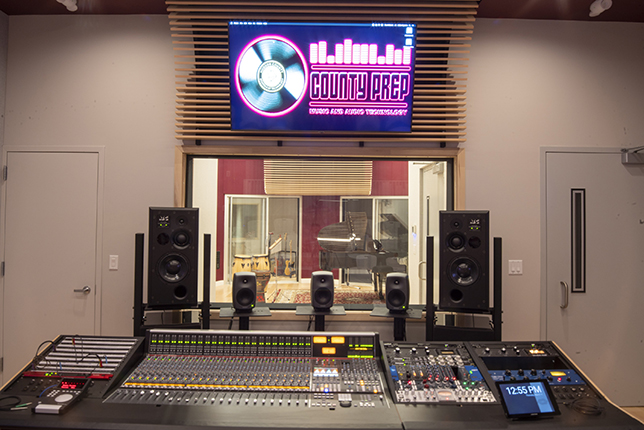
The new studio at County Prep High School features professional equipment from Solid State Logic.
Source: Solid State Logic
Also see:
Addendum on 4/1/21:
Improved Student Engagement in Higher Education’s Next Normal — from er.educause.edu by Ed Glantz, Chris Gamrat, Lisa Lenze and Jeffrey Bardzell
Five pandemic-introduced innovative teaching adaptations can improve student engagement in the next normal for higher education.
Excerpt (emphasis DSC):
The five teaching enhancements/adaptations discussed above—collaborative technologies for sense-making, student experts in learning and technology, back channels, digital breakout rooms, and supplemental recording—are well positioned to expand the definition of “student engagement” beyond traditional roll call and attendance tracking. Opportunities to include students at a distance have permitted inclusion of students who are reticent to speak publicly, students whose first language is not English, students with disabilities, and students less engaged through “traditional” channels. With these new conceptions of engagement in mind, we are prepared to be more inclusive of all students in the next normal of higher education.
ARHT Media Inc.
Access The Power Of HoloPresence | Hologram Technology | Holographic Displays | Hologram Events
Excerpt:
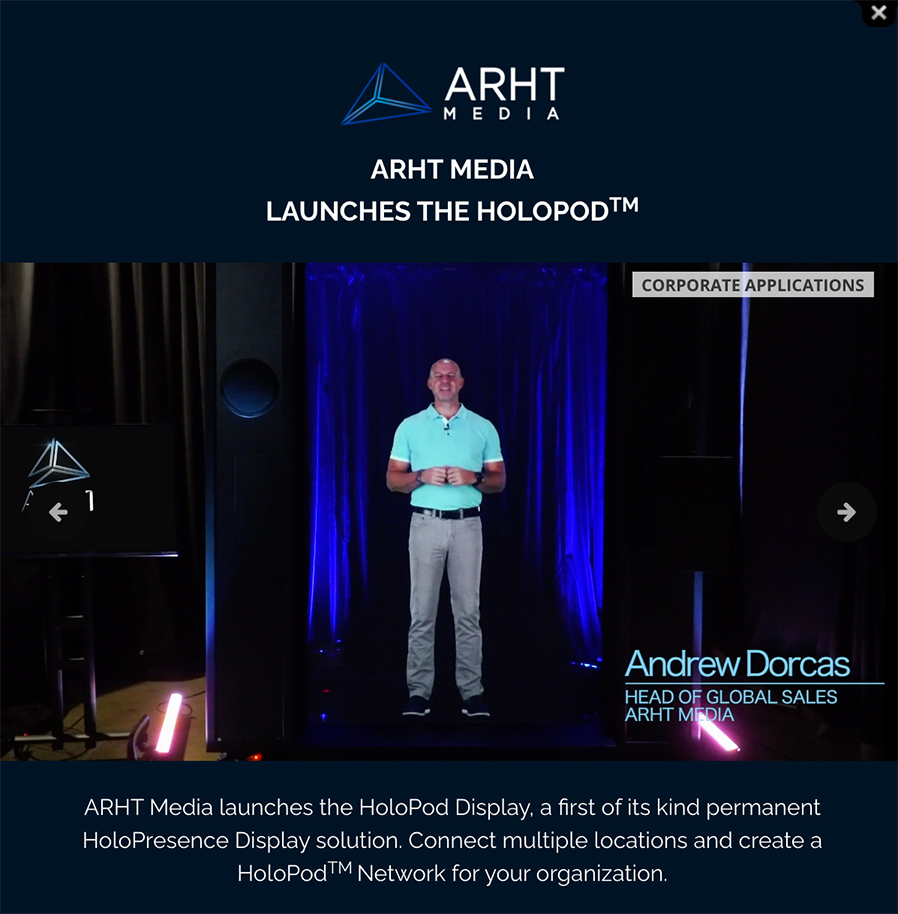
ARHT Media mounted a holographic display at the event in Vancouver and had Sunlife’s executive captured and transmitted live as a hologram to the event from our Toronto studio. He was able to see the audience and interact with them in realtime as if he was attending the event and present in the room.
From DSC:
The excerpt below is from The 7 best online whiteboards in 2021 — from zapier.com by Maria Myre
From DSC:
Other potentially-relevant tools/vendors here include: