On 04/26/2020,
in accessibility / UDL, assistive technologies, education, education technology, health, homeschooling/homeschoolers, human-computer interaction (HCI), K-12 related, languages and translation, Microsoft, neurodivergent/special needs, online learning, online media, platforms, psychology, remote teaching and learning, youth,
by Daniel Christian
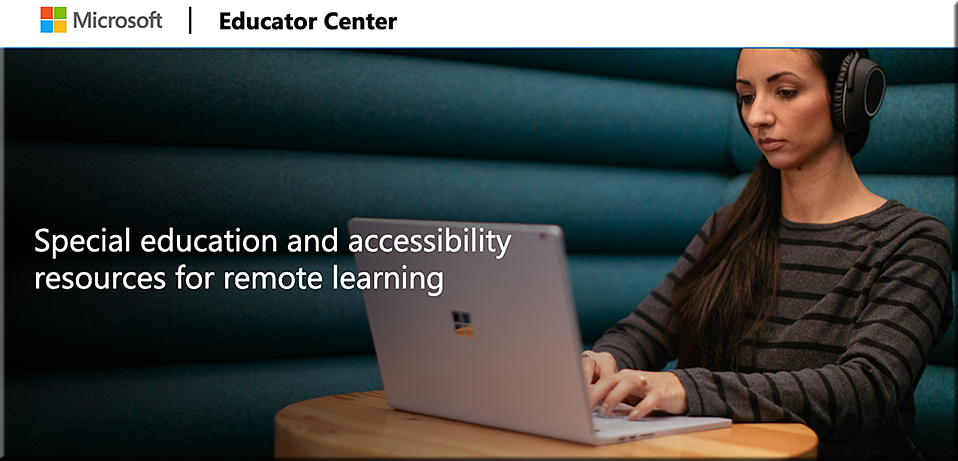
Special education and accessibility resources for remote learning — from education.microsoft.com
Excerpt:
For special educators, diversity demands they provide inclusive, accessible learning environments that inspire confidence and encourage independence differently for each student. Learn about how to create a personalized and engaging remote learning experience for all of your students through the resources provided in these pages.
These resources are intended for all educators, but will be especially helpful for educators and support staff who work in the following areas: special education, assistive technology, blind and visually impaired, deaf and hard of hearing, occupational therapy, physical therapy, speech language pathology, early childhood special education, behavior, counseling, school psychology, language interpretation, literacy, autism, and many other areas that assist students who need specially designed instruction.
On 04/03/2020,
in 21st century, 24x7x365 access, accessibility / UDL, Artificial Intelligence/Agents/LLMs/and Related, career development, change, changing business models, cloud-based computing / apps / other cloud-related, CMS/LMS, collaboration, colleges, communities of practice, community colleges, computer science, cost of getting a degree, data related items, digital learning, education, education technology, emerging technologies, engineering, experimentation, future of higher education, game-changing environment, global / globalization, higher education, human-computer interaction (HCI), ideas, India, intelligent systems, intelligent tutoring, learner profiles, learning, learning agents, learning ecosystem, Learning from the Living [Class] Room, learning preferences, MOOCs -- Massive Open Online Courses, morals/values, more voice more choice more control, new business models, personalized/customized learning, platforms, science, social learning / networks, society, STEAM-related, student-related, teaching & learning, technologies for your home, technology (general), tools, TVs, United States, universities,
by Daniel Christian
Why education is a ‘wicked problem’ for learning engineers to solve — from edsurge.com by Rebecca Koenig
Excerpts (emphasis DSC):
So, back to the wicked problem: How do we make education that’s both quality education and at the same time accessible and affordable?
“Now, we are building a new technology that we call Agent Smith. It’s another AI technology— and we’re very excited about it—that builds [a] Jill Watson for you. And Agent Smith can build a Jill Watson for you in less than 10 percent of the hours.”
…
So one question for online education is, can we build a new set of tools—and I think that’s where AI is going to go, that learning engineering is going to go—where AI is not helping individual humans as much as AI is helping human-human interaction.
Huge ethical issues and something that learning engineering has not yet started focusing on in a serious manner. We are still in a phase of, “Look ma, no hands, I can ride a bike without hands.”
…
Technology should not be left to technologists.

On 02/20/2020,
in 24x7x365 access, 3D, accessibility / UDL, colleges, community colleges, design, immersion, innovation, intelligent systems, interactivity, interface design, learning hubs & pods & microschooling, learning spaces, neurodivergent/special needs, platforms, tools, universities, usability, user experience (UX), vendors,
by Daniel Christian
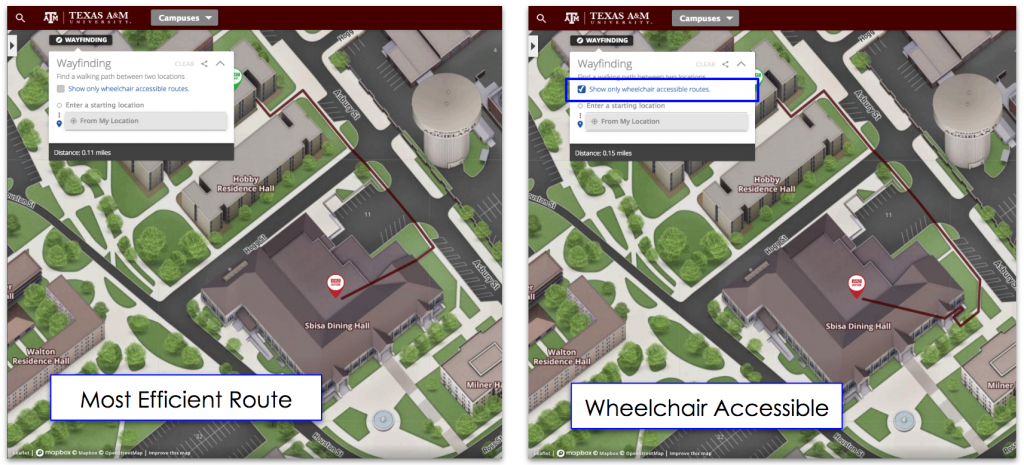
Concept3D introduces wheelchair wayfinding feature to support campus accessibility — from concept3d.echoscomm.com with thanks to Delaney Lanker for this resource
System makes wheelchair friendly campus routes easy to find and follow
Excerpt:
Concept3D, a leader in creating immersive online experiences with 3D modeling, interactive maps and virtual tour software, today announced the launch of a new wheelchair wayfinding feature that adds a new level of accessibility to the company’s interactive map and tour platform.
With the new wheelchair accessible route functionality, Concept3D clients are able to offer a separate set of wayfinding routes specifically designed to identify the most efficient and easiest routes.
Concept3D’s wayfinding system uses a weighted algorithm to determine the most efficient route between start and end points, and the new system was enhanced to factor in routing variables like stairs, curb cuts, steep inclines, and other areas that may impact accessibility.
Also see:
Wayfinding :: Wheelchair Accessible Routes — from concept3d.com
On 02/10/2020,
in accessibility / UDL, adjunct faculty, blended learning, colleges, community colleges, elearning, faculty/staff, higher education, law schools, more voice more choice more control, online learning, participation, pedagogy, universities,
by Daniel Christian
A two-part series from Educause regarding inclusive design/accessibility — with thanks to Ray Schroeder for his posting on this out on LinkedIn.
- Part I: A Taxonomy of Inclusive Design: On Disclosure, Accessibility, and Inclusion — from er.educause.edu by Lorna Gonzalez and Kristi O’Neil
- Part II: Moving a Taxonomy of Inclusive Design from Theory to Practice
— from er.educause.edu by Lorna Gonzalez and Kristi O’Neil
An excerpt from Part II:
The previous two definitions have tried to articulate the idea that students carry intersecting invisible circumstances with them into the classroom. Whether or not students disclose their circumstances—or whether faculty members invite students to disclose them—does not determine their existence. From this perspective, inclusion means designing and teaching for variability. Faculty can practice inclusive pedagogy by following universal design principles and offering multiple options for representation, engagement, and expression:
Options are essential to learning, because no single way of presenting information, no single way of responding to information, and no single way of engaging students will work across the diversity of students that populate our classrooms. Alternatives reduce barriers to learning for students with disabilities while enhancing learning opportunities for everyone.4
In a Nutshell …
Inclusive pedagogy can be an act of intention—something that is initiated before and during the course design process—rather than being an act of revision or omission.
On 02/03/2020,
in accessibility / UDL, analytics, business side of he, change, cloud-based computing / apps / other cloud-related, CMS/LMS, colleges, community colleges, data related items, education technology, higher education, learning ecosystem, mobile technologies, strategy, student-related, teaching & learning, technology (general), tools, trends, United States, universities,
by Daniel Christian
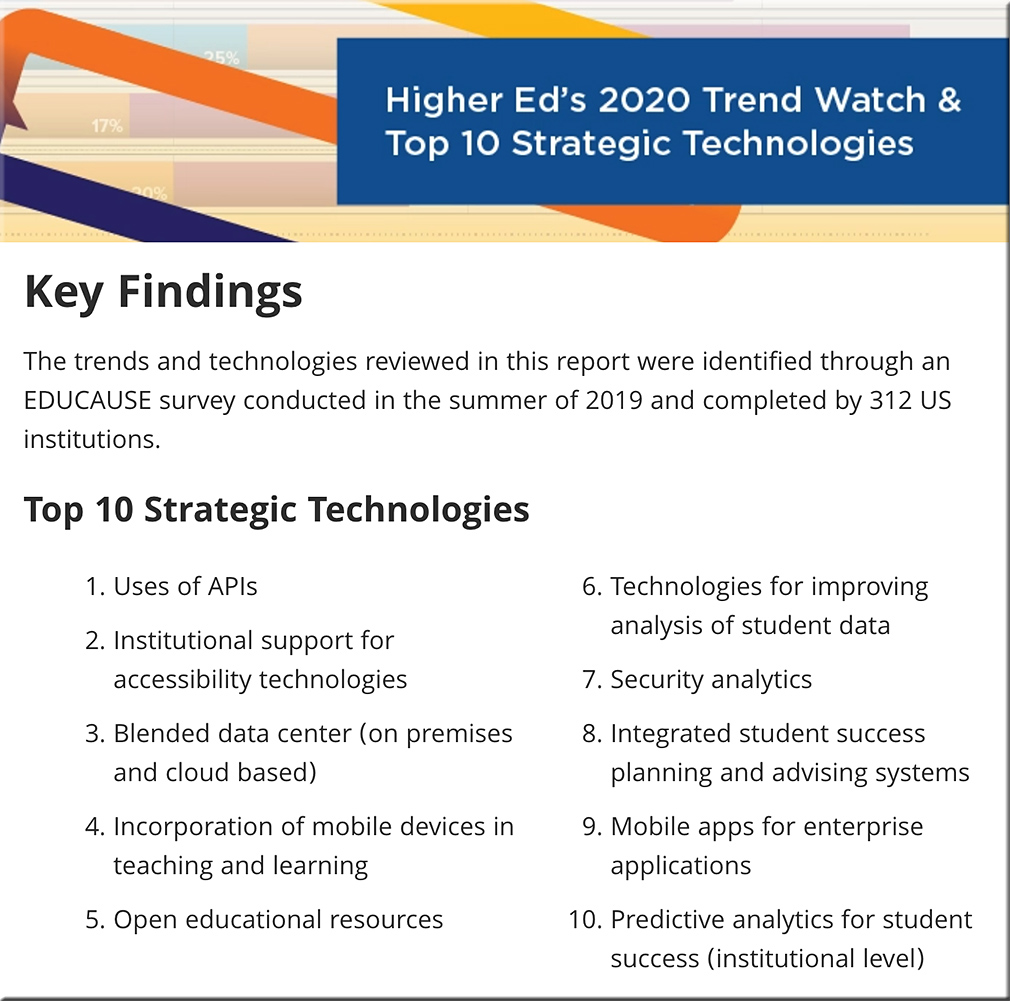
Higher Education’s 2020 Trend Watch & Top 10 Strategic Technologies — from library.educause.edu
Excerpt:
Most Influential Trends
Six trends are influential at 61% or more of colleges and universities (listed below from highest to lowest level of influence):
- Growing complexity of security threats
- Student success focus/imperatives
- Data-informed decision-making
- Privacy
- Enterprise risk management
- Institution-wide data management and integrations
On 12/08/2019,
in accessibility / UDL, adjunct faculty, assistive technologies, colleges, community colleges, higher education, legislatures / government / legal, neurodivergent/special needs, policy, society, teaching & learning, teaching online, United States, universities,
by Daniel Christian
Accessibility at a Crossroads: Balancing Legal Requirements, Frivolous Lawsuits, and Legitimate Needs — from er.educause.edu by Martin LaGrow
Excerpt:
Changes in legal requirements for IT accessibility have prompted some to pursue self-serving legal actions. To increase access to users of all abilities, colleges and universities should articulate their commitment to accessibility and focus on changing institutional culture.
On 12/03/2019,
in accessibility / UDL, active learning, adjunct faculty, adult learning, analytics, attention, blended learning, CMS/LMS, colleges, community colleges, corporate universities / corporate training, Daniel S. Christian, data related items, digital learning, education technology, engagement / engaging students, face-to-face, faculty/staff, flipping -- inverted learning, formal learning, higher education, hybrid learning, instructional design, interactivity, internet, IT in HE, learning, learning ecosystem, learning preferences, online learning, pedagogy, platforms, student teaching/teacher education, student-related, teaching & learning, teaching online, training / L&D, United States, universities,
by Daniel Christian
2019 study of undergraduate students & information technology — from library.educause.edu
Excerpts:
Drawing on survey data from more than 40,000 students across 118 US institutions, this report highlights a number of important findings related to students’ technology preferences, supports, and experiences, with the goal of aiding technology and higher education professionals in improving student learning experiences and success.
…
But they want to be more than in-class spectators:
- “I want my professors to stop reading PowerPoint slides word-for-word off of a screen, and to start using the technology at hand to create a different kind of lecture that will engage their students in the learning process.”
- “I’d love for there to be more interactive polling and questions during class. Even though I don’t like the idea of being in lecture every day, that would keep me more engaged if the instructors were more dynamic with their tech use.”
- “Integrate [technology] more into lectures. It’s very difficult to sit and watch you talk. Technology can be so beneficial to learning if used in the right ways to enhance and complement lectures. Use collaborative quizzes (Kahoot, etc.), let us research in class, etc.”
- “Provide more online learning tools such as interactive lectures where people on laptops or tablets can also engage with the material being presented.”
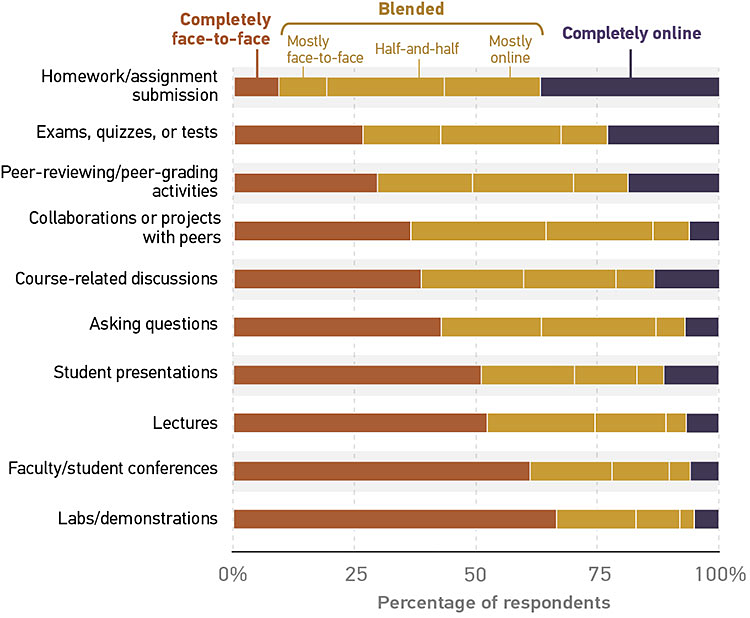
Figure 2. Student learning environment preferences for specific course-related activities and assignments
Recommendations
- Leverage analytics to gain a greater understanding of the student demographics that influence learning environment preferences.
- Continue to promote online success tools and provide training to students on their use through orientations and advisement sessions.
- Expand efforts to improve Wi-Fi reliability in campus housing and outdoor spaces.
- Allow students to use the devices that are most important to their academic success in the classroom.
- Establish a campus community to address accessibility issues and give “accessibility evangelists” a seat at the table.
From DSC:
Well students…you might find that you have a major surprise ahead of you — as a significant amount of your future learning/training will take place completely online. Go ask some folks who have graduated about their onboarding experiences. Then go ask people who have been in the workplace for over a decade. You’ll see what I mean.
On 10/08/2019,
in accessibility / UDL, CMS/LMS, colleges, community colleges, corporate / business world, corporate universities / corporate training, design, digital learning, education technology, higher education, human-computer interaction (HCI), instructional design, interaction design, IT in HE, K-12 related, law schools, learning ecosystem, productivity / tips and tricks, professional development, tools, United States, universities, usability, user experience (UX), user interface design, vendors, web design and production,
by Daniel Christian
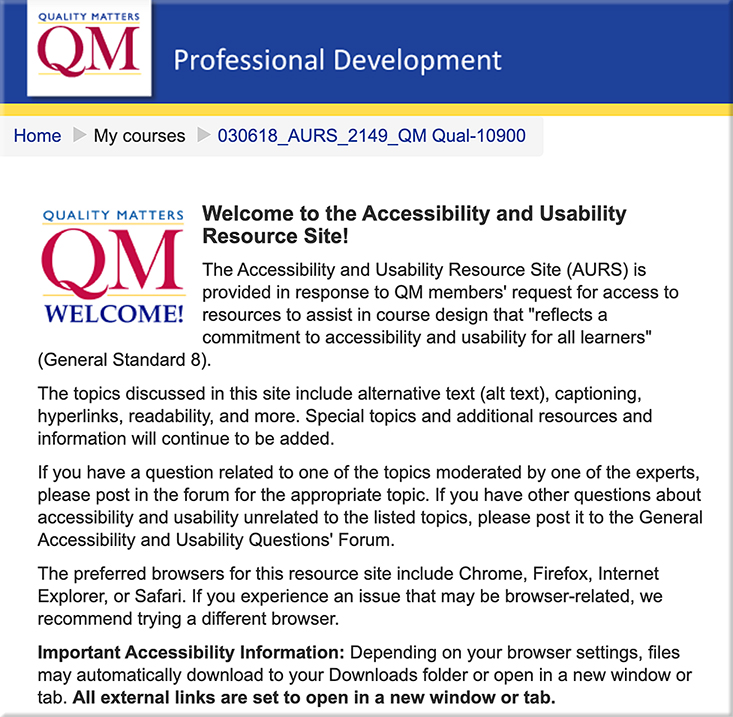
Meet AURS — Your go-to resource for addressing accessibility challenges — from wcetfrontiers.org and Quality Matters
Excerpt:
Accessibility is not only one of the main areas of focus for WCET, but a consistent issue and opportunity for higher education institutions. In order to support faculty, instructional designers, and others who work in the area, Quality Matters, a WCET member, created a new resource site for educators to get information on how to address key accessibility and usability concerns. Today’s post introduces the new website, AURS, and reviews the development process for the site and the resources.
On 09/26/2019,
in accessibility / UDL, Artificial Intelligence/Agents/LLMs/and Related, Augmented Reality (AR), career development, corporate / business world, digital storytelling, drama/theater, education, education technology, future, game-changing environment, health, ideas, innovation, intelligent systems, intelligent tutoring, internet, IT in HE, law schools, learning, learning agents, learning ecosystem, Learning from the Living [Class] Room, legislatures / government / legal, media/film, Mixed Reality (MR), Natural Language Processing (NLP), personalized/customized learning, platforms, society, story, storytelling, student-related, United States, workplace,
by Daniel Christian
Artificial Intelligence in Future and Present — from datafloq.com
A look at what AI might do and what it can actually do in various industries…
- Artificial Intelligence and Medicine
- Artificial Intelligence and Finance
- Artificial Intelligence and Manufacturing
- Artificial Intelligence and Media & Entertainment
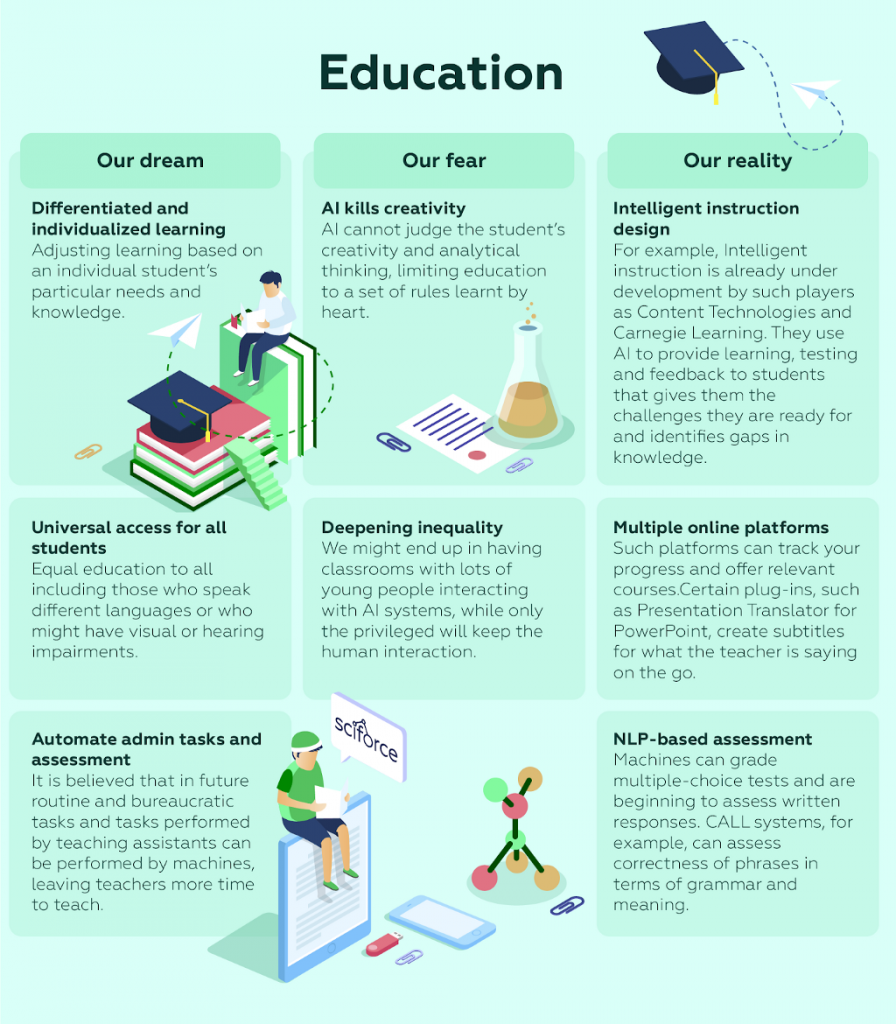
- Artificial Intelligence and Education