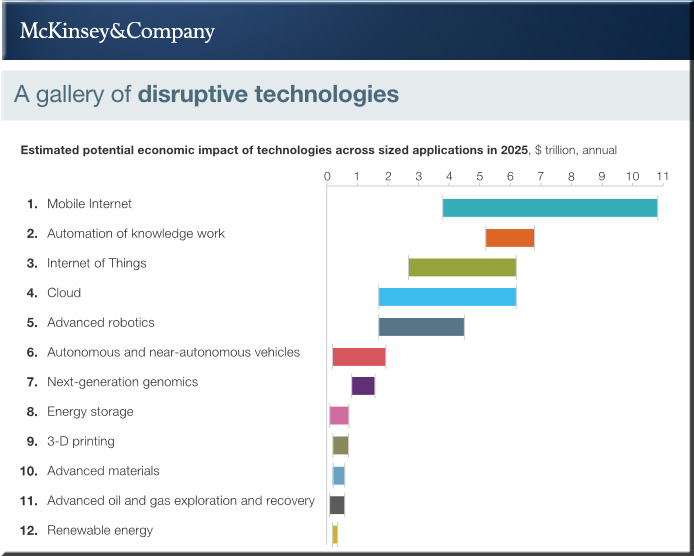
Technology predictions for the second half of the decade — from techcrunch.com by Lance Smith

Excerpts:

  • Big Data and IoT evolve into automated information sharing
  • Self-driving vehicles become mainstream
  • The appearance of artificial intelligent assistants
  • Real-time agility through data virtualization


EdTech trends for the coming years — from edtechreview.in

Excerpts:

EdTech is about to explode. The coming technology and the new trends on the rise can’t but forecast an extensive technology adoption in schools all around the globe.

Specific apps, systems, codable gadgets and the adaptation of general use elements to the school environment are engaging teachers and opening up the way to new pedagogical approaches. And while we are scratching the surface of some of them, others have just started to buzz persistently.

  • Wearables + Nano/Micro Technology + the Internet of Things
  • 3D + 4D printing
  • Big Data + Data Mining
  • Mobile Learning
  • Coding
  • Artificial Intelligence + Deep Learning
    • Adaptative learning: based on a student’s behaviour and results, an intelligent assistant can predict and readapt the learning path to those necessities. Combined with biometrics and the ubiquitous persona (explained below) a student could have the best experience ever.
    • Automatic courses on the fly, with contents collected by intelligent searching systems (data mining).
    • Virtual tutors.
  • The Ubiquitous Persona + Gamification + Social Media Learning
  • Specialised Staff in Schools


Phones and wearables will spur tenfold growth in wireless data by 2019 — from recode.net

Excerpts:

Persistent growth in the use of smartphones, plus the adoption of wireless wearable devices, will cause the total amount of global wireless data traffic to rise by 10 times its current levels by 2019, according to a forecast by networking giant Cisco Systems out [on 2/3/15].

The forecast, which Cisco calls its Visual Networking Index, is based in part on the growth of wireless traffic during 2014, which Cisco says reached 30 exabytes, the equivalent of 30 billion gigabytes. If growth patterns remain consistent, Cisco’s analysts reckon, the wireless portion of traffic crossing the global Internet will reach 292 exabytes by the close of the decade.


9 ed tech trends to watch in 2015 — from the Jan/Feb edition of Campus Technology Magazine

  1. Learning spaces
  2. Badges
  3. Gamification
  4. Analytics
  5. 3D Printing
  6. Openness
  7. Digital
  8. Consumerization
  9. Adaptive & Personalized Learning


Even though I’ve mentioned it before, I’ll mention it again here because it fits the theme of this posting:

NMC Horizon Report > 2015 Higher Education Edition — from nmc.org

Excerpt:

What is on the five-year horizon for higher education institutions? Which trends and technologies will drive educational change? What are the challenges that we consider as solvable or difficult to overcome, and how can we strategize effective solutions? These questions and similar inquiries regarding technology adoption and educational change steered the collaborative research and discussions of a body of 56 experts to produce the NMC Horizon Report: 2015 Higher Education Edition, in partnership with the EDUCAUSE Learning Initiative (ELI). The NMC Horizon Report series charts the five-year horizon for the impact of emerging technologies in learning communities across the globe. With more than 13 years of research and publications, it can be regarded as the world’s longest-running exploration of emerging technology trends and uptake in education.


From DSC:
Speaking of trends…although this item isn’t necessarily technology related, I’m going to include it here anyway:

Career trends students should be watching in 2015 — from hackcollege.com by

Excerpt:

Students Need to Pay Attention to Broader Trends, and Get Ready.
For better or worse, the post-college world is changing.

According to a variety of analysis sites, including Forbes, Time, and Bing Predicts, more and more of the workforce will be impacted by increased entrepreneurship, freelancing, work-from-home trends, and non-traditional career paths.

These experts are saying that hiring practices will shift, meaning that students need to prepare LinkedIn profiles, online portfolio, work at internships, and to network to build relationships with potential future employers.

———-


Addendum on 3/6/15:
Self-driving car technology could end up in robots — from pcworld.com by Fred O’Connor

Excerpt:

The development of self-driving cars could spur advancements in robotics and cause other ripple effects, potentially benefitting society in a variety of ways.

Autonomous cars as well as robots rely on artificial intelligence, image recognition, GPS and processors, among other technologies, notes a report from consulting firm McKinsey. Some of the hardware used in self-driving cars could find its way into robots, lowering production costs and the price for consumers.

Self-driving cars could also help people grow accustomed to other machines, like robots, that can complete tasks without the need for human intervention.

Addendum on 3/6/15:

  • Top 5 Emerging Technologies In 2015 — from wtvox.com
    Excerpt:
    1) Robotics 2.0
    2) Neuromorphic Engineering
    3) Intelligent Nanobots – Drones
    4) 3D Printing
    5) Precision Medicine
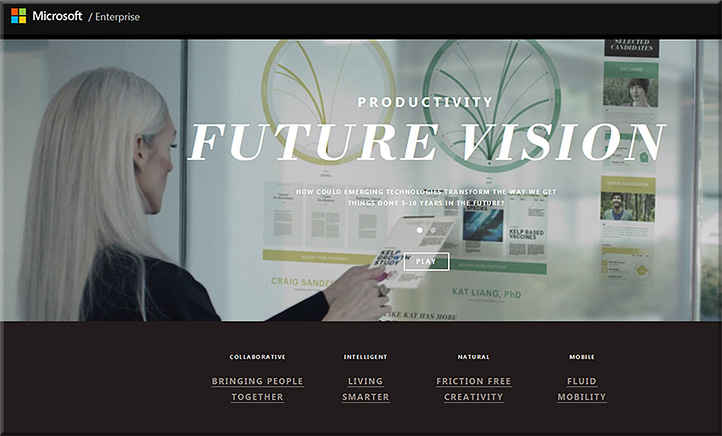
 

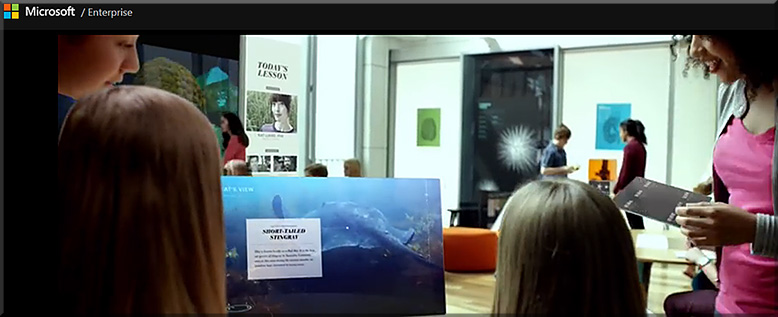
MicrosoftProductivityVision2015


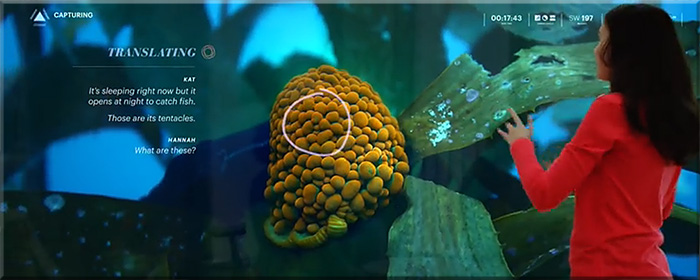
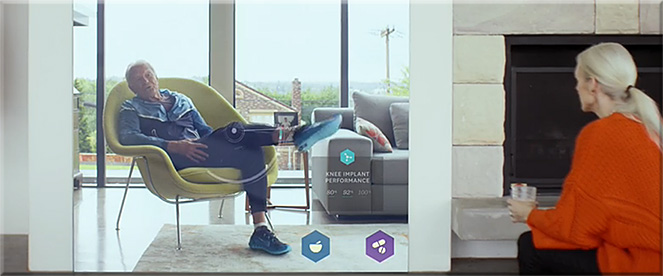
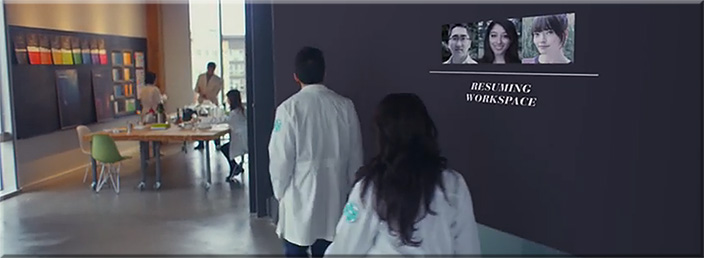
Example snapshots from
Microsoft’s Productivity Future Vision


MicrosoftProductivityVision2-2015


MicrosoftProductivityVision3-2015


MicrosoftProductivityVision5-2015


MicrosoftProductivityVision6-2015


MicrosoftProductivityVision7-2015


MicrosoftProductivityVision8-2015


MicrosoftProductivityVision4-2015


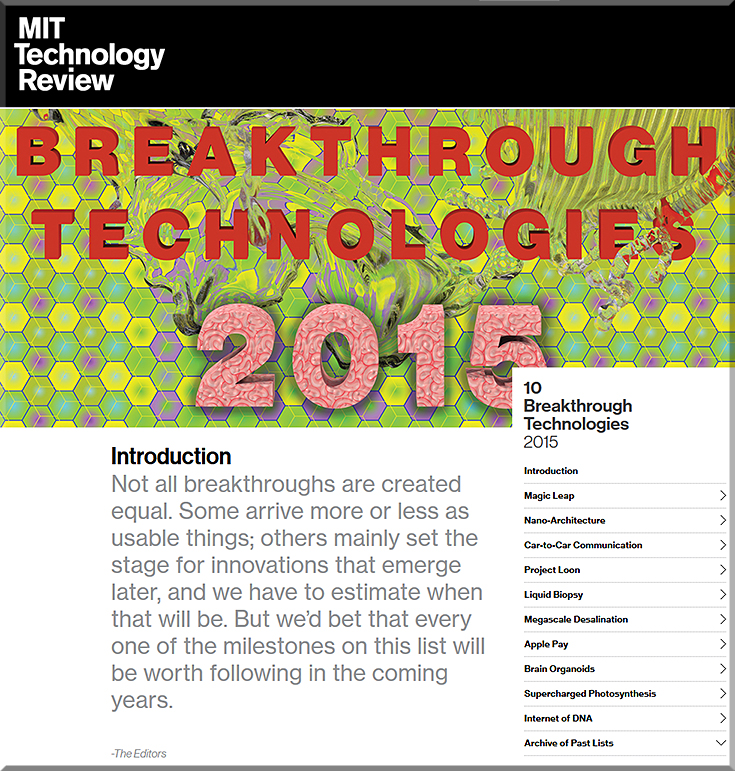
MITTechReview-10Breakthroughs-2015


Excerpt:

Not all breakthroughs are created equal. Some arrive more or less as usable things; others mainly set the stage for innovations that emerge later, and we have to estimate when that will be. But we’d bet that every one of the milestones on this list will be worth following in the coming years.


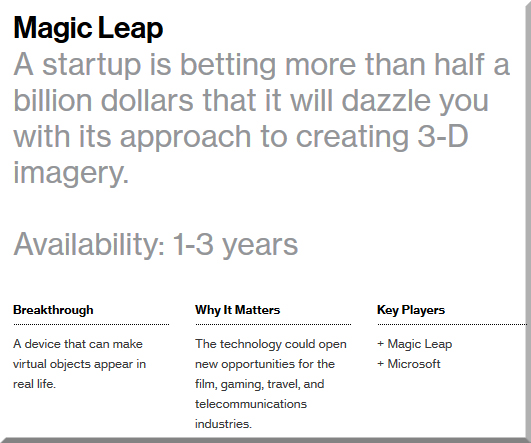
MITTechReview-2015-magic-leap


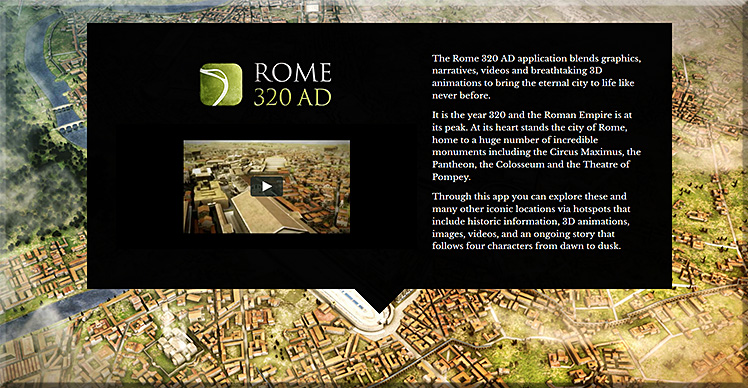
Rome 320 AD – Interactive App — from indianajen.com by Jennifer Carey

Excerpt:

The app follows the lives of four Romans as they travel through the city on a summer day in 320 CE. You can explore 3D, interactive models of the city in high resolution and detail.


ROME-320AD


ROME-320AD-image


Also see:


World-of-Comenius-Oct2014


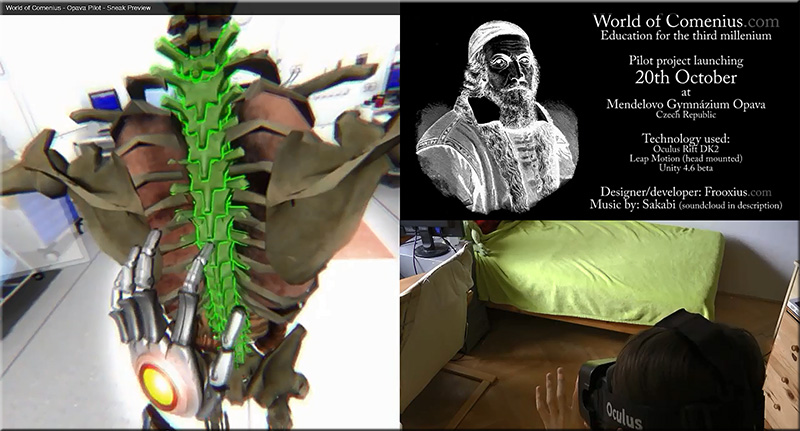
‘World of Comenius’ demonstrates powerful educational interaction w/ Leap Motion & Oculus Rift and Tomas “Frooxius” Mariancik

Excerpt:

We recently covered a (at that point unnamed) VR project by developer Tomáš “Frooxius” Marian?ík, the mind behind the stunning ‘Sightline’ VR series of demos. The project fused Leap Motion skeletal hand tracking with Oculus Rift DK2 positional tracking to produce an impressively intuitive VR interface. Now, a new video of the interface  shows impressive progress. We catch up with Tomáš to find out some more about this mysterious VR project.

Enter the ‘World of Comenius’
The virtual reality resurgence that is currently underway, necessarily and predictably concentrates on bringing people new ways to consume and experience media and games. This is where virtual reality has the best chance of breaking through as a viable technology, one that will appeal to consumers worldwide. But virtual reality’s greatest impact, at least in terms of historical worth to society, could and probably will come in the form of non-entertainment based fields.


Also see:


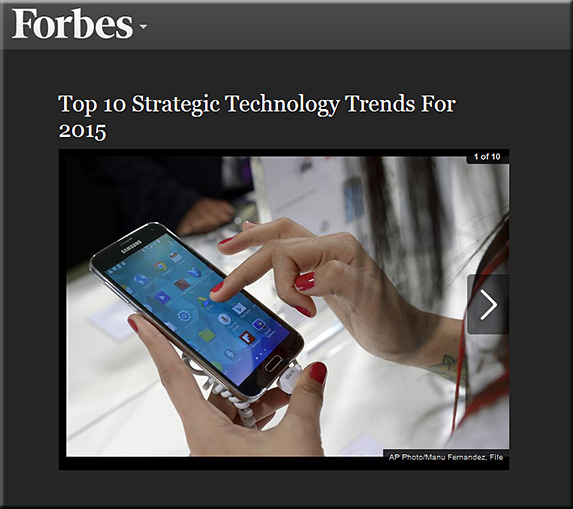
Gartner: Top 10 Strategic IT Trends For 2015 — from forbes.com by Peter High

Summary:

  1. Computing Everywhere
  2. The Internet of Things (IoT)
  3. 3D Printing
  4. Advanced, Pervasive, Invisible Analytics
  5. Context-Rich Systems
  6. Smart Machines
  7. Cloud/Client Architecture
  8. Software-Defined Infrastructure and Applications
  9. Web-Scale IT
  10. Risk-Based Security and Self-Protection


Gartner2015TopTrends


App Ed Review


APPEdReview-April2014


From the About Us page (emphasis DSC):

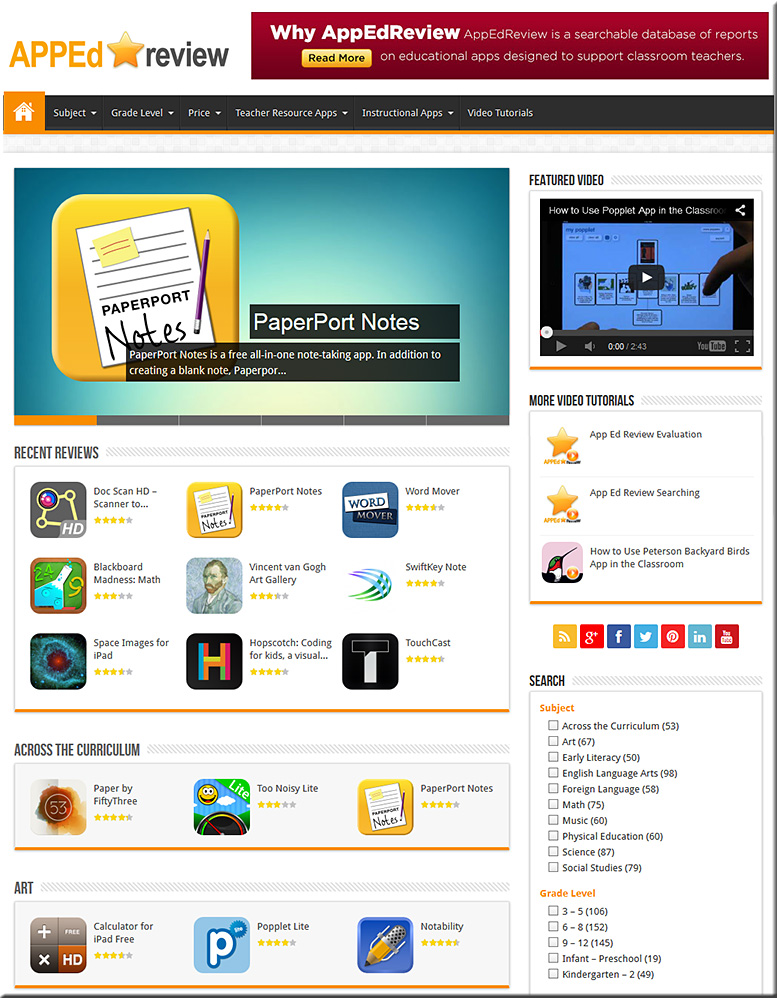
App Ed Review is a free searchable database of educational app reviews designed to support classroom teachers finding and using apps effectively in their teaching practice. In its database, each app review includes:

  • A brief, original description of the app;
  • A classification of the app based on its purpose;
  • Three or more ideas for how the app could be used in the classroom;
  • A comprehensive app evaluation;
  • The app’s target audience;
  • Subject areas where the app can be used; and,
  • The cost of the app.


Also see the Global Education Database:


GlobalEducationDatabase-Feb2014


From the About Us page:

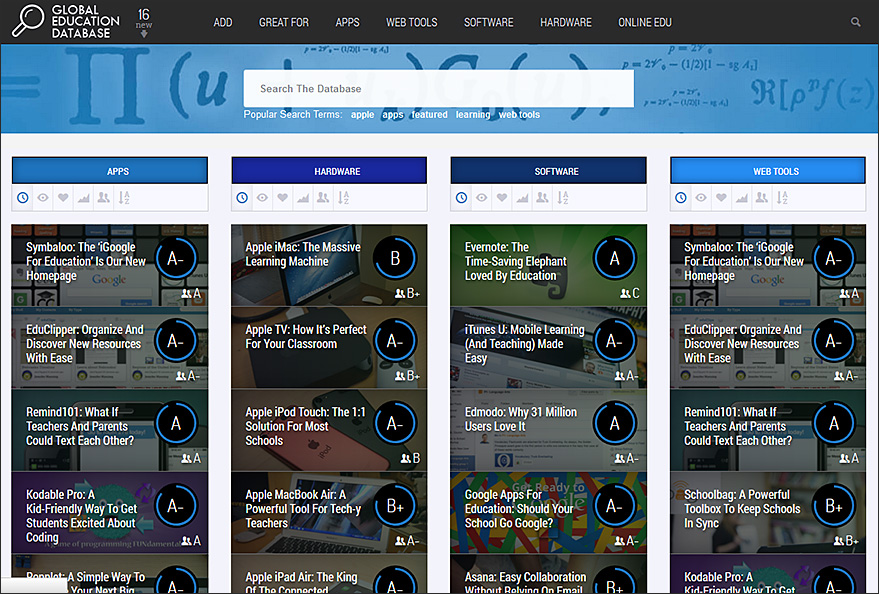
It’s our belief that digital technologies will utterly change the way education is delivered and consumed over the next decade. We also reckon that this large-scale disruption doesn’t come with an instruction manual. And we’d like GEDB to be part of the answer to that.

It’s the pulling together of a number of different ways in which all those involved in education (teachers, parents, administrators, students) can make some sense of the huge changes going on around them. So there’s consumer reviews of technologies, a forum for advice, an aggregation of the most important EdTech news and online courses for users to equip themselves with digital skills. Backed by a growing community on social media (here, here and here for starters).

It’s a fast-track to digital literacy in the education industry.

GEDB has been pulled together by California residents Jeff Dunn, co-founder of Edudemic, and Katie Dunn, the other Edudemic co-founder, and, across the Atlantic in London, Jimmy Leach, a former habitue of digital government and media circles.


Addendum:

Favorite educational iPad apps that are also on Android — from the Learning in Hand blog by Tony Vincent


Gartner identifies the top 10 strategic technology trends for 2014
Analysts Examine Top Industry Trends at Gartner Symposium/ITxpo 2013 October 6-10 in Orlando

Excerpt:

Gartner, Inc. today highlighted the top ten technologies and trends that will be strategic for most organizations in 2014.  Analysts presented their findings during Gartner Symposium/ITxpo, being held here through October 10.

Gartner defines a strategic technology as one with the potential for significant impact on the enterprise in the next three years. Factors that denote significant impact include a high potential for disruption to IT or the business, the need for a major dollar investment, or the risk of being late to adopt.

A strategic technology may be an existing technology that has matured and/or become suitable for a wider range of uses. It may also be an emerging technology that offers an opportunity for strategic business advantage for early adopters or with potential for significant market disruption in the next five years. These technologies impact the organization’s long-term plans, programs and initiatives.

“We have identified the top 10 technologies that companies should factor into their strategic planning processes,” said David Cearley. “This does not necessarily mean adoption and investment in all of the listed technologies, but companies should look to make deliberate decisions about them during the next two years.”

…

The top ten strategic technology trends for 2014 include:


A first look at how educators are really using Google Glass — from by Stephen Noonoo

Excerpts (emphasis DSC):

Per Andrew Vanden Heuvel:

What Glass does offer, Vanden Heuvel said, is a shift in perspective, particularly because teachers can use it as a tool to engage students faster and more easily than before. After returning from Geneva, Vanden Heuvel launched a YouTube channel devoted to his experiments with science–and Glass–called STEMBite. To date, in more than two dozen videos, he’s guided viewers through the physics of ball spin on the tennis court to the polarization of light through (appropriately enough) a pair of glasses.

“What I’m excited by making these videos is not only that they’re filmed with Google Glass, but they’re high engagement videos, so they’re meant to be really short and to get kids to think about how math and science is all around,” he said. “I suppose I could have done that before, but it’s just so easy now.”

Per Hanna Brown:

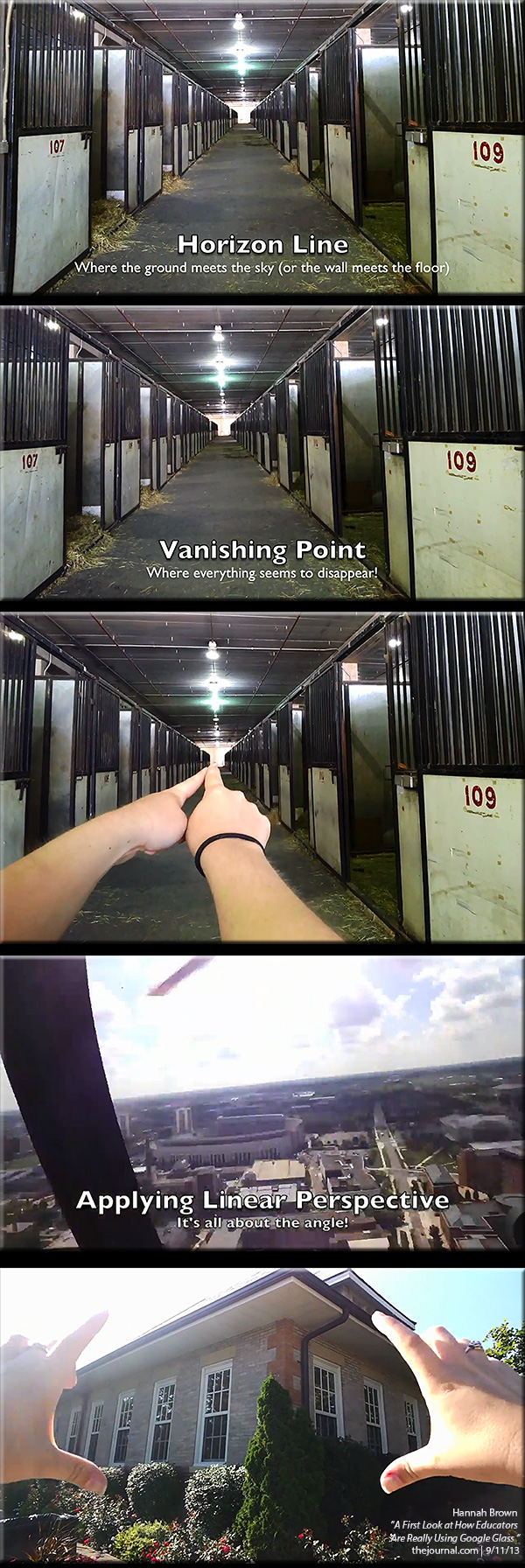
“I’ve had videos in my classroom before–that’s not a novel thing–but I’ve never been able to take a video from my eye perspective,” said Hannah Brown, another early Glass adopter who works as a high school art teacher at Electronic Classroom of Tomorrow, an all-online statewide charter school in Ohio.


HannahBrown-9-11-13-Art-and-Google-Glass-thejournal


From DSC:
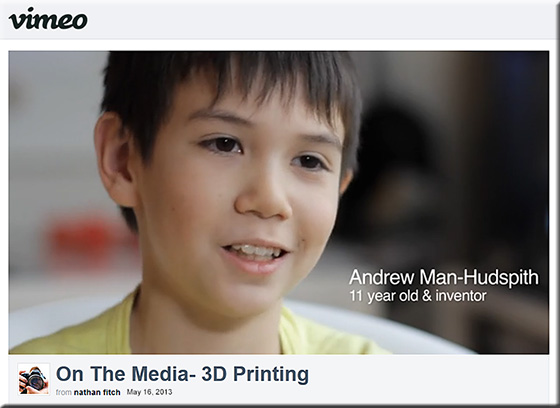
Virtual field trips, mobile learning, videoconferencing, web-based collaboration, Human Computer Interaction (HCI), and other topics come to my mind when I see this.


11-year-old-inventor-May2013

.

With thanks going out to Mr. Joe Byerwalter for bringing this to my attention.

.

Tagged with: • • • •  

Amazing 3D pencil drawings pop out of the page (Ejleh)

Amazing 3D pencil drawings pop out of the page — from mymodernmet.com by Muhammad Ejleh

Excerpts:


.

Tagged with: • •  

Doodle 3D printer accessory enables 3D printing of drawings — from bitrebels.com by Richard Darell


doodle-3d-printer-accessory

doodle-3d-printer-accessory

Tagged with: • • •  

Innovation alert: World’s first 3D printed canal house in Amsterdam — from freshome.com


3D printed canal hou Innovation Alert: Worlds First 3D Printed Canal House in Amsterdam


…and, as usual, technology itself can be used for good or bad…here’s the far less appealing side of the coin (at least to me):


3D-Printed-Weapons-March2013


© 2025 | Daniel Christian