Why inexperienced workers can’t get entry-level jobs — from bbc.com by Kate Morgan; with thanks to Ryan Craig for this resource

Excerpt:

As anyone who’s graduated from university or applied for their first job in recent years can attest to, something new – and alarming – has happened to entry-level jobs: they’ve disappeared.

A recent analysis of close to 4 million jobs posted on LinkedIn since late 2017 showed that 35% of postings for “entry-level” positions asked for years of prior relevant work experience. That requirement was even more common in certain industries. More than 60% of listings for entry-level software and IT Services jobs, for instance, required three or more years of experience. In short, it seems entry-level jobs aren’t for people just entering the workforce at all.

“Internships are now the entry level,” he says. “Most of the students in college are doing or trying to do internships, and now it’s increasingly common to do more than one.”

From DSC:
I love the idea of internships. (In my days in college, internships were reserved mainly for engineers; few of us had them back then.)

But with an eye on the cost of obtaining a degree, internships should be PAID internships. That is, interns should receive decent/proper compensation. I’m concerned that businesses will take advantage of free labor here (though that’s less likely given the tight labor market I suppose). But businesses have taken advantage of free labor in the past. “It takes a village…”

Also see:


Legal Technology: Why the Legal Tech Boom is Just Getting Started — from nasdaq.com by Casey Flaherty and Jae Um of LexFusion; with thanks to Gabe Teninbaum for this resource via his Lawtomatic Newsletter, Issue #136

Excerpt:

In quick succession, legal technology finally saw its first IPOs:

With private money pouring into legal tech startups and based on our own conversations inside the industry, we at LexFusion expect more IPOs on the horizon. Thus, a primer on legal tech as a category to watch. This Part I summarizes the legal market fundamentals driving unprecedented investment in enabling tech—much of which extends beyond the boundaries implied by “legal” as a descriptor.

A pivot point appears to be upon us. Considered unthinkable a decade ago, US states and Canadian provinces—following similar reforms in the UK and Australia that have resulted in the first publicly traded law firms—are rapidly creating regulatory sandboxes to expand current rules limiting (a) who can provide legal services and (b) who can own those businesses.

From DSC:
One can see why #AI will become key. “…the projected CAGR for global data volumes is 26%—to pt where ‘the amount of data created over the next three years will be more than the data created over the past 30 years.’ This data explosion complicates even standard legal matters.”

Gabe also mentioned the following Tweet, which is relevant for this posting:


The Metaverse is Taking Over the Physical World — from interestingengineering.com by Rupendra Brahambhatt; with thanks to Dan Lejerskar for this resource
The virtual world is expanding with real world avatars and digital economy.

Excerpt:

The advent of AR, blockchain, and VR devices in the last few years has sparked the development of the metaverse. Moreover, the unprecedented growth of highly advanced technologies in the gaming industry, which offer immersive gameplay experiences, not only provides us a glimpse of how the metaverse would look like but also indicates that we are closer than ever to experience a virtual world of our own.

What is the metaverse?

The Metaverse is Taking Over the Physical WorldSource: Kelvin Han/Unsplash

A metaverse is a group of persistent, shared 3D virtual environments where you (in the form of your digital avatar) can visit places, shop for products, subscribe to services, work with your colleagues, play games, and even customize the scenes around you to meet your personal tastes and requirements, and the digital assets you own. So essentially, a metaverse is a virtual world or worlds, that would allow you to go inside the digital world — to be in rather than on the digital space.


From DSC:
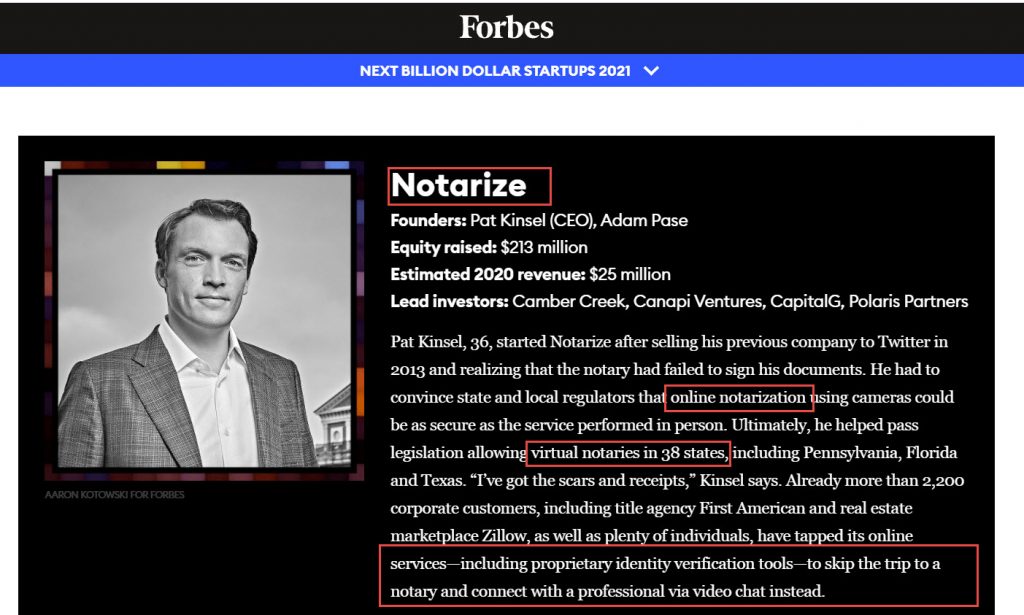
Again I wonder….on the legal side of things…how will this impact what lawyers, judges, legislators, general counsels, and more need to know? Along these lines see:

To do this well, legal department heads and the lawyers and professionals in the department will have to learn, and practice, some new skills: embracing technology, project management, change management, and adaptability.

The first, and likely most obvious, skill an attorney needs in a rapidly evolving business environment is a firm grasp on existing and emerging technology. There are two important categories of technology to consider—the first is legal technology and the second is broader technology trends.


From DSC:
What if you were working in the law office that these folks came into for help, representation, and counsel…what would you do?

Or if someone “stole” your voice for a bit:

You can see the critical role that the American Bar Association plays in helping our nation deal with these kinds of things. They are the pace-setters on the [legal] track.


‘A very big deal.’ Nonlawyer licensing plan clears hurdle in California — from reuters.com by Karen Sloan; with thanks to Law 2030’s October 2021 newsletter from the University of Pennsylvania’s Carey Law School

Excerpt:

(Reuters) – California is on track to become the largest state to let specially trained nonlawyers offer legal advice in limited settings, such as employment and consumer debt.

The State Bar of California’s Board of Trustees on Thursday gave its preliminary blessing to a proposed “paraprofessional” program by voting to gather public comment on the plan. The public will have 110 days to weigh in on the proposal, which if adopted has the potential to jumpstart the fledgling movement behind legal paraprofessionals, or limited license legal professionals, as they are sometimes called.


The Disruption Of Legal Services Is Here — from forbes.com by John Arsneault

Excerpt:

For the first time in those 12 years, I am now convinced we are on the precipice of the promised disruption in legal. Not because anyone in the law firms are driving toward this — but because venture capital and tech innovators have finally turned their attention to the industry.

Legal services are a much smaller overall market than, say, retail, financial services or biotech. In the world of disruption and the promised gold rush for the companies that do the disrupting, size matters. Legal has just been low on the industry list. Its number is now up.

It’s easy to Monday morning quarterback that industry now. Easy to see how big of a threat Amazon was to those companies. But when you are being rewarded for doing what you have always done and what your predecessors always did, it’s easy to miss what is around the bend. By the time those companies’ executives realized Amazon was a direct competitor with a much better fulfillment model, it was too late.


BlueJeans Video Conferencing Giant to Launch Native Google Glass App for Remote Assistance — from next.reality.news by Adario Strange

Excerpt:

Starting in 2022, Glass Enterprise Edition 2 users will have the option of using a native version of the BlueJeans meeting software.

Like other enterprise AR wearables on the market, the primary use case for the dynamic will be in the realm of remote assistance, in which an expert in a faraway location can see what a Google Glass wearer sees and advise that team member accordingly.

From DSC:
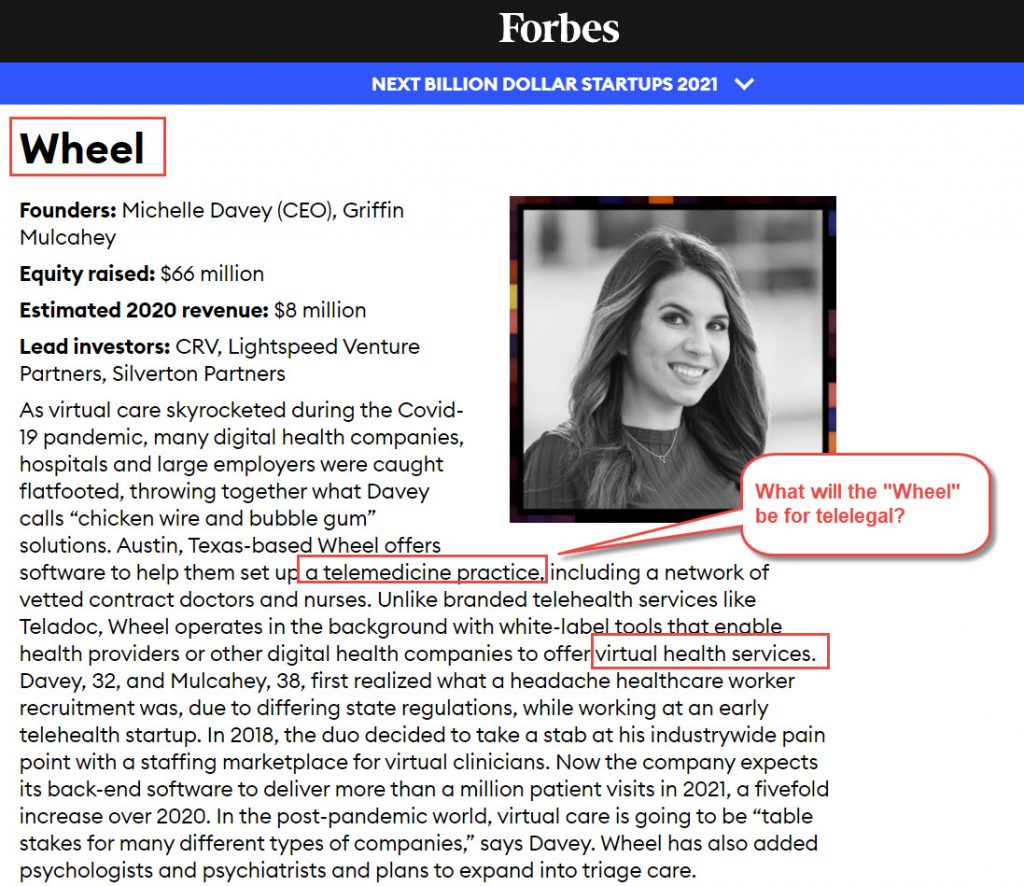
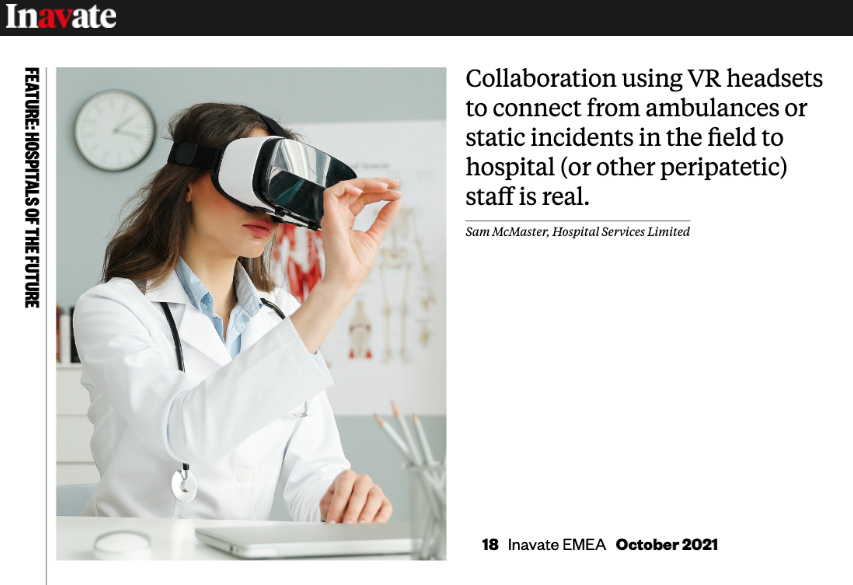
Remote support is also occurring in healthcare. What might “telehealth” morph into?

Remote support is also occurring in healthcare. What might telehealth morph into?


Can colleges compete with companies like Coursera? — from highereddive.com by Rick Seltzer
Arthur Levine discusses how trends like personalized education are unfolding, what’s driving them, and what can go right or wrong for colleges.

Excerpt:

They say colleges will see their control over the market slip while consumers increase their power. New content producers like companies and museums are entering the postsecondary market. Students will often prioritize personalized education and low prices. Measuring learning by time in seats will transition to outcome-based education. Degrees won’t necessarily be the dominant form of credential anymore as students turn to “just-in-time education” that quickly teaches them the skills for microcredentials they need for the labor market.

For higher education to be successful, you have to have its feet in two worlds. One world is the library, and that’s human heritage. And the other is the street. That’s the real world, what’s happening now. It’s jobs, it’s the workplace.

What happens when we change quickly is we continue as institutions to keep our hold on the library, but we lose traction in the street.

Institutions have to reestablish their traction. They have to prepare students for careers. They have to prepare students for the world…

From DSC:
I also like the part where is says, “So you’ve got to ask yourself, what are they offering that would draw people there? One thing they are offering is 24/7. Another thing that they’re offering is unbundled. Another thing they’re offering is low cost, and that’s very appealing.”


Could AR and/or VR enable a massive 3D-based type of “Voicethread?” [Christian]

From DSC:
What if we could quickly submit items for a group to discuss, annotate, and respond to — using whichever media format is available/preferable for a person — like a massive 3D-based Voicethread? What if this type of discussion could be contributed to and accessed via Augmented Reality (AR) and/or via Virtual Reality (VR) types of devices?

It could be a new 3D format that a person could essentially blow all the way up into the size of a billboard. Think, “Honey, I shrunk the kids” type of stuff.  

Input devices might include:

  • Augmented Reality (AR) glasses
  • Virtual Reality (VR) headsets/glasses
  • Scanners
  • Smartphones
  • Tablets
  • Desktops and laptops
  • SmartTVs
  • Other types of input devices

For example, a person could take a picture of a document or something else and then save that image into a new file format that would be vector-based. I say a vector-based file format so that the image could be enlarged to the size of a billboard without losing any resolution (i.e., wouldn’t become grainy; the image would remain crystal clear regardless of how big the image is). I’m thinking here along the lines of “Honey, I shrunk the kids!”

Other thoughts here:

  • The files could be accessible online for attendees of classes or for audiences of presentations/webinars
  • The files could be displayed on the walls of learning/presentation spaces for marking them up
  • One could manipulate the 3D image if that person was using a virtual/immersive environment
  • Users should be able to annotate on those images and/or be able to save such annotations and notes

A question for phase II:
Could this concept also be used if virtual courts take off?

Hmmmm…just thinking out loud.


Discovery Education Collaborates with AWS to Enhance Recommendation Engine — from discoveryeducation.com

Excerpt:

SILVER SPRING, MD [On Monday,?September 27, 2021] — Discovery Education—a worldwide edtech leader supporting learning wherever it takes place — announced that it has enhanced its K-12 learning platform with Amazon Web Services (AWS) machine learning capabilities. The pioneering use of machine learning within the Discovery Education platform helps educators spend less time searching for digital resources and more time teaching.

Several months of planning and deep collaboration with AWS enabled Discovery Education to innovatively integrate Amazon Personalize technology into the “Just For You” area of its K-12 platform. The “Just For You” row connects educators to a unique, personalized set of resources based on the grade level taught, preferences, and assets used in the past.

“For some time, educators have desired more resources to help personalize teaching and learning. ML technology is already being used to curate our entertainment experiences, help with workforce productivity, and more, and it’s exciting to see this innovation is being integrated into classrooms,” said Alec Chalmers, Director, EdTech and GovTech Markets at AWS.

From DSC:
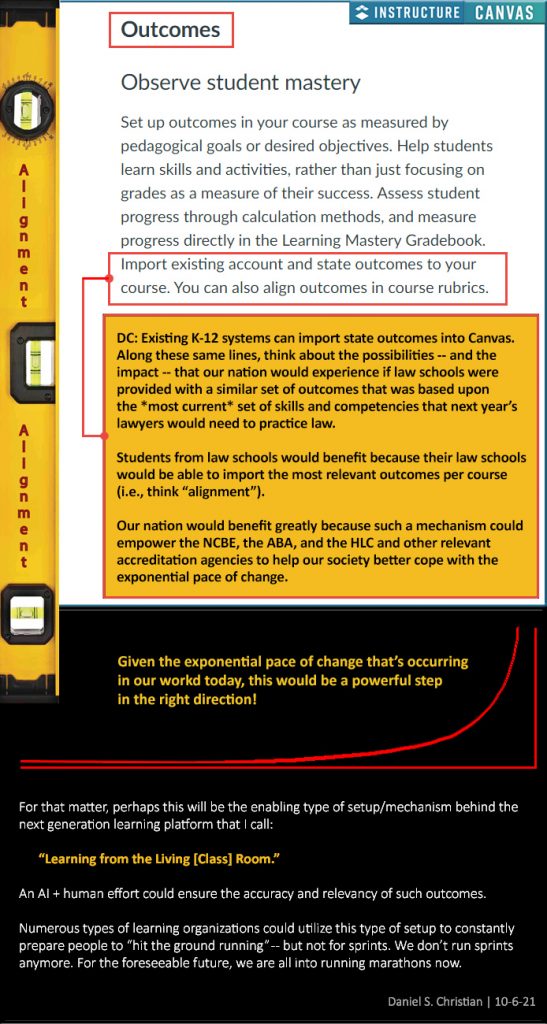
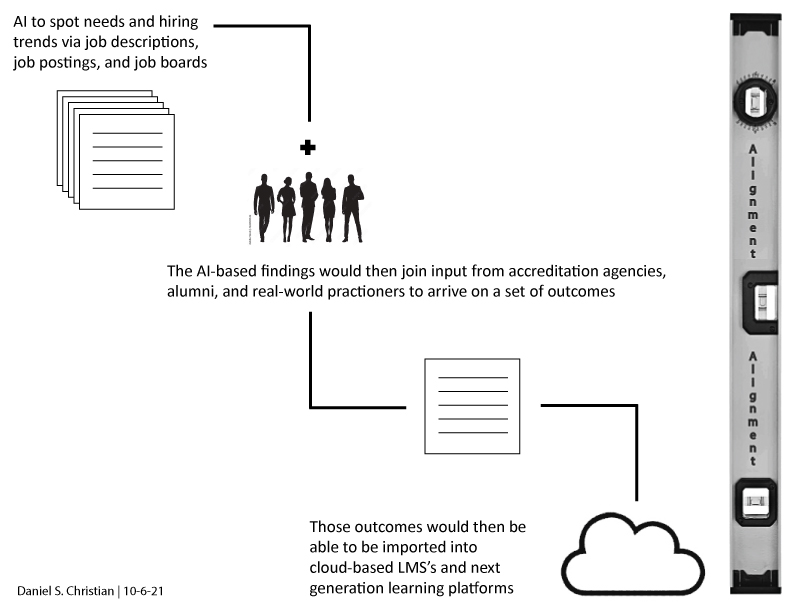
It looks like Amazon continues to make inroads into the education space. Team up this type of recommendation engine with an AI that’s pulling the latest skills that are needed for — and embedded within — job descriptions and you have a learning powerhouse. 

Disruption ahead…?


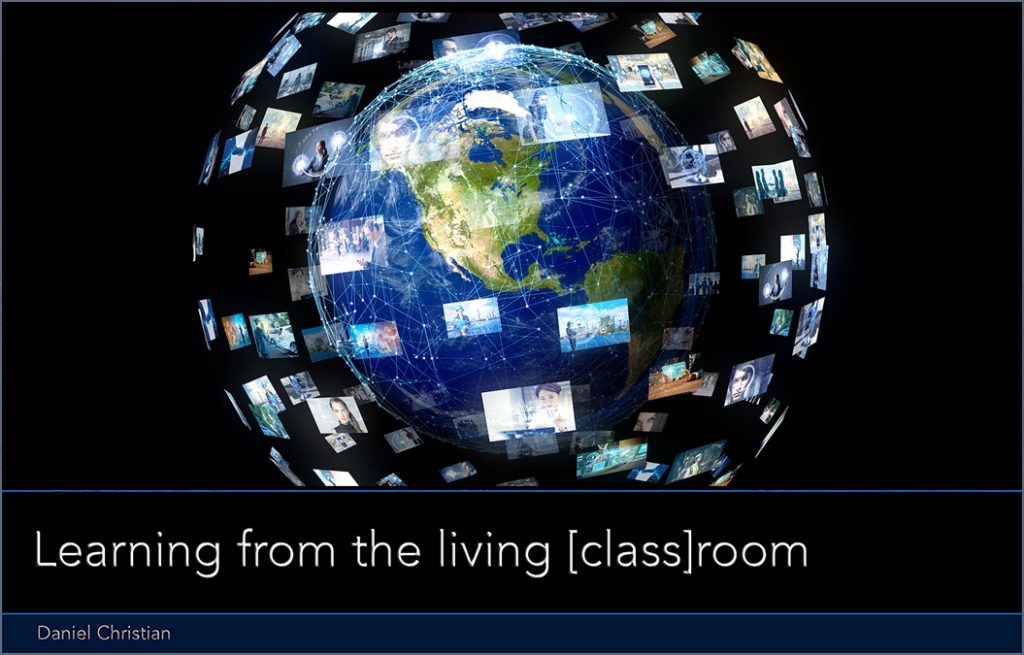
Learning from the living class room
Also see:

  • How Machine Learning Is Having an Impact on Education — from techlearning.com by Erik Ofgang
    Discovery Education has partnered with Amazon Web Services to enhance its platform with machine learning. It’s one of many ways machine learning is being used in K-12 today.
 

Artificial Intelligence: Should You Teach It To Your Employees?— from forbes.com by Tom Taulli

Excerpt:

“If more people are AI literate and can start to participate and contribute to the process, more problems–both big and small–across the organization can be tackled,” said David Sweenor, who is the Senior Director of Product Marketing at Alteryx. “We call this the ‘Democratization of AI and Analytics.’ A team of 100, 1,000, or 5,000 working on different problems in their areas of expertise certainly will have a bigger impact than if left in the hands of a few.”

New Artificial Intelligence Tool Accelerates Discovery of Truly New Materials — from scitechdaily.com
The new artificial intelligence tool has already led to the discovery of four new materials.

Excerpt:

Researchers at the University of Liverpool have created a collaborative artificial intelligence tool that reduces the time and effort required to discover truly new materials.

AI development must be guided by ethics, human wellbeing and responsible innovation — from healthcareitnews.com by Bill Siwicki
An expert in emerging technology from the IEEE Standards Association describes the elements that must be considered as artificial intelligence proliferates across healthcare.


How tech will change the way we work by 2030 — from techradar.com by Rob Lamb
Everyday jobs will be augmented by technology

Technologies like Artificial Intelligence (AI), Machine Learning (ML) and Blockchain will have a significant impact on work in the next decade and beyond. But if you believe the sci-fi hype or get bogged down in the technology, it can be difficult to relate them to today’s workplaces and jobs.

Excerpt:

Here are three everyday examples of their potential, expressed in terms of the business challenge they are addressing or how consumers will experience them. I don’t mean to over simplify – these are powerful tools – but I think their potential shines through best when they’re expressed in their simplest terms.

From DSC:
I have an issue with one of their examples that involves positioning AI as the savior of the hiring process:

The problem with this process isn’t just that it’s hugely time-consuming, it’s that all kinds of unconscious biases can creep in, potentially even into the job advert. These issues can be eradicated with the use of AI, which can vet ads for gendered language, sort through applicants and pick out the most suitable ones in a fraction of the time it would take an HR professional or any other human being.

AI can be biased as well — just like humans. Lamb recognizes this as well when he states that “Provided the algorithms are written correctly, AI will be key to organisations addressing issues around diversity and inclusion in the workplace.” But that’s a big IF in my mind. So far, it appears that the track record isn’t great in this area. Also, as Cathy O’Neil asserts: “Algorithms are opinions embedded in code.”

AI may not be as adept as a skilled HR professional in seeing the possibilities for someone. Can person A’s existing skillsets be leveraged in this new/other position?


Could Coursera become as prestigious as Harvard? This expert thinks so. — from edsurge.com by Jeffrey R. Young

Excerpt:

Big changes are coming to higher education, and those changes will be bigger and more disruptive than many college leaders realize as online education grows in both size and prestige.

That’s the view of Arthur Levine, in a new book called “The Great Upheaval: Higher Education’s Past, Present, and Uncertain Future,” which he co-wrote with Scott Van Pelt, a lecturer and associate director of the Communication Program for the University of Pennsylvania’s Wharton School.

As more students turn to these degrees for their credentials, they may come to see these corporate platforms as the provider of learning rather than worry about which college is the one behind the scenes doing the teaching, Levine says.

 
© 2025 | Daniel Christian