Coursera to Combine with Udemy to Empower the Global Workforce with Skills for the AI Era — from investor.coursera.com

Highly Complementary Capabilities Will Create a Leading Technology Platform, Redefining Skills Discovery, Development, and Mastery for Learners and Organizations at Scale

Unites Udemy’s Dynamic AI-Powered Skills Development Marketplace with World-Class University and Industry Brands Under the Coursera Ecosystem, Expanding Value, Impact, and Choice Globally

Strengthens Combined Company’s Financial Profile with Pro Forma Annual Revenue of More Than $1.5 Billion and Anticipated Annual Run-Rate Cost Synergies of $115 Million Within 24 Months

“We’re at a pivotal moment in which AI is rapidly redefining the skills required for every job across every industry. Organizations and individuals around the world need a platform that is as agile as the new and emerging skills learners must master,” said Greg Hart, CEO of Coursera. “By combining the highly complementary strengths of Coursera and Udemy, we will be in an even stronger position to address the global talent transformation opportunity, unlock a faster pace of innovation, and deliver valuable experiences and outcomes for our learners and customers. Together, we will ensure our millions of learners, thousands of enterprise, university, and government customers, and expert instructors have a platform to keep pace with technology acceleration.”
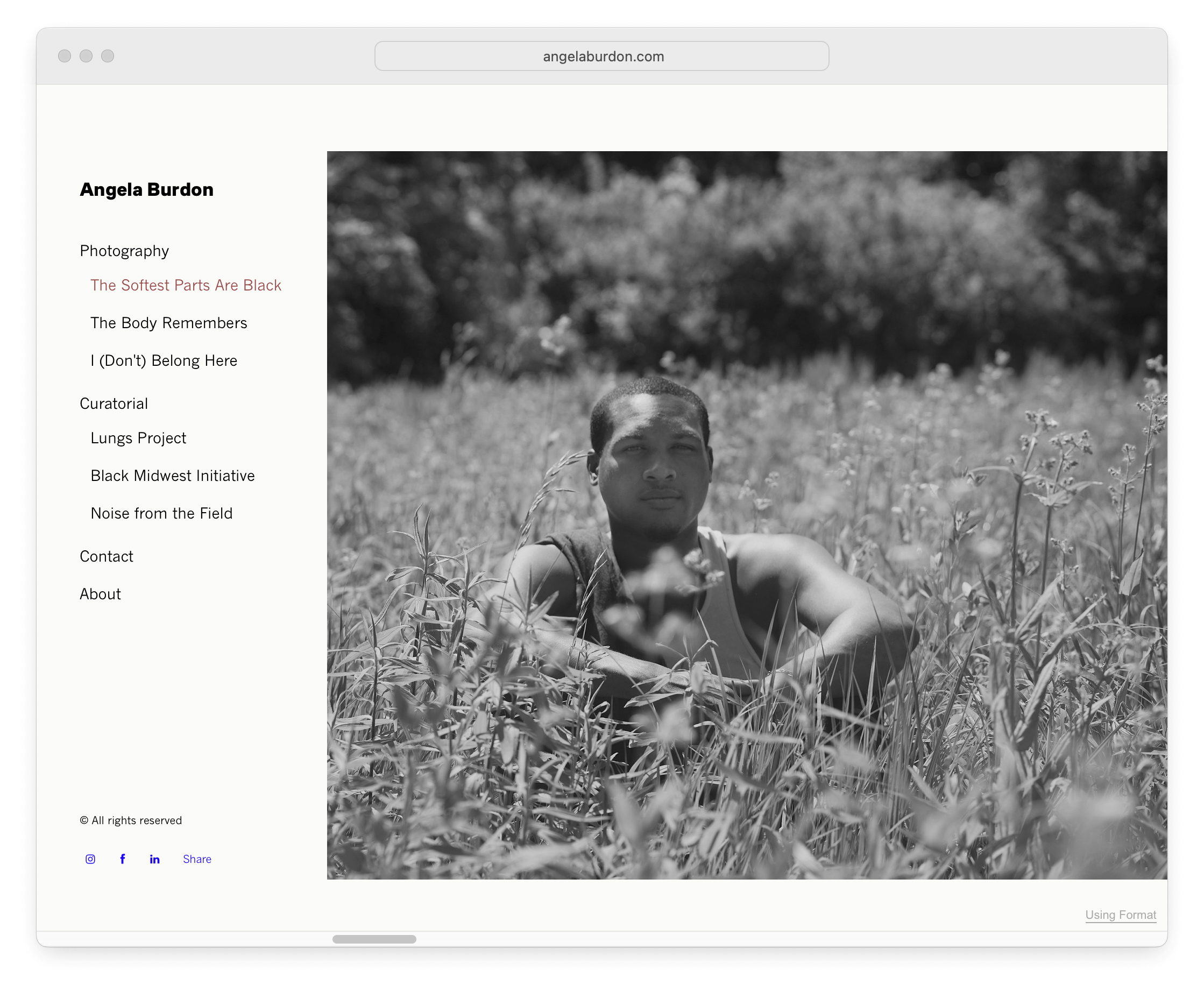
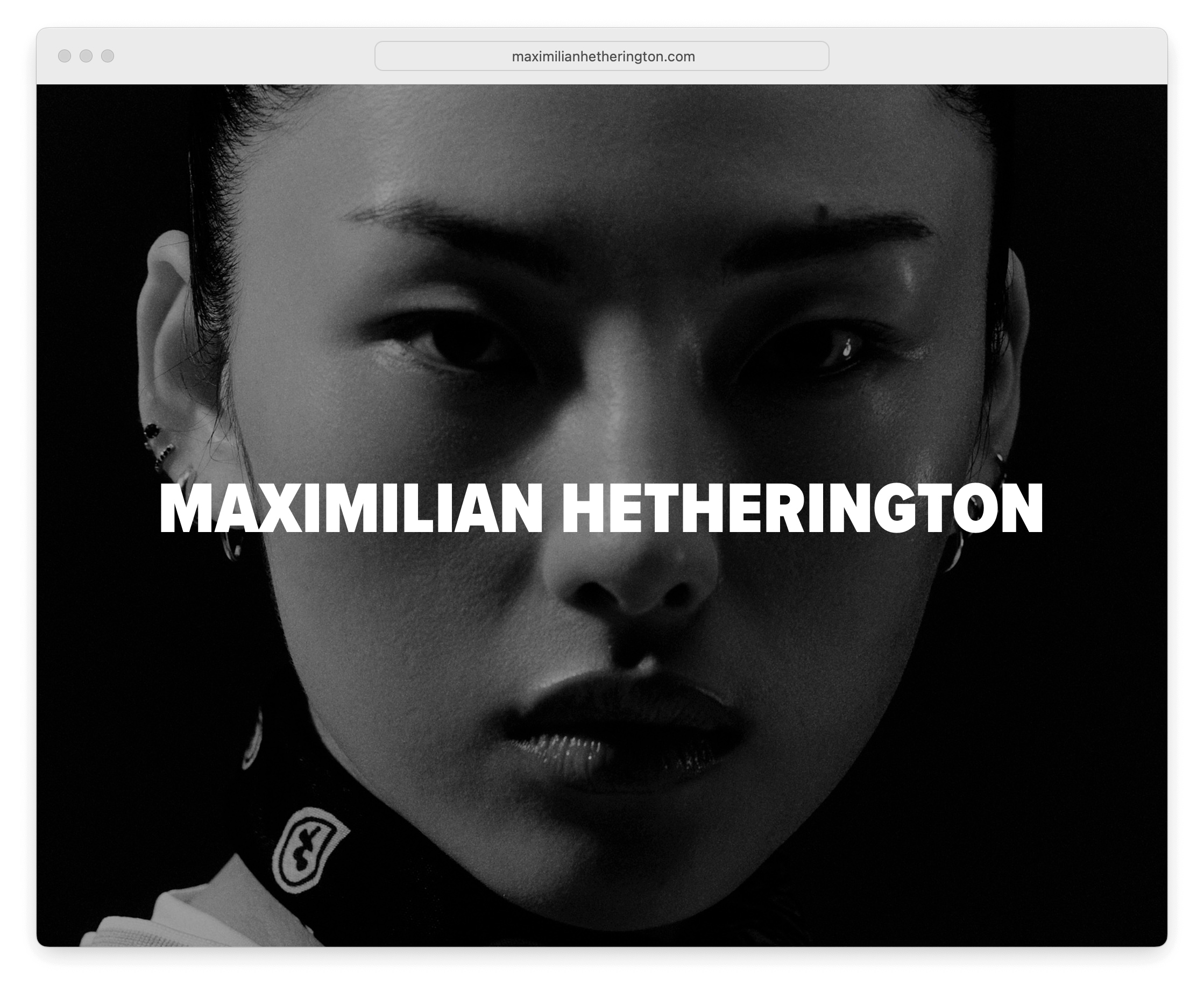


12 Photographer Portfolios Packed With Ideas and Inspiration — from booooooom.com


Speaking of photography, also see:

Photographer Spotlight: Pelle Cass — from booooooom.com


AI working competency is now a graduation requirement at Purdue [Pacton] + other items re: AI in our learning ecosystems


AI Has Landed in Education: Now What? — from learningfuturesdigest.substack.com by Dr. Philippa Hardman

Here’s what’s shaped the AI-education landscape in the last month:

  • The AI Speed Trap is [still] here: AI adoption in L&D is basically won (87%)—but it’s being used to ship faster, not learn better (84% prioritising speed), scaling “more of the same” at pace.
  • AI tutors risk a “pedagogy of passivity”: emerging evidence suggests tutoring bots can reduce cognitive friction and pull learners down the ICAP spectrum—away from interactive/constructive learning toward efficient consumption.
  • Singapore + India are building what the West lacks: they’re treating AI as national learning infrastructure—for resilience (Singapore) and access + language inclusion (India)—while Western systems remain fragmented and reactive.
  • Agentic AI is the next pivot: early signs show a shift from AI as a content engine to AI as a learning partner—with UConn using agents to remove barriers so learners can participate more fully in shared learning.
  • Moodle’s AI stance sends two big signals: the traditional learning ecosystem in fragmenting, and the concept of “user sovereignty” over by AI is emerging.

Four strategies for implementing custom AIs that help students learn, not outsource — from educational-innovation.sydney.edu.au by Kria Coleman, Matthew Clemson, Laura Crocco and Samantha Clarke; via Derek Bruff

For Cogniti to be taken seriously, it needs to be woven into the structure of your unit and its delivery, both in class and on Canvas, rather than left on the side. This article shares practical strategies for implementing Cogniti in your teaching so that students:

  • understand the context and purpose of the agent,
  • know how to interact with it effectively,
  • perceive its value as a learning tool over any other available AI chatbots, and
  • engage in reflection and feedback.

In this post, we discuss how to introduce and integrate Cogniti agents into the learning environment so students understand their context, interact effectively, and see their value as customised learning companions.

In this post, we share four strategies to help introduce and integrate Cogniti in your teaching so that students understand their context, interact effectively, and see their value as customised learning companions.


Collection: Teaching with Custom AI Chatbots — from teaching.virginia.edu; via Derek Bruff
The default behaviors of popular AI chatbots don’t always align with our teaching goals. This collection explores approaches to designing AI chatbots for particular pedagogical purposes.

Example/excerpt:


7 Legal Tech Trends That Will Reshape Every Business In 2026 — from forbes.com by Bernard Marr

Here are the trends that will matter most.

  1. AI Agents As Legal Assistants
  2. AI As A Driver Of Business Strategy
  3. Automation In Judicial Administration
  4. Always-On Compliance Monitoring
  5. Cybersecurity As An Essential Survival Tool
  6. Predictive Litigation
  7. Compliance As Part Of The Everyday Automation Fabric

According to the Thomson Reuters Future Of Professionals report, most experts already expect AI to transform their work within five years, with many viewing it as a positive force. The challenge now is clear: legal and compliance leaders must understand the tools reshaping their field and prepare their teams for a very different way of working in 2026.


Addendum on 12/17/25:


Higher education faces ‘deteriorating’ 2026 outlook, Fitch says — from highereddive.com by Laura Spitalniak
A shrinking pipeline of students, uncertainty about state and federal support, and rising expenses could all hurt college finances, according to analysts.

Dive Brief:

  • Fitch Ratings on Thursday issued a “deteriorating” outlook for the higher education sector in 2026, continuing the gloomy prediction the agency issued for 2025.
  • Analysts based their forecast on a shrinking prospective student base, “rising uncertainty related to state and federal support, continued expense escalation and shifting economic conditions.”
  • With its report, Fitch joins Moody’s Ratings and S&P Global Ratings in predicting a grim year for higher ed — Moody’s for the sector overall and S&P for nonprofit colleges specifically.

Yale expects layoffs as leaders brace for $300M in endowment taxes — from highereddive.com by Ben Unglesbee
The Ivy League institution’s tax bill starting next year will be higher than what it spends on student aid, university officials said.

Dive Brief:

  • Yale University is bracing for layoffs as it prepares to pay the government hundreds of millions of dollars in endowment income taxes.
  • In a public message, senior leaders at the Ivy League institution said that Yale’s schools plan to take steps such as delaying hiring and reducing travel spending to save money. But they warned workforce cuts were on the horizon.
  • “Layoffs may be necessary” in some units where cutting open positions and other reductions are insufficient, the university officials said. They expect to complete any downsizing by the end of 2026 barring “additional significant financial changes.”

Education Department adds ‘lower earnings’ warning to FAFSA — from highereddive.com by Natalie Schwartz
The agency will warn students when they’ve indicated interest in a college whose graduates have relatively low incomes.

The U.S. Department of Education has launched a new disclosure feature that warns students who fill out the Free Application for Federal Student Aid if they’re interested in colleges whose graduates have relatively low earnings, the agency said Monday. 

“Families deserve a clearer picture of how postsecondary education connects to real-world earnings, and this new indicator will provide that transparency,” U.S. Education Secretary Linda McMahon said in a Monday statement. “Not only will this new FAFSA feature make public earnings data more accessible, but it will empower prospective students to make data-driven decisions before they are saddled with debt.”


Also from highereddive.com, see:


Field Kallop Meditates on Universal Patterns Through Bold Chromatic Compositions — from thisiscolossal.com by Field Kallop and Grace Ebert
.


Psalm 16:1
A miktam[a] of David.

Keep me safe, my God, for in you I take refuge.

Deuteronomy 18:15

The Lord your God will raise up for you a prophet like me from among you, from your fellow Israelites. You must listen to him.

Luke 1:30-33

But the angel said to her, “Do not be afraid, Mary; you have found favor with God. You will conceive and give birth to a son, and you are to call him Jesus. He will be great and will be called the Son of the Most High. The Lord God will give him the throne of his father David, and he will reign over Jacob’s descendants forever; his kingdom will never end.”


Fresh Off the Press: Parents’ Guide to Microschools — from gettingsmart.com

We’re excited to announce and share our new Parents Guide to Microschools, a clear and approachable introduction to one of the fastest growing learning models in the country. The guide unpacks what microschools are, how they work and why families are increasingly drawn to intimate, relationship centered environments. It highlights features like flexible schedules, small cohorts, personalized pathways and hands-on learning so parents can picture what these settings actually look and feel like.

It also equips families with practical tools to navigate the decision making process: key questions to ask during visits, indicators of strong culture and instruction, considerations around cost and accreditation and how to assess overall fit for each learner. Whether parents are simply curious or actively exploring new options, this guide offers clarity, confidence and a starting point for imagining what learning could look like next.


Beyond Infographics: How to Use Nano Banana to *Actually* Support Learning — from drphilippahardman.substack.com by Dr Philippa Hardman
Six evidence-based use cases to try in Google’s latest image-generating AI tool

While it’s true that Nano Banana generates better infographics than other AI models, the conversation has so far massively under-sold what’s actually different and valuable about this tool for those of us who design learning experiences.

What this means for our workflow:

Instead of the traditional “commission ? wait ? tweak ? approve ? repeat” cycle, Nano Banana enables an iterative, rapid-cycle design process where you can:

  • Sketch an idea and see it refined in minutes.
  • Test multiple visual metaphors for the same concept without re-briefing a designer.
  • Build 10-image storyboards with perfect consistency by specifying the constraints once, not manually editing each frame.
  • Implement evidence-based strategies (contrasting cases, worked examples, observational learning) that are usually too labour-intensive to produce at scale.

This shift—from “image generation as decoration” to “image generation as instructional scaffolding”—is what makes Nano Banana uniquely useful for the 10 evidence-based strategies below.


Why Parents Aren’t Reading to Kids, and What It Means for Young Students — from the74million.org by Jessika Harkay
A recent study found less than half of children are read to daily. The consequences are serious for early learners who enter school unprepared.

For children not getting the benefits of being read to at home, the opportunity gap has widened, with those young students entering school unprepared compared to those who have been read to.

“The gap really begins very, very early on. I think we underestimate how large a gap we’re already seeing in kindergarten,” said Susan Neuman, professor of childhood and literacy education at New York University, adding she recently visited a New York City kindergarten classroom and saw some children who only knew two letters compared to others who were prepared to read phrases.

A 2019 Ohio State University study found a 5-year-old child who is read to daily would be exposed to nearly 300,000 more words than one who isn’t read to regularly.


Beyond ChatGPT: Why In-House Counsel Need Purpose Built AI (Cecilia Ziniti, CEO – GC AI) — from tlpodcast.com

This episode features a conversation with Cecilia Ziniti, Co-Founder and CEO of GC.AI. Cecilia traces her career from the early days of the internet to founding an AI-driven legal platform for in-house counsel.

Cecilia shares her journey, starting as a paralegal at Yahoo in the early 2000s, working on nascent legal issues related to the internet. She discusses her time at Morrison & Foerster and her role at Amazon, where she was an early member of the Alexa team, gaining deep insight into AI’s potential before the rise of modern large language models (LLMs).

The core discussion centers on the creation of GC AI, a legal AI tool specifically designed for in-house counsel. Cecilia explains why general LLMs like ChatGPT are insufficient for professional legal work—lacking proper citation, context, and security/privilege protections. She highlights the app’s features, including enhanced document analysis (RAG implementation), a Word Add-in, and workflow-based playbooks to deliver accurate, client-forward legal analysis. The episode also touches on the current state of legal tech, the growing trend of bringing legal work in-house, and the potential for AI to shift the dynamics of the billable hour.


Caring for Patients for 26 Years—and Still Not a Nurse — from workshift.org/ by Colleen Connolly

Arnett’s experience spending decades in a job she intended as a first step is common among CNAs, medical assistants, and other entry-level healthcare workers, many of them women of color from low-income backgrounds. Amid a nationwide nursing shortage, elevating those workers seems like an obvious solution, but the path from CNA to nurse isn’t so much a ladder as it is a huge leap.

And obstacle after obstacle is strewn in the way. The high cost of nursing school, lengthy prerequisite requirements, rigid schedules, and unpaid clinical hours make it difficult for many CNAs to advance in their careers, despite their willingness and ability and the dire need of healthcare facilities.

While there are no national statistics about the number of entry-level healthcare workers who move on to higher-paid positions, a study of federal grants for CNA training showed that only 3% of those who completed the training went on to pursue further education to become an LPN or RN. Only 1% obtained an associate degree or above. A similar study in California showed that 22% of people who completed CNA certificate programs at community colleges went on to get a higher-level educational credential in health, but only 13% became registered nurses within six years.

That reality perpetuates chronic shortages in nursing, and it also keeps hundreds of thousands of healthcare workers locked below a living wage, often for decades.


Celebrating International Day of Persons with Disabilities — from joshbersin.com by Josh Bersin

Today I want to celebrate the International Day of Persons with Disabilities, an important day that recognizes the needs of millions of people. My perspective, as a professional entering my later years, is that many of us are likely to have disabilities over time, so the more we understand the diversity of disabilities the better for everyone.

First, let me point out that this is a massive population. The US Department of Labor and Census estimates that 11-13% of the working age population has some form of disability (more on what that means below), yet only 5-6% of workers. This points out that the employment ratio (percent of people with jobs) is far lower. People with disabilities are one-third as likely to have a job, which is quite a disparity and loss of economic potential.

Second, people with disabilities suffer a 15% lower average wage.


Josh linked to the item below:


Celebrating International Day of persons with disabilities
International Day of Persons with Disabilities (IDPD) is a UN day that is celebrated every year on 3 December.

The day is about promoting the rights and well-being of persons with disabilities at every level of society and development, and to raise awareness of the situation of persons with disabilities in all aspects of political, social, economic, and cultural life. WHO joins the UN in observing this day each year, reinforcing the importance of securing the rights of people with disabilities, so they can participate fully, equally and effectively in society with others, and face no barriers in all aspects of their lives.

At its headquarters in Geneva, WHO organizes an annual IDPD event to educate the public, raise awareness, advocate for political will and resources, and celebrate WHO’s achievements. In 2022, the WHO launched the Global Report on health equity for persons with disabilities. This report sets forth the approaches and actions that countries can take to address the health inequities that persons with disabilities experience.


From DSC:
I just want to add that one of our daughters has some special needs. So Josh’s posting caught my eye. He’s right to point out these things. You and I will likely have a period of disability in our lives. It’s not just relevant for “other people.” (And by the way…in the learning world, practicing Universal Design for Learning (UDL) is good for everyone!)

People with disabilities face enormous challenges that neurotypical people never have to deal with. They face unfair wage situations and a lack of opportunities. Our family has experienced — and continues to experience — this firsthand.

So thanks Josh for your posting here.


Agents, robots, and us: Skill partnerships in the age of AI — from mckinsey.com by Lareina Yee, Anu Madgavkar, Sven Smit, Alexis Krivkovich, Michael Chui, María Jesús Ramírez, and Diego Castresana
AI is expanding the productivity frontier. Realizing its benefits requires new skills and rethinking how people work together with intelligent machines.

At a glance

  • Work in the future will be a partnership between people, agents, and robots—all powered by AI. …
  • Most human skills will endure, though they will be applied differently. …
  • Our new Skill Change Index shows which skills will be most and least exposed to automation in the next five years….
  • Demand for AI fluency—the ability to use and manage AI tools—has grown sevenfold in two years…
  • By 2030, about $2.9 trillion of economic value could be unlocked in the United States…

Also related/see:


State of AI: December 2025 newsletter — from nathanbenaich.substack.com by Nathan Benaich
What you’ve got to know in AI from the last 4 weeks.

Welcome to the latest issue of the State of AI, an editorialized newsletter that covers the key developments in AI policy, research, industry, and start-ups over the last month.


© 2025 | Daniel Christian