Researchers hid a prompt injection inside a PNG, and AI fell for it — from digitaltrends.com by Shimul Sood

A team of security researchers (professor Sudipta Chattopadhyay and researcher Murali Ediga) has demonstrated an unusual attack that doesn’t target the AI model directly. Instead, it targets what the AI doesn’t pay enough attention to during code reviews. Rather than hiding malicious instructions in lines of code, the researchers tucked them inside an image file. Since many AI review tools treat images as decorative assets rather than as something worth inspecting, the pull request can appear perfectly harmless and sail through the review.

They argue that AI review tools need to become “multimodal” in the truest sense — treating images, documentation, configuration files, and other non-code assets with the same level of scrutiny as source code. If an AI can read a picture, it also needs to understand that the picture could be trying to manipulate it. For developers, this is another reminder that AI coding tools still need supervision. They can dramatically speed up software development, but they also open entirely new attack surfaces that didn’t exist before. The next security risk might not be hidden in thousands of lines of code — it could be sitting inside an image that nobody thought was worth opening.


AI has already fallen into the wrong hands and they’re using it to make bombs — from digitaltrends.com by Shimul Sood

Artificial intelligence has quickly become the go-to tool for everything from writing emails and summarizing meetings to helping students study or developers debug code. But the same technology that saves people time can also be misused, and a new report suggests that terrorist organizations are finding ways to do exactly that.

According to a research paper shared with The New York Times ahead of its publication, researchers found evidence that members of Boko Haram have been using popular AI chatbots to support both day-to-day activities and combat-related tasks. Interviews with 27 former members conducted in Nigeria over the past two years suggest that tools such as ChatGPT, Gemini, Claude, Grok, Meta AI, and DeepSeek were used to gather technical information, troubleshoot weapons, and even assist with planning attacks.

This wasn’t just a few bad actors messing around
What makes the findings especially concerning is that this wasn’t described as the work of a few individuals experimenting with AI. The report claims the group’s use of AI had become organized, with dedicated teams, internal training, and knowledge shared between members. Researchers also say some users managed to bypass built-in safety protections designed to prevent AI from responding to requests related to violence.


Reconnecting Professional Learning — from elemenous.substack.com by Lucy Gray
Reflections from My Wednesday ISTE Panel

At ISTE this year, I facilitated a Wednesday morning panel on professional learning. The session I organized was titled, The Future of Professional Learning: Connecting Educators Across Borders. I was joined by fellow Apple Distinguished Educators Tami Brewster, Bethany LaDue Nugent, Marcus Borders, Jason Krug and global educator Julie Meltzer. Our focus: How do we move professional development away from isolated, one-time experiences and toward something more connected, meaningful, and human?
…
The panel was grounded in a few simple but powerful ideas: professional learning should nurture, guide, and empower. It should be relevant, contextual, reflective, and sustained. It should recognize educators as capable professionals, not as people who are broken and need to be fixed. Too often, professional development is still designed around deficit thinking. Too often, teachers’ needs are not the starting point, and sessions become dry, one-directional experiences where information is delivered at them rather than built through conversation and collaboration, with little choice, little personalization, and little connection to the realities of their classrooms. Our panel served as a call to action to re-think professional learning.

We explored six different approaches to professional learning, and while each model was distinct, a clear through line emerged: relationships matter most.

  1. Virtual Conferences at Scale — Lucy Gray — Actionable Innovations Events / GLOW
  2. Micro-Mentorship — Tami Brewster
  3. Networked, Values-Driven PD — Julie Meltzer — Institute for Humane Education
  4. AI-Personalized PD Pathways — Marcus Borders
  5. Share Stories with Voice — Bethany LaDue Nugent
  6. Speak Your Crazy — Jason Krug

  • Our Padlet – Share resources and introduce yourself
  • Our Slides – Meet our panelists and learn about our work
  • Our Google NotebookLM – This notebook contains dozens of resources related to research and best practices in educator professional learning
  • The Connected PD App – This is an app I’m building in Base 44 to help people plan great professional learning experiences

Also from Lucy Gray, see the following for some nice tips and resources:


Microsoft Discovery Platform Brings Agentic AI to Scientific Research — from campustechnology.com by Chris Paoli

Key Takeaways

  • Microsoft Discovery reaches general availability, bringing agentic AI to scientific research and development workflows.
  • AI agents support hypothesis generation, experimentation, data analysis, and knowledge management at scale.
  • New Discovery app preview enables researchers to explore AI-driven scientific discovery with lower adoption barriers.
 

This is the Future of High School
The Tennessee School Rewriting the Rules of High School — from xqsuperschool.org
At Elizabethton High School, students wanted more from their education. So they helped rebuild it—class by class, project by project. Their idea: give students real, meaningful work, and they’ll rise to the challenge.

A cold case became a Prime Video series. A robotics club became an international competitor. And an ordinary high school became something else entirely. Elizabethton is reinventing high school—and showing what’s possible for the rest of the country.

Watch the Elizabethton+XQ story
Ten years, one school, and a redesign still unfolding. It took courage to break with tradition—and that risk is paying off for an entire community.


Why recruiters can’t find workers and new grads can’t find jobs (it’s not AI) — from washingtonpost.com by Jon Marcus
Experts say a major labor shortage looms because of population shifts and a mismatch between new graduates’ skills and employers’ needs.

Recent college graduates complain they can’t find entry-level jobs because artificial intelligence is taking over.

Yet, tech recruiter Matt Walsh and other experts say the growth of AI and the struggle to find entry-level work mask a bigger problem: The United States is facing what’s projected to become the largest labor shortage in its history.

In sectors such as semiconductor production, the problem isn’t AI or too few jobs, said Walsh, CEO of the Phoenix-based search firm Blue Signal.

“It’s ridiculous,” he said. “There just aren’t enough people.”

Economists warn that the worsening labor problem, due in part to a skills shortage and population shifts, will be vast and reach beyond tech.

Among the trends that have been leading to this moment: a mismatch between the careers college graduates are pursuing and the jobs employers are struggling to fill. Far fewer students are majoring in health care fields than are needed to meet demand, for instance.

“We have pumped so many young people into business and finance” when what’s really in demand are graduates in other fields, Hetrick said. “It’s like a factory producing these workers like widgets, even though society is saying, ‘We really don’t need them.’ And the factory just keeps pumping them out.”


“Teachers ban it. Employers demand it.”


Also relevant/see:


The Shifting Career Ladder — from nafez.substack.com by Nafez Dakkak
AI is changing how work works and quietly removing the pathways through which young people learn to become experts.

AI is reshaping how people build skills, enter professions, and move along the career ladder and through the labour market.

In this conversation, I sit down with Matt Sigelmen founder of LightCast and now the President of Burning Glass Institute. Matt has dedicated his career to understanding the labor market and helping society improve the connections within in it.

Matt and I explore why people and opportunities are often only “a few skills apart,” why entry-level work may be losing its traditional role as the first rung of expertise, and why schools, universities, and employers now need to rethink the pathways that turn potential into mastery.

Educators need to be deeply aligned with what these changes are, and they need to shift the AI discourse from “how” questions to “what” questions. What do we need to teach? What do we need to keep in the curriculum?


LEGAL FUTURISMS: Consumer Legal Tech and the Soul of US Democracy

The “Dollar Legal” Thought Experiment

What if the salvation of our democratic enthusiasm doesn’t come from a political revolution, but a technological one? Enter the thought experiment of Dollar Legal.

Imagine a ubiquitous, consumer-facing legal tech platform—accessible from any smartphone—that commoditizes basic legal defense and assertion of rights. It is AI-driven legal agency for the masses, costing no more than a cup of coffee, or perhaps literally a single dollar.

Dollar Legal wouldn’t exist to litigate complex corporate mergers; it would exist to handle the agonizing friction of everyday survival. It instantly analyzes a notice to quit, drafts a legally sound response asserting warranty of habitability defenses, and files it electronically. It forces the bureaucratic machine to pause. It translates the raw, terrifying human experience of a legal threat into the cold rules and procedures that the justice system understands.

And the price, $1.00, at sufficient scale, would support the operation and maintenance of the service.

By deploying Dollar Legal, we fundamentally shift the balance of power. The democratization of legal leverage changes the calculus for bad actors who rely on the silent default judgments of the unrepresented.


Veks Van Hillik Suspends Fish, Insects, and Other Objects in Surreal Murals — from thisiscolossal.com by Veks Van Hillik and Kate Mothes


The Law School Deans Driving AI Innovation in Legal Education — from natlawreview.com by Shivani Vedhere, AI & the Law Newsletter; via Colin S. Levy

Artificial intelligence is no longer a peripheral issue for legal education. It is quickly becoming one of the central questions facing law schools: how to prepare future lawyers for a profession in which AI will affect research, client counseling, litigation strategy, access to justice, and the business of law.

For decades, law schools treated legal technology as an elective or a niche interest for students already inclined toward innovation. That era is ending. Law firms are adopting AI tools at scale and even investing in developing their own tools. Clients are asking harder questions about efficiency, cost, and competence. Courts are sanctioning lawyers and litigants for AI-generated hallucinations, with the number of identified cases in the United States now exceeding 1,000. Students entering the profession will be expected to keep up with this rapidly changing landscape.

The most forward-looking law schools are responding accordingly. That transformation is being driven in large part by a group of innovative law school deans who are treating AI not as a passing trend, but as a structural change in legal education.

These initiatives signal a broader shift in legal academia where law schools are no longer merely debating whether AI belongs in the curriculum. The more pressing question is how deeply, how early, and how responsibly AI should be integrated into legal education.


A Comprehensive Report on Teens, Tweens, and AI — from commonsensemedia.org

To find out what that actually looks like day-to-day, we surveyed more than a thousand 9- to 17-year-olds across the country. We asked them how they use AI, how often, and for what.

The Common Sense Media Census: AI Use by Tweens and Teens (2026) is the first in a series we’ll repeat every year to learn how this generation’s relationship with AI evolves over time.

A few things stood out:

  • Kids are using AI for many things. It’s not just a homework helper anymore. For some kids, AI has become a confidant, even though our research is clear that AI companionship is not safe for anyone under 18.
  • Guardrails are thin to nonexistent. Schools are talking about rules more than safety. Three-quarters of kids say their school has discussed what they can and cannot use AI for, but just over half have been taught how to use AI safely.
  • Just like we saw with smartphones and social media, the conversation is once again lagging behind the technology. Nearly half of kids have never had a conversation with their parents about AI safety.
 

Flipped Classrooms and Academic Achievement — from learningscientists.org by Megan Sumeracki

There are actually many, many ways to design a flipped classroom, and it has been fascinating to learn about the ways my colleague typically structures her hybrid, flipped-classroom courses. As a result, we’ve been able to engage in really interesting conversations about the best approach for this particular course, and why. As a result of some of these discussions, I came across a few recent meta-analyses related to the effects of flipped classrooms, the results of which I thought were worth sharing here (1, 2, 3).


Higher Education Can’t Wait for the Future to Arrive (Lev Gonick, Arizona State University) — from humanistxyz.substack.com by Allison Dulin Salisbury
“The biggest risk we face as a sector is assuming we can wait out AI.”

We have an opportunity right now to reorient the university around student experience—not as an aspiration, but as a necessity. I’m calling this shift TechEd, which I explore in detail in my LinkedIn series The TechEd Revolution.

AI poses a fundamental shift in how technology might empower students to own their discovery and educational journey, and to drastically reduce the friction that makes college so unappealing to so many.

To that end, we need to urgently redesign systems and opportunities around skills and competencies. That work should be far more advanced than it currently is. And one of the hardest challenges is rethinking how we operate as a workforce in academia. 


Empowerment Spotlight: Building advocacy skills for families and students with disabilities — from rightquestion.org

Shove says the Right Question Institute has helped her help families advocate for themselves. She uses the Question Formulation Technique to teach adults and children to ask better questions and know when to use open-ended questions, which encourage longer, more detailed responses, and when to use close-ended ones, which tend to elicit short responses such as “yes” or “no.”

“It’s using that Question Formulation Technique to guide the discussion and obtain the information we all will use to make decisions and a plan for the child,” adds Shove, a former elementary school teacher who started doing advocacy work after discovering how tough it was to obtain special education services for her own children in the early 2000s.
…
We recently interviewed Shove to learn more about how she uses the Question Formulation Technique — and how families’ interactions with school officials can change after they master it.


Also see:


Anthropic, NVIDIA Move AI Agents Deeper into Scientific Workflows — from campustechnology.com by John K. Waters

Key Takeaways

  • Anthropic’s Claude Science beta and NVIDIA’s BioNeMo Agent Toolkit show AI agents moving beyond general productivity into specialized scientific research workflows.
  • The companies are emphasizing auditability and reproducibility, including preserved code, environments, message history, reviewer agents, and integration with existing research tools.
  • For enterprises and research teams, the key test will be whether agentic AI can produce traceable, reliable results while keeping humans in control of sensitive data, compute, and scientific judgment.
 

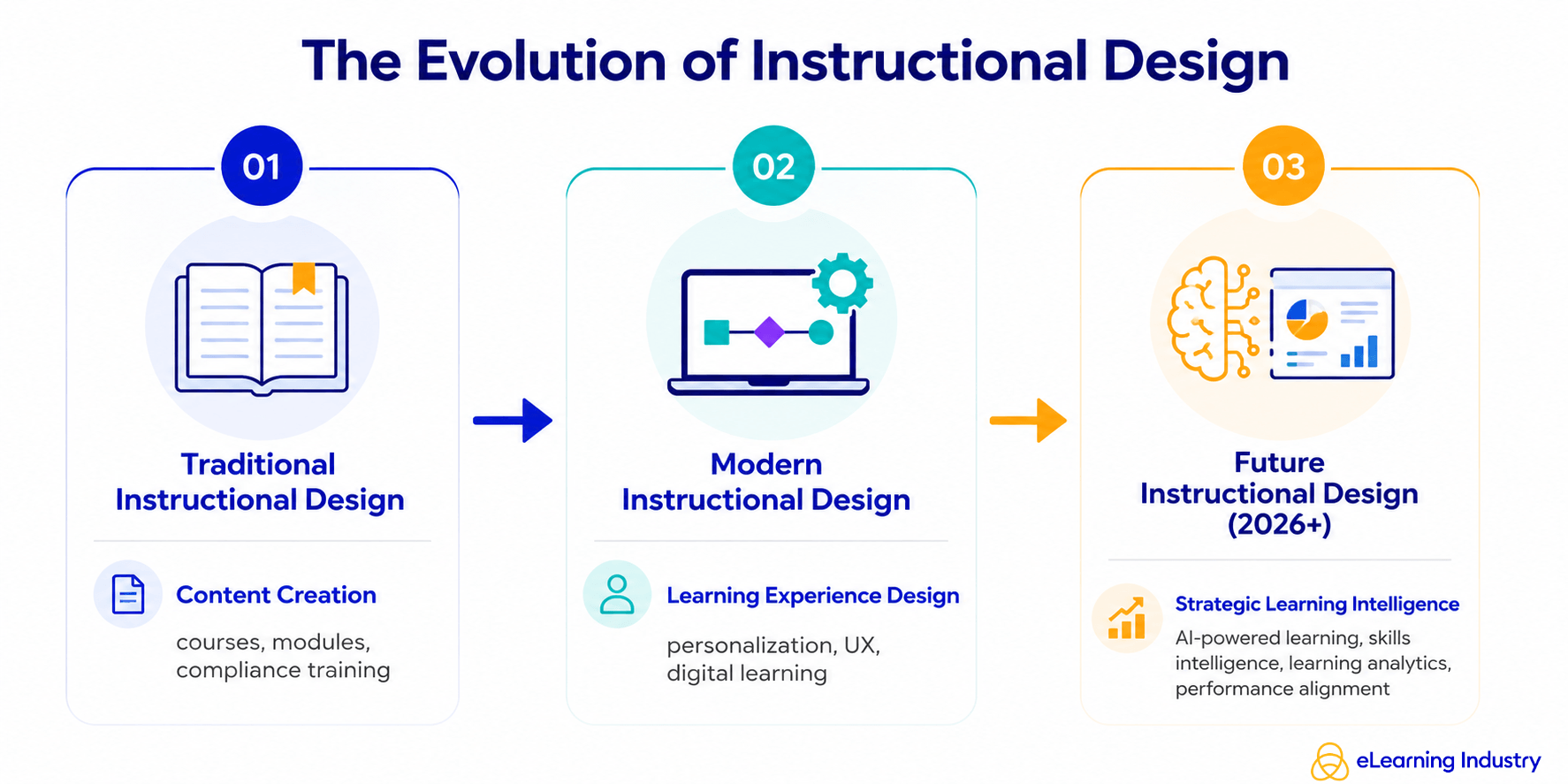
Instructional Design Trends: What’s Shaping The Future Of Learning? — from elearningindustry.com by Christopher Pappas

Table of contents

1. Why Instructional Design Is Entering A New Era
2. The State Of Instructional Design Today
3. Top Instructional Design Trends Shaping 2026
4. The Future Of Instructional Design And Technology


Also from elearningindustry.com, see:

The Future Of Personalized Learning And The Leaders Being Trained To Deliver It — by Ryan Ayers

Table of contents

1. Personalized Learning For Future Leaders
2. Where Personalized Learning Is Heading
3. What Implementing Personalized Learning At Scale Actually Requires
4. The Educational Leaders Being Trained To Deliver This Future
5. Conclusion

 
© 2025 | Daniel Christian