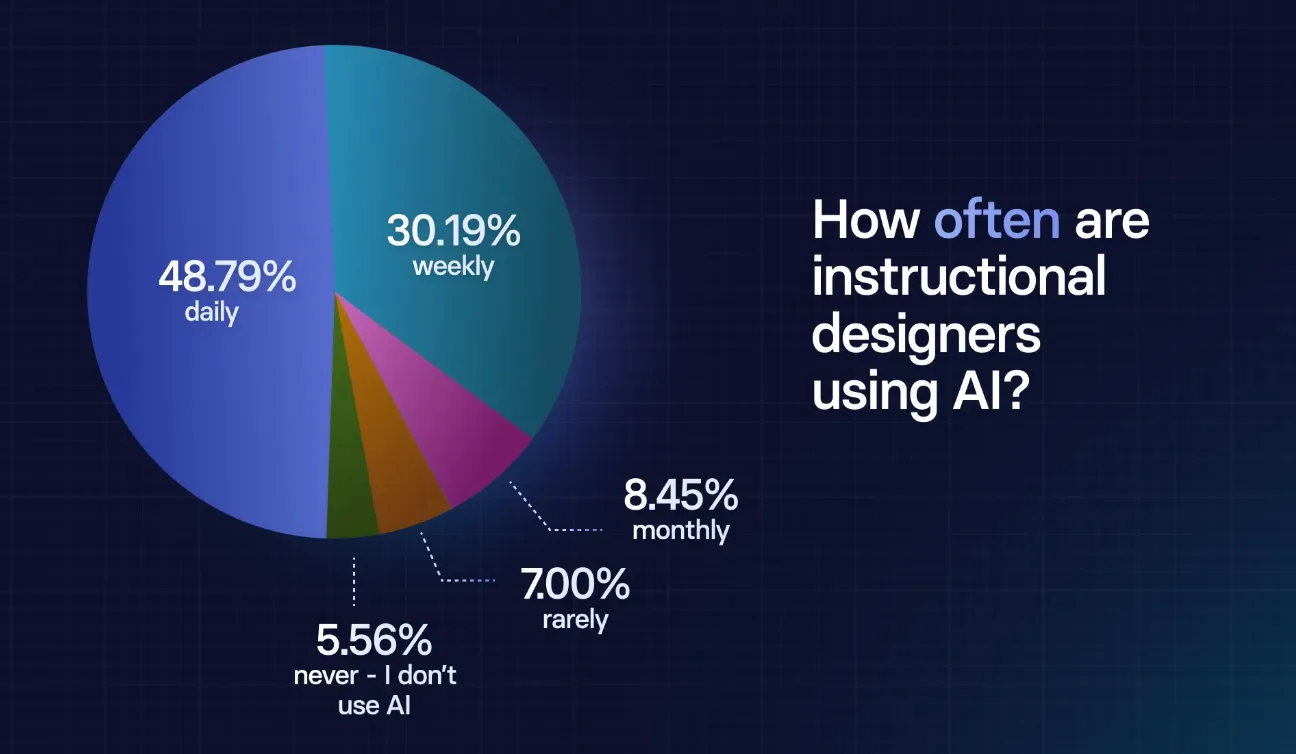
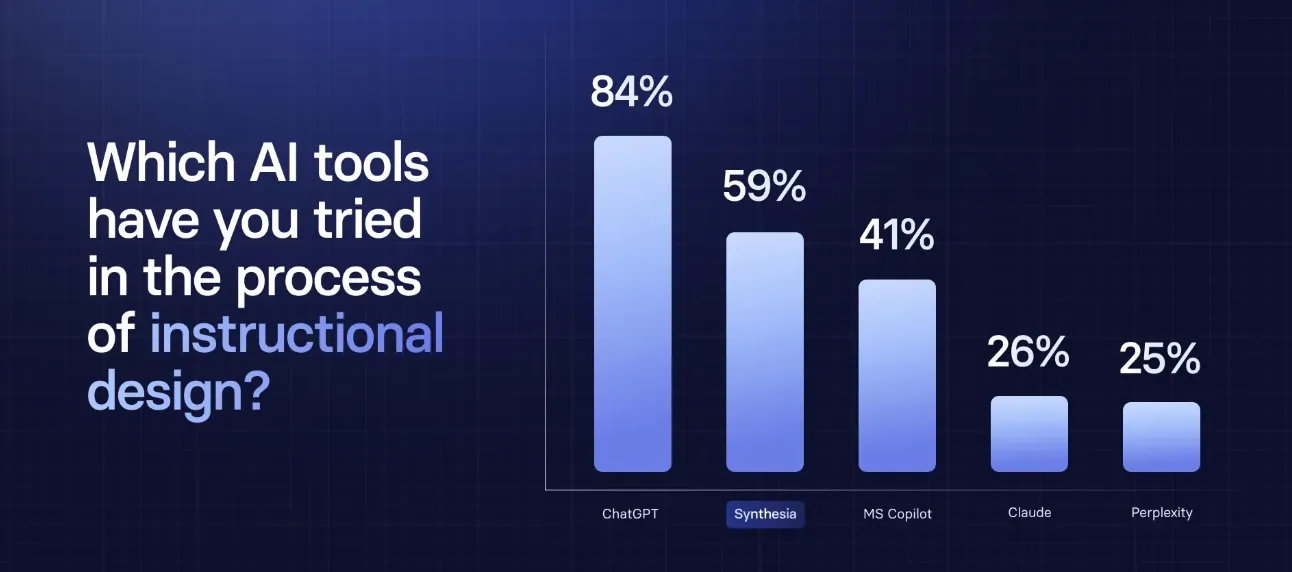
In other words, individual learning leaders need to obtain information from surveys and studies that are directly useful in their curriculum planning. This article attempts, in these early days, to provide some specific guidelines for AI curriculum planning in enterprise organizations.
The two reports identified in the first paragraph help to answer an important question. What can enterprise L&D teams do to improve AI fluency in their organizations?
The Importance of Building a ‘Change Muscle’ The ability to test and learn, pivot quickly, and embrace change is an increasingly foundational skill that all employees, no matter the level of experience or seniority, need in 2025 and beyond. Adaptable organizations significantly outperform more change-averse peers on nearly every metric, ranging from revenue growth to employee engagement. In other words, having agility and adaptability embedded in your culture pays dividends. Although these terms are often used interchangeably, they represent distinct yet interconnected aspects of organizational success:
Agility refers to the ability to swiftly and efficiently respond to immediate challenges or opportunities. It’s about being nimble and proactive, making quick decisions, and adjusting to navigate short-term obstacles.
Adaptability is a broader concept that encompasses the capacity to evolve and thrive in the face of long-term shifts in the environment. It’s about being resilient and flexible by modifying strategies and structures to align with fundamental changes in the market or industry.
And a quick comment from DSC:
Agility and adaptability are key skills/orientations/expectations that we need to help our K-16 students build. Changes can happen quickly, as those of us who worked several decades can attest to.
Employees’ skills and abilities must match the skills and abilities required for their jobs; when they do, organizational performance and productivity improve.
Skills gaps occur when there are mismatches between employees’ skills and capabilities and the skills and capabilities needed for their work. As technology and work become more complex, identifying and correcting skills gaps become essential to optimizing employee performance.
This article discusses various methods involving skills inference and predictive analytics in addition to traditional methods to pinpoint and prevent skills gaps.
Another year, another opportunity to bring microlearning into your performance and talent development strategy! This is especially appealing as more and more organizations strive to deliver training in ways that meet the fast-paced needs of their employees.
However, implementing a microlearning strategy that aligns with organizational outcomes and sustains performance is no small feat. Learning and Development (L&D) leaders often grapple with questions like: Where do we start; How do we ensure our efforts are effective; and What factors should we evaluate?
The Microlearning Effectiveness (MLE) Framework offers a practical approach to addressing these challenges. Instead of rigid rules, the framework acts as a guide, encouraging leaders to evaluate their efforts against six key components:
NVIDIA’s Apple moment?! — from theneurondaily.com by Noah Edelman and Grant Harvey PLUS: How to level up your AI workflows for 2025…
NVIDIA wants to put an AI supercomputer on your desk (and it only costs $3,000). … And last night at CES 2025, Jensen Huang announced phase two of this plan: Project DIGITS, a $3K personal AI supercomputer that runs 200B parameter models from your desk. Guess we now know why Apple recently developed an NVIDIA allergy…
… But NVIDIA doesn’t just want its “Apple PC moment”… it also wants its OpenAI moment. NVIDIA also announced Cosmos, a platform for building physical AI (think: robots and self-driving cars)—which Jensen Huang calls “the ChatGPT moment for robotics.”
NVIDIA is bringing AI from the cloud to personal devices and enterprises, covering all computing needs from developers to ordinary users.
At CES 2025, which opened this morning, NVIDIA founder and CEO Jensen Huang delivered a milestone keynote speech, revealing the future of AI and computing. From the core token concept of generative AI to the launch of the new Blackwell architecture GPU, and the AI-driven digital future, this speech will profoundly impact the entire industry from a cross-disciplinary perspective.
From DSC: I’m posting this next item (involving Samsung) as it relates to how TVs continue to change within our living rooms. AI is finding its way into our TVs…the ramifications of this remain to be seen.
The Rundown: Samsung revealed its new “AI for All” tagline at CES 2025, introducing a comprehensive suite of new AI features and products across its entire ecosystem — including new AI-powered TVs, appliances, PCs, and more.
The details:
Vision AI brings features like real-time translation, the ability to adapt to user preferences, AI upscaling, and instant content summaries to Samsung TVs.
Several of Samsung’s new Smart TVs will also have Microsoft Copilot built in, while also teasing a potential AI partnership with Google.
Samsung also announced the new line of Galaxy Book5 AI PCs, with new capabilities like AI-powered search and photo editing.
AI is also being infused into Samsung’s laundry appliances, art frames, home security equipment, and other devices within its SmartThings ecosystem.
Why it matters: Samsung’s web of products are getting the AI treatment — and we’re about to be surrounded by AI-infused appliances in every aspect of our lives. The edge will be the ability to sync it all together under one central hub, which could position Samsung as the go-to for the inevitable transition from smart to AI-powered homes.
***
“Samsung sees TVs not as one-directional devices for passive consumption but as interactive, intelligent partners that adapt to your needs,” said SW Yong, President and Head of Visual Display Business at Samsung Electronics. “With Samsung Vision AI, we’re reimagining what screens can do, connecting entertainment, personalization, and lifestyle solutions into one seamless experience to simplify your life.” — from Samsung
The following framework I offer for defining, understanding, and preparing for agentic AI blends foundational work in computer science with insights from cognitive psychology and speculative philosophy. Each of the seven levels represents a step-change in technology, capability, and autonomy. The framework expresses increasing opportunities to innovate, thrive, and transform in a data-fueled and AI-driven digital economy.
The Rise of AI Agents and Data-Driven Decisions — from devprojournal.com by Mike Monocello Fueled by generative AI and machine learning advancements, we’re witnessing a paradigm shift in how businesses operate and make decisions.
AI Agents Enhance Generative AI’s Impact Burley Kawasaki, Global VP of Product Marketing and Strategy at Creatio, predicts a significant leap forward in generative AI. “In 2025, AI agents will take generative AI to the next level by moving beyond content creation to active participation in daily business operations,” he says. “These agents, capable of partial or full autonomy, will handle tasks like scheduling, lead qualification, and customer follow-ups, seamlessly integrating into workflows. Rather than replacing generative AI, they will enhance its utility by transforming insights into immediate, actionable outcomes.”
Everyone’s talking about the potential of AI agents in 2025 (and don’t get me wrong, it’s really significant), but there’s a crucial detail that keeps getting overlooked: the gap between current capabilities and practical reliability.
Here’s the reality check that most predictions miss: AI agents currently operate at about 80% accuracy (according to Microsoft’s AI CEO). Sounds impressive, right? But here’s the thing – for businesses and users to actually trust these systems with meaningful tasks, we need 99% reliability. That’s not just a 19% gap – it’s the difference between an interesting tech demo and a business-critical tool.
This matters because it completely changes how we should think about AI agents in 2025. While major players like Microsoft, Google, and Amazon are pouring billions into development, they’re all facing the same fundamental challenge – making them work reliably enough that you can actually trust them with your business processes.
Think about it this way: Would you trust an assistant who gets things wrong 20% of the time? Probably not. But would you trust one who makes a mistake only 1% of the time, especially if they could handle repetitive tasks across your entire workflow? That’s a completely different conversation.
In the tech world, we like to label periods as the year of (insert milestone here). This past year (2024) was a year of broader experimentation in AI and, of course, agentic use cases.
As 2025 opens, VentureBeat spoke to industry analysts and IT decision-makers to see what the year might bring. For many, 2025 will be the year of agents, when all the pilot programs, experiments and new AI use cases converge into something resembling a return on investment.
In addition, the experts VentureBeat spoke to see 2025 as the year AI orchestration will play a bigger role in the enterprise. Organizations plan to make management of AI applications and agents much more straightforward.
Here are some themes we expect to see more in 2025.
AI agents take charge
Jérémy Grandillon, CEO of TC9 – AI Allbound Agency, said “Today, AI can do a lot, but we don’t trust it to take actions on our behalf. This will change in 2025. Be ready to ask your AI assistant to book a Uber ride for you.” Start small with one agent handling one task. Build up to an army.
“If 2024 was agents everywhere, then 2025 will be about bringing those agents together in networks and systems,” said Nicholas Holland, vice president of AI at Hubspot. “Micro agents working together to accomplish larger bodies of work, and marketplaces where humans can ‘hire’ agents to work alongside them in hybrid teams. Before long, we’ll be saying, ‘there’s an agent for that.'”
… Voice becomes default
Stop typing and start talking. Adam Biddlecombe, head of brand at Mindstream, predicts a shift in how we interact with AI. “2025 will be the year that people start talking with AI,” he said. “The majority of people interact with ChatGPT and other tools in the text format, and a lot of emphasis is put on prompting skills.
Biddlecombe believes, “With Apple’s ChatGPT integration for Siri, millions of people will start talking to ChatGPT. This will make AI so much more accessible and people will start to use it for very simple queries.”
Get ready for the next wave of advancements in AI. AGI arrives early, AI agents take charge, and voice becomes the norm. Video creation gets easy, AI embeds everywhere, and one-person billion-dollar companies emerge.
To better understand the types of roles that AI is impacting, ZoomInfo’s research team looked to its proprietary database of professional contacts for answers. The platform, which detects more than 1.5 million personnel changes per day, revealed a dramatic increase in AI-related job titles since 2022. With a 200% increase in two years, the data paints a vivid picture of how AI technology is reshaping the workforce.
Why does this shift in AI titles matter for every industry?
An Arizona charter school will use AI instead of human teachers for two hours a day on academic lessons.
The AI will customize lessons in real-time to match each student’s needs.
The company has only tested this idea at private schools before but claims it hugely increases student academic success.
One school in Arizona is trying out a new educational model built around AI and a two-hour school day. When Arizona’s Unbound Academy opens, the only teachers will be artificial intelligence algorithms in a perfect utopia or dystopia, depending on your point of view.
In order to encourage and facilitate debate on key controversies related to AI, I put together this free 130+ page guide to the main arguments and ideas related to the controversies.
Universities need to step up their AGI game — from futureofbeinghuman.com by Andrew Maynard As Sam Altman and others push toward a future where AI changes everything, universities need to decide if they’re going to be leaders or bystanders in helping society navigate advanced AI transitions
And because of this, I think there’s a unique opportunity for universities (research universities in particular) to up their game and play a leadership role in navigating the coming advanced AI transition.
Of course, there are already a number of respected university-based initiatives that are working on parts of the challenge. Stanford HAI (Human-centered Artificial Intelligence) is one that stands out, as does the Leverhulm Center for the Future of Intelligence at the University of Cambridge, and the Center for Governance of AI at the University of Oxford. But these and other initiatives are barely scratching the surface of what is needed to help successfully navigate advanced AI transitions.
If universities are to be leaders rather than bystanders in ensuring human flourishing in an age of AI, there’s an urgent need for bolder and more creative forward-looking initiatives that support research, teaching, thought leadership, and knowledge mobilization, at the intersection of advanced AI and all aspects of what it means to thrive and grow as a species.
Ever since a new revolutionary version of chat ChatGPT became operable in late 2022, educators have faced several complex challenges as they learn how to navigate artificial intelligence systems.
…
Education Week produced a significant amount of coverage in 2024 exploring these and other critical questions involving the understanding and use of AI.
Here are the five most popular stories that Education Week published in 2024 about AI in schools.
Dr. Lodge said there are five key areas the higher education sector needs to address to adapt to the use of AI:
1. Teach ‘people’ skills as well as tech skills
2. Help all students use new tech
3. Prepare students for the jobs of the future
4. Learn to make sense of complex information
5. Universities to lead the tech change
Checking the Pulse: The Impact of AI on Everyday Lives So, what exactly did our users have to say about how AI transformed their lives this year? .
Top 2024 Developments in AI
Video Generation…
AI Employees…
Open Source Advancements…
Getting ready for 2025: your AI team members (Gift lesson 3/3) — from flexos.com by Daan van Rossum
And that’s why today, I’ll tell you exactly which AI tools I’ve recommended for the top 5 use cases to almost 200 business leaders who took the Lead with AI course.
1. Email Management: Simplifying Communication with AI
Microsoft Copilot for Outlook. …
Gemini AI for Gmail. …
Grammarly. …
2. Meeting Management: Maximize Your Time
Otter.ai. …
Copilot for Microsoft Teams. …
Other AI Meeting Assistants. Zoom AI Companion, Granola, and Fathom
3. Research: Streamlining Information Gathering
ChatGPT. …
Perplexity. …
Consensus. …
…plus several more items and tools that were mentioned by Daan.
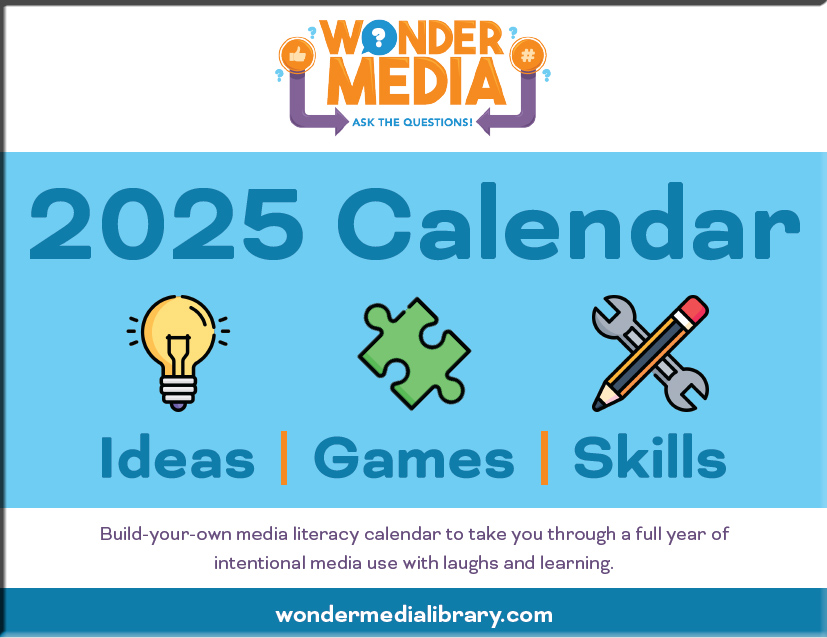
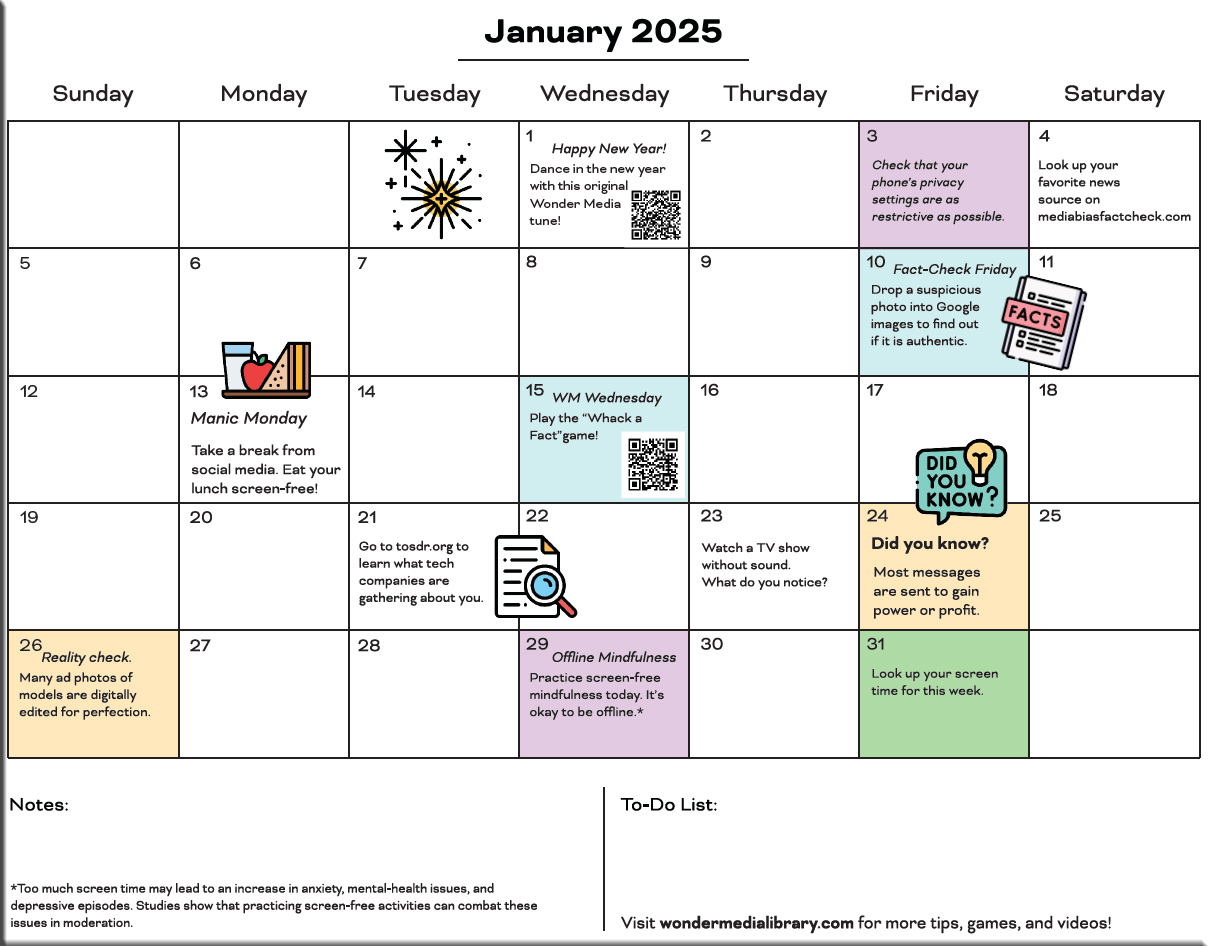
Introducing the 2025 Wonder Media Calendar for tweens, teens, and their families/households.Designed by Sue Ellen Christian and her students in her Global Media Literacy class (in the fall 2024 semester at Western Michigan University), the calendar’s purpose is to help people create a new year filled with skills and smart decisions about their media use. This calendar is part of the ongoing Wonder Media Library.comproject that includes videos, lesson plans, games, songs and more. The website is funded by a generous grant from the Institute of Museum and Library Services, in partnership with Western Michigan University and the Library of Michigan.
As 2024 draws to a close, we took a look at the past year and the year ahead with Christina Blacklaws, the former president of the Law Society of England and Wales who, after leaving office, has developed a career supporting businesses as a non-executive director, consultant and strategic advisor. One of those advisory roles is chair of LawtechUK, an initiative to “turbocharge” the UK’s lawtech sector, delivered by CodeBase and LegalGeek and funded by the Ministry of Justice.
For Blacklaws, one of the huge areas of potential for GenAI technology is in helping to solve the access to justice crisis and she talks through some of the exciting work being done in this space and why we’re on the cusp of meaningful change.
The Legal Operations landscape is evolving faster than ever, and UpLevel Ops is at the forefront of this transformation. With advancements like generative AI subscriptions, custom GPT services, and value-based pricing shaking up traditional approaches, legal departments are navigating uncharted territory.
…
From revolutionary uses of AI to new strategies in outside counsel management, their insights provide a roadmap for legal teams ready to embrace the next wave of innovation.
A judge in Florida has just set a precedent that might forever change the US legal system—and maybe even the global legal system—forever.
…
But now the technology has advanced to the point where the judge and jury can be almost literally in his client’s shoes.
This allows the judge to not just understand the words of his testimony, but the physical conditions of it in a much more tactile way. Whether or not this will make his case more convincing is up to the jury.
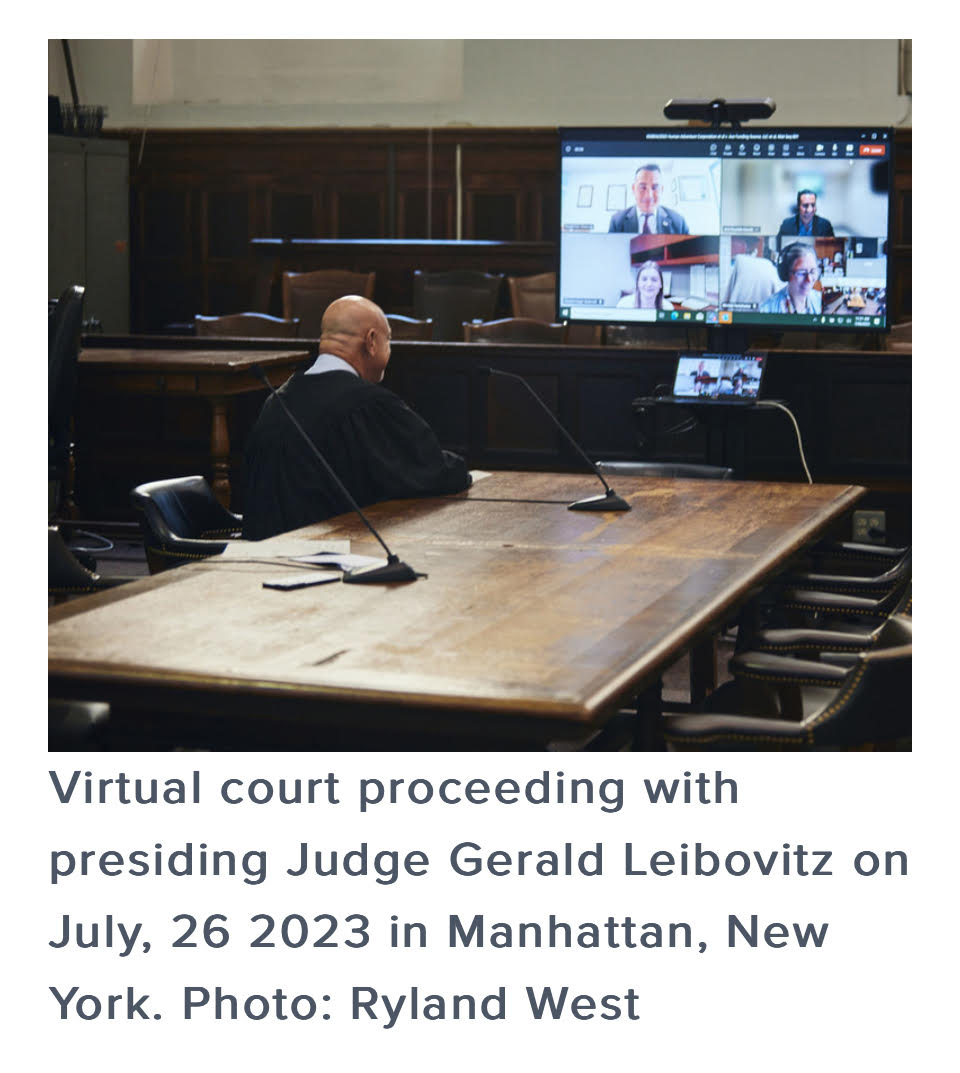
The Evolution of a Virtual Court System — from law.com by Sondra Mendelson-Toscano (behind a paywall) “It is my prediction that the future of the court system includes a hybrid employment model for the bench.”
Shortly thereafter, the New York Office of Court Administration designed and executed a plan whereby judges were able to handle their assigned matters electronically. Such seemed like a natural progression under the circumstances, given that prior to the advent of the Coronavirus, electronic testimony was successfully utilized in many different types of proceedings in various ways (e.g. vulnerable child witnesses, interstate custody and child support, elderly material witnesses, medically disabled defendants, and incarcerated individuals).
A virtual court online resource center was created for judges, staff, and the public for information related to remote operations. Despite some initial resistance by attorneys (who argued violations of the right to confrontation, that virtual is less effective and not as persuasive, computer illiteracy, and so forth), the Unified Court System pushed forward.
OCA’s course of action proved to be effective and, eventually, attorneys and litigants enjoyed the option of appearing virtually. Lawyers could handle multiple matters from their home offices in less time than it would have taken them to drive back and forth between courthouses, thus maximizing their work day.
Parties appreciated the flexibility of appearing from home and those who were essential workers valued joining proceedings on breaks while at work. Being in court remotely alleviated the stress of having to ask for, and take off, time from work, or making arrangements to address child care issues, elder care issues, and the like. Litigants with physical disabilities and other hardships, such as lack of transportation, received an automatic accommodation without having to request one.
“In an ideal world, we would get everyone an in-person attorney to represent them for the full length of their case,” says Baez, the Commission on Immigration’s director of pro bono. “But in the reality we live in, where that’s really not possible, we are trying to be thoughtful and innovative on how we engage the most volunteers to help the most people who would otherwise not be able to access any legal assistance.”
In June, the Commission on Immigration partnered with Microsoft to launch a new virtual clinic to help pro se asylum-seekers complete their asylum applications. During this clinic, which included four sessions, nearly 30 volunteers from Microsoft worked with asylum-seekers to gather necessary information and prepare their applications for submission.
But when the set time had fully come, God sent his Son, born of a woman, born under the law, to redeem those under the law, that we might receive adoption to sonship.
But after he had considered this, an angel of the Lord appeared to him in a dream and said, “Joseph son of David, do not be afraid to take Mary home as your wife, because what is conceived in her is from the Holy Spirit. She will give birth to a son, and you are to give him the name Jesus, because he will save his people from their sins.”
While they were there, the time came for the baby to be born, and she gave birth to her firstborn, a son. She wrapped him in cloths and placed him in a manger, because there was no guest room available for them.
So they hurried off and found Mary and Joseph, and the baby, who was lying in the manger. When they had seen him, they spread the word concerning what had been told them about this child, and all who heard it were amazed at what the shepherds said to them. But Mary treasured up all these things and pondered them in her heart. The shepherds returned, glorifying and praising God for all the things they had heard and seen, which were just as they had been told.
Tech Trends 2025 — from deloitte.com by Deloitte Insights In Deloitte’s 16th annual Tech Trends report, AI is the common thread of nearly every trend. Moving forward, it will be part of the substructure of everything we do.
We propose that the future of technology isn’t so much about more AI as it is about ubiquitous AI. We expect that, going forward, AI will become so fundamentally woven into the fabric of our lives that it’s everywhere, and so foundational that we stop noticing it.
AI will eventually follow a similar path, becoming so ubiquitous that it will be a part of the unseen substructure of everything we do, and we eventually won’t even know it’s there. It will quietly hum along in the background, optimizing traffic in our cities, personalizing our health care, and creating adaptative and accessible learning paths in education. We won’t “use” AI. We’ll just experience a world where things work smarter, faster, and more intuitively—like magic, but grounded in algorithms. We expect that it will provide a foundation for business and personal growth while also adapting and sustaining itself over time.
Nowhere is this AI-infused future more evident than in this year’s Tech Trends report, which each year explores emerging trends across the six macro forces of information technology (figure 1). Half of the trends that we’ve chronicled are elevating forces—interaction, information, and computation—that underpin innovation and growth. The other half—the grounding forces of the business of technology, cyber and trust, and core modernization—help enterprises seamlessly operate while they grow.
“I mean, that’s what I’ll always want for my own children and, frankly, for anyone’s children,” Khan said. “And the hope here is that we can use artificial intelligence and other technologies to amplify what a teacher can do so they can spend more time standing next to a student, figuring them out, having a person-to-person connection.”
…
“After a week you start to realize, like, how you can use it,” Brockman said. “That’s been one of the really important things about working with Sal and his team, to really figure out what’s the right way to sort of bring this to parents and to teachers and to classrooms and to do that in a way…so that the students really learn and aren’t just, you know, asking for the answers and that the parents can have oversight and the teachers can be involved in that process.”
More than 100 colleges and high schools are turning to a new AI tool called Nectir, allowing teachers to create a personalized learning partner that’s trained on their syllabi, textbooks, and assignments to help students with anything from questions related to their coursework to essay writing assistance and even future career guidance.
…
With Nectir, teachers can create an AI assistant tailored to their specific needs, whether for a single class, a department, or the entire campus. There are various personalization options available, enabling teachers to establish clear boundaries for the AI’s interactions, such as programming the assistant to assist only with certain subjects or responding in a way that aligns with their teaching style.
“It’ll really be that customized learning partner. Every single conversation that a student has with any of their assistants will then be fed into that student profile for them to be able to see based on what the AI thinks, what should I be doing next, not only in my educational journey, but in my career journey,” Ghai said.
How Will AI Influence Higher Ed in 2025? — from insidehighered.com by Kathryn Palmer No one knows for sure, but Inside Higher Ed asked seven experts for their predictions.
As the technology continues to evolve at a rapid pace, no one knows for sure how AI will influence higher education in 2025. But several experts offered Inside Higher Ed their predictions—and some guidance—for how colleges and universities will have to navigate AI’s potential in the new year.
In the short term, A.I. will help teachers create lesson plans, find illustrative examples and generate quizzes tailored to each student. Customized problem sets will serve as tools to combat cheating while A.I. provides instant feedback.
…
In the longer term, it’s possible to imagine a world where A.I. can ingest rich learner data and create personalized learning paths for students, all within a curriculum established by the teacher. Teachers can continue to be deeply involved in fostering student discussions, guiding group projects and engaging their students, while A.I. handles grading and uses the Socratic method to help students discover answers on their own. Teachers provide encouragement and one-on-one support when needed, using their newfound availability to give students some extra care.
Let’s be clear: A.I. will never replace the human touch that is so vital to education. No algorithm can replicate the empathy, creativity and passion a teacher brings to the classroom. But A.I. can certainly amplify those qualities. It can be our co-pilot, our chief of staff helping us extend our reach and improve our effectiveness.
Today, I want to reflect on two recent OpenAI developments that highlight this evolution: their belated publication of advice for students on integrating AI into writing workflows, and last week’s launch of the full GPTo1 Pro version. When OpenAI released their student writing guide, there were plenty of snarky comments about how this guidance arrives almost a year after they thoroughly disrupted the educational landscape. Fair enough – I took my own side swipes initially. But let’s look at what they’re actually advising, because the details matter more than the timing.
Tutoring programs exploded in the last five years as states and school districts searched for ways to counter plummeting achievement during COVID. But the cost of providing supplemental instruction to tens of millions of students can be eye-watering, even as the results seem to taper off as programs serve more students.
That’s where artificial intelligence could prove a decisive advantage. A report circulated in October by the National Student Support Accelerator found that an AI-powered tutoring assistant significantly improved the performance of hundreds of tutors by prompting them with new ways to explain concepts to students. With the help of the tool, dubbed Tutor CoPilot, students assigned to the weakest tutors began posting academic results nearly equal to those assigned to the strongest. And the cost to run the program was just $20 per pupil.
Faculty must have the time and support necessary to come to terms with this new technology and that requires us to change how we view professional development in higher education and K-12. We cannot treat generative AI as a one-off problem that can be solved by a workshop, an invited talk, or a course policy discussion. Generative AI in education has to be viewed as a continuum. Faculty need a myriad of support options each semester:
Course buyouts
Fellowships
Learning communities
Reading groups
AI Institutes and workshops
Funding to explore the scholarship of teaching and learning around generative AI
Education leaders should focus on integrating AI literacy, civic education, and work-based learning to equip students for future challenges and opportunities.
Building social capital and personalized learning environments will be crucial for student success in a world increasingly influenced by AI and decentralized power structures.
Per The Rundown: OpenAI just launched a surprising new way to access ChatGPT — through an old-school 1-800 number & also rolled out a new WhatsApp integration for global users during Day 10 of the company’s livestream event.
Agentic AI represents a significant evolution in artificial intelligence, offering enhanced autonomy and decision-making capabilities beyond traditional AI systems. Unlike conventional AI, which requires human instructions, agentic AI can independently perform complex tasks, adapt to changing environments, and pursue goals with minimal human intervention.
This makes it a powerful tool across various industries, especially in the customer service function. To understand it better, let’s compare AI Agents with non-AI agents.
… Characteristics of Agentic AI
Autonomy: Achieves complex objectives without requiring human collaboration.
Language Comprehension: Understands nuanced human speech and text effectively.
Rationality: Makes informed, contextual decisions using advanced reasoning engines.
Adaptation: Adjusts plans and goals in dynamic situations.
Workflow Optimization: Streamlines and organizes business workflows with minimal oversight.
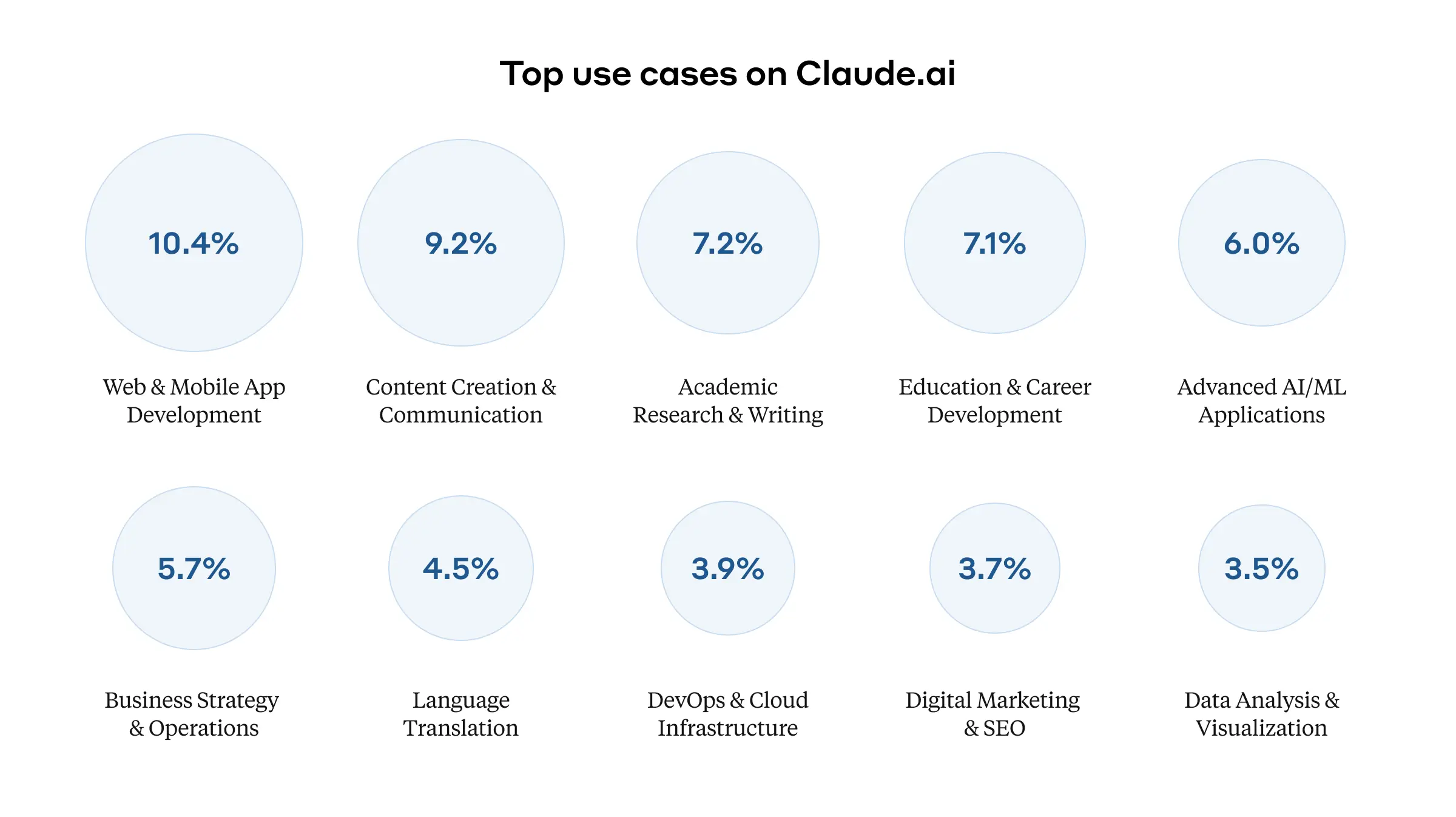
How, then, can we research and observe how our systems are used while rigorously maintaining user privacy?
Claude insights and observations, or “Clio,” is our attempt to answer this question. Clio is an automated analysis tool that enables privacy-preserving analysis of real-world language model use. It gives us insights into the day-to-day uses of claude.ai in a way that’s analogous to tools like Google Trends. It’s also already helping us improve our safety measures. In this post—which accompanies a full research paper—we describe Clio and some of its initial results.
Evolving tools redefine AI video — from heatherbcooper.substack.com by Heather Cooper Google’s Veo 2, Kling 1.6, Pika 2.0 & more
AI video continues to surpass expectations
The AI video generation space has evolved dramatically in recent weeks, with several major players introducing groundbreaking tools.
Here’s a comprehensive look at the current landscape:
Veo 2…
Pika 2.0…
Runway’s Gen-3…
Luma AI Dream Machine…
Hailuo’s MiniMax…
OpenAI’s Sora…
Hunyuan Video by Tencent…
There are several other video models and platforms, including …
A Three-Phase, Rational System of Education — from petergray.substack.com by Peter Gray; with thanks to Dr. Kate Christian for this resource What will replace k-12 and college?
A Three-Phase, Rational System of Education I don’t know just how or how fast the change will happen, but I think the days of K-12 and four years of college are numbered and sanity will begin to prevail in the educational world. I envision a future with something like the following three-phase approach to education:
Phase I. Discovery: Learning about your world, your self, and how the two fit together.… Phase II. Exploring a career path.… Phase III. Becoming credentialed for specialized work.…
College operating costs rose 3.4% in fiscal 2024 — from highereddive.com by Ben Unglesbee Commonfund Institute’s latest Higher Education Price Index shows that cost spikes slowed — but that doesn’t make them any less painful.
Dive Brief:
Costs for operating a college rose 3.4% in fiscal 2024, according to the latest Higher Education Price Index from the Commonfund Institute.
The price increases outpaced Commonfund’s preliminary projections this spring of 3% for the year. However, the HEPI showed that inflation has slowed more than half a percentage point from fiscal 2023 and is down nearly 2 percentage points from 2022’s 5.2% inflation rate.
Utility prices and those for supplies and materials slowed the most significantly, after recent years of volatility in those areas. While costs for institutions are cooling, “there is an ongoing trend of inflation rates remaining elevated compared with the previous decade,” Commonfund said.
Speaking of higher education, also see:
25 Stats for 2025 — from insidehighered.com by Ashley Mowreader Inside Higher Ed compiled two dozen–plus data points to help guide strategic decision-making and student success initiatives on college campuses.
Thanks for dropping by my Learning Ecosystems blog!
My name is Daniel Christian and this blog seeks to cover the teaching and learning environments within the K-12 (including homeschooling, learning pods/micro-schools), collegiate, and corporate training spaces -- whether those environments be face-to-face, blended, hyflex, or 100% online.
Just as the organizations that we work for have their own learning ecosystems, each of us has our own learning ecosystem. We need to be very intentional about enhancing those learning ecosystems -- as we all need to be lifelong learners in order to remain marketable and employed. It's no longer about running sprints (i.e., getting a 4-year degree or going to a vocational school and then calling it quits), but rather, we are all running marathons now (i.e., we are into lifelong learning these days).