How To Get Hired During the AI Apocalypse — from kathleendelaski.substack.com by Kathleen deLaski
And other discussions to have with your kids on the way to college graduation

A less temporary, more existential threat to the four year degree: AI could hollow out the entry level job market for knowledge workers (i.e. new college grads). And if 56% of families were saying college “wasn’t worth it” in 2023,(WSJ), what will that number look like in 2026 or beyond? The one of my kids who went to college ended up working in a bike shop for a year-ish after graduation. No regrets, but it came as a shock to them that they weren’t more employable with their neuroscience degree.

A colleague provided a great example: Her son, newly graduated, went for a job interview as an entry level writer last month and he was asked, as a test, to produce a story with AI and then use that story to write a better one by himself. He would presumably be judged on his ability to prompt AI and then improve upon its product. Is that learning how to DO? I think so. It’s using AI tools to accomplish a workplace task.


Also relevant in terms of the job search, see the following gifted article:

‘We Are the Most Rejected Generation’ — from nytimes.com by David Brooks; gifted article
David talks admissions rates for selective colleges, ultra-hard to get summer internships, a tough entry into student clubs, and the job market.

Things get even worse when students leave school and enter the job market. They enter what I’ve come to think of as the seventh circle of Indeed hell. Applying for jobs online is easy, so you have millions of people sending hundreds of applications each into the great miasma of the internet, and God knows which impersonal algorithm is reading them. I keep hearing and reading stories about young people who applied to 400 jobs and got rejected by all of them.

It seems we’ve created a vast multilayered system that evaluates the worth of millions of young adults and, most of the time, tells them they are not up to snuff.

Many administrators and faculty members I’ve spoken to are mystified that students would create such an unforgiving set of status competitions. But the world of competitive exclusion is the world they know, so of course they are going to replicate it. 

And in this column I’m not even trying to cover the rejections experienced by the 94 percent of American students who don’t go to elite schools and don’t apply for internships at Goldman Sachs. By middle school, the system has told them that because they don’t do well on academic tests, they are not smart, not winners. That’s among the most brutal rejections our society has to offer.


Fiverr CEO explains alarming message to workers about AI — from iblnews.org
Fiverr CEO Micha Kaufman recently warned his employees about the impact of artificial intelligence on their jobs.

The Great Career Reinvention, and How Workers Can Keep Up — from workshift.org by Michael Rosenbaum

A wide range of roles can or will quickly be replaced with AI, including inside sales representatives, customer service representatives, junior lawyers, junior accountants, and physicians whose focus is diagnosis.


Behind the Curtain: A white-collar bloodbath — from axios.com by Jim VandeHei and Mike Allen

Dario Amodei — CEO of Anthropic, one of the world’s most powerful creators of artificial intelligence — has a blunt, scary warning for the U.S. government and all of us:

  • AI could wipe out half of all entry-level white-collar jobs — and spike unemployment to 10-20% in the next one to five years, Amodei told us in an interview from his San Francisco office.
  • Amodei said AI companies and government need to stop “sugar-coating” what’s coming: the possible mass elimination of jobs across technology, finance, law, consulting and other white-collar professions, especially entry-level gigs.

Why it matters: Amodei, 42, who’s building the very technology he predicts could reorder society overnight, said he’s speaking out in hopes of jarring government and fellow AI companies into preparing — and protecting — the nation.

 

AI & Schools: 4 Ways Artificial Intelligence Can Help Students — from the74million.org by W. Ian O’Byrne
AI creates potential for more personalized learning

I am a literacy educator and researcher, and here are four ways I believe these kinds of systems can be used to help students learn.

  1. Differentiated instruction
  2. Intelligent textbooks
  3. Improved assessment
  4. Personalized learning


5 Skills Kids (and Adults) Need in an AI World — from oreilly.com by Raffi Krikorian
Hint: Coding Isn’t One of Them

Five Essential Skills Kids Need (More than Coding)
I’m not saying we shouldn’t teach kids to code. It’s a useful skill. But these are the five true foundations that will serve them regardless of how technology evolves.

  1. Loving the journey, not just the destination
  2. Being a question-asker, not just an answer-getter
  3. Trying, failing, and trying differently
  4. Seeing the whole picture
  5. Walking in others’ shoes

The AI moment is now: Are teachers and students ready? — from iblnews.org

Day of AI Australia hosted a panel discussion on 20 May, 2025. Hosted by Dr Sebastian Sequoiah-Grayson (Senior Lecturer in the School of Computer Science and Engineering, UNSW Sydney) with panel members Katie Ford (Industry Executive – Higher Education at Microsoft), Tamara Templeton (Primary School Teacher, Townsville), Sarina Wilson (Teaching and Learning Coordinator – Emerging Technology at NSW Department of Education) and Professor Didar Zowghi (Senior Principal Research Scientist at CSIRO’s Data61).


Teachers using AI tools more regularly, survey finds — from iblnews.org

As many students face criticism and punishment for using artificial intelligence tools like ChatGPT for assignments, new reporting shows that many instructors are increasingly using those same programs.


Addendum on 5/28/25:

A Museum of Real Use: The Field Guide to Effective AI Use — from mikekentz.substack.com by Mike Kentz
Six Educators Annotate Their Real AI Use—and a Method Emerges for Benchmarking the Chats

Our next challenge is to self-analyze and develop meaningful benchmarks for AI use across contexts. This research exhibit aims to take the first major step in that direction.

With the right approach, a transcript becomes something else:

  • A window into student decision-making
  • A record of how understanding evolves
  • A conversation that can be interpreted and assessed
  • An opportunity to evaluate content understanding

This week, I’m excited to share something that brings that idea into practice.

Over time, I imagine a future where annotated transcripts are collected and curated. Schools and universities could draw from a shared library of real examples—not polished templates, but genuine conversations that show process, reflection, and revision. These transcripts would live not as static samples but as evolving benchmarks.

This Field Guide is the first move in that direction.


In ‘The Quilters,’ Men in a Missouri Prison Sew Gifts for Children — from thisiscolossal.com by Grace Ebert

In a room bigger than most at South Central Correctional Center in Licking, Missouri, a group of men has volunteered for a creative project that stretches beyond prison walls. For about 40 hours each week, they cut and stitch quilts for children in foster care or with disabilities, sewing vibrant, patterned patchworks and finding joy and camaraderie while doing so.


Skilling Up for AI Transformation — from learningguild.com by Lauren Milstid and Megan Torrance

Lately, I’ve been in a lot of conversations—some casual, some strategy-deep—about what it takes to skill up teams for AI. One pattern keeps emerging: The organizations getting the most out of generative AI are the ones doing the most to support their people. They’re not just training on a single tool. They’re building the capacity to work with AI as a class of technology.

So let’s talk about that. Not the hype, but the real work of helping humans thrive in an AI-enabled workplace.


If Leadership Training Isn’t Applied, It Hasn’t Happened — from learningguild.com by Tim Samuels

L&D leadership training sessions often “feel” successful. A program is designed, a workshop is delivered, and employees leave feeling informed and engaged. But if that training isn’t applied in the workplace, did it actually happen? If we focus entirely on the “learning” but not the “development,” we’re wasting huge amounts of time and money. So let’s take a look at the current situation first.

The reality is stark; according to Harvard Business Review:

  • Only 12% of employees apply new skills learned in L&D programs
  • Just 25% believe their training measurably improved performance
  • We forget 75% of what we learn within six days unless we use it
 

Republican Bill Would Limit Judges’ Contempt Power — from nytimes.com by Michael Gold (this is a gifted article)
Democrats have argued that House Republicans’ measure would rob courts of their power by stripping away any consequences for officials who ignore judges’ rulings.

The sprawling domestic policy bill Republicans pushed through the House [last] Thursday would limit the power of federal judges to hold people in contempt, potentially shielding President Trump and members of his administration from the consequences of violating court orders.

Republicans tucked the provision into the tax and spending cut bill at a time when they have moved aggressively to curb the power of federal courts to issue injunctions blocking Mr. Trump’s executive actions. It comes as federal judges have opened inquiries about whether to hold the Trump administration in contempt for violating their orders in cases related to its aggressive deportation efforts.


From DSC:
This is deeply disappointing to see that this sneaky little provision was tucked away in a 1,000+ page bill. It’s highly likely that it’s from Donald Trump himself — as he stands in contempt of court from a Supreme Court ruling from several weeks ago. But what is equally troubling is that the Republican “leadership” is good with it too, evidently. Shame on them. This isn’t leadership. This is tyranny and a blatant disregard for the rule of law.

What’s even more troubling about the whole Trump situation is that just over half of America put him there. For those who put him in office, I’m not sure how they can tell their children not to lie. Because if a person voted for Donald Trump, they no longer care about someone telling the truth.

Character matters. Ethics and morals matter. The Constitution matters. People matter. America matters. The rule of law matters. Justice matters.  We need to take a serious look in the mirror.


Opinions | This Baltimore program shows how to fight generational poverty – from washingtonpost.com by Leana S. Wen; this is a gifted article
How one grassroots organization is teaching young people leadership skills and giving them hope.

She recognized their desperation and felt called to return and use what she had learned to help them realize a different future. So she set up an organization, HeartSmiles, to do just that — one young person at a time.

Holifield’s experience is one that city officials and public health workers can learn from. If they want to disrupt the generational cycle of poverty, trauma and hopelessness that afflicts so many communities, a good place to focus their efforts is children.
…
How can communities overcome inertia and resignation? Holifield’s organization starts with two core interventions. The first is career and leadership development. Children as young as 8 go to the HeartSmiles center to participate in facilitated sessions on youth entrepreneurship, budgeting and conflict resolution. Those who want to explore certain career paths are matched with professionals in these fields.
…
The second part of her vision is youth-led mentorship, which involves pairing young people with those not much older than they are. 


Also relevant/see:

Lost boys, trapped men, and the role of lifers in prison education — from college-inside.beehiiv.com by Charlotte West

This week, we’re publishing Part 2 of a Q&A with Erik Maloney, a lifer in Arizona, and Kevin Wright, a criminal justice professor at Arizona State University. They co-authored Imprisoned Minds, a book about trauma and healing published in December 2024, over the course of seven years. Check out Part 1 of the Q&A.

West: The fact that you created your own curriculum to accompany the book makes me think about the role of lifers in creating educational opportunities in prisons. What do you see as the role of lifers in filling some of these gaps?

Maloney
: I’ve said for years that lifers are so underutilized in prison. It’s all about punishment for what you’re in for, and [the prison system] overlooks us as a resource. We are people who, if allowed to be educated properly, can teach courses indefinitely while also being a role model for those with shorter sentences. This gives the lifer meaning and purpose to do good again. He serves as a mentor, whether he likes it or not, to [those] people coming into the prisons. When they see him doing well, it inspires others to want to do well.

But if it’s all about punishment, and a person has no meaning and no purpose in life, then all they have is hopelessness. With hopelessness comes despair, and with despair, you have rampant drug and alcohol abuse in prison, and violence stems from that.


Summers Says Harvard Student Ban ‘The Stuff of Tyranny’ — from bloomberg.com

Former US Treasury Secretary Lawrence Summers blasted the Trump administration’s decision to block Harvard University from enrolling international students, calling on the institution to fight back. “This is vicious, it is illegal, it is unwise, and it is very damaging,” Summers, who is president emeritus of Harvard University, told Bloomberg TV. “Why does it make any sense at all to stop 6,000 enormously talented young people who want to come to the United States to study from having that opportunity?” “Harvard must start by resisting,” he said. “This is the stuff of tyranny.” Summers spoke to Bloomberg’s David Ingles on “The China Show.” (Source: Bloomberg)


GIFTED ARTICLE

Trump Administration Says It Is Halting Harvard’s Ability to Enroll International Students
The move was a major escalation in the administration’s efforts to pressure the college to fall in line with President Trump’s demands.

The Trump administration on Thursday said it would halt Harvard University’s ability to enroll international students, taking aim at a crucial funding source for the nation’s oldest and wealthiest college in a major escalation of the administration’s efforts to pressure the elite school to fall in line with the president’s agenda.

The administration notified Harvard about the decision — which could affect about a quarter of the school’s student body — after a back-and-forth in recent weeks over the legality of a sprawling records request as part of the Department of Homeland Security’s investigation, according to three people with knowledge of the negotiations. The people spoke on the condition of anonymity because they were not authorized to discuss the matter publicly.


Excerpt:


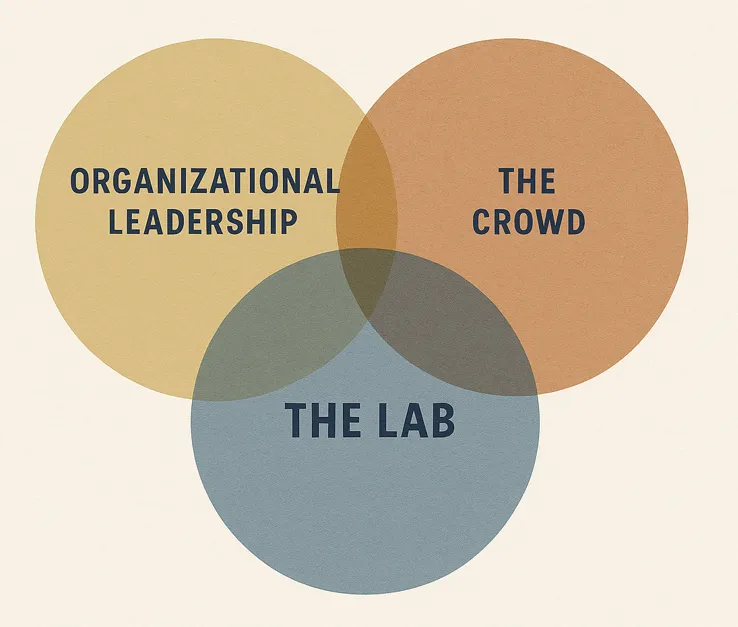
Making AI Work: Leadership, Lab, and Crowd — from oneusefulthing.org by Ethan Mollick
A formula for AI in companies

How do we reconcile the first three points with the final one? The answer is that AI use that boosts individual performance does not naturally translate to improving organizational performance. To get organizational gains requires organizational innovation, rethinking incentives, processes, and even the nature of work. But the muscles for organizational innovation inside companies have atrophied. For decades, companies have outsourced this to consultants or enterprise software vendors who develop generalized approaches that address the issues of many companies at once. That won’t work here, at least for a while. Nobody has special information about how to best use AI at your company, or a playbook for how to integrate it into your organization.
.


Galileo Learn™ – A Revolutionary Approach To Corporate Learning — from joshbersin.com

Today we are excited to launch Galileo Learn™, a revolutionary new platform for corporate learning and professional development.
…
How do we leverage AI to revolutionize this model, doing away with the dated “publishing” model of training?

The answer is Galileo Learn, a radically new and different approach to corporate training and professional development.
…
What Exactly is Galileo Learn™?
Galileo Learn is an AI-native learning platform which is tightly integrated into the Galileo agent. It takes content in any form (PDF, word, audio, video, SCORM courses, and more) and automatically (with your guidance) builds courses, assessments, learning programs, polls, exercises, simulations, and a variety of other instructional formats.


Designing an Ecosystem of Resources to Foster AI Literacy With Duri Long — from aialoe.org

Centering Public Understanding in AI Education
In a recent talk titled “Designing an Ecosystem of Resources to Foster AI Literacy,” Duri Long, Assistant Professor at Northwestern University, highlighted the growing need for accessible, engaging learning experiences that empower the public to make informed decisions about artificial intelligence. Long emphasized that as AI technologies increasingly influence everyday life, fostering public understanding is not just beneficial—it’s essential. Her work seeks to develop a framework for AI literacy across varying audiences, from middle school students to adult learners and journalists.

A Design-Driven, Multi-Context Approach
Drawing from design research, cognitive science, and the learning sciences, Long presented a range of educational tools aimed at demystifying AI. Her team has created hands-on museum exhibits, such as Data Bites, where learners build physical datasets to explore how computers learn. These interactive experiences, along with web-based tools and support resources, are part of a broader initiative to bridge AI knowledge gaps using the 4As framework: Ask, Adapt, Author, and Analyze. Central to her approach is the belief that familiar, tangible interactions and interfaces reduce intimidation and promote deeper engagement with complex AI concepts.


AI-Powered Lawyering: AI Reasoning Models, Retrieval Augmented Generation, and the Future of Legal Practice
Minnesota Legal Studies Research Paper No. 25-16; March 02, 2025; from papers.ssrn.com by:

Daniel Schwarcz
University of Minnesota Law School

Sam Manning
Centre for the Governance of AI

Patrick Barry
University of Michigan Law School

David R. Cleveland
University of Minnesota Law School

J.J. Prescott
University of Michigan Law School

Beverly Rich
Ogletree Deakins

Abstract

Generative AI is set to transform the legal profession, but its full impact remains uncertain. While AI models like GPT-4 improve the efficiency with which legal work can be completed, they can at times make up cases and “hallucinate” facts, thereby undermining legal judgment, particularly in complex tasks handled by skilled lawyers. This article examines two emerging AI innovations that may mitigate these lingering issues: Retrieval Augmented Generation (RAG), which grounds AI-powered analysis in legal sources, and AI reasoning models, which structure complex reasoning before generating output. We conducted the first randomized controlled trial assessing these technologies, assigning upper-level law students to complete six legal tasks using a RAG-powered legal AI tool (Vincent AI), an AI reasoning model (OpenAI’s o1-preview), or no AI. We find that both AI tools significantly enhanced legal work quality, a marked contrast with previous research examining older large language models like GPT-4. Moreover, we find that these models maintain the efficiency benefits associated with use of older AI technologies. Our findings show that AI assistance significantly boosts productivity in five out of six tested legal tasks, with Vincent yielding statistically significant gains of approximately 38% to 115% and o1-preview increasing productivity by 34% to 140%, with particularly strong effects in complex tasks like drafting persuasive letters and analyzing complaints. Notably, o1-preview improved the analytical depth of participants’ work product but resulted in some hallucinations, whereas Vincent AI-aided participants produced roughly the same amount of hallucinations as participants who did not use AI at all. These findings suggest that integrating domain-specific RAG capabilities with reasoning models could yield synergistic improvements, shaping the next generation of AI-powered legal tools and the future of lawyering more generally.


Guest post: How technological innovation can boost growth — from legaltechnology.com by Caroline Hill

One key change is the growing adoption of technology within legal service providers, and this is transforming the way firms operate and deliver value to clients.

The legal services sector’s digital transformation is gaining momentum, driven both by client expectations as well as the potential for operational efficiency. With the right support, legal firms can innovate through tech adoption and remain competitive to deliver strong client outcomes and long-term growth.


AI Can Do Many Tasks for Lawyers – But Be Careful — from nysba.org by Rebecca Melnitsky

Artificial intelligence can perform several tasks to aid lawyers and save time. But lawyers must be cautious when using this new technology, lest they break confidentiality or violate ethical standards.

The New York State Bar Association hosted a hybrid program discussing AI’s potential and its pitfalls for the legal profession. More than 300 people watched the livestream.

For that reason, Unger suggests using legal AI tools, like LexisNexis AI, Westlaw Edge, and vLex Fastcase, for legal research instead of general generative AI tools. While legal-specific tools still hallucinate, they hallucinate much less. A legal tool will hallucinate 10% to 20% of the time, while a tool like ChatGPT will hallucinate 50% to 80%.


Fresh Voices on Legal Tech with Nikki Shaver — from legaltalknetwork.com by Dennis Kennedy, Tom Mighell, and Nikki Shaver

Determining which legal technology is best for your law firm can seem like a daunting task, so Legaltech Hub does the hard work for you! In another edition of Fresh Voices, Dennis and Tom talk with Nikki Shaver, CEO at Legaltech Hub, about her in-depth knowledge of technology and AI trends. Nikki shares what effective tech strategies should look like for attorneys and recommends innovative tools for maintaining best practices in modern law firms. Learn more at legaltechnologyhub.com.


AI for in-house legal: 2025 predictions — from deloitte.com
Our expectations for AI engagement and adoption in the legal Market over the coming year.

AI will continue to transform in-house legal departments in 2025
As we enter 2025, over two-thirds of organisations plan to increase their Generative AI (GenAI) investments, providing legal teams with significant executive support and resources to further develop this Capabilities. This presents a substantial opportunity for legal departments, particularly as GenAI technology continues to advance at an impressive pace. We make five predictions for AI engagement and adoption in the legal Market over the coming year and beyond.


Navigating The Fine Line: Redefining Legal Advice In The Age Of Tech With Erin Levine And Quinten Steenhuis — from abovethelaw.com by Olga V. Mack
The definition of ‘practicing law’ is outdated and increasingly irrelevant in a tech-driven world. Should the line between legal advice and legal information even exist?

Practical Takeaways for Legal Leaders

  • Use Aggregated Data: Providing consumers with benchmarks (e.g., “90% of users in your position accepted similar settlements”) empowers them without giving direct legal advice.
  • Train and Supervise AI Tools: AI works best when it’s trained on reliable, localized data and supervised by legal professionals.
  • Partner with Courts: As Quinten pointed out, tools built in collaboration with courts often avoid UPL pitfalls. They’re also more likely to gain the trust of both regulators and consumers.
  • Embrace Transparency: Clear disclaimers like “This is not legal advice” go a long way in building consumer trust and meeting ethical standards.


Google I/O 2025: From research to reality — from blog.google
Here’s how we’re making AI more helpful with Gemini.


Google I/O 2025 LIVE — all the details about Android XR smart glasses, AI Mode, Veo 3, Gemini, Google Beam and more — from tomsguide.com by Philip Michaels
Google’s annual conference goes all in on AI

With a running time of 2 hours, Google I/O 2025 leaned heavily into Gemini and new models that make the assistant work in more places than ever before. Despite focusing the majority of the keynote around Gemini, Google saved its most ambitious and anticipated announcement towards the end with its big Android XR smart glasses reveal.

Shockingly, very little was spent around Android 16. Most of its Android 16 related news, like the redesigned Material 3 Expressive interface, was announced during the Android Show live stream last week — which explains why Google I/O 2025 was such an AI heavy showcase.

That’s because Google carved out most of the keynote to dive deeper into Gemini, its new models, and integrations with other Google services. There’s clearly a lot to unpack, so here’s all the biggest Google I/O 2025 announcements.


Our vision for building a universal AI assistant— from blog.google
We’re extending Gemini to become a world model that can make plans and imagine new experiences by simulating aspects of the world.

Making Gemini a world model is a critical step in developing a new, more general and more useful kind of AI — a universal AI assistant. This is an AI that’s intelligent, understands the context you are in, and that can plan and take action on your behalf, across any device.

By applying LearnLM capabilities, and directly incorporating feedback from experts across the industry, Gemini adheres to the principles of learning science to go beyond just giving you the answer. Instead, Gemini can explain how you get there, helping you untangle even the most complex questions and topics so you can learn more effectively. Our new prompting guide provides sample instructions to see this in action.


Learn in newer, deeper ways with Gemini — from blog.google.com by Ben Gomes
We’re infusing LearnLM directly into Gemini 2.5 — plus more learning news from I/O.

At I/O 2025, we announced that we’re infusing LearnLM directly into Gemini 2.5, which is now the world’s leading model for learning. As detailed in our latest report, Gemini 2.5 Pro outperformed competitors on every category of learning science principles. Educators and pedagogy experts preferred Gemini 2.5 Pro over other offerings across a range of learning scenarios, both for supporting a user’s learning goals and on key principles of good pedagogy.


Gemini gets more personal, proactive and powerful — from blog.google.com by Josh Woodward
It’s your turn to create, learn and explore with an AI assistant that’s starting to understand your world and anticipate your needs.

Here’s what we announced at Google IO:

  • Gemini Live with camera and screen sharing, is now free on Android and iOS for everyone, so you can point your phone at anything and talk it through.
  • Imagen 4, our new image generation model, comes built in and is known for its image quality, better text rendering and speed.
  • Veo 3, our new, state-of-the-art video generation model, comes built in and is the first in the world to have native support for sound effects, background noises and dialogue between characters.
  • Deep Research and Canvas are getting their biggest updates yet, unlocking new ways to analyze information, create podcasts and vibe code websites and apps.
  • Gemini is coming to Chrome, so you can ask questions while browsing the web.
  • Students around the world can easily make interactive quizzes, and college students in the U.S., Brazil, Indonesia, Japan and the UK are eligible for a free school year of the Google AI Pro plan.
  • Google AI Ultra, a new premium plan, is for the pioneers who want the highest rate limits and early access to new features in the Gemini app.
  • 2.5 Flash has become our new default model, and it blends incredible quality with lightning fast response times.

Fuel your creativity with new generative media models and tools — from by Eli Collins
Introducing Veo 3 and Imagen 4, and a new tool for filmmaking called Flow.


AI in Search: Going beyond information to intelligence
We’re introducing new AI features to make it easier to ask any question in Search.

AI in Search is making it easier to ask Google anything and get a helpful response, with links to the web. That’s why AI Overviews is one of the most successful launches in Search in the past decade. As people use AI Overviews, we see they’re happier with their results, and they search more often. In our biggest markets like the U.S. and India, AI Overviews is driving over 10% increase in usage of Google for the types of queries that show AI Overviews.

This means that once people use AI Overviews, they’re coming to do more of these types of queries, and what’s particularly exciting is how this growth increases over time. And we’re delivering this at the speed people expect of Google Search — AI Overviews delivers the fastest AI responses in the industry.

In this story:

  • AI Mode in Search
  • Deep Search
  • Live capabilities
  • Agentic capabilities
  • Shopping
  • Personal context
  • Custom charts


Boys Are Struggling in School. What Can Be Done? — from edweek.org by Rick Hess
Scholar Richard Reeves says it’s time to take a hard look at gender equity

Rick: What kinds of strategies do you think would help?

Richard: In education, we should expand the use of male-friendly teaching methods, such as more hands-on and active learning approaches. We should also consider redshirting boys—starting them in school a year later—to account for developmental differences between boys and girls. We should also introduce more male mentors and role models in schools, particularly in elementary education, where male teachers are scarce. In the workforce, apprenticeship and vocational training programs need to be expanded to create pathways into stable employment for young men who may not pursue a four-year degree. Career counseling should also emphasize diverse pathways to ensure that boys who may not thrive in a traditional academic setting still have opportunities for success. Additionally, fatherhood policies should recognize the importance of male engagement in family life, supporting fathers in their role as caregivers and providers.


While on the topic of K12 education, also see:

How Electives Help All Students Succeed — from edutopia.org by Miriam Plotinsky
Giving students a choice of electives increases engagement and allows them to develop skills outside of core academic subjects.

I recently conducted a student focus group on the topic of school attendance. One of the participants, a high school junior who admitted to being frequently late or absent, explained why she still came to school: “I never want to miss Drama. My teacher is awesome. Her class is the reason I show up every day.” As the rest of the focus group chimed in with similar thoughts, I reflected on the power that elective courses hold for students of all ages.

These courses, from jazz band to yoga, cement students’ sense of self not just in their primary and secondary years, but also in their journey toward adulthood. In these tight economic times, schools or districts often slash electives to save money on staffing, which is highly detrimental to student success. Instead, not only should budget cuts be made elsewhere, but also elective offerings should increase to heighten student choice and well-being.


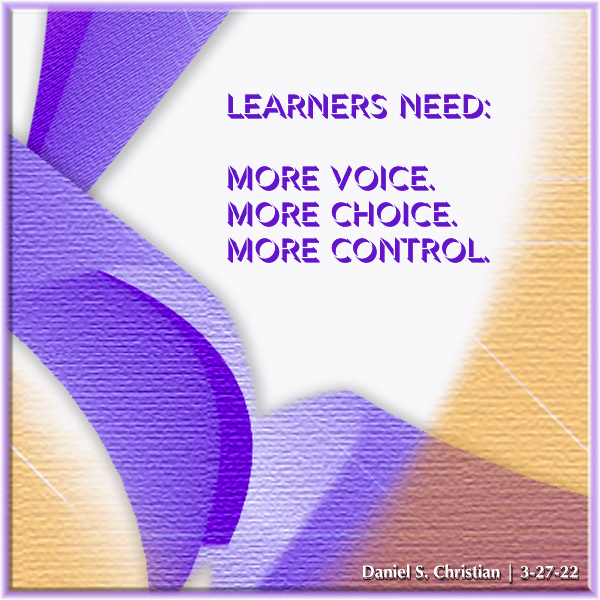
Learners need: More voice. More choice. More control. -- this image was created by Daniel Christian


OpenAI buys former Apple design chief Jony Ive’s startup for $6.5 billion in AI product push — from finance.yahoo.com by Daniel Howley

According to OpenAI, Ive and LoveFrom will assume design and creative responsibilities across OpenAI and io and plan to share their work next year.

Sam Altman & Jony Ive introduce io –from openai.com

As io merges with OpenAI, Jony and LoveFrom will assume deep design and creative responsibilities across OpenAI and io.

Details leak about Jony Ive’s new ‘screen-free’ OpenAI device — from theverge.com by Jess Weatherbed

Altman told OpenAI employees on the call that they have “the chance to do the biggest thing we’ve ever done as a company here.” The Journal reports that Ive referred to the project as “a new design movement,” and harkened back to his Apple career that saw him work closely with Steve Jobs before his passing in 2011. Now teamed up with Altman, Ive said, “the way that we clicked, and the way that we’ve been able to work together, has been profound for me.”


Comments from The Rundown AI:

Why it matters: This duo has been making moves beneath the surface for several years, but this is a loud official announcement of OpenAI’s hardware ambitions. The AI giant now has the secret sauce behind many of Apple’s revolutionary products — and will now look to crack the code on a device that changes how users interact with AI.


I’m a LinkedIn Executive. I See the Bottom Rung of the Career Ladder Breaking. — from nytimes.com by Aneesh Raman; this is a gifted article

There are growing signs that artificial intelligence poses a real threat to a substantial number of the jobs that normally serve as the first step for each new generation of young workers. Uncertainty around tariffs and global trade is likely to only accelerate that pressure, just as millions of 2025 graduates enter the work force.
…
Breaking first is the bottom rung of the career ladder. In tech, advanced coding tools are creeping into the tasks of writing simple code and debugging — the ways junior developers gain experience. In law firms, junior paralegals and first-year associates who once cut their teeth on document review are handing weeks of work over to A.I. tools to complete in a matter of hours. And across retailers, A.I. chatbots and automated customer service tools are taking on duties once assigned to young associates.


Michiganders in these 25 cities have the most student loan debt, ranking says — from mlive.com by Jackie Smith; this is a gifted article

Millions of former students and college graduates across the U.S. are weighed down with student loan debt, but with exactly how much may depend on where you live.

An analysis from WalletHub was released earlier this month, listing high averages student loan debts of residents in more than 2,500 American cities, including 83 in Michigan.

Student loans are the second highest form of household debt after mortgages, according to WalletHub, totaling more than $1.6 tillion, or averaging $38,000 per borrower. 

The above article links to:

Cities with the Most & Least Student Debt (2025) — from wallethub.com by Adam McCann

High balances combined with a payoff timeline that lasts into middle age force many graduates to significantly delay or forgo other financial goals such as saving for retirement or buying a home. Paying back student loans has also become even more difficult due to high inflation putting a strain on Americans’ finances.

While we have a big student-loan crisis as a country, student-loan debts are more unsustainable in some places than others. To determine where borrowers are burdened the most, WalletHub compared the median student-loan balance against the median earnings of adults ages 25 and older with a bachelor’s degree in more than 2,500 U.S. cities.

If you are considering borrowing money for college or you’re in danger of defaulting, we advise using a student loan calculator to determine an affordable payment amount and realistic payoff timeline.


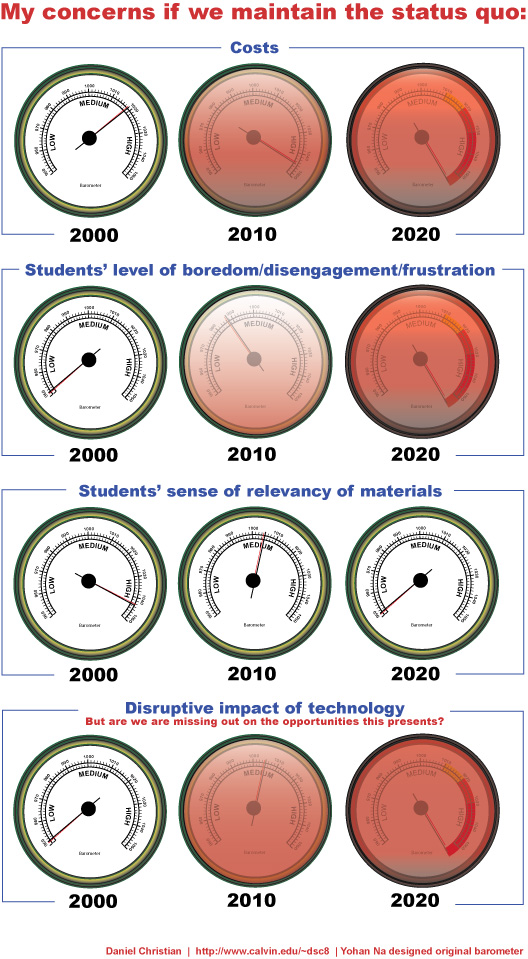
Again, this graphic from 2009 comes to mind:
.


© 2025 | Daniel Christian