Corporate Training Solutions That Actually Improve Performance — from blog.upsidelearning.com by Unnati Umare

Designing Learning Around Performance in the Flow of Work
Once it becomes clear that completion does not reliably translate into changed behavior, the next question tends to surface on its own. If training is not failing outright, then what it should be designed around becomes harder to ignore.

In most organizations, the answer remains content. Content is easier to define, easier to build, and easier to track, even when it explains very little about how work actually gets done.

Performance-aligned learning design shifts that starting point by paying closer attention to how work unfolds in practice. Instead of organizing learning around topics or courses, design decisions begin with what a role requires people to notice, decide, and act on during real situations.  


Nvidia, Eli Lilly announce $1 billion investment in AI drug discovery lab — from finance.yahoo.com by Laura Bratton

AI chipmaker Nvidia (NVDA) and pharmaceutical giant Eli Lilly (LLY) on Monday announced that the two companies would jointly invest $1 billion to create a lab in San Francisco focused on using AI to accelerate drug discovery.
…
The $1 billion investment will be spent over five years on infrastructure, compute, and talent for the lab. Nvidia’s engineers will work alongside Lilly’s experts in biology, science, and medicine to generate large-scale data and build AI models to advance medicine development. The lab’s work will begin early this year, the companies said.


Shoppers will soon be able to make purchases directly through Google’s Gemini app and browser.


Google and Walmart Join Forces to Shape the Future of Retail — from adweek.com by Lauren Johnson
At NRF, Sundar Pichai and John Furner revealed how AI and drones will shape shopping in 2026 and beyond

One of the biggest reveals is that shoppers will be able to purchase Walmart and Sam’s Club products through Google’s AI chatbot Gemini.


The Hard Part of Legal AI Isn’t the Technology — from linkedin.com by Colin S. Levy

Selecting AI tools for legal teams is no longer about novelty or experimentation. It is about aligning technology with judgment, workflows, and risk tolerance. Teams that approach AI with specificity, skepticism, and operational discipline place themselves in a far stronger position to capture real value and avoid unwelcome surprises once the demo environment disappears.


Addendum on 1/8/26:


What 3 credit ratings agencies forecast for higher ed in 2026 — from highereddive.com by Ben Unglesbee
Fitch Ratings, S&P Global and Moody’s Ratings all predicted a tough year ahead, pointing to deteriorating financial conditions and heightened uncertainty.

Fitch Ratings labeled its higher ed financial outlook for 2026 as “deteriorating” while Moody’s Ratings described an “increasingly difficult and shifting operating environment for colleges and universities.” Similarly, S&P Global Ratings said it expects“mounting operating pressures and uncertainty” ahead for the sector’s nonprofit institutions.

Analysts cited additional disruption and belt-tightening ahead in the new year, from predicted demographic declines to pressures on international enrollment to uncertainties about how Republicans’ big spending bill passed this summer will impact demand for college.

Below are the various takes on higher ed in 2026 by Moody’s, Fitch and S&P Global Ratings:


10 Elearning Interaction Ideas You May Not Have Thought Of Yet — from theelearningcoach.com by Connie Malamed

Is click-to-reveal always bad for learning?
Not necessarily. Click-to-reveal interactions can be useful when you want to manage cognitive load, reveal information gradually, or work within limited screen space. In those cases, clicking supports the presentation of information.

However, from an instructional perspective, clicking alone does not make an interaction meaningful. An interaction adds value when it asks learners to think, not just trigger more content.

The interaction ideas below require learners to analyze, judge, predict, or diagnose. These are the types of mental actions learners perform in real work settings. Each one includes a short, real-world question to show how the idea might be used in practice.


From DSC:
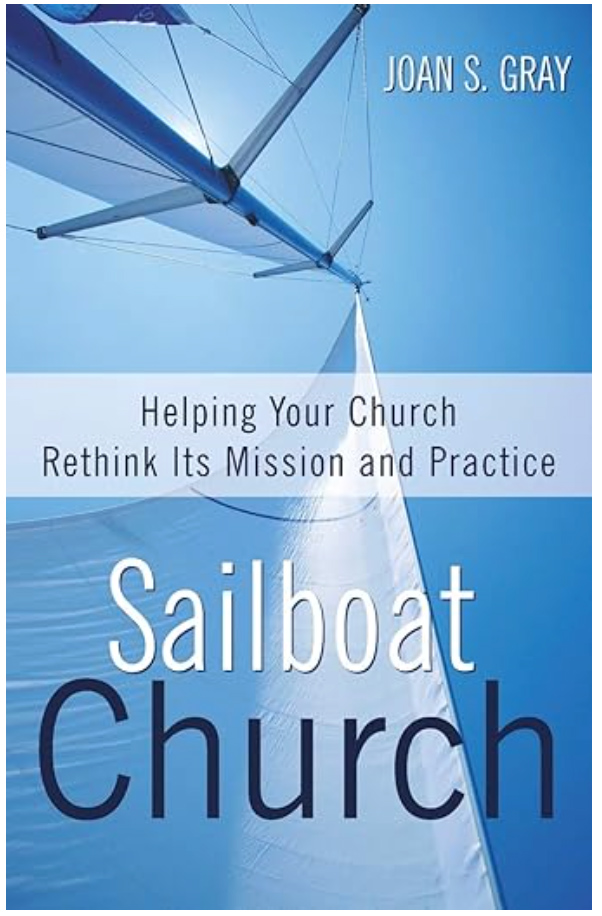
Over the last year, our church has been heavily focused on the topic of prayer. Much of that has to do with a book given to our leadership team called, “Sailboat Church: Helping Your Church Rethink Its Mission and Practice written by Joan S. Gray.
.

Sailboat Church: Helping Your Church Rethink Its Mission and Practice -- written by Joan S. Gray.
.

.

Gray does an incredible job packing a lot of material into a very concise book. In it, she describes the difference between a rowboat church (which relies on human efforts) and a sailboat church (which relies upon the LORD to guide it, resource it, and empower it). She asserts that the main purpose of a sailboat is to leave the dock and set out on the waters of life to achieve what the LORD guides us to by His Holy Spirit. And prayer is a key element of this book and this process.


So as I was reading it, I began compiling resources from Scripture and from several other books that I read on the topic of prayer. If you would like to see those passages as well as my notes on those books, please see this PDF document.


May the LORD bless your reading of it, as you seek to deepen your relationship — and your communications — with Him.


Reflecting on Education in 2025 — from by Dr. Rachelle Dené Poth

Educators have become more discerning about initiatives to invest in, tools to explore, and expectations to set. The question “Can we do this?” shifted to “Should we do this? And “Why?” Which then led to the “How” part.

This shift showed up in conversations around curriculum, assessment, technology use, and student well-being. Schools began reducing or being more selective rather than layering, which helped educators to adjust better to change. Leaders focused more on coherence instead of compliance. And in some conversations I had or articles I read, I noticed respectful pushback on practices that added complexity without improving learning.

I think this is why the recalibration mattered.

AI has become less about “cheating” and more about helping students and others learn how to think, evaluate, and create responsibly in an AI-infused world.
…
Educators have become more discerning about initiatives to invest in, tools to explore, and expectations to set. The question “Can we do this?” shifted to “Should we do this? And “Why?” Which then led to the “How” part.


Community colleges are training the next generation of manufacturing workers — from manufacturingdive.com by Michelle No
Rutgers University explored how community colleges are responding to regional workforce training demands. Clark State College and Columbus State Community College are among those leading the way.

One underrated option may hold the most promise for workforce growth: the local community college.

That’s according to a series of reports by The Rutgers Education and Employment Research Center released in October, which examines the “hidden innovative structure” of America’s community colleges.

Community colleges excel in ways conducive to a successful manufacturing career, said Shalin Jyotishi, founder of the Future of Work & Innovation Economy Initiative at think tank New America.


6 Ed Tech Tools to Try in 2026 — from cultofpedagogy.com by Jennifer Gonzalez

It’s that time again ~ the annual round-up of tech tools we think are worth a look this year. This year I really feel like there’s something for everyone: history teachers, math and science teachers, people who run makerspaces, teachers interested in music or podcasting, writing teachers, special ed teachers, and anyone whose course content could be made clearer through graphic organizers.


Also somewhat relevant here, see:


At CES 2026, Everything Is AI. What Matters Is How You Use It — from wired.com by Boone Ashworth
Integrated chatbots and built-in machine intelligence are no longer standout features in consumer tech. If companies want to win in the AI era, they’ve got to hone the user experience.

Beyond Wearables
Right now, AI is on your face and arms—smart glasses and smart watches—but this year will see it proliferate further into products like earbuds, headphones, and smart clothing.

Health tech will see an influx of AI features too, as companies aim to use AI to monitor biometric data from wearables like rings and wristbands. Heath sensors will also continue to show up in newer places like toilets, bath mats, and brassieres.

The smart home will continue to be bolstered by machine intelligence, with more products that can listen, see, and understand what’s happening in your living space. Familiar candidates for AI-powered upgrades like smart vacuums and security cameras will be joined by surprising AI bedfellows like refrigerators and garage door openers.


Along these lines, see
live updates from CNET here.


ChatGPT is overrated. Here’s what to use instead. — from washingtonpost.com by Geoffrey A. Fowler
When I want help from AI, ChatGPT is no longer my default first stop.

I can tell you which AI tools are worth using — and which to avoid — because I’ve been running a chatbot fight club.

I conducted dozens of bot challenges based on real things people do with AI, including writing breakup texts and work emails, decoding legal contracts and scientific research, answering tricky research questions, and editing photos and making “art.” Human experts including best-selling authors, reference librarians, a renowned scientist and even a Pulitzer Prize-winning photographer judged the results.

After a year of bot battles, one thing stands out: There is no single best AI. The smartest way to use chatbots today is to pick different tools for different jobs — and not assume one bot can do it all.


How Collaborative AI Agents Are Shaping the Future of Autonomous IT — from aijourn.com by Michael Nappi

Some enterprise platforms now support cross-agent communication and integration with ecosystems maintained by companies like Microsoft, NVIDIA, Google, and Oracle. These cross-platform data fabrics break down silos and turn isolated AI pilots into enterprise-wide services. The result is an IT backbone that not only automates but also collaborates for continuous learning, diagnostics, and system optimization in real time.


Nvidia dominated the headlines in 2025 — these were its 15 biggest events of the year — from finance.yahoo.com by Daniel Howley

It’s difficult to think of any single company that had a bigger impact on Wall Street and the AI trade in 2025 than Nvidia (NVDA).
…
Nvidia’s revenue soared in 2025, bringing in $187.1 billion, and its market capitalization continued to climb, briefly eclipsing the $5 trillion mark before settling back in the $4 trillion range.

There were plenty of major highs and deep lows throughout the year, but these 15 were among the biggest moments of Nvidia’s 2025.


Work from Home Jobs No Experience — from intelligenthq.com by A.Peyman Khosravani

Work from home jobs with no experience can help you earn money from home, even if you are new and have never done a remote job before. If you are looking for work from home jobs with no experience and aren’t sure which are real (and worth your time), you’re in the right place. In this guide, you will find real, beginner-friendly remote jobs you can do from home, even if you have never worked remotely before.

We will explain the best entry-level options, what they may pay, what you need to get started, and how to avoid scams. I will also share simple tips to help you get work-from-home jobs with no experience and start remote jobs faster.
…
1) What is the best work from home with no experience?
The best work-from-home jobs with no experience are usually remote customer service, transcription, AI task work, or moderation, since training and guidelines are provided.

2) What jobs can you do online from home with no experience?
You can do online customer support, transcription/captioning, microtasks, paid research studies, and entry-level AI evaluation tasks.


Rebuilding The First Rung Of The Opportunity Ladder — from forbes.com by Bruno V. Manno

Two-thirds of employers say most new hires are not fully prepared for their roles, citing “experience,” not technical skill, as the greatest shortfall. At the same time, 61% of companies have raised their experience requirements.

As a result, many so-called entry-level roles now demand two to five years of prior work experience. The first rung of the career ladder has been pulled even farther out of reach for new job seekers. A portfolio—or full-spectrum—model of work-based learning is one promising way to rebuild that rung.

Experience has become what Deloitte calls “the new currency of employability.” But the places where young people once earned that currency are disappearing.

 
© 2025 | Daniel Christian