Recording of “The Future of Education Collaborative for Higher Education” on 8/12/21 — this event was sponsored by Instructure and AWS

From DSC:
One of the most interesting items for me in this was to hear how one university is allowing students to drive the Request For Proposal (RFP) process – giving students much more VOICE. Staff and faculty are consultants but students have the final say! Wow! 

Also, I agree with the idea that the market will drive changes within higher education. But for that to occur more significantly:

  • Employers need to hire more people from a variety of backgrounds and that come into their interviews with a greater variety of credentials.
  • The accrediting agencies involved with higher ed are going to need to become more innovative and flexible.
  • And the elephant in the room for me is that faculty members are going to have to come to the realization that those organizations/courses of the future that will thrive and have the most impact will be much more team-based and will be based upon what the market needs (i.e., better alignment is needed between the corporate/business world and the world of higher education). For far too long, the faculty member has been the sole person at the table….the person holding the steering wheel…the person in control of everything that gets presented and how it gets presented….the person who decides what they want to teach (vs. what the market actually needs) and how they want to teach it.

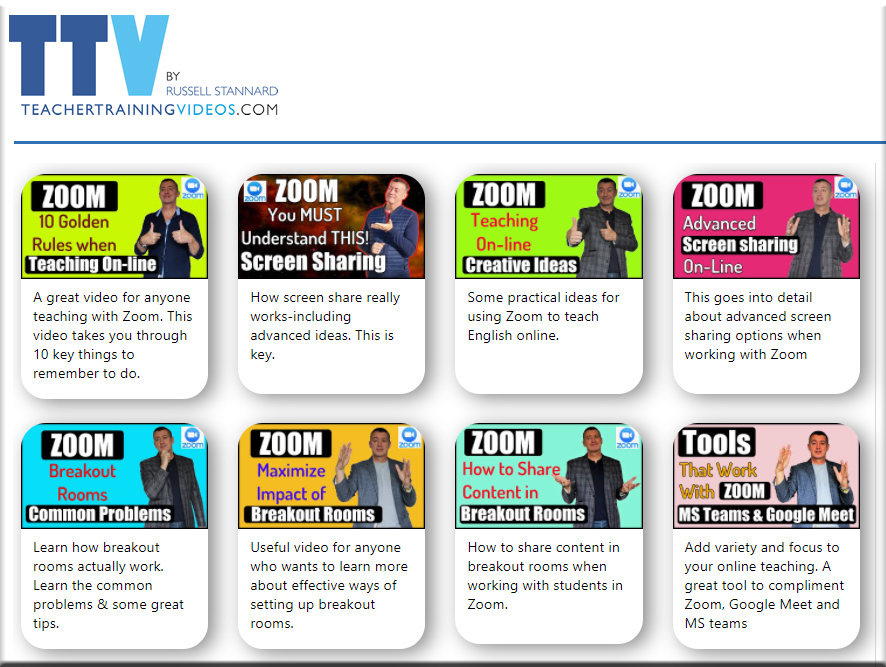
Finally, I bet AWS and Zoom could have said a LOT more than they actually said.

#learningfromthelivingclassroom


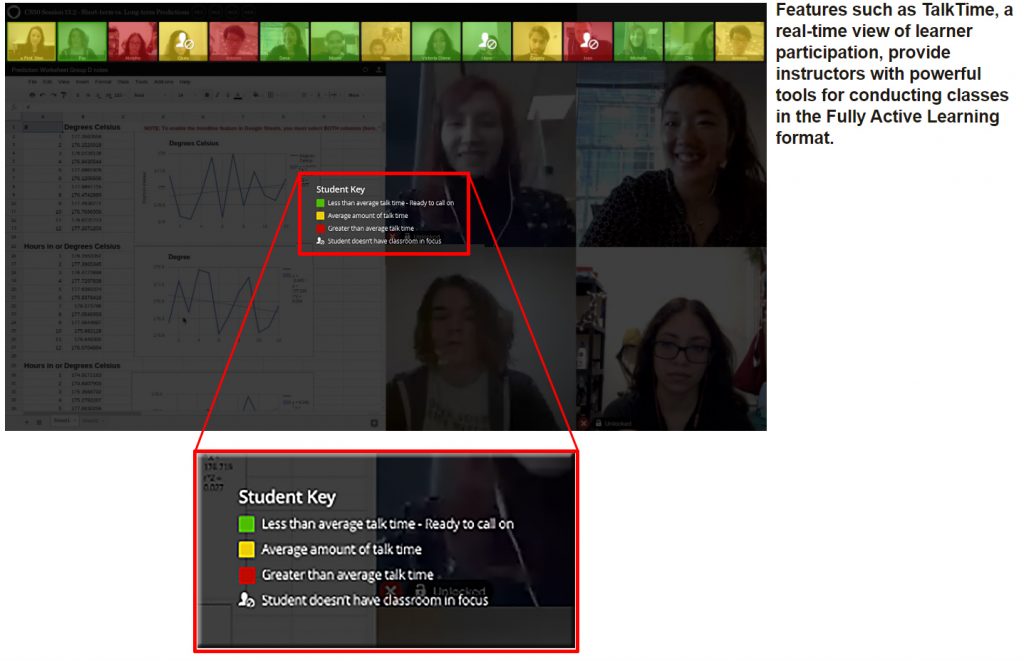
What doors does this type of real-time translation feature open up for learning? [Christian]

From DSC:
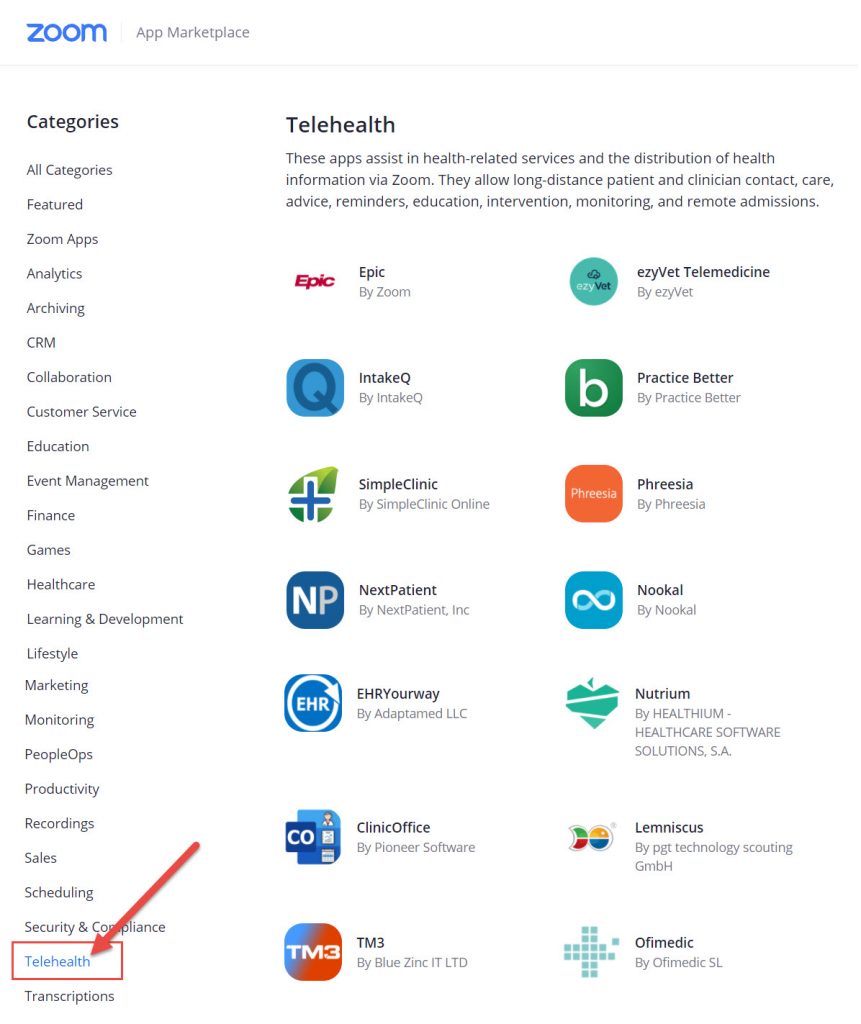
For that matter, what does it open up for #JusticeTech? #Legaltech? #A2J? #Telehealth?


Learning from the living class room


Transforming the classroom with augmented learning — from thetechedvocate.org by Matthew Lynch

Excerpt:

Forbes documented the many ways that augmented reality (AR) has come to life in recent years. They list several award-winning apps that use AR. A few are:

  • The “Gatwick Airport Passenger” App, which helps passengers navigate the airport;
  • The “Dulux Visualizer” App, which  lets you virtually scan and paint your room any color you choose;
  • “Envisioned by the Mine” App, which lets you put 3D images of any type of accessory or furnishing in your home that Lowe’s offers;
  • “Sephora Virtual Artist”, which allows you to “put makeup on” without actually touching brush to face;
  • “Accuvein”, which doctors and nurses use to scan a patient’s vein network (it reduces escalations by 45%);
  • And, of course, there are apps like the “BIC DrawyBook App” just for fun.

But what about the classroom? Can we see a future in transforming the classroom with augmented learning?

From DSC:
Along the lines of developing creativity with edtech…

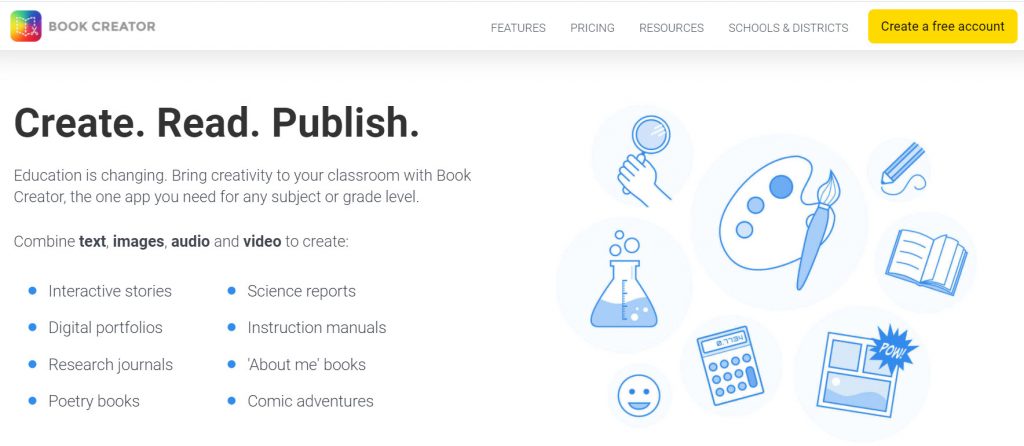
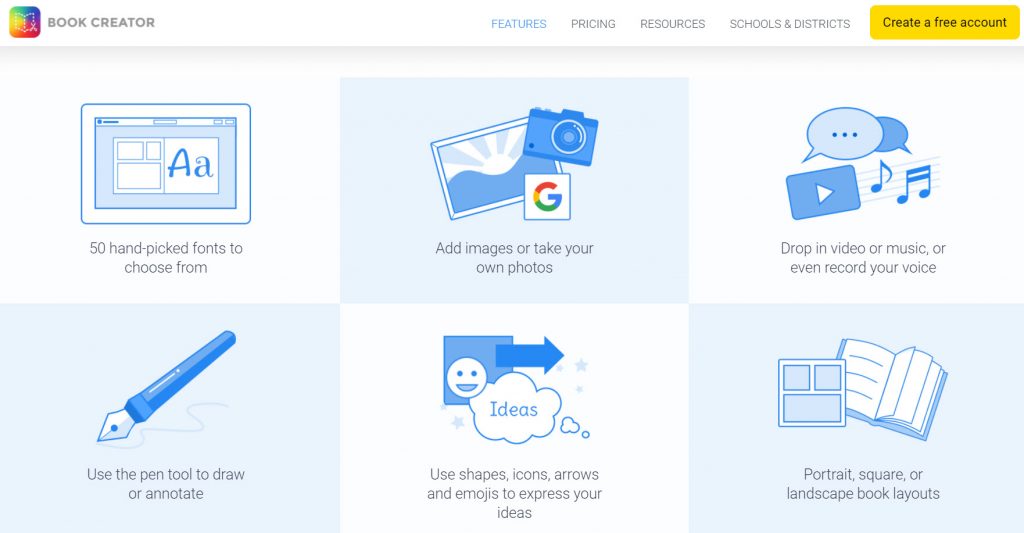
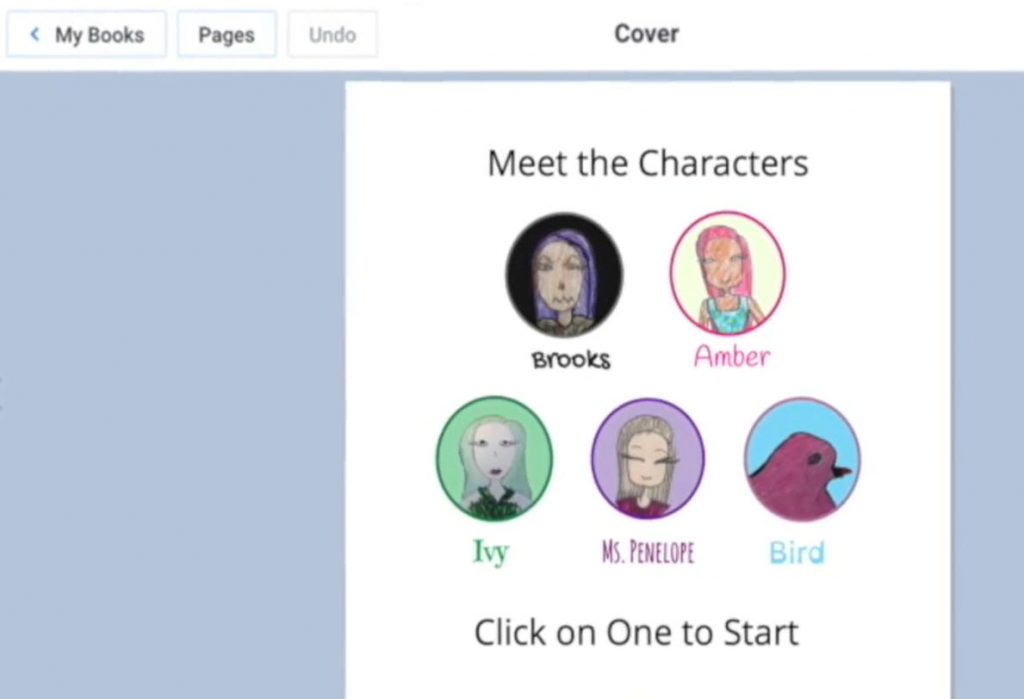
I saw another item recently about Book Creator, something that’s made this blog before. I love that type of tool because it promotes creativity, unleashes a student’s imagination, promotes their artwork and writing/storytelling and their musical or acting abilities, and it develops skills in design and developing multimedia-based artifacts. For teachers, it could be a nice project-based learning exercise. 

I asked our youngest daughter if she would like to use it…we’ll see. You can get a free account that allows you to publish up to 40 books. (Plus there is pricing for schools and districts.)

And who knows…? This type of thing might just produce the next J.K. Rowling or a J.J. Abrams.
Book Creator -- check it out

Book Creator -- check it out

Book Creator -- check it out


Reading Wikipedia in the Classroom is the Wikimedia Foundation’s flagship teacher training program, helping both educators and students to develop vital media and information literacy skills for the 21st century, including:

  • Understanding how information is produced
  • How to access and evaluate content online
  • How to understand biases and knowledge gaps in the information they consume


Zoom will have automatic translation in real time to videoconferences after buying the company Kites — from entrepreneur.com
Video calling platform Zoom bought a German startup specializing in language translation using Artificial Intelligence.

Excerpt:

Through its official blog , Zoom announced that they are in negotiations to acquire the company Karlsruhe Information Technology Solutions , abbreviated Kites . It is a German startup dedicated to the development of real-time machine translation solutions or MT, for its acronym in English.

Also see:


2U, Inc. and edX to Join Together in Industry-Redefining Combination — from transformingdigitaleducation.com

  • 2U to acquire substantially all edX assets, including edX brand, website, and marketplace
  • Together, 2U and edX will reach over 50 million learners, serve more than 230 partners, and offer over 3,500 digital programs on the world’s most comprehensive free-to-degree online education marketplace
  • Proceeds of the transaction will go to a nonprofit led by Harvard and MIT focused on transforming educational outcomes, tackling learning inequities

Other items related to this:


Facebook to target Nigerian learners with educational app Sabee, created by its R&D team — from techcrunch.com by Sarah Perez

Excerpt:

Last fall, Facebook announced it was opening an office in Lagos, Nigeria, which would provide the company with a hub in the region and the first office on the continent staffed with a team of engineers. We’ve now spotted one of the first products to emerge from this office: an education-focused mobile app called Sabee, which means “to know” in Nigerian Pidgin. The app aims to connect learners and educators in online communities to make educational opportunities more accessible.


No, it doesn’t need to be a Zoom — from wired.com by Chris Stokel-Walker
We’re wasting hours of our lives on inefficient video calls. Here’s how to decide when you should jump on a Zoom – and when not to

Excerpt:

Academic research has pinpointed four reasons why we’re growing sick of video calls. For one thing, we’re engaged in an unnaturally large amount of eye contact, which can prove exhausting, according to Jeremy Bailenson professor at Stanford University and founding director of the Stanford Virtual Human Interaction Lab. We’re also stressed out by being confronted with our own face for hours on end (even if you can’t stop staring at it). Bailenson compares it to be followed around with a mirror all day.

From DSC:
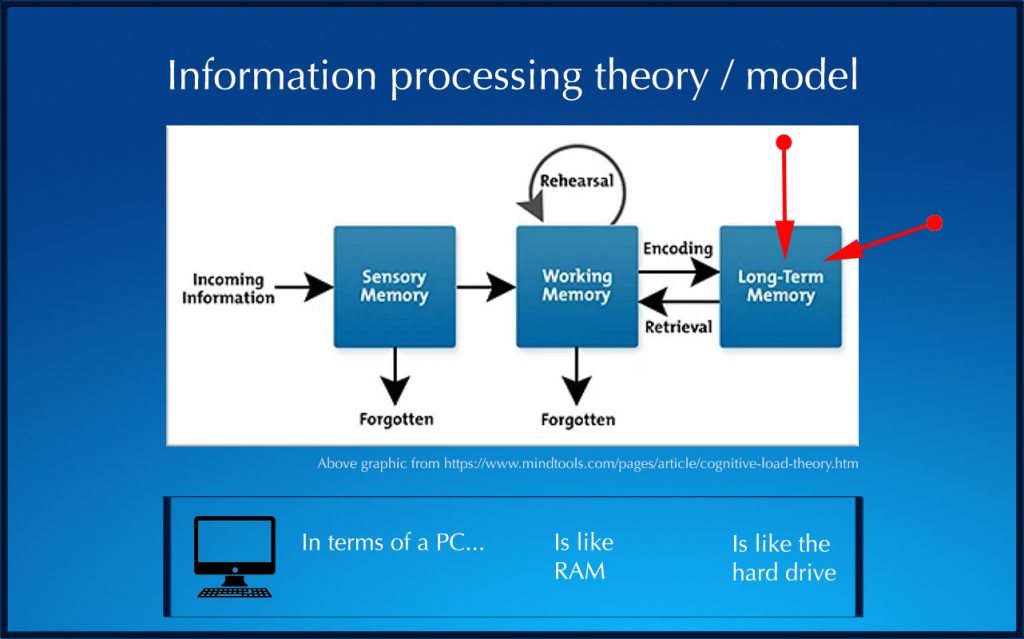
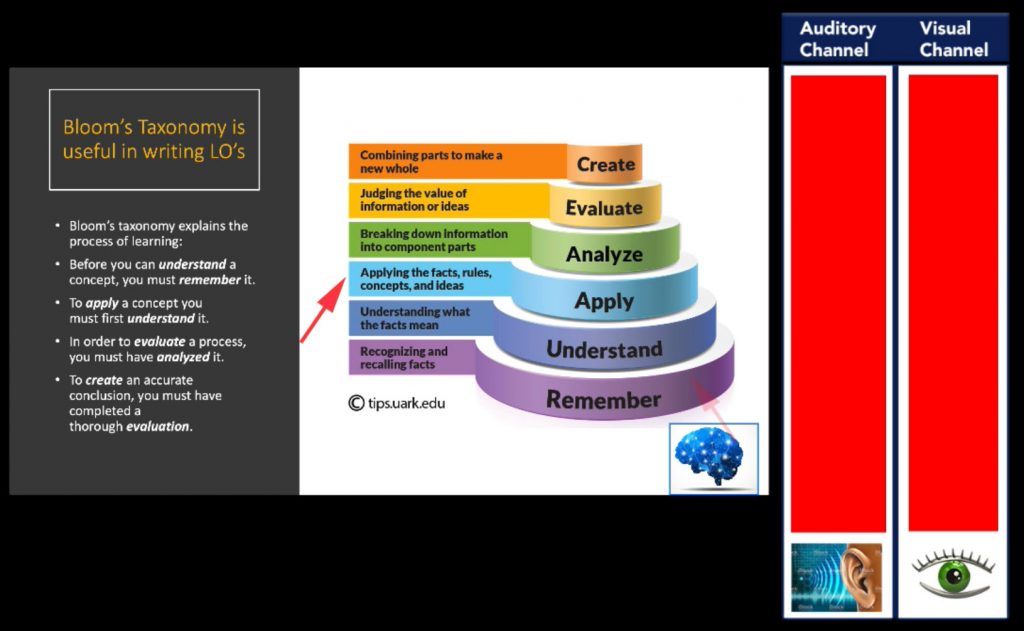
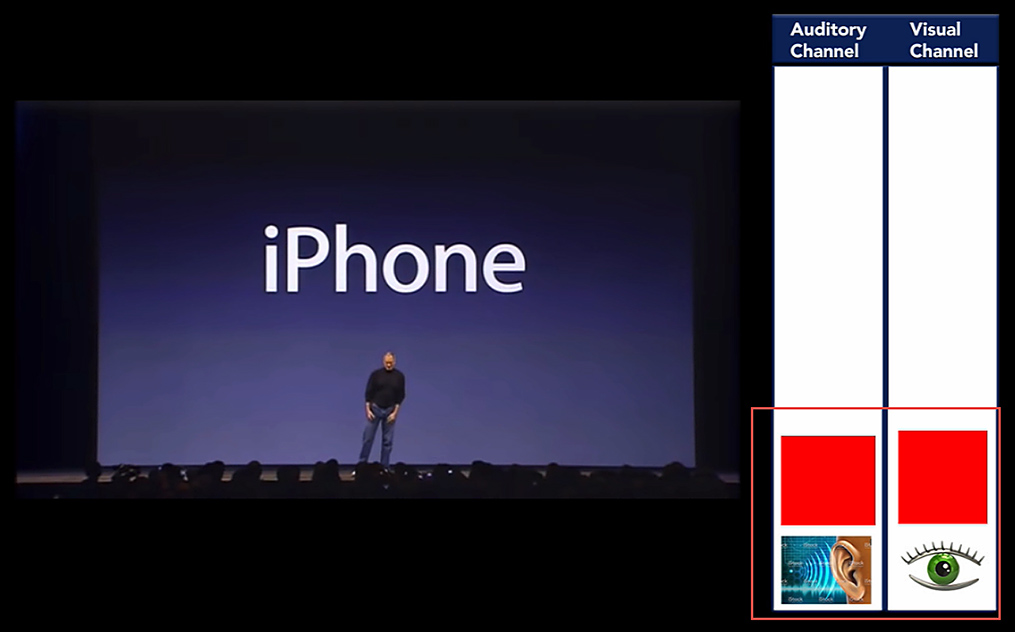
What comes to my mind here is that videoconferencing — and meeting in general — requires mental work — and thus energy. Why? Because, as I mentioned in this posting, we are constantly processing auditory and visual channels. 


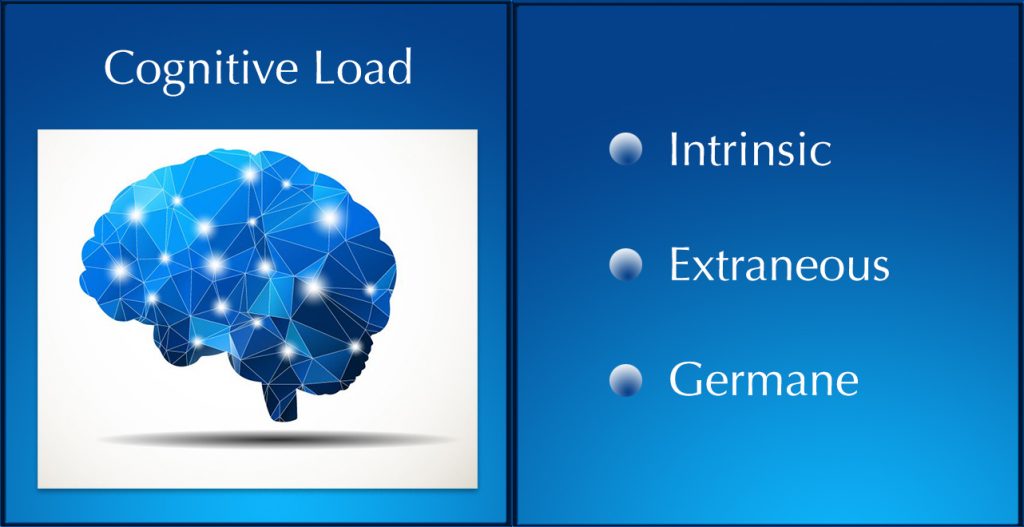
What is cognitive load? And why should I care about it?

Transcript here.


From DSC:
So having to process auditory and visual information hour after hour takes major energy! And some presentations/presenters require a lot more energy than others.

Having to process auditory and visual information hour after hour takes major energy!


watching a presentation by Steve Jobs requires a lot less auditory and visual processing


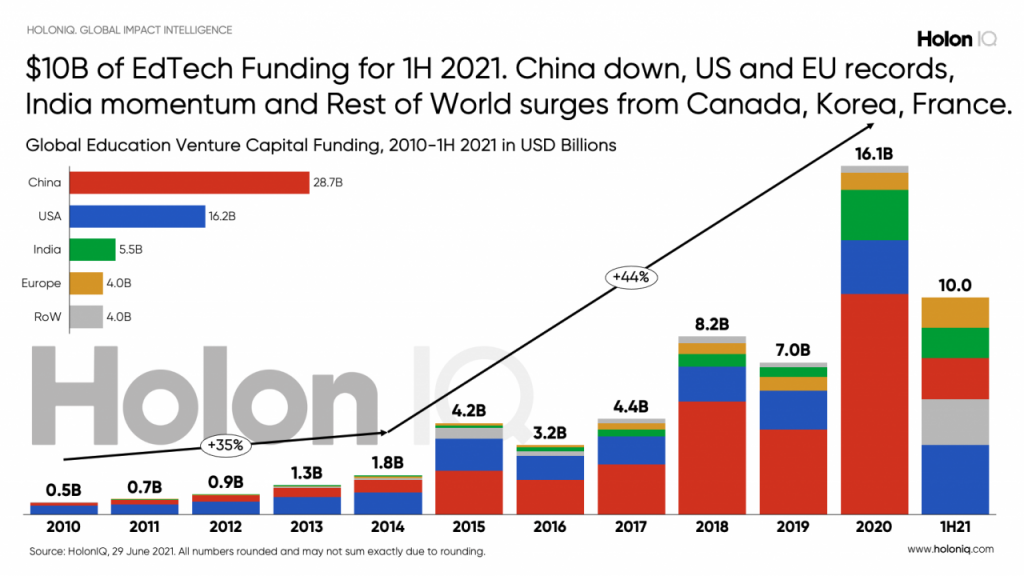
Coursera: The ‘Amazon’ Of Online Education May Grow By Magnitudes — from seekingalpha.com

Summary

  • Increasing student dissatisfaction and declining enrollment suggest that many people are rethinking traditional methods of higher education.
  • The historical value of universities is becoming defunct as the internet allows a more efficient, less expensive, and more accessible vector of transmitting knowledge.
  • Innovative platforms like Coursera offer students a huge “marketplace” of high-quality courses far less expensive than those in traditional universities.
  • Given Coursera’s minimal barriers to growth and its massive total addressable market, I would not be surprised to see its annual revenue rise by 10X or more within years.
  • COUR may be one of the few recent IPOs which is actually trading below its fundamental fair value – subject to the assumption that online education will eventually supersede traditional models.


The Next Great Disruption Is Hybrid Work—Are We Ready? — from Microsoft

“Over the past year, no area has undergone more rapid transformation than the way we work. Employee expectations are changing, and we will need to define productivity much more broadly — inclusive of collaboration, learning, and wellbeing to drive career advancement for every worker, including frontline and knowledge workers, as well as for new graduates and those who are in the workforce today. All this needs to be done with flexibility in when, where, and how people work.”

Satya Nadella, CEO at Microsoft

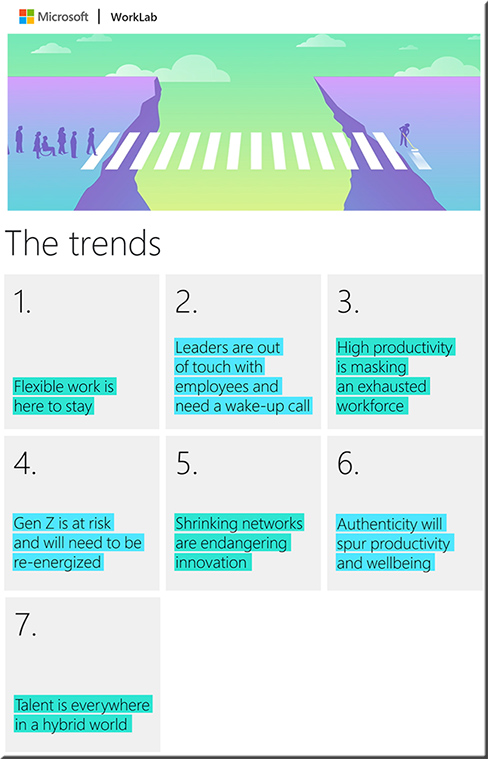
This graphic lists the 7 trends out at a new report from Microsoft re: the future of work and the trends that they are seeing.


Also see:


© 2025 | Daniel Christian