From DSC:
The other day, I put this post out there.

Now, I’d like to add to that information with information from Mr. Joseph Byerwalter, who pointed me to the following videos re: LEGO BOOST!


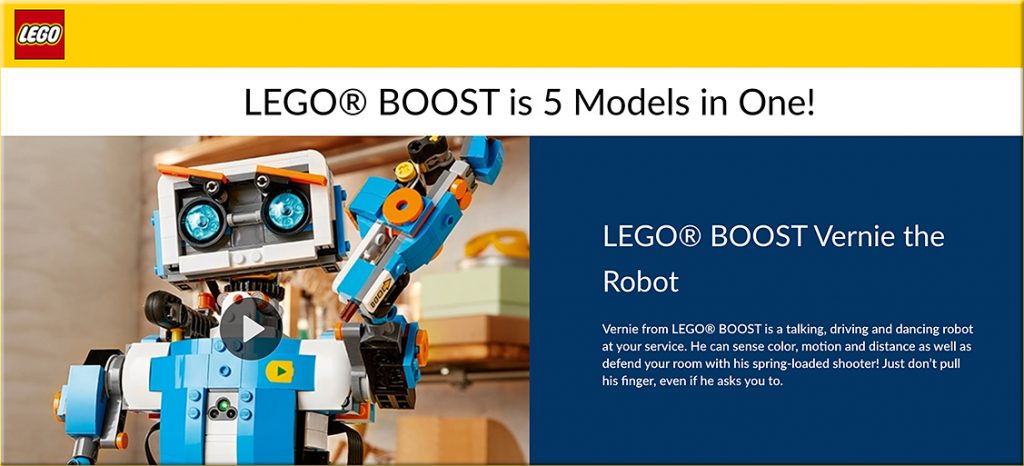
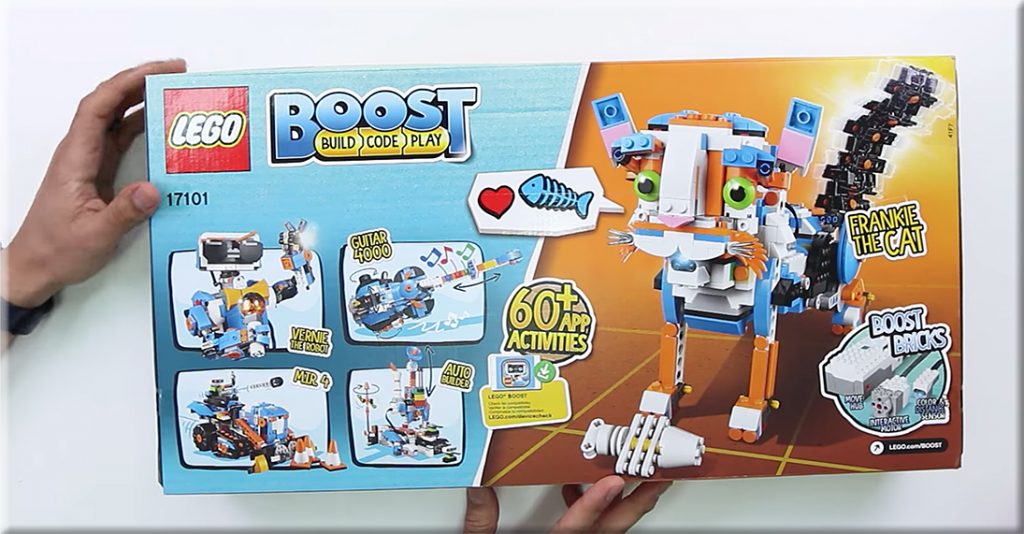
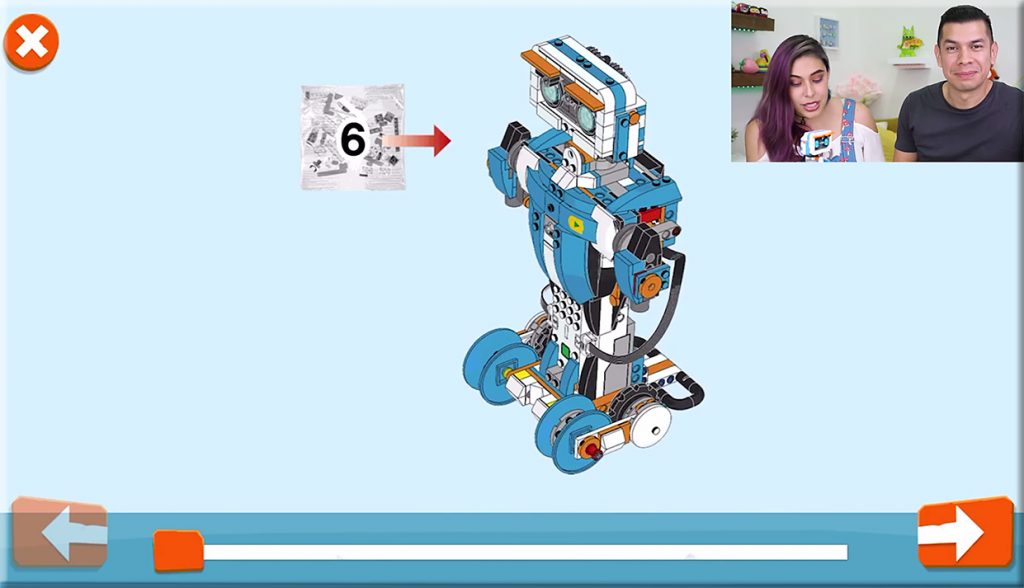
LEGO® BOOST lets children create models with motors and sensors, and then bring their creations to life through simple, icon-based coding commands. The free LEGO BOOST tablet app includes easy step-by-step building instructions for creating and coding multifunctional models.

P.S. I am not getting paid by LEGO or anyone else here.
I just think learning should be engaging and fun!


LEGO BOOST


LEGO BOOST


LEGO BOOST


LEGO BOOST


LEGO BOOST


LEGO BOOST


LEGO BOOST


LEGO BOOST

Addendum on 10/18/19:


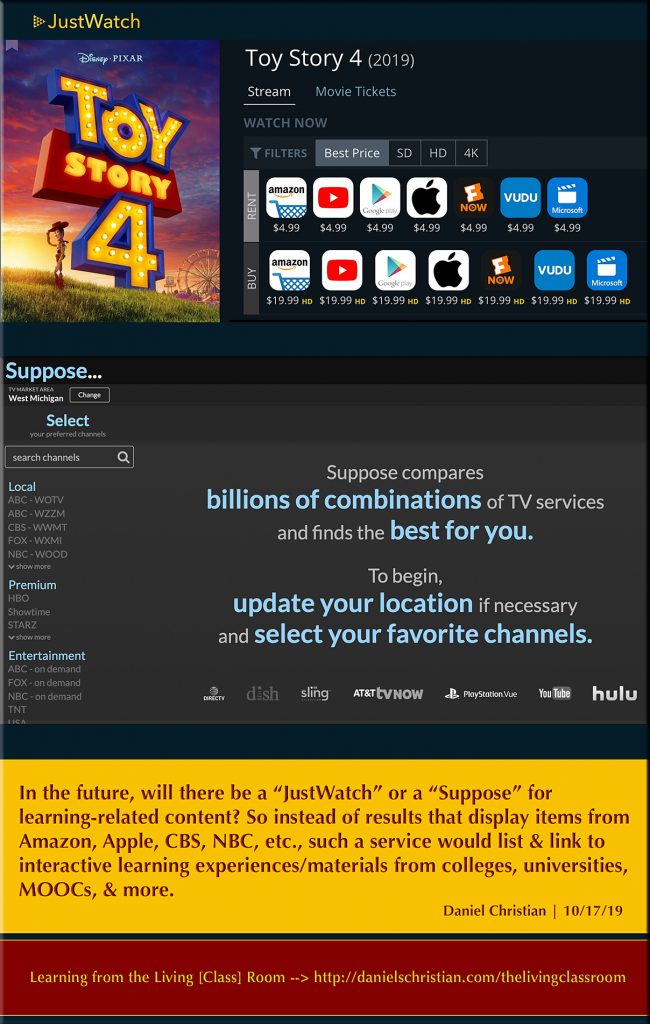
DC: In the future…will there be a “JustWatch” or a “Suppose” for learning-related content?

DC: In the future...will there be a JustWatch or a Suppose for learning-related content?


5 good tools to create whiteboard animations — from educatorstechnology.com

Excerpt:

In short, whiteboard animation (also called video scribing or animated doodling) is a video clip in which the recorder records the process of drawing on a whiteboard while using audio comment. The final result is a beautiful synchronization of the drawings and the audio feedback. In education, whiteboard animation videos  are used in language teaching/learning, in professional development sessions, to create educational tutorials and presentations and many more. In today’s post, we are sharing with you some good web tools you can use to create whiteboard animation videos.


From DSC:
Is this only on Pixel 4? If so, too bad. It has a lot of potential — especially for students and lecture capture!

Speaking of lecture capture…Panopto offers an incredible search feature for searching text, audio, and video!

“With Panopto, you can search through your video library the same way you’d search across the internet, or through your email.

  • By any keyword spoken in your videos
  • By any word that ever appears on-screen or anywhere else in your video
  • By traditional and advanced metadata, including tags and titles, viewer notes and comments, and even speakers notes from your PowerPoint slides.
  • Panopto enables you to search across every video in your library…and get specific results that fast-forward to the exact moment the keyword occurs in your video.”


Students nationwide to join coding boot camp phase of 2019 National Cyber Robotics Coding Competition — from gocoderz.com

Excerpts:

During the first phase, a two-week boot camp, students and educators begin learning about coding and robotics in a virtual, highly scaffolded “sandbox” on the competition platform, the award-winning CoderZ Cyber Robotics Learning Environment. The cloud-based platform features a graphical simulation of LEGO Mindstorms EV3 robots; users activate the virtual robot, or “cyber-robot,” in game-like “missions” and watch the results in a real-time simulation.
…
Organized by ISCEF, the Intelitek STEM and CTE Education Foundation, the national CRCC is the first-of-its-kind, online coding and robotics tournament for students in grades 5-8 that enables schools, districts, after-school programs and clubs to engage students in STEM learning.


Also see:

Cyber Robotics 101 Course

Bring Cyber Robotics into your classroom. Use the appeal of robotics and gaming to introduce all your students to coding

The solution empowers all students to learn STEM.
Students learn how to code and operate virtual robots guided by a step-by-step instruction and gamified missions completely online. No need for expensive hardware or specialized training.

CoderZ is classroom ready, designed for teachers, and school friendly. The courseware can be teacher-led, self-paced or used in flipped classroom.

Level: Middle School (5 – 8th Grade). No previous knowledge is needed.
Length: 15 hours of courseware and programming exercises

Give students an in depth look at STEM and cyber robotics using all the available teacher resources…

Coding Robots

Introduce students to the concepts of Robots and Code with CoderZ, an online learning environment for programming real and virtual robots.

The Robotics & Coding STEM Curriculum brings your students up to speed with code and robotics in no time. This 45 hour program will teach your students to solve STEM problems through code, using math and engineering to overcome challenges. CoderZ uses engaging simulation so students will have immediate life-like feedback and can work from any computer, even from home, making sure all students get to code their robot even when time and resources are limited.

The Coding Robots STEM Curriculum brings your students up to speed with code and robotics in no time. This 45 hour program will teach your students to solve STEM problems through code, using math and engineering to overcome challenges. CoderZ helps get teachers started with robotics and bring the interdisciplinary value of STEM into the classroom. CoderZ uses engaging simulation so students will have immediate life-like feedback and can work from any computer, in class or at home, making sure all students get to code their robot even when time and resources are limited.

Learning Robotics and Coding with CoderZ

CoderZ is an online STEM learning environment where students worldwide engage in Robotics and Computer Science Education (CSEd) by coding virtual 3D robots.


Priorities for new lawyers are changing. Can the legal industry keep up? — — from law.com by Annie Datesh, Natasha Allen, and Nicole Hatcher, Atrium
As the legal field continues to move forward, it is well-primed to place greater value on technological advancements, diverse leadership, and healthy work cultures over settling for the status quo.

Excerpts:

Yet the legal industry these lawyers are joining is evolving, and now increasingly hosts a new cohort of professionals—those shaped by technology and innovation, and who value diversity, mentorship, and efficiency over homogeneous workplaces with minimal coaching and exhausted capacities.
…
Amid a strengthening job market, why are jobs in a generally well-respected industry being looked over in favor of other industries? One reason could be the legal industry’s notorious lack of progressiveness. The industry’s technology landscape is one such area of slow growth; its lack of diversity is another.

The legal industry’s long-standing dismissal of technology, while slowly changing, is fairly well known. While legal technology holds enormous potential for law firms, the industry as a whole has been famously slow to adopt modern technologies or meaningfully innovate on the traditional law firm business model. Why? For smaller firms, money can be tight, and solutions can be expensive.


The good news is that the legal industry is slowly but surely becoming more receptive to the benefits of evolving its traditional approach to the business and practice of law. Legal technologies continue to offer increased efficiencies to law firms, should they elect to adopt them, and the call for diversity and other cultural improvements within firms and the legal industry more broadly is on the rise.
…
Those players in the legal industry who are able to recognize prevailing industry trends now will be in the best position to act on them.


An inserted graphic from DSC:


Also see:

Blockchain: 5 Ways Cybercriminals Can Hack The Unhackable — from disruptionhub.com


From DSC:
Though this posting sounds negative on blockchain, I don’t mean it to be…as I think it may very well have a future. But these postings show that it’s still early in the game here.


Pre-to-3: App uses medical model to screen for dyslexia — from educationdive.com by Linda Jacobson
?Children can administer the assessment themselves, and teachers get resources on how to respond if students are missing key literacy milestones.

Excerpt:

That’s why she wanted to provide educators with a screening instrument children can administer themselves, and one that provides strategies to help children when they miss key early literacy milestones in areas such as vocabulary, oral listening comprehension and phonological awareness.

The Boston Children’s Hospital Early Literacy Screening System is a 20-minute, game-based, adaptive app being piloted in 40 schools in nine states.


The Future Ready Lawyer — from Wolters Kluwer

Excerpts:

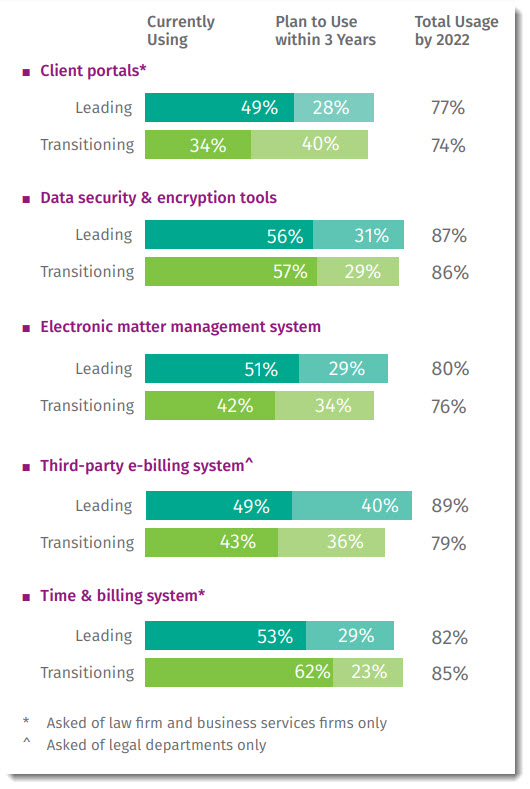
Leveraging technology as a strategic advantage is characteristics of high-performing businesses and professionals around the world. The same is true for the legal sector. Technology is a differentiator, and will become even more important as legal professionals recognize and leverage the unprecedented insights, capabilities and efficiencies that technology delivers. In addition, the emerging legal ecosystems will demand it, as tech-empowered players outside of the traditional legal profession continue to enter and disrupt the market.


Excerpt from the Future Ready Lawyer


From DSC:
It’s interesting to note how many times the words “technology” (205 times) and/or the word “technologies” (77 times) appear in that report.


Accessibility and Usability Resource site from Quality Matters


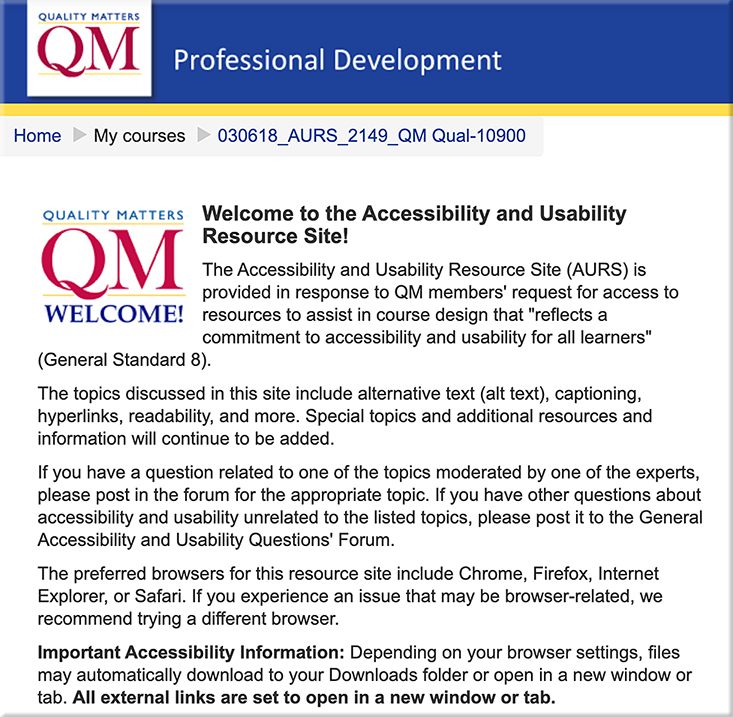
Meet AURS — Your go-to resource for addressing accessibility challenges — from wcetfrontiers.org and Quality Matters

Excerpt:

Accessibility is not only one of the main areas of focus for WCET, but a consistent issue and opportunity for higher education institutions. In order to support faculty, instructional designers, and others who work in the area, Quality Matters, a WCET member, created a new resource site for educators to get information on how to address key accessibility and usability concerns. Today’s post introduces the new website, AURS, and reviews the development process for the site and the resources.


Three threats posed by deepfakes that technology won’t solve — from technologyreview.com by Angela Chen
As deepfakes get better, companies are rushing to develop technology to detect them. But little of their potential harm will be fixed without social and legal solutions.

Excerpt:

3) Problem: Deepfake detection is too late to help victims
With deepfakes, “there’s little real recourse after that video or audio is out,” says Franks, the University of Miami scholar.

Existing laws are inadequate. Laws that punish sharing legitimate private information like medical records don’t apply to false but damaging videos. Laws against impersonation are “oddly limited,” Franks says—they focus on making it illegal to impersonate a doctor or government official. Defamation laws only address false representations that portray the subject negatively, but Franks says we should be worried about deepfakes that falsely portray people in a positive light too.


Big money is betting on legal industry transformation — from forbes.com by Mark Cohen

Excerpts:

Law has been big business for decades, but only recently has significant venture capital, private equity, and entrepreneur money been pumped into the legal sector. Last year saw an eye-popping 718% increase in legal industry investment, and this year’s capital infusion through the third-quarter has already surpassed last year’s $1 billion total and could well double it. Capital is turbocharging customer-centric providers that are leveraging technology, process, new skillsets, and data to transform the legal function and the delivery of legal services.

…
Teaser alert: what’s to prevent Amazon, Google, or some other tech giant from entering the legal space, creating a global platform, injecting billions into infrastructure and talent, creating a global legal services hub that connects consumers with global legal delivery sources as never before imagined? Short answer: the inclination to do so.


Legal delivery has morphed into a three-legged stool supported by legal, technological, and business expertise. 


‘Goliath is winning’: The biggest U.S. banks are set to automate away 200,000 jobs — from gizmodo.com by Brian Merchant

Excerpt (excerpt):

Over the next decade, U.S. banks, which are investing $150 billion in technology annually, will use automation to eliminate 200,000 jobs, thus facilitating “the greatest transfer from labor to capital” in the industry’s history. The call is coming from inside the house this time, too—both the projection and the quote come from a recent Wells Fargo report, whose lead author, Mike Mayo, told the Financial Times that he expects the industry to shed 10 percent of all of its jobs.

This, Mayo said, will lay the groundwork for, and I quote, “a golden age of banking efficiency.” The job cuts are slated to hit front offices, call centers, and branches the hardest, where 20-30 percent of those roles will be on the chopping block. They will be replaced by better ATMs, automated chatbots, and software instruments that take advantage of big data and cloud computing to make investment decisions.

“The next decade should be the biggest decade for banks in technology in history,” Mayo said.


From DSC:
How does this impact entry level positions? How does this help a young graduate who is trying to get out of the Catch 22 with job experience? How are colleges and universities helping young people navigate these quickly changing landscapes?


IT laggards could lose up to $20 billion in revenue over the next 5 years, says Accenture — from zdnet.com by Larry Dignan
Accenture’s leaders see enterprise technologies as a system compared to independent fixes and bet on cloud, AI, big data analytics and IoT.

Excerpt:

Companies that fail to scale innovation may lose up to $20 billion in revenue over the next five years as enterprises thrive or dive based on information technology decisions, according to Accenture.

Accenture’s report was based on a survey of more than 8,300 companies across 20 industries and 22 countries. Accenture scored companies on technology adoption, depth of technology adoption and cultural readiness. From there, Accenture segmented companies into leaders, defined as the top 10%, and laggards, which represent the bottom 25%.


Also see:

 
© 2025 | Daniel Christian