A ‘New Normal’ Requires New Tools for Attendance and Family Engagement — from edsurge.com by Liesel Carlson

Excerpt:

Mini arrived at the Office of School Culture in Michigan’s Lansing School District in December 2020. She came on board to help us assess our attendance goals and strategies several months into a global pandemic. Mini immediately organized our scattered data and got to work pushing critical information about attendance to families by sending positive “nudges” via text messages, offering empathetic support and guidance.

Mini happens to be a chatbot.


Sites and apps to enjoy with your kids — from wondertools.substack.com by Jeremy Caplan

Check out Jeremy’s list of sites and apps to review with your kids re:

  • Making music delightful
  • Bringing joy to science, math, and coding
  • Other fantastic resources for kids and families


BlueJeans Video Conferencing Giant to Launch Native Google Glass App for Remote Assistance — from next.reality.news by Adario Strange

Excerpt:

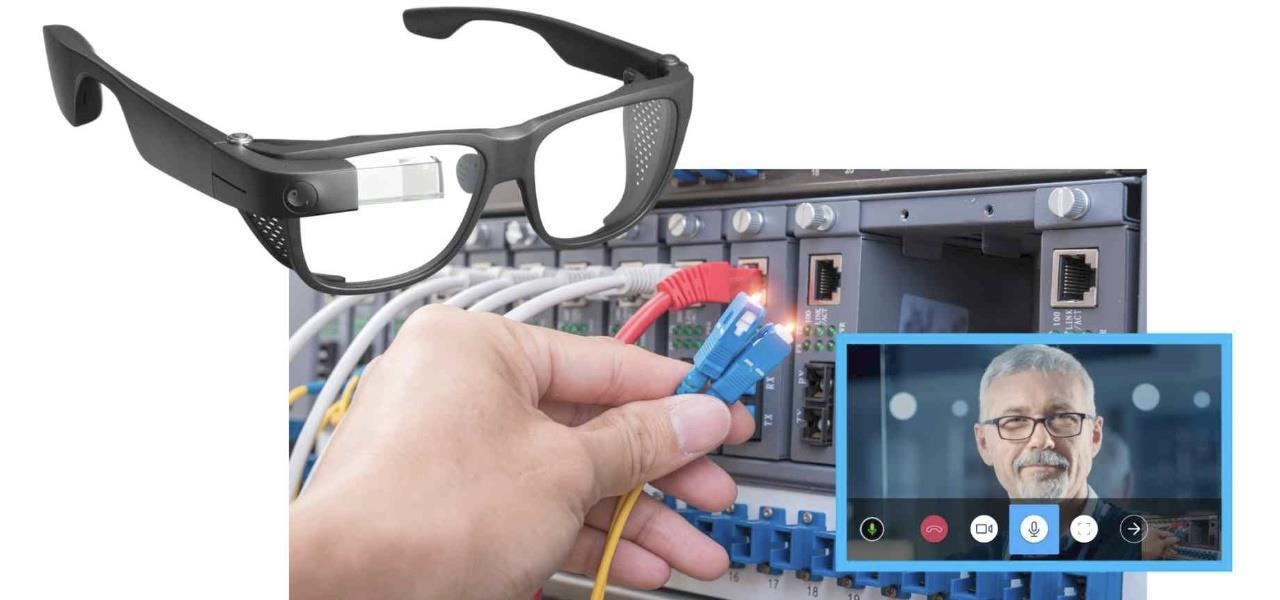
Starting in 2022, Glass Enterprise Edition 2 users will have the option of using a native version of the BlueJeans meeting software.

Like other enterprise AR wearables on the market, the primary use case for the dynamic will be in the realm of remote assistance, in which an expert in a faraway location can see what a Google Glass wearer sees and advise that team member accordingly.

From DSC:
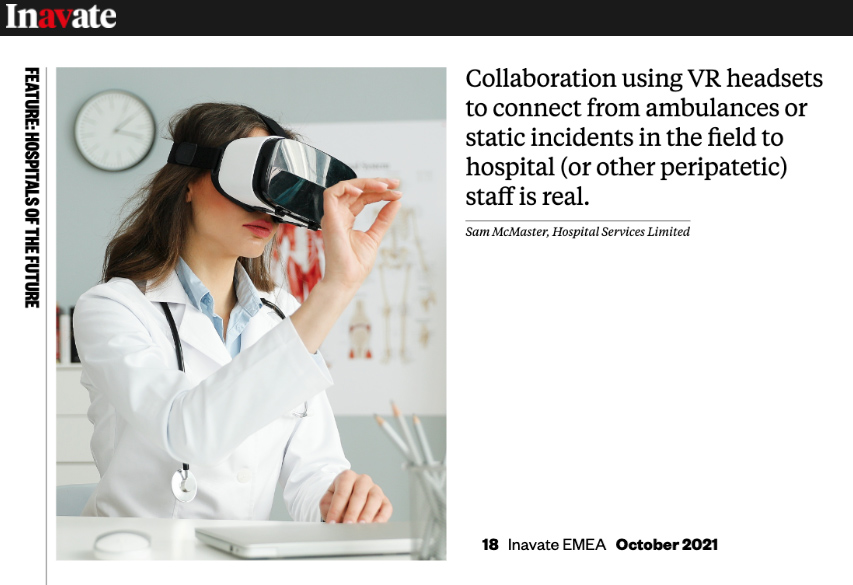
Remote support is also occurring in healthcare. What might “telehealth” morph into?

Remote support is also occurring in healthcare. What might telehealth morph into?


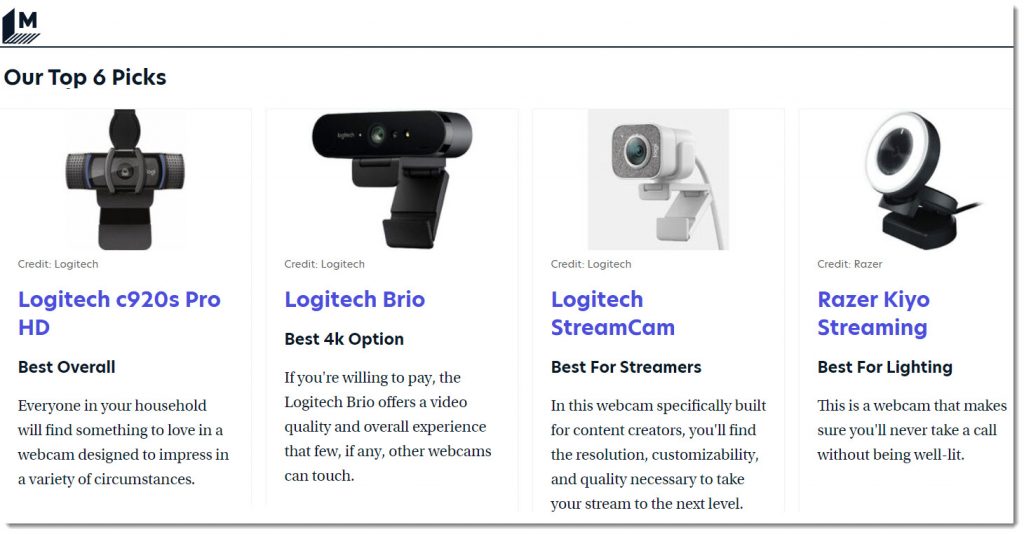
Best Wireless Keyboard and Mouse for Teachers 2021 — from techlearning.com by Luke Edwards
The best wireless keyboard and mouse for teachers can give freedom to move without losing ease of input

The following don’t focus much on Apple’s products, but you can also see:


Could AR and/or VR enable a massive 3D-based type of “Voicethread?” [Christian]

From DSC:
What if we could quickly submit items for a group to discuss, annotate, and respond to — using whichever media format is available/preferable for a person — like a massive 3D-based Voicethread? What if this type of discussion could be contributed to and accessed via Augmented Reality (AR) and/or via Virtual Reality (VR) types of devices?

It could be a new 3D format that a person could essentially blow all the way up into the size of a billboard. Think, “Honey, I shrunk the kids” type of stuff.  

Input devices might include:

  • Augmented Reality (AR) glasses
  • Virtual Reality (VR) headsets/glasses
  • Scanners
  • Smartphones
  • Tablets
  • Desktops and laptops
  • SmartTVs
  • Other types of input devices

For example, a person could take a picture of a document or something else and then save that image into a new file format that would be vector-based. I say a vector-based file format so that the image could be enlarged to the size of a billboard without losing any resolution (i.e., wouldn’t become grainy; the image would remain crystal clear regardless of how big the image is). I’m thinking here along the lines of “Honey, I shrunk the kids!”

Other thoughts here:

  • The files could be accessible online for attendees of classes or for audiences of presentations/webinars
  • The files could be displayed on the walls of learning/presentation spaces for marking them up
  • One could manipulate the 3D image if that person was using a virtual/immersive environment
  • Users should be able to annotate on those images and/or be able to save such annotations and notes

A question for phase II:
Could this concept also be used if virtual courts take off?

Hmmmm…just thinking out loud.


ANALYSIS: Break Down Barriers to Legal Tech Usage With Training — from news.blooberlaw.com by Francis Boustany

Excerpt:

Many law firms and legal departments report barriers to using legal technology, and insufficient training may be a root cause. To help break down these barriers, organizations should consider creating more opportunities for their lawyers and staff to train on legal technology.

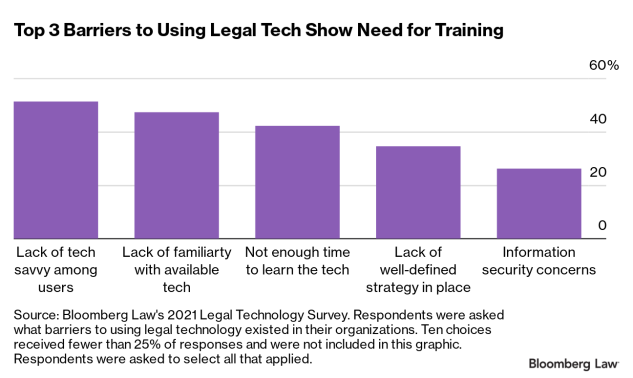
When asked to select what barriers to using legal technologies exist at their organizations, respondents to Bloomberg Law’s 2021 Legal Technology Survey indicated that the top obstacles are a lack of tech savvy, a lack of familiarity with available technology, and not enough time to learn the technology.


From DSC:
If it’s not already in place, all law schools should be offering curricula in this area from here on out.


Discovery Education Collaborates with AWS to Enhance Recommendation Engine — from discoveryeducation.com

Excerpt:

SILVER SPRING, MD [On Monday,?September 27, 2021] — Discovery Education—a worldwide edtech leader supporting learning wherever it takes place — announced that it has enhanced its K-12 learning platform with Amazon Web Services (AWS) machine learning capabilities. The pioneering use of machine learning within the Discovery Education platform helps educators spend less time searching for digital resources and more time teaching.
…
Several months of planning and deep collaboration with AWS enabled Discovery Education to innovatively integrate Amazon Personalize technology into the “Just For You” area of its K-12 platform. The “Just For You” row connects educators to a unique, personalized set of resources based on the grade level taught, preferences, and assets used in the past.

“For some time, educators have desired more resources to help personalize teaching and learning. ML technology is already being used to curate our entertainment experiences, help with workforce productivity, and more, and it’s exciting to see this innovation is being integrated into classrooms,” said Alec Chalmers, Director, EdTech and GovTech Markets at AWS.

From DSC:
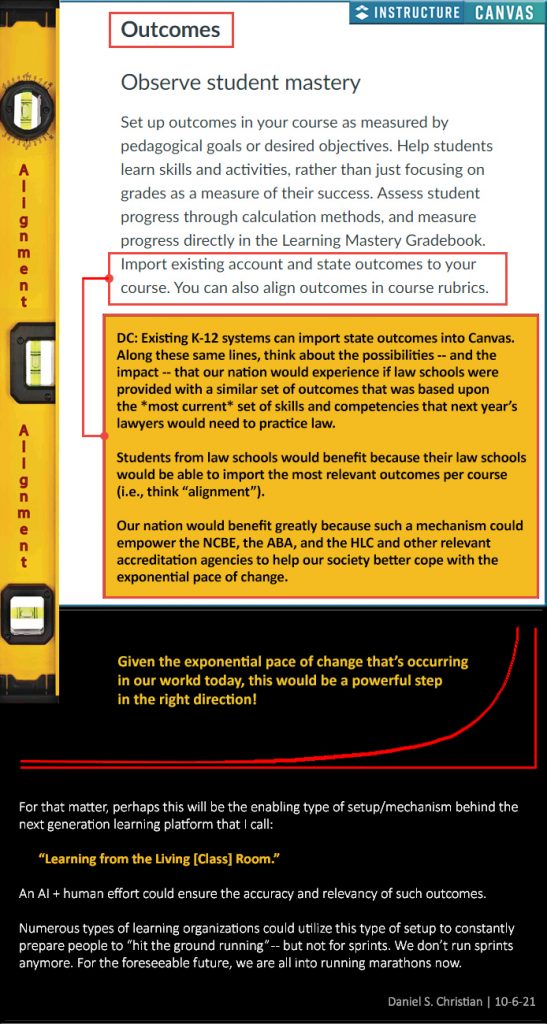
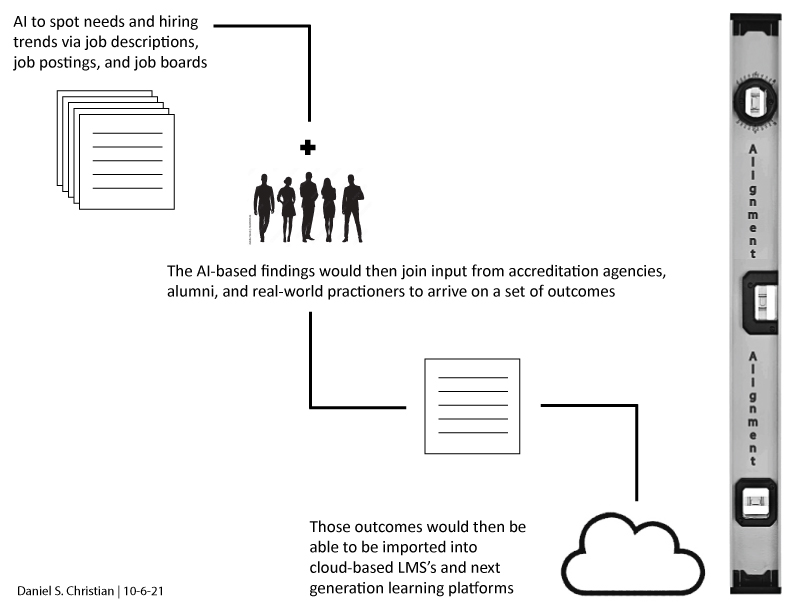
It looks like Amazon continues to make inroads into the education space. Team up this type of recommendation engine with an AI that’s pulling the latest skills that are needed for — and embedded within — job descriptions and you have a learning powerhouse. 

Disruption ahead…?


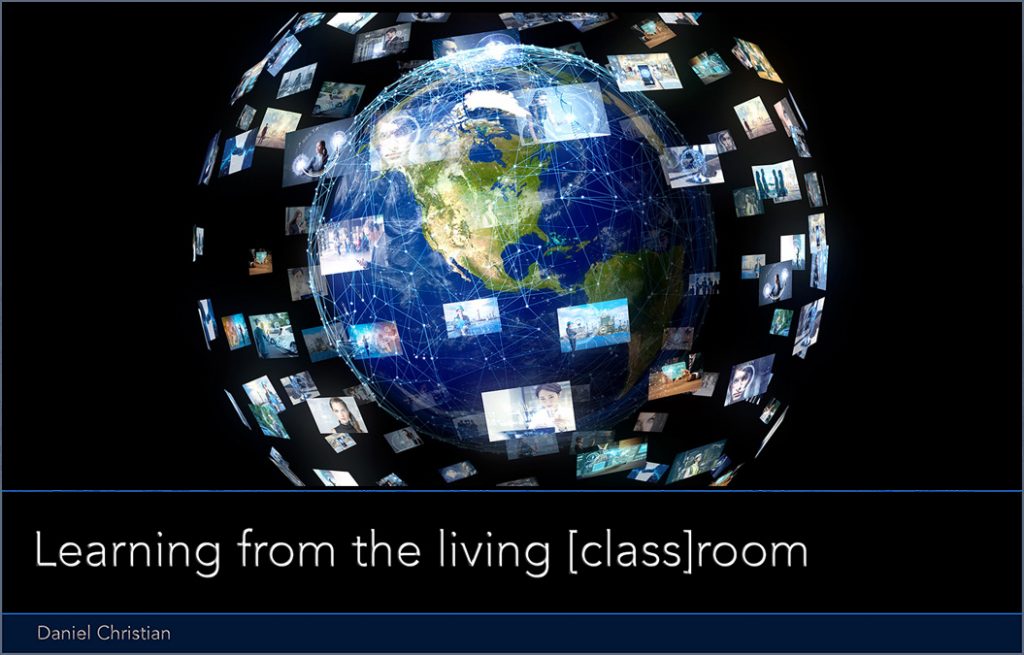
Learning from the living class room
Also see:

  • How Machine Learning Is Having an Impact on Education — from techlearning.com by Erik Ofgang
    Discovery Education has partnered with Amazon Web Services to enhance its platform with machine learning. It’s one of many ways machine learning is being used in K-12 today.
 

Twitter rolls out tipping with bitcoin, explores verifying NFT profile pics — from mashable.com by Jack Morse
Bitcoin is coming to Twitter.

Excerpt:

Twitter is leaning into the blockchain.

The social media giant announced Thursday that, starting immediately, users around the globe will be able to post their bitcoin wallet directly into their profile — while a more limited subset will be able to more directly integrate a bitcoin payment app. The addition of cryptocurrency payments to Twitter, via Tips (formerly dubbed Tip Jar), coincides with the larger rollout of Tips to all iOS users globally, with Android access promised in the near future.


What Will Online Learning Look Like in 10 Years? Zoom Has Some Ideas — from edsurge.com by Stephen Noonoo

Excerpt:

This week at Zoom’s annual conference, Zoomtopia, a trio of education-focused Zoom employees (er, Zoomers?) speculated wildly about what hybrid Zoom learning might look like 10 years from now, given the warp speed advances in artificial intelligence and machine learning expected. Below are highlights of their grandiose, if sometimes vague, vision for the future of learning on Zoom.

Zoom very much sees itself as one day innovating on personalized learning in a substantial way, although beyond breakout rooms and instant translation services, they have few concrete ideas in mind. Mostly, the company says it will be working to add more choices to how teachers can present materials and how students can display mastery to teachers in realtime. They’re bullish on Kahoot-like gamification features and new ways of assessing students, too.

Also see:

An Eighth Grader Was Tired of Being Late to Zoom School. So He Made an App for That. — from edsurge.com by Nadia Tamez-Robledo

“I could not find anything else that exists like this to automatically join meetings at the right times,” says Seth, a high school freshman based in Walnut Creek, Calif. “Reminders are just really easy to ignore. I’ll get a notification maybe five minutes before my meeting, and it’ll just sit there and not do anything. [LinkJoin] interrupts whatever you’re doing and says, ‘Join this meeting. In fact it’s already opening, so better get on it.’”


Zoom product updates showcase the art of the possible for hybrid work — from diginomica.com by Derek du Preez
Zoom’s annual conference – Zoomtopia – kicked off with a number of impressive product updates that highlight how we should be thinking about the future of hybrid work.

Excerpt:

Zoom CEO Eric Yuan kicked off the collaboration vendor’s annual conference – Zoomtopia – with a swathe of product updates that effectively showcase how we should be thinking about the future of hybrid work.
…
What’s clear is that Zoom is thinking well beyond its video call roots and is creating a platform that’s an effective place for people to get work done. Upcoming integrations with the likes of Google Drive and Dropbox are just part of this.

Features such as being able to continuously access and collaborate on content in a meeting, whether that be chats or files, whilst also having call transcriptions instantly accessible within the Zoom client after a call is completed, and having access to Zoom Whiteboard to create visual presentations – and being able to do this wherever you are – gives you an idea of how the vendor is thinking about making remote work as seamless and productive as possible.

From DSC:
The intense competition between vendors like Zoom, Cisco, Microsoft, and others will only benefit all of us in the longer term. Here’s to innovation! Online learning may never be the same again. For that matter, learning may never be the same again.


Active Learning: 5 Tips for Implementing the Approach — from techlearning.com by Erik Ofgang
Active learning provides ways to get your students engaged without needing to revamp how you teach.

Excerpts:

However, neither listening to a lecture or reading a textbook is the most efficient way to learn or what active learning is truly about. “What exactly do we mean by active learning?” Deslauriers says.  “We mean that first, you have to be engaged. Obviously, that’s number one. Number two, you have to be engaged productively. And number three, the productivity has to be toward a goal that is deemed worthwhile*.”

— Louis Deslauriers, Director of Science Teaching and Learning
in the Faculty of Arts and Sciences at Harvard University


From DSC:
I appreciated seeing/reading this solid article. Just a couple of reflections and highlights here…


* But worthwhile for whom? For the faculty members? The teachers? The trainers? Or for the learners, the students, or the employees? Where is agency here? Where does more choice and control come into play here? Where’s the motivation for me to learn something if someone keeps telling me what’s important to THEM? What’s relevant to THEM? Why should I care about this topic? How is it relevant? How will it help me get a job and/or make a positive difference in this world? Can I choose how deep I want to dive in?

Later…Deslauriers goes on to make a great point when urging a pause for students to practice some metacognition:

  • Does this make sense to me?
  • How is this relevant? <– DSC: There it is.
  • Does it connect with something I already know? And if so, how do I integrate with what I already know?
  • What sort of questions do I have right now?
  • Can I repeat what the instructor just did? Or is it going to require a lot of practice?

“There’s no way you can undergo these mental processes when someone keeps talking,”  Deslauriers says. But if educators pause during their lectures and encourage this type of focus, they can help their students learn more efficiently.


 Instructors can hand out electronic clickers, use web-based tools such as Google forms, or even go completely low-tech by giving color-coded cards to students that correspond to different answers. 


Also see:

 
© 2025 | Daniel Christian