From DSC:
I appreciate the innovative work of Dr. Susan Aldridge and Marci Powell; check the Virtually Inspired site out for some examples of what I’m talking about.

From DSC:
I appreciate the innovative work of Dr. Susan Aldridge and Marci Powell; check the Virtually Inspired site out for some examples of what I’m talking about.
Microsoft Announces New Laptops and OS Perfect for 21st-Century Students — from edtechmagazine.com by Meghan Bogardus Cortez
Windows 10 S, Surface Laptop and other updates are coming to classrooms in the fall.
Excerpt:
Surface Laptop Introduces Seamless Technology
Perhaps the biggest cheers from the crowd came from the announcement of the new Surface Laptop, which will be available in June 2017.
…
The laptop checks in at 2.76 pounds with a 13.5-inch PixelSense display and 3:2 aspect ratio. Equipped with a fabric overlay on the backlit keyboard, the laptop is so seamless it doesn’t even have speaker grills. Instead, Panay says users can be immersed in sound while working on things like video. With a Surface Pen and the laptop’s LCD touch module, annotation is easy, even on videos.
Microsoft Debuts Surface Laptops, Windows 10 S for Education, Teams for Office 365 for Education — from campustechnology.com by David Nagel
Excerpt:
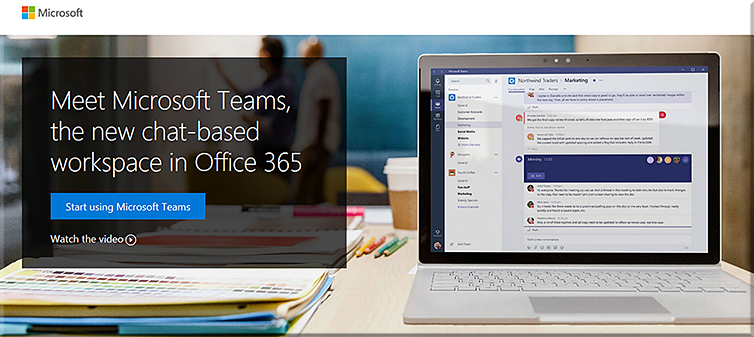
Microsoft has unveiled several new offerings for education, including the forthcoming Surface Laptop and a new version of Windows 10 designed for school environments — Windows 10 S.
Also see:
Also see:
From Mixed Reality to New Minecraft and OS, Microsoft Unleashes a Flurry of EDU Upgrades — from edsurge.com by Jenny AbamuMay
Excerpt:
“How can technology create more opportunity, not for a few but for all,” asked Nadella, noting how his own grandfather was not able to go to school because of the limited resources his family had. “Democratizing education must be something that is for everyone and not just for a select few, this is something that is deeply personal.”
His passionate and personal plea set the tone for the flurry of announcements and updates that followed. By the end of the whirlwind showcase, educators were weary but excited about future possibilities.
Also see:
Microsoft Unveils K-12 Operating System, Tools to Challenge Google — from edweek.org by Sean Cavanagh
Excerpt:
Microsoft unveiled a new, streamlined operating system, a slim laptop and a bevy of classroom tools, a group of products that in design and spirit seem aimed at competing with ascendant Chromebooks and other Google offerings in the school market.
At a product announcement on Tuesday crowded with company employees and tech journalists, Microsoft executives repeatedly touted a theme in describing the new operating system, Windows 10 S, and the accompanying products: simplicity.
The goal is “simplify to magnify,” Terry Myerson, Microsoft’s executive vice president of the Windows and devices group, told the assembled crowd. “Simplicity is power.”
“Technology should help, not hinder, teachers’ work in the classroom,” Microsoft CEO Satya Nadella said. It should make educators’ jobs easier, and “spark students’ creativity.”
Brace yourselves: AI is set to explode in higher ed in the next 4 years –from ecampusnews.com by Laura Ascione
As AI grows in the education sector, its impact could be felt in student learning programs, websites and admissions programs
Excerpt:
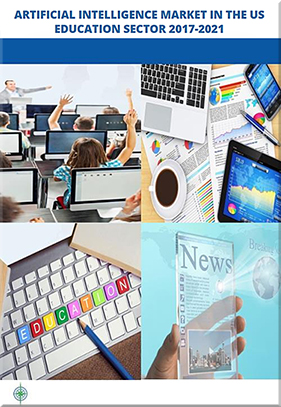
A new report predicts that artificial intelligence (AI) in the U.S. education sector will grow 47.5 percent through 2021.
The report, Artificial Intelligence Market in the U.S. Education Sector 2017-2021, is based on in-depth market analysis with inputs from industry experts.
One of the major trends surrounding AI and education is AI-powered educational games. Because games have the potential to engage students while teaching them challenging education concepts in an engaging manner, vendors are incorporating AI features into games to enhance their interactivity.
Educational games that include adaptive learning features give students frequent and timely suggestions for a guided learning experience.
From DSC:
I can’t say how many AI-based solutions we’ll see within higher education in the next 4 years…it could be a lot…it could be a little. But it will happen. At some point, it will happen.
The use of AI will likely play a key role in a future organization that I’m calling the Next Amazon.com of Higher Education. AI will likely serve as a foundational piece of what futurist Thomas Frey claims will be the largest company on the internet: “an education-based company that we haven’t heard of yet.” (source)
Web-based learner profiles and blockchain-based technologies should also be on our radars, and are relevant in this discussion.
Also see:
Key questions answered in this report
Q&A: Artificial Intelligence Expert Shares His Vision of the Future of Education — from edtechmagazine.com by Amy Burroughs
Artificial intelligence expert Joseph Qualls believes AI can solve some of the biggest challenges facing higher education — and the change is already underway.
Excerpts:
EDTECH: What AI applications might we see in higher education?
QUALLS: You are going to see a massive change in education from K–12 to the university. The thought of having large universities and large faculties teaching students is probably going to go away — not in the short-term, but in the long-term. You will have a student interact with an AI system that will understand him or her and provide an educational path for that particular student. Once you have a personalized education system, education will become much faster and more enriching. You may have a student who can do calculus in the sixth grade because AI realized he had a mathematical sense. That personalized education is going to change everything.
From DSC:
I haven’t tried this app myself, but I was intrigued by the concept behind it. Machine learning/deep learning is very much at play here, as the app can recognize a particular problem and then present some potential assistance/answers to you. “Take a photo. Get instant help.”
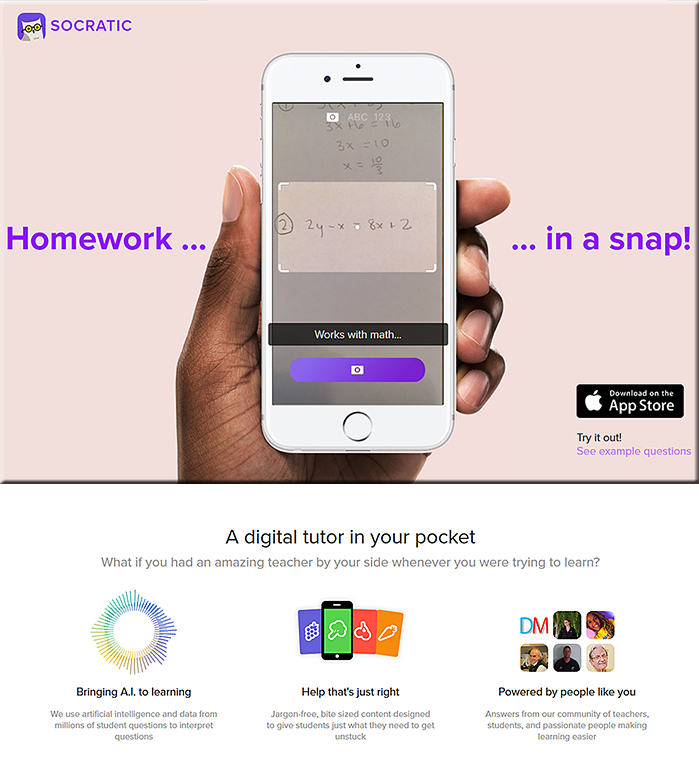
Description
Take a PHOTO of your homework question and get explanations, videos, and step-by-step help instantly. Supports Math, Science, History, English, Econ and more. Completely free, NO in-app purchases. “This app is a lifesaver”
~~ How it works ~~
Socratic is a homework app that combines cutting-edge Artificial Intelligence (AI) with amazing learning content to make learning on your phone easy.
Take a picture of a homework question and our AI instantly figures out which concepts you need to learn in order to answer it, and shows you simple, high-quality content designed to make learning easy.
Socratic’s AI combines cutting-edge computer vision technologies, which read questions from images, with machine learning classifiers built using millions of sample homework questions, to accurately predict which concepts will help you solve your question.
Socratic’s team of educators is creating highly-visual, jargon-free content to teach every important high school curriculum concept, and is curating the best online videos from sources like Khan Academy, Crash Course, and others.
Together, the Socratic app represents a huge improvement in how students learn on the Internet.
From DSC:
Again, this is the type of service that I could see the New Amazon.com of Higher Education featuring in their courses and/or microlearning-based offerings.
Also see:
.
Excerpts:
EDTECH: What AI applications might we see in higher education?
QUALLS: You are going to see a massive change in education from K–12 to the university. The thought of having large universities and large faculties teaching students is probably going to go away — not in the short-term, but in the long-term. You will have a student interact with an AI system that will understand him or her and provide an educational path for that particular student. Once you have a personalized education system, education will become much faster and more enriching. You may have a student who can do calculus in the sixth grade because AI realized he had a mathematical sense. That personalized education is going to change everything.
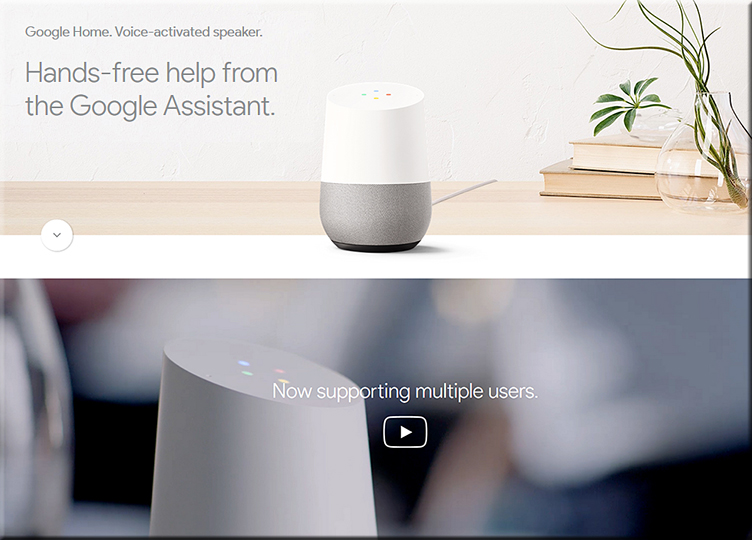
Google Home’s assistant can now recognize different voices — from cnbc.com
Excerpt:
SAN FRANCISCO (AP) — Google’s voice-activated assistant can now recognize who’s talking to it on Google’s Home speaker.
An update released Thursday enables Home’s built-in assistant to learn the different voices of up to six people, although they can’t all be talking to the internet-connected speaker at the same time.
Distinguishing voices will allow Home to be more personal in some of its responses, depending on who triggers the assistant with the phrase, “OK Google” or “Hey Google.”
For instance, once Home is trained to recognize a user named Joe, the assistant will automatically be able to tell him what traffic is like on his commute, list events on his daily calendar or even play his favorite songs. Then another user named Jane could get similar information from Home, but customized for her.
What’s New for Video and Audio (April 2017) | Adobe Creative Cloud
Adobe Creative Cloud Propels Video Forward at NAB 2017 — from news.adobe.com
Latest Release Features New Capabilities in AI, VR, Motion Graphics, Live Animation and Audio
Excerpt:
SAN JOSE, Calif.–(BUSINESS WIRE)–Ahead of the National Association of Broadcasting (NAB) conference, Adobe (Nasdaq:ADBE) today announced a major update for video in Adobe Creative Cloud to help filmmakers and video producers collaborate and streamline video workflows. The Creative Cloud release, available today, delivers new features for graphics and titling, animation, polishing audio and sharing assets; support for the latest video formats, such as HDR, VR and 4K; new integrations with Adobe Stock; and advanced artificial intelligence capabilities powered by Adobe Sensei. Announced at Adobe Summit 2017, Adobe Experience Cloud also allows brands to deliver connected video experiences across any screen at massive scale, while analyzing performance and monetizing ads.
Technology advancements and exploding consumer demand for impactful and personalized content require video producers to create, deliver and monetize their video assets faster than ever before. From the largest studio to next generation YouTubers, a scalable, end-to-end solution is required to create, collaborate and streamline video workflows with robust analytics and advertising tools to optimize content and drive more value.
Adobe Makes Big Leaps in Video, Just in Time for NAB — from blogs.adobe.com
Excerpt:
Next week, thousands of broadcasters, video producers and digital content lovers will gather for the National Association of Broadcasters (NAB) annual conference. Just in time for the event, Adobe is unveiling big updates to our video tools for graphics and titling, animation, and sharing assets; support for the latest formats including HDR, VR and 4K; lots of improvements to video workflows; and more power from Adobe Sensei, our artificial intelligence technology. It’s all part of a major Adobe CC product update available today.
“The newest Creative Cloud video release integrates the advanced science of Adobe Sensei to make common tasks faster and easier. All video producers – whether they’re part of the major media companies or up and coming YouTubers – can now bring their creative vision to life without having to be motion graphics or audio experts,” says Steven Warner, vice president of digital media at Adobe.

These are the latest features in After Effects CC 2017, available now — from provideocoalition.com by Mark Christiansen
Get up to date and up to speed with these additions & changes
[For a detailed overview, check back during NAB when the course After Effects CC 2017: New Features from LinkedIn Learning (otherwise known as Lynda.com) will be updated with everything that’s brand new as of today. This course will feature the examples depicted here in step-by-step detail.]
Adobe updates Premiere Pro CC for April 2017 — from provideocoalition.com by Scott Simmons
And instead of waiting months for the new CC versions they should be available soon, as in probably today
After Effects NAB 2017 Update — from provideocoalition.com by Chris and Trish Meyer
How to play nice(r) with Premiere Pro editors, as well as other updates
Also see:
From DSC:
In terms of learning, having to be in the same physical place as others continues to not be a requirement nearly as much as it used to be. But I’m not just talking about online learning here. I’m talking about a new type of learning environment that involves both hardware and software to facilitate collaboration (and it was designed that way from day 1). These new types of setups can provide us with new opportunities and affordances that we should begin experimenting with immediately.
Check out the following products — all of which allow a person to contribute to a discussion or conversation from anywhere they can get Internet access:
When you go to those sites, you will see words and phrase such as:
So using these types of software and hardware setups, I can contribute regardless of where I’m located. Remote learning — from anywhere in the world — being combined with our face-to-face based classrooms.
Also, the push for Active Learning Classrooms (ALCs) continues across higher education. Such hands-on, project-learning based, student-centered approaches fit extremely well with the collaboration setups mentioned above.
Then, there’s the insight from Simon Dudley in this article:
“…video conferencing is increasingly an application within in a larger workflow…”
Lastly, if colleges and universities don’t have the funds to maintain their physical plants, look for higher education to move increasingly online — and these types of solutions could play a significant role in that environment. Plus, for working adults who need to reinvent themselves, this is an extremely efficient means of picking up some new skills and competencies.
So the growth of these types of setups — where the software and hardware work together to support worldwide collaboration — will likely create a powerful, new, emerging piece of our learning ecosystems.
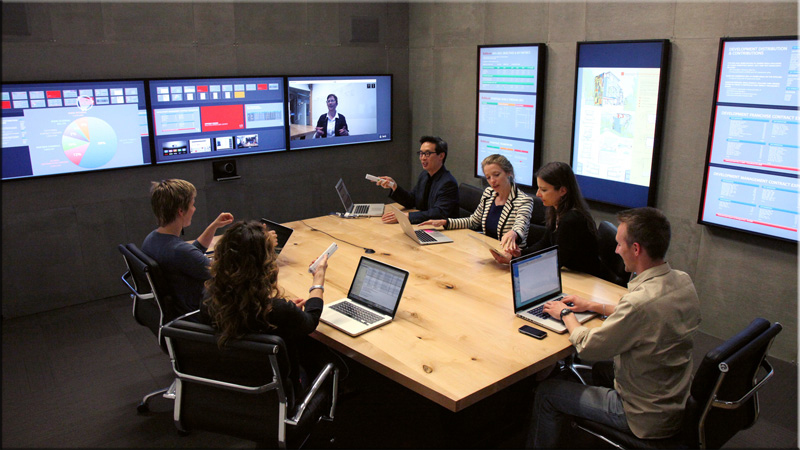


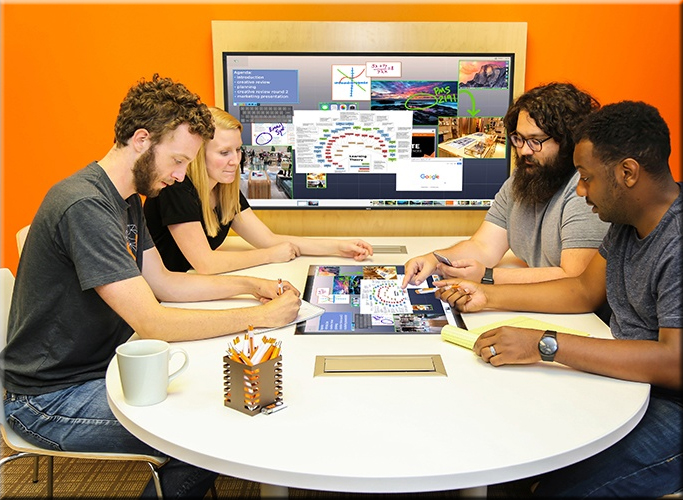
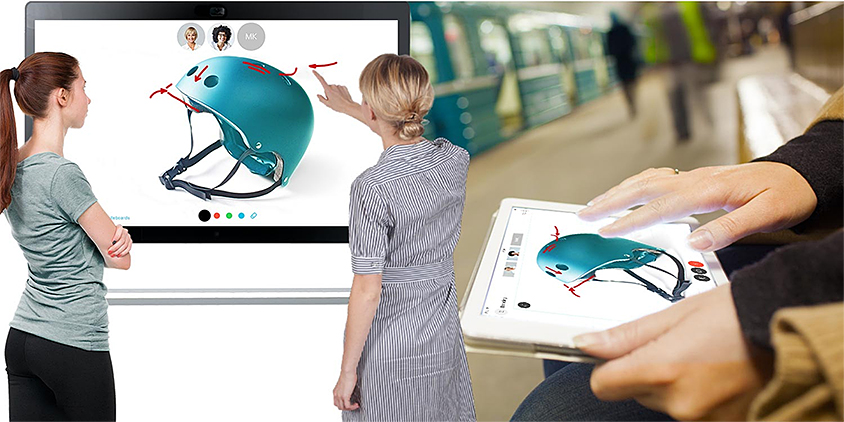

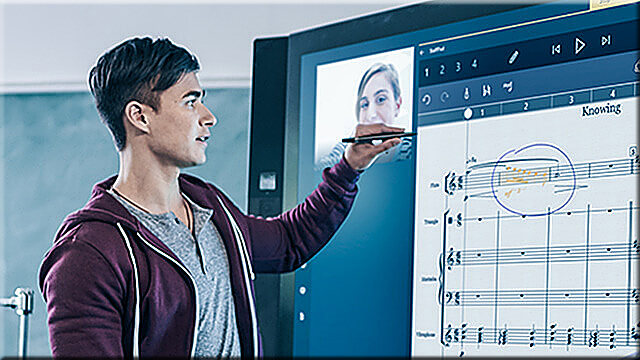


Remote learning — from anywhere in the world — being combined with our face-to-face based classrooms.
Five things to know about Facebook’s huge augmented reality fantasy — from gizmodo.com by Michael Nunez
Excerpt:
One example of how this might work is at a restaurant. Your friend will be able to leave an augmented reality sticky note on the menu, letting you know which menu item is the best or which one’s the worst when you hold your camera up to it.
Another example is if you’re at a celebration, like New Year’s Eve or a birthday party. Facebook could use an augmented reality filter to fill the scene with confetti or morph the bar into an aquarium or any other setting corresponding with the team’s mascot. The basic examples are similar to Snapchat’s geo-filters—but the more sophisticated uses because it will actually let you leave digital objects behind for your friends to discover. Very cool!
“We’re going to make the camera the first mainstream AR platform,” said Zuckerberg.
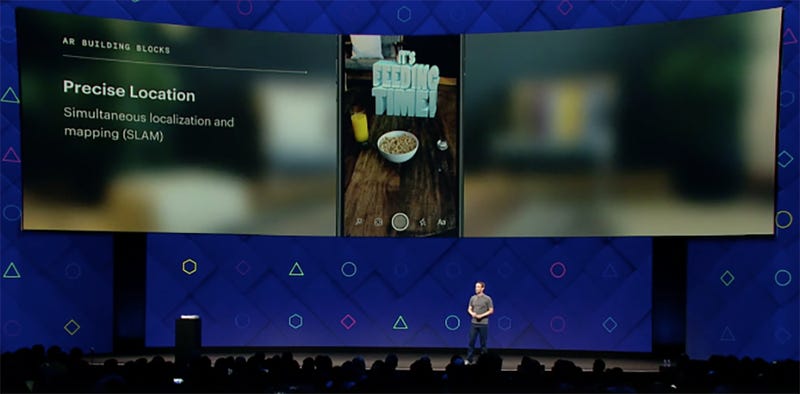
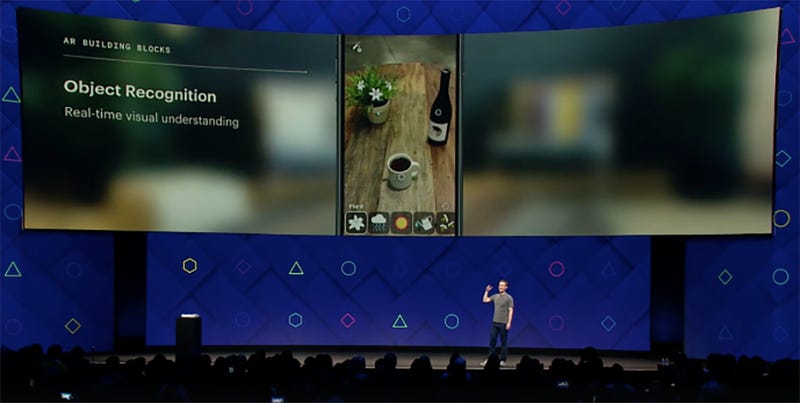
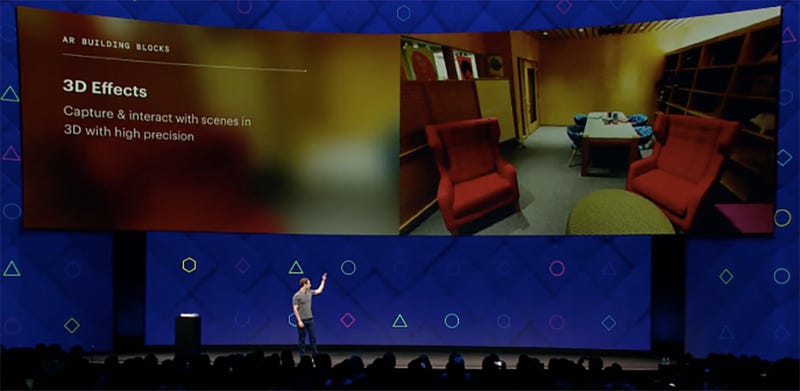
Here’s Everything Facebook Announced at F8, From VR to Bots — from wired.com
Excerpt:
On Tuesday, Facebook kicked off its annual F8 developer conference with a keynote address. CEO Mark Zuckerberg and others on his executive team made a bunch of announcements aimed at developers, but the implications for Facebook’s users was pretty clear. The apps that billions of us use daily—Facebook, Messenger, WhatsApp, Instagram—are going to be getting new camera tricks, new augmented reality capabilities, and more bots. So many bots!
Facebook’s bold and bizarre VR hangout app is now available for the Oculus Rift — from theverge.com by Nick Statt
Excerpt:
Facebook’s most fascinating virtual reality experiment, a VR hangout session where you can interact with friends as if you were sitting next to one another, is now ready for the public. The company is calling the product Facebook Spaces, and it’s being released today in beta form for the Oculus Rift.

From DSC:
Facebook Launches Local ‘Developer Circles’ To Help Entrepreneurs Collaborate, Build Skills — from forbes.com by Kathleen Chaykowski
Excerpt:
In 2014, Facebook launched its FbStart program, which has helped several thousand early stage apps build and grow their apps through a set of free tools and mentorship meetings. On Tuesday, Facebook unveiled a new program to reach a broader range of developers, as well as students interested in technology.
The program, called “Developer Circles,” is intended to bring developers in local communities together offline as well as online in Facebook groups to encourage the sharing of technical know-how, discuss ideas and build new projects. The program is also designed to serve students who may not yet be working on an app, but who are interested in building skills to work in computer science.
Facebook launches augmented reality Camera Effects developer platform — from techcrunch.com by Josh Constine
Excerpt:
Facebook will rely on an army of outside developers to contribute augmented reality image filters and interactive experiences to its new Camera Effects platform. After today’s Facebook F8 conference, the first effects will become available inside Facebook’s Camera feature on smartphones, but the Camera Effects platform is designed to eventually be compatible with future augmented reality hardware, such as eyeglasses.
While critics thought Facebook was just mindlessly copying Snapchat with its recent Stories and Camera features in Facebook, Messenger, Instagram and WhatsApp, Mark Zuckerberg tells TechCrunch his company was just laying the groundwork for today’s Camera Effects platform launch.
Mark Zuckerberg Sees Augmented Reality Ecosystem in Facebook — from nytimes.com by Mike Isaac
Excerpt:
On Tuesday, Mr. Zuckerberg introduced what he positioned as the first mainstream augmented reality platform, a way for people to view and digitally manipulate the physical world around them through the lens of their smartphone cameras.
Facebook Launches Social VR App ‘Facebook Spaces’ in Beta for Rift — from virtualrealitypulse.com by Ben Lang
Addendums on 4/20/17:
109 ways companies are using virtual & augmented reality right now — from metavrse.com by Alan Smithson
Excerpt:
By 2035, Citi Financial Estimates the vCommerce industry to be worth $1.3 trillion. Yes, that is trillion with a “T”, we’re talking 4 comma club! Now that is a massive number and surely not all of this is from virtual and augmented reality… or is it. According to VR evangelist and author of the Fourth Transformation, A book about the transformative potential of VR/AR, Robert Scoble suggests ‘Users will start expecting brands to have mixed reality experiences in 2018.
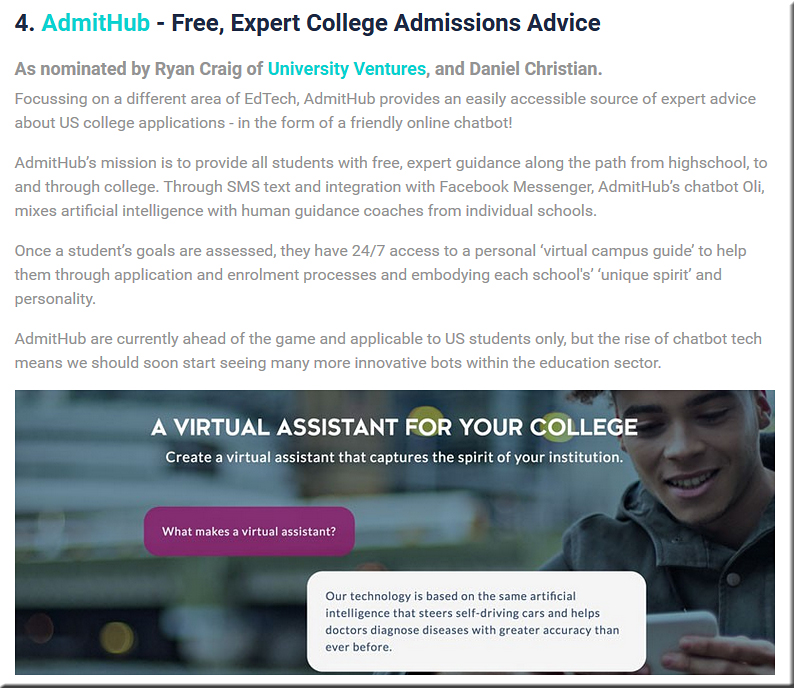
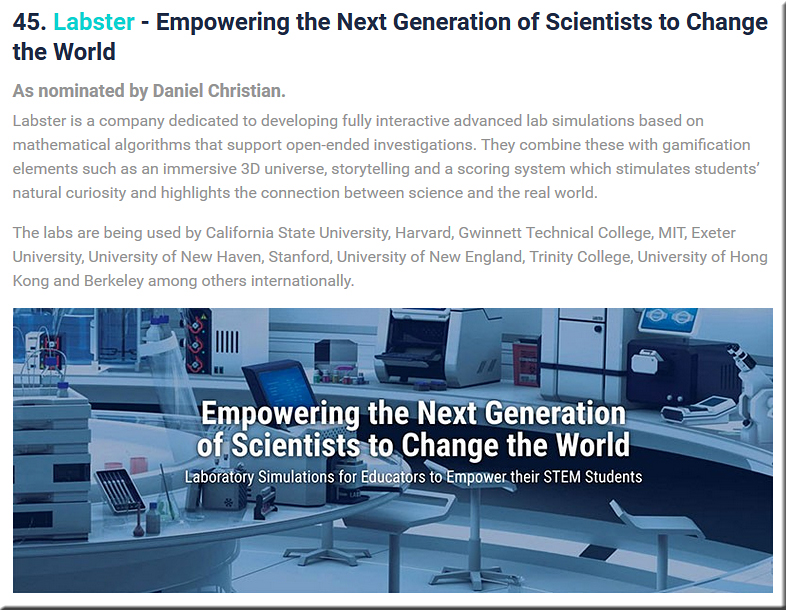
The 82 Hottest EdTech Tools of 2017 According to Education Experts — from tutora.co.uk by Giorgio Cassella
Excerpt:
If you work in education, you’ll know there’s a HUGE array of applications, services, products and tools created to serve a multitude of functions in education.
Tools for teaching and learning, parent-teacher communication apps, lesson planning software, home-tutoring websites, revision blogs, SEN education information, professional development qualifications and more.
There are so many companies creating new products for education, though, that it can be difficult to keep up – especially with the massive volumes of planning and marking teachers have to do, never mind finding the time to actually teach!
So how do you know which ones are the best?
Well, as a team of people passionate about education and learning, we decided to do a bit of research to help you out.
We’ve asked some of the best and brightest in education for their opinions on the hottest EdTech of 2017. These guys are the real deal – experts in education, teaching and new tech from all over the world from England to India, to New York and San Francisco.
They’ve given us a list of 82 amazing, tried and tested tools…
From DSC:
The ones that I mentioned that Giorgio included in his excellent article were: