A New Frontier For Agencies: Immersive Training — from forbes.com by Sarah Mannone

Excerpt:

We’ve all seen how new technologies like AR and VR are being incorporated into print and digital marketing, but what I have come to realize is that there is an opportunity for the agencies that have invested in these technologies and have developed an expertise to offer a new service: immersive training.

What is immersive training? Immersive training experiences use augmented and virtual reality to bring training content to life. Think roleplaying a customer service call using a VR headset, or exploring a 3D model of a new piece of equipment before using it on the factory floor. Companies are beginning to use these immersive experiences to engage learners — and to save time and money — by offering digital training anywhere, anytime.

Whether employees are learning specific processes and products or more conceptual skills like sales and communication, companies are using interaction and immersion to increase knowledge retention. Even big companies like Walmart are getting on board with immersive training: The retail superstore is using virtual reality to train new employees in a classroom setting before letting them loose in the aisles.

Immersive training allows companies to meet people where they are ? on the mobile devices they use every day. It gives learners ongoing, on-demand access to training materials and supporting content, far beyond the printed page.


ARCore: Augmented reality at Android scale — from blog.google by Dave Burke

Excerpt:

With more than two billion active devices, Android is the largest mobile platform in the world. And for the past nine years, we’ve worked to create a rich set of tools, frameworks and APIs that deliver developers’ creations to people everywhere. Today, we’re releasing a preview of a new software development kit (SDK) called ARCore. It brings augmented reality capabilities to existing and future Android phones. Developers can start experimenting with it right now.


Google just announced its plan to match the coolest new feature coming to the iPhone –from cnbc.com by Todd Haselton

  • Google just announced its answer to Apple’s augmented reality platform
  • New tools called ARCore will let developers enable AR on millions of Android devices


AR Experiments

Description:

AR Experiments is a site that features work by coders who are experimenting with augmented reality in exciting ways. These experiments use various tools like ARCore, an SDK that lets Android developers create awesome AR experiences. We’re featuring some of our favorite projects here to help inspire more coders to imagine what could be made with AR.


Google’s ARCore hopes to introduce augmented reality to the Android masses — from androidauthority.com by Williams Pelegrin

Excerpt:

Available as a preview, ARCore is an Android software development kit (SDK) that lets developers introduce AR capabilities to, you guessed it, Android devices. Because of how ARCore works, there is no need for folks to purchase additional sensors or hardware – it will work on existing and future Android phones.


Augray, An Augmented Reality Company Has Launched World’s First AR Messenger — from tada-time.com; with thanks to Mr. Woontack Woo for this resource

Excerpt:

Never before has there been a messenger app based only on AR.

Just by downloading the app with a selfie, you will get your avatar and up get to customize them! There are many clothing and style options to fit your personality and mood. Don’t worry, you can change their appearance at any time. Once you create your digital you, you will place them in any environment around you, with the default animation’s audio or with your own voice, you really make your avatar come alive. You can record the actions in the real world, record, and chat with your friends and family or post them in the inbuilt social media for everyone to see your creative recording or the to experience your digital you in their world! This app will change your social life for the better.


Also related/see:
The Future of Social Media is Here: The Rise of Augmented Reality


The Top 5 Virtual Reality and Augmented Reality Apps for Architects — from archdaily.com by Lidija Grozdanic for Archipreneur.com; again, with thanks to Mr. Woontack Woo for this resource

Excerpt:

Virtual reality and augmented reality tools for the AEC industry are getting increasingly better and more optimized. As prices keep dropping, there are fewer reasons why every architect, engineer, contractor, and owner shouldn’t use some form of VR/AR in bringing their projects to life.

From being a novelty a few years ago, VR/AR solutions are slowly becoming a medium that’s transforming the way professionals in the AEC industry communicate, create and experience content. Offering a more immersive experience of architectural designs, but also products and areas related to space building, VR and AR tools are becoming an industry standard that offers rapid iterations and opportunity to refine designs in collaboration with clients and colleagues.


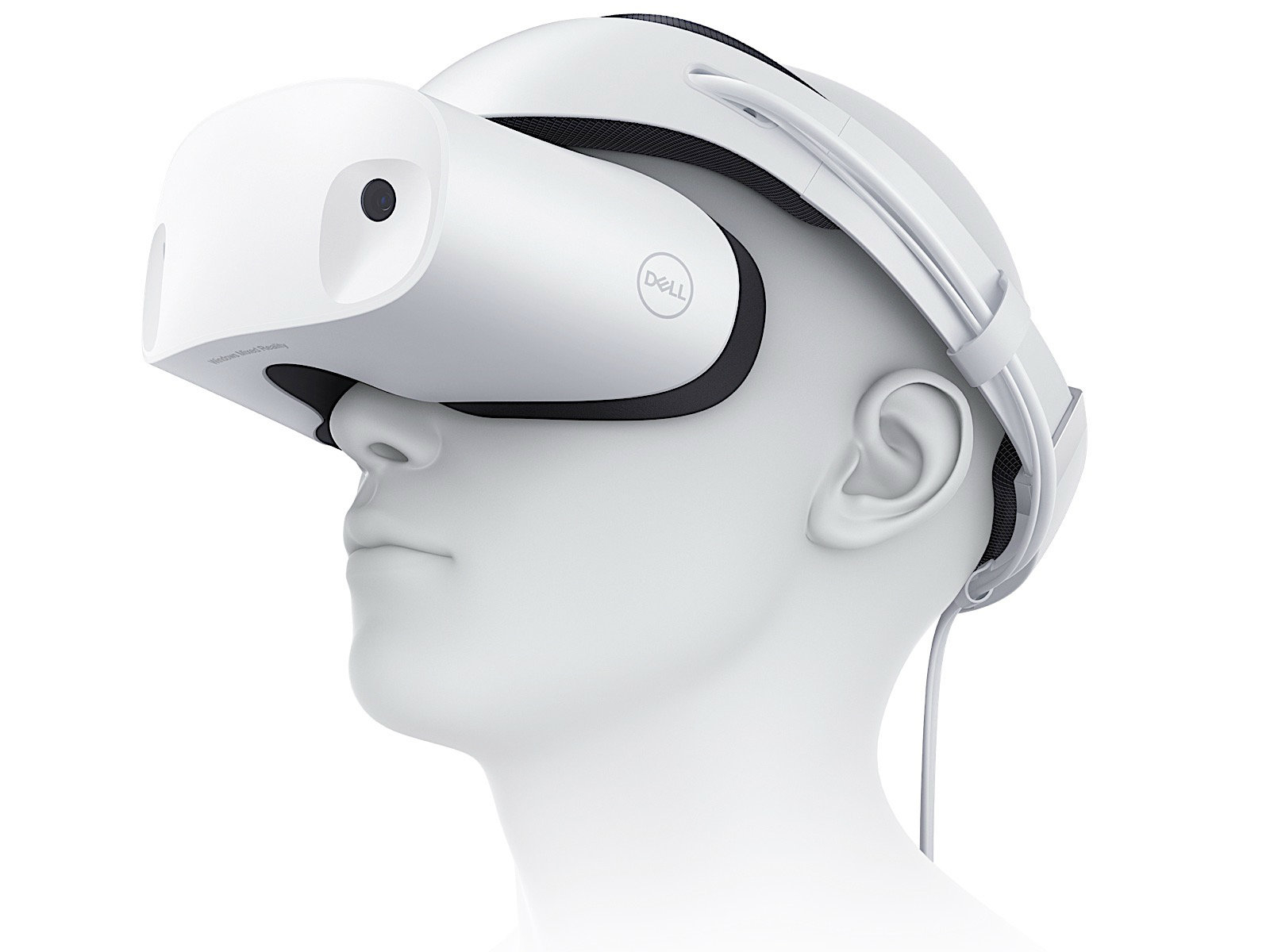
Dell makes a VR Visor to go with its Alienware laptops — from engadget.com by Andrew Tarantola
It’ll retail for $349 when it goes on sale in October.


Addendums:
Microsoft’s new partnership with Valve looks like a win-win — from businessinsider.com by Matt Weinberger

Excerpt:

  • Cheap VR headsets, priced at around $300, are coming to Windows 10 later this year
  • Microsoft just announced those headsets will support apps and games from the Steam platform, which will greatly expand selection. Plus, Microsoft says it’s working on “Halo” content for virtual reality.
  • The VR headsets will work with less powerful computers, potentially expanding the market.

 
Virtual reality, real rewards in higher ed — from universitybusiness.com by Jennifer Fink
Using augmented and virtual reality to attract students and engage donors


Top Trends in the Gartner Hype Cycle for Emerging Technologies, 2017 — from gartner.com by Kasey Panetta
Enterprises should explain the business potential of blockchain, artificial intelligence and augmented reality.

Excerpt (emphasis DSC):

…emerging technologies such as machine learning, blockchain, drones (commercial UAVs), software-defined security and brain-computer interfaces have moved significantly along the Hype Cycle since 2016.
…

The Gartner Hype Cycle for Emerging Technologies, 2017 focuses on three emerging technology mega-trends: Artificial intelligence (AI) everywhere, transparently immersive experiences and digital platforms. Enterprise architects and technology innovation leaders should explore and ideate these three mega-trends to understand the future impacts to their business.

“Organizations will continue to be faced with rapidly accelerating technology innovation that will profoundly impact the way they deal with their workforces, customers and partners,” says Mike J. Walker, research director. “Our 2017 Hype Cycle reveals three distinct technology trends that profoundly create new experiences with unrivaled intelligence, and offer platforms that propel organizations to connect with new business ecosystems in order to become competitive over the next five to 10 years.”


Amazon’s TenMarks releases a new curriculum for educators that teaches kids writing using digital assistants, text messaging and more — from techcrunch.com by Sarah Perez

Excerpt:

Amazon is expanding its efforts in the education technology space [on 8/23/17] with the launch of a new curriculum from TenMarks, the company it acquired several years ago which previously only focused on math lessons and related activities. Now, the business is offering an online curriculum for teachers designed to help students learn how to be better writers. The program includes a writing coach that leverages natural language processing, a variety of resources for teachers, and something called “bursts,” which are short writing prompts kids will be familiar with because of their use of mobile apps.

These bursts, which can be used by teachers as warm-ups or supplemental activities, make writing seem less intimidating for students, as they’re similar to what kids might do online or on their smartphones.
…
TenMarks is only one way that Amazon is aiming to insert itself into the classroom. The company also runs Amazon Inspire, still in beta, a collection of K-12 curriculum resources. Currently, educators can browse the content library and download those they want to use, but a sharing feature that will support uploads is soon to launch.


From DSC:
Readers of this Learning Ecosystems blog will recognize the following graphic:



I have long believed that each of us needs to draw from the relevant streams of content that are constantly flowing by us — and also that we should be contributing content to those streams as well. Such content can come from blogs, websites, Twitter, LinkedIn, podcasts, YouTube channels, Google Alerts, periodicals, and via other means.

I’m a big fan of blogging and using RSS feeds along with feed aggregators such as Feedly. I also find that Twitter, LinkedIn, and Google Alerts to be excellent means of tapping into — and contributing to — these streams of content. (See Jane Hart’s compilations to tap into other tools/means of learning as well.)

This perspective is echoed in the following article at the Harvard Business Review:

  • Help Employees Create Knowledge — Not Just Share It — from hbr.org by John Hagel III and John Seely Brown
    Excerpt:
    Without diminishing the value of knowledge sharing, we would suggest that the most valuable form of learning today is actually creating new knowledge. Organizations are increasingly being confronted with new and unexpected situations that go beyond the textbooks and operating manuals and require leaders to improvise on the spot, coming up with new approaches that haven’t been tried before. In the process, they develop new knowledge about what works and what doesn’t work in specific situations. We believe the old, “scalable efficiency” approach to knowledge needs to be replaced with a new, more nimble kind of “scalable learning.” To foster the latter, managers should understand five essential distinctions…


We need to be constantly challenging our assumptions and beliefs about what is required to achieve impact because, as the world changes, what used to work in the past may no longer work. 

— Hagel and Brown


So whether you are working or studying within the world of higher education, or whether you are in the corporate world, or working in a governmental office, or whether you are a student in K-12, you need to be drawing from — and contributing your voice/knowledge to — streams of content.

In fact, in my mind, that’s what Training/L&D Departments should shift their focus to, as employees are already self-motivated to build their own learning ecosystems. And in the world of higher education, that’s why I work to help students in my courses build their own online-based footprints, while encouraging them to draw from — contribute to — these streams of content. As more people are becoming freelancers and consultants, it makes even more sense to do this.


But when we recognize that the environment around us is rapidly changing, skills have a shorter and shorter half-life. While skills are still necessary for success, the focus should shift to cultivating the underlying capabilities that can accelerate learning so that new skills can be more rapidly acquired. These capabilities include curiosity, critical thinking, willingness to take risk, imagination, creativity, and social and emotional intelligence. If we can develop those learning capabilities, we should be able to rapidly evolve our skill sets in ways that keep us ahead of the game.

— Hagel and Brown


10 examples of how brands are using chatbots to delight customers — from medium.com by Larry Kim

Excerpt:

Businesses and brands are using chatbots in lots of exciting ways.

You can order food, schedule flights, and get recommendations for pretty much anything you can think of.

We’re still in the early days, but the latest chatbot statistics all say the same thing: adoption is growing.

Whether you like it or not, chatbots and virtual assistants are the future of marketing and customer support.

So which brands are already making the most of chatbots to delight their customers?

Here are 10 examples.


Artificial intelligence will transform universities. Here’s how. — from weforum.org by Mark Dodgson & David Gann

Excerpt:

The most innovative AI breakthroughs, and the companies that promote them – such as DeepMind, Magic Pony, Aysadi, Wolfram Alpha and Improbable – have their origins in universities. Now AI will transform universities.

We believe AI is a new scientific infrastructure for research and learning that universities will need to embrace and lead, otherwise they will become increasingly irrelevant and eventually redundant.

Through their own brilliant discoveries, universities have sown the seeds of their own disruption. How they respond to this AI revolution will profoundly reshape science, innovation, education – and society itself.
…
As AI gets more powerful, it will not only combine knowledge and data as instructed, but will search for combinations autonomously. It can also assist collaboration between universities and external parties, such as between medical research and clinical practice in the health sector.

The implications of AI for university research extend beyond science and technology.
…
When it comes to AI in teaching and learning, many of the more routine academic tasks (and least rewarding for lecturers), such as grading assignments, can be automated. Chatbots, intelligent agents using natural language, are being developed by universities such as the Technical University of Berlin; these will answer questions from students to help plan their course of studies.

Virtual assistants can tutor and guide more personalized learning. As part of its Open Learning Initiative (OLI), Carnegie Mellon University has been working on AI-based cognitive tutors for a number of years. It found that its OLI statistics course, run with minimal instructor contact, resulted in comparable learning outcomes for students with fewer hours of study. In one course at the Georgia Institute of Technology, students could not tell the difference between feedback from a human being and a bot.


Also see:

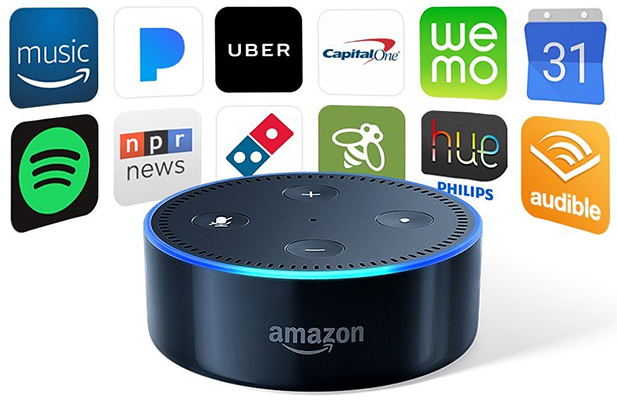
Digital audio assistants in teaching and learning — from blog.blackboard.com by Szymon Machajewski

Excerpts:

I built an Amazon Alexa skill called Introduction to Computing Flashcards. In using the skill, or Amazon Alexa app, students are able to listen to Alexa and then answer questions. Alexa helps students prepare for an exam by speaking definitions and then waiting for their identification. In addition to quizzing the student, Alexa is also keeping track of the correct answers. If a student answers five questions correctly, Alexa shares a game code, which is worth class experience points in the course gamification My Game app.

…

Certainly, exam preparation apps are one way to use digital assistants in education. As development and publishing of Amazon Alexa skills becomes easier, faculty will be able to produce such skills just as easily as they now create PowerPoints. Given the basic code available through Amazon tutorials, it takes 20 minutes to create a new exam preparation app. Basic voice experience Amazon Alexa skills can take as much as five minutes to complete.

Universities can publish their campus news through the Alexa Flash Briefing. This type of a skill can publish news, success stories, and other events associated with the campus.

…

If you are a faculty member, how can you develop your first Amazon Alexa skill? You can use any of the tutorials already available. You can also participate in an Amazon Alexa classroom training provided by Alexa Dev Days. It is possible that schools or maker spaces near you offer in-person developer sessions. You can use meetup.com to track these opportunities.


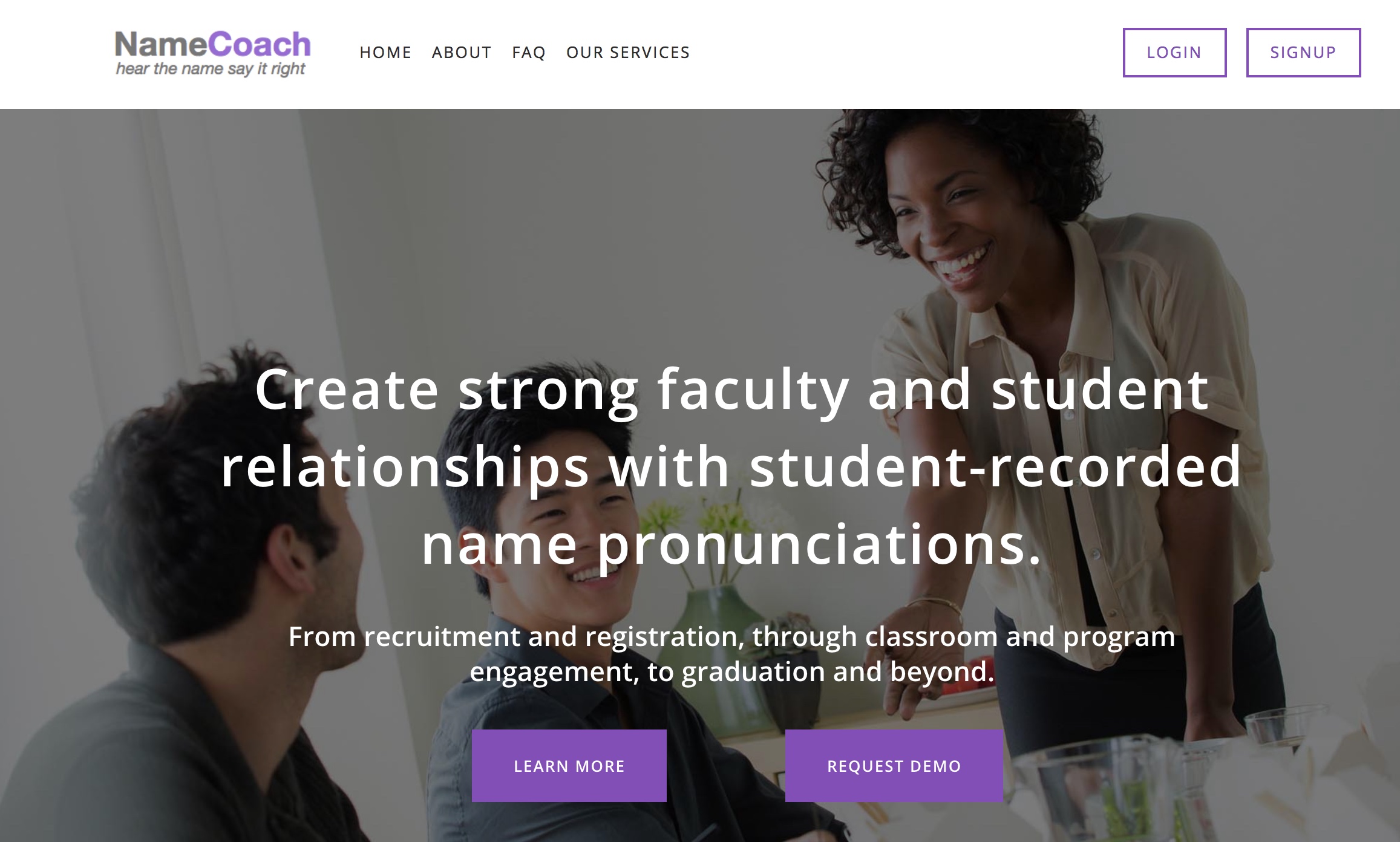
NameCoach
Create strong faculty and student relationships with student-recorded name pronunciations.


Also see:

Software helps instructors stop mangling hard-to-pronounce student names — from edsurge.com by Tina Nazerian

Excerpt (emphasis DSC):

Learning names at the beginning of the term has long been a challenge for instructors—especially when the names are ones professors have never encountered before. There are companies like NameCoach that give professors a way to hear and review the correct pronunciation before classes even begin.

The Redwood City, Calif.-based company lets students record their own names and pairs the recordings with campus systems so that professors can listen to them as they review their rosters. Stanford University and Northwestern University are among the higher education institutions that use NameCoach.


5 reasons iPhone 8 will be an augmented reality game changer — from techradar.com by Mark Knapp
Augmented Reality (AR) will be everywhere!

Excerpt (emphasis DSC):

Most of us are at least vaguely familiar with augmented reality thanks to Pokemon Go sticking Charmanders in our sock drawers and Snapchat letting us spew stars and rainbows from our mouths, but Apple’s iPhone 8 is going to push AR to point of ubiquity. When the iPhone 8 launches, we’ll all be seeing the world differently.

iPhones are everywhere, so AR will be everywhere!

The iPhone 8 will bring with it iOS 11, and with iOS 11 will come Apple’s AR. Since the iPhone 8 is all but guaranteed to be a best-seller and earlier iPhones and iPads will be widely updated to iOS 11, Apple will have a massive AR platform. Craig Federighi, Apple’s Senior Vice President of Software Engineering, believes it will be “the largest AR platform in the world,” which will lure AR developers en masse.


Apple AR has huge potential in education.
Apple has been positioning itself in the education world for years, with programs like iTunes U and iBook, as well as efforts to get iPads into classrooms. AR already has major prospects in education, with the ability to make Museum exhibits interactive and to put a visually explorable world in front of users.


Apple could guide you around your city using augmented reality — from techcrunch.com by Romain Dillet, with thanks to Woontack Woo for this resource


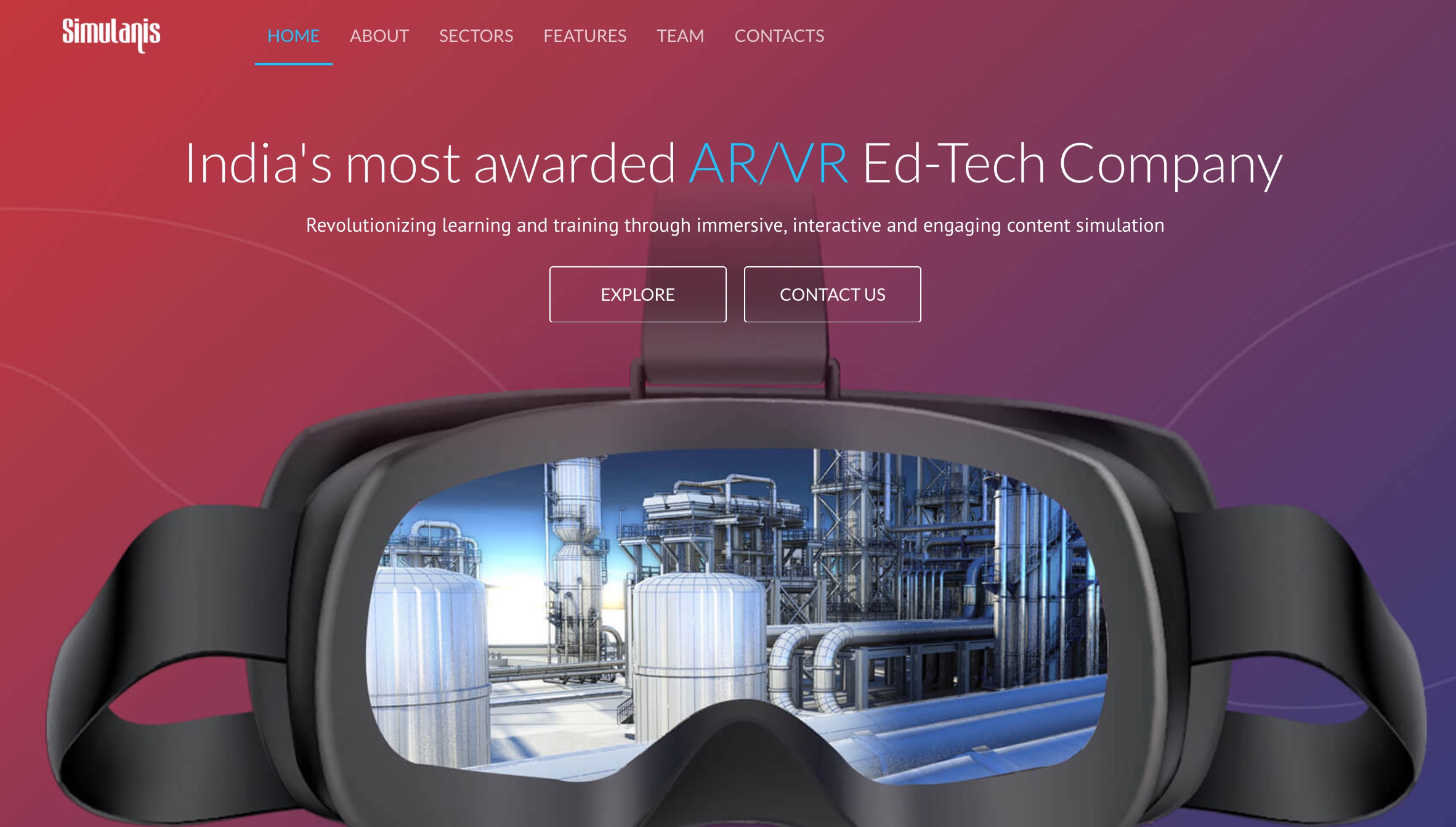
Startup Simulanis uses augmented and virtual reality to skill professionals — from economictimes.indiatimes.com by Vinay Dwivedi

Excerpt:

[India] The widening gap between the skills required by businesses and the know-how of a large number of engineering students got Raman Talwar started on his entrepreneurial journey.
…
Delhi-based Simulanis harnesses AR and VR technology to help companies across industries— pharmaceuticals, auto, FMCG and manufacturing—train their staff. It continues to work in the engineering education sector and has developed applications that assist students visualise challenging subjects and concepts.

Our products help students and trainees learn difficult concepts easily and interactively through immersive AR-VR and 3-D gamification methods,” says Talwar. Simulanis’ offerings include an AR learning platform, Saral, and a gamified learning platform, Protocol.


Also see:


Want to learn a new language? With this AR app, just point & tap — from fastcodesign.com by Mark Wilson
A new demo shows how augmented reality could redefine apps as we know them.

Excerpt:

There’s a new app gold rush. After Facebook and Apple both released augmented reality development kits in recent months, developers are demonstrating just what they can do with these new technologies. It’s a race to invent the future first.

To get a taste of how quickly and dramatically our smartphone apps are about to change, just take a look at this little demo by front end engineer Frances Ng, featured on Prosthetic Knowledge. Just by aiming her iPhone at various objects and tapping, she can both identify items like lamps and laptops, and translate their names to a number of different languages. Bye bye, multilingual dictionaries and Google translate. Hello, “what the heck is the Korean word for that?”


Also see:

Apple ARKit & Machine Learning Come Together Making Smarter Augmented Reality — from next.reality.news by Jason Odom

Excerpt:

The world is a massive place, especially when you consider the field of view of your smartglasses or mobile device. To fulfill the potential promise of augmented reality, we must find a way to fill that view with useful and contextual information. Of course, the job of creating contextual, valuable information, to fill the massive space that is the planet earth, is a daunting task to take on. Machine learning seems to be one solution many are moving toward.

Tokyo, Japan based web developer, Frances Ng released a video on Twitter showing off her first experiments with Apple’s ARKit and CoreML, Apple’s machine learning system. As you can see in the gifs below, her mobile device is being used to recognize a few objects around her room, and then display the name of the identified objects.


Davy Crockett to give tours of Alamo in new augmented reality app — from mysanantonio.com by Samantha Ehlinger

Excerpt:

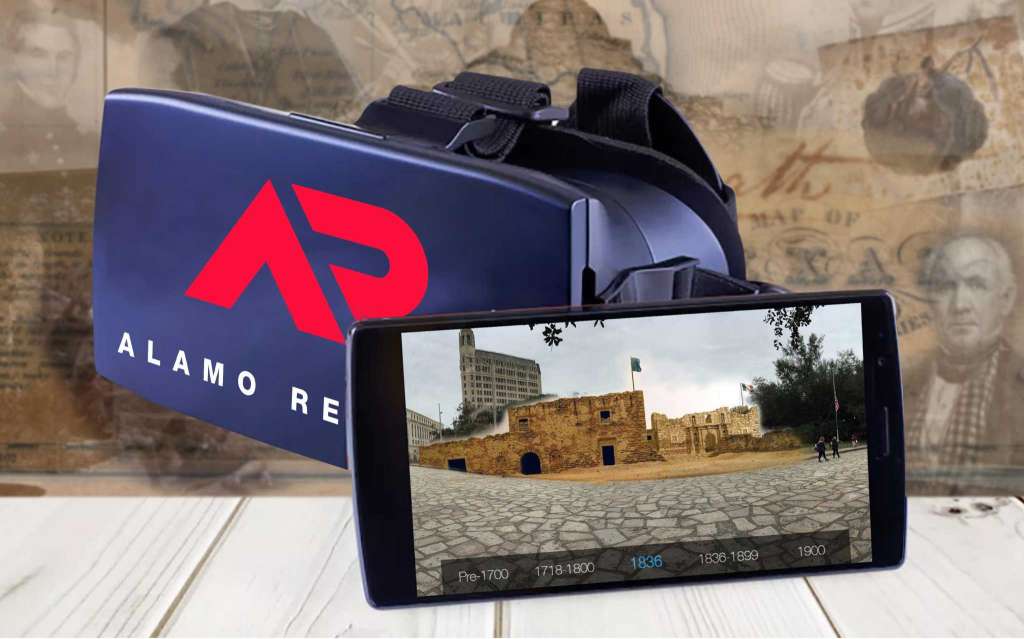
Using a smart phone, users will be able to see and interact with computer-generated people and scenes from the past — overlayed on top of the very real and present-day Alamo. The app will also show the Alamo as it was at different points in history, and tell the story of the historic battle through different perspectives of the people (like Crockett) who were there. The app includes extra features users can buy, much like Pokémon Go.

“We’re making this into a virtual time machine so that if I’m standing on this spot and I look at, oh well there’s Davy Crockett, then I can go back a century and I can see the mission being built,” Alamo Reality CEO Michael McGar said. The app will allow users to see the Alamo not only as it was in 1836, but as it was before and after, McGar said.


“We’re developing a technology that’s going to be able to span across generations to tell a story”

— Lane Traylor


Augmented Reality Technology: A student creates the closest thing yet to a magic ring — from forbes.com by Kevin Murnane

Excerpt:

Nat Martin set himself the problem of designing a control mechanism that can be used unobtrusively to meld AR displays with the user’s real-world environment. His solution was a controller in the shape of a ring that can be worn on the user’s finger. He calls it Scroll. It uses the ARKit software platform and contains an Arduino circuit board, a capacitive sensor, gyroscope, accelerometer, and a Softpot potentiometer. Scroll works with any AR device that supports the Unity game engine such as Google Cardboard or Microsoft’s Hololens.


Also see:

Scroll from Nat on Vimeo.


Addendum on 8/15/17:

New iOS 11 ARKit Demo Shows Off Drawing With Fingers In Augmented Reality [Video] — from redmondpie.com by Oliver Haslam |

Excerpt:

When Apple releases iOS 11 to the public next month, it will also release ARKit for the first time. The framework, designed to make bringing augmented reality to iOS a reality was first debuted during the opening keynote of WWDC 2017 when Apple announced iOS 11, and ever since then we have been seeing new concepts and demos be released by developers.

Those developers have given us a glimpse of what we can expect when apps taking advantage of ARKit start to ship alongside iOS 11, and the latest of those is a demonstration in which someone’s finger is used to draw on a notepad.


Codify Academy Taps IBM Cloud with Watson to Design Cognitive Chatbot — from finance.yahoo.com
Chatbot “Bobbot” has driven thousands of potential leads, 10 percent increase in converting visitors to students

Excerpt:

ARMONK, N.Y., Aug. 4, 2017 /PRNewswire/ — IBM (NYSE: IBM) today announced that Codify Academy, a San Francisco-based developer education startup, tapped into IBM Cloud’s cognitive services to create an interactive cognitive chatbot, Bobbot, that is improving student experiences and increasing enrollment.

Using the IBM Watson Conversation Service, Bobbot fields questions from prospective and current students in natural language via the company’s website. Since implementing the chatbot, Codify Academy has engaged thousands of potential leads through live conversation between the bot and site visitors, leading to a 10 percent increase in converting these visitors into students.


Bobbot can answer more than 200 common questions about enrollment, course and program details, tuition, and prerequisites, in turn enabling Codify Academy staff to focus on deeper, more meaningful exchanges.


Also see:

Chatbots — The Beginners Guide
 — from chatbotsmagazine.com

Excerpt:

If you search for chatbots on Google, you’ll probably come across hundreds of pages starting from what is a chatbot to how to build one. This is because we’re in 2017, the year of the chatbots revolution.

I’ve been introduced to many people who are new to this space, and who are very interested and motivated in entering it, rather they’re software developers, entrepreneurs, or just tech hobbyists. Entering this space for the first time, has become overwhelming in just a few months, particularly after Facebook announced the release of the messenger API at F8 developer conference. Due to this matter, I’ve decided to simplify the basic steps of entering this fascinating world.


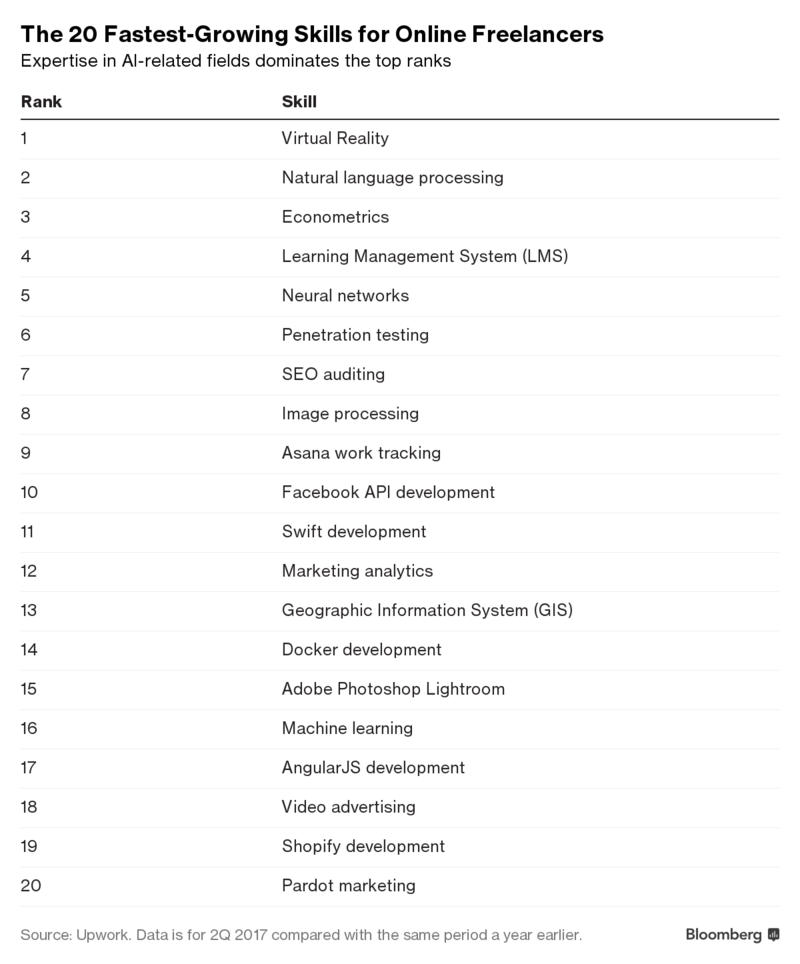
VR Is the Fastest-Growing Skill for Online Freelancers — from bloomberg.com by Isabel Gottlieb
Workers who specialize in artificial intelligence also saw big jumps in demand for their expertise.

Excerpt:

Overall, tech-related skills accounted for nearly two-thirds of Upwork’s list of the 20 fastest-growing skills.


Also see:


How to Prepare Preschoolers for an Automated Economy — from nytimes.com by Claire Miller and Jess Bidgood

Excerpt

MEDFORD, Mass. — Amory Kahan, 7, wanted to know when it would be snack time. Harvey Borisy, 5, complained about a scrape on his elbow. And Declan Lewis, 8, was wondering why the two-wheeled wooden robot he was programming to do the Hokey Pokey wasn’t working. He sighed, “Forward, backward, and it stops.”

Declan tried it again, and this time the robot shook back and forth on the gray rug. “It did it!” he cried. Amanda Sullivan, a camp coordinator and a postdoctoral researcher in early childhood technology, smiled. “They’ve been debugging their Hokey Pokeys,” she said.

The children, at a summer camp last month run by the Developmental Technologies Research Group at Tufts University, were learning typical kid skills: building with blocks, taking turns, persevering through frustration. They were also, researchers say, learning the skills necessary to succeed in an automated economy.

Technological advances have rendered an increasing number of jobs obsolete in the last decade, and researchers say parts of most jobs will eventually be automated. What the labor market will look like when today’s young children are old enough to work is perhaps harder to predict than at any time in recent history. Jobs are likely to be very different, but we don’t know which will still exist, which will be done by machines and which new ones will be created.


© 2025 | Daniel Christian